At least 45 people were killed, 17 missing and 487 injured after a magnitude 7.8 earthquake struck off the southern coast of Mindanao, the Philippines, on Monday, said the National Disaster Risk Reduction and Management Council on Wednesday.
The council said the quake has affected more than 33,000 households, or nearly 150,000 people, and over 41,000 affected residents have been displaced. In terms of property damage, a total of 238 infrastructure facilities, including hospitals, schools and bridges, have been damaged, along with nearly 3,000 houses.
It said that the tremor was felt across most of Mindanao and parts of the central Philippines, and more than 1,700 aftershocks have been recorded since the main shock. Search and rescue operations in affected areas are still ongoing.
The most affected areas in terms of casualties, displacement, and damage to houses and infrastructure are the provinces of Sarangani and South Cotabato, including General Santos City, with a population of some 700,000, the council said, adding that fatalities were caused by earthquake-triggered landslides, drowning, and injuries from falling or collapsing debris.
The Philippines' Department of Education said the quake had affected over 8,600 schools, disrupting classes for over 4 million learners and more than 150,000 school personnel. The country's Department of Energy said that around 864,000 households experienced power interruptions.
The Department of Public Works and Highways said the damage to property caused by the quake has reached 1 billion pesos (about 16.2 million U.S. dollars) in General Santos City, a port city with a population of over 700,000.
The Philippine Institute of Volcanology and Seismology said the tectonic earthquake occurred at 07:37 local time at a depth of 33 km, with the epicenter 32 km southwest of the coast of Maasim town in Sarangani province on Mindanao Island.

45 killed, 17 missing after strong quake hits Philippines

45 killed, 17 missing after strong quake hits Philippines
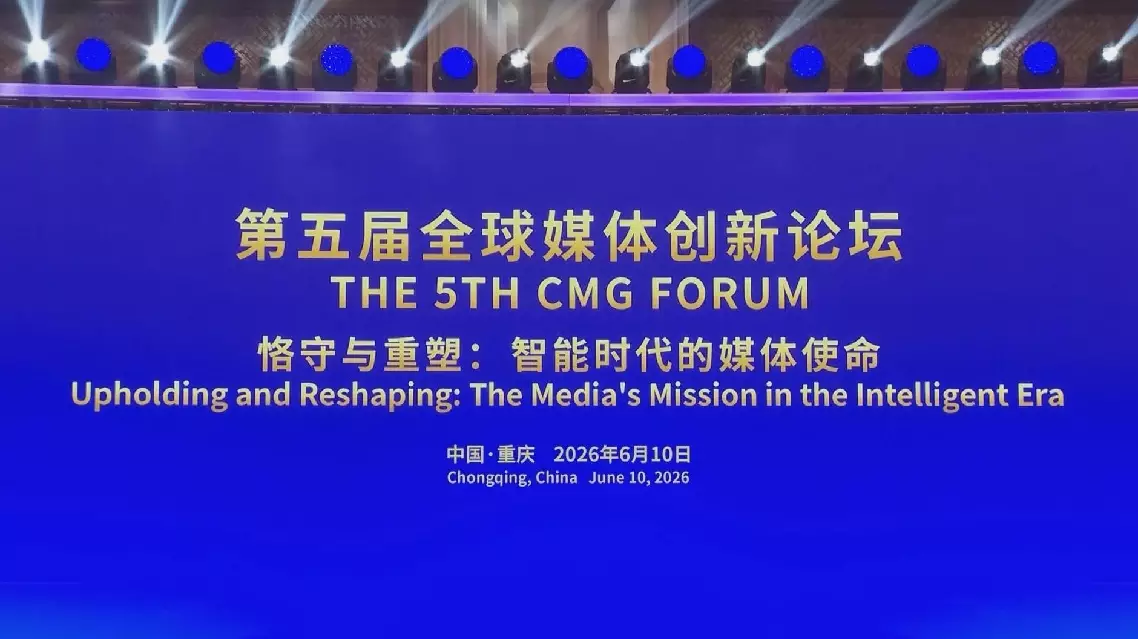
The Fifth Global Media Innovation Forum was held in southwest China's Chongqing Municipality on Wednesday, gathering hundreds of attendees to discuss key issues facing the media industry, including the profound impact of artificial intelligence.
Jointly hosted by the China Media Group (CMG) and the Chongqing Municipal People's Government, the forum was themed "Upholding and Reshaping: The Media's Mission in the Intelligent Era" and brought together around 300 representatives from government agencies, international organizations, media outlets, think tanks, and multinational companies. Participants noted that, guided by the spirit of Chinese President Xi Jinping's congratulatory letter to the first Global Media Innovation Forum in 2022, the event has since become an important platform for media organizations worldwide to deepen exchanges, share experiences, and promote mutual learning.
Speakers highlighted how a new wave of technological and industrial transformations, led primarily by artificial intelligence (AI), is reshaping production, lifestyles, education, and working practices.
China's "AI Plus" initiative -- which aims to promote the extensive and in-depth integration of AI across various fields -- has hailed for creating new opportunities and expanding the scope for cooperation between China and the rest of the world.
Attendees emphasized that AI is exerting a profound impact on the media landscape and public opinion ecosystem. They called for greater application of AI in journalism, cultural communication, and public services to accelerate the media transformation and push innovation.
Participants also stressed the importance of promoting the common values of humanity, building international consensus on global AI governance, and ensuring that digital and intelligent technologies remain people-centered and serve the public good.
They further advocated implementing the Global Civilization Initiative, which was proposed by President Xi, by creating more online platforms for cultural exchanges and mutual learning to strengthen people-to-people connectivity.
Global Media Innovation Forum held in Chongqing with focus on impact of AI