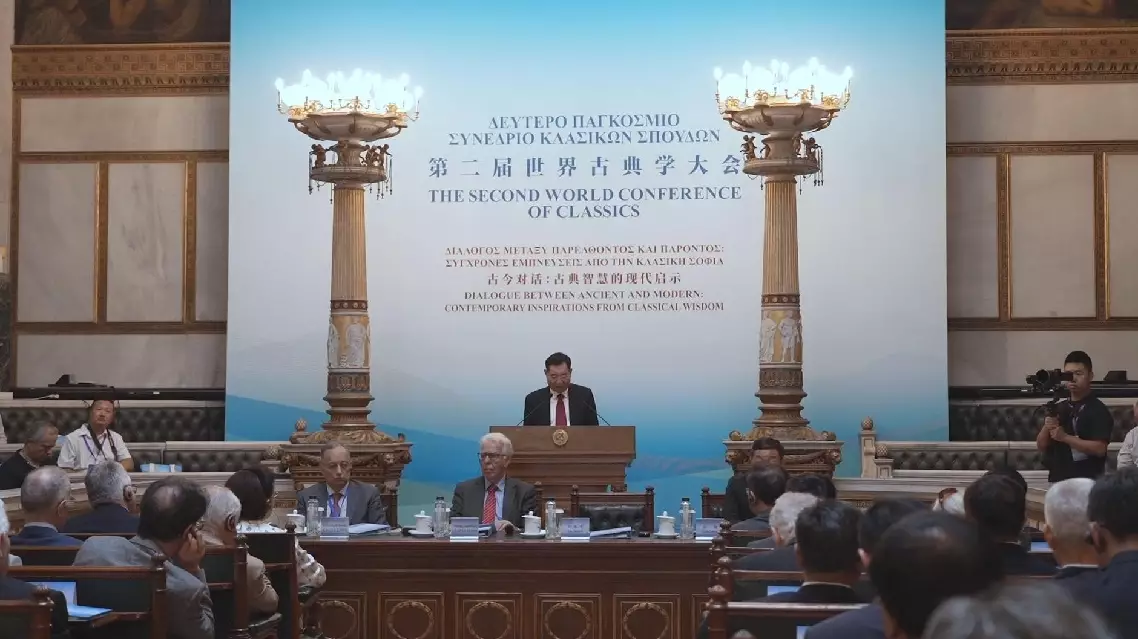
The Second World Conference of Classics drew over 200 participants in Athens on Tuesday, with delegates stressing the need to tap classical wisdom to confront modern challenges.
The two-day conference, themed "Dialogue Between Ancient and Modern: Contemporary Inspiration from Classical Wisdom," has brought together officials from Chinese and Greek institutions, experts and scholars in classical studies and related fields from around the world, as well as diplomats and media representatives based in Greece.
Participants noted that academic institutions, including the Chinese School of Classical Studies at Athens, have leveraged their respective strengths to promote the development of classical studies, contributing to mutual learning among civilizations and cultural exchanges.
They also highlighted that classical civilizations, with their profound humanistic heritage and enduring wisdom, have long provided intellectual inspiration and spiritual nourishment for the development of human society, while serving as an important driving force for national prosperity and progress.
"Classical studies are not relics of the past. They are a necessary investment in the future, because they provide the intellectual tools we need to address the complex challenges of our time," said Lina Mendoni, Greek culture minister.
"Through modern interpretations of humanity's ancient classics, we can awaken classical wisdom and guide the ship of human civilization as it cuts through the waves - advancing steadily toward a distant future," said Hu Heping, deputy head of Publicity Department of the Central Committee of the Communist Party of China (CPC).
Artificial intelligence (AI) emerged as one of the opening ceremony's strongest themes, with participants warning that technological progress must remain anchored in human values.
"In the face of AI, what should concern us most is whether our humanistic traditions can be preserved. We must not allow technology to become a runaway horse racing uncontrollably," said Gao Xiang, president of the Chinese Academy of Social Sciences
Since the inaugural World Conference of Classics was held in Beijing in November 2024, related departments and institutions of China and Greece have worked closely to implement the outcomes of the first conference and build networks to promote exchanges and dialogue in classical studies.
Participants at Athens classics conference urge ancient wisdom for modern challenges
Guests at events marking the second International Day for Dialogue Among Civilizations have spoken highly of the significance of the Global Civilization Initiative (GCI) and commended China's contribution to promoting dialogue among civilizations, a Foreign Ministry spokesman said on Wednesday.
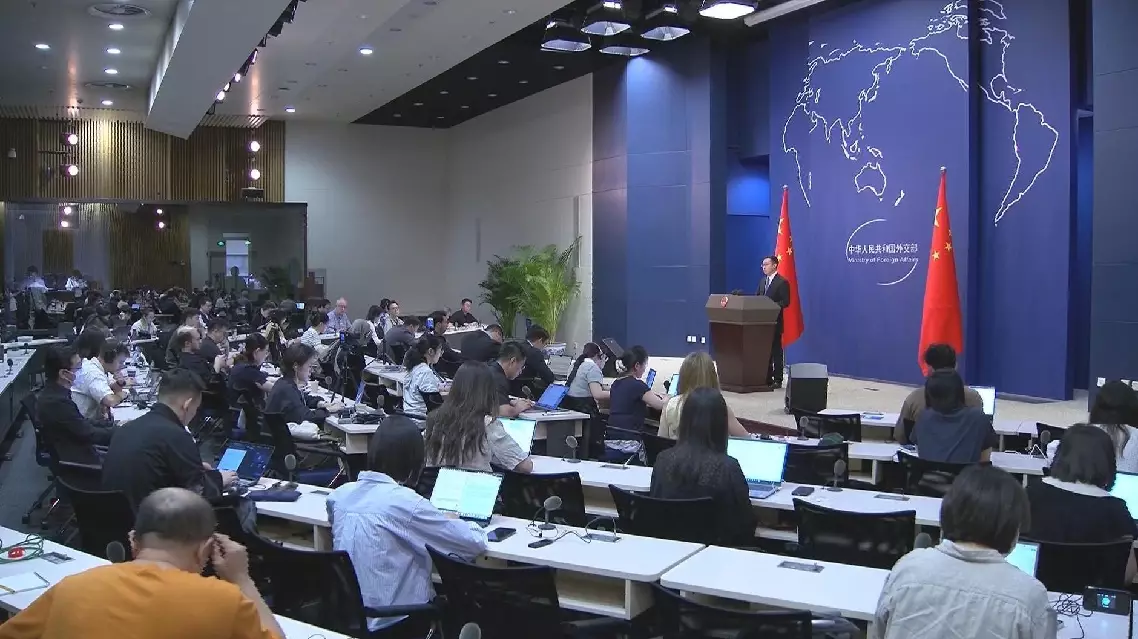
At a press conference in Beijing, spokesman Lin Jian briefed the reporters on the events held at the UN headquarters and in cities home to multiple UN entities to mark the second International Day for Dialogue among Civilizations, as well as on a report on dialogue among civilizations released by the China Institute of International Studies on the day.
"Three years ago, President Xi Jinping put forth the GCI, highlighting the need for civilizations to live together in harmony. Establishing the International Day for Dialogue Among Civilizations is an important step to implement the GCI. Today marks the second International Day for Dialogue Among Civilizations. As the initiator, China, together with the UN and other international organizations, held a variety of events across the globe," Lin said.
"Member of the Political Bureau of the Communist Party of China Central Committee and Minister of Foreign Affairs Wang Yi delivered a video address and proposed to facilitate dialogue among civilizations from four aspects: First, champion mutual respect and promote harmonious coexistence of civilizations; second, champion putting the people first and cement the foundation of exchanges among civilizations; third, champion both heritage and innovation to drive the progress of civilization; fourth, champion exchanges and mutual learning and improve mechanisms for dialogue among civilizations," said the spokesman.
"President of Colombia Gustavo Petro, UN Secretary-General Antonio Guterres, High Representative for the United Nations Alliance of Civilizations (UNAOC) Miguel Angel Moratinos, and heads of UN entities and other international organizations in cities including Geneva, Vienna, Nairobi, and Hague have voiced their support for the events and delivered remarks. Various parties have spoken highly of the significance of the GCI in the world and commended China's contribution to promoting dialogue among civilizations. They also call on the international community to strengthen solidarity and cooperation to promote peace and development through dialogue among civilizations," he said.
"To further review and summarize China's experience, practices and major achievements in facilitating global dialogue among civilizations, the China Institute of International Studies today released the report China's Actions for Advancing Global Civilization Dialogue, which systemically states China's concepts, policies and achievements in promoting dialogue among civilizations and also looks ahead to China's next steps in this regard. You are all welcome to read the report," Lin said.
"Joint efforts from the international community are needed to promote dialogue among civilizations. China will work with all parties to take the International Day for Dialogue Among Civilizations as an opportunity to draw wisdom through dialogue among civilizations to tackle global difficulties and embrace more partners in this regard so as to build a community with a shared future for humanity together," he said.
China's contribution to promoting dialogue among civilizations widely acclaimed: spokesman