Skip to Content Facebook Feature Image

Hungerford Properties Launches Seven Generations Capital With $75M Committed Capital for Indigenous Land Development Fund

Business

Hungerford Properties Launches Seven Generations Capital With $75M Committed Capital for Indigenous Land Development Fund
Business

Business

Hungerford Properties Launches Seven Generations Capital With $75M Committed Capital for Indigenous Land Development Fund

2026-06-10 18:00 Last Updated At:18:10

VANCOUVER, British Columbia--(BUSINESS WIRE)--Jun 10, 2026--

Hungerford Properties is announcing the public launch of Seven Generations Growth Fund (“The Fund”), with $75 million CAD to date in committed equity capital. The Fund operates under the Seven Generations Capital brand with the full backing of the Hungerford Properties’ platform.

This press release features multimedia. View the full release here: https://www.businesswire.com/news/home/20260610210762/en/

Similar to Hungerford Properties’ previous real estate value-add Funds, the Fund will leverage Hungerford Properties’ institutional expertise and core values to execute on diversified land developments, while targeting market-rate returns. The Fund’s investment strategy and platform are built to protect capital, de-risk opportunity, and responsibly generate long-term wealth for all stakeholders. Investments will benefit from distinct jurisdictional and legal advantages allowing for strong downside protection and outperformance.

The Fund is also committed to advancing financial inclusion for local partners, becoming a sustainable real assets leader, and ensuring community engagement is a top priority.

The Fund is projected to capitalize 10 to 15 projects, representing thousands of new housing units and hundreds of millions of dollars in economic development. Recognizing that housing remains a critical national priority, the Fund will focus on investing in workforce and market housing, mixed-use projects, and light industrial developments across major urban centers in Canada.

"Our decades of experience in diversified real estate have prepared us to execute this strategy at the highest institutional level," says Michael Hungerford, Partner at Hungerford Properties and Seven Generations Capital. "By combining our proven development platform with a complimentary focus on Indigenous partnership, we provide the competency and capacity required to deliver market-rate risk-adjusted returns while addressing critical needs in housing and industrial infrastructure across Canada. We are proud to bring this investment vehicle to the market."

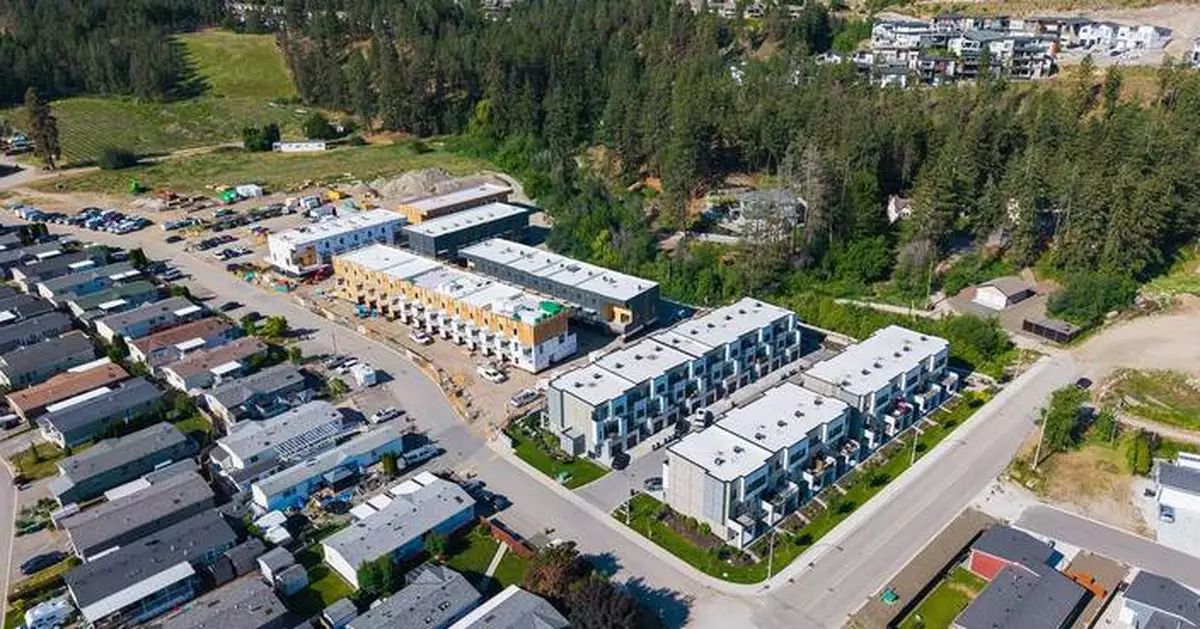
“We have built strong relationships with communities across Canada and within the Fund’s target markets, and we remain deeply committed to nurturing and strengthening these connections over time,” says Andrew Hungerford, Partner at Hungerford Properties and Seven Generations Capital. “Our past projects include a partnership between Seven Generations Capital and Westbank’s First Nation’s Ntityix Development Corporation. The partnership is committed to providing necessary housing opportunities in the Okanagan market for the long-term, and with aligned values in sustainability, we believe this partnership will continue to bring value to our Fund, our partner community and their lands.”

Commitments to date are from endowments, foundations, pensions, fund of funds, economic development corps, trusts and family offices, and include groups such as Royal Bank of Canada (RBC) and the Victoria Foundation.

“Our investment into Seven Generations Capital is rooted in the strength of its platform — decades of institutional real estate experience, purpose-built to bridge mainstream capital with Indigenous land partnerships,” says Barrie Laver, Managing Director, Venture Capital and Private Equity, RBC. “It’s an investment that reflects RBC’s long-term commitment toward reconciliation, guided by RBC Origins and our Reconciliation Action Plan, and part of the bank’s work to co-create meaningful change with Indigenous communities. More importantly, it’s a step forward for Indigenous economic reconciliation, which is the foundation for a future we can all be proud of."

The Seven Generations Growth Fund remains open for additional commitments until December 2026. The Fund invites accredited investors to participate in this unique investment opportunity. Introduction Capital is the Fund’s Exempt Market Dealer.

Seven Generations Capital

Seven Generations Capital is an institutionally backed, private real estate and investment firm. Guided by the Gwich’in ancestry and values of our founders, we draw on Hungerford Properties’ decades of success in developing, managing, and building industrial, self-storage, residential, office, and retail properties across Canada.

Seven Generations Capital supports local communities’ path to self-determination through financial inclusion and urban land development, focusing on environmental and social values alignment, while respecting Indigenous knowledge and stewardship.

Hungerford Properties

Hungerford Properties is an established, award-winning, Vancouver-based private real estate company with decades of success in investing, developing and managing industrial, self-storage, residential, office and retail properties across Canada. Our vertically integrated platform serves as our competitive edge, allowing our team to provide value across all stages of the real estate lifecycle, offering in-house investment, asset management, financing, and property management services. We approach real estate with rigorous systems, proven processes, and operational excellence to get the best results. Our values driven culture is committed to seeking long-lasting collaborative relationships with our partners, by communicating openly, being accountable and transparent, and seeking win-wins.

Səkʷíw development on Westbank First Nation.


Səkʷíw development on Westbank First Nation.

PORTLAND, Maine (AP) — This election year is déjà vu for Sen. Susan Collins — the Maine Republican is running for reelection as Democrats pin their hopes on a new candidate to defeat her. Last time, it was state lawmaker Sara Gideon. This time, it's combat veteran and oyster farmer Graham Platner.

But Collins has proven to be a hard target for Democrats over the years — even for candidates without the baggage of Platner, who has faced criticism for his relationships with women, inflammatory online posts and a previous tattoo recognized as a Nazi symbol. Collins is seeking her sixth term with sky-high name recognition, a record-breaking run of consecutive Senate votes and a history of bringing back federal funding for her state for years.

She is also the rare Republican who sometimes can boost her own popularity back home by keeping her distance from President Donald Trump, and she has perfected that delicate dance even as his tightening grip on the party has cost two of her Senate Republican colleagues their reelection.

Sens. John Cornyn of Texas and Bill Cassidy of Louisiana lost their primaries when facing Trump-endorsed opponents. But despite the president's complaints about Collins, he did not campaign against her. Years of practice have made her adept at staying close — but not too close — to the president when it is politically advantageous, and moving away when showing an independent streak is helpful.

“She’s shown time and time again where her state’s electorate is. She understands what’s too far, she understands where she needs to be,” said political consultant Matt Mackowiak, who worked for Cornyn's failed reelection campaign. Trump endorsed Cornyn's opponent, Texas Attorney General Ken Paxton.

The Democrats need to flip four seats to take control of the Senate in November and hope that Trump's falling approval ratings and the war in Iran — as well as its subsequent effect on oil prices and the economy — could buoy their chances. Maine is among the top targets, along with Alaska, Ohio and North Carolina.

Platner wants to make the case that Collins isn't as independent of Trump as her reputation suggests — repeatedly noting that she allowed his Supreme Court nominations to go through, which in 2022 led to the overturning of Roe v. Wade, a landmark 1973 decision that legalized abortion, among other major issues.

"Susan Collins may have started her career decades ago in Washington with good intentions, but she has become just as spineless and corrupt as the establishment she now serves," Platner said at a victory party on Tuesday.

Platner supporters are ready for change, said John Keenan, of Sullivan, Maine.

“I think Maine has grown tired of the same old system,” he said. “And putting youth into the campaign, with new instead of a rubber stamp, is very refreshing.”

Even as she faces Platner in November, Collins may have to stay wary of Trump. The president has spent years singling her out for daring to occasionally defy him on some issues.

However, he's refrained from doing so more recently — especially as Collins failed to draw a credible challenger and cruised to a Republican primary victory.

The White House declined to comment. Political advisers close to Trump, however, said the president understands how critical it is that Republicans maintain control of Congress after November, which requires accommodating Collins. Trump understands the need to avoid a Republican wipeout like 2018's “blue wave” midterms that saw Democrats flip the House and derail much of the last two years of his first-term plans.

“Senator Susan Collins represents the people of Maine first and foremost and has proven herself to be a dedicated public servant," said Republican National Committee spokesperson Kristen Cianci in a statement.

Collins spokesperson Blake Kernen said the senator “has worked with five different Presidents throughout her Senate tenure, and has never agreed with any of them on every issue.”

“When she agrees with an effort, she will support it; when she disagrees, she does not hesitate to speak up for what she believes is the right outcome for Maine and for America,” Kernen said in a statement.

That didn't work out for some Republican senators.

Cornyn was among his party's top voices, rising through the ranks after joining the Senate in 2002. Paxton trounced him in a runoff race days after Trump endorsed the attorney general.

In office since 2015, Cassidy voted to convict Trump during his impeachment trial after the U.S. Capitol siege on Jan. 6, 2021. He lost his primary to Trump-endorsed state Rep. Julia Letlow.

Maine figures to be a more competitive race in November — as evidenced by Trump recently refraining from singling out Collins. That's despite her voting last week with Democrats to block the nearly $1.8 billion fund the president wanted to create to benefit allies that he claims were unfairly targeted by law enforcement.

“She’s always down in the polls and she survives,” Trump conceded when asked about Collins in an interview with the New York Post last week.

Collins defeated Gideon, the Maine House speaker, by almost 9 points in 2020, the same year that Biden beat Trump by a similar margin in the state.

Mackowiak said "there’s just no pathway to a MAGA senator from Maine.”

“It does appear that the Trump political operation is soberly analyzing the electoral environment in Maine and really kind of follows her lead as it relates to that state and that race, particularly this cycle,” he said.

Chuck Ellis, a Republican from Westbrook who runs a digital marketing company, said Collins' reluctance to move in lockstep with Trump can be a plus.

Although there are some “hard-line” voters who may disapprove, Ellis said, "ultimately a lot of your conservatives, your Republicans, are people who are a bit more pragmatic.”

After Collins opposed the White House’s signature tax cut and spending package last year, and voted against a proposal to claw back $9 billion in foreign aid and public media funding, the president complained about her on social media.

“Republicans, when in doubt, vote the exact opposite of Senator Susan Collins," he wrote.

Then, in January, Trump lashed out at the “stupidity” of Collins and four other Senate Republicans who joined Democrats to start a debate over restricting the president’s use of force in Venezuela.

She later received a profanity-laced call from Trump.

As chair of the powerful Senate Appropriations Committee, Collins last week cast her 10,000th Senate vote in a row, setting a record.

“She has been able to do and show that ‘I am bringing money and resources from the federal government to Maine to help Maine,’” Ellis said.

The president is unlikely to travel to Maine ahead of November despite visiting other states with key Senate races, like Iowa and Michigan. He could even campaign personally for Paxton.

Vice President JD Vance has been to Maine, where he promoted his anti-fraud task force. Collins didn’t attend Vance’s speech in Bangor last month where he acknowledged the senator's distance from the Trump administration.

“If she was as partisan as I sometimes wish that she was,” Vance said, "she would not be a good fit for the people of Maine.”

This story has been corrected to show the spelling of Collins’ spokesperson’s surname is Kernen, not Kernan.

Weissert reported from Washington.

Sen. Susan Collins, R-Maine, chair of the Senate Appropriations Committee, heads to the chamber before votes on the immigration enforcement funding package, at the Capitol in Washington, Thursday, June 4, 2026. (AP Photo/J. Scott Applewhite)

Sen. Susan Collins, R-Maine, chair of the Senate Appropriations Committee, heads to the chamber before votes on the immigration enforcement funding package, at the Capitol in Washington, Thursday, June 4, 2026. (AP Photo/J. Scott Applewhite)

Recommended Articles