The United Nations (UN) is pressing Israel to reopen more Gaza crossings, warning that reliance on a single entry point has left humanitarian aid bottlenecked despite the limited reopening of Kerem Shalom.
Israel on Tuesday reopened Kerem Shalom, the enclave’s sole cargo crossing, after a two-day closure reportedly triggered by an Iranian missile attack, UN spokesman Farhan Haq said during a press conference at the UN headquarters.
The UN Office for the Coordination of Humanitarian Affairs confirmed the reopening, noting Kerem Shalom remains Gaza's only entry point for approved relief cargo.
Haq stressed that humanitarian needs remain urgent, while Secretary-General Antonio Guterres reiterated his call for Israel to reopen all crossings to ensure safe and unhindered aid delivery.
"The Office for the Coordination of Humanitarian Affairs reports that today Israeli authorities reopened the Kerem Shalom crossing, which remains the only crossing point for approved cargo to enter Gaza. Meanwhile, the UN and our humanitarian partners continue to respond to people's needs, despite bureaucratic hurdles and funding shortfalls, to maintain the response and reach as many vulnerable people as possible," said Haq.
UN officials say the reopening does little to ease the crisis, with Guterres warning that only full access across Gaza’s borders can meet urgent humanitarian needs.
"Mr. Guterres is also deeply concerned by the decision by Israel to close crossings into Gaza. He reiterates his call for the immediate reopening of all crossings to ensure the rapid, safe and unhindered passage of humanitarian assistance at scale throughout Gaza," Haq said.

UN presses Israel to reopen more Gaza crossings as aid bottleneck deepens

UN presses Israel to reopen more Gaza crossings as aid bottleneck deepens

UN presses Israel to reopen more Gaza crossings as aid bottleneck deepens
The summer animation box office boom has fueled creative industries and tourism consumption in Shanghai as movie goers swarm into cinemas and theme parks for All Wishes Come True and Toy Story 5.
Inspired by the legend of the Eight Immortals, the Chinese animated film All Wishes Come True has become a summer box-office hit, with the box office earning exceeding 600 million yuan (about 88.6 million U.S. dollars) in less than eight days after its release on July 18.
The story follows eight ordinary people who meet by chance and embark on an unexpected journey. Through a series of challenges, they gradually discover their strengths and eventually become the Eight Immortals known to generations of Chinese people.
The film mixes comedy, adventure and traditional Chinese visual elements and offers a new interpretation of a story that has been told for generations.
"It's fascinating and moving. The Eight Immortals crossing the sea I used to know about impressed me that the Eight Immortals might be really deities, but now I understand they seem to be actually mortals," said viewer at the UME cinema in Shanghai Xintiandi Plaza.
With innovative storytelling and high-quality production, the film has attracted a significant number of middle-aged and elderly viewers among the audience.
"Half of our six screening rooms are dedicated to All Wishes Come True. The overall production quality of domestic animations has improved dramatically. The animations are no longer just for young children, they appeal to all age groups now," said Lu Ying, assistant manager of the cinema.
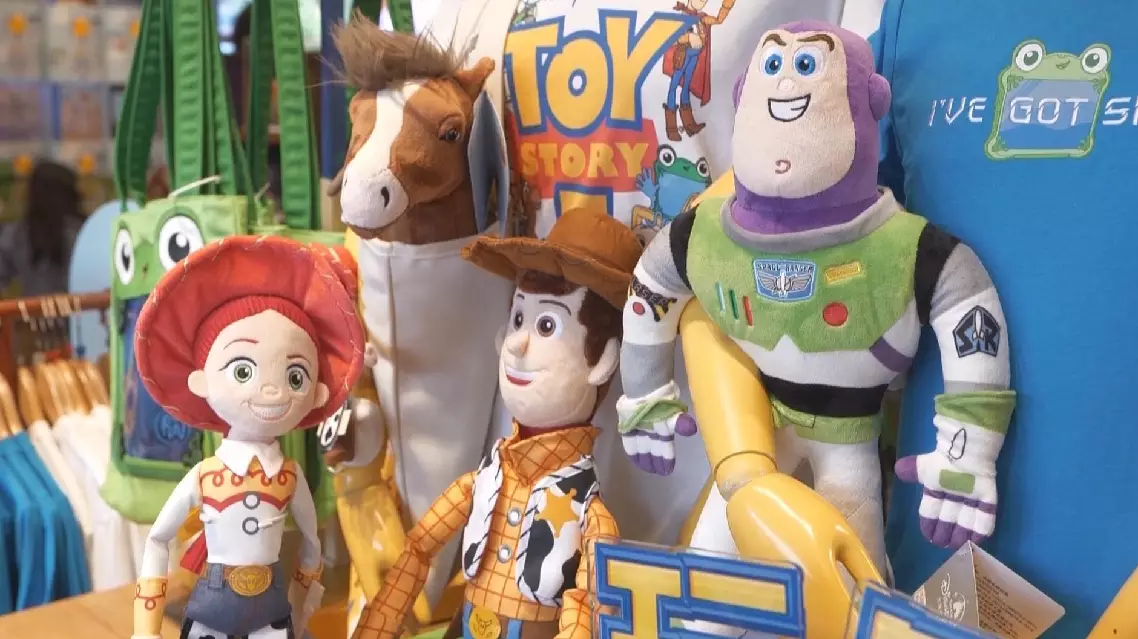
At the cinema's retail section, many moviegoers purchase film-related souvenirs, boosting the cinema's revenue.
"On a daily basis, revenue from these merchandise sales now accounts for nearly 17 to 18 percent of our daily box office intake," said Zhao Heqian, duty manager of the cinema.
Beyond physical merchandise, animation IPs are extending their reach into tourism through cross-sector collaborations.
At Shanghai Disneyland's Toy Story Land, many visitors travel here specifically after watching the movie Toy Story 5 to immerse themselves in the world of the silver screen characters.
"I'm really drawn to the female image of Jessie, so I tried to imitate her today. My friend cosplays Woody here," said a visitor at Shanghai Disneyland.
The film, also released during the summer slot, has grossed over 280 million yuan in the Chinese mainland as of late July.
Summer animation box office boom fuels creativity, tourism consumption