Emergency rescue and relief work is underway on Sunday in Huidong County, south China's Guangdong Province, after Typhoon Noul battered its coastal areas with heavy damage, incurring widespread power cuts, blocked roads, and uprooted trees.
Noul, the 12th typhoon of the year, landed in Huidong, a costal county in Huizhou City, at 03:50 on Sunday. Nearly 10 hours later, rough seas and strong winds continue to lash the coast, with ever heavier rains.
Sever damages have been reported across the county in the wake of the typhoon. By 11:00, statistics showed that power supply to some 100,000 households had been cut along the coast and riversides, though repair teams had already reconnected over half of them. The typhoon also disrupted traffic on more than 30 roads and felled more than 5,000 trees.
A coastal street in Huidong bore the full force of the typhoon, with debris from shattered buildings littering the road and several blockages reported in the morning. Following urgent cleanup operations, the street has been largely restored to traffic.
In response to the typhoon, Huidong has deployed over 5,000 rescuers, including firefighters, emergency responders, and militiamen, who are now working at various emergency spots. The county has also set up more than 380 shelters to accommodate nearly 70,000 evacuees.
More than 200,000 people across Huizhou City have been relocated so far.
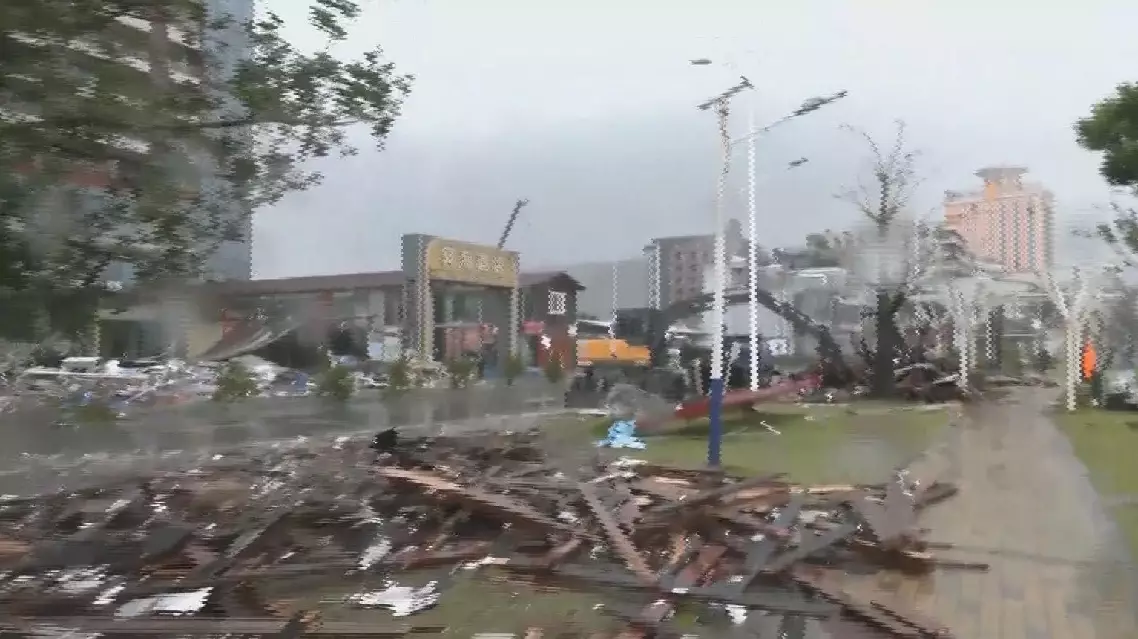
Rescue from Typhoon Noul damage underway in Huidong
Weihai, a coastal city in eastern China, is experiencing a summer paddleboarding and surfing boom that has packed its beaches and fueled rising demand for water sports gear in domestic and overseas markets.
The city has built a complete industrial ecosystem covering raw material research and development, mold design, assembly manufacturing, and cross-border sales. In the first five months of this year, Weihai's exports of water sports gear reached 950 million yuan (about 140 million U.S. dollars), up 20.4 percent year on year. Among these, wakeboards and surfboards accounted for more than 70 percent of exports, with growth accelerating to 38.6 percent.
Local manufacturers, once focused on original equipment manufacturing (OEM) for foreign brands, are now racing to build their own labels, supported by the city's mature industrial supply chain.
Weihai's sea surface is dotted with colorful paddleboards as clubs organize training camps for young enthusiasts, with many summer camps fully booked by late June and daily participation topping 100.
"Most of my classmates know how to paddleboard, so I think it's quite a popular sport," said Xu Ziqing, a young paddleboarding trainee.
Behind the seaside bustle, Weihai's water sports equipment manufacturing sector is operating at full capacity. At a sportswear company, workers are racing to produce inflatable paddleboards bound for European and American markets. In the first half of this year, the company shipped more than 90,000 units, marking a 2.5-fold year-on-year increase.
"When we first entered the industry, we started doing OEM for others. After accumulating enough experience, we began developing our own clients and launching our own brands," said said Wang Yongfeng, general manager of Hetong (Weihai) Sports Goods Co.
Just a few kilometers apart, Weihai firms can source every production component, enabling new water sports products to move from blueprint to sample in only days thanks to the city's mature industrial ecosystem.
"So far, we have long-term partnerships with 40 to 50 supporting suppliers. Whatever accessories we need for new product development, we can source them from the supply chain very quickly," said Wang.
The consumer boom is quickly feeding into the supply chain, with demand rippling upstream to component makers. One firm that once specialized in parts for automobiles and trains has pivoted to water sports, now producing carbon fiber paddles, hydrofoils, and other key components for paddleboard manufacturers. "Our production capacity in 2026 has roughly tripled or quadrupled compared to before. Water sports products now account for 55 to 60 percent of our total carbon fiber sales," said Liu Zhiqing, deputy general manager of Weihai Heliyuan Carbon Fiber Technology Co.
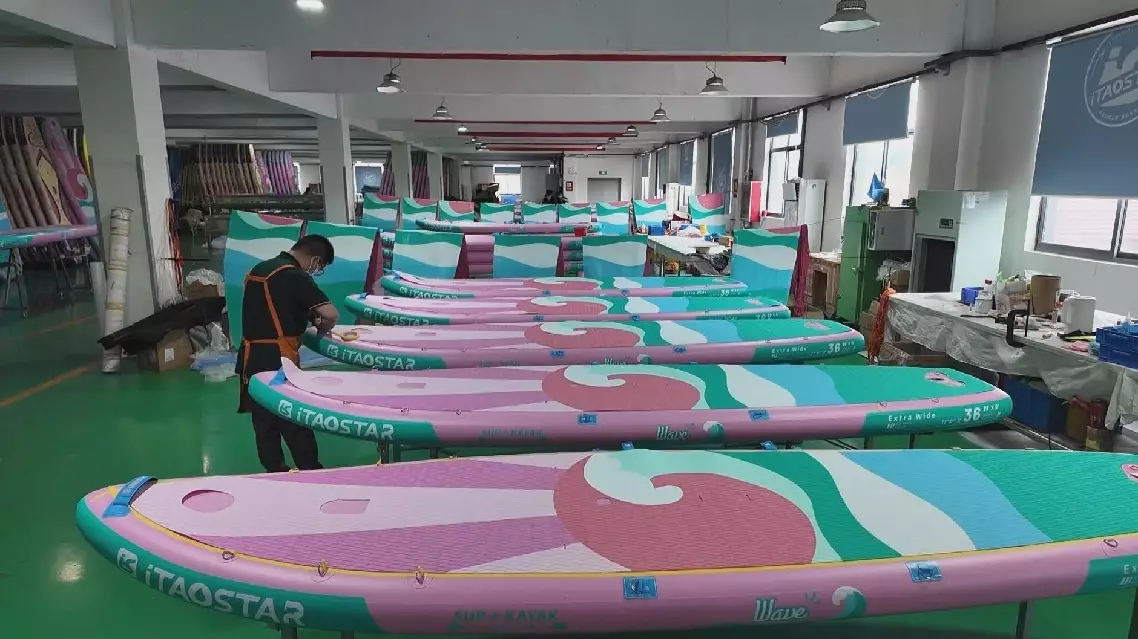
Weihai sees water sports boom as paddleboarding demand lifts exports