The Pentagon’s revision to its list of Christian religions this week has reignited a nearly 200-year-old debate: Is The Church of Jesus Christ of Latter-day Saints a Christian denomination?
Most Latter-day Saints do see themselves as Christians. But there are many prominent Christian clergy and scholars who disagree, citing core differences in how they view God and the Trinity and revere a scripture that is not part of the two-testament Christian Bible.
Utah's U.S. Senators Mike Lee and John Curtis, both Republicans and Latter-day Saints, challenged the Pentagon’s exclusion of their faith from its list of Christian religions. It was part of the Department of Defense’s recent effort to significantly pare down a list of more than 200 religious affiliations that troops could choose from, deleting categories such as atheists, Unitarian Universalists, pagans and Wiccans.
“Latter-day Saints are among the most patriotic, service-oriented individuals in our country,” Curtis posted on X in defense of his faith. “They are also unequivocally Christian — just look at who is in the name of the Church.”
He also said in his post that it is “unacceptable” for the government to characterize a faith in a way that contradicts how the religion identifies itself — a sentiment echoed widely in the social media blowback.
The Pentagon responded on Monday by removing the Christian label from 20 other traditions, including Catholic, Lutheran and Pentecostal, and stayed away from labeling Latter-day Saints as Christian. The department also issued a statement saying that the new rubric is not intended to “make any claims on the legitimacy of any faith or religion’s belief,” but to help chaplains do their jobs and structure resources quickly and efficiently.
The Church of Jesus Christ of Latter-day Saints, widely known as the Mormon church, has nearly 18 million members worldwide with the highest concentration in Utah. The church has a long history of military service; it emphasizes patriotism and chaplaincy support.
In a social media post, Lee said: “My church membership is inextricably intertwined with my Christianity, as it is for 17 million other Latter-day Saints. Regardless of what the Pentagon thinks.”
The church’s website states that it is a “Christian Church, but is neither Catholic nor Protestant.”
“Rather, it is a restoration of the Church of Jesus Christ as originally established by the Savior in the New Testament of the Bible,” the site further explains. “Jesus Christ is central to the lives of Church members. They seek to follow his example by being baptized, praying in His holy name, partaking of the sacrament, doing good to others and bearing witness of Him through both word and deed. The only way to salvation is through faith in Jesus Christ.”
Yet the debate about whether Latter-day Saints are Christians goes back nearly 200 years to the days of the church’s founding.
Matthew Bowman, chair of Mormon studies at Claremont Graduate University in Southern California, said the primary difference between major Christian denominations and Latter-day Saints lies in how the nature of God is defined, and their view of the Trinity, the spiritual relationship between God, Jesus and the Holy Spirit. Most Christian faiths believe God is spirit, while founders of the Latter-day Saints believed that God was a human being who achieved Godhood, he said.
Latter-day Saints also reject the Nicene Creed, which emphasizes the doctrine of the Trinity as one divine being.
“They believe that while the three have a relationship, they are distinct beings,” Bowman said.
The Catholic Church has long held that Latter-day Saints are not Christian. Most recently in 2012, the Vatican stated that even if the Latter-day Saint baptismal rite refers to the Trinity, the church’s beliefs about the identities of the three are so different from Catholic and mainline Christian beliefs that the rite cannot be regarded as a Christian baptism.
This debate has raged on in U.S. politics over the decades, resulting in tensions between evangelical Christians and Latter-day Saints who have long considered themselves members of the religious right. Like evangelicals, most Latter-day Saints hold conservative views on topics such as abortion and LGBTQ+ issues.
Bowman said the question of Latter-day Saints' Christian identity exploded during Mitt Romney’s 2012 presidential campaign.
“At the time — and often after that — there continues to be a sense of surprise among Latter-day Saints that the evangelicals didn’t consider them Christian and among evangelicals when they learn that the Latter-day Saints in fact consider themselves Christian,” he said.
The rise of Donald Trump has created a feeling among Latter-day Saints that their old alliance with evangelical Christians is shakier than ever, especially with younger Latter-day Saints viewing evangelicals as a hostile group, Bowman said.
“In the past five years or so, there is a growing push among evangelicals to create a muscular, masculine Christianity, more vocal on doctrine, with some calling (Mormons) heretics,” he said.
Philip McLemore, who served as a Latter-day Saint chaplain in the Air Force from 1984 to 2005, said he and others felt discriminated against then, and he was passed up for promotions because of his faith.
“That mostly came from other Christian chaplains and supervisors who believed Mormon chaplains were not Christian,” he said. “They also felt the same way about Christian Scientists.”
McLemore said some of the other Christian chaplains told him they feared that Latter-day Saint chaplains were using the military to proselytize and convert. But he said he could see why other Christians were suspicious of Latter-day Saints.
“Mormonism doesn’t fit comfortably into most classic Christianity mostly because of the founders’ claims of exclusive truth and authority that can be offensive to some,” he said. “Joseph Smith’s first vision — a foundational event for the church — was one of Jesus telling him that all the other churches are false and their creeds are abominations.”
Overall, McLemore does not believe denomination matters much in the military.
“In my experience, service members would not know what your denomination was, and they didn’t care,” he said. “They didn’t consult chaplains on matters of religion. They needed chaplains for personal problems and issues with work, mental health and marriage.”
AP reporters Konstantin Toropin and Tiffany Stanley contributed to this report.
Associated Press religion coverage receives support through the AP’s collaboration with The Conversation US, with funding from Lilly Endowment Inc. The AP is solely responsible for this content.
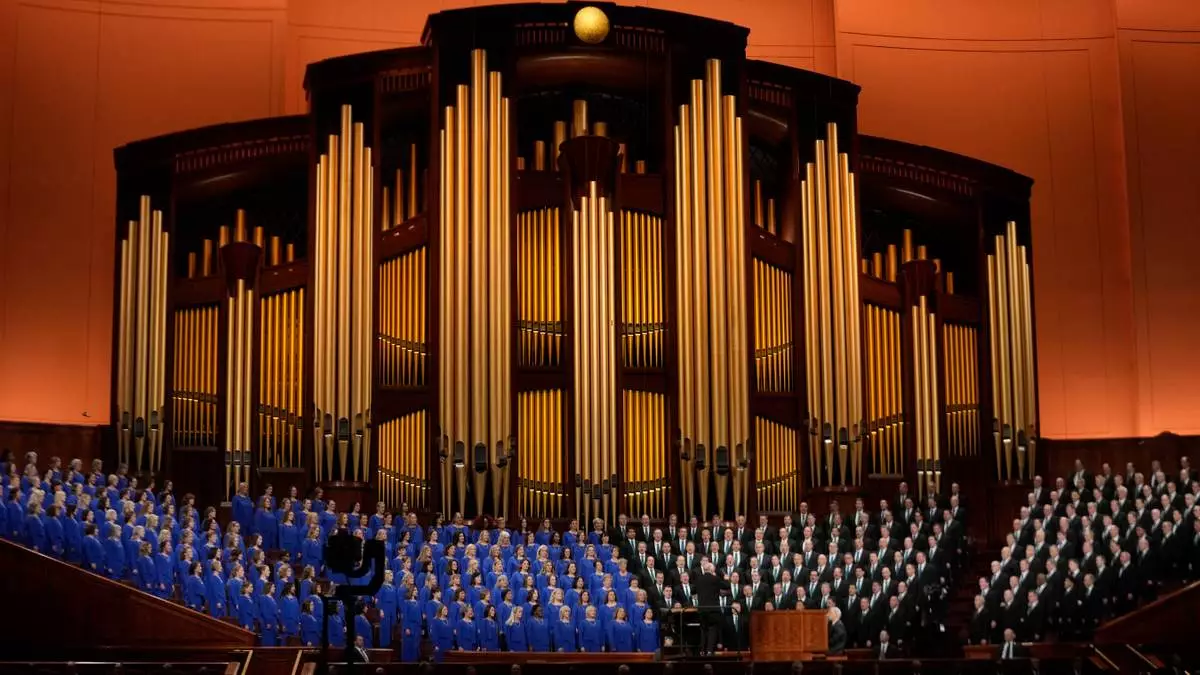
FILE - Members of the Tabernacle Choir at Temple Square perform during the twice-annual conference of the Church of Jesus Christ of Latter-day Saints, Sunday, April 7, 2024, in Salt Lake City. (AP Photo/Rick Bowmer,File)
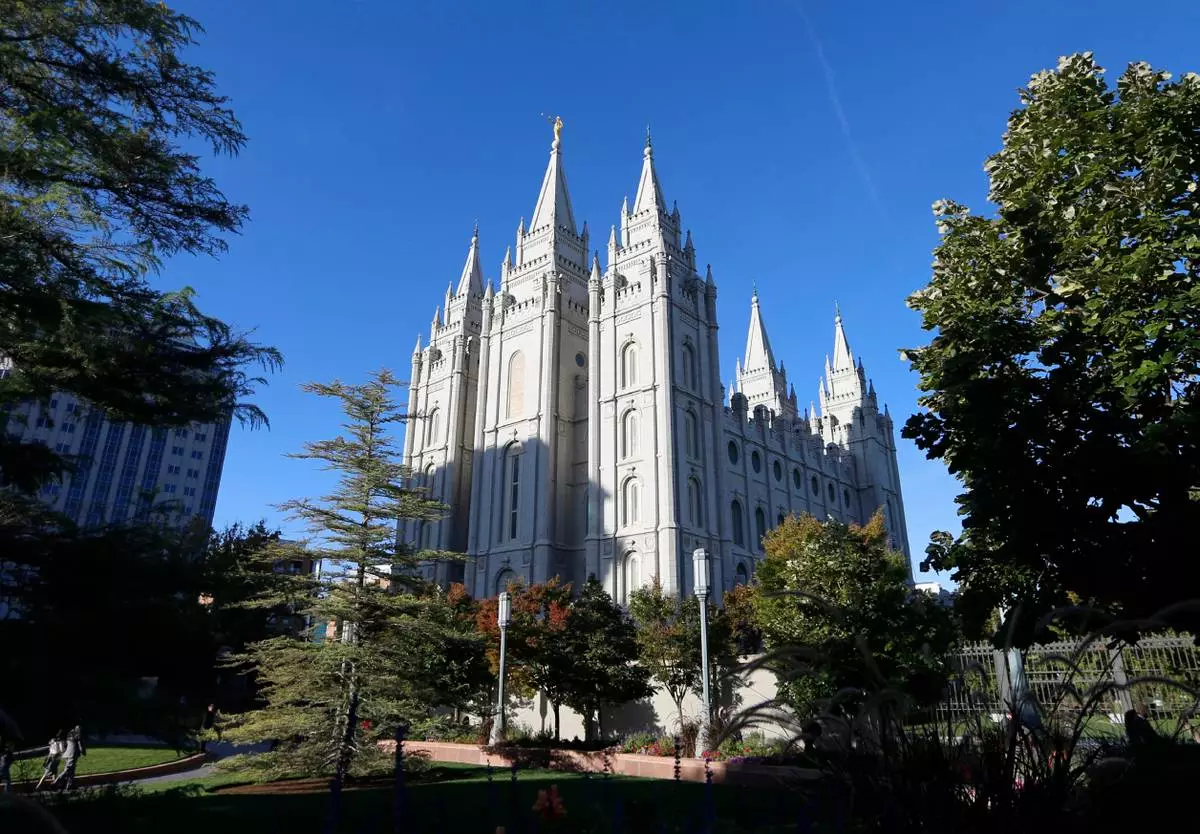
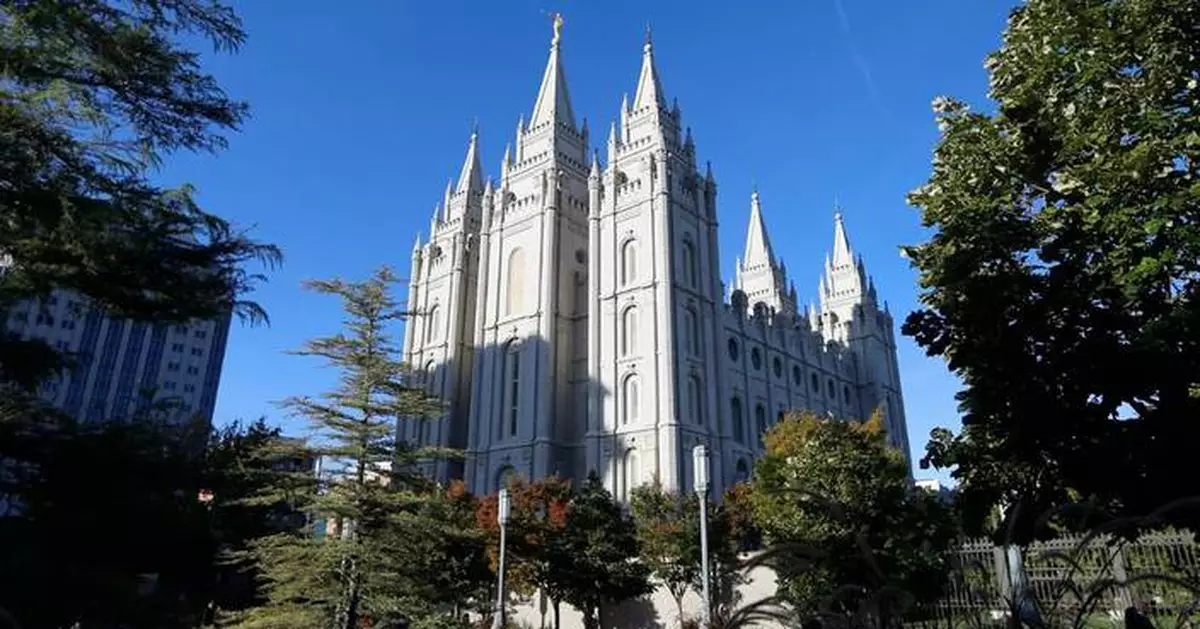
FILE - The Salt Lake Temple stands at Temple Square in Salt Lake City, Oct. 5, 2019. (AP Photo/Rick Bowmer, File)

DUBAI, United Arab Emirates (AP) — U.S. President Donald Trump said Wednesday that Iran is taking “too long to negotiate a deal” and that “now they will have to pay the price.”
Trump made the comment on his Truth Social platform.
It wasn’t clear what exactly that would mean for Tehran. It came after the countries exchanged fire earlier Wednesday.
Trump wrote: “They’ve taken too long to negotiate a deal that would have been great for them, now they will have to pay the price!!!”
THIS IS A BREAKING NEWS UPDATE. AP’s earlier story follows below.
DUBAI, United Arab Emirates (AP) — The United States launched airstrikes early Wednesday against Iran after blaming Tehran for the crash of an American attack helicopter, and Iran fired back at countries in the region — another escalation that threatened to derail efforts to end the war.
Bahrain, Kuwait and Jordan — all of which host U.S. troops — came under Iranian fire. It was the second time this week that back-and-forth strikes have tested the ceasefire after Iran and Israel targeted each other on Monday, and it again raised the question of how much pressure the deal can take before it cracks.
While U.S. President Donald Trump has insisted that negotiations with Iran to end the war are making progress, he has repeatedly vacillated between expressing such optimism and warning that he was ready to return to all-out war. Iran, meanwhile, has proved resilient despite having faced weeks of heavy bombing, betting that its ability to effectively close the Strait of Hormuz — a crucial passageway for the world’s oil and natural gas — gives it a strong bargaining chip.
Both countries seem to be looking for a way to end the conflict — if they can manage to sell it as a win at home. But Israeli Prime Minister Benjamin Netanyahu appears intent on pursuing much more difficult goals: the collapse of Iran’s theocratic government, the elimination of its nuclear program, and the destruction of the Iranian-allied Hezbollah militant group in Lebanon. That will make compromise much harder.
Since the U.S. and Israel started the war with attacks on Iran on Feb. 28, the conflict has shaken the global economy, driven up energy prices around the world, and made many basics, including food, more expensive. Brent crude oil, the international standard, was at more than $91 a barrel on Wednesday, up more than 25% since the start of the war.
In the latest strikes, U.S. fighter jets targeted “air defense, ground control stations, and surveillance radar sites,” the military’s Central Command said. Iran acknowledged strikes around Bandar Abbas and Qeshm Island, but gave no details on the damage.
“The operation was a proportional response to recent attacks on U.S. forces and international commercial ships transiting regional waters,” Central Command said.
Iran’s top diplomat vowed that there would be a response, and Tehran later claimed attacks in Kuwait, Bahrain and Jordan.
Jordan said it shot down five incoming missiles, which Iran said targeted the Muwaffaq Salti Air Base. The base has hosted American F-35 fighter jets and other aircraft.
Jordan’s state-run Petra news agency carried a military statement saying there were no injuries and that explosives experts examined the debris from the interceptions.
Bahrain and Kuwait said they intercepted incoming fire, without elaborating.
Iranian Foreign Minister Abbas Araghchi condemned the American attacks as a violation of Iranian sovereignty in calls with his counterparts from Turkey and Saudi Arabia “and emphasized the inherent right of self-defense, including reciprocal action,” according to a post on his office's Telegram channel.
Foreign Ministry spokesperson Esmail Baghaei said in televised comments Wednesday that in light of the new attacks, Iran would review its stance on negotiations to end the war.
The exchanges of fire came a day after a U.S. Army attack helicopter crashed near the Strait of Hormuz after colliding with an Iranian drone, according to a U.S. official, who spoke on condition of anonymity to discuss an ongoing investigation. It wasn’t clear whether the collision was intentional.
A drone boat rescued both of the helicopter’s aviators, and Trump said they were uninjured.
Guards aboard a cargo ship off the coast of Yemen in the Gulf of Aden exchanged fire with gunmen in a small boat and repelled their attack, the British military’s United Kingdom Maritime Trade Operations center said.
No group immediately claimed responsibility. Yemen’s Iran-backed Houthi rebels have said they will resume their attacks against Israel-affiliated ships in the Red Sea. Somali pirates have also become more active in the region.
The UKMTO later reported a fire in the engine room of a tanker in the Gulf of Oman, near the Strait of Hormuz, saying one person had been hurt and two others aboard were missing. It wasn’t immediately clear what caused the fire.
Before he accused Iran of downing the U.S. helicopter, Trump expressed renewed optimism over negotiations with Iran, but didn’t say why there was reason for hope.
While Trump, wary of high gas prices and upcoming congressional elections in November, seems to be looking for a quick win, he is also making demands that will be tough for Iran to swallow.
The U.S. wants to see Iran give up its stockpile of highly enriched uranium. While Iran insists its nuclear program is peaceful, that uranium is a short, technical step from weapons-grade levels.
Iran is refusing to give up the uranium and demanding relief from sanctions. It also wants the release of frozen assets even before a final agreement is in place, something rejected by Trump.
It's not clear how those differences can be bridged — and Trump has repeatedly threatened to walk away from the talks. On his Truth Social platform overnight he seemed to be warning again that he was ready to return to all-out war, posting a clip from the American TV series “The West Wing” with actor Martin Sheen as president bellowing: “We don’t come back with a proportional response, we come back with total disaster!”
Meanwhile, Iran has continued to insist that any deal to end the war must also end fighting between its ally Hezbollah and Israel. Instead, Israel has intensified its military campaign against the militant group.
Israel's military said on Wednesday it launched multiple strikes in southern Lebanon over the past day, targeting Hezbollah infrastructure.
An airstrike on a village east of Tyre killed at least six people, Lebanon's state-run National News Agency reported.
Associated Press writers David Rising in Bangkok; Bassem Mroue in Beirut; Michelle L. Price in New York; and Will Weissert in Washington contributed to this report.
People take shelter as air raid sirens warn of incoming Iranian missiles in Ramat Gan, Israel, Monday, June 8, 2026. (AP Photo/Oded Balilty)
A projectile streaks through the sky over central Israel during an Iranian missile attack, Sunday, June 7, 2026. (AP Photo/Ohad Zwigenberg)
A cleric checks his cell phone on stage in front of a screen displaying portraits of the late Iranian revolutionary founder Ayatollah Khomeini, left, late Supreme Leader Ayatollah Ali Khamenei, center, and Supreme Leader Ayatollah Mojtaba Khamenei, during a pro-government gathering in Tehran, Iran, Sunday, June 7, 2026. (AP Photo/Vahid Salemi)
A woman walks past a mural depicting a U.S. aircraft carrier under missile attack in downtown Tehran, Iran, Monday, June 8, 2026. (AP Photo/Vahid Salemi)