Skip to Content Facebook Feature Image

WWI soldier's postcard from home helps unite his family after a century

News

WWI soldier's postcard from home helps unite his family after a century
News

News

WWI soldier's postcard from home helps unite his family after a century

2026-06-11 16:01 Last Updated At:16:10

ZONNEBEKE, Belgium (AP) — A postcard belonging to a World War I soldier whose body was found with five comrades during an excavation has helped reunite distant descendants more than a century after his death on the Western Front.

Dozens of mourners attended a memorial service in western Belgium on Wednesday during which six new white marble headstones were dedicated to the British soldiers whose remains were recently identified through the use of archival research and DNA analysis.

More Images
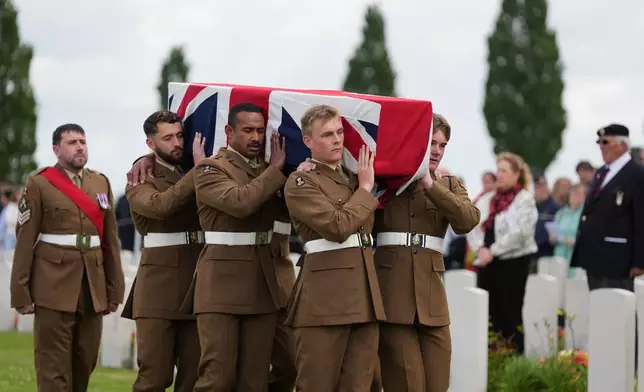
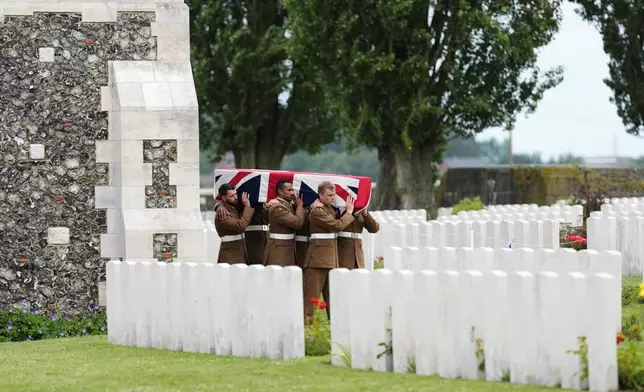
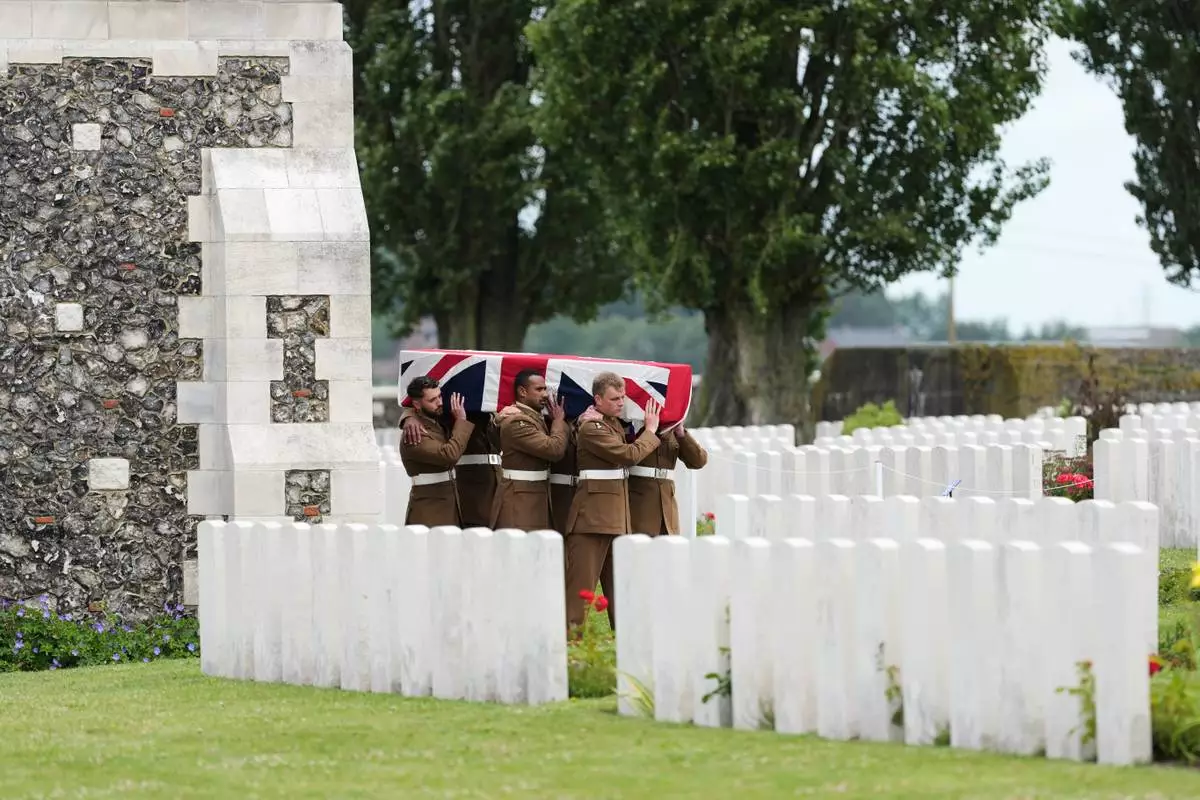
Soldiers from the Princess of Wales's Royal Regiment carry a coffin during a burial ceremony for six British soldiers of World War I, at the CWGC's Tyne Cot Cemetery in Zonnebeke, Belgium, Wednesday, June 10, 2026. (AP Photo/Virginia Mayo)
Soldiers from the Princess of Wales's Royal Regiment carry a coffin during a burial ceremony for six British soldiers of World War I, at the CWGC's Tyne Cot Cemetery in Zonnebeke, Belgium, Wednesday, June 10, 2026. (AP Photo/Virginia Mayo)
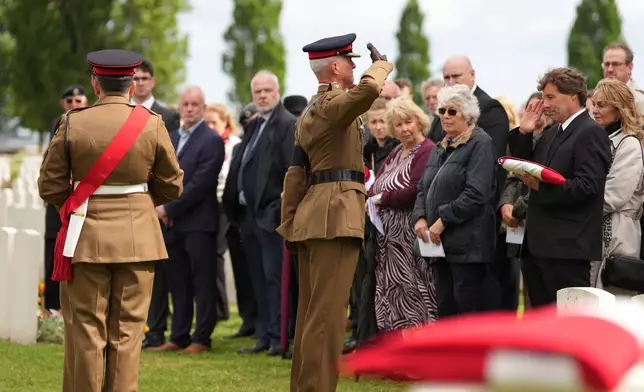
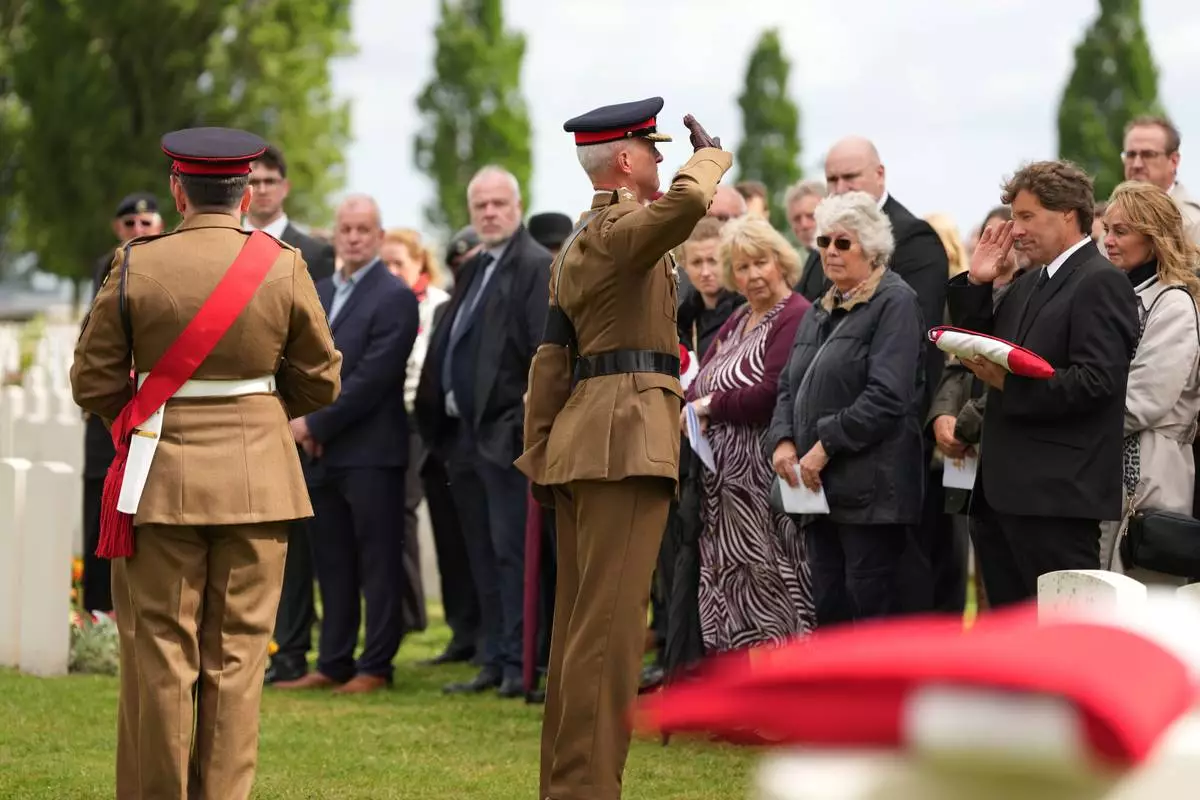
Folded flags are presented to relatives during a burial ceremony for six British soldiers of World War I, at the CWGC's Tyne Cot Cemetery in Zonnebeke, Belgium, Wednesday, June 10, 2026. (AP Photo/Virginia Mayo)
Folded flags are presented to relatives during a burial ceremony for six British soldiers of World War I, at the CWGC's Tyne Cot Cemetery in Zonnebeke, Belgium, Wednesday, June 10, 2026. (AP Photo/Virginia Mayo)
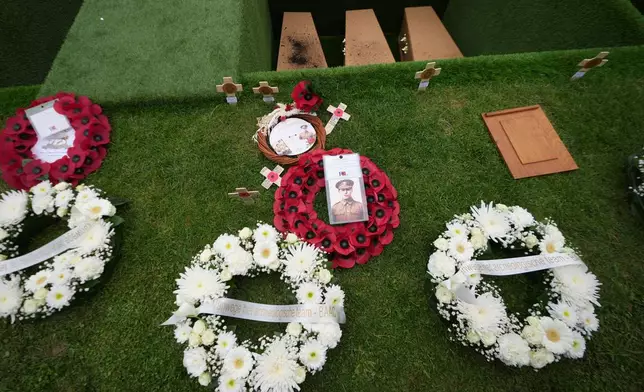
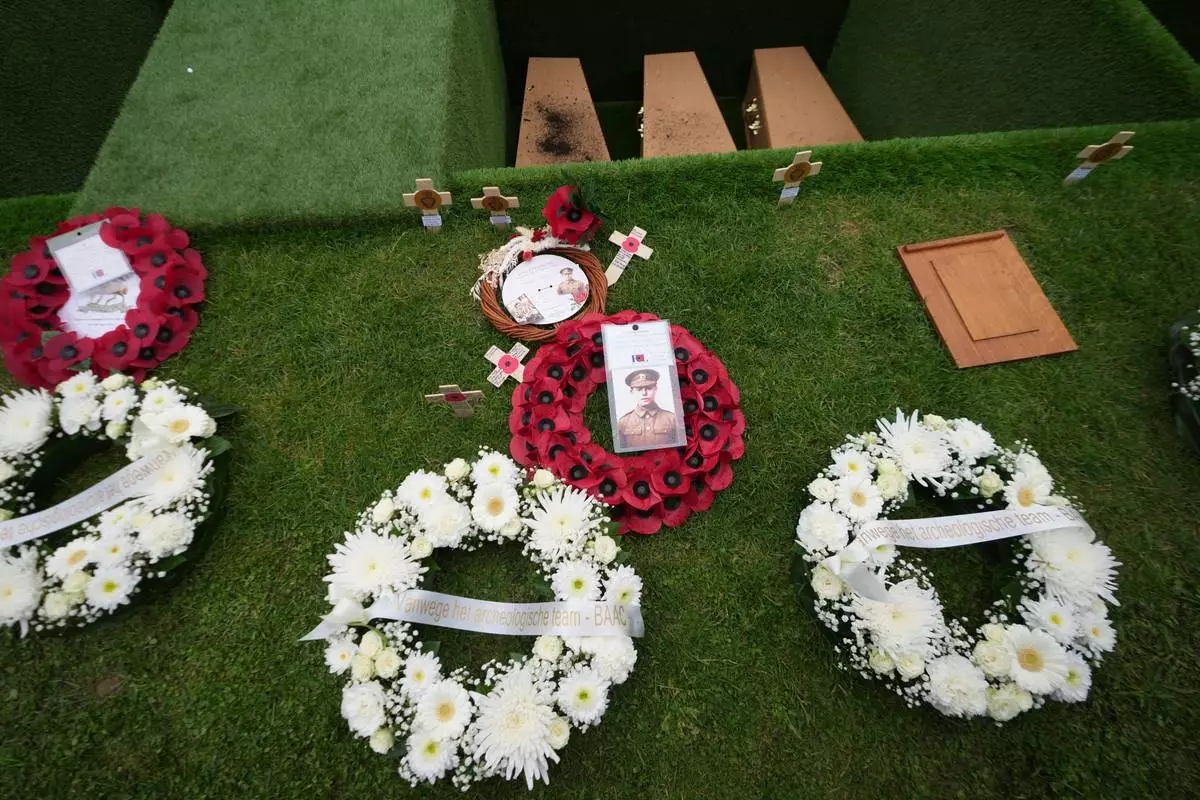
Poppy wreaths and photos stand beside the graves during a burial ceremony for six British soldiers of World War I, at the CWGC's Tyne Cot Cemetery in Zonnebeke, Belgium, Wednesday, June 10, 2026. (AP Photo/Virginia Mayo)

Poppy wreaths and photos stand beside the graves during a burial ceremony for six British soldiers of World War I, at the CWGC's Tyne Cot Cemetery in Zonnebeke, Belgium, Wednesday, June 10, 2026. (AP Photo/Virginia Mayo)

Soldiers from the Princess of Wales's Royal Regiment carry a coffin during a burial ceremony for six British soldiers of World War I, at the CWGC's Tyne Cot Cemetery in Zonnebeke, Belgium, Wednesday, June 10, 2026. (AP Photo/Virginia Mayo)

Soldiers from the Princess of Wales's Royal Regiment carry a coffin during a burial ceremony for six British soldiers of World War I, at the CWGC's Tyne Cot Cemetery in Zonnebeke, Belgium, Wednesday, June 10, 2026. (AP Photo/Virginia Mayo)

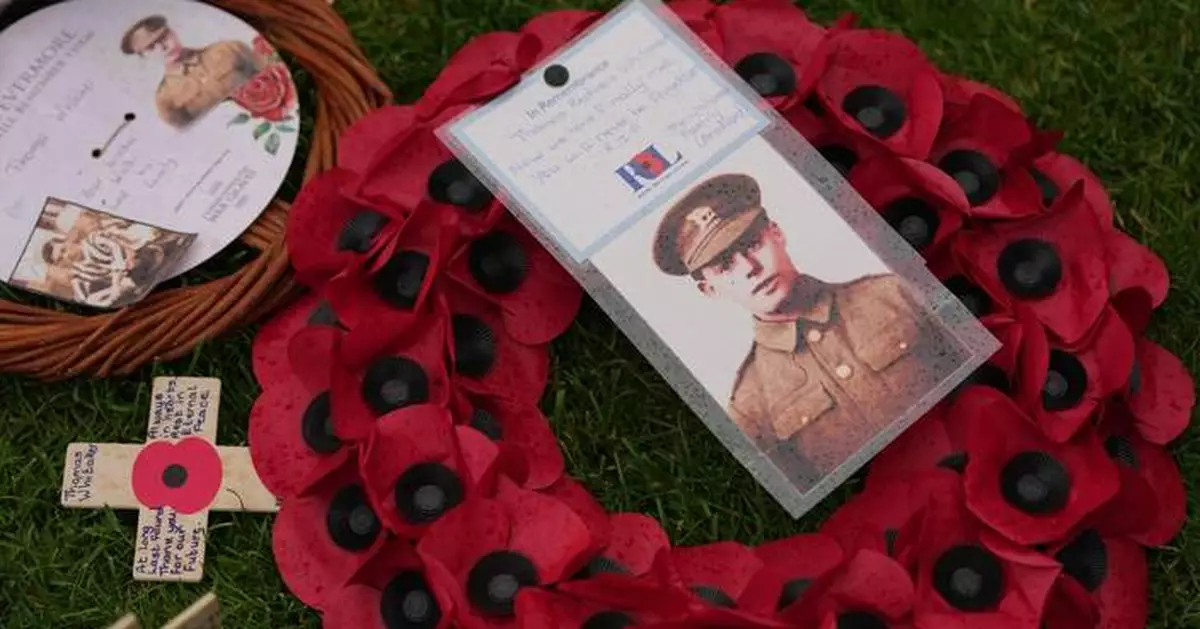
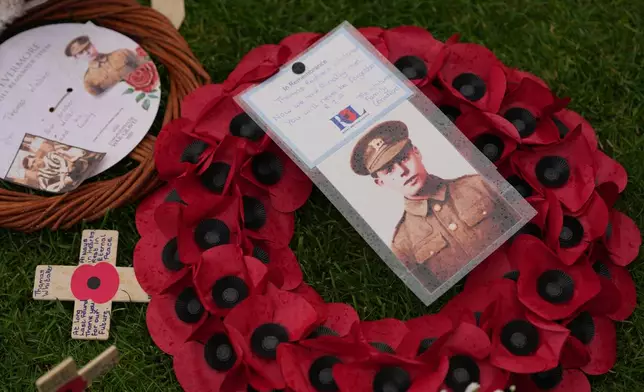
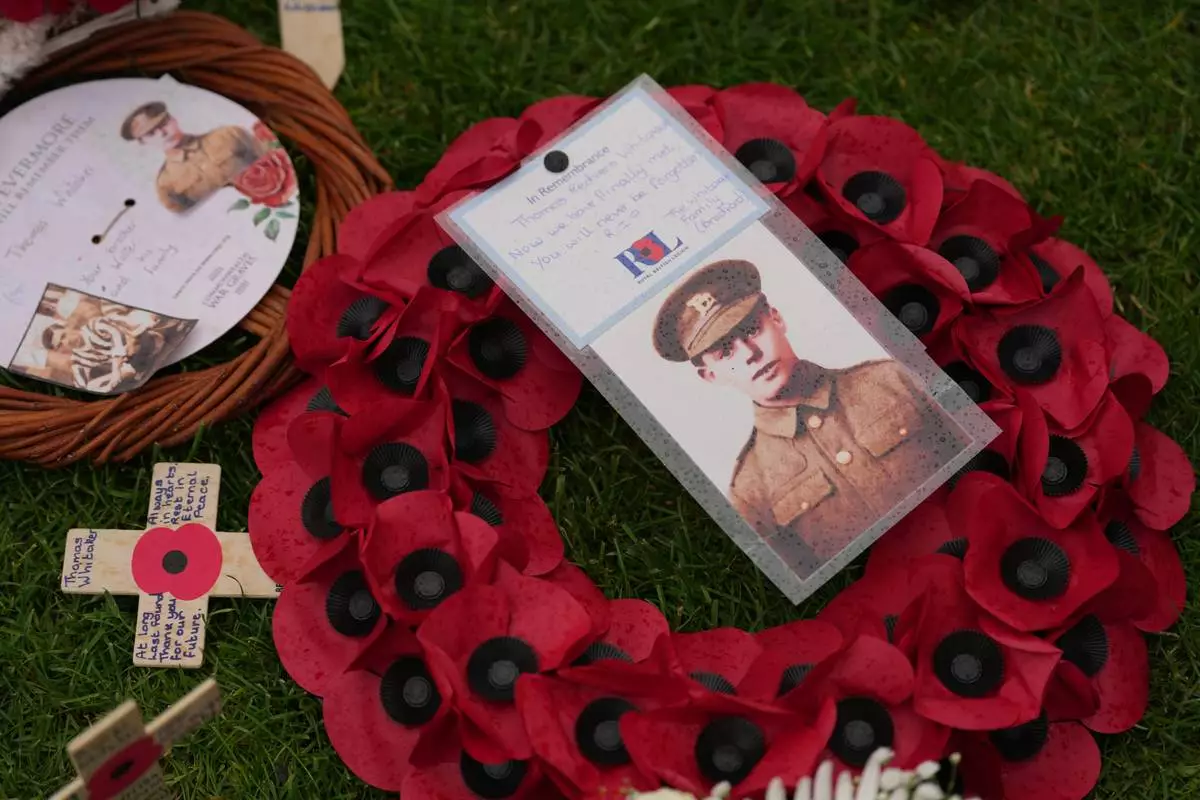
A poppy wreath and a photo next to the grave of Private Thomas Redvers Whitaker during a burial ceremony for six British soldiers of World War I, at the CWGC's Tyne Cot Cemetery in Zonnebeke, Belgium, Wednesday, June 10, 2026. (AP Photo/Virginia Mayo)

A poppy wreath and a photo next to the grave of Private Thomas Redvers Whitaker during a burial ceremony for six British soldiers of World War I, at the CWGC's Tyne Cot Cemetery in Zonnebeke, Belgium, Wednesday, June 10, 2026. (AP Photo/Virginia Mayo)

The six burials at the Tyne Cot Cemetery included that of Pvt. Thomas Whitaker, who died in the trenches carrying a postcard from Bradford, in north east England, where some of his relations still live.

At the ceremony were three members of the Whitaker family. Under sunshine piercing the gray drizzle, Joe Whitaker, 22, read aloud a poem written in honor of his great-great-uncle: “At peace in foreign hills, he finally drifts away to sleep, his mind on Bradford mills.”

The soldier's postcard proved to be a crucial piece of evidence that helped British government researchers establish his identity and ultimately linked Joe's family with another, estranged, branch of the Whitaker family.

Joe said: “The thought that (Thomas) might have been thinking of home, comforted by this postcard that he kept on him from Bradford — we were all quite taken aback by that.”

He said writing a poem “felt like the right thing to do.”

Alexia Clark, a commemorations case worker at the U.K. Ministry of Defence’s Joint Casualty and Compassionate Centre (JCCC), said the six soldiers were found during an excavation in western Belgium. But the discovery of the postcard on one of them proved to be a crucial “hint.”

She added: “And then actually when we looked at the missing list and went, ‘Oh we have got one from Bradford! Great, there’s a strong chance that he is going to be one of them.‘”

By matching the postcard with other found artifacts, including a Lewis Gun and uniforms, the JCCC researchers — known as “the war detectives” -- were able to zero in on a likely group of men from the more than half a million British soldiers still missing from World War I.

The team contacted potential relatives for DNA samples, and the analysis confirmed the identity not only of Thomas Whitaker, but also privates Horace Frederick Cook, Frederick Martin, Charles Richard Russels, Courtney Darvill Hart and Joseph Turnley -- all members of 2/4 Battalion Queen’s Royal West Surrey Regiment.

Paul Turnley was presented with a British flag folded into a triangle given by the military in honor of the sacrifice of his relation, Pvt. Joseph Turnley.

“Just a privileged to be laying a relative of ours to rest, to watch, to be present and then to be passed the flag... it was the greatest treasure actually,” said Paul, in tribute to his grandfather’s cousin.

As nearby cows, students and bike riders watched along an adjacent farm road, a military musician played a martial lament on a cornet, while prayers were said by the Rev. Adéle Rees.

Then Pvt. Jone Wainile of the Princess of Wales’s Royal Regiment honor guard read the poignant Kohima Epitaph: “When you go home tell them of us and say, ‘For your tomorrow, we gave our today.’”

Paul Whitaker said: “My children, my grandchildren, anyone, can come and know where Thomas is, and that is a lovely thing to have. It’s just a real privilege to have Thomas be one of the ones that has been found.”
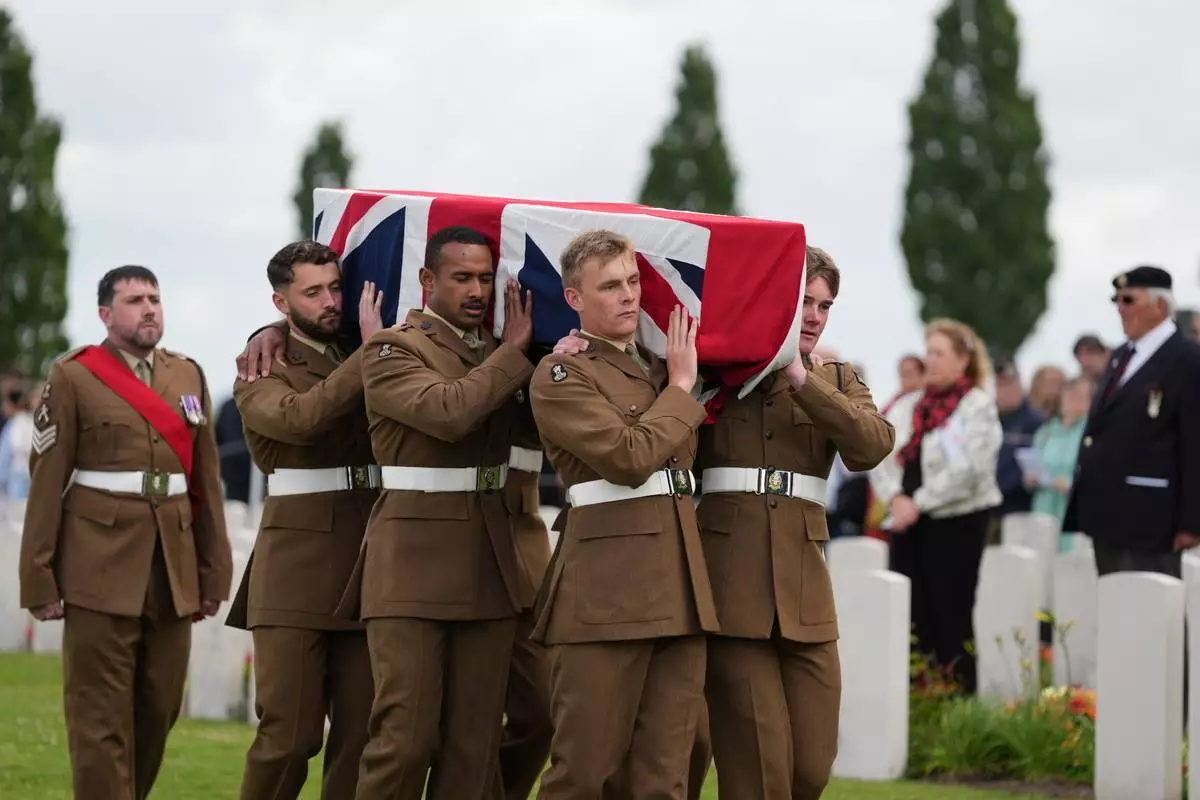
Soldiers from the Princess of Wales's Royal Regiment carry a coffin during a burial ceremony for six British soldiers of World War I, at the CWGC's Tyne Cot Cemetery in Zonnebeke, Belgium, Wednesday, June 10, 2026. (AP Photo/Virginia Mayo)
Soldiers from the Princess of Wales's Royal Regiment carry a coffin during a burial ceremony for six British soldiers of World War I, at the CWGC's Tyne Cot Cemetery in Zonnebeke, Belgium, Wednesday, June 10, 2026. (AP Photo/Virginia Mayo)
Folded flags are presented to relatives during a burial ceremony for six British soldiers of World War I, at the CWGC's Tyne Cot Cemetery in Zonnebeke, Belgium, Wednesday, June 10, 2026. (AP Photo/Virginia Mayo)
Folded flags are presented to relatives during a burial ceremony for six British soldiers of World War I, at the CWGC's Tyne Cot Cemetery in Zonnebeke, Belgium, Wednesday, June 10, 2026. (AP Photo/Virginia Mayo)
Poppy wreaths and photos stand beside the graves during a burial ceremony for six British soldiers of World War I, at the CWGC's Tyne Cot Cemetery in Zonnebeke, Belgium, Wednesday, June 10, 2026. (AP Photo/Virginia Mayo)

Poppy wreaths and photos stand beside the graves during a burial ceremony for six British soldiers of World War I, at the CWGC's Tyne Cot Cemetery in Zonnebeke, Belgium, Wednesday, June 10, 2026. (AP Photo/Virginia Mayo)
Soldiers from the Princess of Wales's Royal Regiment carry a coffin during a burial ceremony for six British soldiers of World War I, at the CWGC's Tyne Cot Cemetery in Zonnebeke, Belgium, Wednesday, June 10, 2026. (AP Photo/Virginia Mayo)
Soldiers from the Princess of Wales's Royal Regiment carry a coffin during a burial ceremony for six British soldiers of World War I, at the CWGC's Tyne Cot Cemetery in Zonnebeke, Belgium, Wednesday, June 10, 2026. (AP Photo/Virginia Mayo)
A poppy wreath and a photo next to the grave of Private Thomas Redvers Whitaker during a burial ceremony for six British soldiers of World War I, at the CWGC's Tyne Cot Cemetery in Zonnebeke, Belgium, Wednesday, June 10, 2026. (AP Photo/Virginia Mayo)

A poppy wreath and a photo next to the grave of Private Thomas Redvers Whitaker during a burial ceremony for six British soldiers of World War I, at the CWGC's Tyne Cot Cemetery in Zonnebeke, Belgium, Wednesday, June 10, 2026. (AP Photo/Virginia Mayo)

MEXICO CITY (AP) — The sound of construction roared over the most memed metro station in Mexico City as workers hammered at marble floors under a chandelier and rows of lamps reminiscent of a scene from “Harry Potter” or “Titanic,” racing to finish ahead of the FIFA World Cup opening ceremony Thursday.

Mexicans milling through the busy Hidalgo metro station pointed and laughed, occasionally snapping pictures of the face-lift that has become the subject of a cascade of internet memes.

The cosmetic makeover that authorities have attempted to give the capital as visitors arrive from around the globe also has become a symbol of criticisms that the government is prioritizing its superficial appearance for World Cup fans over fixing critical structural issues that have long plagued the city.

“People make fun of it because it's a failed aesthetic, it doesn't make a lot of sense,” said Silvia Escamilla, 28, who was hustling to work among a crowd of Mexican commuters. “All these renovations are like putting makeup on the city, because the infrastructure they could actually invest in just isn’t there.”

For weeks, Mexico City workers have plastered walls and metro cars with cartoon axolotls, the mole salamander that has become a city mascot. They also have painted bridges purple and planted Mexican marigold flowers typical of Day of the Dead celebrations in November.

The 22 million residents of the sprawling capital, known as Chilangos, have jokingly referred to the renovations as the city's “axolotlization.” They have posted videos of flooded underpasses next to freshly painted murals of axolotls and crumbling stairs and potholes painted bright purple.

Hidalgo station, in the heart of the downtown, has perhaps become the subject of more memes than anywhere else in the city.

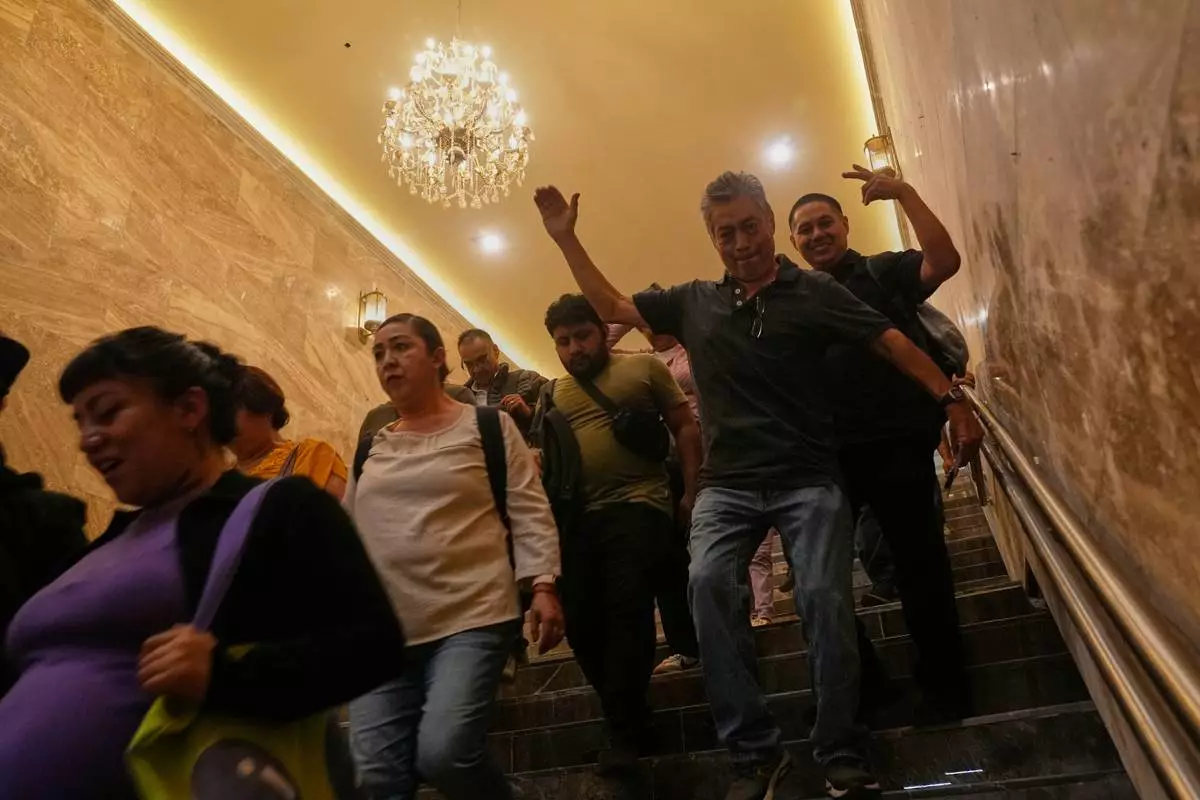
When city workers installed the chandelier near the metro entrance and rows of Victorian wall lamps in May, social media users were quick to joke that authorities were trying to make the gritty metro system look like it was in a European city.

Residents began to show up at the station in elegant dresses in videos layered over Mozart music. One social media influencer descended the marble stairs dressed as the Beast from the classic Disney cartoon “Beauty and the Beast.” Another arrived as Napoleon Bonaparte in a white wig and French military uniform.

“May you have an elegant metro connection,” one social media influencer said as he strolled through throngs of commuters dressed in a tuxedo and top hat. Another filmed herself selling pink dresses aboard one of the metro trains, yelling to passengers that the items matched the “etiquette” of Metro Hidalgo.

Many more posed next to marble floors and walls torn up by construction ahead of the soccer tournament being hosted by Mexico, the United States and Canada.

The crush of jokes amused Mexicans for weeks, but also cut to the core of a deeper problem in the city, said Aldo Solano Rojas, an art historian in Mexico City who has criticized the remodel.

Failures to prioritize issues like the metro's crumbling infrastructure and holes in the major municipal roadways show the government “doesn't understand the real needs of the city,” he said.

“State presence, at its best, is reflected in well-maintained sidewalks and adequate transportation infrastructure that doesn't collapse every day,” Solano Rojas said. “It's not reflected in frivolous, superficial axolotl murals while the streets are flooding.”

The criticisms come in the midst of wider social unrest in Mexico City as the country's teachers union, families of Mexico's 130,000 missing people and a range of other social movements use the proximity to the event to pressure authorities.

The government also has faced accusations of displacing sex workers and street vendors in an effort to clean up the streets. Despite the tensions, city workers on Wednesday were still racing to complete construction ahead of the opening ceremony and first match.

Mirna Baranco looked fondly on the renovations, but the 46-year-old laughed at the chandelier over Hidalgo construction workers. She nudged her boyfriend and pointed.

“I've already seen it all over the place on Facebook, but not in real life,” she said.

Baranco understood the criticisms, but said she didn't think it was necessarily a bad thing that authorities were making changes to be more attractive to international visitors. The World Cup has helped push local governments to make needed renovations, even if some look a little out of place, she said.

The changes show that “Mexico isn't just how others stereotype us, as a country with narcos,” Baranco said. “Mexico has a lot to give the world.”

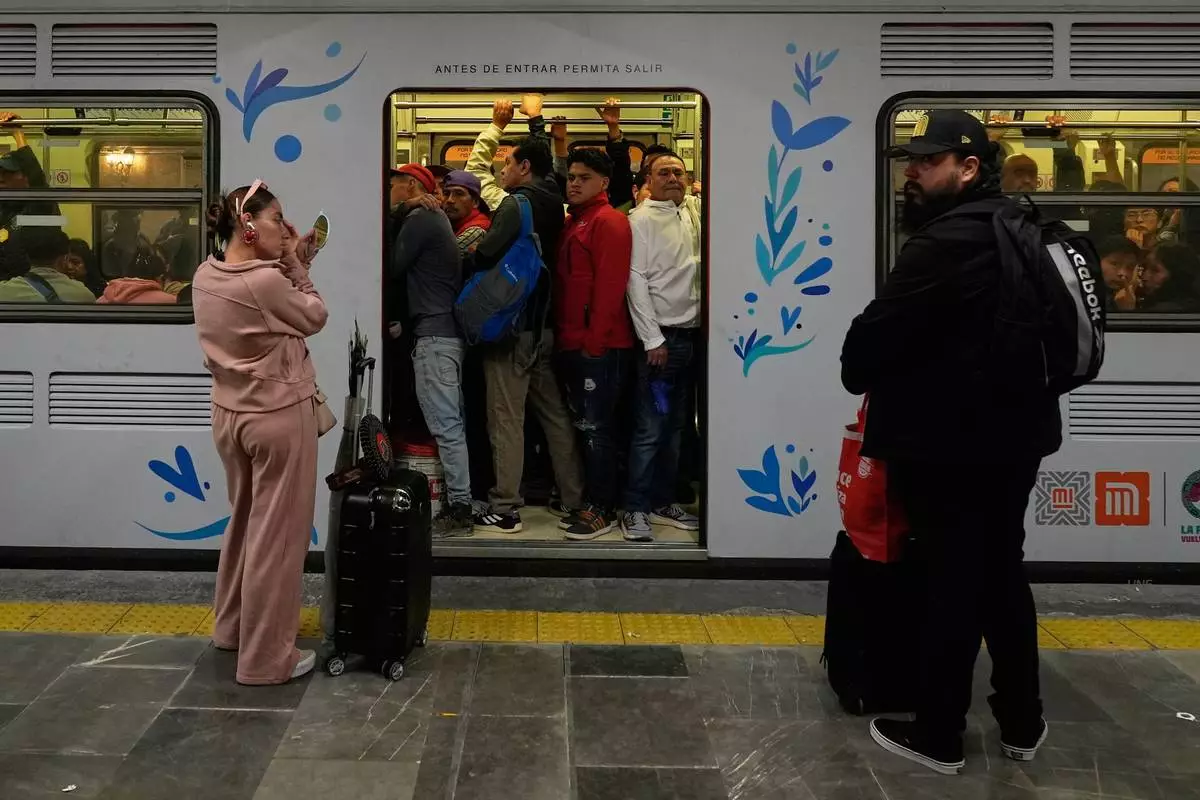
A woman puts on makeup at the subway in Mexico City, Tuesday, June 9, 2026. (AP Photo/Marco Ugarte)

A woman puts on makeup at the subway in Mexico City, Tuesday, June 9, 2026. (AP Photo/Marco Ugarte)

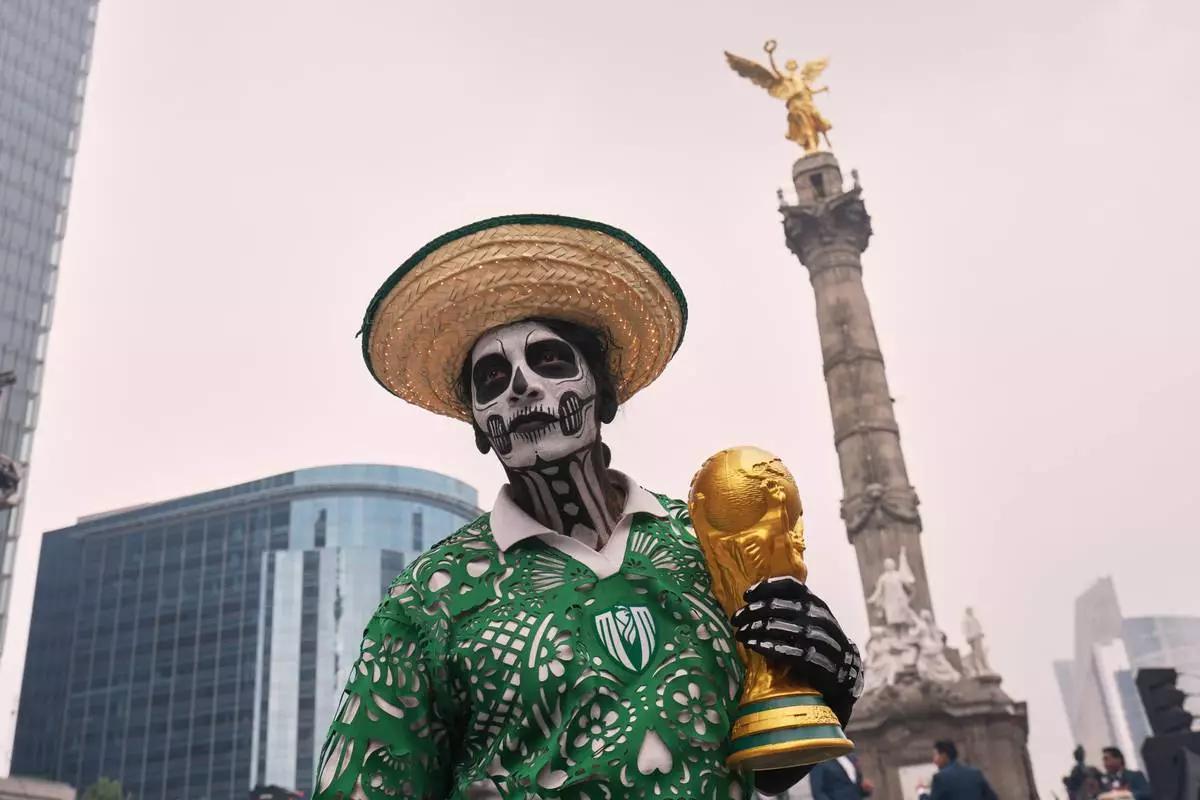
A dancer holds a replica of the World Cup trophy as soccer fans stand along Reforma Avenue in Mexico City, Saturday, June 6, 2026 ahead of the FIFA World Cup. (AP Photo/Moises Castillo)

A dancer holds a replica of the World Cup trophy as soccer fans stand along Reforma Avenue in Mexico City, Saturday, June 6, 2026 ahead of the FIFA World Cup. (AP Photo/Moises Castillo)

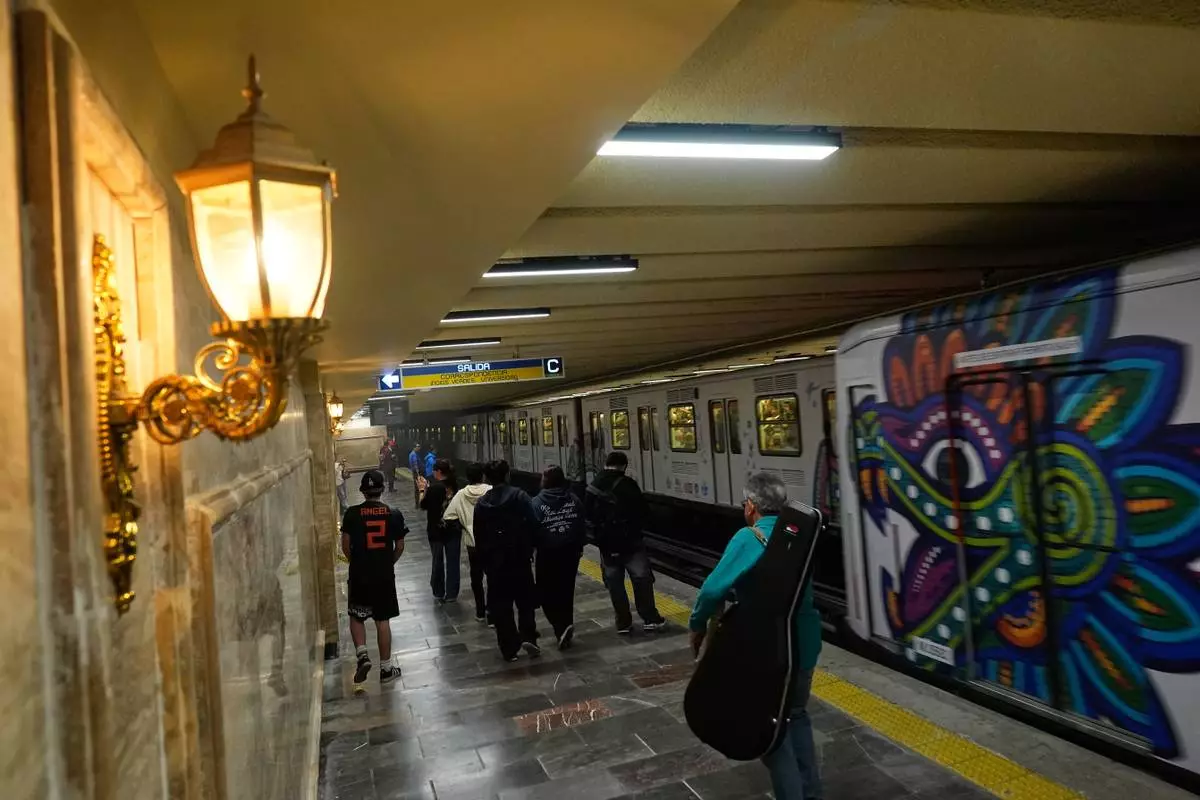
People walk through a subway station that has new lighting, part of preparations for hosting the World Cup soccer tournament in Mexico City, Wednesday, June 10, 2026. (AP Photo/Marco Ugarte)

People walk through a subway station that has new lighting, part of preparations for hosting the World Cup soccer tournament in Mexico City, Wednesday, June 10, 2026. (AP Photo/Marco Ugarte)

People walk through a subway station that has new lighting, part of preparations for hosting the World Cup soccer tournament in Mexico City, Wednesday, June 10, 2026. (AP Photo/Marco Ugarte)

People walk through a subway station that has new lighting, part of preparations for hosting the World Cup soccer tournament in Mexico City, Wednesday, June 10, 2026. (AP Photo/Marco Ugarte)

Recommended Articles