Skip to Content Facebook Feature Image

Pope visiting 'dock of shame' in Canary Islands where migrants slept in squalor

News

Pope visiting 'dock of shame' in Canary Islands where migrants slept in squalor
News

News

Pope visiting 'dock of shame' in Canary Islands where migrants slept in squalor

2026-06-11 15:15 Last Updated At:15:20

BARCELONA, Spain (AP) — Pope Leo XIV is visiting the Canary Islands on Thursday to draw attention to the plight of migrants who risk their lives every year trying to reach Europe, fulfilling a wish of Pope Francis to visit one of the epicenters of the European migration debate.

Leo is spending the final two days of his weeklong trip to Spain in the Canary Islands, a Spanish archipelago closer to Africa than the Iberian Peninsula that is a key point of entry for migrants smuggled from West Africa.

He is meeting with recently arrived migrants and representatives of the church and humanitarian organizations that care for them and work to integrate them into Spanish society.

Most poignantly, he will commemorate the thousands of lives lost at sea from a port that in 2020 became known as the “dock of shame” because of the squalid conditions migrants lived in when they came ashore during a spike in arrivals.

Spain’s Socialist-led government, which had been shamed by the 2020 crisis, has bucked a trend in Europe and the United States by defending immigration on economic and humanitarian grounds. It has launched a legalization push earlier this year for hundreds of thousands of immigrants without authorization.

Prime Minister Pedro Sánchez has highlighted the benefits to the economy with an aging workforce and low birth rate.

Leo has already called for strengthened international efforts to prevent human smuggling of migrants, the creation of safe pathways for them to move legally and development in countries of origin so more people can choose to stay home.

In a speech to the Spanish Parliament earlier this week, the first-ever by a pope, Leo demanded welcome and integration for those who do choose to flee, insisting on their inherent human dignity.

“The moral greatness of a nation is manifested, above all, in its capacity to accompany, protect and love those lives that are most fragile,” Leo said in a speech that also upheld the inherent dignity of the unborn, the elderly and sick. He received a 7-minute standing ovation at the end.

Migrant arrivals in the Canary Islands peaked in 2024 at nearly 47,000, but have fallen dramatically, with just over 2,000 people landing there in the first four months of 2026.

Upon his arrival in Las Palmas, Leo was to head to Arguineguin, where in 2020 arrivals reached such numbers that migrants were forced to sleep in makeshift camps in the open air on a dock that became known as the “dock of shame.”

Many migrants were left to sleep for weeks with just a blanket and no showers. Potential asylum seekers had no proper access to legal advice and some people were held for weeks, much longer than the three days that the law allowed. The crisis shamed the government, which was forced by its ombudsman to shutter the makeshift camp and relocate the migrants.

Learning of the crisis, Francis had planned to visit the Canary Islands to bring his solidarity, but never managed the trip. Francis had made the plight of refugees a hallmark of his papacy, following the Gospel mandate to “welcome the stranger.”

Leo has followed suit, insisting especially on the dignity of migrants in his native United States amid the Trump administration’s crackdown and mass deportation program.

Next month, on July 4, the American pope will spend U.S. Independence Day on the island of Lampedusa, Sicily, another main point of entry for migrants smuggled from North Africa trying to reach Europe.

Francis had visited Lampedusa in 2013, on his first trip outside Rome, and tossed a wreath into the Mediterranean in honor of the thousands of migrants who died in the perilous crossing. It was on that trip that he coined a phrase that became a mantra during his pontificate denouncing the “globalization of indifference” that the world showed migrants.

Associated Press religion coverage receives support through the AP’s collaboration with The Conversation US, with funding from Lilly Endowment Inc. The AP is solely responsible for this content.

Pope Leo XIV delivers his speech as he meets with members of the Spanish Parliament at the Congress of Deputies, in Madrid, Monday, June 8, 2026. (AP Photo/Alessandra Tarantino)

Pope Leo XIV delivers his speech as he meets with members of the Spanish Parliament at the Congress of Deputies, in Madrid, Monday, June 8, 2026. (AP Photo/Alessandra Tarantino)

Pope Leo XIV leaves at the end of a meeting with faithful and members of the diocesan charity and welfare organizations in the Church of Sant Agusti in Barcelona, Spain, Wednesday, June 10, 2026 (AP Photo/Alessandra Tarantino)

Pope Leo XIV leaves at the end of a meeting with faithful and members of the diocesan charity and welfare organizations in the Church of Sant Agusti in Barcelona, Spain, Wednesday, June 10, 2026 (AP Photo/Alessandra Tarantino)

Pope Leo XIV waves as he arrives to celebrate Mass at the Basilica of the Sagrada Familia in Barcelona, Spain, Wednesday, June 10, 2026. (AP Photo/Joan Mateu Parra)

Pope Leo XIV waves as he arrives to celebrate Mass at the Basilica of the Sagrada Familia in Barcelona, Spain, Wednesday, June 10, 2026. (AP Photo/Joan Mateu Parra)
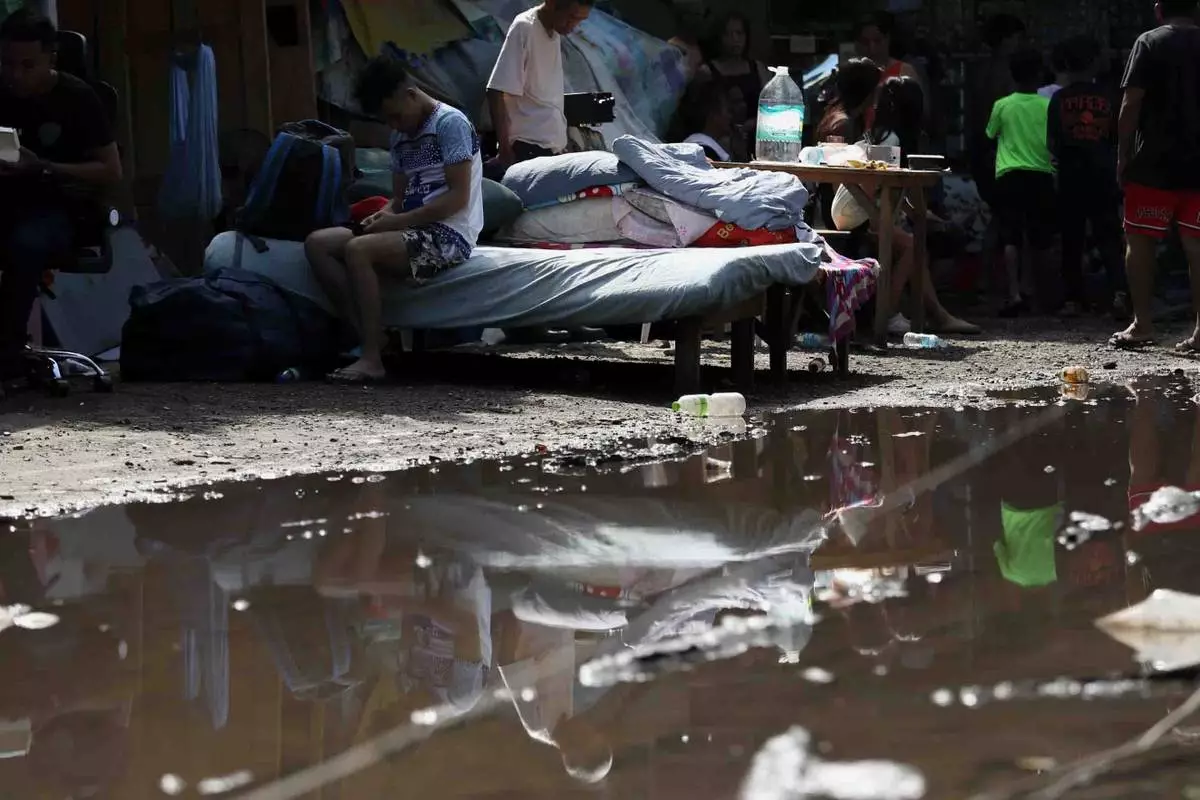
GENERAL SANTOS, Philippines (AP) — The mayor of a southern Philippine town that was devastated by a powerful earthquake pleaded Thursday for helicopters to transport food to stave off hunger in several landslide-isolated villages.

The 7.8 magnitude offshore quake, one of the strongest to hit the Philippine archipelago in a half century, struck Monday off the southern province of Sarangani and has left at least 47 people dead and injured 688 with 31 still missing.

More than 45,000 people remained displaced, about half in emergency shelters, after the quake damaged more than 12,600 houses in farming towns and cities. Many were still too traumatized to return home due to aftershocks, provincial officials said.

Sarangani reported 20 dead from the quake, the highest toll from the affected provinces, mostly due to a landslide that buried houses in the coastal town of Glan, according to the government's Office of Civil Defense, which deals with major disasters.

Glan Mayor Victor James Yap said power has not been restored to his province and 10 of 31 villages in his town of more than 100,000 people remained inaccessible mostly due to landslides. He asked the government to immediately deploy air force helicopters to deliver food and other aid to the stricken areas.

“We need food and water but it’s difficult to transport them to some of our villages which remain isolated,” Yap told DZMM radio network. “Choppers are needed to transport food because people there are already very hungry.”

A key access road to the town has been reopened and will allow the delivery of fuel as early as Thursday, but the town remained without power and cellphone services were still spotty, according to Yap.

The Office of Civil Defense said more than 26 million pesos ($426,000) worth of food packs, cash and other aid have been provided so far and 180 government and military planes, helicopters, ships and trucks have been deployed to respond to the disaster.

About 3,400 government and military personnel were involved in search efforts for the missing, debris-clearing in roads, damage assessment and other disaster-mitigation work, it said.

President Ferdinand Marcos Jr. on Wednesday visited the hard-hit city of General Santos city, where he inspected damaged hospitals and schools and discussed recovery efforts. He ordered the release of 100 million pesos ($1.6 million) for the repair of the partly collapsed city hall and 50,000 pesos ($820) for the families of each of the victims who died in the quake.

Most of the deaths from the quake were caused by falling debris from collapsed buildings and landslides in Sarangani, the coastal city of General Santos, and the outlying provinces of South Cotabato and Davao Occidental.

Two swimmers drowned and one remained missing off General Santos after being swept out to sea shortly after the quake hit. Waves of up to 1.4 meters (4.6 feet) above tide level were measured in the country’s south and smaller waves washed ashore in Indonesia and Palau and as far away as southern Japan.

The earthquake was one of the strongest to hit the country since an 8.1 magnitude quake and tsunami on Aug. 17, 1976, that killed about 8,000 people.

The Philippines is often hit by earthquakes and volcanic eruptions due to its location on the Pacific “Ring of Fire,” an arc of seismic faults around the ocean.

Associated Press journalist Jim Gomez contributed to this report from Manila, Philippines.

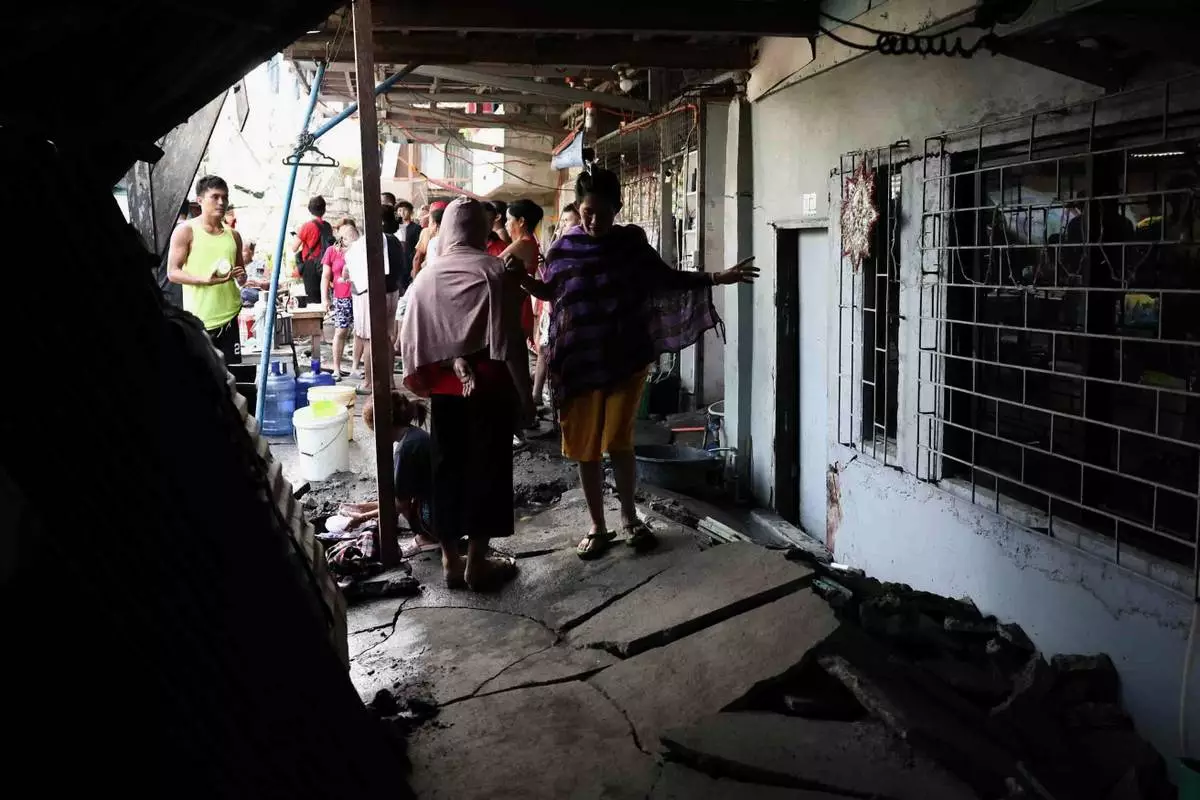
Residents walk along a damaged pathway in General Santos, southern Philippines, Thursday, June 11, 2026, following Monday's powerful earthquake. (AP Photo/Basilio Sepe)

Residents walk along a damaged pathway in General Santos, southern Philippines, Thursday, June 11, 2026, following Monday's powerful earthquake. (AP Photo/Basilio Sepe)

Residents gather their belongings as they evacuate from their damaged homes in General Santos, southern Philippines, Thursday, June 11, 2026, following Monday's powerful earthquake. (AP Photo/Basilio Sepe)

Residents gather their belongings as they evacuate from their damaged homes in General Santos, southern Philippines, Thursday, June 11, 2026, following Monday's powerful earthquake. (AP Photo/Basilio Sepe)

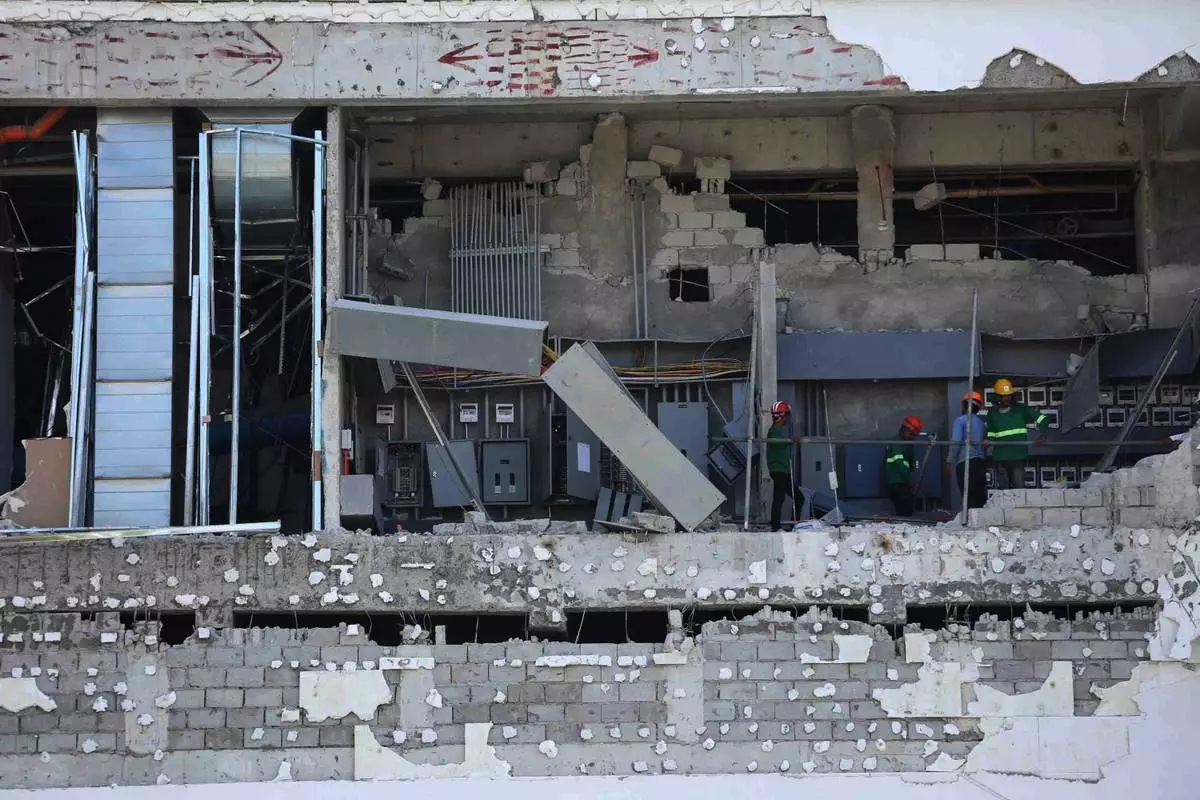
Workers inspect a damaged mall in General Santos, southern Philippines, Thursday, June 11, 2026, following Monday's powerful earthquake. (AP Photo/Basilio Sepe)

Workers inspect a damaged mall in General Santos, southern Philippines, Thursday, June 11, 2026, following Monday's powerful earthquake. (AP Photo/Basilio Sepe)

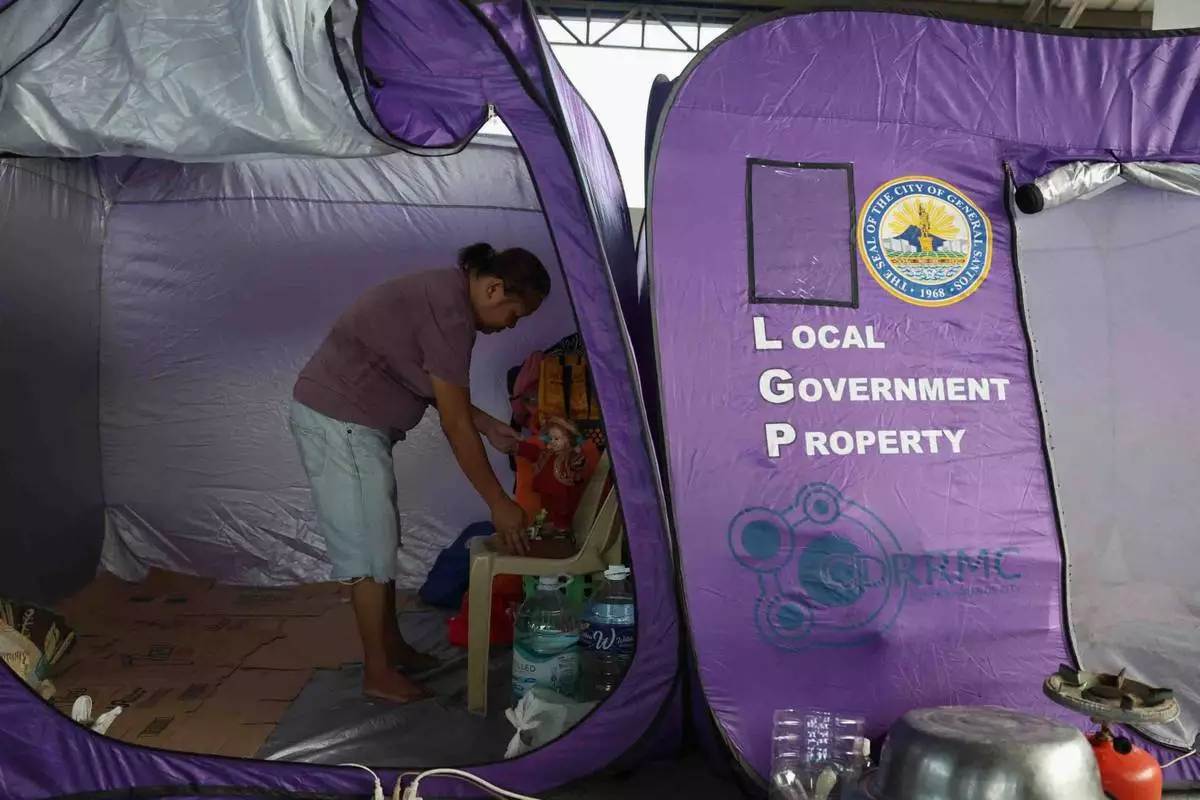
Mary Jean Lacsi takes shelter at a covered court turned into an evacuation center in General Santos, southern Philippines, Thursday, June 11, 2026, after Monday's earthquake destroyed her home. (AP Photo/Basilio Sepe)

Mary Jean Lacsi takes shelter at a covered court turned into an evacuation center in General Santos, southern Philippines, Thursday, June 11, 2026, after Monday's earthquake destroyed her home. (AP Photo/Basilio Sepe)

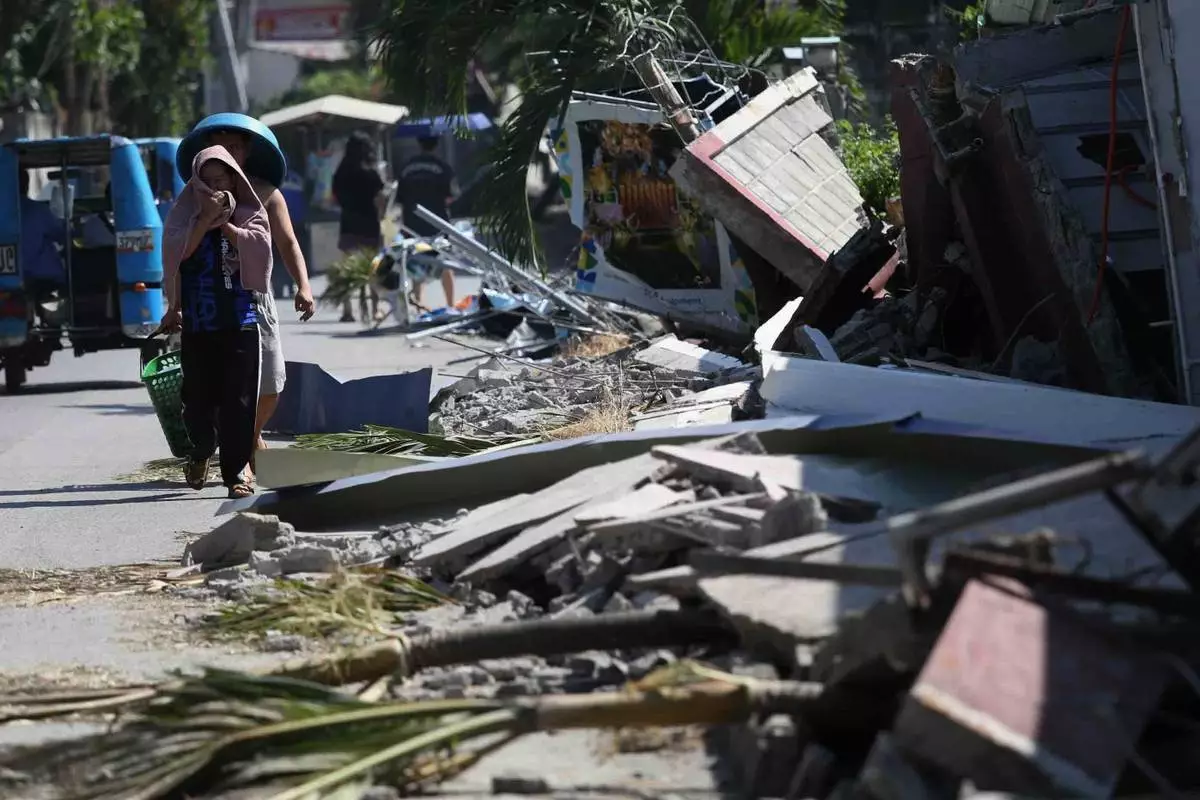
Residents walk past debris from a damaged building in General Santos, southern Philippines, Thursday, June 11, 2026, following Monday's powerful earthquake. (AP Photo/Basilio Sepe)

Residents walk past debris from a damaged building in General Santos, southern Philippines, Thursday, June 11, 2026, following Monday's powerful earthquake. (AP Photo/Basilio Sepe)

Recommended Articles