Skip to Content Facebook Feature Image

Health sleuths are watching for disease threats during the World Cup

News

Health sleuths are watching for disease threats during the World Cup
News

News

Health sleuths are watching for disease threats during the World Cup

2026-06-11 03:16 Last Updated At:03:20

WASHINGTON (AP) — While millions of soccer fans cheer or groan over World Cup matches spanning North America, health officials will be on high alert for germs.

A heat wave may be the most obvious health threat. But infectious diseases can spread in a crowd, and experts are set to scrutinize wastewater, hospital visits, even social media for any signs that an outbreak might be brewing.

Measles, one of the most contagious diseases, is among the top concerns, sparking a warning this week from the Pan American Health Organization, PAHO. With a nearly six-week stretch of packed stadiums, bars and tourist sites in 16 cities, officials are on the lookout for a long list of infections, from the stomach bug norovirus to mosquito-borne dengue fever.

“This is truly a marathon,” said Palak Raval-Nelson, Philadelphia's health commissioner.

The mass gatherings come at a tense moment for budget-strapped health agencies in the U.S. The Centers for Disease Control and Prevention, hit hard by Trump administration staffing cuts, already was grappling with a growing Ebola outbreak in central Africa and a cruise ship hantavirus outbreak. While CDC officials have advised state and local health departments behind the scenes, its expected World Cup disease surveillance dashboard still was “in final development” days before games began, according to the Department of Health and Human Services.

“Our public health professionals are pretty stretched,” said global health specialist Rebecca Katz of Georgetown University, who is leading an unusual new hub to help.

At the Health Security Operations Center, a joint effort between Georgetown and MedStar Health, workers are analyzing data from around the country so they can alert health authorities, even emergency rooms, to any early signs of trouble. The center is issuing daily “situation reports” about disease trends around World Cup host cities and team base camps to several hundred local and federal public health groups, emergency management and hospital officials and others who’ve signed up.

“It's important that we don't become alarmist,” said MedStar emergency medicine specialist Dr. Shane Kappler. “We're trying to be the insurance policy.”

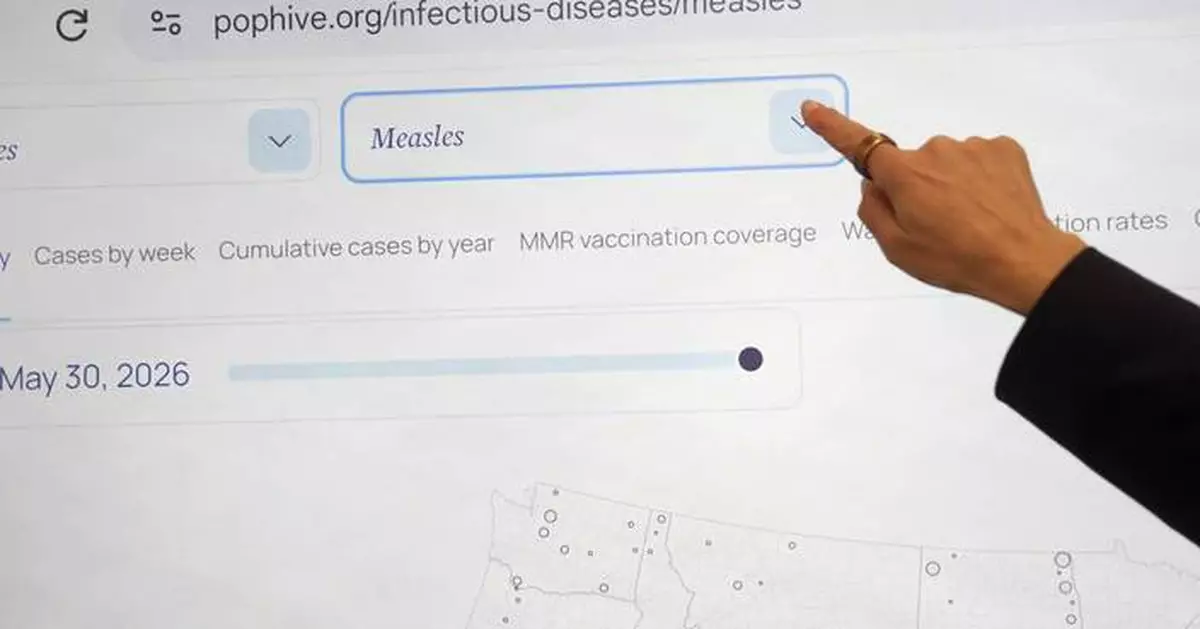
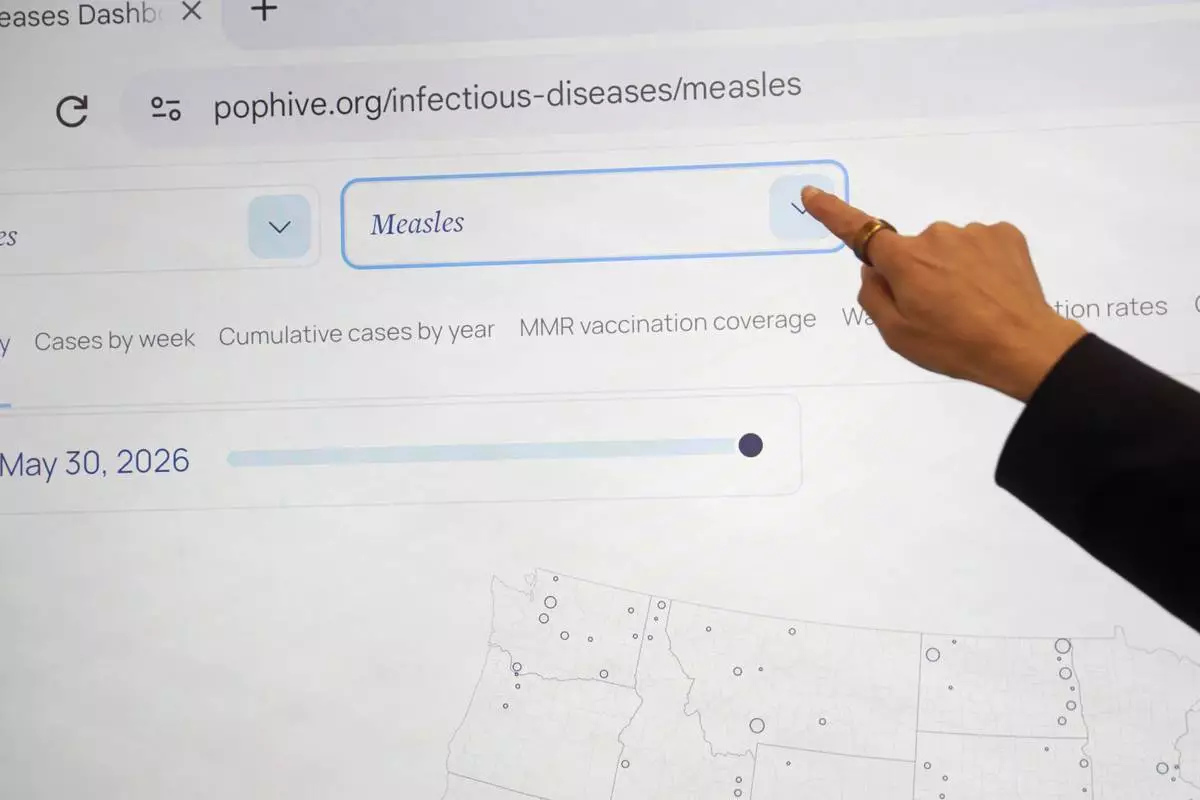
Already more than 2,000 people in the U.S. have come down with measles this year, nearly as many as during all of last year, according to the CDC. Patients can spread measles before the rash appears and they realize they're sick. Not too long ago, the U.S. seldom saw measles except from international travel by unvaccinated people.

Now with frequent U.S. outbreaks, "actually a lot of our international partners are worried about measles being exported to them after the games,” said Georgetown’s Katz.

Measles is spreading in Canada, too, and has exceeded 11,000 cases in Mexico, according to PAHO. It’s urging soccer fans to be sure they’re vaccinated, with a health campaign saying a single measles patient can spread the virus to up to 18 unprotected people.

Brown University’s Dr. Craig Spencer, who survived Ebola while working in the West Africa outbreak over a decade ago, said he’s repeatedly asked about the risk of Ebola during the World Cup — but “for me, Ebola is not the No. 1 or No. 2 or even No. 3 threat.”

“I am concerned about importation of measles, I am much more concerned about the importation of other infectious threats that may not seem as scary to us as Ebola,” Spencer said.

Many health experts agree that the risk of Ebola spreading in the U.S. is very low. That’s partly because of government travel screenings and restrictions on people recently in outbreak-affected areas. Moreover, Ebola spreads by contact with bodily fluids from someone showing symptoms, not through the air like measles or respiratory viruses.

“One fortunate thing about this virus is you’re most contagious when you’re really quite ill. It’s not like COVID, where you could be sitting next to someone who doesn’t even know they’re infected and perhaps contract the virus,” said Jennifer Nuzzo, director of Brown’s Pandemic Center.

There’s precedent for germs invading major sporting events. Canadian scientists linked a community measles outbreak to the 2010 Olympics in Vancouver, and clusters of norovirus had to be contained during the Olympics this year in Milan and in 2018 in South Korea.

One way to detect signs of trouble: People with certain viral or bacterial infections shed genetic material that sophisticated testing of wastewater can spot. For example, measles can appear in wastewater days before an emergency room sees its first patients.

This week's surveillance reports from Katz's center note that wastewater testing recently found diarrhea-causing rotavirus, hepatitis A and norovirus in some parts of the U.S., something to watch as soccer crowds arrive.

In Dallas, officials ramped up wastewater screening including at the international airport, casting a wide net rather than looking for specific illnesses, said Dr. Phil Huang, director of Dallas County Health and Human Services.

His team also is enhancing the usual mosquito testing, checking not just for West Nile virus that regularly spreads in the U.S. but for viruses more common in other countries like dengue and chikungunya.

Public health officials have been preparing for months, said Philadelphia’s Raval-Nelson, including with mock emergency drills and communications with counterparts around the country.

“I don’t want to send a message that there’s one key thing," she said. “We have the frameworks in place to carry out what we need to.”

The Associated Press Health and Science Department receives support from the Howard Hughes Medical Institute’s Department of Science Education and the Robert Wood Johnson Foundation. The AP is solely responsible for all content.
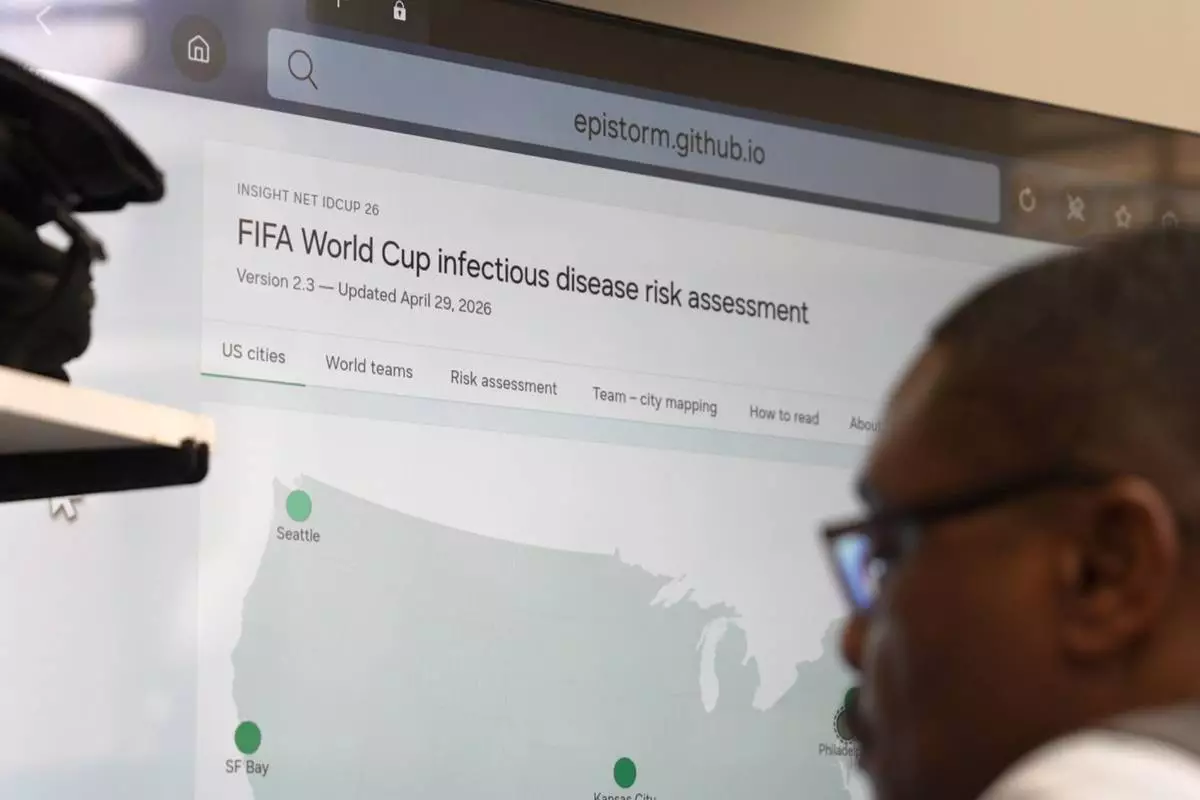
A screen displays infectious disease risk assessments for the World Cup at Georgetown's Health Security Operations Center in Washington on June 3, 2026. (AP Photo/Shelby Lum)
A screen displays infectious disease risk assessments for the World Cup at Georgetown's Health Security Operations Center in Washington on June 3, 2026. (AP Photo/Shelby Lum)
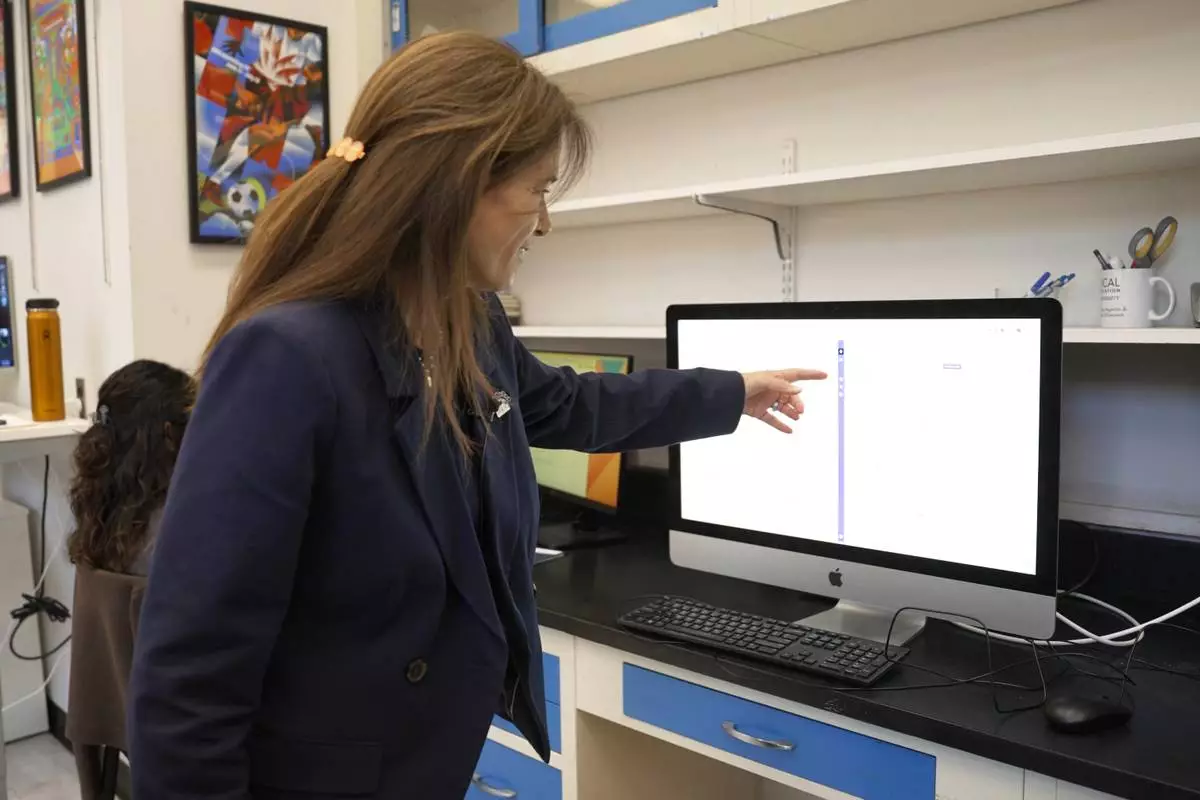
Georgetown University's Rebecca Katz points to waste water data looking at infectious diseases at Georgetown's Health Security Operations Center in Washington on June 3, 2026. (AP Photo/Shelby Lum)

Georgetown University's Rebecca Katz points to waste water data looking at infectious diseases at Georgetown's Health Security Operations Center in Washington on June 3, 2026. (AP Photo/Shelby Lum)
Georgetown University's Rebecca Katz points to measles data for the country at Georgetown's Health Security Operations Center in Washington on June 3, 2026. (AP Photo/Shelby Lum)
Georgetown University's Rebecca Katz points to measles data for the country at Georgetown's Health Security Operations Center in Washington on June 3, 2026. (AP Photo/Shelby Lum)
NEW YORK (AP) — Another sell-off for artificial-intelligence stocks is dragging the U.S. market sharply lower on Wednesday as Wall Street's former superstars continue to face heavy scrutiny for their success.

The S&P 500 dropped 1.4% after giving up a brief modest gain in the morning, and it's heading toward its first back-to-back drop in three weeks. The Dow Jones Industrial Average was down 772 points, or 1.5%, with an hour remaining in trading, and the Nasdaq composite was 1.8% lower.

Wall Street has been shaky since last week, when AI stocks went from roaring to records to suddenly turning lower. Among the worries is that their prices have simply shot too high, too fast because of AI mania. The question now is whether the break lower has cleared out excessive optimism that may have built into their stock prices, or if it's just the start of a longer downturn.

Super Micro Computer, which sells AI servers, tumbled 23.1% after saying late Tuesday that it plans to raise $7 billion in cash by selling shares of stock and convertible preferred stock. Such moves raise the most money for companies when their stock prices are high, and they can dilute the ownership stakes of existing shareholders.

Micron Technology went from an early loss of nearly 4% to a modest gain and back to a loss of 4.7%. It's coming off a wild stretch where it sank 7.7% last Thursday, then plunged another 13.3% Friday and rallied 9.9% Monday. Despite all the swings, the computer memory maker's stock is still up 212.6% for the year so far.

Stocks of companies whose products and services help to make semiconductors had been the strongest forces pushing upward on the S&P 500 during the morning, but they trimmed their gains as the day progressed. KLA, for example, pared its early jump of 7.7% to 0.1%.

Nvidia, the chip company that's grown into a nearly $4.9 trillion behemoth because of the AI boom, was the heaviest weight on the S&P 500 after falling 3.4%.

Some of the pressure on AI stocks could also be coming from investors pulling cash out to prepare for high-profile debuts on U.S. stock markets for several AI giants. SpaceX's initial public offering could come later this week, for example.

In the bond market, Treasury yields held relatively steady following an update on U.S. inflation. While inflation accelerated to its highest level in three years, the numbers were pretty much exactly what economists had forecast. The rise in an important underlying measure of inflation, meanwhile, was not as bad from April through May as economists expected.

The yield on the 10-year Treasury edged up to 4.54% from 4.53% late Tuesday. The two-year Treasury yield, which more closely tracks expectations for what the Federal Reserve will do with its overnight interest rates, ticked down to 4.12% from 4.13%.

Traders have been building bets recently that the Fed will have to hike its main interest rate at least once this year, given how high inflation is and how strong the U.S. job market remains. Wednesday’s inflation update caused them to trim their bets by a smidgen, according to data from CME Group.

High yields can slow entire economies and undercut prices for all kinds of investments, including stocks and cryptocurrencies. They hit investments seen as the most expensive in particular, and some critics are calling AI a bubble where investment inflated too far.

Keeping things uncertain are continued swings for crude oil prices, which have been rising and falling with hopes that the United States and Iran can reach a deal to reopen the Strait of Hormuz to oil tankers.

The price for a barrel of Brent crude oil rose 1.8% to $93.10 after President Donald Trump warned Iran would “pay the price” for stalled negotiations between the two on their war.

In stock markets abroad, indexes in Europe were mixed following sharper drops in Asia.

South Korea’s Kospi tumbled 4.5%, hurt by losses for tech giants Samsung Electronics and SK Hynix.

Tokyo’s Nikkei 225 sank 1.9% after data showed Japan’s producer price index, a measure for prices at the wholesale level, rose in May at the fastest pace in more than three years. Shares of technology and telecommunications giant SoftBank Group, which has a strong AI focus, lost 8.3%.

AP Business Writers Chan Ho-him and Matt Ott contributed to this report.

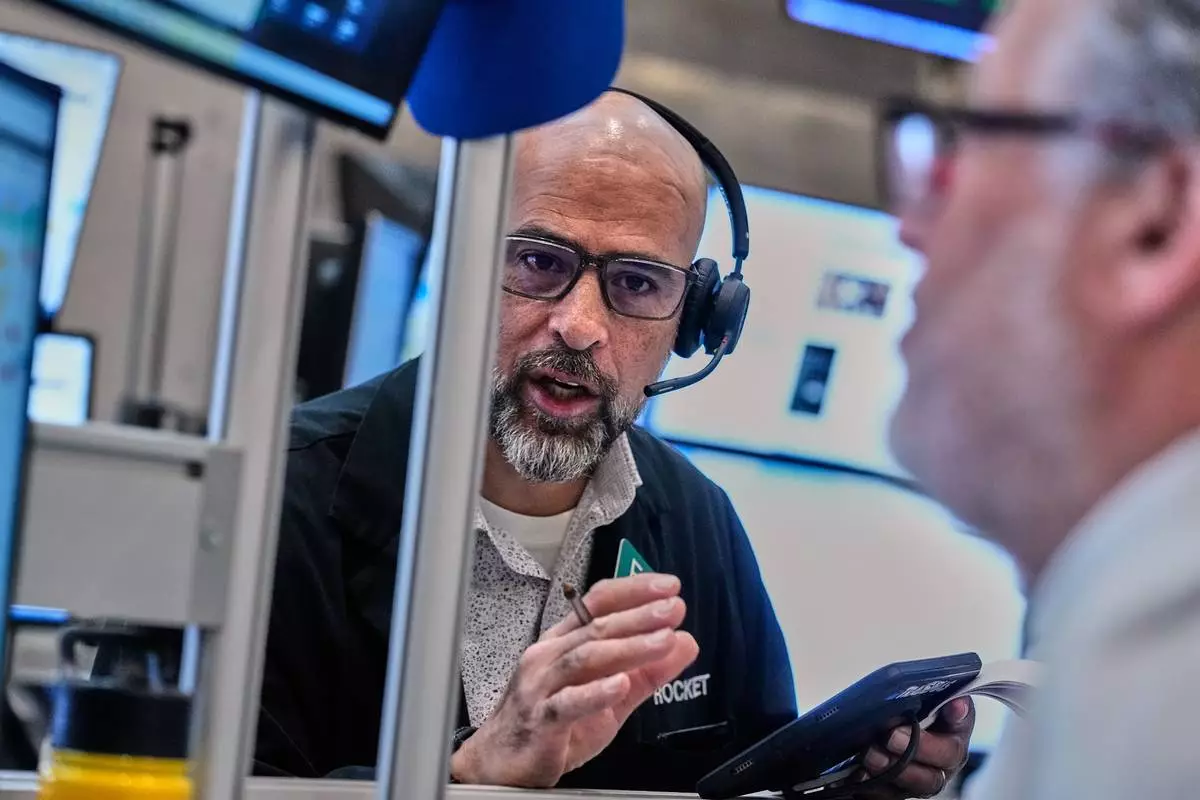
Options traders Steven Rodriguez, left, and Marty Handler work on the floor of the New York Stock Exchange, Wednesday, June 3, 2026. (AP Photo/Richard Drew)

Options traders Steven Rodriguez, left, and Marty Handler work on the floor of the New York Stock Exchange, Wednesday, June 3, 2026. (AP Photo/Richard Drew)

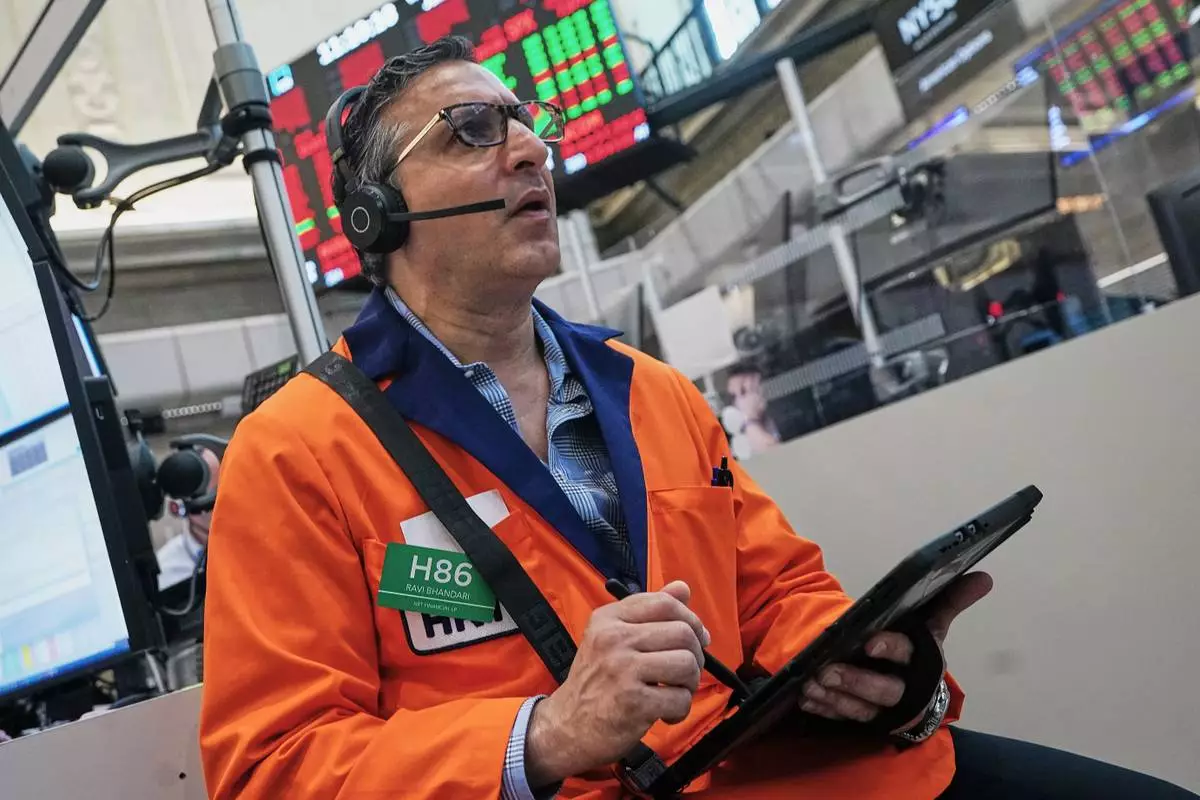
Options trader Ravi Bhandari works on the floor of the New York Stock Exchange, Wednesday, June 3, 2026. (AP Photo/Richard Drew)

Options trader Ravi Bhandari works on the floor of the New York Stock Exchange, Wednesday, June 3, 2026. (AP Photo/Richard Drew)

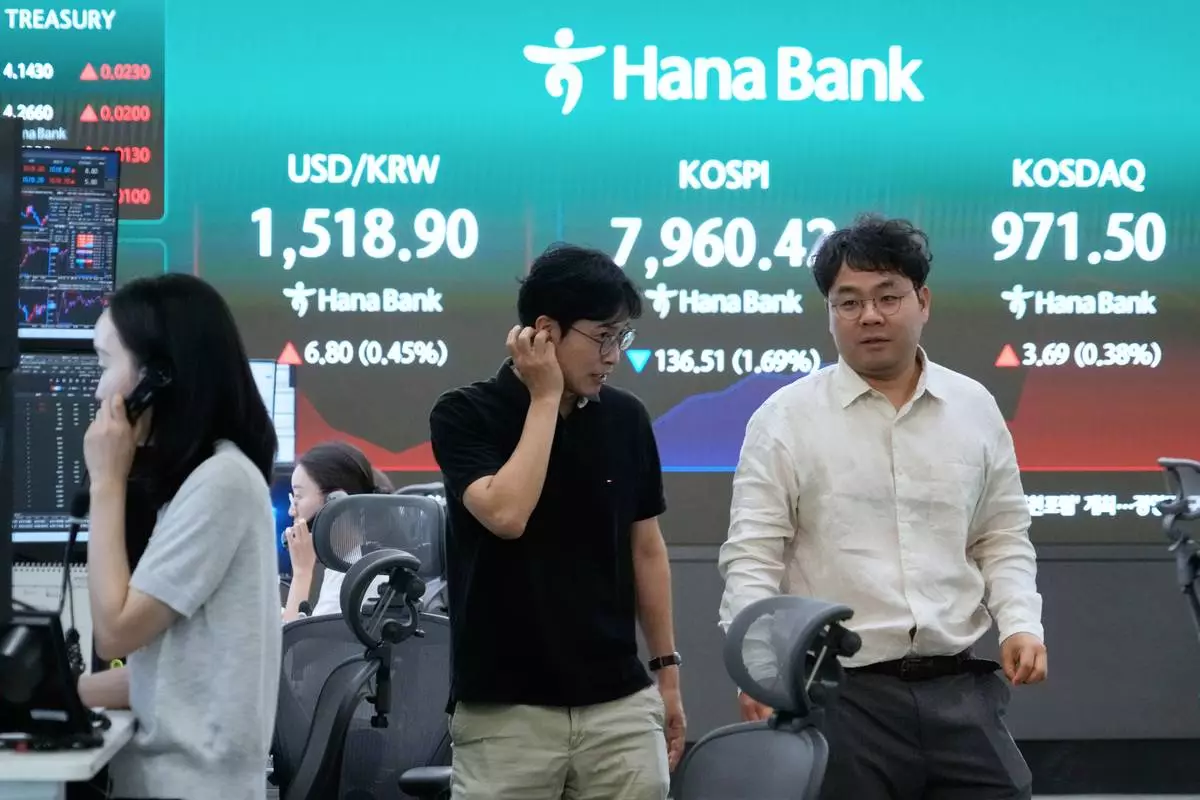
Currency traders pass by a screen showing the Korea Composite Stock Price Index (KOSPI) and the foreign exchange rate between U.S. dollar and South Korean won at the foreign exchange dealing room of the Hana Bank headquarters in Seoul, South Korea, Wednesday, June 10, 2026. (AP Photo/Ahn Young-joon)

Currency traders pass by a screen showing the Korea Composite Stock Price Index (KOSPI) and the foreign exchange rate between U.S. dollar and South Korean won at the foreign exchange dealing room of the Hana Bank headquarters in Seoul, South Korea, Wednesday, June 10, 2026. (AP Photo/Ahn Young-joon)

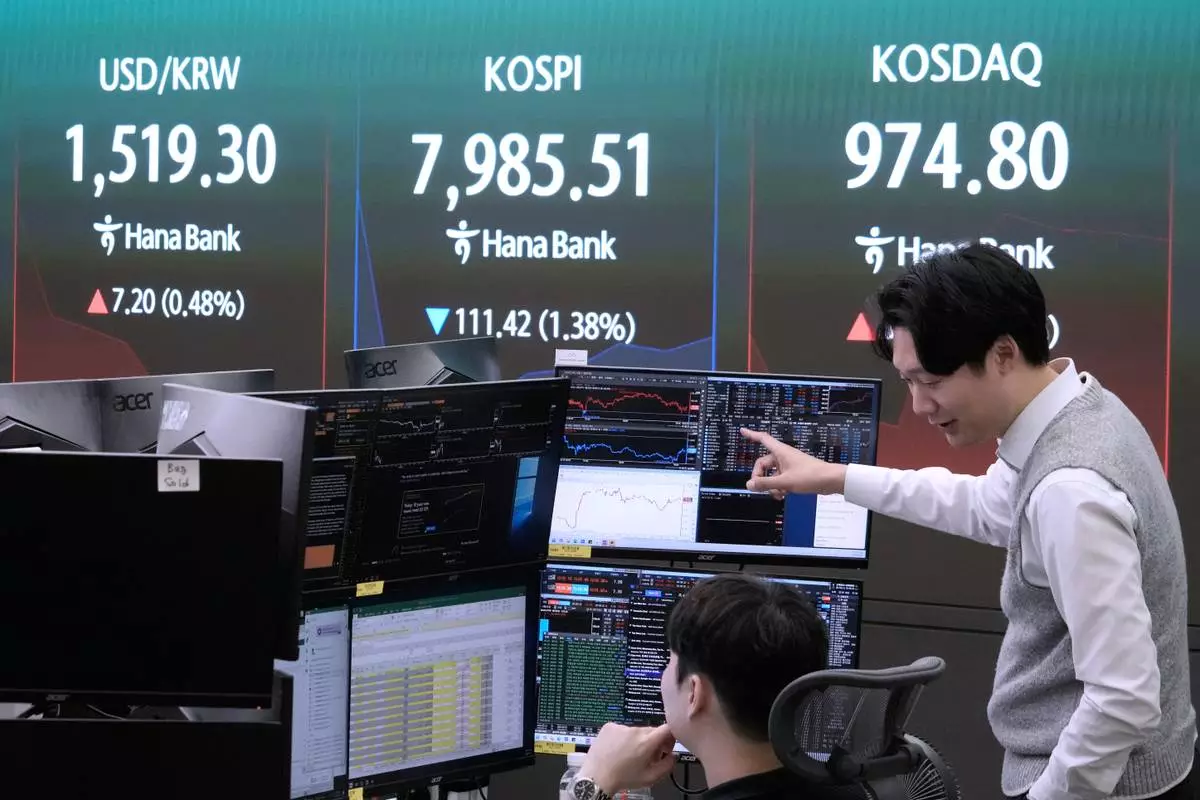
Currency traders work near a screen showing the Korea Composite Stock Price Index (KOSPI) and the foreign exchange rate between U.S. dollar and South Korean won at the foreign exchange dealing room of the Hana Bank headquarters in Seoul, South Korea, Wednesday, June 10, 2026. (AP Photo/Ahn Young-joon)

Currency traders work near a screen showing the Korea Composite Stock Price Index (KOSPI) and the foreign exchange rate between U.S. dollar and South Korean won at the foreign exchange dealing room of the Hana Bank headquarters in Seoul, South Korea, Wednesday, June 10, 2026. (AP Photo/Ahn Young-joon)

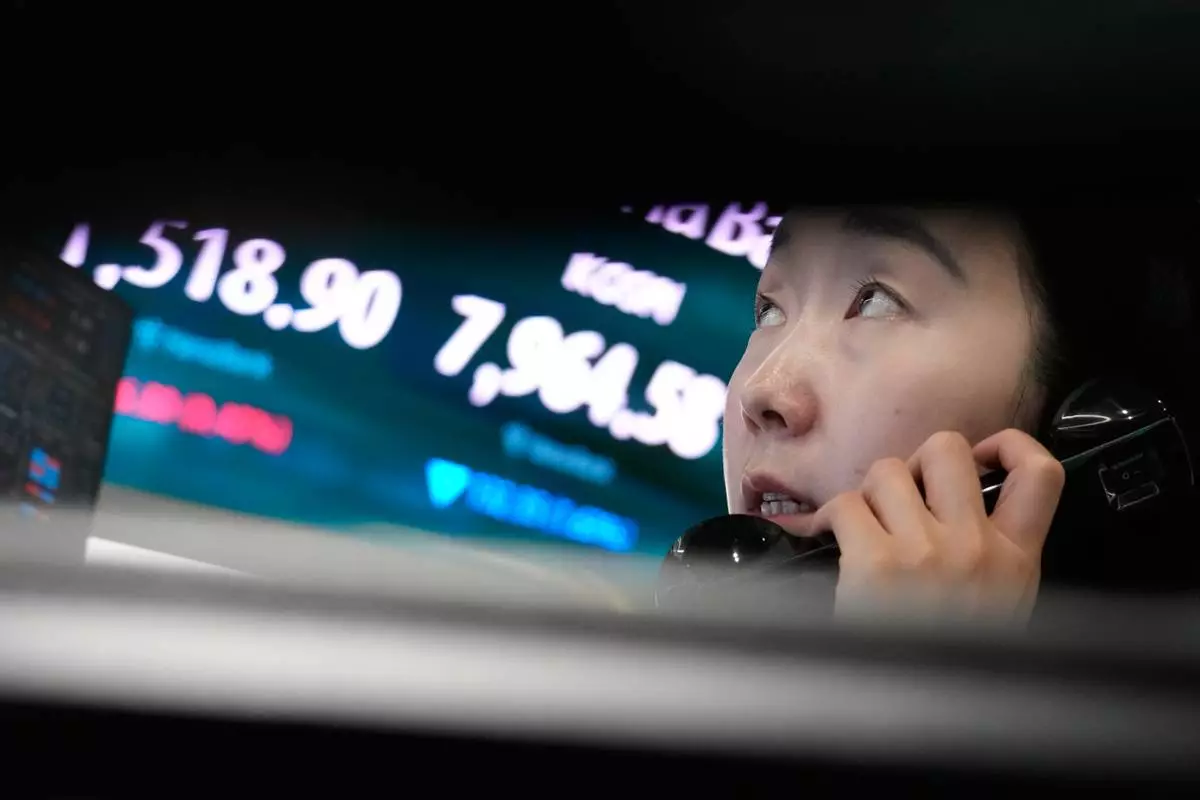
A currency trader talks on the phone near a screen showing the Korea Composite Stock Price Index (KOSPI) and the foreign exchange rate between U.S. dollar and South Korean won at the foreign exchange dealing room of the Hana Bank headquarters in Seoul, South Korea, Wednesday, June 10, 2026. (AP Photo/Ahn Young-joon)

A currency trader talks on the phone near a screen showing the Korea Composite Stock Price Index (KOSPI) and the foreign exchange rate between U.S. dollar and South Korean won at the foreign exchange dealing room of the Hana Bank headquarters in Seoul, South Korea, Wednesday, June 10, 2026. (AP Photo/Ahn Young-joon)

Recommended Articles