EL SEGUNDO, Calif.--(BUSINESS WIRE)--Jun 10, 2026--
KARL STORZ, a global leader in endoscopic and minimally invasive surgical technology, has received FDA clearance for the Rubina™ Lens exoscope for open surgery, broadening the company’s near-infrared (NIR) imaging ecosystem across open and minimally invasive procedures in the United States.
This press release features multimedia. View the full release here: https://www.businesswire.com/news/home/20260610715509/en/
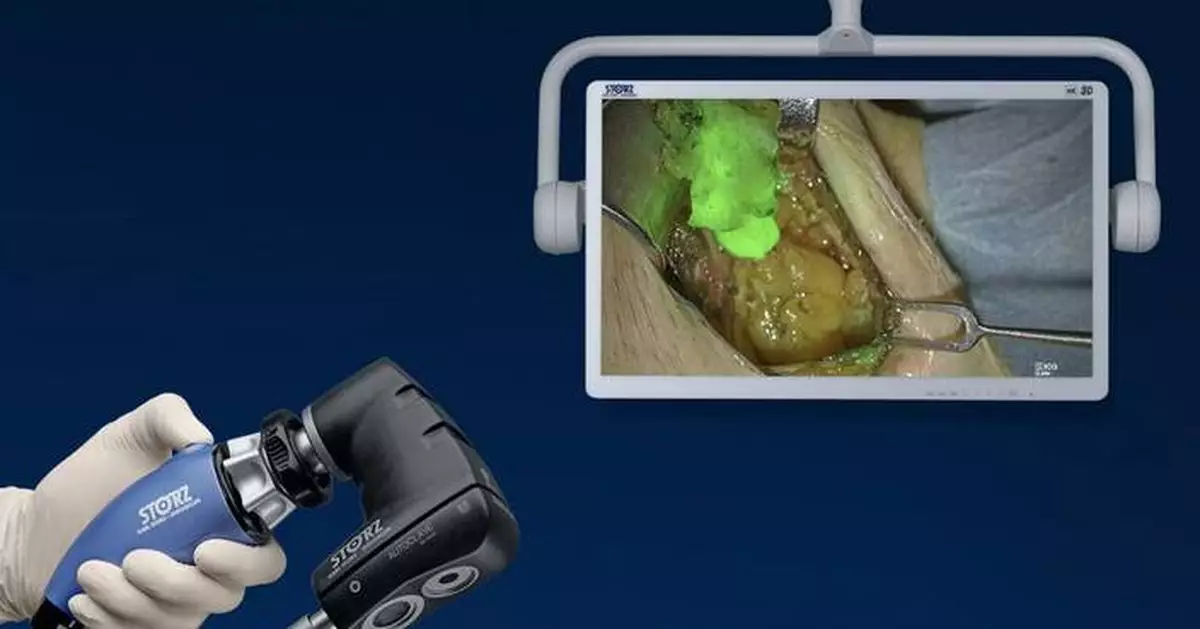
The digital, camera‑based Rubina™ Lens exoscope displays a real‑time, magnified 4K image of the surgical field on a monitor. With the ability to switch into NIR imaging using indocyanine green (ICG), the Rubina™ Lens exoscope helps reveal important information that cannot be seen with the naked eye, supporting more informed decision‑making during open surgery.
“The Rubina Lens extends real-time fluorescence visualization into open surgery, integrating seamlessly with existing OR platforms,” said Fernando Morales, Vice President, Surgical & OR Integration, KARL STORZ United States. “It enables surgeons to incorporate NIR imaging into open procedures without unnecessary complexity or workflow burden.”
The Rubina™ Lens is indicated for real-time tissue perfusion assessment, lymphatic mapping, and breast surgery and is designed for use in any open surgical procedure where NIR imaging with ICG may support intraoperative decision making. As with the fully endoscopic version, Rubina™ Lens gives the surgeon several options for viewing the NIR/ICG fluorescence imaging signal. By integrating directly with existing KARL STORZ IMAGE1 S™ Rubina™ imaging platforms, the Rubina™ Lens enables surgical teams to expand fluorescence capabilities without additional capital investment. The exoscope can be used handheld or mounted on a holding arm, providing flexibility across surgical settings.
Already approved for use in markets outside the United States, the Rubina™ Lens exoscope brings proven NIR imaging technology to US surgeons performing open procedures, addressing the need for consistent visualization across surgical approaches. To learn more about Rubina™ Lens for open surgery and other KARL STORZ NIR/ICG imaging solutions, visit karlstorz.com.
About KARL STORZ
KARL STORZ is an innovative leader in endoscopic technology and surgical imaging across virtually all surgical specialties. The company’s advanced imaging and integration solutions are designed to enhance collaboration to improve clinical efficiency and outcomes inside the hospital and other sites of care. Based in Germany, KARL STORZ is a global family-owned company that designs, engineers, manufactures, and markets all its products with an emphasis on visionary design, precision craftsmanship, and clinical effectiveness. For more information, visit www.karlstorz.com.
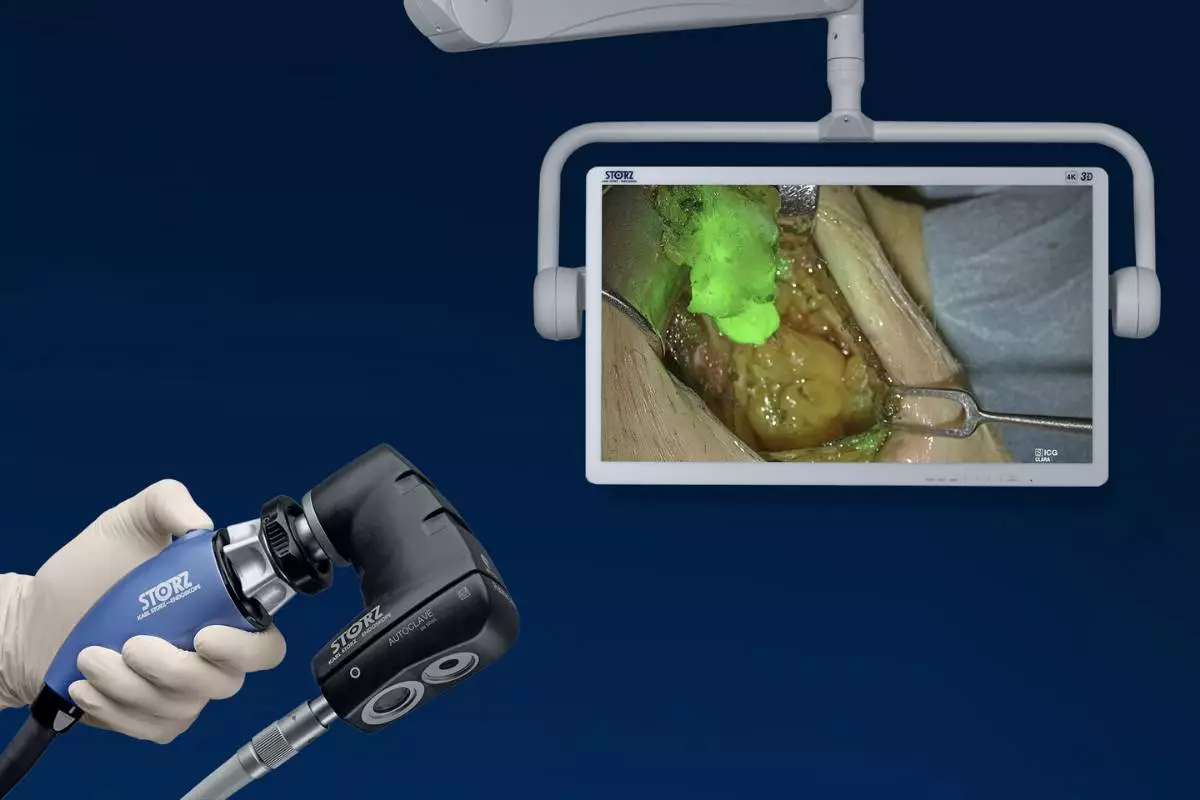
The Rubina™ Lens digital exoscope displays a magnified 4K image of the surgical field on a monitor. The ability to switch to NIR/ICG fluorescence imaging helps reveal information that cannot be seen with the naked eye.
NEW YORK (AP) — Throughout the New York Knicks' playoff run, thousands of deliriously happy fans have flooded the streets outside Madison Square Garden, often invoking a two-word rallying cry: “We outside.”
But for a pivotal game four of the NBA Finals on Wednesday, spontaneous outdoor gatherings won’t be allowed in front of the team’s famed arena.
A security plan released by the New York Police Department will bar fans from gathering around the Manhattan arena unless they are going to the game or have “business specific to that area.”
Instead, the city said it would allow 1,000 fans access to a watch party outside the Garden — a scaled-down version of previous viewing parties, which the NYPD had sought to have canceled for rowdiness, before later reversing course.
Otherwise, fans had to prove they had an “authorized reason” to be inside a security perimeter that stretches for several blocks around the arena. While bars and restaurants could stay open, they were subject to “strict capacity limits,” police said.
The measures incensed some long-suffering fans and nearby businesses, along with the Knicks owner, James Dolan — whose game-three invitation to President Donald Trump prompted another frozen zone in the area and prevented an outdoor watch party from going forward.
In a statement on Wednesday, the Madison Square Garden Company accused the mayor of transforming the streets around the arena into a “police state” in order to “freeze out fans from celebrating.”
Because of the restrictions, Dolan said on Wednesday afternoon that he would not be putting up TV screens for Wednesday's watch party. And he disputed the city's claim that MSG had only requested a permit for up to 999 people.
Still, to some New Yorkers, the security restrictions appeared to be a betrayal of Mayor Zohran Mamdani’s broader agenda, which included improving access to public spaces and limiting how the NYPD polices major events. The conflict has also focused attention once again on the shaky alliance between the mayor and his police commissioner, Jessica Tisch.
“The NYPD is historically extremely risk-averse to disorderly behavior by crowds, whether they be celebratory or protesting,” said Jeffrey Fagan, a law professor at Columbia University who studies policing. “The mayor now faces a difficult calculus between the strong emotions of Knicks fans and the political risks if crowd control isn’t airtight.”
In recent days, members of Mamdani’s administration have pressed Tisch to allow some version of the watch parties to go forward outside Madison Square Garden, according to two people familiar with the meetings, who spoke with The Associated Press on condition of anonymity because they weren't authorized to discuss the discussions.
In exchange, Tisch has advocated for the security perimeter, citing the need to control against rowdy crowds that have at times become violent and unruly. Some recent fan gatherings in Manhattan have led to dozens of arrests and several injuries to police officers.
Following the Knicks' loss Monday, at least 21 people were taken into custody. The NYPD said it is currently searching for members of a group that ripped a San Antonio Spurs jersey off a man while punching and kicking him.
Shaun Geddes, a Knicks fan who runs a popular podcast about the team, said he had celebrated multiple series-clinching victories outside the arena and found the vast majority of fans were respectful.
“Then there's a small group of people out there cosplaying as Knicks fans and doing performative things to go viral on TikTok,” Geddes added. “But being passionate as a Knicks fan doesn’t mean assaulting anyone.”
The regulations have also left businesses around the arena concerned that they could face a major drop in foot traffic on what would have otherwise been one of the busiest days of the year.
“It’s ruining my business,” said Angela Reilly, the owner of Molly Wee, an Irish pub near the arena. “I haven’t seen anything like this level of security in 46 years.”
In response to criticism about the closure, city officials have noted there isn't a recent precedent for the position in which they now find themselves. The Knicks have not been to an NBA Finals since 1999. Most of the city’s other major sports teams play in the less-crowded outer boroughs or in New Jersey.
But when the New York Rangers — who also play in the Garden— last won the Stanley Cup, in 1994, the NYPD took another approach to managing elated fans.
Ahead of the game, police announced they would clear the area around the arena of potential projectiles, like metal trash cans or debris, but would allow fans to move freely.
“We expect the fans to be extremely vocal,” Allen Hoehl, former NYPD chief, said at a news conference. “If they want to go from here to there, we’ll escort them in any direction.”
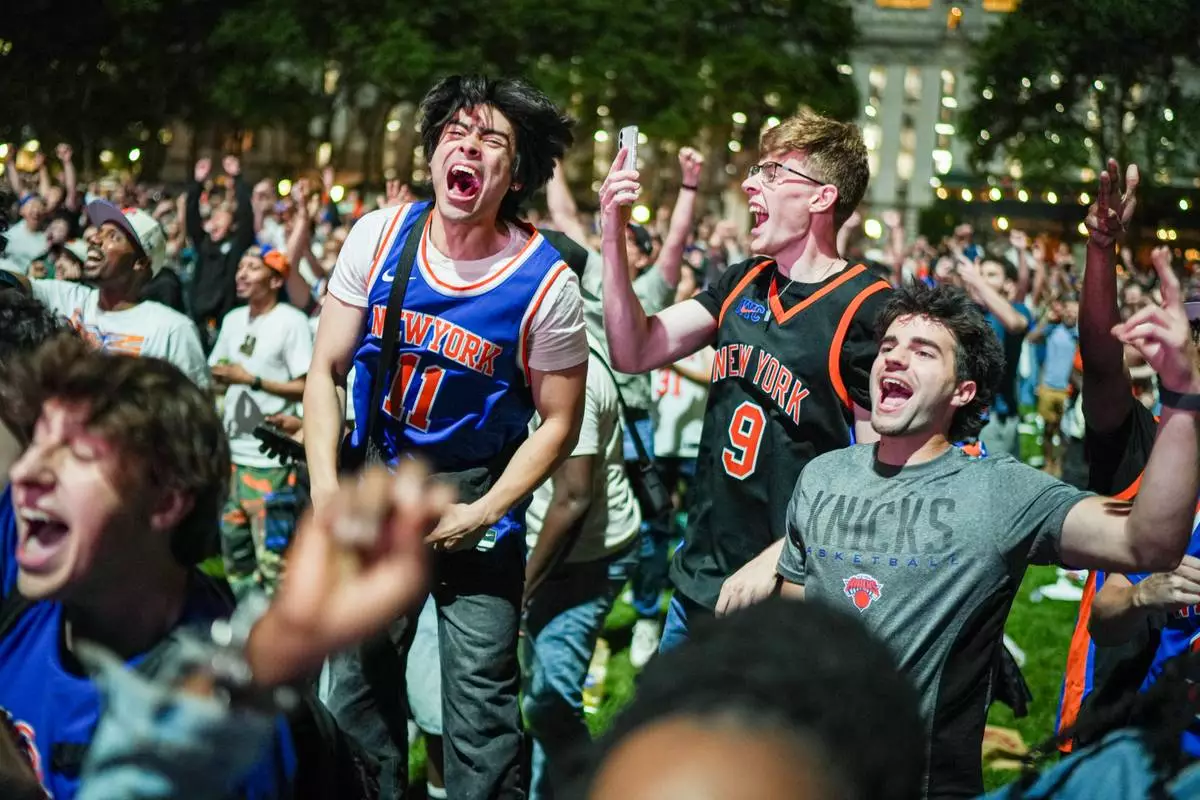
New York Knicks fans cheer at a watch party during Game 3 of the NBA Finals basketball series between the Knicks and the San Antonio Spurs, Monday, June 8, 2026, in New York. (AP Photo/Ryan Murphy)
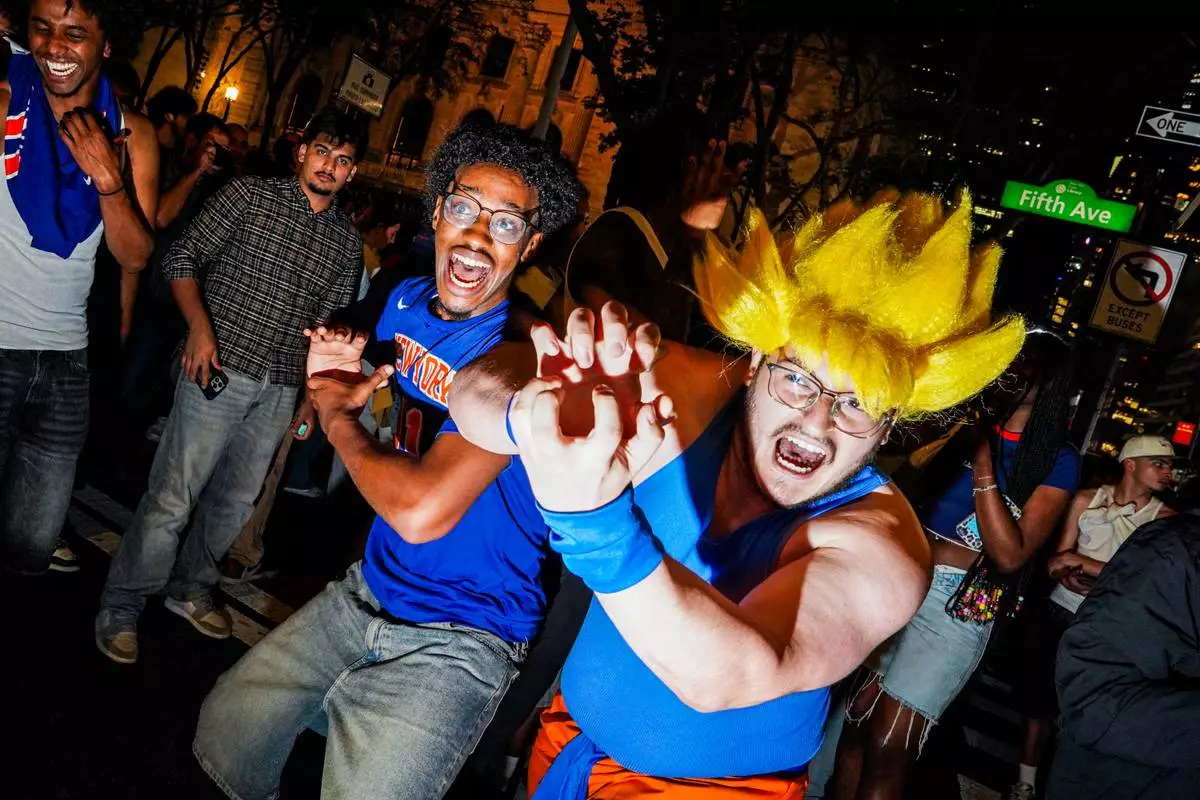
New York Knicks fans celebrate outside of a watch party in Bryant Park for Game 3 of the NBA Finals basketball series between the Knicks and the San Antonio Spurs, Monday, June 8, 2026, in New York. (AP Photo/Ryan Murphy)
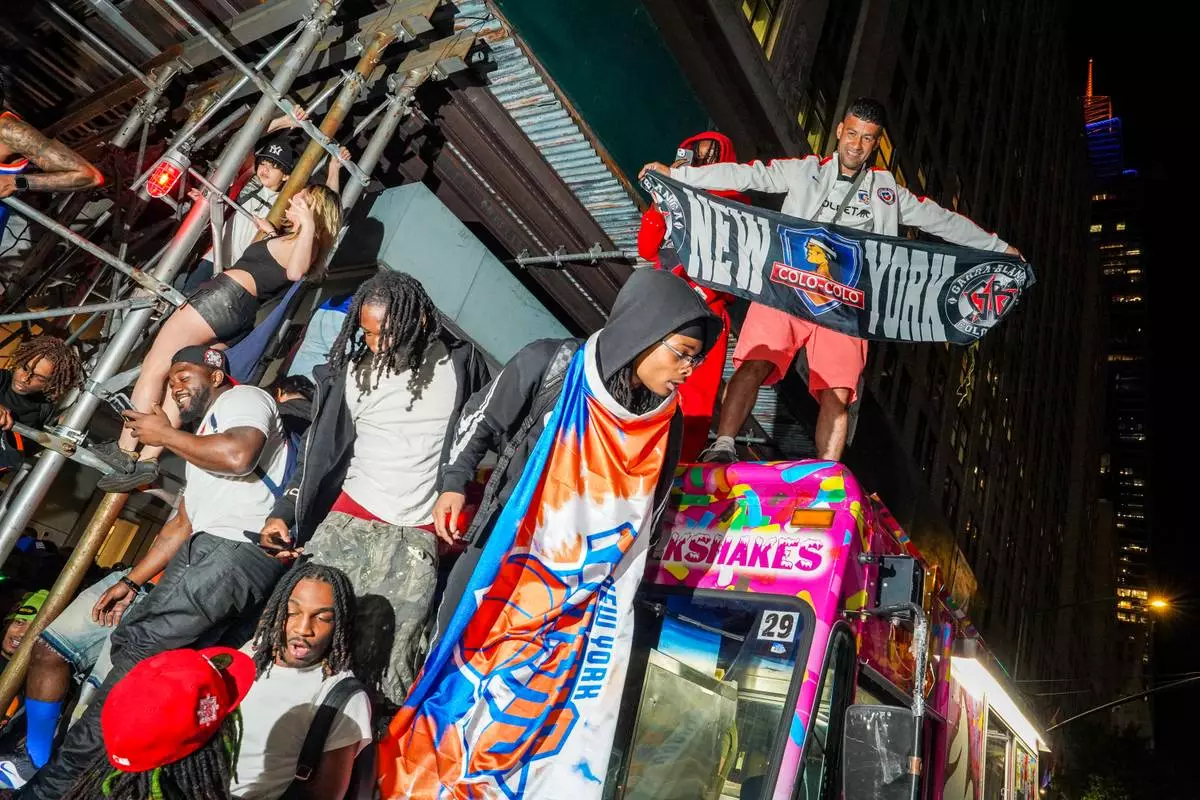
New York Knicks fans celebrate on the street outside of a watch party in Bryant Park for Game 3 of the NBA Finals basketball series between the Knicks and the San Antonio Spurs, Monday, June 8, 2026, in New York. (AP Photo/Ryan Murphy)