Skip to Content Facebook Feature Image

Nevada GOP voters choose Trump-backed US House candidate in one of state's high-profile races

News

Nevada GOP voters choose Trump-backed US House candidate in one of state's high-profile races
News

News

Nevada GOP voters choose Trump-backed US House candidate in one of state's high-profile races

2026-06-11 00:54 Last Updated At:01:00

LAS VEGAS (AP) — Retired Air Force Lt. Col. David Flippo has won the Republican primary in Nevada’s 2nd Congressional District after securing President Donald Trump’s endorsement in the closing weeks of the campaign.

The race, which was called Wednesday, put Trump opposite Republican Nevada Gov. Joe Lombardo and retiring Rep. Mark Amodei, who both backed former state Sen. James Settelmeyer. Amodei announced he was retiring after 15 years, opening up a competitive primary for Nevada’s only Republican-held House seat.

Flippo said he will fight “relentlessly” for secure borders, American energy, tax cuts, national defense and “the America First agenda our country needs.”

“Nevada deserves a fighter, and that’s exactly what I will deliver,” he said in a statement.

Democrats had hoped for a Flippo victory, thinking it would make it easier for them to win over less partisan voters in November in the conservative-leaning district. They nominated the chief of staff to state Attorney General Aaron Ford, former majority floor leader Teresa Benitez-Thompson.

“I will ensure that Nevada families have an authentic Nevadan voice fighting for their needs in Washington DC,” Benitez-Thompson said in a Wednesday morning statement.

The 2nd District race is one of several Nevada contests that will be watched closely this year. In southern Nevada’s 3rd Congressional District, Democratic Rep. Susie Lee will face Marty O’Donnell, a composer known for writing the soundtrack to the video game “Halo.”

Trump won the 3rd district in 2024 and backed O’Donnell, who thanked Trump in his victory statement.

Tuesday’s primary also set the general election contest for governor, with Ford defeating a progressive candidate in the Democratic primary and moving on to face Gov. Lombardo. The incumbent, a former Clark County sheriff, is running on his record of public safety and job creation while pledging to work on housing affordability in a second term.

Ford is tying Lombardo to Trump in placing blame for soaring prices across the state and has pledged to lower costs for families. He would be the state’s first Black governor if elected in November.

In other races for statewide offices, Republican primaries for attorney general and secretary of state included several candidates who had pushed election conspiracy theories or been skeptical of election operations. Adriana Guzmán Fralick, who has expressed concerns about voting security, won the GOP nomination for attorney general and will face Democratic state Senate Majority Leader Nicole Cannizzaro.

The Republican primary for secretary of state, the office that oversees elections, included Jim Marchant, a former state lawmaker who has said the 2020 election “ was probably stolen,” and Sharron Angle, a former state lawmaker who was part of an effort to block the certification of Nevada’s 2020 election results. Another candidate who was competitive in the race, Shirley Folkins-Roberts, is an attorney who has denied that there is widespread voting fraud in Nevada.

In the 2nd District race, Flippo said he understands issues important to the region, including mining, water rights and fuel prices. He sought to turn Settelmeyer’s long political record into a liability, pointing to votes he said did not match conservative values.

He moved to the district this election cycle after losing a race in southern Nevada in 2024. The 2nd District covers all northern Nevada. It mostly rural but includes the major battleground county of Washoe, home to Reno.

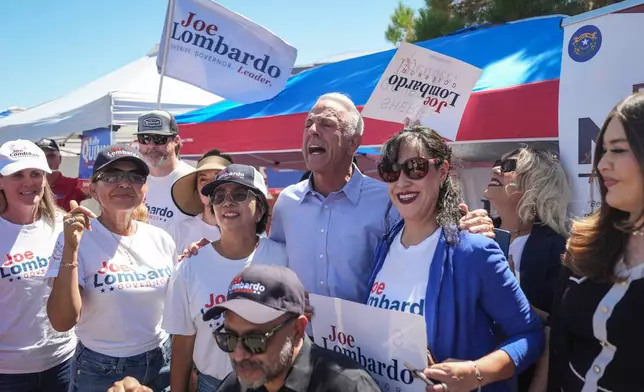
Nevada Gov. Joe Lombardo, center, poses with supporters outside a vote center Tuesday, June 9, 2026, in Las Vegas. (AP Photo/Jae C. Hong)
Nevada Gov. Joe Lombardo, center, poses with supporters outside a vote center Tuesday, June 9, 2026, in Las Vegas. (AP Photo/Jae C. Hong)

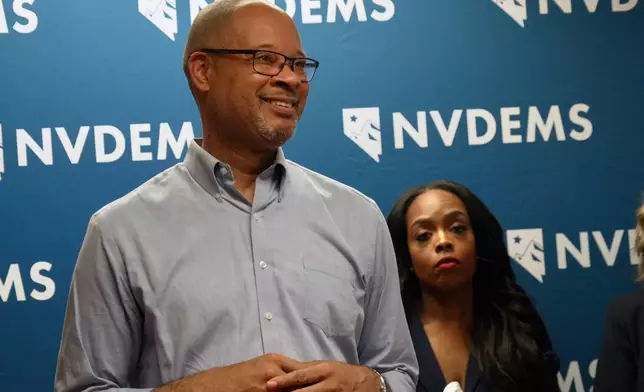
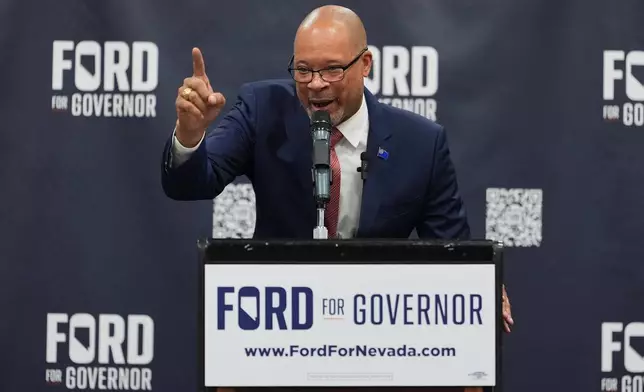
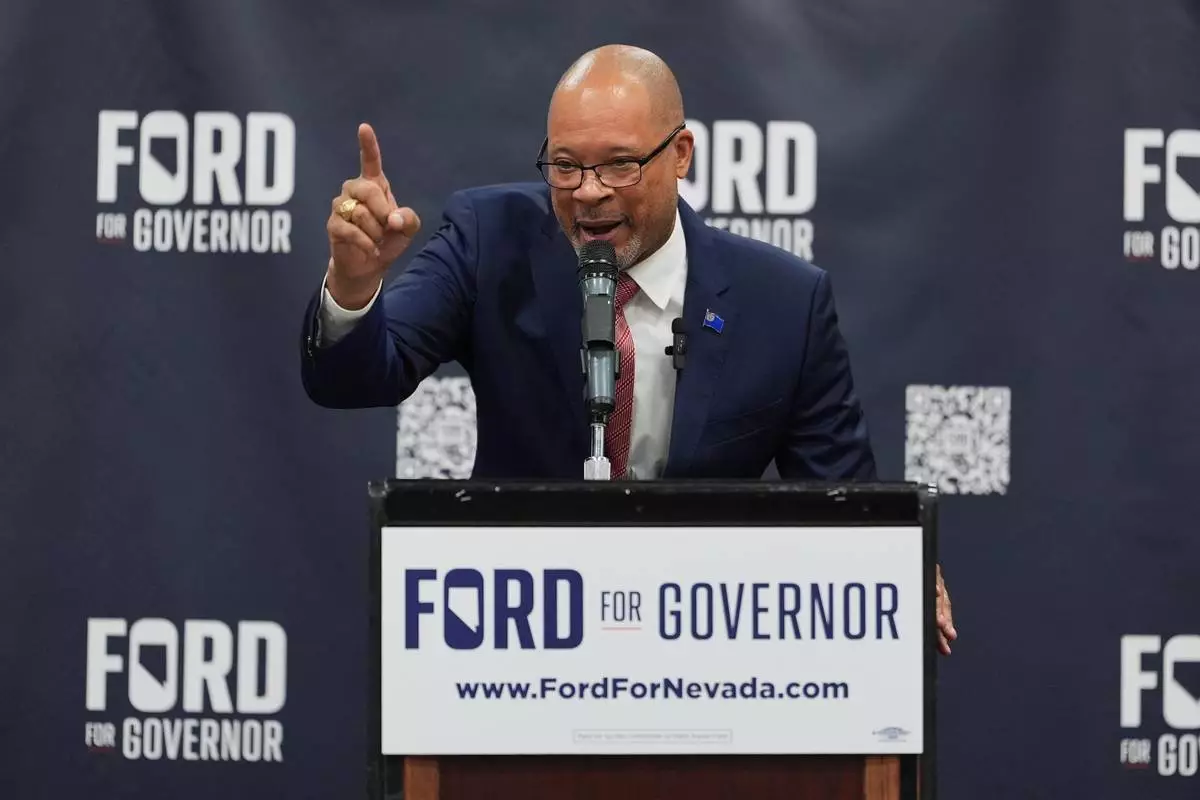
Gubernatorial candidate Aaron Ford, attorney general of Nevada, speaks during a primary election night watch party after winning the Democratic nomination Tuesday, June 9, 2026, in Las Vegas. (AP Photo/Jae C. Hong)
Gubernatorial candidate Aaron Ford, attorney general of Nevada, speaks during a primary election night watch party after winning the Democratic nomination Tuesday, June 9, 2026, in Las Vegas. (AP Photo/Jae C. Hong)
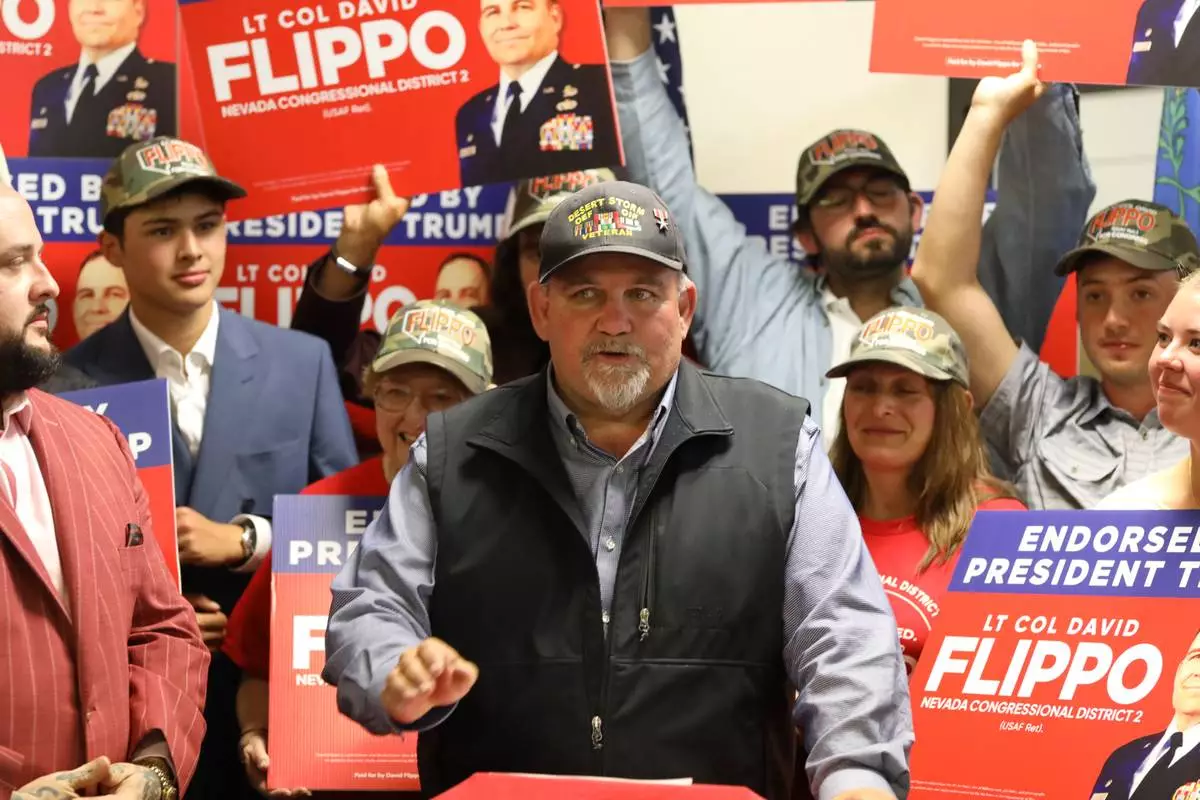
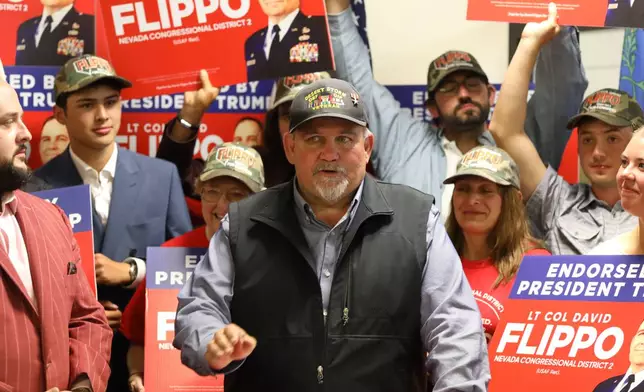
David Flippo, a Republican candidate for Congress in Nevada's 2nd district, speaks during a primary election night watch party Tuesday, June 9, 2026, in Reno, Nev. (AP Photo/William Hale Irwin)


David Flippo, a Republican candidate for Congress in Nevada's 2nd district, speaks during a primary election night watch party Tuesday, June 9, 2026, in Reno, Nev. (AP Photo/William Hale Irwin)

NEW YORK (AP) — Artificial-intelligence stocks are yo-yoing Wednesday, as the former superstars of Wall Street continue to face scrutiny for their success, and they're dragging the U.S. market with them.

The S&P 500 sank 1% after bouncing between a modest gain and a loss of 1.1%, and it's heading toward its first back-to-back drop in three weeks. The Dow Jones Industrial Average was down 627 points, or 1.2%, as of 12:52 p.m. Eastern time, and the Nasdaq composite was 1.3% lower.

Wall Street has been shaky since last week, when AI stocks went from roaring to records to suddenly turning lower. Among the worries is that their prices have simply shot too high, too fast because of AI mania. The question now is whether the break lower has cleared out excessive optimism that may have built into their stock prices, or if it's just the start of a longer downturn.

Super Micro Computer, which sells AI servers, tumbled 18.4% after saying late Tuesday that it plans to raise $7 billion in cash by selling shares of stock and convertible preferred stock. Such moves raise the most money for companies when their stock prices are high, and they can dilute the ownership stakes of existing shareholders.

Micron Technology went from an early loss of nearly 4% to a modest gain and back to a loss of 4%. It's coming off a wild stretch where it sank 7.7% last Thursday, then plunged another 13.3% Friday and rallied 9.9% Monday. Despite all the swings, the computer memory maker's stock is still up 214.3% for the year so far.

Stocks of companies whose products and services help to make semiconductors had been the strongest forces pushing upward on the S&P 500 during the morning, but they trimmed their gains as the day progressed. KLA, for example, pared its early jump of 7.7% to 0.6%.

Some of the pressure on AI stocks could be coming from investors pulling cash out to prepare for high-profile debuts on the U.S. stock exchange for several AI giants. SpaceX's initial public offering could come later this week, for example.

The market's swings came even as stocks got a bit of a boost from an update on U.S. inflation that arrived before trading began.

While the report said inflation accelerated to its highest level in three years, the numbers were pretty much exactly what economists had forecast. The rise in an important underlying measure of inflation, meanwhile, was not as bad from April through May as economists expected.

That helped Treasury yields ease a bit in the bond market, which in turn relaxed some of the pressure that’s built up on the stock market.

High bond yields can slow entire economies and undercut prices for all kinds of investments, including stocks and cryptocurrencies. They hit investments seen as the most expensive in particular, and some critics are calling AI a bubble where investment inflated too far.

The yield on the 10-year Treasury fell to 4.54% from nearly 4.55% earlier in the morning. The two-year Treasury yield, which more closely tracks expectations for what the Federal Reserve will do with its overnight interest rates, held steady at 4.13%.

Traders have been building bets recently that the Fed will have to hike its main interest rate at least once this year, given how high inflation is and how strong the U.S. job market remains. Wednesday’s inflation update caused them to trim their bets by a smidgen, according to data from CME Group.

Keeping things uncertain are continued swings for crude oil prices, which have been rising and falling with hopes that the United States and Iran can reach a deal to reopen the Strait of Hormuz to oil tankers.

The price for a barrel of Brent crude oil rose 2.7% to $93.89 after President Donald Trump warned Iran would “pay the price” for stalled negotiations between the two on their war.

In stock markets abroad, indexes in Europe pared their losses following sharper drops in Asia.

South Korea’s Kospi tumbled 4.5%, hurt by losses for tech giants Samsung Electronics and SK Hynix.

Tokyo’s Nikkei 225 sank 1.9% after data showed Japan’s producer price index, a measure for prices at the wholesale level, rose in May at the fastest pace in more than three years. Shares of technology and telecommunications giant SoftBank Group, which has a strong AI focus, lost 8.3%.

AP Business Writers Chan Ho-him and Matt Ott contributed to this report.

Options traders Steven Rodriguez, left, and Marty Handler work on the floor of the New York Stock Exchange, Wednesday, June 3, 2026. (AP Photo/Richard Drew)

Options traders Steven Rodriguez, left, and Marty Handler work on the floor of the New York Stock Exchange, Wednesday, June 3, 2026. (AP Photo/Richard Drew)

Options trader Ravi Bhandari works on the floor of the New York Stock Exchange, Wednesday, June 3, 2026. (AP Photo/Richard Drew)

Options trader Ravi Bhandari works on the floor of the New York Stock Exchange, Wednesday, June 3, 2026. (AP Photo/Richard Drew)

Currency traders pass by a screen showing the Korea Composite Stock Price Index (KOSPI) and the foreign exchange rate between U.S. dollar and South Korean won at the foreign exchange dealing room of the Hana Bank headquarters in Seoul, South Korea, Wednesday, June 10, 2026. (AP Photo/Ahn Young-joon)

Currency traders pass by a screen showing the Korea Composite Stock Price Index (KOSPI) and the foreign exchange rate between U.S. dollar and South Korean won at the foreign exchange dealing room of the Hana Bank headquarters in Seoul, South Korea, Wednesday, June 10, 2026. (AP Photo/Ahn Young-joon)

Currency traders work near a screen showing the Korea Composite Stock Price Index (KOSPI) and the foreign exchange rate between U.S. dollar and South Korean won at the foreign exchange dealing room of the Hana Bank headquarters in Seoul, South Korea, Wednesday, June 10, 2026. (AP Photo/Ahn Young-joon)

Currency traders work near a screen showing the Korea Composite Stock Price Index (KOSPI) and the foreign exchange rate between U.S. dollar and South Korean won at the foreign exchange dealing room of the Hana Bank headquarters in Seoul, South Korea, Wednesday, June 10, 2026. (AP Photo/Ahn Young-joon)

A currency trader talks on the phone near a screen showing the Korea Composite Stock Price Index (KOSPI) and the foreign exchange rate between U.S. dollar and South Korean won at the foreign exchange dealing room of the Hana Bank headquarters in Seoul, South Korea, Wednesday, June 10, 2026. (AP Photo/Ahn Young-joon)

A currency trader talks on the phone near a screen showing the Korea Composite Stock Price Index (KOSPI) and the foreign exchange rate between U.S. dollar and South Korean won at the foreign exchange dealing room of the Hana Bank headquarters in Seoul, South Korea, Wednesday, June 10, 2026. (AP Photo/Ahn Young-joon)

Recommended Articles