TORONTO (AP) — Canada introduced legislation on Wednesday that could bar children younger than 16 from having social media accounts unless the companies show they can make their platforms safe.
Canada is joining a growing global effort to tighten safety protections. Canadian government officials said social media platforms can obtain an exemption if they have put in place sufficient safeguards.
Click to Gallery
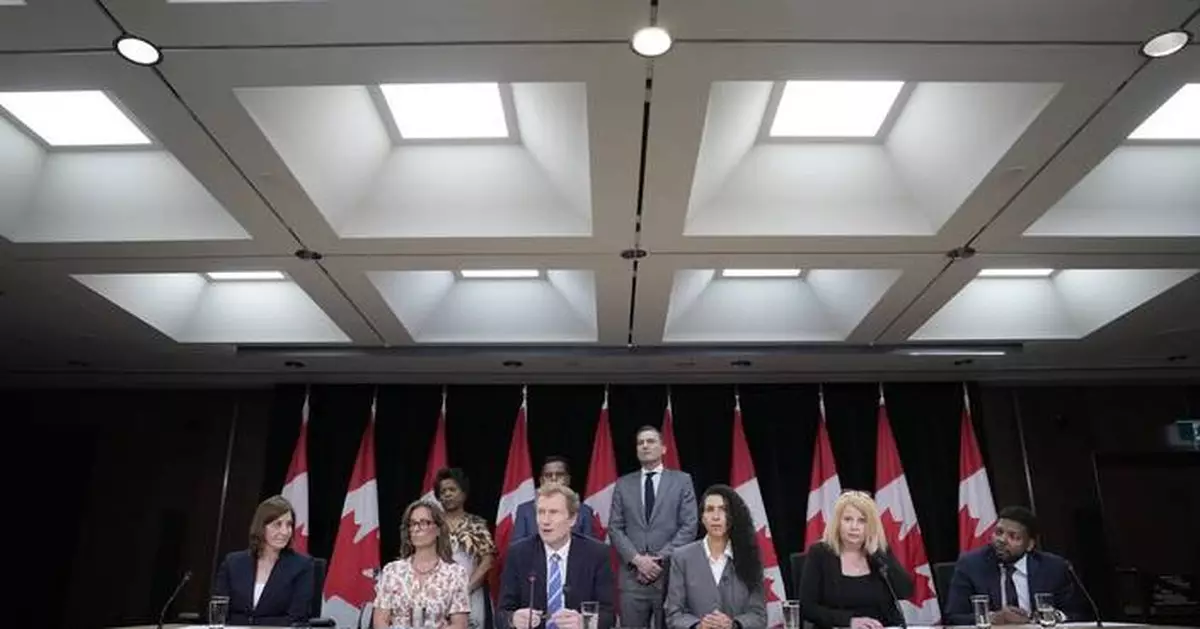
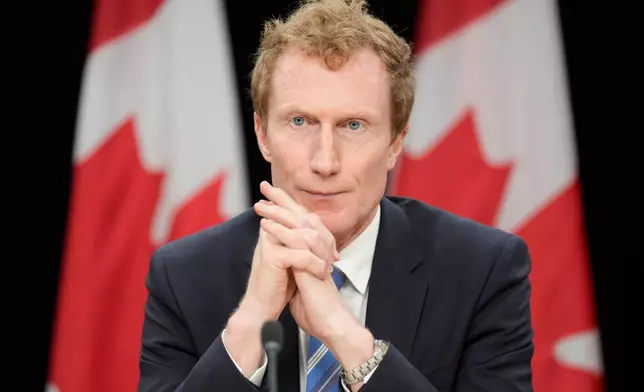
Canadian Identity and Culture Minister Marc Miller looks on during a news conference in Ottawa, Ontario, Wednesday, June 10, 2026. (Adrian Wyld/The Canadian Press via AP)
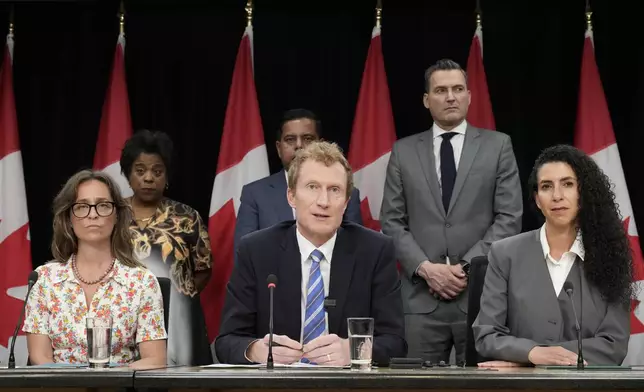
Secretary of State (Children and Youth) Anna Gainey, front left, and MP for Outremont Rachel Bendayan, front right, listen as Canadian Identity and Culture Minister Marc Miller speaks during a news conference in Ottawa, Ontario, Wednesday, June 10, 2026. (Adrian Wyld/The Canadian Press via AP)
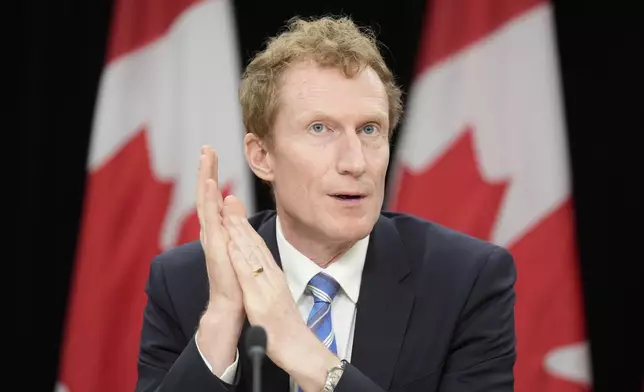
Canadian Identity and Culture Minister Marc Miller speaks during a news conference in Ottawa, Ontario, Wednesday, June 10, 2026. (Adrian Wyld/The Canadian Press via AP)
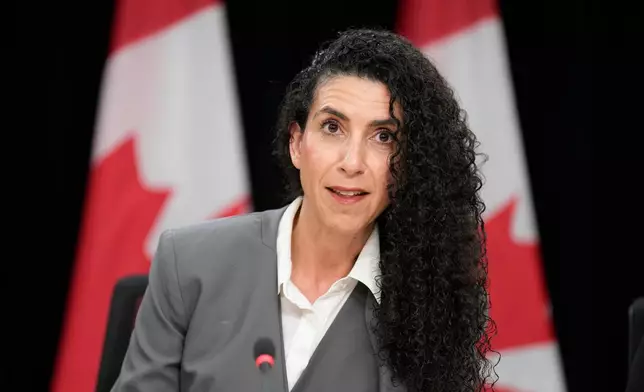
MP for Outremont, Rachel Bendayan speaks during a news conference in Ottawa, Ontario, Wednesday, June 10, 2026. (Adrian Wyld/The Canadian Press via AP)
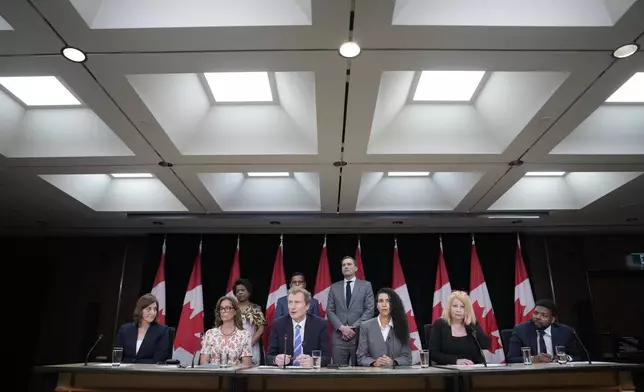
Canadian Identity and Culture Minister Marc Miller speaks as colleagues and medical professionals look on during a news conference in Ottawa, Ontario, Wednesday, June 10, 2026. (Adrian Wyld/The Canadian Press via AP)
“We are failing our children. Enough is enough,” Marc Miller, Canada’s culture minister, said. “We need basic protection in place."
The legislation covers seven types of harmful content including content that induces children to harm themselves, content that incites violence and foments hatred and non-consensual intimate images.
A new regulator, the Digital Safety Commission of Canada, will be created. Criteria for what exemptions would look like will be announced at a later date. Miller said setting up the regulator could take up to 18 months.
Miller said platforms will need to prove they are safe. Age verification will also be established.
Countries including Australia,Brazil and Indonesia have introduced or announced age-based restrictions or requirements for children’s access to social media. Others including Britain, France, Spain, Denmark, Thailand and South Korea are studying or developing similar approaches.
Platforms in Canada that offer adult content would not be able to obtain an exemption.
The legislation would also regulate the companies behind artificial intelligence chatbots by imposing on them a duty to act responsibly through measures such as crisis intervention protocols.
In Australia, social media companies have revoked access to about 4.7 million accounts identified as belonging to children since the country banned use of the platforms by those under 16, officials said. The law provoked intense debate in Australia about technology use, privacy, child safety and mental health and has prompted other countries to consider similar measures.
A Canadian government official, in a briefing with journalists, said authorities will try to learn lessons from Australia.
Lianna McDonald, Executive Director of the Canadian Centre for Child Protection, applauded the move, noting sextortion on social media is up dramatically.
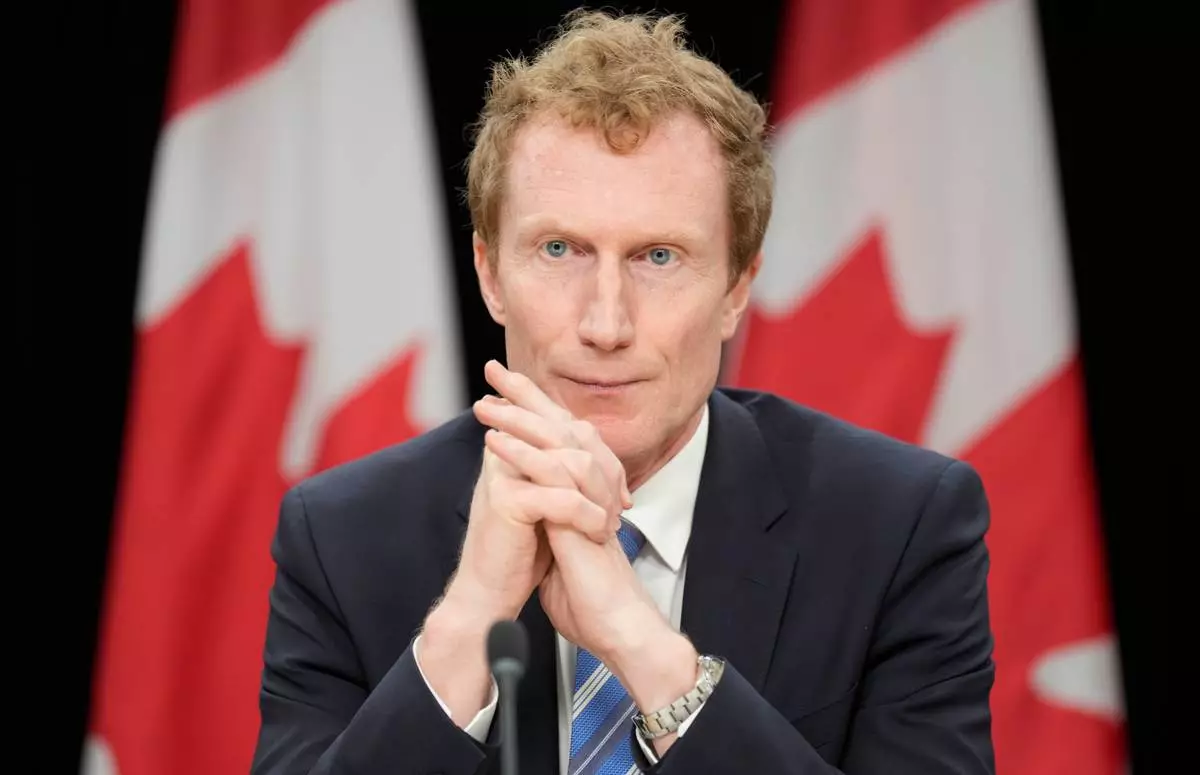
Canadian Identity and Culture Minister Marc Miller looks on during a news conference in Ottawa, Ontario, Wednesday, June 10, 2026. (Adrian Wyld/The Canadian Press via AP)
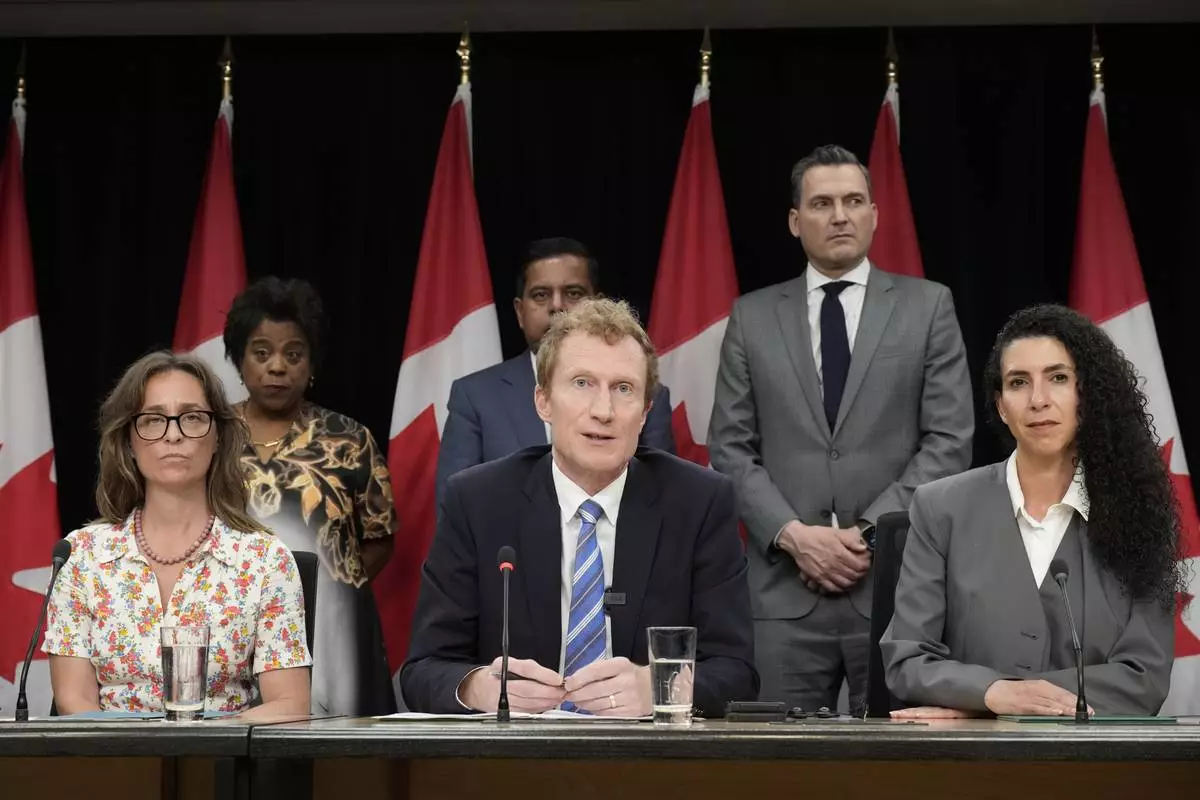
Secretary of State (Children and Youth) Anna Gainey, front left, and MP for Outremont Rachel Bendayan, front right, listen as Canadian Identity and Culture Minister Marc Miller speaks during a news conference in Ottawa, Ontario, Wednesday, June 10, 2026. (Adrian Wyld/The Canadian Press via AP)
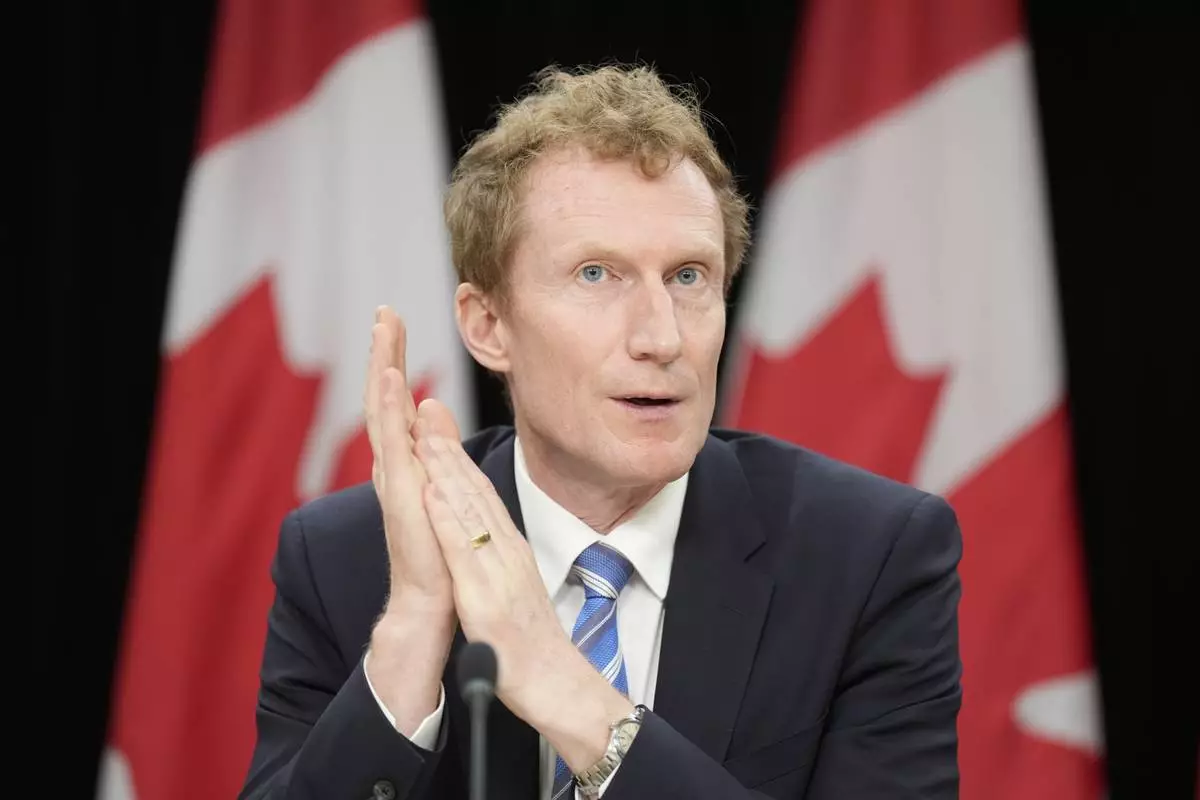
Canadian Identity and Culture Minister Marc Miller speaks during a news conference in Ottawa, Ontario, Wednesday, June 10, 2026. (Adrian Wyld/The Canadian Press via AP)
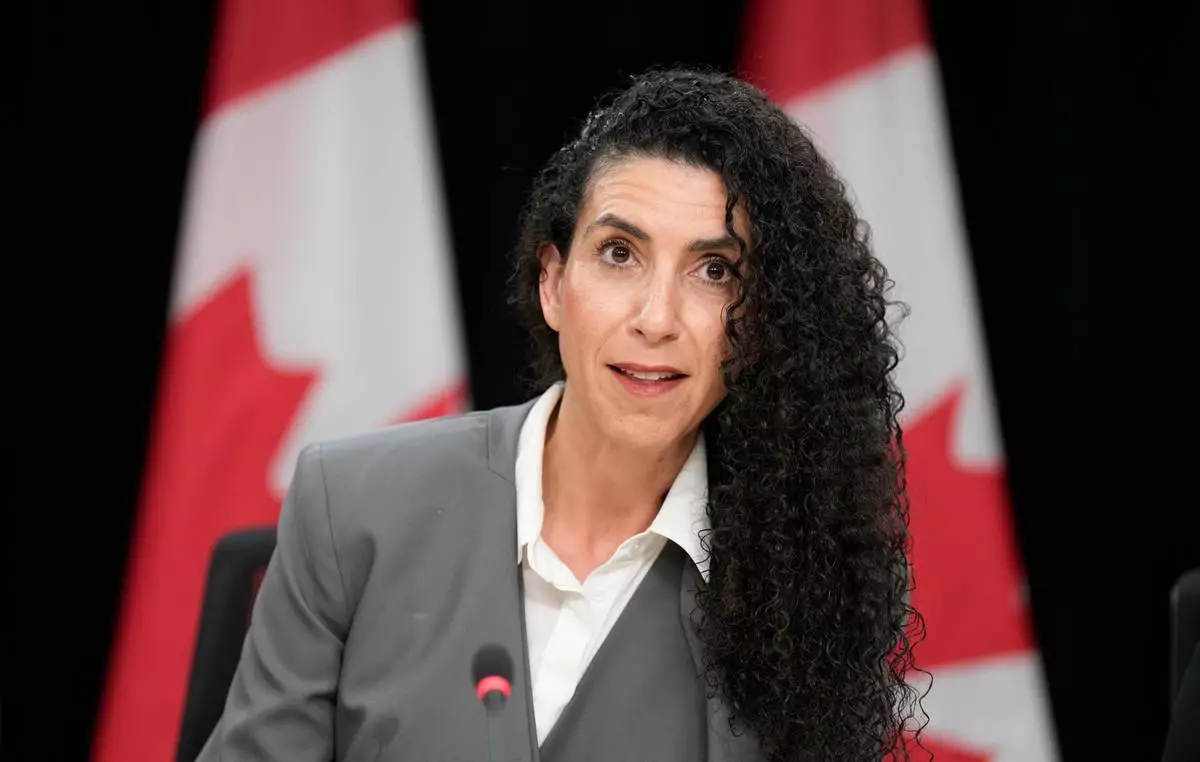
MP for Outremont, Rachel Bendayan speaks during a news conference in Ottawa, Ontario, Wednesday, June 10, 2026. (Adrian Wyld/The Canadian Press via AP)
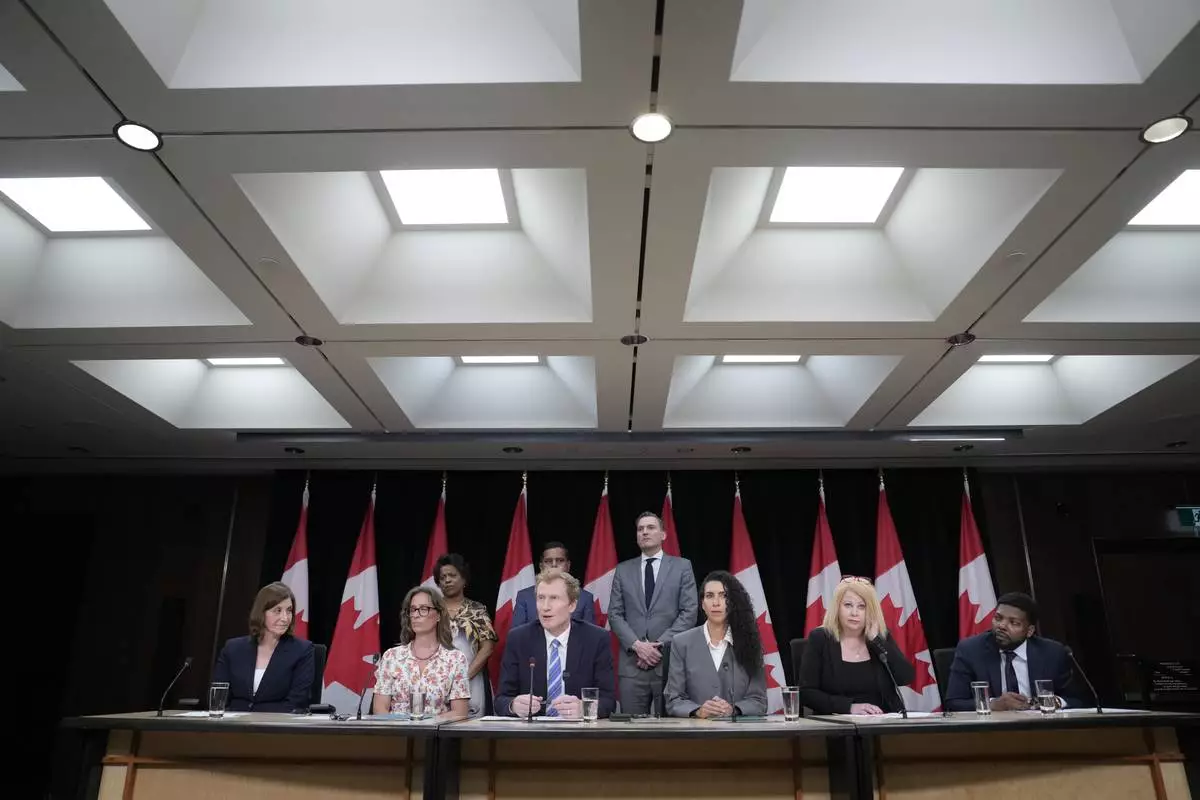
Canadian Identity and Culture Minister Marc Miller speaks as colleagues and medical professionals look on during a news conference in Ottawa, Ontario, Wednesday, June 10, 2026. (Adrian Wyld/The Canadian Press via AP)
DUBAI, United Arab Emirates (AP) — Bahrain sounded its missile alert sirens early Thursday morning after Iran threatened to retaliate over a new round of U.S. airstrikes targeting the Islamic Republic.
Bahrain, the small island kingdom in the Persian Gulf off Saudi Arabia, urged the public to seek shelter.
Iran’s paramilitary Revolutionary Guard had threatened to strike Bahrain over the attacks.
The U.S. Central Command said in a social media post that the military was striking targets in Iran “in response to Iran’s unwarranted and continued aggression.” The second day of American strikes comes hours after Bahrain, Kuwait and Jordan — all of which host U.S. troops — came under Iranian fire.
THIS IS A BREAKING NEWS UPDATE. AP’s earlier story follows below.
DUBAI, United Arab Emirates (AP) — The U.S. military said Wednesday it began another round of strikes against Iran after President Donald Trump warned that Tehran would “pay the price” for stalled negotiations. The escalating attacks threatened to derail efforts to end the war.
U.S. Central Command said in a social media post that the military was striking “multiple targets in Iran,” attacks that were “in response to Iran’s unwarranted and continued aggression.”
The second day of American strikes came hours after Bahrain, Kuwait and Jordan — all of which host U.S. troops — came under Iranian fire. It was the third time this week that back-and-forth strikes have tested a two-month ceasefire. They also came a day after the U.S. struck Iran following the crash of an Army helicopter near the Strait of Hormuz that Trump blamed on the Islamic Republic.
Trump has urged Iran to sign a deal to end the war and suggested earlier this week that an agreement could be reached in a matter of days.
Iranian media reported that explosions were heard in Bandar Abbas, Sirik and Minab in the south of the country.
Iran has proved resilient despite weeks of heavy bombing. It is betting that its ability to effectively close the Strait of Hormuz — a crucial passageway for oil and natural gas — gives it a strong bargaining chip. The U.S. Central Command refuted Iran's claims that the Strait of Hormuz is closed, saying commercial ships are continuing to transit in and out.
Iran’s United Nations envoy said the U.S. should refrain from threats of force if it wants a deal.
“Iran has never negotiated under threats and pressure and will never submit to pressure or question,” Ambassador Amir Saeid Iravani told the U.N. Security Council on Wednesday.
Still, both countries seem to be looking for a way to end the conflict — if they can manage to sell it as a win at home.
Israeli Prime Minister Benjamin Netanyahu appears intent on pursuing goals that make compromise harder: the collapse of Iran’s theocratic government, the elimination of its nuclear program, and the destruction of the Iranian-allied Hezbollah militant group in Lebanon. On Monday, Iran and Israel targeted each other.
Since the U.S. and Israel started the war with Feb. 28 attacks on Iran, the conflict has shaken the global economy, driven up energy prices worldwide, and made food and other basics more expensive.
The international benchmark for crude oil traded above $93 a barrel on Wednesday, up more than 25% since the start of the war.
Trump said Wednesday the U.S. military has since last month undertaken a “secret mission” to sneak oil shipments past Iran’s forces in the Strait of Hormuz. He said ships were slipping through at night, aided by the destruction of Iranian radar equipment.
Trump said as a result more than 100 million barrels of oil have evaded Iran’s chokehold on the strait. There was no immediate confirmation of that figure, which roughly equals five days of oil shipments through the waterway before the war began.
The military’s role was not immediately clear. Capt. Tim Hawkins, a Central Command spokesman, said U.S. forces “communicate and coordinate” with commercial ships in the area, but gave no details on military support being offered.
Earlier Wednesday, the U.S. military said an American aircraft fired “precision munitions” into the engine room of the Palau-flagged vessel M/T Settebello as it attempted to breach the naval blockade with a shipment of Iranian oil. It was the eighth merchant vessel disabled by U.S. forces in waters off Iran.
India’s foreign ministry said three Indian sailors were missing after the Settebello was struck, while 21 others were rescued. Its statement did not mention the U.S. military or the blockade.
Hawkins of U.S. Central Command said American forces warned the crew before firing on the ship.
The U.S. military said strikes earlier Wednesday targeted “air defense, ground control stations, and surveillance radar sites."
Iran said U.S. strikes hit two water reservoirs in the southern city of Sirik, temporarily cutting off water to thousands of people. U.S. Central Command had no immediate comment.
Tehran later claimed attacks in Kuwait, Bahrain and Jordan.
Jordan said it shot down five incoming missiles, which Iran said targeted an air base hosting American military aircraft.
Bahrain and Kuwait said they intercepted incoming fire.
Iranian Foreign Minister Abbas Araghchi condemned the American attacks as a violation of Iranian sovereignty. Foreign Ministry spokesperson Esmail Baghaei said in televised comments that, following the new attacks, Iran would review its stance on negotiations to end the war.
Efforts to mediate a deal continued. Following consultations with the U.S., a delegation from Qatar arrived in Tehran for talks on Wednesday, according to an official with knowledge of the visit who requested anonymity due to the sensitivity of the talks.
The exchanges of fire came a day after a U.S. Army attack helicopter crashed near the Strait of Hormuz. The helicopter collided with an Iranian drone, according to a U.S. official speaking on condition of anonymity to discuss an ongoing investigation. It wasn’t clear whether the collision was intentional.
A drone boat rescued the helicopter’s two crew. Trump said they were uninjured.
Wary of high gas prices in the run-up to congressional elections in November, Trump seems to be looking for a quick win. But he is also making demands that will be tough for Iran to swallow.
The U.S. wants to see Iran give up its stockpile of highly enriched uranium. While Iran insists its nuclear program is peaceful, that uranium is a short technical step from weapons-grade levels.
Iran is refusing to give up the uranium and demanding relief from sanctions. It also wants the release of frozen assets even before a final agreement is in place, something Trump rejected.
It's not clear how those differences can be bridged. In a Truth Social post Wednesday, Trump said Iran was taking “too long to negotiate a deal" and "now they will have to pay the price!!!”
Iran has insisted that any deal to end the war must also end fighting between its ally Hezbollah and Israel. Israel has instead intensified its military campaign against the Lebanon-based militant group.
An airstrike on a village east of Tyre killed at least six people, Lebanon's state-run National News Agency reported. It said two others were killed by an Israeli drone strike on a car in the southern city of Sidon.
Price reported from Washington. Associated Press writers Konstantin Toropin and Will Weissert in Washington; Edith M. Lederer at the United Nations; Natalie Melzer in Nahariya, Israel; David Rising in Bangkok; Bassem Mroue in Beirut; Michelle L. Price in New York; Russ Bynum in Savannah, Georgia, and Hannah Schoenbaum in Salt Lake City contributed to this report.
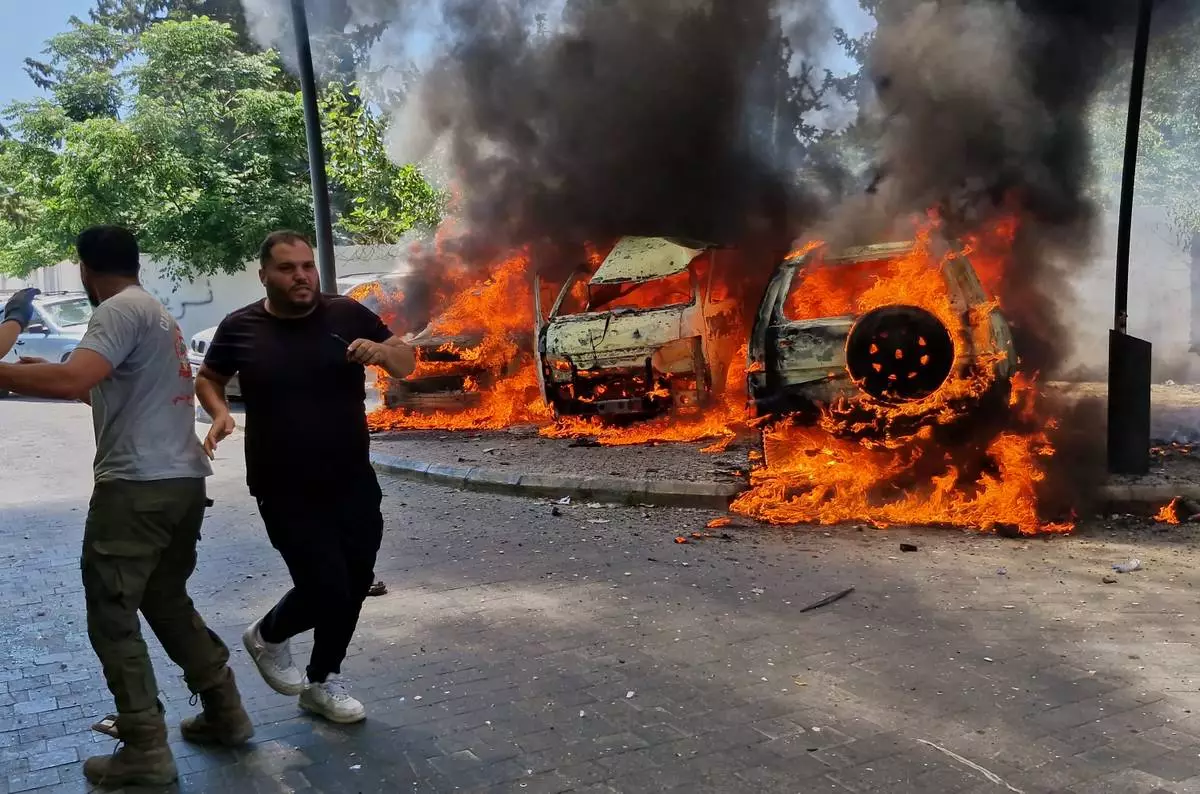
A man runs past burning cars following an Israeli airstrike in the southern port city of Sidon, Lebanon, Wednesday, June 10, 2026. (AP Photo/Mohammed Zaatari)

People take shelter as air raid sirens warn of incoming Iranian missiles in Ramat Gan, Israel, Monday, June 8, 2026. (AP Photo/Oded Balilty)
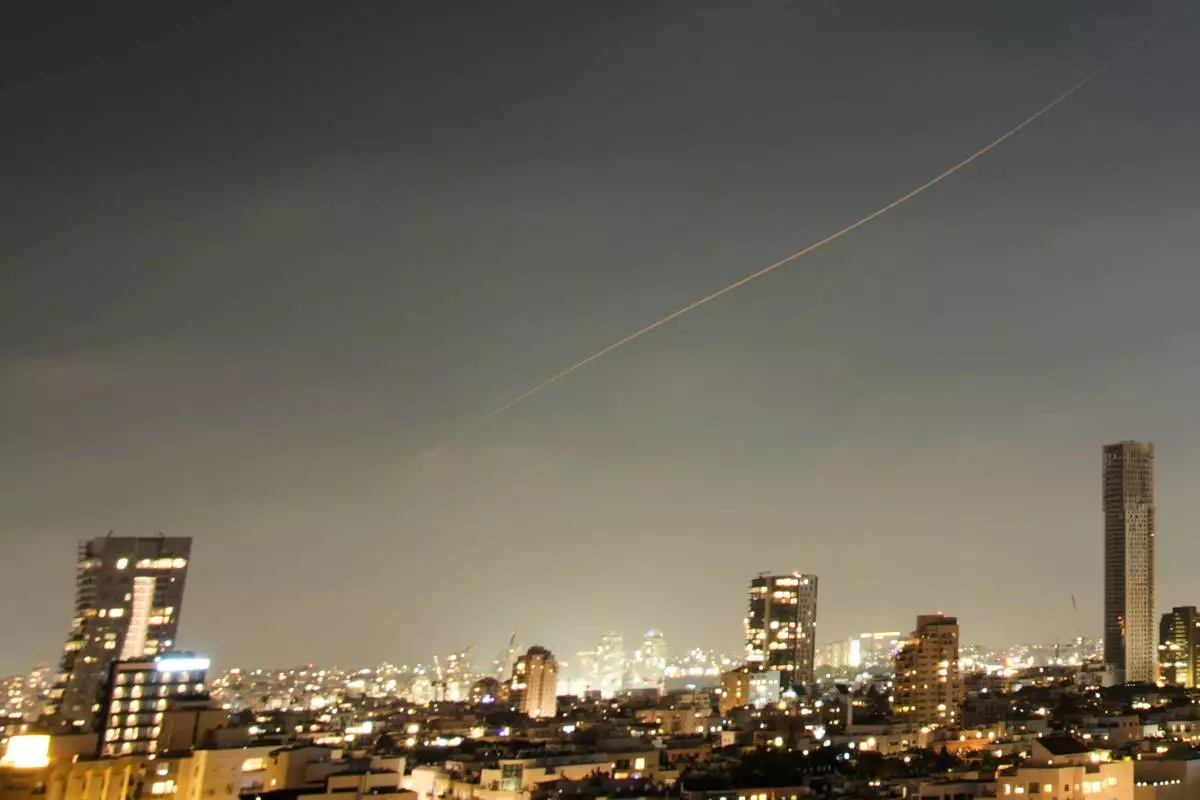
A projectile streaks through the sky over central Israel during an Iranian missile attack, Sunday, June 7, 2026. (AP Photo/Ohad Zwigenberg)
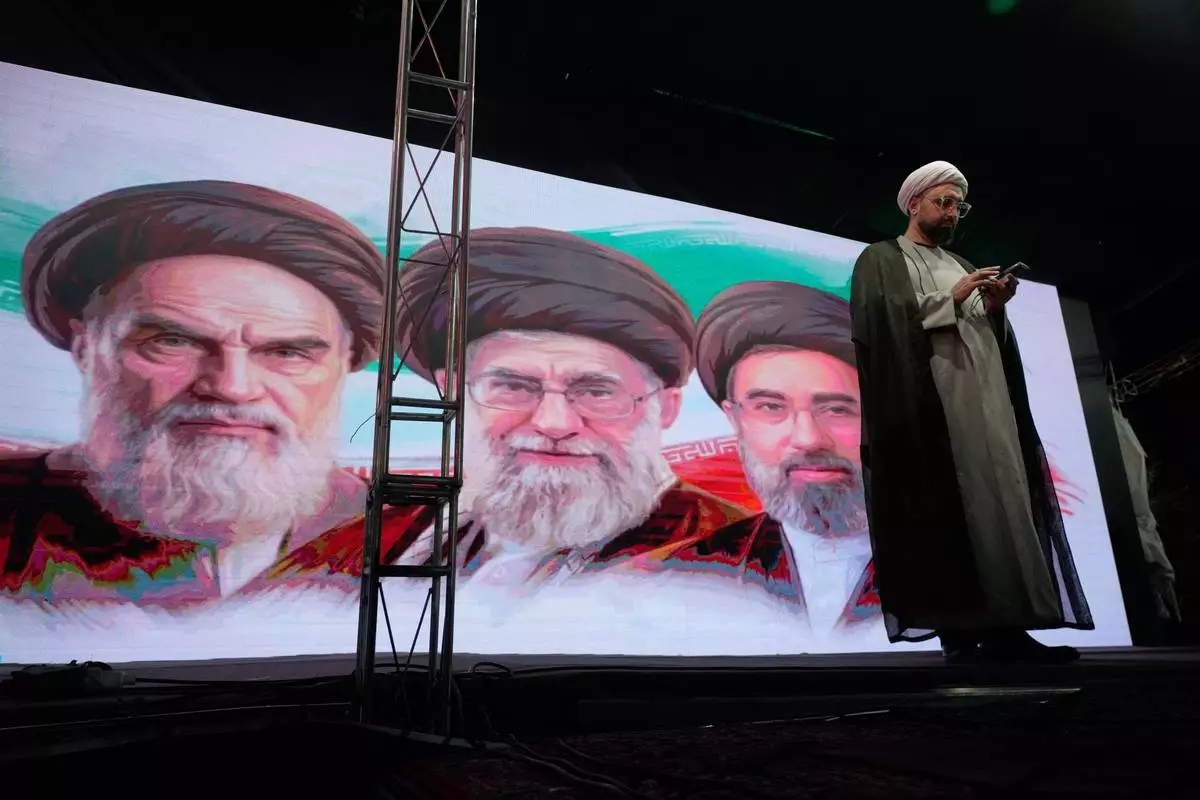
A cleric checks his cell phone on stage in front of a screen displaying portraits of the late Iranian revolutionary founder Ayatollah Khomeini, left, late Supreme Leader Ayatollah Ali Khamenei, center, and Supreme Leader Ayatollah Mojtaba Khamenei, during a pro-government gathering in Tehran, Iran, Sunday, June 7, 2026. (AP Photo/Vahid Salemi)
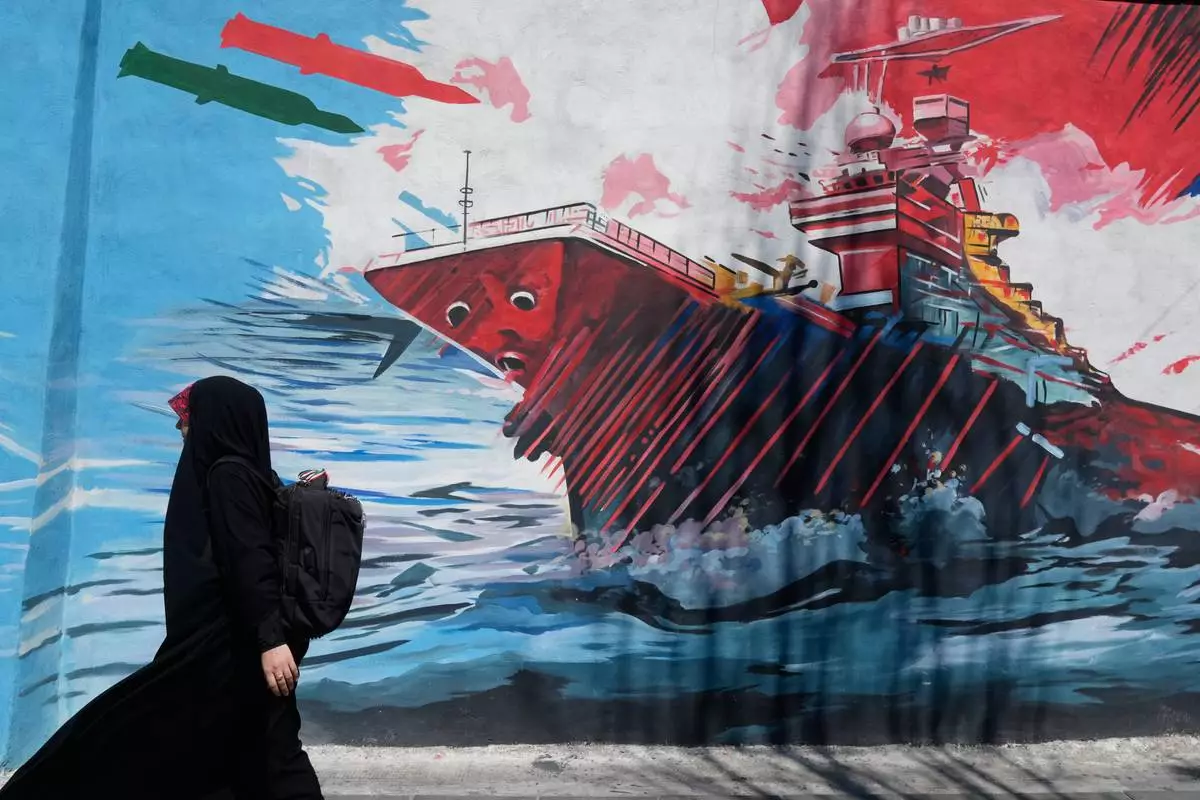
A woman walks past a mural depicting a U.S. aircraft carrier under missile attack in downtown Tehran, Iran, Monday, June 8, 2026. (AP Photo/Vahid Salemi)