JERUSALEM (AP) — Amnesty International accused Israel on Wednesday of carrying out a campaign of “ethnic cleansing” of Palestinians from the occupied West Bank with the intention to annex the Palestinian territory.
The accusation came in a new, 149-page report alleging that the forced displacement of West Bank Palestinians resulted from a concerted state policy, and not just the actions of violent settlers. While much of the displacement is driven by settlers who build outposts on Palestinian land, the report asserts that the process could not occur without the support of the government.
Click to Gallery
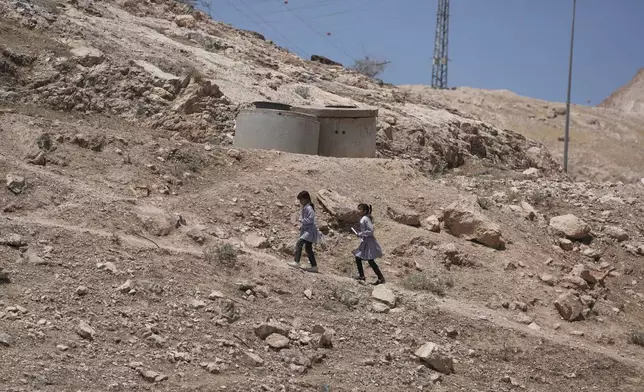
Palestinian students walk on their way home after receiving their year end reports from school, in the West Bank Bedouin hamlets of Khan al-Ahmar, Wednesday, June 10, 2026. (AP Photo/Mahmoud Illean)
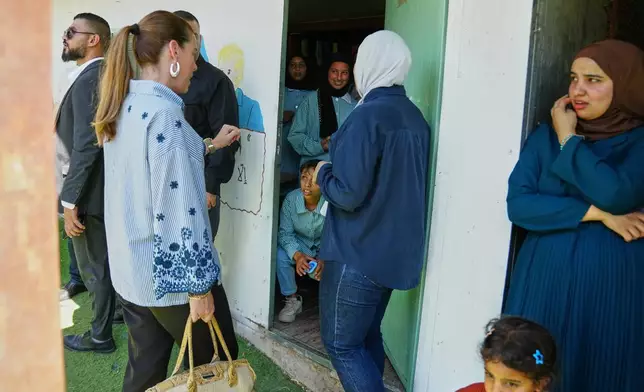
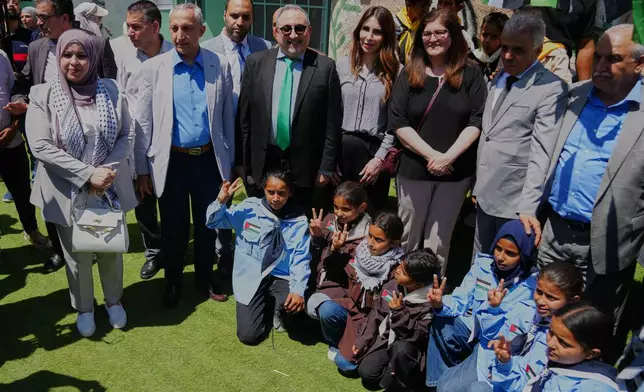
Palestinian officials and foreign diplomats talk to students during their field tour in the West Bank Bedouin hamlets of Khan al-Ahmar, Wednesday, June 10, 2026. (AP Photo/Mahmoud Illean)
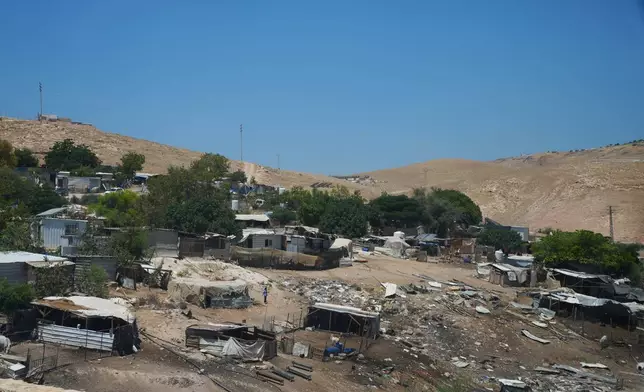
A view of the West Bank Bedouin hamlets of Khan al-Ahmar, Wednesday, June 10, 2026. (AP Photo/Mahmoud Illean)
Palestinian officials and foreign diplomats take a photo with school children during their field tour in the West Bank Bedouin hamlets of Khan al-Ahmar, Wednesday, June 10, 2026. (AP Photo/Mahmoud Illean)
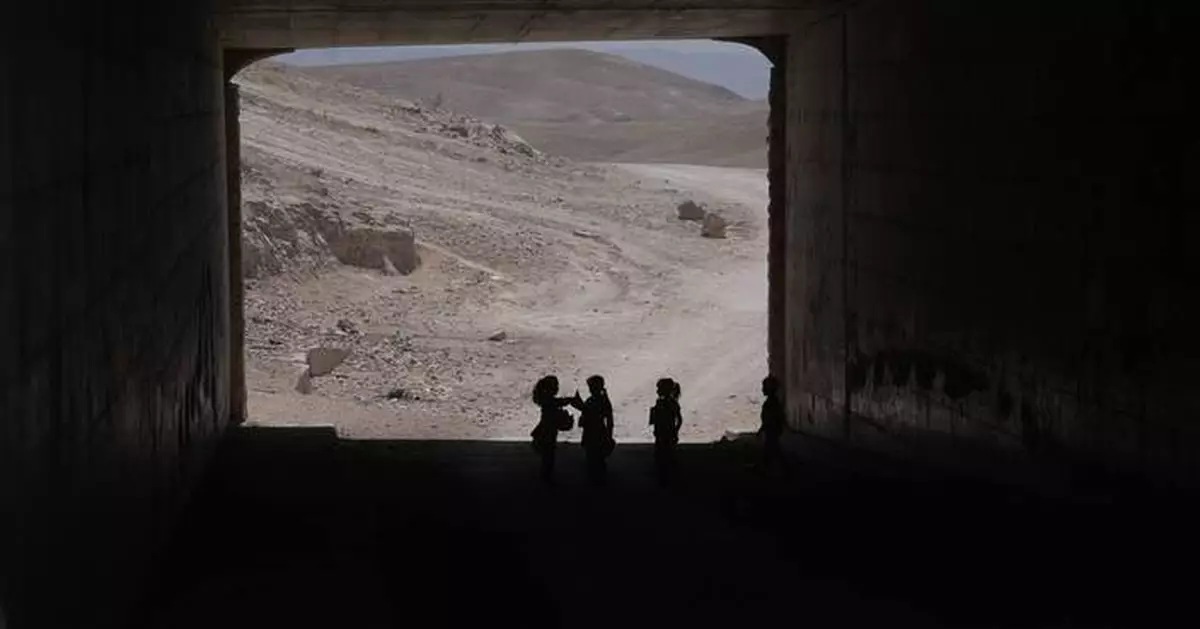
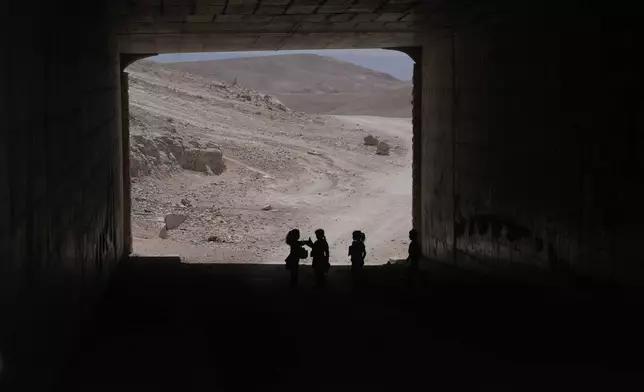
Palestinian children go through a vehicles tunnel on their way home, after receiving their year end reports from their school, in the West Bank Bedouin hamlets of Khan al-Ahmar, Wednesday, June 10, 2026. (AP Photo/Mahmoud Illean)
The international community overwhelmingly considers the settlements illegal. Israel, meanwhile, views the West Bank as disputed territory and says its final status is subject to negotiations.
U.N. data says that over 100 West Bank villages have been fully or partially emptied out between January 2023 and April 2026. At the same time, the United Nations has tracked more than 7,280 instances of individual Palestinian displacement because of demolition of homes and structures by Israeli forces, a figure that includes people who were displaced more than once.
Israel has in the past denounced such accusations — including allegations of “ethnic cleansing,” a term referring to forced expulsions of population by violence — as reflecting longtime unfair bias. It did not immediately respond to the report.
“These abuses are not the result of a few ‘bad apples.’ Settler violence is a core component of a state-sanctioned campaign of ethnic cleansing," said Agnès Callamard, the head of Amnesty. “What we are witnessing is deliberate, state-led annexation, in complete violation of international law unfolding before the eyes of the entire world.”
Israeli leaders have condemned particularly grave violence by Jewish settlers but tend to denounce them as exceptions. Prime Minister Benjamin Netanyahu's coalition government is dominated by settler leaders and supporters, and key Cabinet ministers are pushing for a formal annexation of the territory.
The government has come under heavy criticism from Palestinians and rights groups for accelerating settlement expansion, which they say is aimed at preventing the establishment of a future Palestinian state there. Over 700,000 Israelis now live in the West Bank and east Jerusalem, areas captured by Israel in the 1967 Mideast war and claimed by the Palestinians as parts of a future state.
Amnesty says it has identified dozens of bills in Israel's parliament, the Knesset, to extend Israeli civil law and jurisdiction over settlement blocs, as well as over courts that try Palestinians. Recently, the parliament approved a measure making the death penalty the default punishment for West Bank Palestinians convicted of killing Israelis.
Last year, U.S. President Donald Trump said he would not allow Israel to annex the West Bank. The U.S.-brokered ceasefire between Israel and the Hamas militant group that aimed to stop the war in Gaza also acknowledged Palestinian aspirations for statehood.
Amnesty says the large-scale displacement of Palestinian Bedouin communities in the territory is caused by settler violence, advancement of new settlements and the Israeli takeover of large swaths of unregistered land. Rights groups have raised the alarm about this form of displacement before 2023, but say it dramatically intensified after Hamas' Oct. 7 attack on Israel that year that triggered the war.
Rights groups say Bedouin herding communities in remote areas of the West Bank are most vulnerable to displacement. Unlike Palestinians in cities and towns across the West Bank, the villagers are less able to withstand the pressure from often-armed settlers as they establish new outposts around Palestinian villages.
The anti-settlement monitoring group Peace Now says that 212 of at least 363 existing outposts in the West Bank were created since 2023. The outposts are built without permission from Israeli authorities, who sometimes dismantle them but often turn a blind eye or even legalize them retroactively.
Amnesty said its report looked into 27 hamlets and villages in the West Bank where Palestinians were displaced between 2023 and 2025. Researchers interviewed dozens of Palestinians and lawyers, spoke with witnesses of settler violence, watched over 420 videos and analyzed government statements and other reports.
The group also said the international community has failed to act to stop the displacement.
Dror Etkes, who runs the settlement watchdog group Kerem Navot, said that since the October 2023 attack, settlers have taken about 12.5% of West Bank territory — land that Palestinians can no longer access or cross safely.
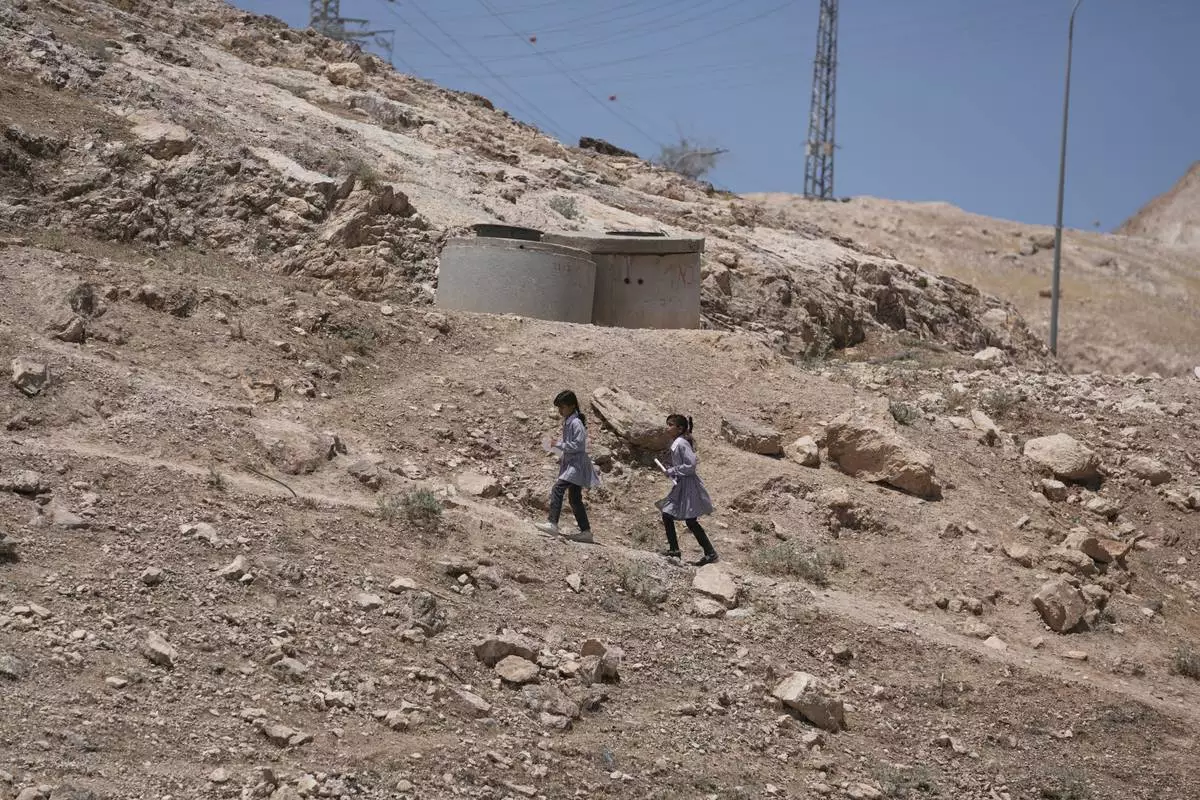
Palestinian students walk on their way home after receiving their year end reports from school, in the West Bank Bedouin hamlets of Khan al-Ahmar, Wednesday, June 10, 2026. (AP Photo/Mahmoud Illean)
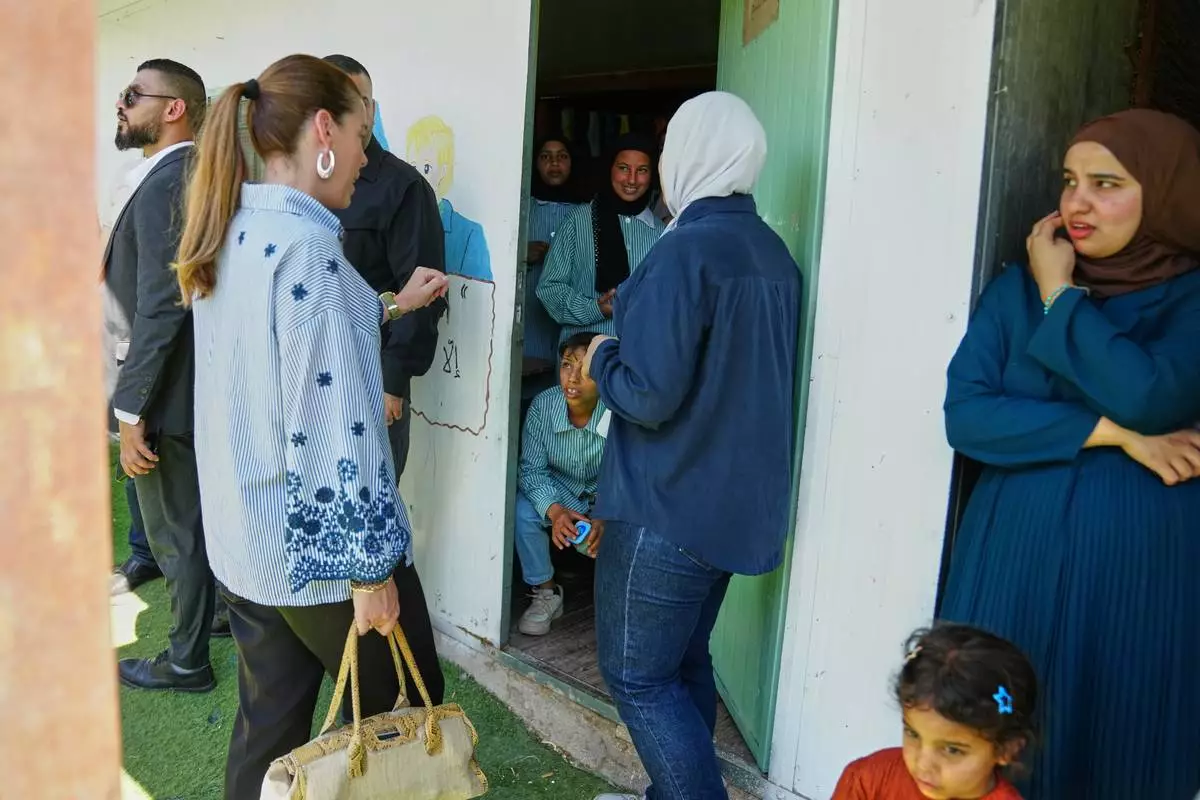
Palestinian officials and foreign diplomats talk to students during their field tour in the West Bank Bedouin hamlets of Khan al-Ahmar, Wednesday, June 10, 2026. (AP Photo/Mahmoud Illean)
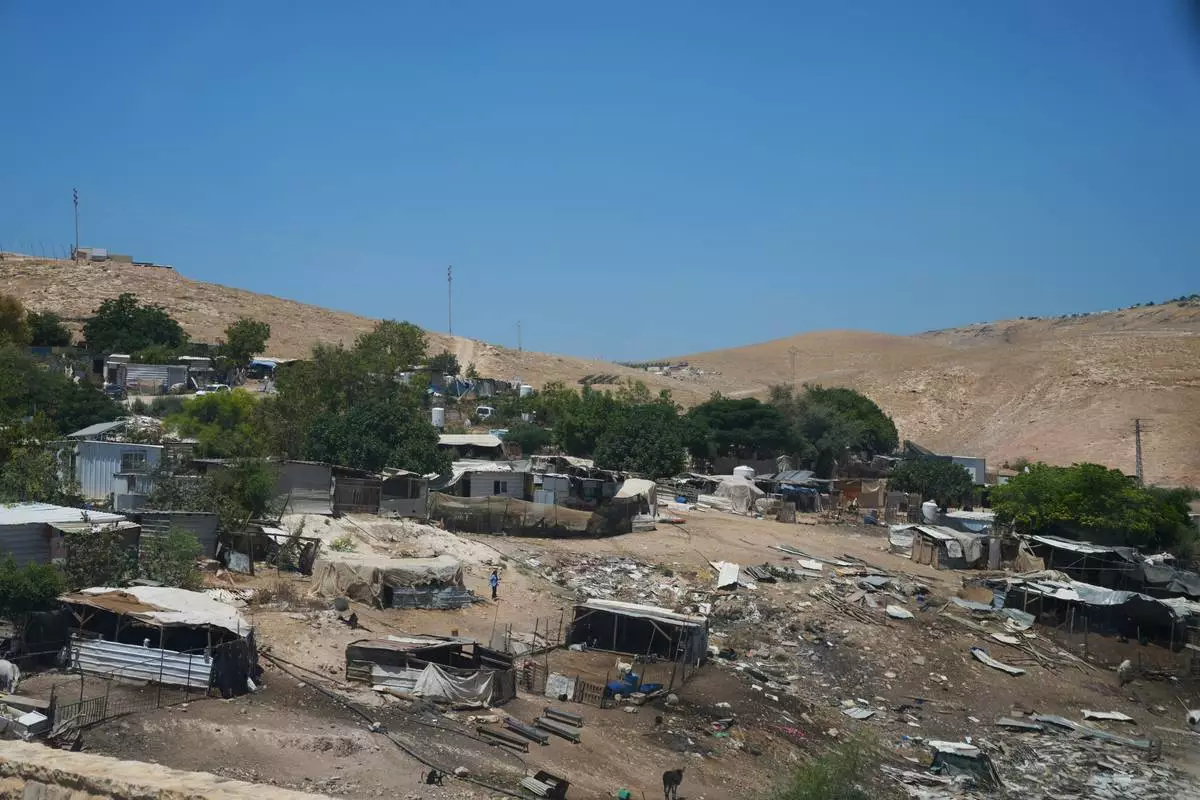
A view of the West Bank Bedouin hamlets of Khan al-Ahmar, Wednesday, June 10, 2026. (AP Photo/Mahmoud Illean)
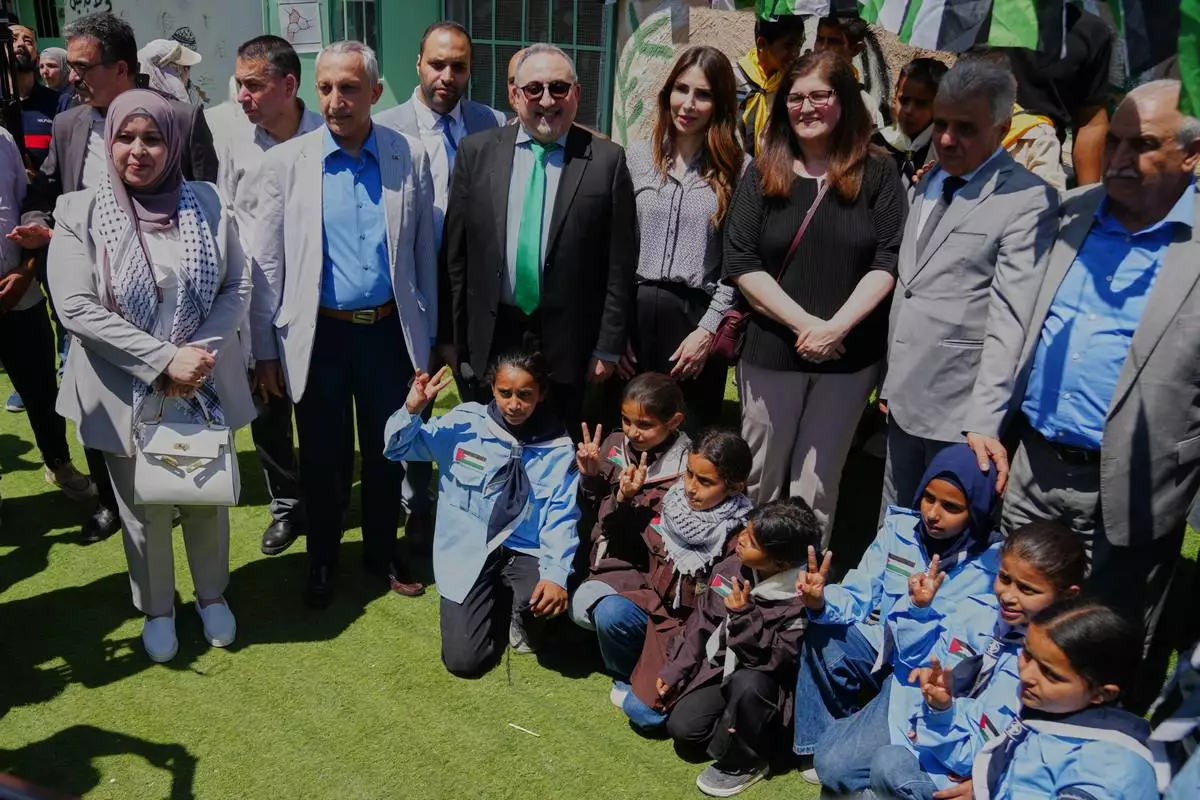
Palestinian officials and foreign diplomats take a photo with school children during their field tour in the West Bank Bedouin hamlets of Khan al-Ahmar, Wednesday, June 10, 2026. (AP Photo/Mahmoud Illean)
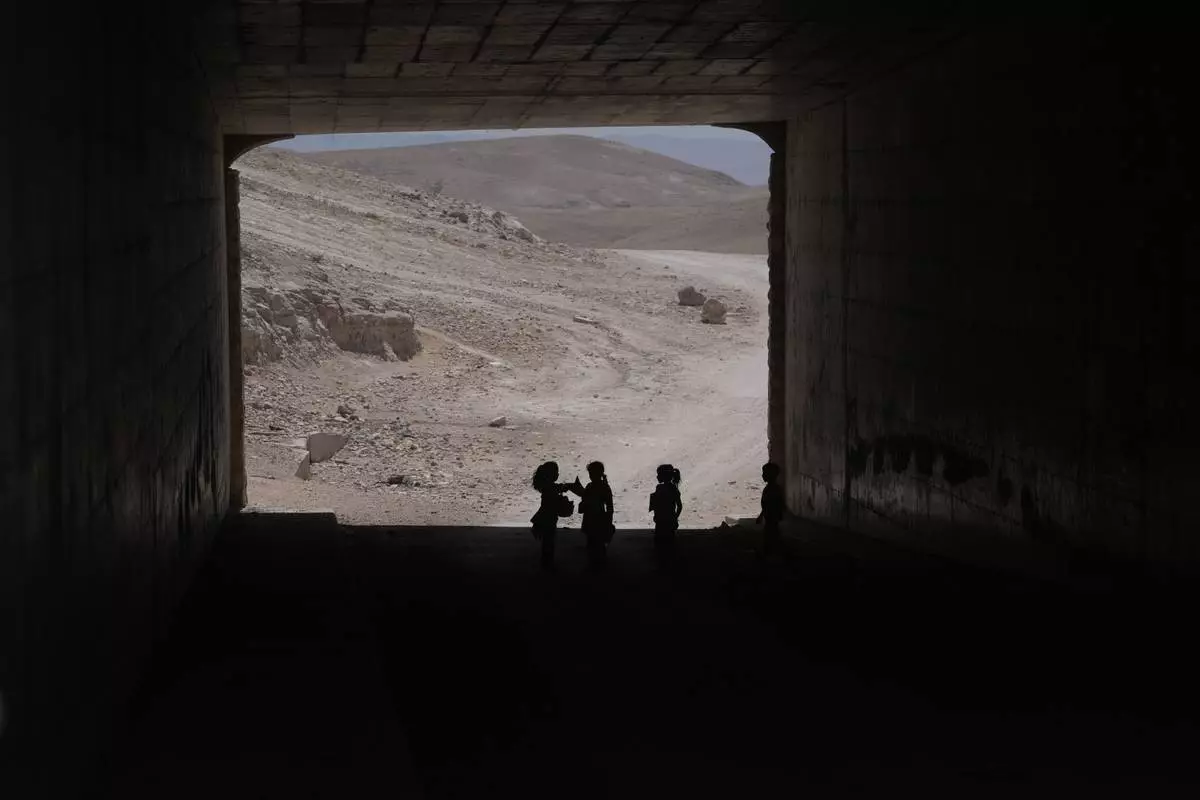
Palestinian children go through a vehicles tunnel on their way home, after receiving their year end reports from their school, in the West Bank Bedouin hamlets of Khan al-Ahmar, Wednesday, June 10, 2026. (AP Photo/Mahmoud Illean)
BELFAST, Northern Ireland (AP) — Police blasted water cannons Wednesday at protesters in Northern Ireland who set small fires and hurled bricks, rocks and bottles at them during a second night of violence over a brutal stabbing on a Belfast street.
Demonstrators wearing masks tore bricks from the walls outside homes and smashed sidewalks with sledgehammers to toss at riot police. In one place, the unruly crowd used sections of a dismantled picket fence to take cover on the street.
The clashes with police came several hours after a 30-year-old man from Sudan appeared in a Belfast court charged with attempted murder in a stabbing attack that left a man seriously injured and triggered anti-immigrant violence.
Hadi Alodid, 30, was ordered held in jail after appearing by video in Belfast Magistrates’ Court, where a detective said he blinded Stephen Ogilvie in the left eye during the knife attack. He was also charged with possessing a knife and threatening to kill a radiographer while being treated for a hand injury after the assault.
When police arrived at the crime scene, they found Alodid on the man, armed with a kitchen knife, the detective said. Alodid later told hospital staff: “I’ve killed someone, I don’t know if they are dead,” and said, “I will kill you."
He refused legal representation through an Arabic interpreter and did not enter a plea.
Police were prepared for more violence after masked men on Tuesday set fire to several homes they believed to house immigrants, burned trash bins, torched a Belfast bus and pelted police with objects.
Firefighters rescued several people from burning houses and more than two dozen people were left homeless.
Anselme Shima, a Belfast resident originally from Congo, said he saw smoke from burning vehicles near his home.
“I’ve lived on my street for almost 10 years, I have a good relationship with my neighbors, but last night was a horrific one,” he said. “We don’t know what to do. I’m scared. Seeing this, I’m wondering if I’m next.”
Families, one with a baby, were rescued and taken to police stations for safety, Police Service of Northern Ireland Chief Constable Jon Boutcher said.
“These weren’t just families from ethnic minority communities, these were families from across communities that were caught up in this vile behavior last night," Boutcher told the BBC. “There is absolutely no excuse for it.”
Boutcher said 200 more officers would be on the streets Wednesday and the PSNI was calling in support from other forces. Bus and train operators in Belfast said they would stop services early because of expected protests.
Ogilvie’s family appealed for an end to the violence and said migrants “make a deeply valuable contribution to our country.”
“We do not want this terrible tragedy to be used to divide people or fuel hostility,” the family said in a statement.
Politicians from both parts of Northern Ireland’s power-sharing government condemned the violence. First Minister Michelle O’Neill of Irish nationalist party Sinn Fein said it was “thuggery.”
“Groups of masked men burning families out of their homes is nothing less than disgusting cowardice,” she said.
Deputy First Minister Emma Little-Pengelly, of the pro-British Democratic Unionist Party, said that “taking frustration at the evil actions of a person out on those who had no part in it is utterly wrong.”
Monday’s attack, caught in video footage that quickly spread on social media, was seized on by anti-immigration activists. Ogilvie, a man in his 40s, was hospitalized with deep cuts to his head, face and back.
Police said Alodid entered Northern Ireland from the neighboring Republic of Ireland in 2023, applied for asylum and was given a five-year permit to remain.
The Police Service of Northern Ireland said there is no information to suggest the attack was terrorism-related.
Protests were encouraged online by far-right activists, and the street violence erupted despite politicians' calls for calm.
Prime Minister Keir Starmer condemned the stabbing attack as “sickening,” but said violence against people based on their background would not be tolerated.
“The scenes in Belfast last night were shocking and completely unacceptable," Starmer said on X. “There is no justification for the violence and disorder that we saw threatening our communities, nor for those who encouraged it, online or elsewhere.”
Northern Ireland Justice Minister Naomi Long said social media agitators who “yesterday would have struggled to find Belfast on a map” were “weaponizing” the fears of local people.
“If you’re driving people from their homes based on nothing but the color of their skin, you can’t dress that up any other way, it’s racism, and those bad faith actors need to take a step back,” she told the BBC.
Some politicians said the stabbing should spark a review of the open border between Northern Ireland, which is part of the U.K., and the Republic of Ireland.
The border is a highly sensitive issue. Allowing the free flow of people is a major pillar of the peace process that largely ended decades of violence known as “The Troubles.” The conflict involving Irish Republican and British Loyalist militants and U.K. security forces left almost 3,600 people dead before a 1998 peace accord.
Much of Tuesday’s violence took place in working-class areas where former paramilitary groups still hold considerable sway over the streets.
Last week a separate case of a university student who was stabbed to death in Southampton, England, in December was seized on by activists and U.S. Vice President JD Vance, who blamed immigration for the violence, an idea rejected by Starmer and other British politicians.
Henry Nowak, who was white, was killed by Vickrum Digwa, a Sikh who falsely claimed to police that he was the victim of a racist assault by Nowak. When police officers arrived, they initially treated the wounded Nowak as a suspect before noticing his injury and trying to resuscitate him.
Digwa was convicted of murder and sentenced last week to life in prison with a minimum 21-year term. A protest over Nowak’s death turned violent, with some attacking police with chairs and rocks. Several people were charged with violent disorder.
Lawless reported from London. Brian Melley contributed to this story.
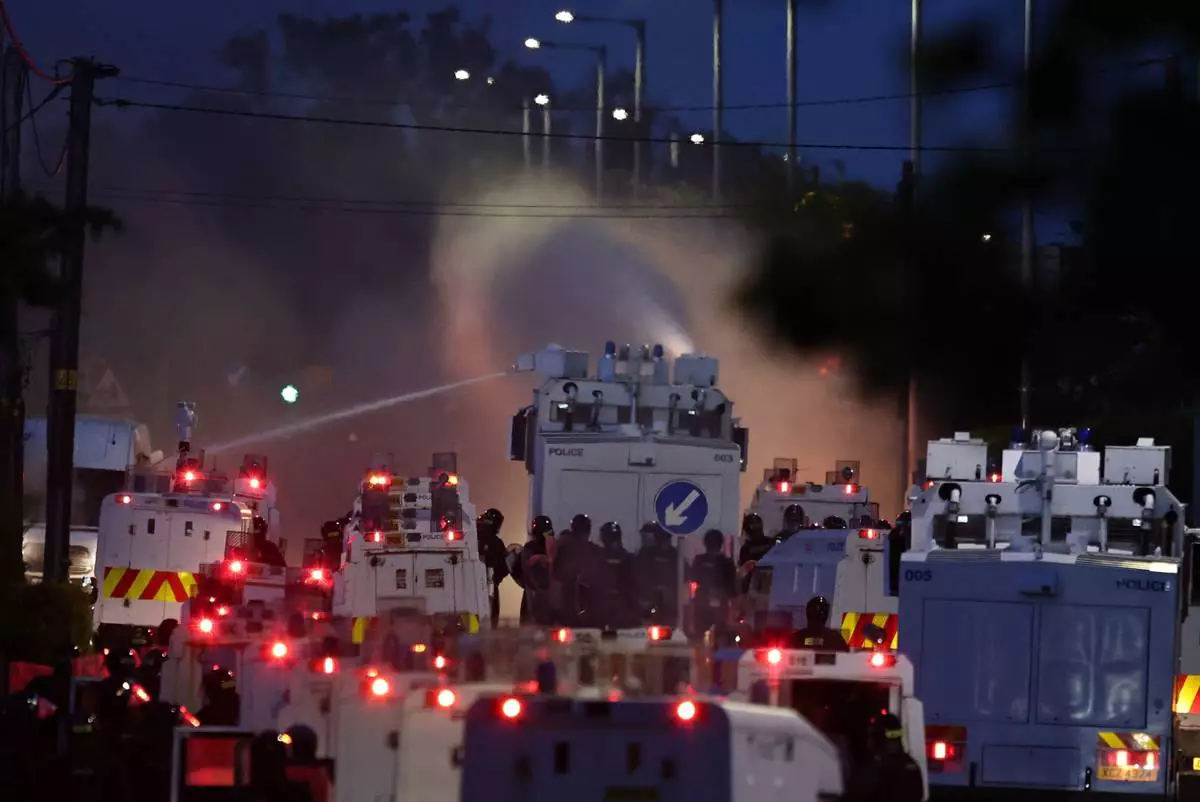
Police fire a water cannon towards rioters after they set fire to wheelie bins and removed a garden fence to use as a shield against the water cannon in Newtownabbey, Belfast, Northern Ireland, Wednesday June 10, 2026. (PA via AP)

Jamie Corrie stands beside his burnt out house after rioting broke out late Tuesday, in east Belfast, Northern Ireland, Wednesday, June 10, 2026, following a stabbing incident. (AP Photo/Peter Morrison)
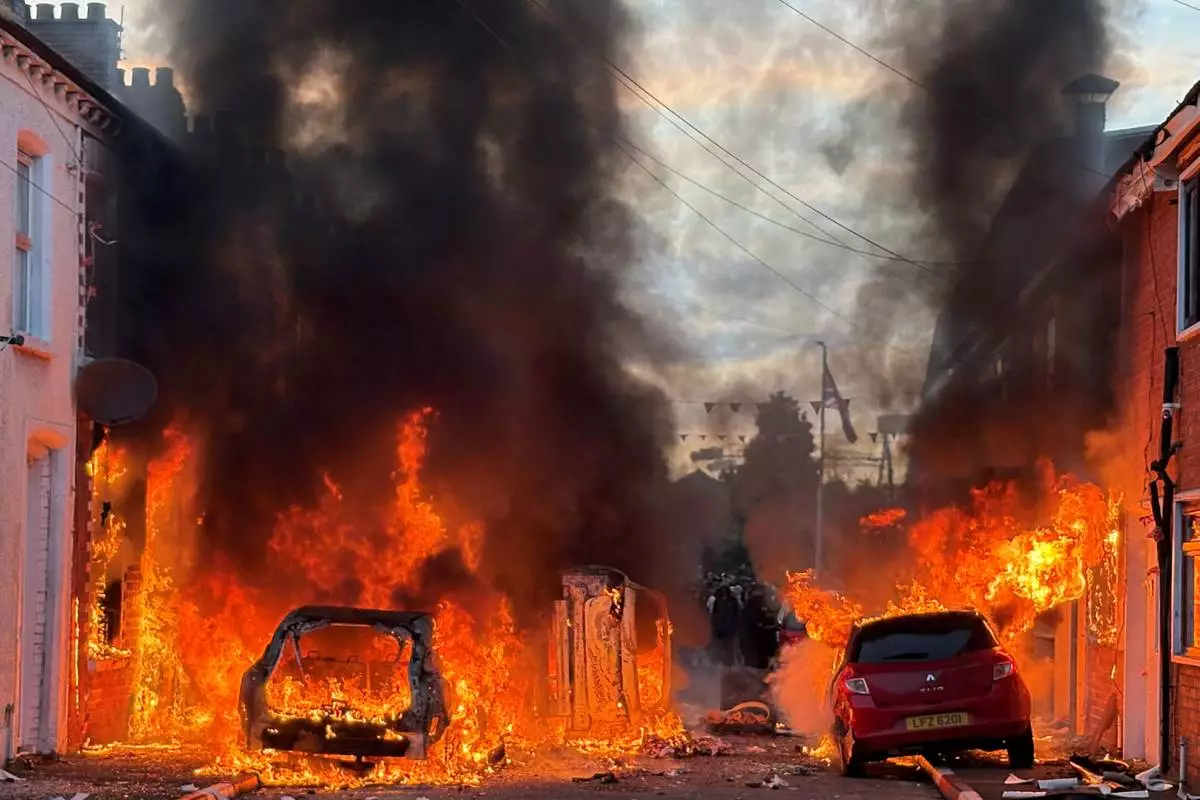
Vehicles set on fire by protesters burn on Lendrick Street in east Belfast, Northern Ireland, on Tuesday, June 9, 2026, after the arrest of a Sudanese man accused of stabbing a man in the northern part of the city. (PA via AP)
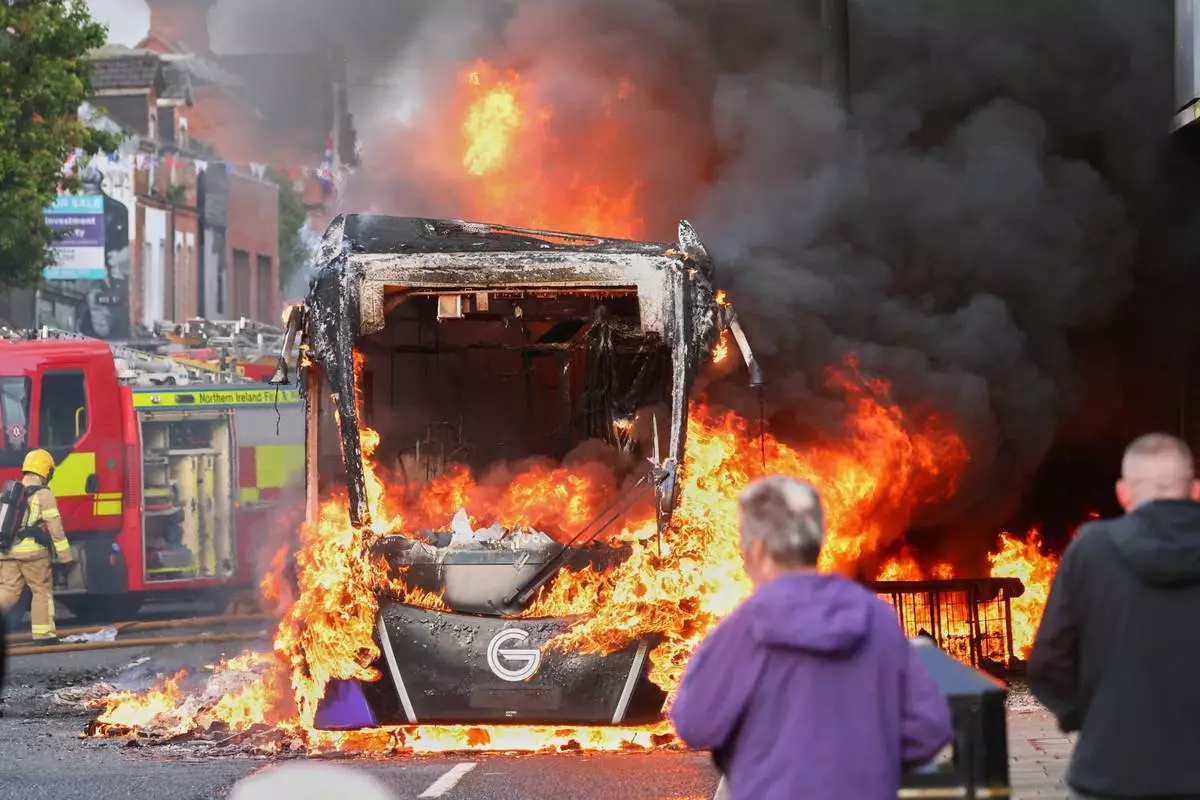
People watch as firemen arrive to put out vehicle that was set alight during a protest in East Belfast following a stabbing incident in Belfast, Tuesday, June 9, 2026. (AP Photo/Peter Morrison)
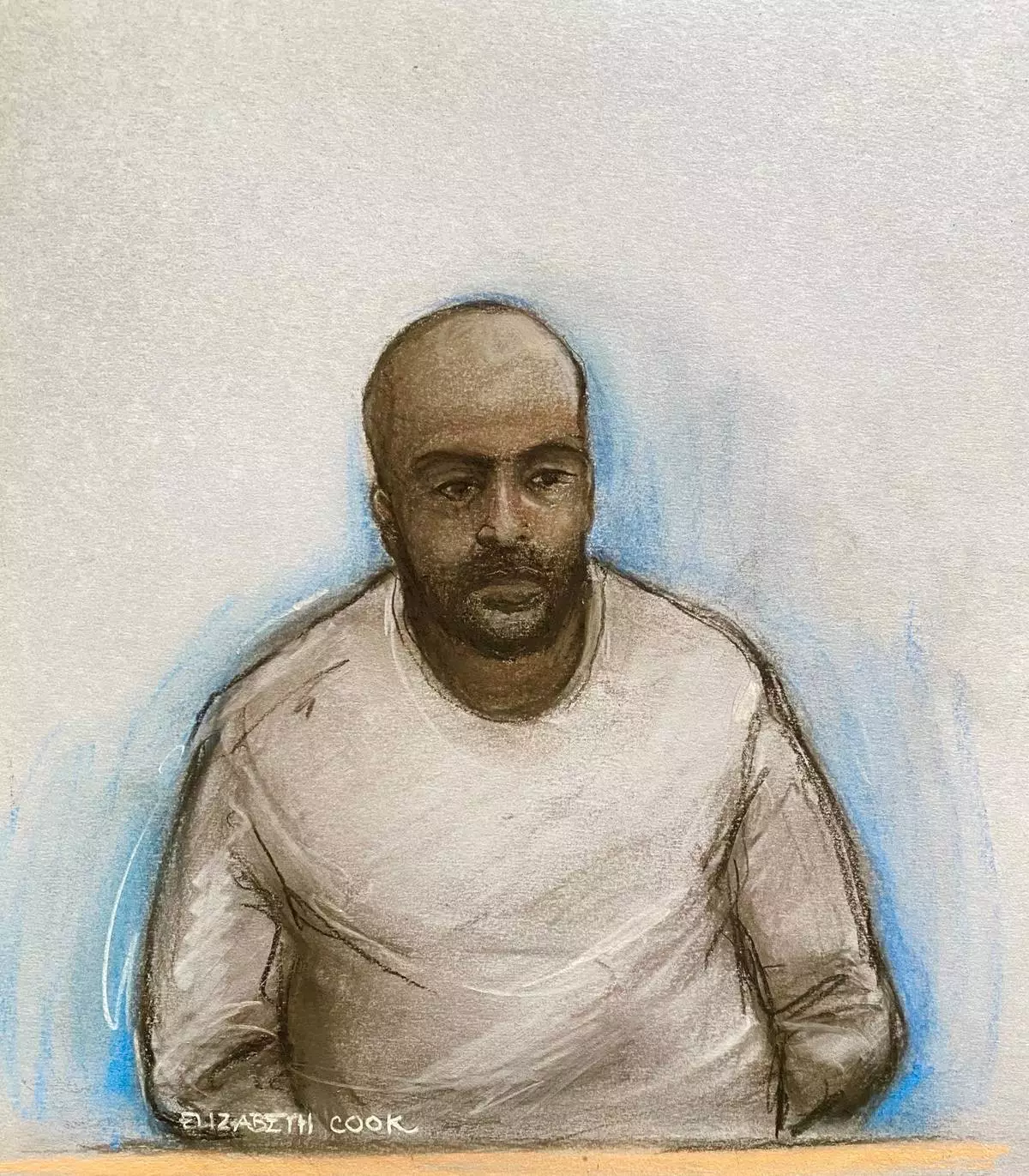
This is a court artist drawing by Elizabeth Cook of Sudanese national Hadi Alodid, 30 appearing via videolink at Belfast Magistrates Court, Belfast, Wednesday, June 10, 2026, after a stabbing attack. (Elizabeth Cook/PA via AP)
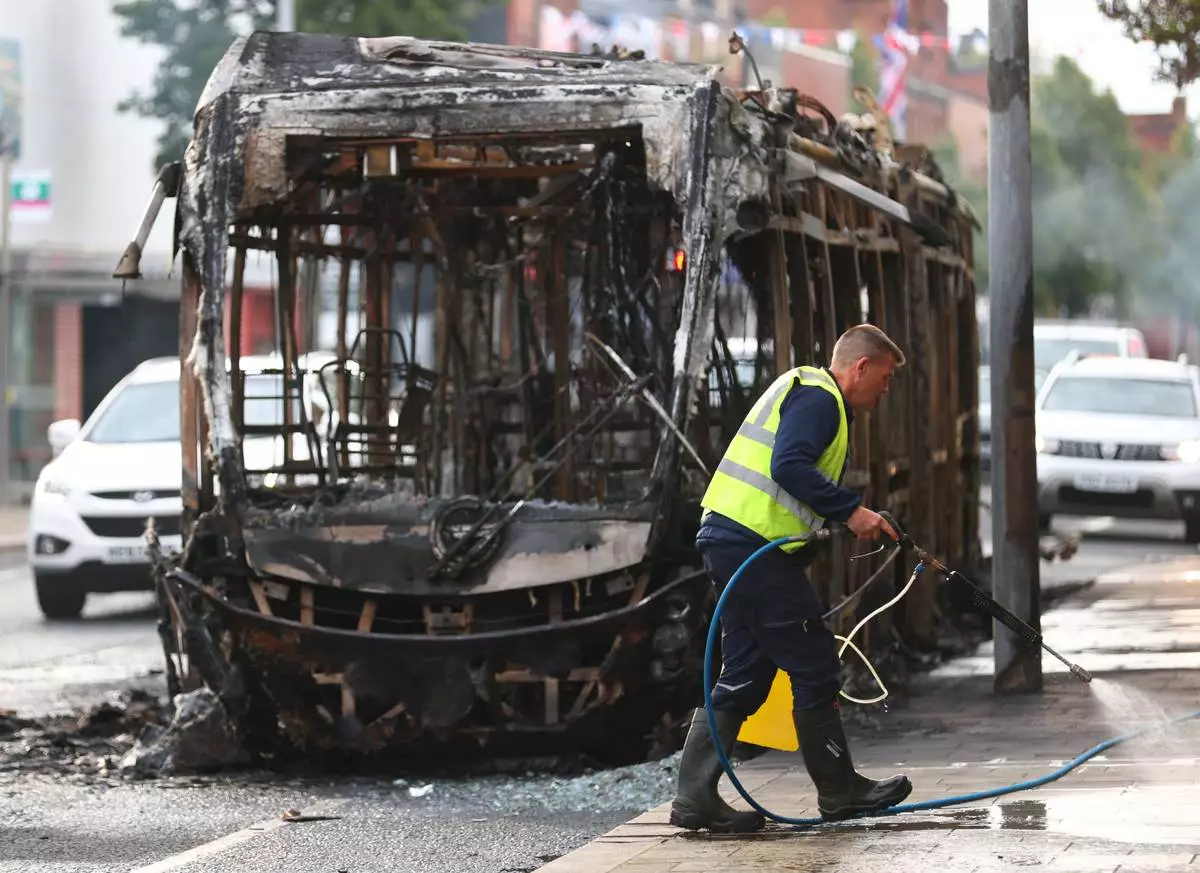
A worker clear up the debris in front of a burnt out bus, after rioting broke out late Tuesday, in east Belfast, Northern Ireland, Wednesday, June 10, 2026, following a stabbing incident. (AP Photo/Peter Morrison)
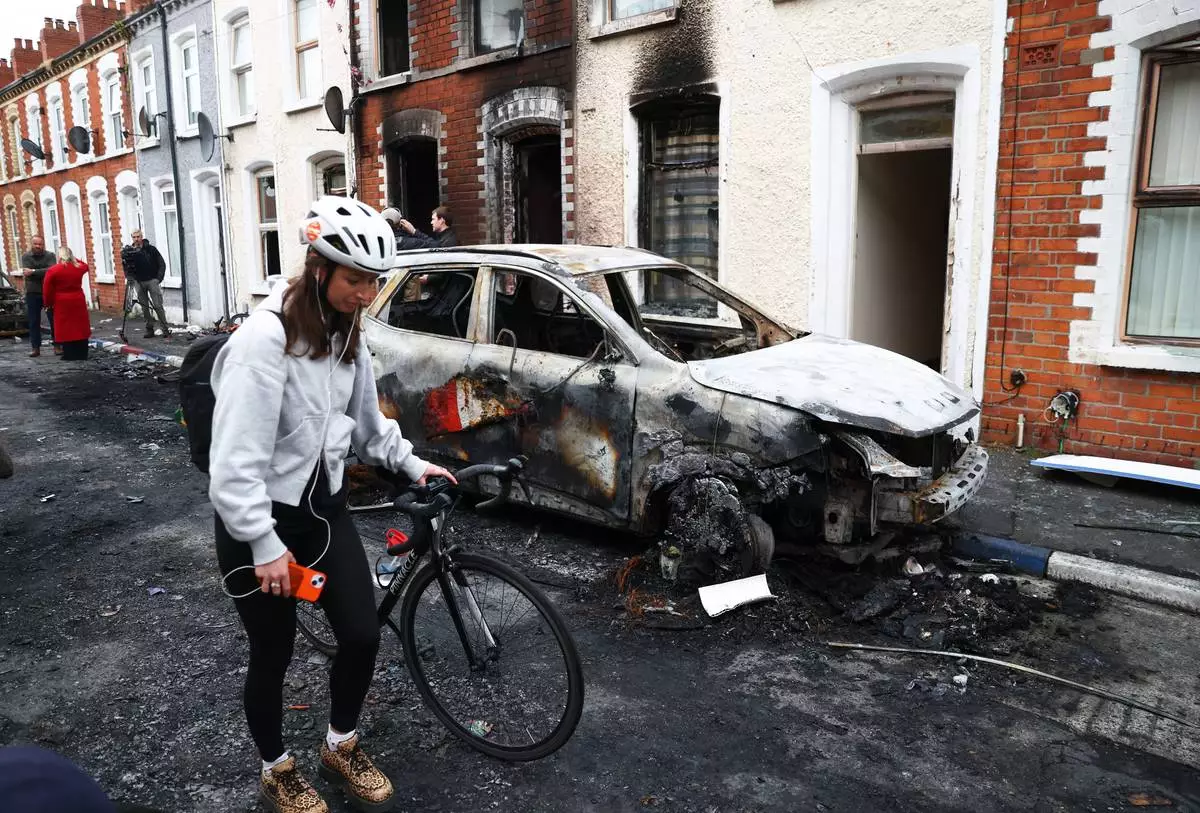
A woman walks past burnt out houses after rioting broke out late Tuesday, in east Belfast, Northern Ireland, Wednesday, June 10, 2026, following a stabbing incident. (AP Photo/Peter Morrison)
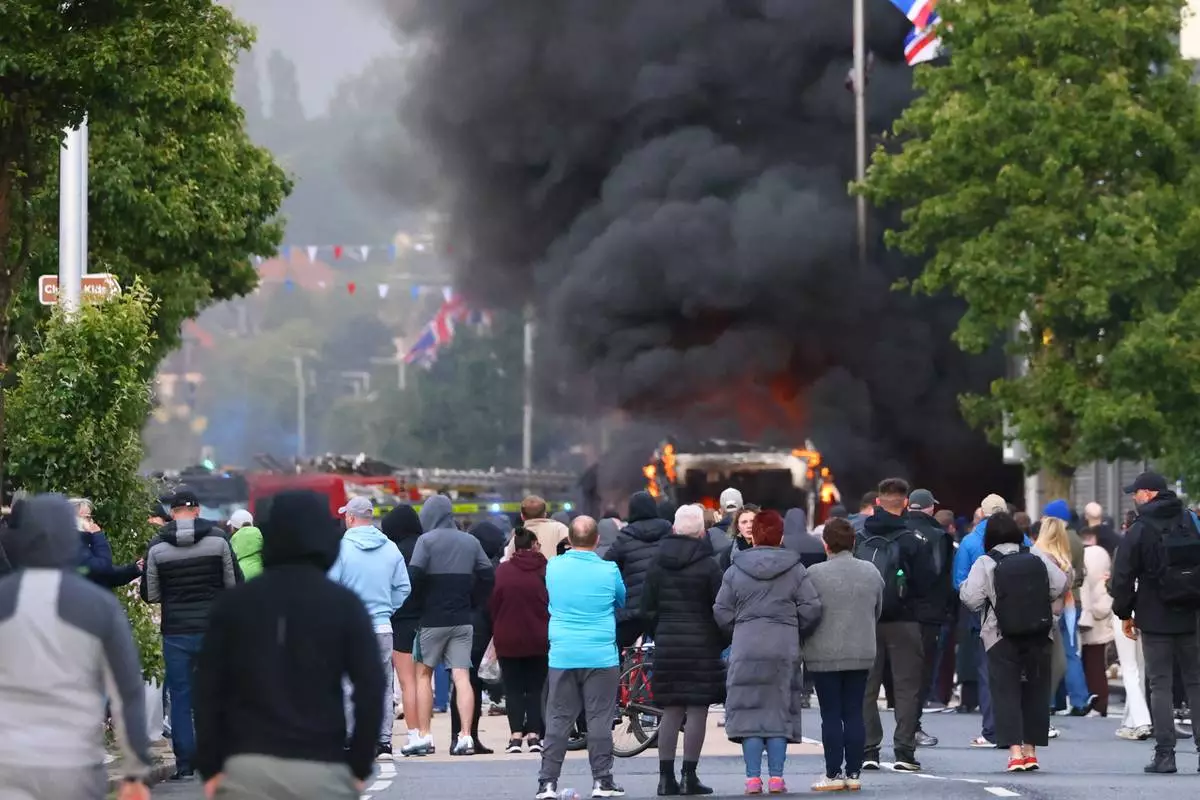
People watch as a vehicle burns during a protest following a stabbing incident in North Belfast, Tuesday, June 9, 2026. (AP Photo/Peter Morrison)
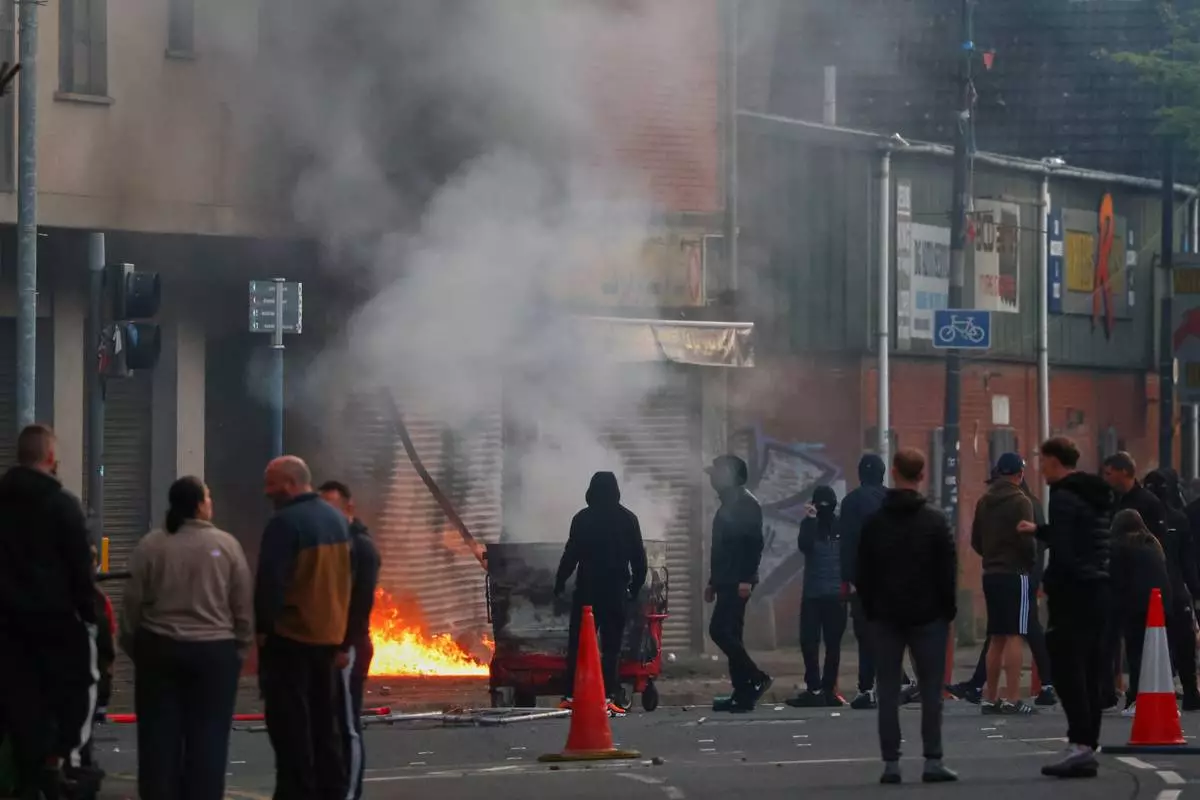
A building is set light to by protesters in central Belfast following a stabbing incident in Belfast, Tuesday, June 9, 2026. (AP Photo/Peter Morrison)
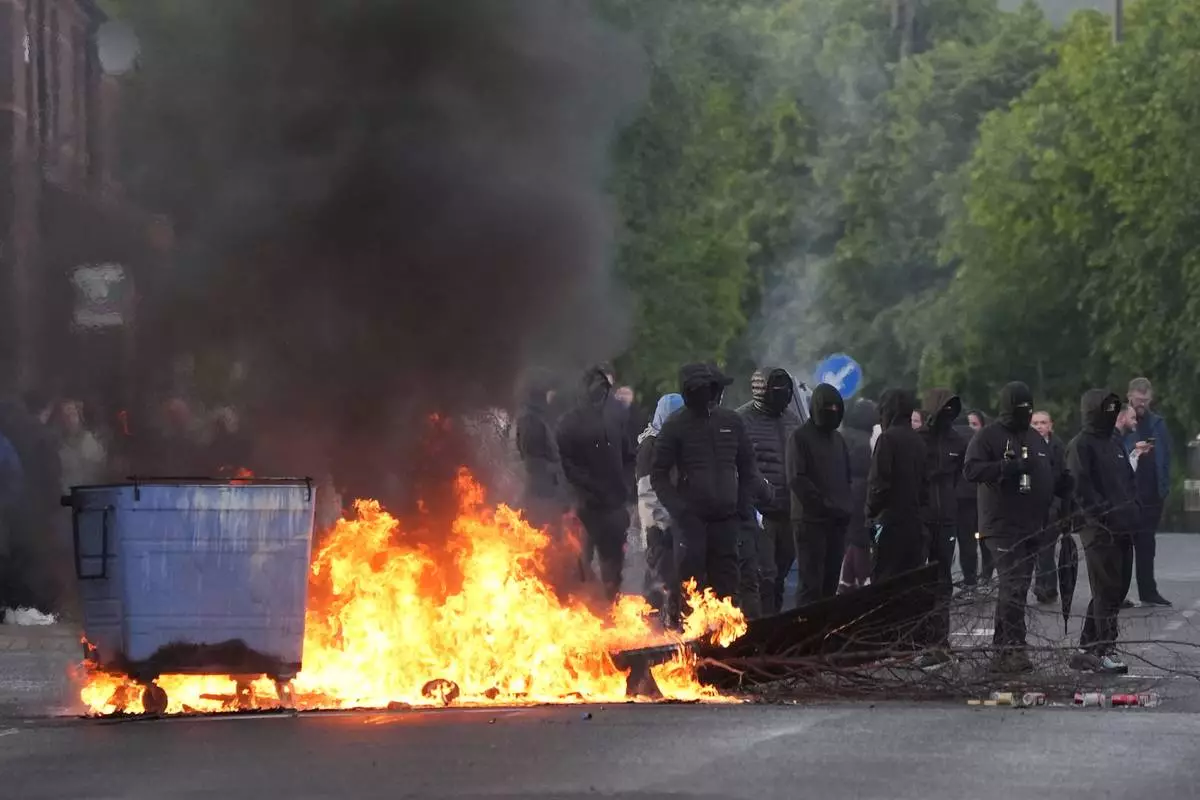
Masked protesters stand by burning trash containers on Ligoniel Road in Belfast, Northern Ireland, on Tuesday, June 9, 2026, after the arrest of a Sudanese man accused of stabbing a man in the northern part of the city. (PA via AP)
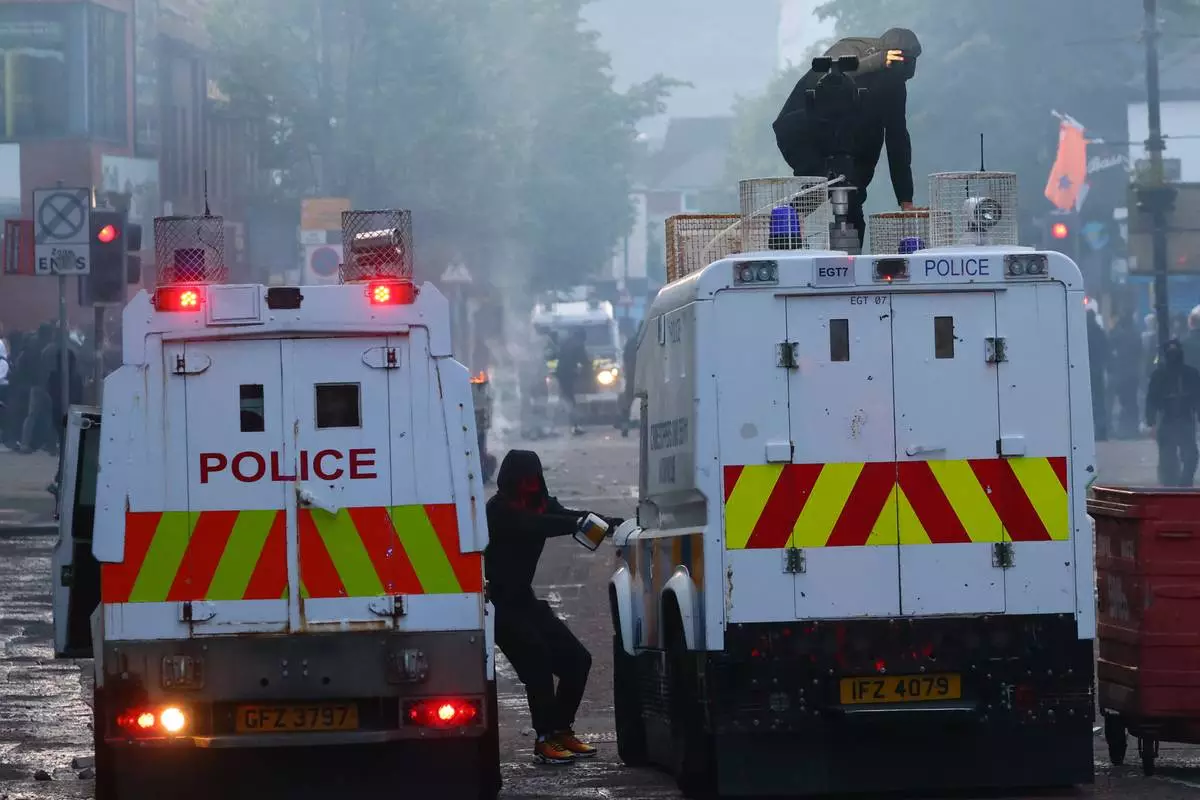
Police vehicles come under attack from protesters following a stabbing incident in Belfast, Tuesday, June 9, 2026. (AP Photo/Peter Morrison)
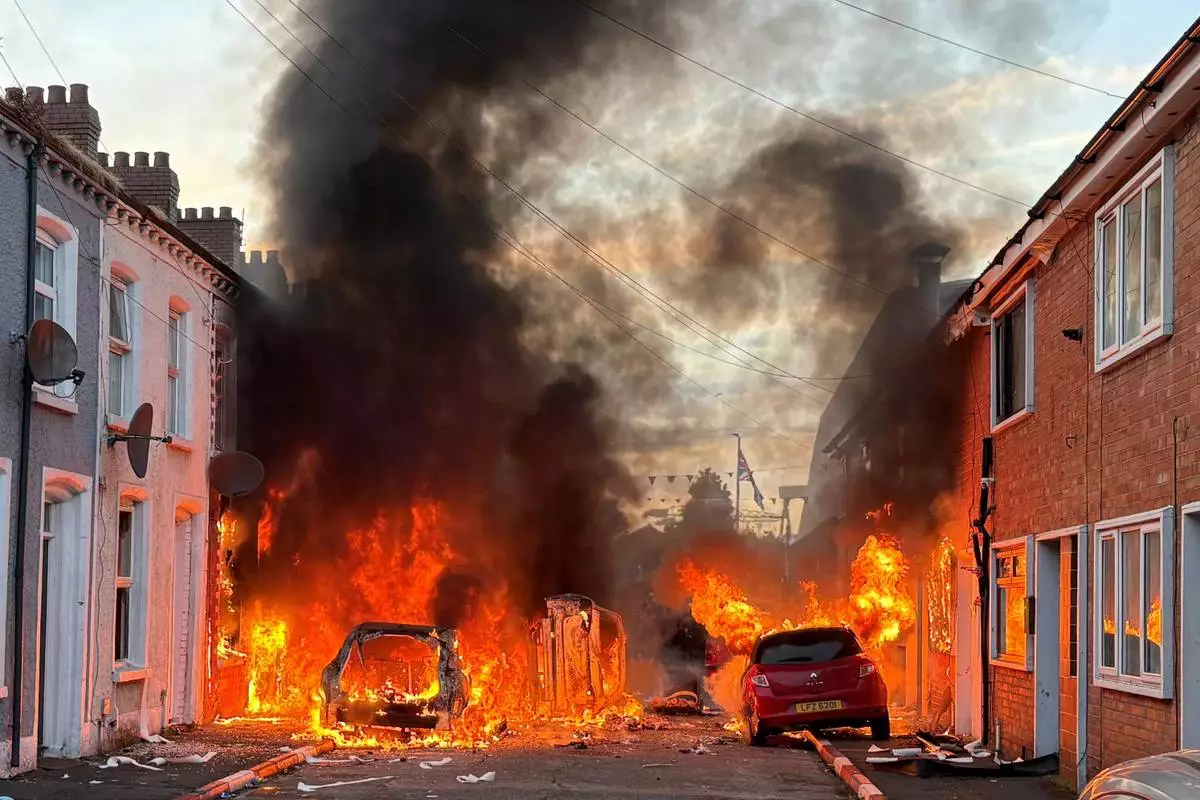
Vehicles set on fire by protesters burn on Lendrick Street in east Belfast, Northern Ireland, on Tuesday, June 9, 2026, after the arrest of a Sudanese man accused of stabbing a man in the northern part of the city. (PA via AP)