Skip to Content Facebook Feature Image

Thai court sentences 2 Uyghur men to death over 2015 Bangkok bombing that killed 20

News

Thai court sentences 2 Uyghur men to death over 2015 Bangkok bombing that killed 20
News

News

Thai court sentences 2 Uyghur men to death over 2015 Bangkok bombing that killed 20

2026-06-11 17:25 Last Updated At:17:30

BANGKOK (AP) — A court in Thailand on Thursday convicted and sentenced to death two members of China’s Muslim Uyghur minority over a 2015 bombing at a Bangkok landmark that killed 20 people and injured more than 120.

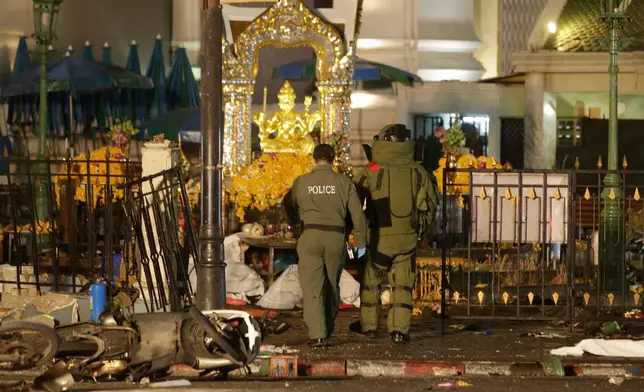
Yusufu Mieraili and Bilal Mohammad were arrested shortly after the Aug. 17, 2015, bombing of the Erawan shrine, which is a popular tourist destination, particularly for visitors from China.

More Images
Visitors pray at the Erawan Shrine in Bangkok, Thailand, Wednesday, June 10, 2026. (AP Photo/Sakchai Lalit)
Visitors pray at the Erawan Shrine in Bangkok, Thailand, Wednesday, June 10, 2026. (AP Photo/Sakchai Lalit)

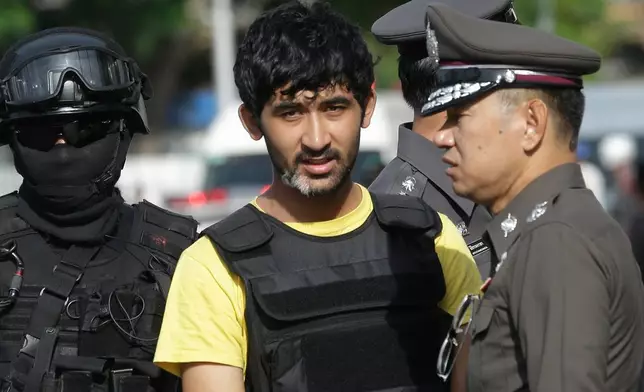
FILE - Police officers escort Yusufu Mieraili, yellow shirt, outside Hua Lamphong railway station in Bangkok, on Sept. 9, 2015. (AP Photo/Sakchai Lalit, File)
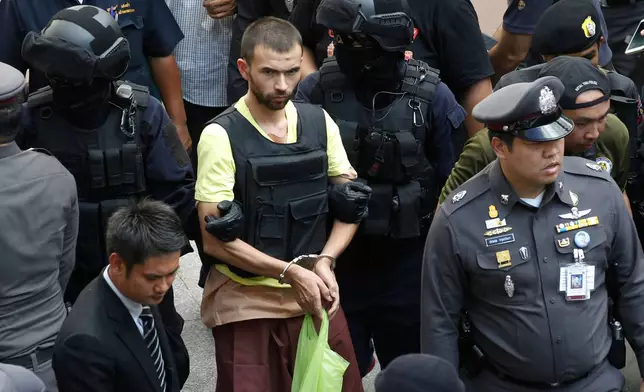
FILE - Police officers escort Yusufu Mieraili, yellow shirt, outside Hua Lamphong railway station in Bangkok, on Sept. 9, 2015. (AP Photo/Sakchai Lalit, File)

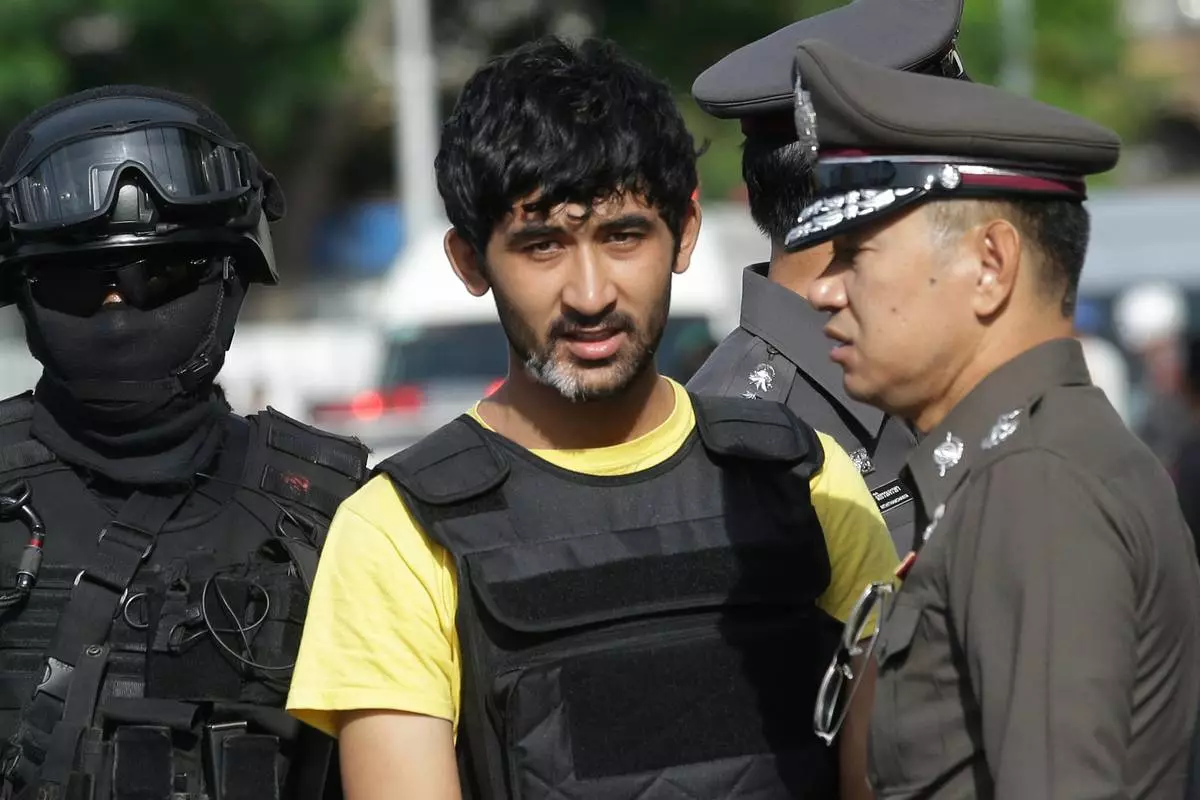
FILE - Police officers escort Bilal Mohammad, center, during a reenactment at Erawan Shrine in Bangkok, on Sept. 26, 2015. (AP Photo/Sakchai Lalit, File)

FILE - Police officers escort Bilal Mohammad, center, during a reenactment at Erawan Shrine in Bangkok, on Sept. 26, 2015. (AP Photo/Sakchai Lalit, File)

Lawyer Chuchart Kanpai talks to reporters after he left a courtroom at Bangkok South Criminal Court in Bangkok, Thailand, Thursday, June 11, 2026. (AP Photo/Sakchai Lalit)
Lawyer Chuchart Kanpai talks to reporters after he left a courtroom at Bangkok South Criminal Court in Bangkok, Thailand, Thursday, June 11, 2026. (AP Photo/Sakchai Lalit)

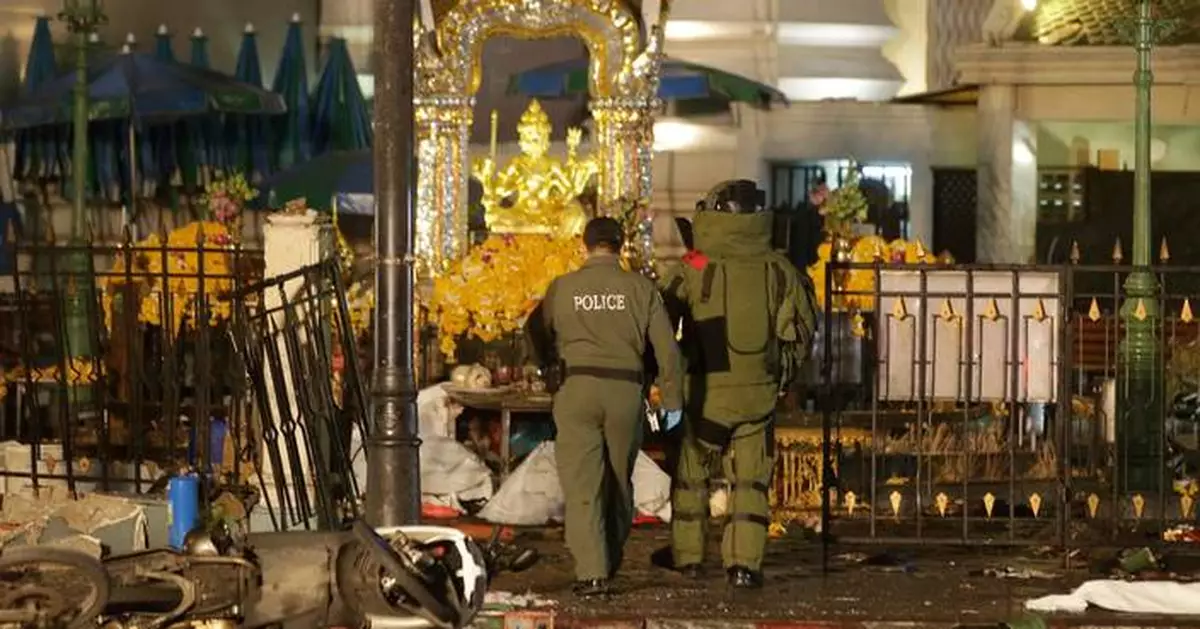
FILE - Explosive Ordnance Disposal officers enter the Erawan Shrine after an explosion in Bangkok, on Aug. 17, 2015. (AP Photo/Sackchai Lalit, File)

FILE - Explosive Ordnance Disposal officers enter the Erawan Shrine after an explosion in Bangkok, on Aug. 17, 2015. (AP Photo/Sackchai Lalit, File)

The men were charged with a variety of offenses, including murder, attempted murder and illegal possession of explosive materials. They allegedly were linked by video, fingerprints and other evidence to the bombing.

Four judges presided over the ruling at Bangkok South Criminal Court. The court ruled the two were found guilty due to overwhelming evidence against them and were unable to provide substantial evidence proving otherwise.

After the judges left the courtroom, Mieraili shouted in broken Thai that he rejected the ruling and was innocent.

“I mourn for Thailand,” he said. “I did not receive justice … I ask Thai people to help me.”

Mieraili learned Thai while in detention, according to his lawyer. He also speaks English and on Thursday was asked to translate the proceedings into Uyghur for Bilal because only an English interpreter was available in court. The trial was repeatedly delayed because of difficulties finding suitable translators.

Chuchart Kanpai, one of the defense lawyers, said they will appeal as there are still several aspects of the case that were not taken into consideration.

The two men allegedly confessed during the initial questioning but pleaded not guilty when the trial began in 2016. The proceedings originally took place in a military court before the case was transferred to the civilian Bangkok South Criminal Court in 2019.

The men said they suffered mistreatment and torture in jail after their arrests. But the judges said Thursday there was no evidence of torture and that investigators did not appear to have coerced the confessions.

China on Thursday said it welcomed the verdict.

“The terrorist bombing that year killed 20 people, including seven Chinese citizens, and injured more than 100 others. The perpetrators were utterly inhumane and guilty of heinous crimes," Ministry of Foreign Affairs spokesman Lin Jian said. “China supports Thailand in conducting the trial in accordance with the law and severely punishing the perpetrators.”

Several human rights groups have criticized the procedures and the lengthy trial. In 2023, the International Federation for Human Rights based in France submitted a petition to the United Nations alleging numerous violations of human rights and due process, including the lack of a legal basis for the arrests and discriminatory treatment.

Authorities identified 17 suspects in connection to the blast but only three were apprehended. Charges against a Thai woman were dropped in 2024 due to lack of evidence.

Police said they believe Mieraili detonated the bomb minutes after a backpack containing the device was allegedly left at the shrine by Bilal, who also is known as Adem Karadag.

Thai authorities have said the bombing was revenge by a people smuggling gang whose activities had been disrupted by the police. Thailand cracked down on human traffickers earlier in 2015 after abandoned camps for Rohingyas fleeing persecution in Myanmar and economic migrants from Bangladesh were found in the jungles along the Thai-Malaysia border.

However, some analysts suspect the bombing was the work of Uyghur separatists angry that Thailand had forcibly repatriated scores of Uyghurs to China in July 2015. Many Uyghurs try to escape persecution and tight control in China with the help of professional smugglers.

Thailand deported 40 Uyghur asylum seekers back to China in 2025, which drew international criticism.

The shrine’s popularity among Chinese tourists lent support to the theory that the bombing had a political element.

Associated Press writer Huizhong Wu contributed to this report.
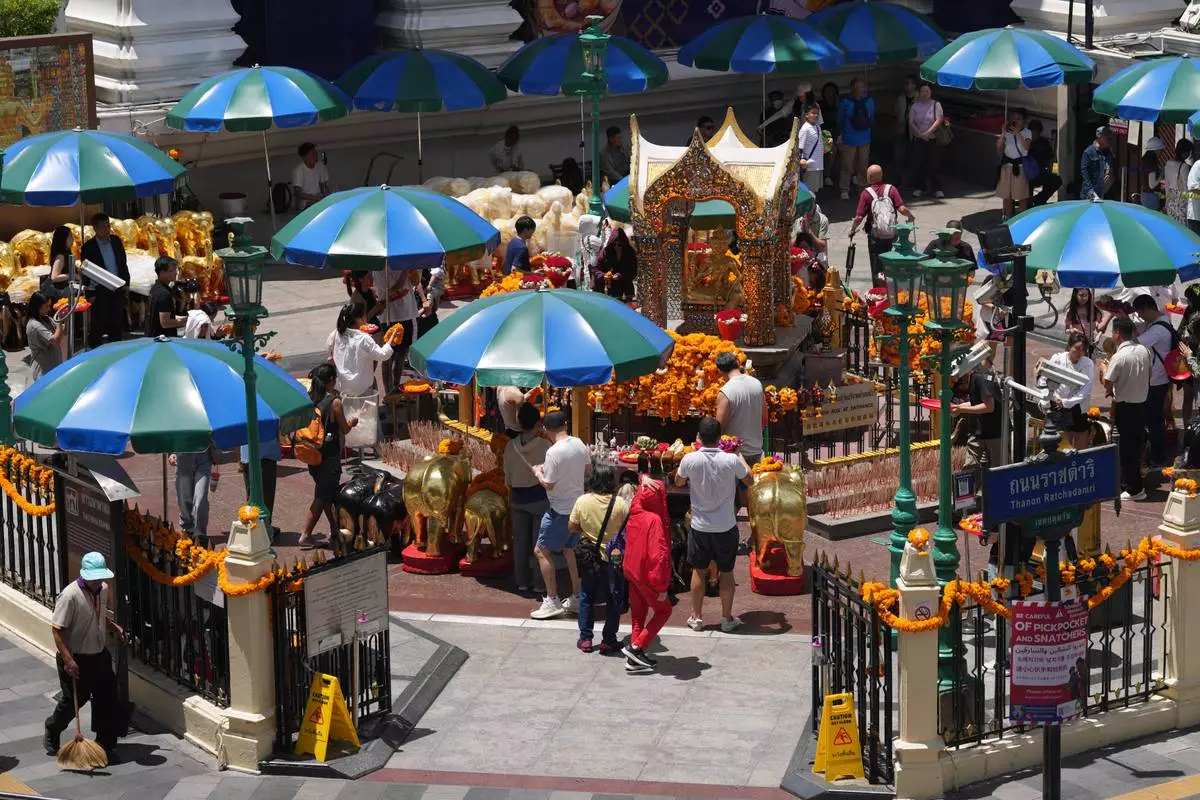
Visitors pray at the Erawan Shrine in Bangkok, Thailand, Wednesday, June 10, 2026. (AP Photo/Sakchai Lalit)
Visitors pray at the Erawan Shrine in Bangkok, Thailand, Wednesday, June 10, 2026. (AP Photo/Sakchai Lalit)

FILE - Police officers escort Yusufu Mieraili, yellow shirt, outside Hua Lamphong railway station in Bangkok, on Sept. 9, 2015. (AP Photo/Sakchai Lalit, File)
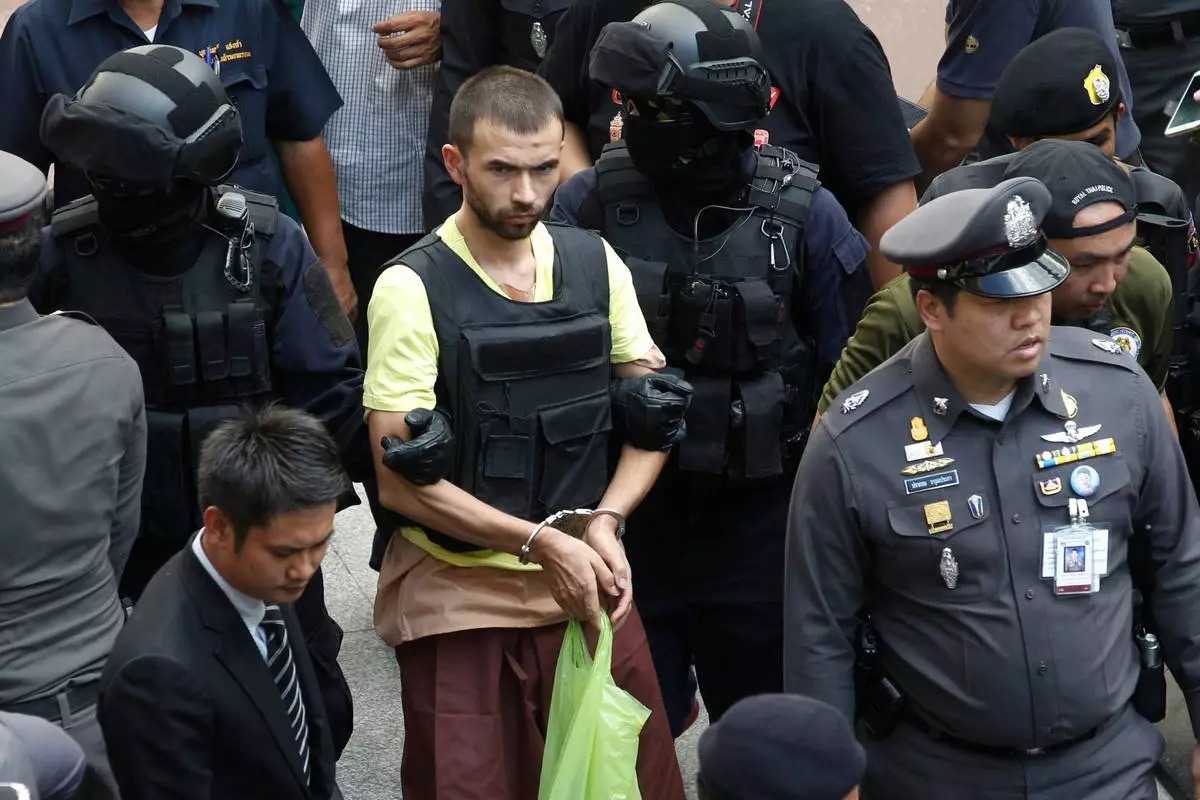
FILE - Police officers escort Yusufu Mieraili, yellow shirt, outside Hua Lamphong railway station in Bangkok, on Sept. 9, 2015. (AP Photo/Sakchai Lalit, File)

FILE - Police officers escort Bilal Mohammad, center, during a reenactment at Erawan Shrine in Bangkok, on Sept. 26, 2015. (AP Photo/Sakchai Lalit, File)
FILE - Police officers escort Bilal Mohammad, center, during a reenactment at Erawan Shrine in Bangkok, on Sept. 26, 2015. (AP Photo/Sakchai Lalit, File)

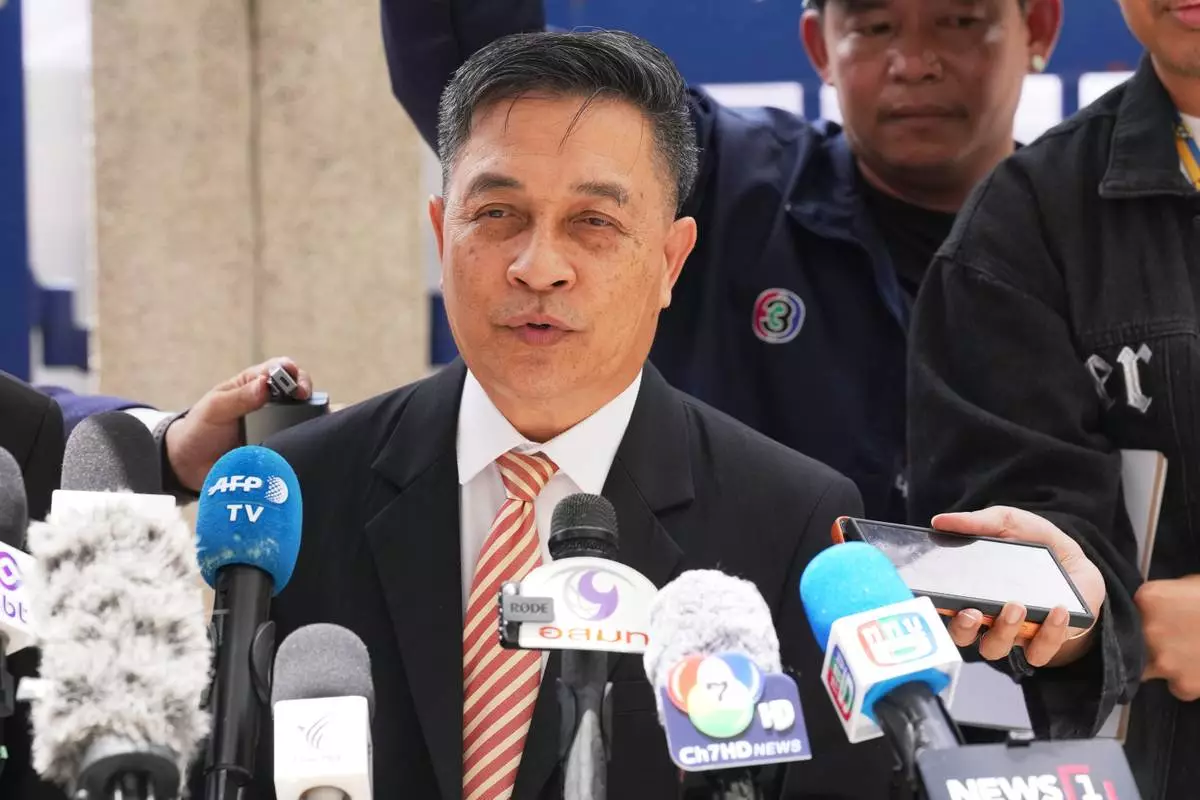
Lawyer Chuchart Kanpai talks to reporters after he left a courtroom at Bangkok South Criminal Court in Bangkok, Thailand, Thursday, June 11, 2026. (AP Photo/Sakchai Lalit)
Lawyer Chuchart Kanpai talks to reporters after he left a courtroom at Bangkok South Criminal Court in Bangkok, Thailand, Thursday, June 11, 2026. (AP Photo/Sakchai Lalit)

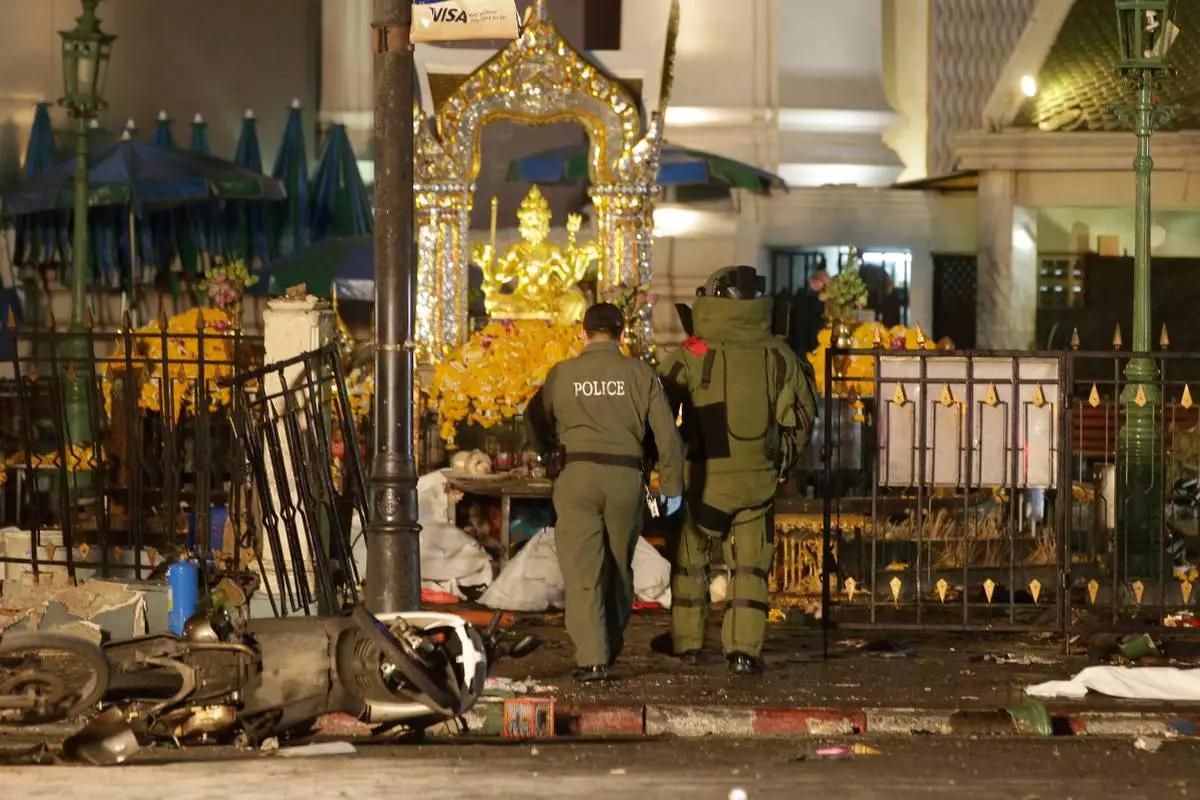
FILE - Explosive Ordnance Disposal officers enter the Erawan Shrine after an explosion in Bangkok, on Aug. 17, 2015. (AP Photo/Sackchai Lalit, File)


FILE - Explosive Ordnance Disposal officers enter the Erawan Shrine after an explosion in Bangkok, on Aug. 17, 2015. (AP Photo/Sackchai Lalit, File)

U.S. President Donald Trump said Tuesday the U.S. has no talks planned with Iran but insisted the Strait of Hormuz remains “open and operating,” despite limited traffic and a reported strike on a ship exiting the waterway.

Earlier this week, Trump also threatened to bomb Oman as the country sought a deal with Iran to manage shipping traffic through the strait, two regional officials said Tuesday, a day after Trump reportedly leveled the threat if Oman "gets in the way.” Iran says the waterway will not be reopened until the U.S. meets its conditions.

As talks between Iran and Oman continue, a projectile hit a ship in the strait and Iran-backed Houthi rebels claimed they fired drones at an oil refinery in Saudi Arabia.

Here’s a look at the latest developments Tuesday in the Iran war and the wider Middle East. Full coverage can be found here.

As Oman and Iran say they are nearing a deal to reopen the Strait of Hormuz, Trump said on social media Tuesday that the U.S. blockade of Iranian ports remains “in full force and effect,” but asserted that all water mines have been removed and that other marine traffic was free to pass.

Trump posted a map depicting the strait as U.S. territory.

Iranian Deputy Foreign Minister Kazem Gharibabadi appeared to respond to Trump’s post.

“Just as Trump correctly wrote the name of the eternal Persian Gulf, soon his delusion regarding the Strait of Hormuz will either be corrected or we will correct the delusions of this deluded man," he wrote on X.

The Trump administration has told Oman it opposes parts of the yet-to-be-announced deal, according to officials briefed on the U.S. position. Those include joint Iranian and Omani management of the passage's exit route and the collection of voluntary fees from vessels, even if the money is used for security and maritime environmental protection.

The officials spoke on condition of anonymity because they were not authorized to talk to journalists.

The White House on Tuesday referred to Trump’s remarks in the Oval Office and declined to comment further about Oman.

— By Samy Magdy in Cairo

The Egyptian Foreign Ministry said Tuesday that the Iranian-Omani deal could pave the way for Washington and Tehran to return to negotiations for a “comprehensive and permanent deal that addresses all concerns and enhances regional security and stability.”

The statement came after a meeting between Egyptian Foreign Minister Badr Abdelatty and Omani counterpart Badr al-Busaidi. But it did not address Trump’s latest threat against Oman.

The 60-day negotiating period ended this week between the U.S. and Iran with no clear end to the war in sight.

Ship traffic through the Strait of Hormuz dropped significantly last week, with confirmed crossings falling 19.5% to 95 transits. Only three vessels made it through the waterway on Sunday, according to shipping data platform Kpler.

The ships used the Iranian-designated route through the strait, with no crossings recorded through the Omani routes.

Crossings through the Bab el-Mandeb Strait increased 6.7% to 254 transits, while so-called dark transits, in which ships turn off the transponders that broadcast their location, fell from 40 to 16, Kpler said.

An unidentified projectile damaged the engine room of a ship in the Strait of Hormuz near Oman and “resulted in a crew casualty," according to the British military’s UK Maritime Trade Operations center.

The maritime monitoring agency did not release any details about the ship or its cargo, and it was not clear whether the crew member was killed or wounded.

No environmental damage has been reported and the agency said the Omani Coast Guard was assisting other crew members and authorities were investigating.

Yemen’s Iran-backed Houthi rebels claimed they fired drones at an oil refinery in neighboring Saudi Arabia, the latest attack threatening to reignite Yemen’s civil war and open another front in the Middle East.

The attack targeted a facility run by Saudi Aramco, Saudi Arabia’s state-owned oil company, according to a report by the Houthi-run SABA news agency. There were no immediate reports of damage or comment from Saudi Arabia.

The Houthis have escalated attacks against government forces in Yemen and oil facilities in Saudi Arabia, which supports the Yemeni government, and the kingdom’s shipping in the Red Sea, an important alternative to the Strait of Hormuz.

An Israeli strike hit Gaza City on Tuesday, killing six people, including a child, and wounding 14 others, according to Shifa Hospital, where the casualties were taken.

The Israeli military said it struck Hamas commanders in the Shati area who it said were planning to carry out attacks against Israeli forces.

The heaviest fighting has subsided since a ceasefire in the more than two-year war took hold in October. Israeli forces have carried out repeated airstrikes since then, killing at least 1,266 Palestinians, according to health officials in Gaza.

The Gaza Health Ministry, which is part of the Hamas-led government, maintains detailed casualty records that are seen as generally reliable by U.N. agencies and independent experts. But it does not give a breakdown of civilians and militants.

The defense ministry of the United Arab Emirates said two ballistic missiles were launched from Iran toward the UAE on Tuesday.

One landed outside of the country’s waters, and the other landed within them, the Emirati Defense Ministry said. It was unclear whether the missiles were shot down by air defenses or fell. No damage or injuries were reported.

Iran early Wednesday rejected the UAE’s claims that it launched missiles toward the country.

In a post on social media, the spokesperson for the Iranian Foreign Ministry, Esmail Baghaei, said Dubai’s accusations were “detrimental to ongoing efforts to strengthen trust among the countries of the region and prevent a further deterioration of security.” He called on the nations in the region to not make “baseless accusations” against Iran.

In the weeks after the U.S. and Israel launched a war against Iran on Feb. 28, the UAE was frequently targeted by Iranian missiles and drones, but Tuesday’s reported attack was the first in weeks.

Dark oil residue covers parts of the shoreline at Shib Deraz Beach on Qeshm Island, Iran, Thursday, Aug. 13, 2026, amid ongoing wartime attacks on vessels and infrastructure in and around the Strait of Hormuz, though the spill’s source has not been independently determined. (Amirhosein Khorgooei/ISNA)

Dark oil residue covers parts of the shoreline at Shib Deraz Beach on Qeshm Island, Iran, Thursday, Aug. 13, 2026, amid ongoing wartime attacks on vessels and infrastructure in and around the Strait of Hormuz, though the spill’s source has not been independently determined. (Amirhosein Khorgooei/ISNA)

Recommended Articles