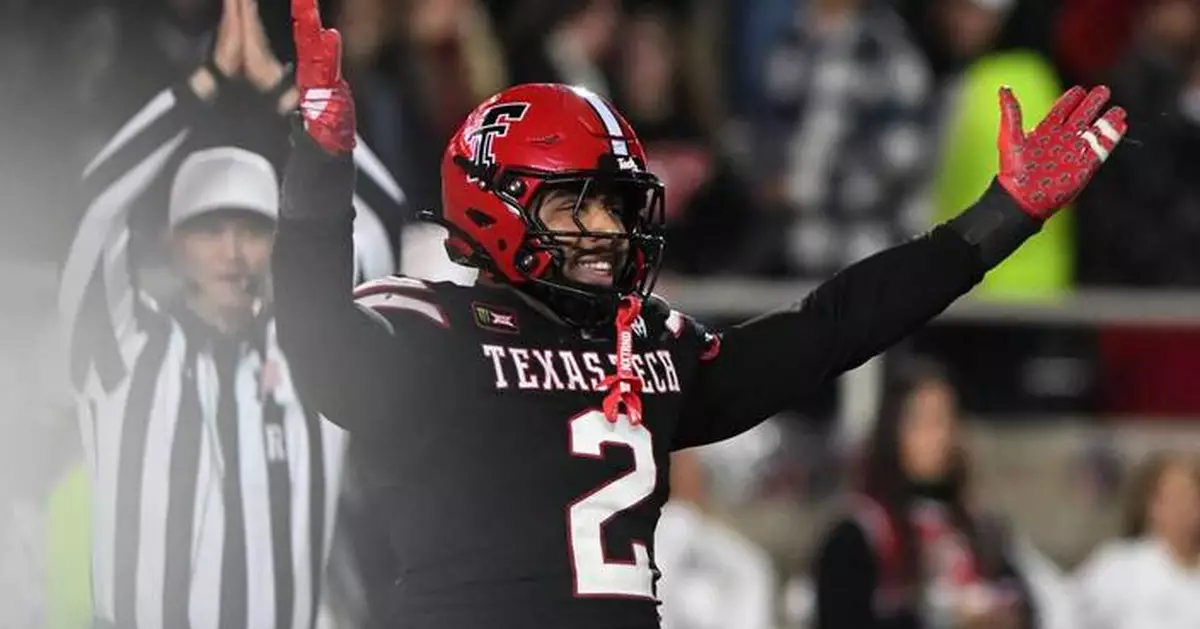
LUBBOCK, Texas (AP) — Thomas Castellanos threw for a career-high five touchdowns, including the go-ahead score to Kenny Johnson with 2:44 remaining, and No. 13 Texas Tech held on for a 53-48 victory over West Virginia in an old-school Big 12 offensive slugfest that ended early Sunday morning.
The Red Raiders (8-1, 5-1 Big 12) stayed on track for a shot at a second consecutive conference title, and the College Football Playoff spot that would come with it, by rallying from seven points down in the fourth quarter after leading by 14 at halftime.
The teams combined for 1,220 yards of offense — 894 of those before halftime — but a few defensive plays in the fourth quarter were as big as any of the game's 13 plays of at least 30 yards.
The biggest was Texas Tech (No. 15 in CFP rankings) stuffing Cam Cook on third-and-1 with seven minutes remaining. West Virginia coach Rich Rodriguez opted to punt, and the Red Raiders went 69 yards in nine plays.
Castellanos kept the drive alive by floating a pass over the middle on fourth-and-3, and Micah Hudson grabbed it as he came across the field for a 26-yard gain. Johnson's scoring catch was a 5-yarder.
“A good old-fashioned throwback Big 12 game broke out,” said fifth-year Texas Tech coach Joey McGuire, who was a Baylor assistant before going to West Texas. “I haven't been a part of that in a long time. I probably haven't seen anything like that, definitely since I've been here.”
Quarterback Michael Hawkins Jr. had three rushing touchdowns to extend his FBS-leading total to 19, tying a West Virginia record set by Ira Errett Rodgers in 1919.
The Mountaineers (5-4, 2-4) erased a two-touchdown deficit by forcing Texas Tech to punt on its first four drives in the second half after the Red Raiders had 494 yards total offense before the break.
“Our defense was gross,” Rodriguez said. ”(Texas Tech) was going against air in the first half.”
With the Red Raiders faltering on offense, West Virginia scored three touchdowns to take a 48-41 lead, but didn't have an answer after Texas Texas went back in front.
The last chance for the Mountaineers ended when Hawkins stumbled and fell in the end zone for a safety in the final two minutes.
“We expect this kind of game or this kind of game and then all of a sudden you get in the game and it's nothing like you thought it would be,” McGuire said. “So it's our job as coaches to find a way to win that game, to find a way to adjust. We didn't play great on defense tonight until the last couple of plays.”
J'Koby Williams had a 75-yard touchdown run for the Red Raiders and finished with 160 yards along with a 43-yard catch to set up a score.
Castellanos, in his second start since replacing Will Hammond, was 18 of 27 for 362 yards without an interception while rushing for 102 yards. Johnson and Terrance Carter Jr. had two scoring catches apiece.
Hawkins had 303 yards passing on just 11 completions, with redshirt freshman Taron Francis catching his first three passes of the season for 169 yards, including a 73-yard TD. Francis had a 75-yarder that set up a score.
“We moved the ball pretty well, but we didn’t when we needed to,” Rodriguez said.
West Virginia: The second-worst defense in FBS statistically gave its offense a chance to get back in the game with the sudden change of fortunes in the second half. The turnaround started with K.J. Henson's 15-yard sack of Castellanos on Texas Tech's first play after the break.
Texas Tech: The Red Raiders have the best run defense in the Big 12, a strength they rode to the league title and CFP last season. Now, they've given up at least 255 yards rushing in two of the past three games after the Mountaineers piled up 279 on the ground.
West Virginia: Hosts Kansas on Saturday.
Texas Tech: At Oklahoma State on Saturday.
Sign up for Top 25 poll alerts here, visit the Top 25 here and see AP’s full college football coverage here
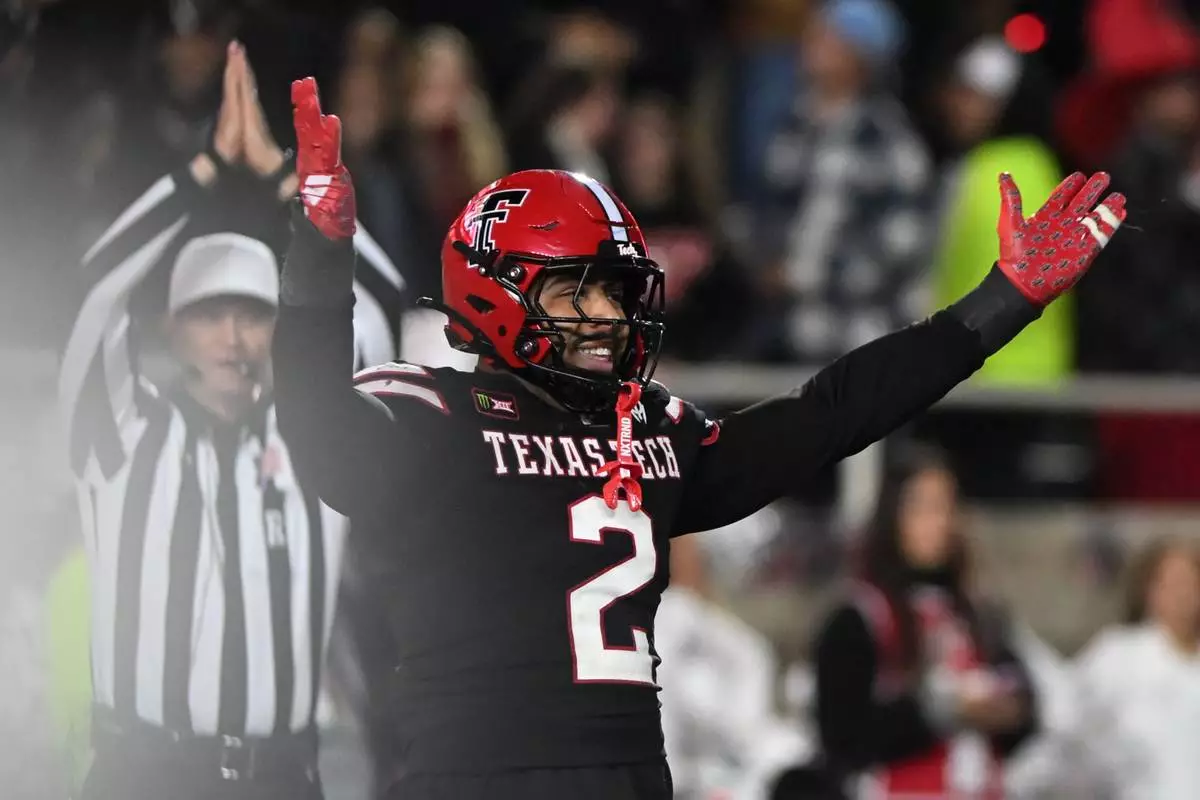
Texas Tech linebacker Trey White (2) gestures after a safety during the second half of an NCAA college football game against West Virginia, Saturday, Nov. 7, 2026, in Lubbock, Texas. (AP Photo/Annie Rice)
MONTEVIDEO, Uruguay (AP) — Pope Leo XIV is wrapping up his visit to Uruguay on Sunday by marking an important Catholic feast day that is tied to the country’s independence, capping his effort to draw attention to the role the church has played in Latin America’s most secular country.
Leo was traveling to the city of Florida, north of Montevideo, before heading to Argentina for the second leg of his three-nation tour of South America. It's expected to be the most politically delicate, given the Catholic Church's sharp criticisms of the austerity program of libertarian President Javier Milei.
For his final event in Uruguay, Leo was commemorating the feast of the Virgin of the Thirty-three. Every year, thousands of pilgrims flock to the city to pray before the small wooden icon of the Virgin Mary.
According to tradition, 33 independence patriots acquired the Guaraní statue and had it with them when independence was declared from the Brazilian empire in Florida on Aug. 25, 1825.
Leo became the first pope in nearly four decades to visit Uruguay, in hopes of reminding its people that the Catholic Church is part of their very identity as a nation — even if in subsequent decades the country went on a deeply secular, and at times anticlerical, route.
Leo was hoping to leave a final parting message before opening the second leg of his South American trip, which he went ahead with despite having undergone surgery Oct. 13 to remove a cancerous tumor from his lung. The final stop is in Peru, his second homeland.
Leo, 71, has appeared in fine form at his events, singing loudly, bounding up stairs and gamely greeting the crowds in his popemobile. He has not cut any events short, including those that have kept him out until past midnight Rome time.
“This visit will also serve to reinforce the image of Leo as a leader, not merely in a spiritual sense, but in a much broader capacity as a political leader and a widely recognized figure who, far from shying away from conflict or tension, offers a powerful perspective and commands a highly respected voice,” said Luis Bahamondes, a professor at the Center for Judaic Studies at the University of Chile.
Milei is due to meet Leo at the Buenos Aires airport and then the two will appear together for the traditional welcome ceremony and exchange of speeches. The encounter could be tense, given Milei’s austerity measures that have slashed social spending, and his embrace of artificial intelligence.
Milei’s sweeping spending cuts have greatly strained relations with Argentine church leaders, who have criticized his government for putting economic orthodoxy ahead of the needs of the poor.
Since taking office in December 2023, for example, Milei has slashed Argentina’s health care budget by 48% in real terms. Planned cuts to the public university system, which represents a near-universal point of pride in the crisis-prone country, sent students into the streets.
Much like its allies in the Trump administration, Milei's government has portrayed the cuts as part of a necessary reform process to remake Argentina’s troubled economy and eliminate fraud and waste in the federal bureaucracy.
According to official data, poverty in Argentina reached 32.3% of the population during the first half of 2026, representing about 15 million people.
Milei has also courted AI investment and data centers with promises of limited regulation. Leo has warned about the threats to humanity and the environment of the AI race and called for strict, internationally policed safeguards on its development.
In Argentina, Leo is very much completing unfinished business left by his predecessor, Pope Francis. The Argentine Jesuit, the former archbishop of Buenos Aires, never returned home during his 12-year pontificate, confounding friends and foes alike.
“There’s a lot of disagreement over Francis and his legacy in Argentina,” said David Lantigua, a theology professor and faculty fellow at the University of Notre Dame’s Kellogg Institute, which focuses especially on Latin American affairs.
Much of the polemics stems from his tenure in Buenos Aires, when the former Cardinal Jorge Mario Bergoglio was a sometimes divisive partisan figure in a politically polarized country. Bergoglio was a slum priest, who advocated for the poorest and most marginalized — the sector of Argentines who have been feeling Milei’s social spending cuts the most.
“I think we’ll see that kind of tension with Leo — that’s the ministry Francis left behind,” Lantigua said.
Leo, who spent two decades as a missionary priest in Peru ministering to poor people, is very much a pastor in Francis' image and owes his pontificate to the late pope.
Associated Press religion coverage receives support through the AP’s collaboration with The Conversation US, with funding from Lilly Endowment Inc. The AP is solely responsible for this content.
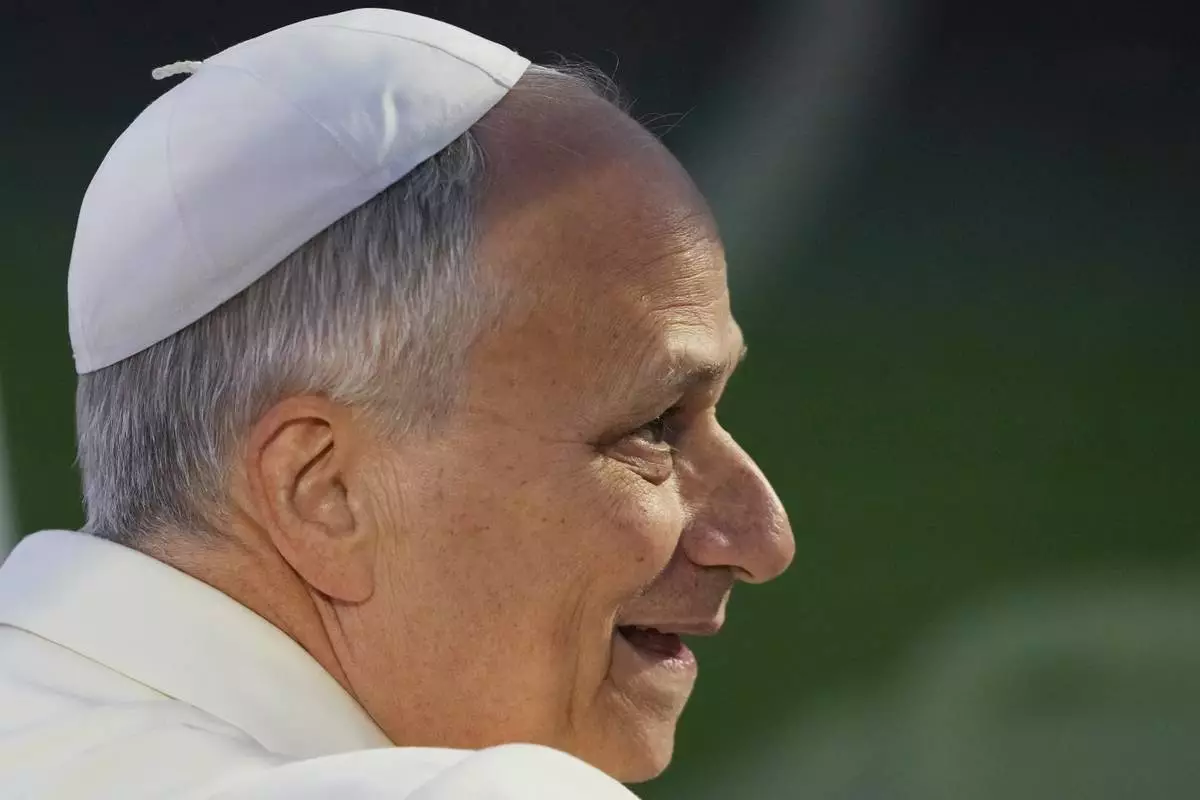
Pope Leo XIV arrives too lead a vigil payer at Centenario Stadium in Montevideo, Uruguay, Saturday, Nov. 7, 2026. (AP Photo/Natacha Pisarenko)
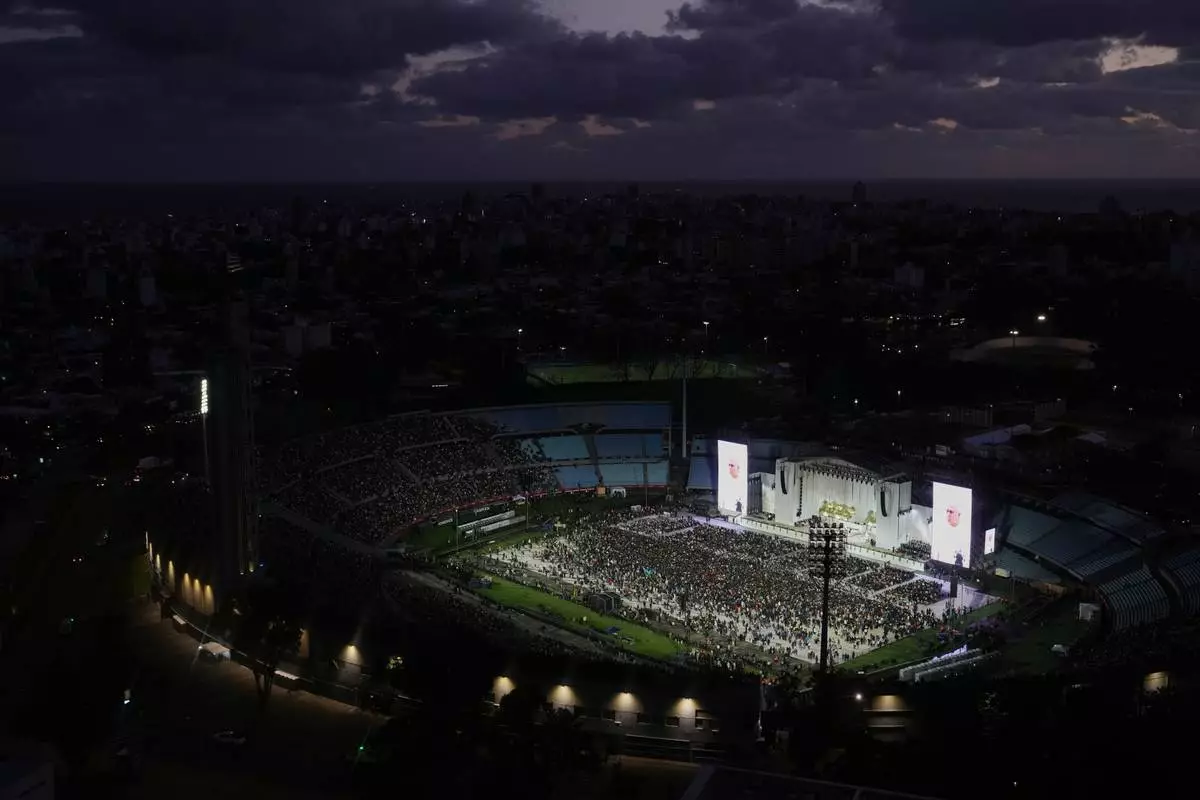
Pope Leo XIV leads a vigil prayer at Centenario Stadium in Montevideo, Uruguay, Saturday, Nov. 7, 2026. (AP Photo/Matilde Campodonico)
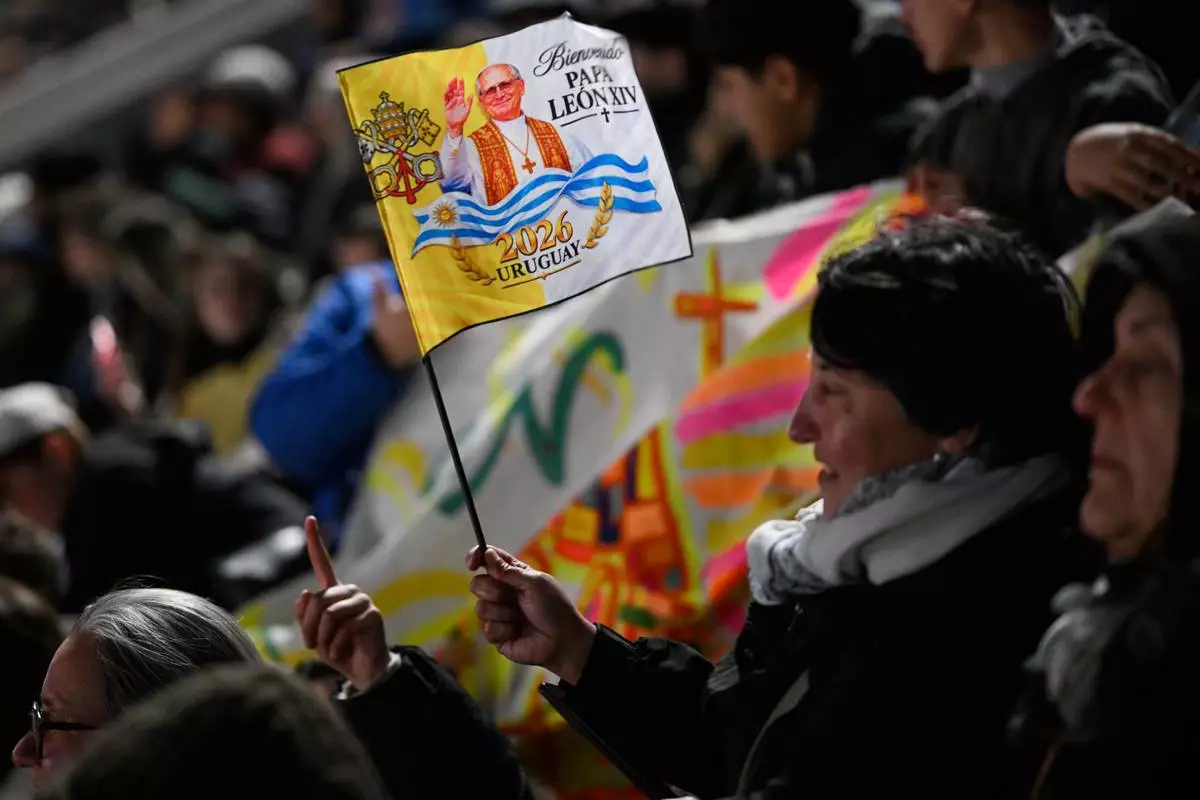
Faithful listen to Pope Leo XIV leading a prayer vigil at Centenario Stadium in Montevideo, Uruguay, Saturday, Nov. 7, 2026. (AP Photo/Santiago Mazzarovich)
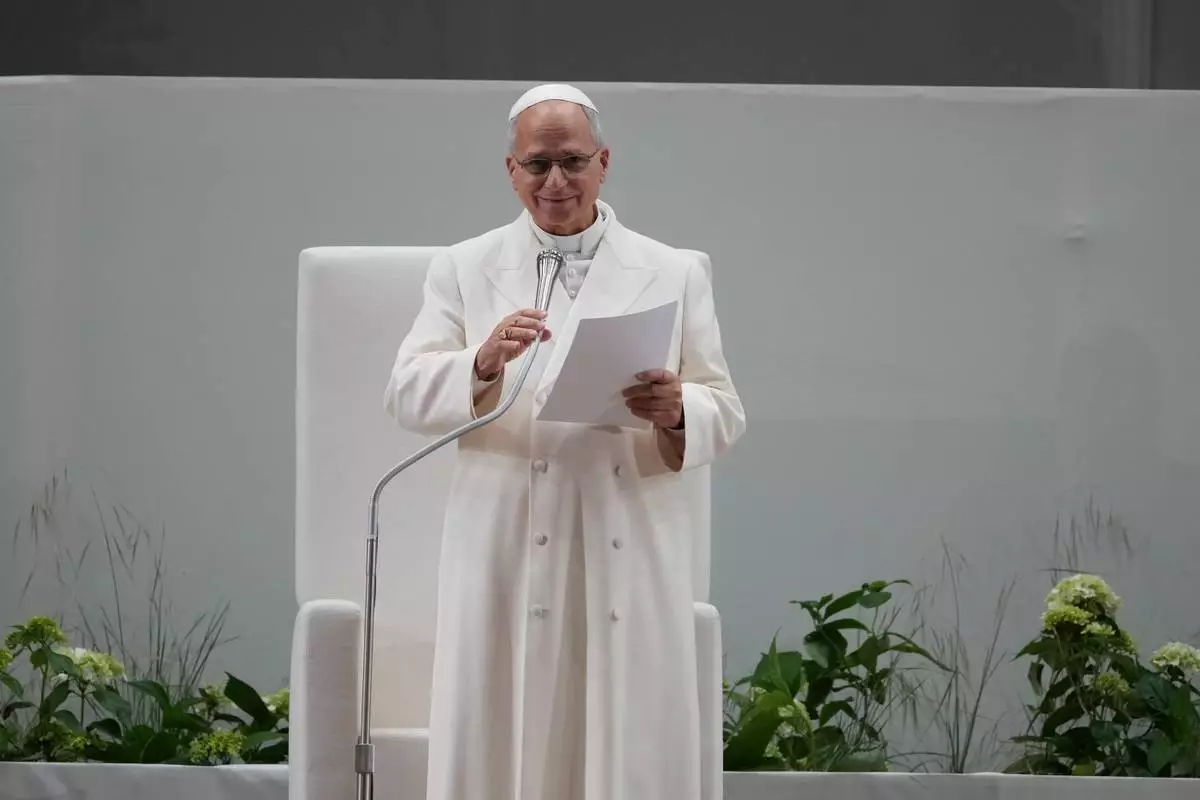
Pope Leo XIV leads a prayer vigil at Centenario Stadium in Montevideo, on the second day of his twelve-day apostolic journey to South America, Saturday, Nov. 7, 2026. (AP Photo/Andrew Medichini)
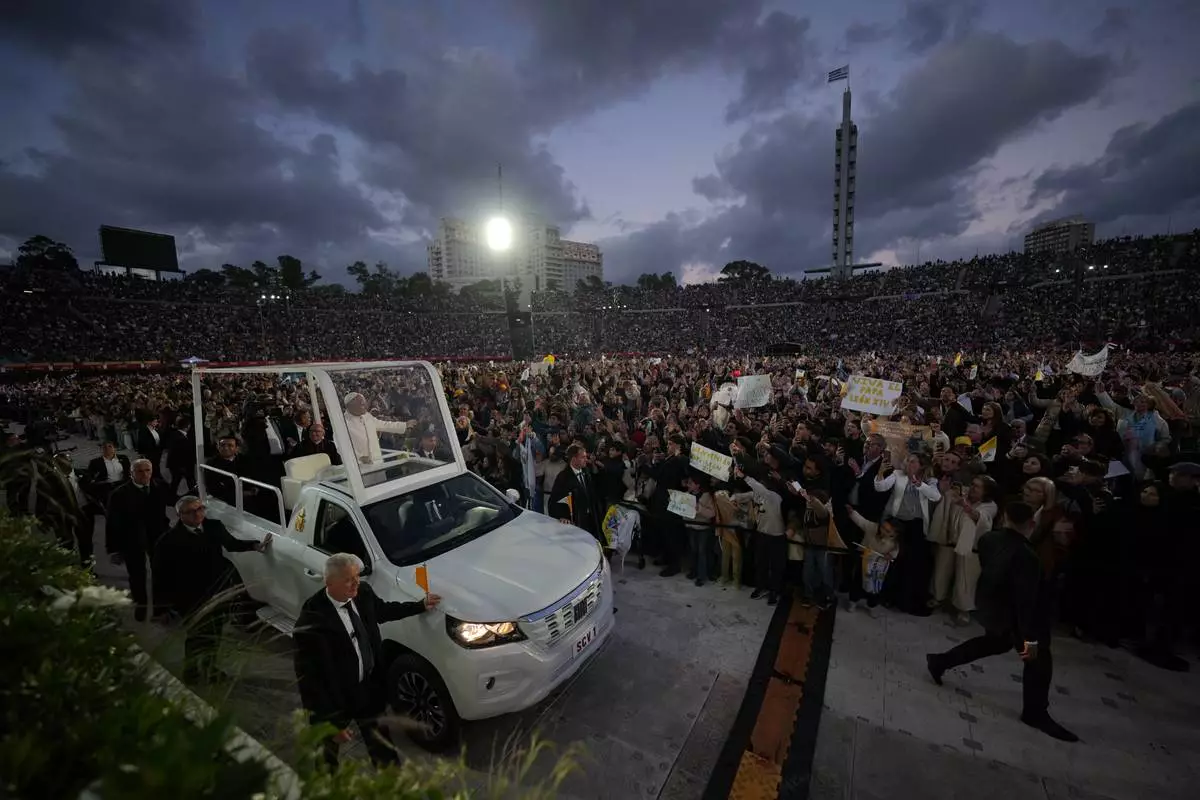
Pope Leo XIV is cheered by faithful as he arrives for a prayer vigil at Centenario Stadium in Montevideo, on the second day of his twelve-day apostolic journey to South America, Saturday, Nov. 7, 2026. (AP Photo/Andrew Medichini)