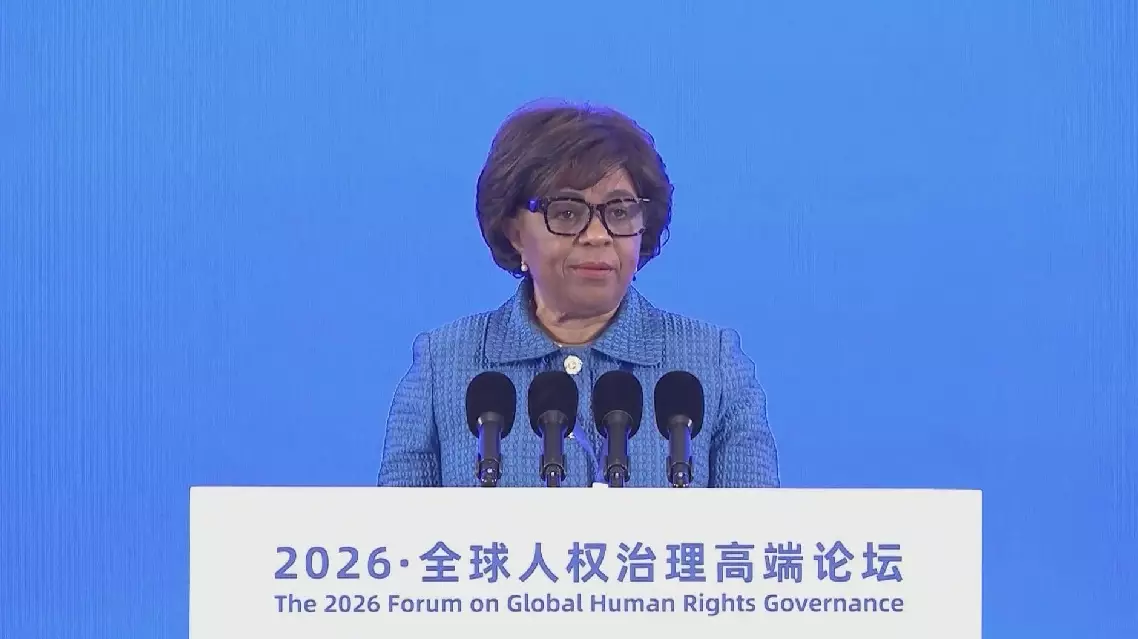
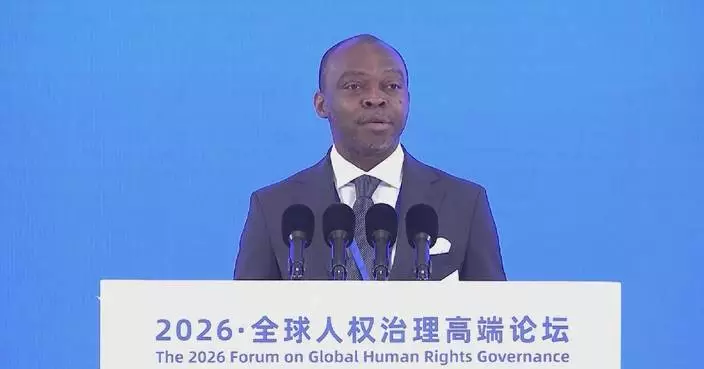
Former Peruvian Prime Minister Eduardo Melchor Arana Ysa on Thursday called for a fundamental rethink of global human rights governance, stressing that true progress must be rooted in respect for civilizational diversity rather than imposed through a single template.
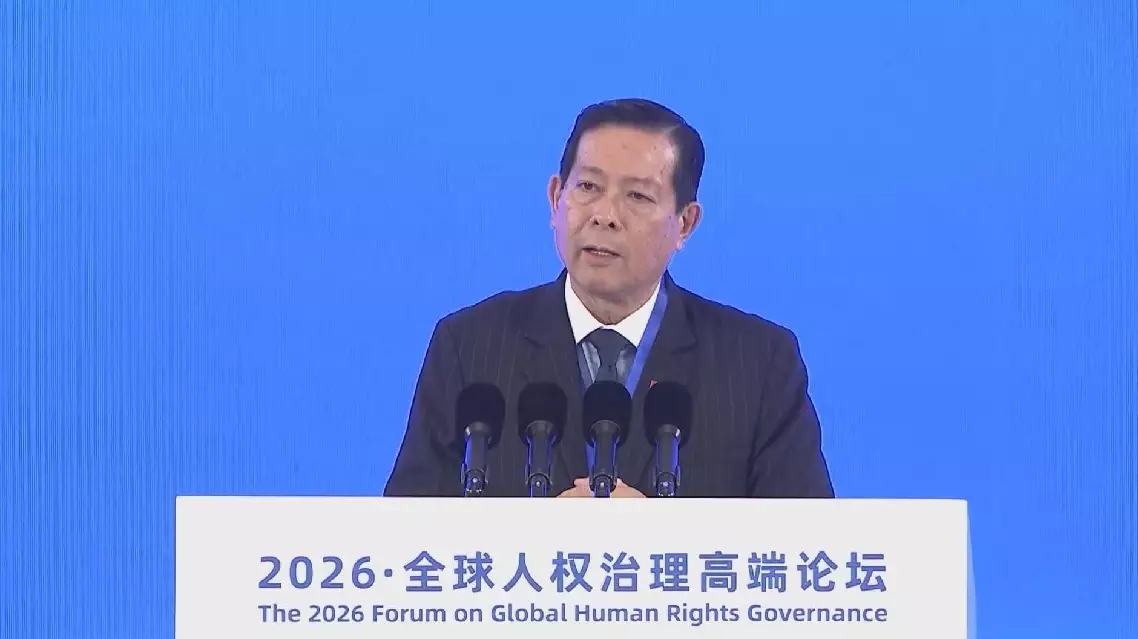
Speaking at the opening ceremony of the 2026 Forum on Global Human Rights Governance in Beijing, the former prime minister noted that as countries build their futures, they must remain anchored in their national identities, traditions, and core values.
"Because the progress of a society cannot be measured solely by economic growth or technological achievements. The true measure lies in whether we can genuinely cherish and protect our respective historical traditions, the collective wisdom accumulated by all our peoples and leaders, and apply these precious assets to expanding opportunities, unlocking human potential, and improving people's living standards. In this sense, the right to development embodies a profound vision of human progress, one that integrates economic growth, social inclusion, innovation, and people's well-being, all ultimately serving the individual and society," he said.
Today, global human rights governance needs the world's attention more than ever, he said, adding that many of the challenges the world faces are shared ones.
Noting that none of such challenges can be solved in isolation, Arana pointed out that as the international community is undergoing a phase of transformation, different countries with different histories and experiences in pursuing development can provide inspiration for others to learn about.
"Human rights, in the pursuit of protecting human dignity and improving people's lives, are a shared goal of all countries in the world. However, the paths that different societies take to achieve these common aspirations may not be the same. The wealth of humanity lies precisely in our diversity. We have different histories, different cultures, different systems, and different development experiences. Failure to recognize this diversity would impoverish our collective understanding of human rights and limit our ability to translate our universal principles into concrete measures that improve the lives of people in each country," he said.
In an increasingly interdependent world, it is necessary to build a shared vision based on respect, cooperation, and dialogue, the former prime minister said.
Efforts should also be made to achieve jointly promote economic prosperity and social progress, environmental sustainability and shared well-being, and form a more inclusive and more representative international governance system, he said. "Today, the challenges we face transcend national borders, transcend political systems, and transcend levels of development. We face arduous challenges such as poverty and persistent inequality. We face the impacts of climate change and environmental challenges. We face profound transformations brought by the rapidly advancing technological revolution. No country has the capacity to respond to these comprehensive challenges on its own. Working hand in hand is not an option, but a necessity. It is our responsibility, and it is the right thing to do for our people and for future generations. We bear such a moral obligation, political imperative, and historical responsibility," said Arana.
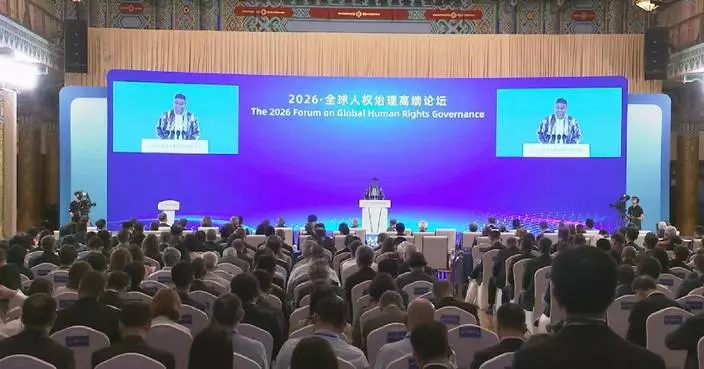
The 2026 Forum on Global Human Rights Governance kicked off in Beijing on Thursday, focusing on joint development and shared human rights.
The two-day forum is themed "Joint Development, Shared Human Rights: The 40th Anniversary of the Adoption of the Declaration on the Right to Development and a New Vision for Global Human Rights Governance," attracting over 400 participants from over 100 countries and international organizations, including the United Nations.
The forum also released the National Human Rights Action Plan of China (2026-2030), which outlines China's work to protect human rights in the next five years. The Chinese government implemented its fourth human rights action plan between 2021 and 2025.
The forum is jointly hosted by the Information Office of the State Council and the Ministry of Foreign Affairs.
Former Peruvian PM urges inclusive governance, respect for diversity