LONDON (AP) — The former leader of Northern Ireland’s largest unionist party told a jury Thursday that he was “crystal clear” that he did not rape an alleged victim when she was a child decades ago, as he gave evidence at his trial on sex crime charges.
At the opening of his trial at Newry Crown Court two weeks ago, Jeffrey Donaldson, 63, pleaded not guilty to one count of rape, four counts of gross indecency and 13 indecent assault charges involving two alleged victims from 1985 to 2008.
Both the alleged victims have given evidence at the trial that they were abused as children. The two told police that Donaldson groped them when they were around primary school age, and the older of the two, referred to in court as Complainant B, said she had been raped.
Donaldson denied any wrongdoing in testimony Thursday. About the rape allegation specifically, Donaldson said: “It just didn’t happen, I am absolutely crystal clear about that."
“It is not something I would ever have done, it is just simply not true," he said.
Donaldson was the leader of the Democratic Unionist Party, or DUP, a conservative party dedicated to maintaining the region’s historic ties to the United Kingdom, when he was arrested in 2024.
He was emotional at times during his testimony, and spoke of how his head was “in a spin” after his arrest. At the time he resigned as leader of the DUP and quit as a lawmaker in the U.K. Parliament.
Donaldson’s wife, Eleanor Donaldson, 60, has denied several charges of aiding and abetting her husband’s alleged offending. She faces a fact-finding hearing on those charges but will not face a criminal trial on mental health grounds.
Donaldson denied any suggestion that his wife had witnessed the abuse but did not intervene.
“She would have been very angry, she would have intervened immediately," he said. “I am absolutely clear, there is no situation where that happened.”
As leader of the DUP from 2021 to 2023, Donaldson was the most powerful figure in Northern Ireland’s unionist movement.
The trial is expected to last another couple of weeks.
.

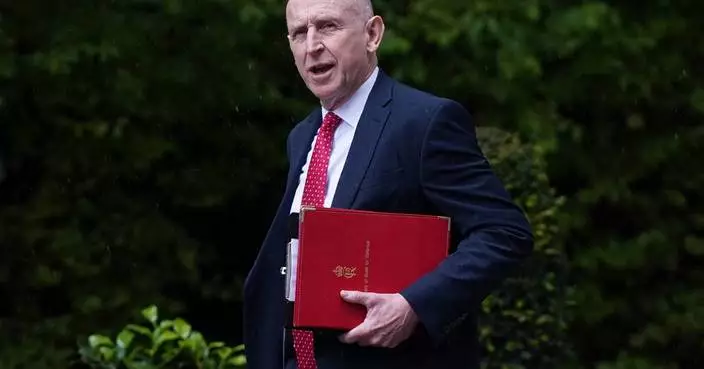
FILE - Jeffrey Donaldson arrives at Newry Crown Court, England, on May 27, 2026. (Brian Lawless/PA via AP)
The average long-term U.S. mortgage rate ticked up this week to just below its high for the year, the latest sign that borrowing costs on home loans remain elevated relative to where they were before the war with Iran started.
The benchmark 30-year fixed rate mortgage rate rose to 6.52% from 6.48% last week, mortgage buyer Freddie Mac said Thursday. Despite the increase, the average rate remains below 6.84%, where it was a year ago.
Borrowing costs on 15-year fixed-rate mortgages, often sought by borrowers refinancing a home loan, also rose this week. That average rate climbed to 5.84% from 5.79% last week. A year ago, it was at 5.97%, Freddie Mac said.
When mortgage rates rise they can add hundreds of dollars a month in costs for borrowers, reducing their purchasing power.
Mortgage rates are influenced by several factors, from the Federal Reserve’s interest rate policy decisions to bond market investors’ expectations for the economy and inflation. They generally follow the trajectory of the 10-year Treasury yield, which lenders use as a guide to pricing home loans.
Rates have been mostly trending higher since the conflict between the U.S. and Iran began in late February, disrupting the flow of crude oil from the Persian Gulf to customers worldwide. That’s sent oil prices sharply higher, helping drive up inflation.
Expectations of higher oil prices as the war drags on have kept long-term bond yields elevated, causing mortgage rates to mostly trend higher.
The yield on the U.S. 10-year Treasury note was at 4.53% in midday trading Thursday on the bond market, up from 4.47% a week ago. It was just 3.97% in late February, before the war broke out.
As recently as late February, the average rate on a 30-year mortgage had slipped just under 6% for the first time since late 2022. It’s hasn’t fallen below that threshold since. Two weeks ago, it climbed to 6.53%, its highest level since August 28.
While average long-term mortgage rates remain lower than they were at this time last year, their mostly upward trajectory and uncertainty over how much higher they may go has kept many would-be homebuyers on the sideline.
Sales of previously occupied U.S. homes declined in the first three months of the year compared to a year earlier, extending a nationwide housing slump that dates back to 2022 when mortgage rates began to climb from pandemic-era lows. Sales were essentially flat in April, but accelerated in May to their fastest pace since December.
Still, sales of existing U.S. homes continue to hovering close to a 4-million annual pace, far short of the historic norm that is closer to 5.2-million.
The latest mortgage applications data suggest home shoppers who can afford to buy at current rates are not holding out for them to move lower.
After declining in recent weeks, mortgage applications, which include loans to buy a home or refinance an existing mortgage, jumped 10.8% last week from the previous week, according to the Mortgage Bankers Association. Applications for both home purchase and refinancing loans rebounded.
The increase in mortgage applications is an encouraging sign for the housing market heading into the second half of the year after a lackluster spring homebuying season.
“However, if inflation continues to outpace wage growth, eroding purchasing power alongside still-elevated mortgage rates, household budgets will come under increasing pressure, posing a meaningful drag on housing demand heading into the summer,” said Jiayi Xu, an economist at Realtor.com.
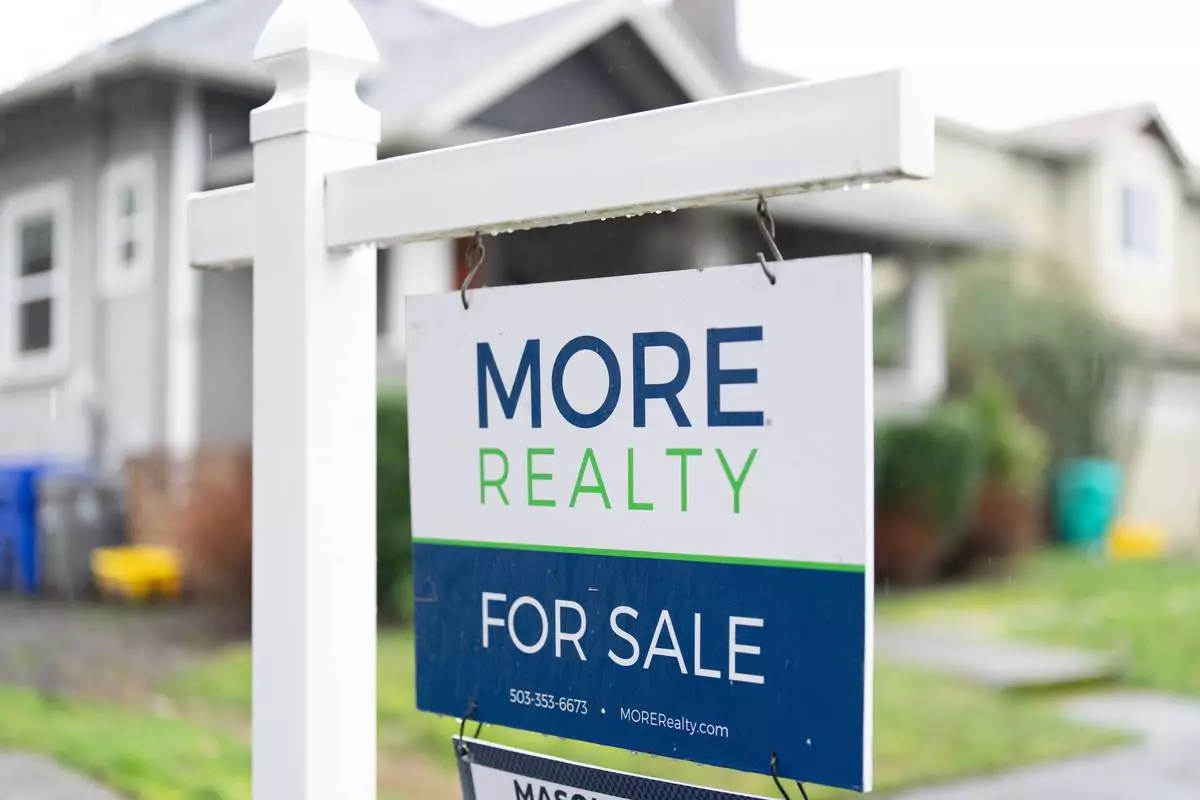
FILE - A "For Sale" sign is seen on Tuesday, Jan. 6, 2026, in Portland, Ore. (AP Photo/Jenny Kane, File)