CARY, N.C.--(BUSINESS WIRE)--Jun 11, 2026--
Cornerstone Building Brands, a leading manufacturer of exterior building products in North America, today announced the 50th anniversary of its MBCI ® brand, marking five decades of delivering metal building components, trim and accessories to customers across North America.
This press release features multimedia. View the full release here: https://www.businesswire.com/news/home/20260611752220/en/
Founded in 1976 in Houston by A.R Ginn and his partners, MBCI began as a small metal components operation guided by hands-on leadership and a commitment to quality and service. Over five decades, countless employees, suppliers, customers and industry advocates have helped build MBCI into one of the most trusted names in metal roof & wall components.
Since its inception, MBCI’s growth has been driven by a commitment to solving real-world challenges faced by builders, contractors and project teams. Established by its founders and carried forward by the team today, that customer-focused approach has helped share product innovations such as standing seam roofing advancements and high-wind systems like SuperLok ®, while also guiding the expansion of MBCI’s portfolio from basic components to a wide range of roof, wall, structural and energy-efficient building systems to meet changing industry demands.
That evolution reflects the entrepreneurial spirit and commitment to quality, integrity and continuous improvement that have guided MBCI since its founding and continues to help customers complete metal roof & wall projects with greater confidence, reliability and efficiency from initial design through final delivery.
MBCI Expands Product Offering and Reach Through Metal Sales Integration
In this 50th year, MBCI embarks on a new phase of growth and enhanced capabilities. Following Cornerstone Building Brands’ acquisition of Metal Sales in 2025, MBCI is expanding its reach by integrating the Metal Sales Commercial & Industrial segment into its portfolio. This evolution provides MBCI customers with expanded access to one of the metal construction industry’s most extensive manufacturing and distribution networks comprised of more than 100 locations.
“As we look to the future, we’re especially excited about expanding our architectural metal panel offerings by bringing capabilities from Metal Sales into the MBCI brand,” said Mike Pegues, Vice President of Growth Excellence for Metal Solutions. “This allows us to deliver a broader range of architectural profiles and wood-grain finishes, giving our customers more flexibility to achieve the look and performance they need across a wide variety of end-use applications. It’s a strong example of how we’re leveraging the strength of our portfolio to create more value for our customers.”
Comprehensive Project Solutions for Complex Metal Roof & Wall Projects
MBCI is also expanding its ability to support customers with comprehensive project solutions through the integration of the Metal Sales CIA Hub, building on a capability the brand has long offered with a larger, more specialized team and enhanced resources. MBCI’s Project Solutions team provides dedicated support across estimating, scope alignment, product selection and project coordination, bringing together metal roofing, wall systems, structural components and architectural panels into a single, cohesive package. With earlier engagement in the project lifecycle, cross-product expertise and centralized communication, MBCI can help customers streamline procurement, reduce scope gaps, improve cost predictability and simplify execution for complex, multi-system projects.
“This is a meaningful step forward in how we support our customers on more complex roof & wall projects,” said Jon O’Leary, Vice President and General Manager of Components for Cornerstone Building Brands’ Metal Solutions business, which includes MBCI. “By strengthening our Project Solutions capabilities and integrating the Metal Sales CIA Hub, we’re bringing together dedicated support across takeoffs, estimating, engineering review, drawings and project coordination into a single, aligned approach. That’s especially valuable on projects that involve detailed specifications, drawings or systems like insulated metal panels because it helps reduce risk, avoid costly rework and gives customers greater confidence that every part of their project is aligned and moving forward as planned.”
Celebrating a Legacy of Momentum
MBCI is marking its milestone with a year-long 50th anniversary campaign, “A Legacy of Momentum: Honoring the First 50 Years of MBCI,” recognizing five decades of product innovation, growth and partnership with customers across North America.
“As we celebrate 50 years of MBCI, we’re incredibly proud of the legacy built by the generations of team members who have shaped this brand,” said Matt Ackley, President of Metal Solutions at Cornerstone Building Brands. “What excites us most is where we’re headed. By bringing together the strength of MBCI, the expanded capabilities of Metal Sales and the scale of Metal Solutions, we’re creating a more powerful platform for our customers. They can expect continued investment in innovation, expanded product offerings and an ongoing commitment to helping them succeed on every project.”
The anniversary campaign will run throughout 2026 and will recognize the customers, employees and partners who have contributed to MBCI’s success, while reinforcing the brand’s continued momentum and forward-looking focus. Key initiatives include:
Customers, partners and industry professionals are invited to explore the 50th anniversary experience and learn more about MBCI’s history and future by visiting https://www.mbci.com/50th/.
Looking Ahead at the Next 50 Years
As MBCI celebrates this milestone, the brand remains focused on the future — investing in streamlined processes, digital tools and forward-thinking solutions designed to enhance the customer experience and support the next generation of construction.
“As customer needs continue to evolve, we’re focused on making it easier to do business with us — whether that’s through broader access, faster service or smarter solutions,” said Ackley. “The future of MBCI is about delivering more value, more consistency and more opportunity for our customers and partners across the industry.”
About MBCI
MBCI, a brand within Cornerstone Building Brands’ Metal Solutions business, has been providing metal building components to customers since 1976. Supported by a network of more than 100 manufacturing and distribution locations across North America, MBCI offers a comprehensive portfolio of more than 90 metal roof and wall panel profiles, along with structural components, trim and accessories. Together, these capabilities enable MBCI to deliver end-to-end expertise and reliable solutions across the full project lifecycle.
About Cornerstone Building Brands
Cornerstone Building Brands is a leading manufacturer of exterior building products for residential and low-rise non-residential buildings in North America. Headquartered in Cary, N.C., we serve residential and commercial customers across the new construction and Repair & Remodel (R&R) markets. Our market-leading portfolio of products spans vinyl windows, vinyl siding, stone veneer, metal roofing, metal wall systems and metal accessories. Cornerstone Building Brands’ broad, multi-channel distribution platform and expansive national footprint includes approximately 19,400 team members at manufacturing, distribution and office locations throughout North America. Corporate stewardship is embedded in our culture and guides our commitment to responsible growth, environmental care and community impact.

MBCI®, a brand within Cornerstone Building Brands’ Metal Solutions business, celebrates 50 years of customer partnership and continued momentum as it expands capabilities and support for metal roof & wall projects. Image courtesy MBCI / Cornerstone Building Brands.
Ukrainian drone strikes on refineries, depots and pipelines. Tanker trucks attacked and left ablaze along the land corridor from Russia to Crimea. Motorists waiting in long lines at gas stations.
In a new blow to the Kremlin's narrative that Moscow is winning the 4-year-old war in Ukraine, Kyiv's forces have targeted supplies to Crimea, triggering the worst fuel crisis on the Black Sea peninsula since it was illegally annexed by Russia in 2014.
The persistent attacks reflect the growing intensity and efficiency of Ukraine’s drone strikes and have caught Russia off guard and struggling for a response.
As the country marks the Russia Day national holiday on Friday, signaling the start of summer vacations, the gas shortages are threatening to cause further disruptions to the tourism-dependent region with its beaches and resorts.
In a rare public acknowledgment, the Kremlin has recognized the scope of the problem and promised to address the issue quickly.
Ukraine's successes have highlighted its ability to inflict painful damage on Russia and change the course of the conflict while Moscow’s advances recently have ground to a near halt. On Thursday, Russia’s full-scale invasion of Ukraine reached its 1,569th day, surpassing the duration of World War I.
Crimea has been a jewel in Russia’s imperial crown since it was seized from Turkic-speaking Tatars in the 18th century after Moscow defeated the Ottoman Empire.
Soviet leader Nikita Khrushchev transferred Crimea from Russia to Ukraine in 1954 when both republics were part of the USSR. When the Soviet Union collapsed in 1991, the diamond-shaped peninsula became part of newly independent Ukraine.
Russia kept a naval base in Sevastopol, and when a Moscow-friendly Ukrainian president was ousted by a popular uprising in February 2014, Russian President Vladimir Putin sent in troops to overtake Crimea. Weeks later, Moscow annexed the peninsula following a referendum that most of the world refuses to recognize.
Soon afterward, a Moscow-backed separatist insurgency erupted in eastern Ukraine, and fighting there raged with varying intensity until the February 2022 invasion. Russian troops concentrated in Crimea quickly seized large parts of southern Ukraine early in the war and secured the land route to the peninsula.
Since early in the war, Ukraine has fired missiles and drones to try to dislodge Moscow’s hold on the territory. The Ukrainian military sank several Russian warships in the Black Sea and at their Crimean bases, crippling Moscow’s naval capability and forcing it to redeploy its fleet to Novorossiysk.
Ukraine also methodically targeted munitions depots, airfields and Putin’s prized asset, the Kerch Bridge linking Crimea to Russia. The span was struck by a truck bomb in October 2022 that killed five people, blew up two sections of the bridge and required months of repairs. More attacks on the bridge followed in 2023 and 2025.
Since the Kerch Bridge attacks, Russia has channeled most fuel and other supplies along the highway and railroad via the occupied territories along the Sea of Azov coast. Those shipments were interrupted last month, when Ukrainian drones hit fuel trucks on the highway that Moscow once deemed to be safe, leaving behind dozens of burning vehicles.
Other relentless Ukrainian strikes hit refineries, oil depots and pipelines deep inside Russia, hurting its oil exports and causing domestic fuel shortages.
The Washington-based Institute for the Study of War noted the synergy between the longer-range attacks and those disrupting supplies to Crimea and other occupied regions.
“The long-range strike campaign is therefore reducing Russia’s production capacity, while the midrange strike campaign is hurting Russia’s ability to transport the gasoline Russia is still able to produce,” it said in an analysis.
Making matters worse, Ukrainian drones this week repeatedly hit the Chonhar Bridge, which links mainland Ukraine and Crimea over a shallow strait. Authorities deployed pontoon bridges.
The Ukrainian military said it struck the bridge to disrupt the movement of troops, ammunition and fuel from Crimea.
It's not immediately clear how the fuel disruptions will affect Russian military operations, but residents of Crimea and other occupied territories are keenly feeling the blow.
The peninsula has had periodic fuel shortages from Ukrainian strikes before, but this crisis is the worst since its 2014 annexation.
At the end of May, authorities restricted the sale of gasoline to 20 liters (5 1/3 gallons) per vehicle owner per week using prepaid coupons. Those were snapped up immediately following their release on an official messaging app channel, and motorists lined up for hours, waiting to refuel.
Social networks have been abuzz with requests and advice on where to find fuel, and authorities launched a hotline for tourists who have found themselves trapped.
While fuel shipments over the Kerch Bridge long have been suspended for security reasons since the Ukrainian attacks, fuel also has been carried by ferries. Those shipments are expected to increase.
Some motorists bring their own gas over the bridge from the mainland, but they are restricted to carrying 100 liters (about 26 1/2 gallons) per vehicle. Some speculators are selling gas at double the market price.
Crimea attracted nearly 7 million tourists last year, and it had hoped to top that number this year. The business daily Kommersant reported that nearly 80% of hotel bookings were canceled in late May and early June.
Some hotels offered gasoline as a bonus for new bookings, offers that were quickly snapped up.
Some travelers were unsettled by a Ukrainian drone attack earlier this week on a passenger train traveling from Moscow to Crimea, injuring its driver and killing his assistant. That led to a brief suspension of service, with passengers taken by buses.
An earlier attack on a commuter train in Crimea killed one person and injured three others, forcing authorities to shift schedules to limit service during daytime hours.
Kremlin spokesman Dmitry Peskov acknowledged the Crimean fuel shortages earlier this week and promised that “measures were being taken” to deal with them.
The Russian Defense Ministry has been silent about the Ukrainian attacks on the land corridor, while some war bloggers have harshly criticized the military for failing to anticipate the strikes and its slow response.
Some suggested military escorts for fuel trucks while others urged stepping up strikes on Ukrainian bridges, fuel storage sites and other infrastructure.
Amid the fuel crisis and the finger-pointing, Ukraine dealt another symbolic blow to Russia, striking a historic Sevastopol building that houses a huge panoramic painting that depicts the defense of the city during the 19th century Crimean War. The painting was effectively destroyed by fire during the attack, according to Mikhail Razvozhayev, the Kremlin-appointed head of Crimea's largest city.
Given Putin’s focus on Crimea, military blogger Valery Shiryayev said the attack would certainly anger the Russian leader.
“It’s hard to find another work of art, another part of national heritage, whose destruction would be as painful for Putin,” he said.

FILE - People gather at the beach in Balaklava Bay, a part of Sevastopol on the Crimean Peninsula, on Sunday, Aug. 9, 2015. (AP Photo/Alexander Zemlianichenko, File)
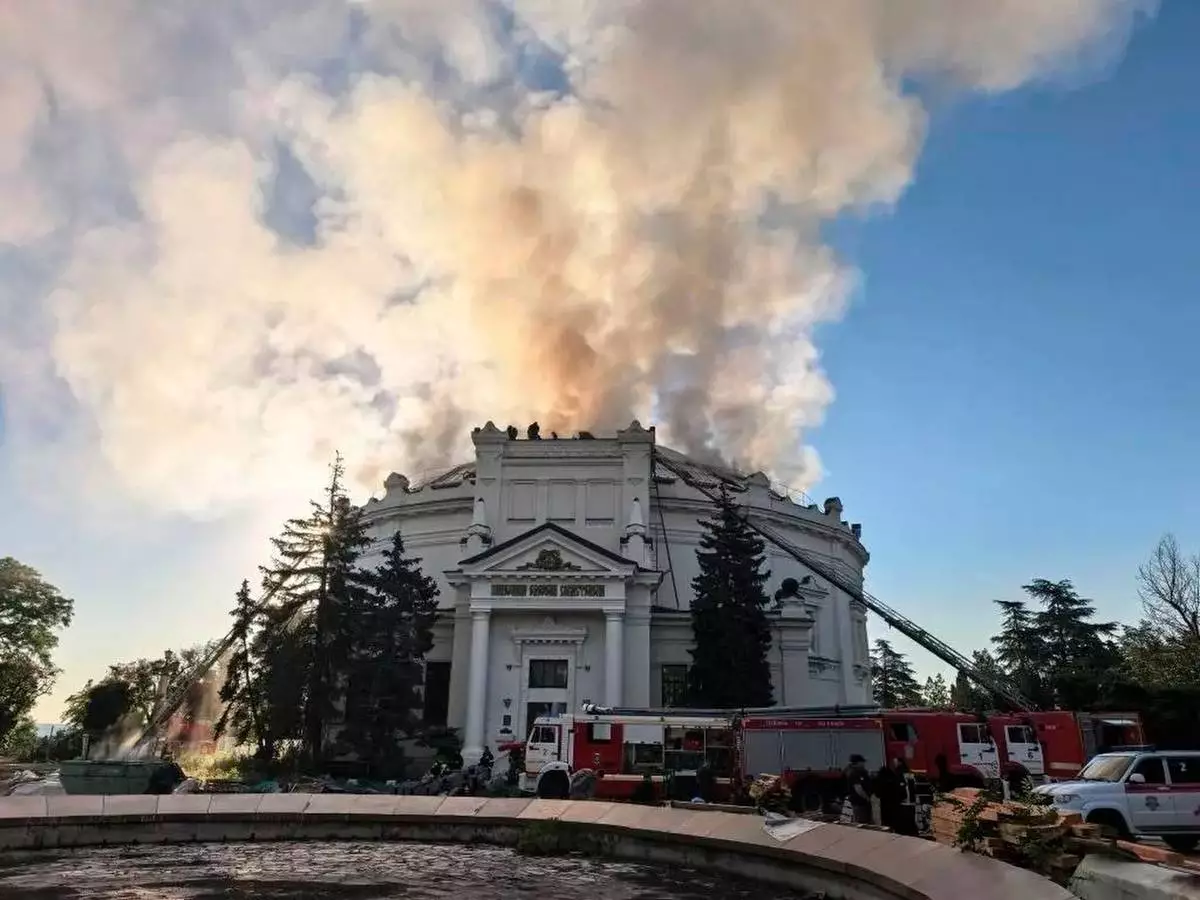
FILE - In this photo provided by Sevastopol Mayor Mikhail Razvozhaev's Telegram channel on Wednesday, June 10, 2026, firefighters put out a blaze after a Ukrainian drone hit a building housing a panoramic painting that depicts the defense of the city during the 19th century Crimean War in Sevastopol, Crimea. (Sevastopol Mayor Mikhail Razvozhaev's Telegram channel via AP, File)
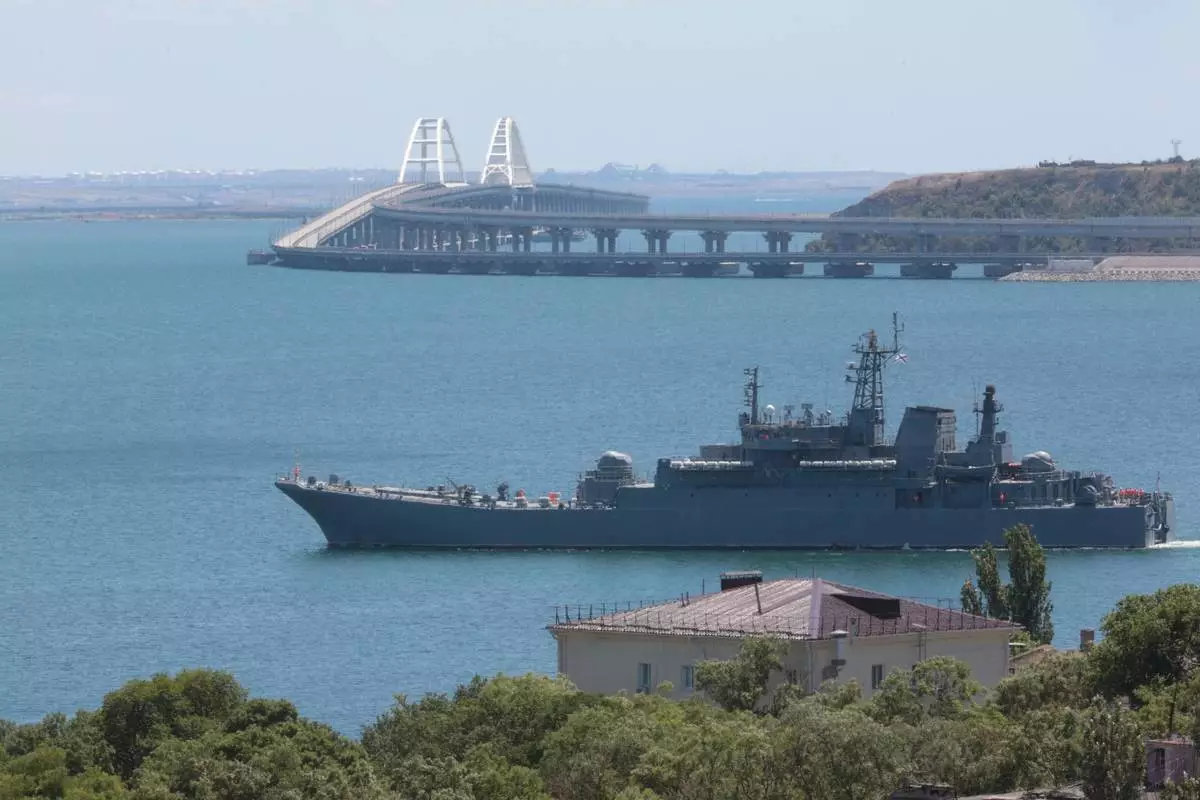
FILE - A Russian military ship transports cars and people from the Russian mainland to the Crimean Peninsula over the Kerch Strait on Monday, July 17, 2023. (AP Photo, File)
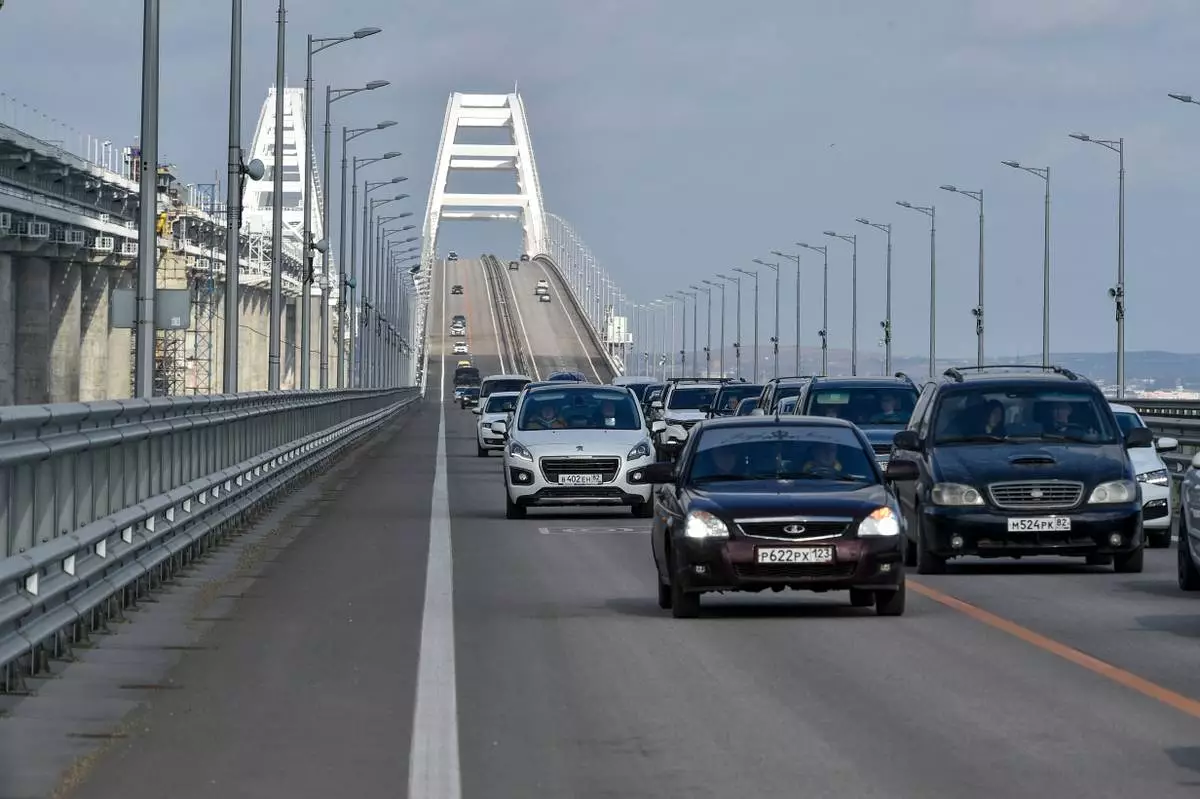
FILE - Cars and other vehicles drive on the Kerch Bridge connecting the Russian mainland and the Crimean Peninsula on Thursday, Feb. 23, 2023. (AP Photo, File)

FILE - Tourists walk along an embankment in Sevastopol, Crimea, Monday, May 2, 2022. (AP Photo, File)