Skip to Content Facebook Feature Image

US puts up $750K to evacuate an American who was aboard hantavirus cruise ship from remote island

News

US puts up $750K to evacuate an American who was aboard hantavirus cruise ship from remote island
News

News

US puts up $750K to evacuate an American who was aboard hantavirus cruise ship from remote island

2026-06-12 02:16 Last Updated At:02:20

WASHINGTON (AP) — The Trump administration put up $750,000 to charter a private yacht to evacuate a single American citizen from a remote South Pacific island after she had been aboard a cruise ship at the center of a deadly hantavirus outbreak, a move that has further strained the State Department's emergency budget.

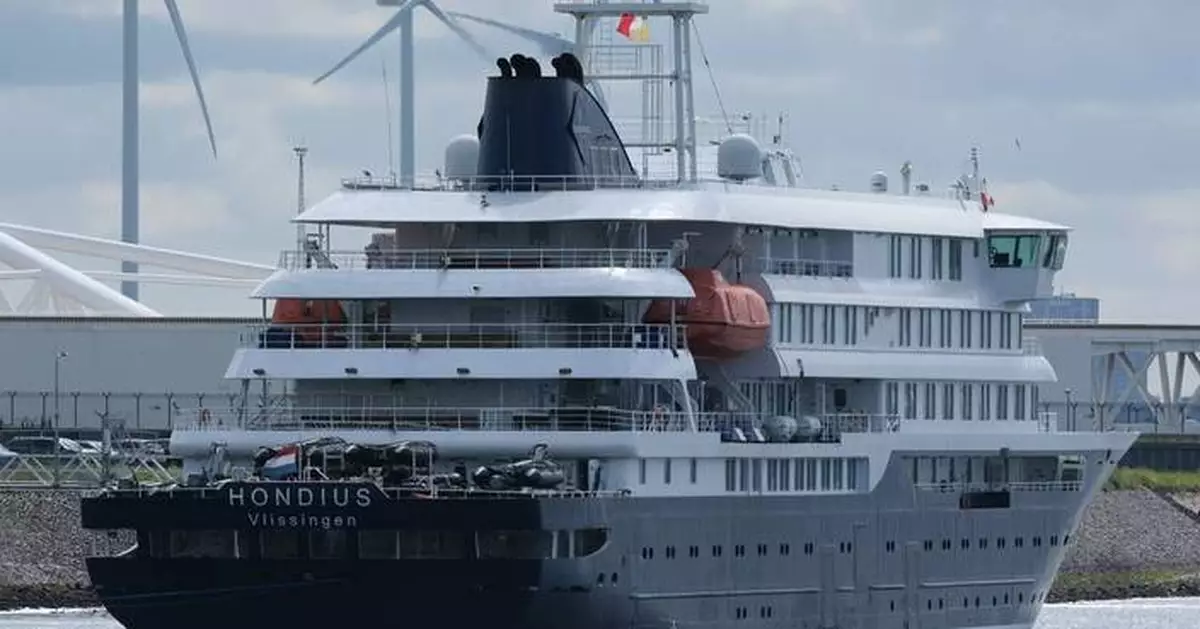
The woman, who may have been exposed to the virus while aboard the Dutch MV Hondius cruise liner in April, had gotten off the ship and then flown to San Francisco before traveling to the isolated British territory of Pitcairn Island through Tahiti, according to two U.S. officials and an internal government document obtained by The Associated Press.

The exact amount of the total evacuation payment is still being assessed because the operation is still underway. Both officials spoke on condition of anonymity to discuss a medical case covered by U.S. privacy laws.

The costly effort to pick up the woman has added to the expense of rapid evacuations for diplomats and private U.S. citizens from the Middle East since the start of the Iran war as well as preparations for possible evacuations from Ebola-stricken countries. All have stressed the State Department budget for unforeseen emergencies, known as the “K Fund,” and brought its balance to the lowest level in seven years.

Another internal document said the State Department is looking at transferring as much as $50 million into that emergency fund from other accounts — $35 million from the budget for embassy security, construction and maintenance and an additional $15 million from an account that pays for broader diplomatic programming. No decision on the transfers has yet been made.

One of the officials said the State Department has another option, to ask Congress to replenish the fund. However, the official said the department is expected to be able to handle payments for both ongoing and “emerging contingency needs.”

The official would not say what the potential shortfall is but insisted that the department is “well positioned" to support diplomats, other U.S. government employees and private Americans who have been forced to leave the Middle East because of the Iran confict, as well as U.S. citizens who may need assistance due to developments such as the Ebola outbreak in Africa.

The State Department declined to comment on the specifics of the woman’s case on Pitcairn Island but said that “when an American is at risk abroad and unable to access commercial transportation, the Department of State seeks to provide appropriate assistance to get them home to the United States or to another safe location.”

After the woman departed the cruise liner where the hantavirus outbreak occurred, the ship continued to other destinations in the South Atlantic, with some passengers falling ill and at least three dying. The unidentified American woman was stuck on Pitcairn, an island with only about 50 inhabitants, no airport and infrequent maritime options to depart.

Pitcairn is well-known as the island on which Fletcher Christian and other British mutineers from the HMS Bounty took refuge after the 1789 events that toppled Capt. William Bligh, which have entered into the public lexicon with books and films about the “Mutiny on the Bounty.” Their descendants make up most of the island's current population.

Complicating matters, British authorities had sought urgent American assistance in evacuating the woman from the island, which is their territory, according to the government document about the cost of the evacuation and the second U.S. official.

But initial attempts to send her to Tahiti, a French dependency, about 1,350 miles (2,160 kilometers) — or a 30-hour sea journey — from Pitcairn, were rejected by French Polynesian authorities. They did not want to allow her in because she had not disclosed her exposure when she transited the island on her way to Pitcairn.

The U.S. is transporting the woman, who was not symptomatic, from Pitcairn to Easter Island, another remote location in the Pacific about 1,400 miles (2,253 km) away, which is a territory of Chile and has direct flights to Santiago, so she can return to the United States for any necessary treatment.

All of those factors mean the process of getting her moved from Pitcairn to Easter Island took many weeks to arrange, the officials said.

The government document, which was confirmed as accurate by the two officials, said moving the woman from Pitcairn eventually was arranged via the “Titaina Explorer” trimaran yacht owned by a wealthy Frenchman, who uses it for personal exploration in the South Pacific. Pitcairn has no airport and only limited sea access.

The officials said the woman had no political or celebrity connections and they did not know exactly when she will return to the U.S. Maritime tracking sites show that the Titaina Explorer departed Pitcairn Island on June 5. The voyage to Easter Island can take up to 10 days depending on the speed of the boat and the weather.
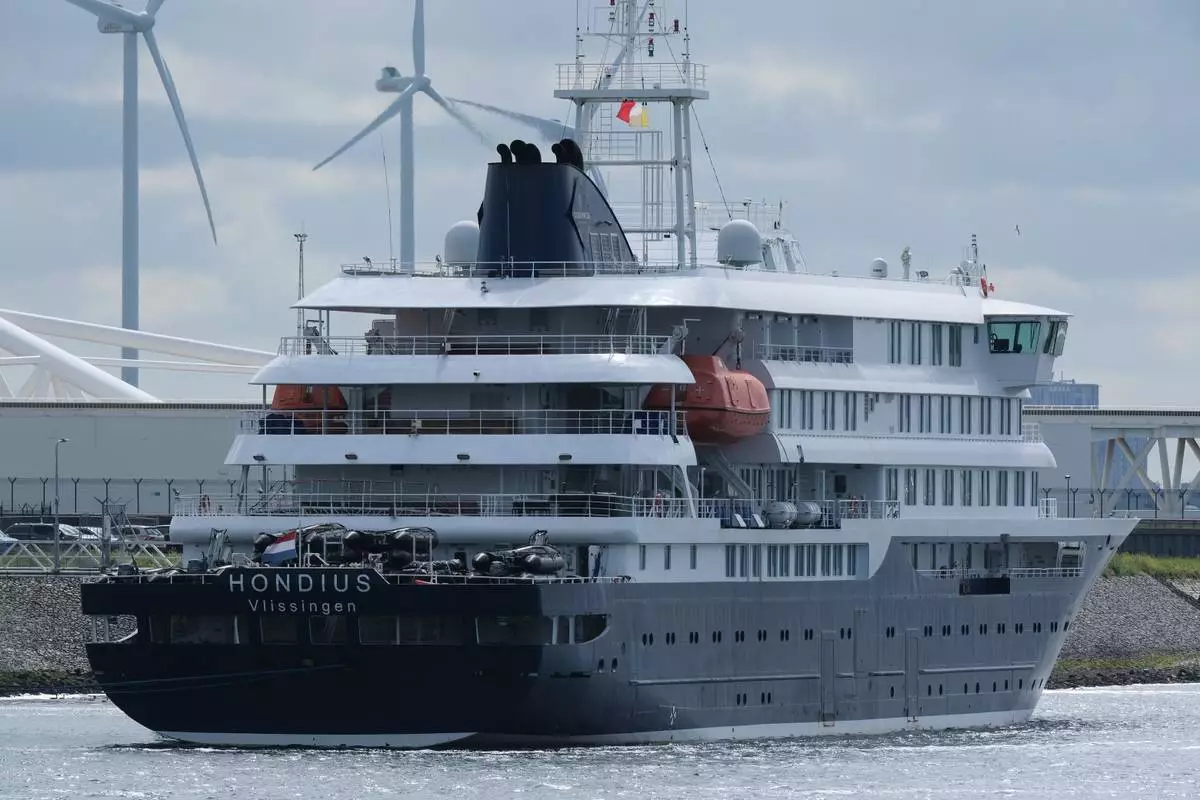
The MV Hondius cruise ship arrives at the Port of Rotterdam, Netherlands, Monday, May 18, 2026. (AP Photo/Patrick Post)


The MV Hondius cruise ship arrives at the Port of Rotterdam, Netherlands, Monday, May 18, 2026. (AP Photo/Patrick Post)

NEW YORK (AP) — U.S. stocks rallied to their best day in two months, and oil prices fell Thursday after President Donald Trump called off his threat to bomb Iran in the evening. That raised hopes for a potential deal that could get the global flow of oil going again.

The S&P 500 jumped 1.8%, coming off a back-to-back drop that had yanked it back to where it was in early May. The Dow Jones Industrial Average leaped 929 points, or 1.9%, and the Nasdaq composite rallied 2.5%.

Stocks immediately veered higher in midday trading after Trump said on his social media network that “discussions with the Islamic Republic of Iran have been brought to the highest level of Iranian leadership and approved” and that the time and place of a signing will “be announced shortly.”

A deal to end the war with Iran could reopen the Strait of Hormuz and allow oil tankers to carry crude again from the Persian Gulf to customers worldwide. The price for a barrel of benchmark U.S. crude sank 2.6% to $87.71. Brent crude, the international standard, fell 2.9% to $90.38, though it’s still above its roughly $70 price from before the war.

Worries had been high because the United States and Iran launched attacks over the past several days threatening a more than monthlong tenuous ceasefire.

High oil prices caused by the Iran war have sent inflation painfully upward, and a report on Thursday showed that prices at the U.S. wholesale level increased by more in May than economists expected. The effect is worldwide, and the European Central Bank on Thursday became the first major central bank to raise interest rates in response.

Higher rates can keep a lid on inflation. But they also slow economies and undercut prices for all kinds of investments, including stocks and cryptocurrencies. They hit investments seen as the most expensive in particular, and some critics are calling the artificial-intelligence industry a bubble where investment inflated too far.

Big swings for AI stocks have been yanking the U.S. stock market up and down over the last week, as they went from roaring to records to suddenly turning lower. The big concern is whether such stocks shot too high, too fast because of AI mania, and their careening moves have sometimes reversed direction by the hour.

AI stocks had already been rolling back up their roller coaster early Thursday, before Trump made his announcement on Iran.

Marvell Technology climbed 11.1%. It’s coming off a manic stretch where it plunged 16.7%, soared 9.6% and then fell more than 5% for two straight days. Just before that, it had a one-day surge of 32.5% that was its best in history when Nvidia CEO Jensen Huang suggested it could be “the next trillion-dollar company.” It was worth a bit more than $190 billion at the time.

Companies involved in the making of chips, meanwhile, jumped to some of the market’s biggest gains. Lam Research leaped 12.7%, and KLA climbed 12.9%.

They helped offset an 8.5% drop for Oracle. It reported a stronger profit for the latest quarter than analysts expected, but it also said it expects to raise $40 billion in cash this fiscal year through borrowing and sales of its stock. That comes after it raised $48 billion last fiscal year to help pay for AI investments.

Other companies’ stocks have also been punished recently for announcing heavy spending on AI, as the question remains whether such investments will produce the profits and productivity that AI proponents are promising.

All told, the S&P 500 jumped 127.31 points to 7,394.30. The Dow Jones Industrial Average rose 929.97 to 50,848.75, and the Nasdaq composite rallied 640.16 to 25,809.66.

In the bond market, Treasury yields eased sharply as falling oil prices meant less upward pressure on inflation. The yield on the 10-year Treasury dropped to 4.45% from 4.55% late Wednesday, which is a significant move for the bond market.

A sustained drop in oil prices could allow the Federal Reserve to keep its main interest rate on hold this year, instead of hiking it as many traders suspected it may have to because of high inflation and a solid U.S. job market. Following Trump’s announcement, traders ratcheted back their bets for a possible increase to the federal funds rate this year, according to data from CME Group.

The Fed could even resume its cuts to interest rates under its new chair, Kevin Warsh, if inflation pressures subside enough. Trump appointed Warsh, and Trump has been loudly calling for lower interest rates.

Stocks of smaller companies can feel the biggest benefit from easier interest rates because many need to borrow money to grow, and the Russell 2000 index of the smallest U.S. stocks jumped a market-leading 3%.

In stock markets abroad, indexes rose modestly in Europe following a mixed finish in Asia.

London’s FTSE 100 rose 0.5%, and Hong Kong’s Hang Seng fell 0.7% for two of the world’s bigger moves.

AP Business Writers Matt Ott and Elaine Kurtenbach contributed to this report.

A trio of traders work on the floor of the New York Stock Exchange, Wednesday, June 3, 2026. (AP Photo/Richard Drew)

A trio of traders work on the floor of the New York Stock Exchange, Wednesday, June 3, 2026. (AP Photo/Richard Drew)

Trader John Bowers works on the floor of the New York Stock Exchange, Wednesday, June 3, 2026. (AP Photo/Richard Drew)

Trader John Bowers works on the floor of the New York Stock Exchange, Wednesday, June 3, 2026. (AP Photo/Richard Drew)

Dealers talk near a screen showing the Korea Composite Stock Price Index (KOSPI) and a foreign exchange rate between the U.S. dollar and the South Korean won at a dealing room of Hana Bank in Seoul, South Korea, Thursday, June 11, 2026. (AP Photo/Lee Jin-man)

Dealers talk near a screen showing the Korea Composite Stock Price Index (KOSPI) and a foreign exchange rate between the U.S. dollar and the South Korean won at a dealing room of Hana Bank in Seoul, South Korea, Thursday, June 11, 2026. (AP Photo/Lee Jin-man)

Dealers talk on the phones at a dealing room of Hana Bank in Seoul, South Korea, Thursday, June 11, 2026. (AP Photo/Lee Jin-man)

Dealers talk on the phones at a dealing room of Hana Bank in Seoul, South Korea, Thursday, June 11, 2026. (AP Photo/Lee Jin-man)

A screen shows foreign exchange rates at a dealing room of Hana Bank in Seoul, South Korea, Thursday, June 11, 2026. (AP Photo/Lee Jin-man)

A screen shows foreign exchange rates at a dealing room of Hana Bank in Seoul, South Korea, Thursday, June 11, 2026. (AP Photo/Lee Jin-man)

Recommended Articles