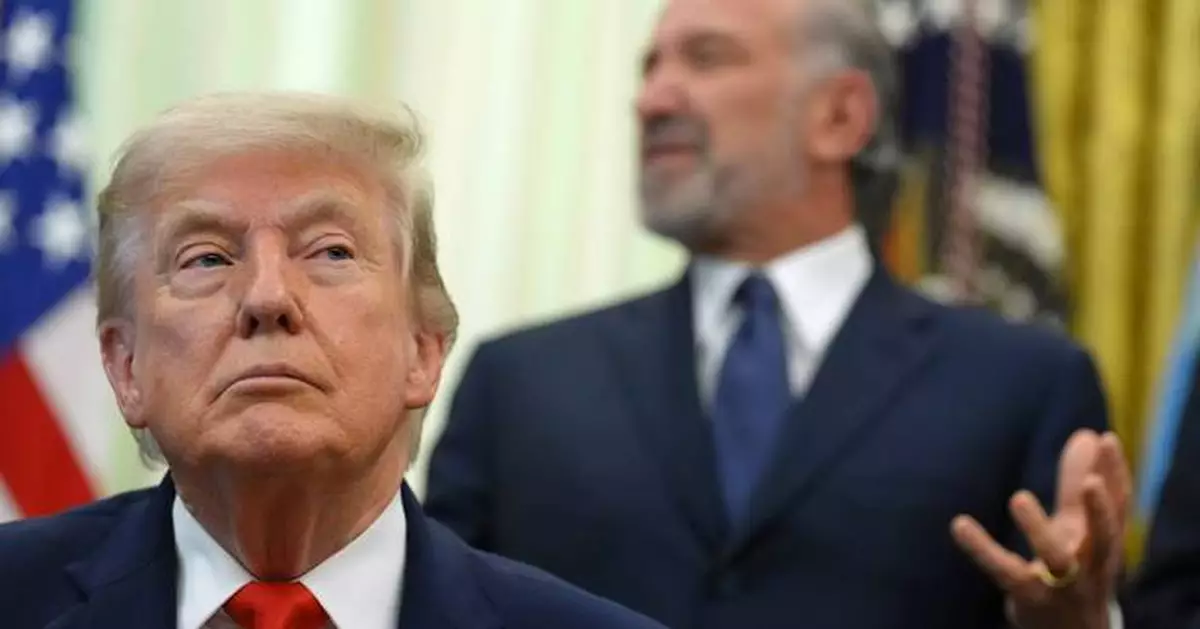
Skip to Content Facebook Feature Image

Trump is raising expectations that this time he really will close deal with Iran to wind down war

News

Trump is raising expectations that this time he really will close deal with Iran to wind down war
News

News

Trump is raising expectations that this time he really will close deal with Iran to wind down war

2026-06-12 12:05 Last Updated At:12:21

WASHINGTON (AP) — President Donald Trump has long been looking for this weekend to be a big one for his presidency.

The World Cup returns to the U.S. on Friday for the first time in 32 years after Trump threw himself into winning the bid to co-host the soccer tourney during his first term. He’ll be feted Sunday, his 80th birthday, during a UFC fight night that’s expected to draw thousands to the White House grounds. Hours after the final bout, he’s scheduled to jet off to the G7 summit in the French Alps for talks with several world leaders he’s been beefing with over war and tariffs.

But Trump set expectations even higher for the coming days when he announced Thursday that the U.S. and Iran could come to terms this weekend on an agreement that would set the pathway to end the three-month-old war that's been broadly unpopular with Americans and has rattled global oil markets. He said he plans to dispatch Vice President JD Vance to the signing of the agreement.

Trump has said on several occasions in recent weeks that he's on the cusp of a deal without anything coming to fruition. A spokesperson for Iran’s Foreign Ministry told state television following Trump's comments that mediators were active but nothing had been finalized to end the conflict.

Still, Trump is claiming this time might be different.

The breakthrough comes after he threatened to escalate the conflict with more intense bombardment of Iran and by seizing control of Iran’s oil industry, including capturing Iran's vital Kharg Island oil facility. The president's threats followed back-and-forth strikes this week that had rendered a temporary ceasefire agreed to in early April all but meaningless.

“They’ve taken a pounding like very few people could take," Trump said in an Oval Office exchange with reporters as he explained why he was confident that, this time, a deal would come through. "And they want to make the deal a lot more than I do.”

Trump offered scant details about the settlement he says is taking shape, but told reporters that he believed the Iranian supreme leader, Ayatollah Mojtaba Khamenei, who is believed to have been wounded on the first day of the war and has not been seen in public since, is ready to sign off on the deal.

Trump is billing the deal as “very strong," though he says it remains “a little conceptual," and says it would ensure Iran is blocked from ever developing a nuclear weapon.

With the conflict intensifying over the past week, Trump’s threat to escalate U.S. military action seemed in part aimed at demonstrating to the hawkish flank of his political base that he was willing to play “hardball” with the Iranians if they didn't come to a deal soon, said Ali Vaez, Iran director at the International Crisis Group.

Trump in March warned he would target Iran’s infrastructure and put American troops on Kharg Island before he ultimately backed down, and the two countries agreed to the temporary ceasefire.

Almost immediately after raising the idea again on social media Thursday, Trump appeared to back away. He called into a morning show on Fox News Channel and questioned whether Americans had the “stomach" for an option that would require putting U.S. troops in harm's way.

Hours later, Trump announced he had decided to cancel orders for “very hard” strikes on Iran and said a deal was close.

Vaez said even as Trump was posting on social media Thursday about escalating strikes, mediators from Pakistan, Turkey and Qatar had been making progress in their talks with Iran.

At the same time, Iran also may have reset the equation for Trump with its decision last weekend to attack Israel directly for the first time since the ceasefire after Israeli forces carried out military strikes on Iranian-backed Hezbollah militants in Lebanon.

With the move, Iran signaled that Israel could no longer bomb Lebanon without facing a meaningful reaction and in the process also raised the cost for the U.S. to follow through on its commitment to help safeguard Israel.

“It really does appear to me that Trump wants to bring this to an end, but his real challenge is that he’s looking for a victory lap and an exit ramp and those two things are not necessarily compatible,” Vaez said.

Trump has been boasting since the early weeks of the conflict that he'd already won the war — much of the Islamic Republic's leadership has been killed in the bombings and the Iranian navy and air force have been severely degraded.

But Iran continues to effectively keep the Strait of Hormuz closed, choking a waterway through which about 20% of the world's oil supply passed before the war, and has yet to agree to restart negotiations with the U.S. over its concerns about Iran's nuclear program, the main reason Trump and Israeli Prime Minister Benjamin Netanyahu gave to justify launching the war.

But the real problem, Trump grumbled Thursday, was largely a public relations issue.

"They could wave the white flag of surrender. They could say: ‘We surrender, we surrender, we’re finished, we’ve had it. The United States is the greatest power, praise be to Allah,’" Trump said on Fox News. “They could say it loud and clear. And the fake news would say it was a great victory for Iran.”

Rep. Michael McCaul, R-Texas, a former chairman of the House Foreign Affairs Committee, said Trump has grown impatient with Iran and the renewed strikes and threats on Kharg Island and Iran's energy sector were intended to get the negotiations back to the “right place.”

Polls show that the conflict is largely unpopular with Americans. McCaul said he believes the Iranians want to “try to drag this out as long as they can,” closer to the midterm elections in November, because they see that as being to their benefit.

Deal or no deal, the war will loom large during next week's talks at the Group of Seven summit in bucolic Évian-les-Bains, France.

Trump has frequently criticized some of the group leaders — British Prime Minister Keir Starmer, French President Emmanuel Macron, Italian Prime Minister Giorgia Meloni and German Chancellor Friedrich Merz — for resisting his calls to aid the U.S. and Israeli war effort.

The four leaders have also angered Trump by criticizing how he's gone about executing the war and his lack of consultation with allies before jumping into a conflict that's hurt the global economy as oil prices have surged.

But Trump said he is optimistic he could have an agreement before his talks with leaders in France.

“The strait will officially open as soon as we sign, which could be soon, very soon — maybe over the weekend in Europe,” Trump said.
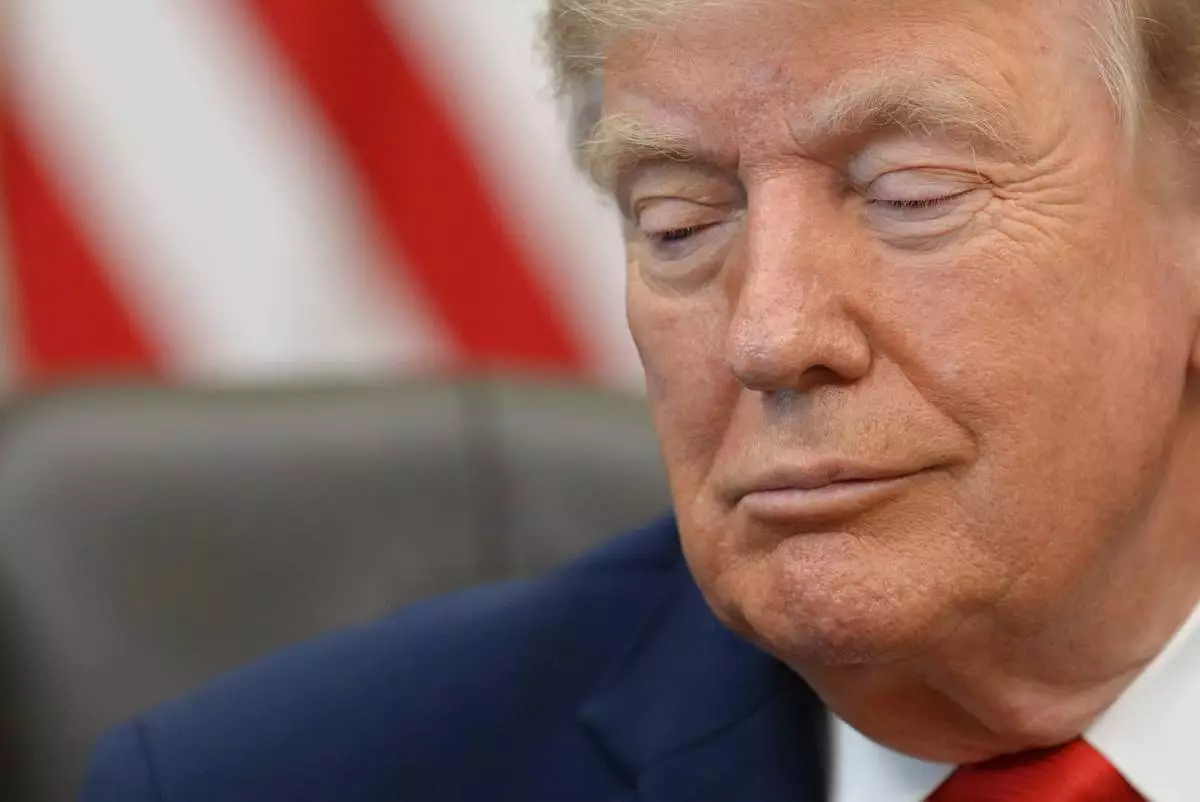
President Donald Trump is pictured during an event where he signs a proclamation about the fishing industry, in the Oval Office of the White House, Thursday, June 11, 2026, in Washington. (AP Photo/Jacquelyn Martin)
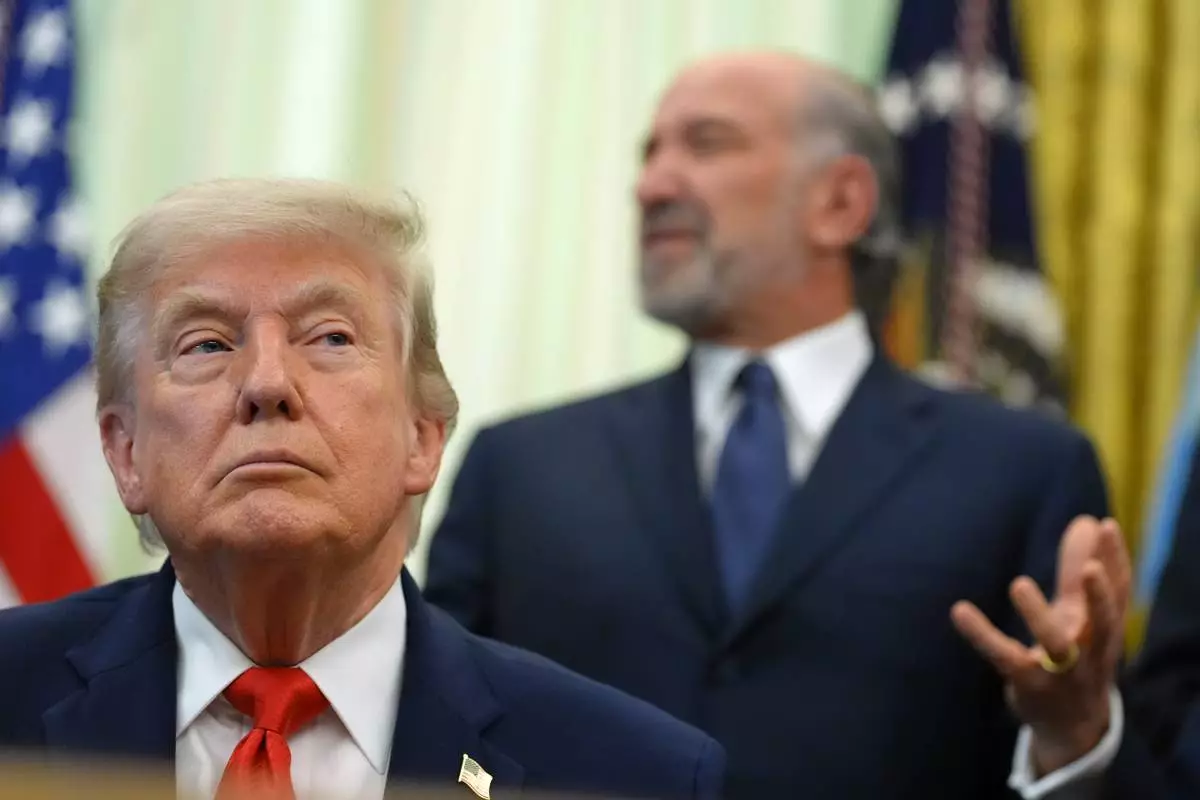
President Donald Trump is pictured during an event where he signs a proclamation about the fishing industry, in the Oval Office of the White House, Thursday, June 11, 2026, in Washington. (AP Photo/Jacquelyn Martin)

Commerce Secretary Howard Lutnick speaks before President Donald Trump, in foreground, signs a proclamation about the fishing industry, in the Oval Office of the White House, Thursday, June 11, 2026, in Washington. (AP Photo/Jacquelyn Martin)

Commerce Secretary Howard Lutnick speaks before President Donald Trump, in foreground, signs a proclamation about the fishing industry, in the Oval Office of the White House, Thursday, June 11, 2026, in Washington. (AP Photo/Jacquelyn Martin)

SAN JUAN, Puerto Rico (AP) — Thousands of Puerto Ricans are struggling with water shortages so severe that the governor of the U.S. territory has activated the National Guard and emergency responders are fielding calls every day.

Officials have not publicly pinpointed the cause, with shortages largely affecting some areas in the island's most populated cities, including the capital San Juan. The island's utilities company extracts water from rivers, reservoirs and underground aquifers that have in the past provided sufficient supply for the island's 3.2 million people.

Residents are being forced to buy potable water, spend money at laundromats and haul heavy buckets up several flights of stairs to wash dishes, flush toilets and take showers. The elderly and disabled struggle the most, with community leaders noting that some have been hospitalized as water shortages persist.

Jorge Figueroa, a community leader for several impoverished San Juan neighborhoods, stood by his car one recent morning fielding questions from residents wondering when the next water truck would swing by.

“They are playing with people's health and lives,” Figueroa said.

Some customers in San Juan began reporting intermittent service more than a year ago, with the governor acknowledging the infrastructure has lacked investment and maintenance for decades.

The water outages have grown so severe that Mayor Miguel Romero sued Puerto Rico’s Water and Sewer Authority in late May.

People like Jeannette Mercado Rodríguez have spent up to two weeks without water as Puerto Rico's searing summer starts and meteorologists are already issuing heat advisories.

“This is really exhausting; it’s maddening,” she said.

The 52-year-old is among the lucky ones: a water truck is stationed near her public housing complex, Las Margaritas. But she still has to haul five buckets and 10 2-liter (half-gallon) bottles up to her third-floor apartment every day. She recently injured her shoulder doing so.

“We can’t take it sometimes,” Mercado said, confiding that she has broken down and cried. “There are older people here, bedridden people.”

Nearly 40,000 customers were hit with water outages on the first weekend of June. That prompted Gov. Jenniffer González to activate the National Guard, which began distributing water via four trucks with a capacity of 2,000 gallons (7,570 liters) each.

Puerto Rico’s Tourism Company brought in additional water trucks with a capacity of 12,800 gallons (48,453 liters) to help serve hotels and short-term rentals.

The need for water is so great that even Puerto Rico’s Department of Agriculture sanitized two large trucks that transport milk and instead used them to deliver potable water.

Despite those measures, water remains scarce for many in San Juan and beyond. At least one stationary tanker in an impoverished community sat empty for a couple of days, with residents cheering the water truck when it arrived, calling municipal workers “heroes.” Other residents also complain that the government doesn't inform them when a water truck will stop by, with those at work missing out.

“This has been a disaster,” said Luz Laborde, president of a neighborhood association in Santurce, a working-class community in San Juan. “This is inhuman … It’s destroying the emotional state of a people.”

Dozens of Puerto Ricans young and old crowded into a courtroom on a recent morning, eager to hear a ruling on the lawsuit that San Juan's mayor filed against the island's water and sewer company as they questioned when their water would return.

“We are exhausted,” said Marcia Soler París, a 61-year-old community leader. “We shouldn’t be living this way. We don’t deserve this.”

Every day at dawn, phones ping as people in San Juan and elsewhere share whether they have water, just a trickle or nothing at all.

Soler calls the emergency management office every other day to request a water truck for her and her neighbors. She lives with her daughter, who has three boys ages 13, 10 and 4, and they play soccer every day. Like many, they don't have a cistern.

“I don’t know what it is to see a stream of water,” said Soler, who recently spent $40 at a laundromat and was forced to buy plastic cups and plates for her family.

The extra costs are straining the budgets of many on the island of 3.2 million people where more than 40% live below the poverty line.

Soler said some of her neighbors bedridden and caregivers are forced to use towels and wet wipes to clean them. Another neighbor is blind, so people ferry water up to her apartment.

For years, chronic power outages have been a big frustration for many Puerto Ricans. Water woes also are at the top of the list now.

At Villa Kennedy, a nearby public housing complex, Elizabeth Sánchez, 79, explained how she injured her waist carrying buckets of water. Her husband can no longer help because he injured his back for the same reason.

“What we are going through is horrible,” she said as she began to cry.

In February 2025, Puerto Rico's governor appointed Luis González Delgado as executive president of the island's Water and Sewer Authority.

Months later, former regional director Roberto Martínez Toledo was replaced. But Martínez was recently appointed to a new committee ordered by a judge to work with the agency to investigate and solve the chronic water shortages.

The mayor of San Juan, who is a member of the governor's party, said that if Martínez hadn't been removed from his position, “we wouldn't be here talking about this issue.”

The new head of the water and sewer agency blamed Martínez for some of the problems.

“(The crisis) could have been avoided if Roberto Martínez had answered the phone the first day I called him,” González told reporters this week, adding that he is willing to work with him.

Some Puerto Ricans are demanding González resign as they clamor for Martínez to return to his old job, while a growing number are blaming the governor for the situation. On Wednesday night, the governor announced that all projects aimed at fixing water-related infrastructure have started with an investment of $217 million.

Those without water say they are still being billed for it.

“That's another outrage,” said Laborde, the community leader. “You lose no matter what.”

Municipal worker José Luiz López Obrero walks back to a water truck after he finishes up filling a cistern at the Villa Kennedy public housing complex in San Juan, Puerto Rico, Wednesday, June 10, 2026. (AP Photo/Danica Coto)

Municipal worker José Luiz López Obrero walks back to a water truck after he finishes up filling a cistern at the Villa Kennedy public housing complex in San Juan, Puerto Rico, Wednesday, June 10, 2026. (AP Photo/Danica Coto)

Juan Lugo, a driver with San Juan's special projects department, delivers free, non-potable water to residents in the Villa Kennedy public housing complex in San Juan, Puerto Rico, Wednesday, June 10, 2026. (AP Photo/Danica Coto)

Juan Lugo, a driver with San Juan's special projects department, delivers free, non-potable water to residents in the Villa Kennedy public housing complex in San Juan, Puerto Rico, Wednesday, June 10, 2026. (AP Photo/Danica Coto)

Bryan Pérez hauls a five-gallon water jug to his apartment in the Villa Kennedy public housing complex in San Juan, Puerto Rico, Wednesday, June 10, 2026. (AP Photo/Danica Coto)

Bryan Pérez hauls a five-gallon water jug to his apartment in the Villa Kennedy public housing complex in San Juan, Puerto Rico, Wednesday, June 10, 2026. (AP Photo/Danica Coto)

Recommended Articles