Vice President Han Zheng met with Seah Kian Peng, speaker of the Parliament of Singapore, in Beijing on Friday.
Noting that the two countries are friendly neighbors and important partners, Han said the meeting between President Xi Jinping and Singaporean Prime Minister Lawrence Wong in June last year charted the course for the development of bilateral ties in the next phase.
China is willing to work with Singapore to earnestly implement the important consensus reached by the leaders of both countries, further strengthen strategic communication, enhance mutual support, expand high-quality cooperation, foster people-to-people bonds, and advance the all-round high-quality future-oriented partnership between China and Singapore, said Han.
The two sides should strengthen multilateral cooperation, jointly advocate for an equal and orderly multipolar world and inclusive economic globalization, and promote the establishment of a more just and equitable global governance system, he said.
Seah said China and Singapore are good friends and good neighbors with fruitful results from extensive cooperation in various fields.
Singapore cherishes its partnership with China, and is firmly committed to further deepening bilateral cooperation, he said, adding that his country firmly adheres to the one-China principle.
At the invitation of Zhao Leji, chairman of China's National People's Congress Standing Committee, Seah is visiting China from Monday to Saturday.
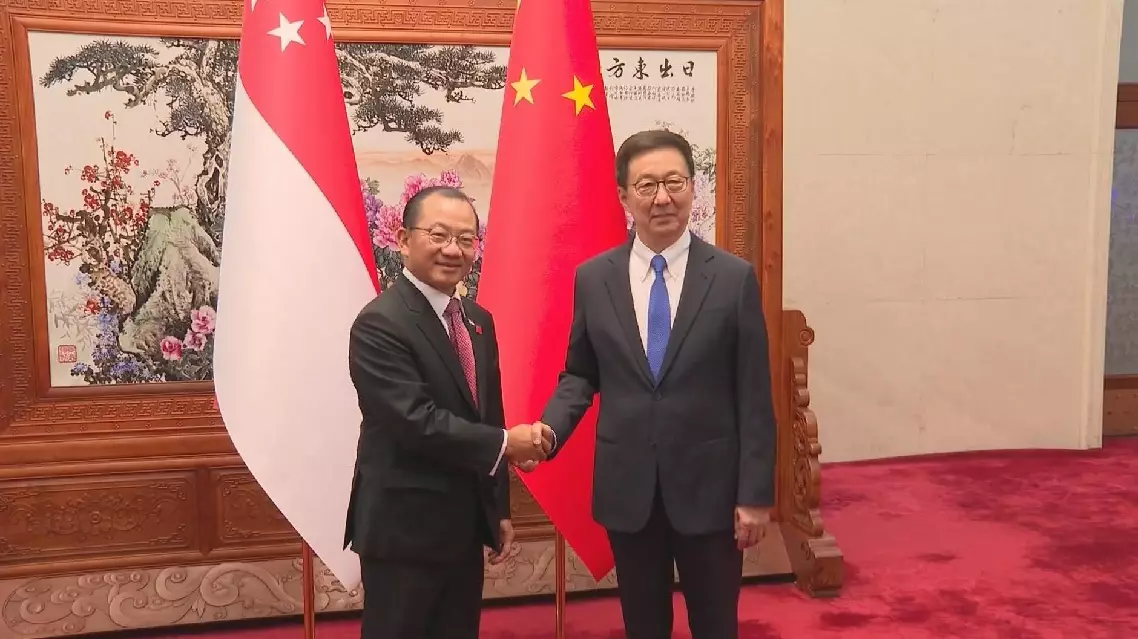
Chinese vice president meets Singapore's parliament speaker
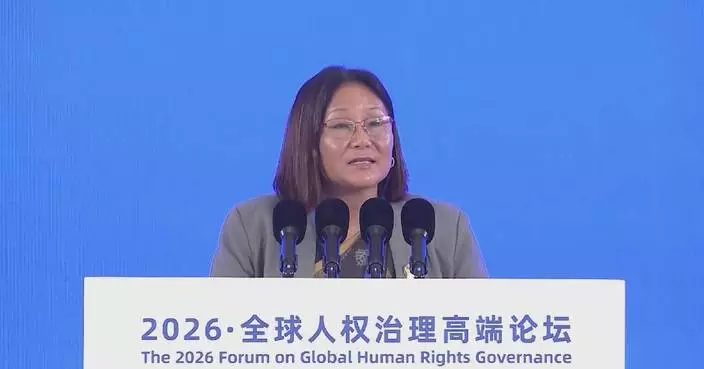
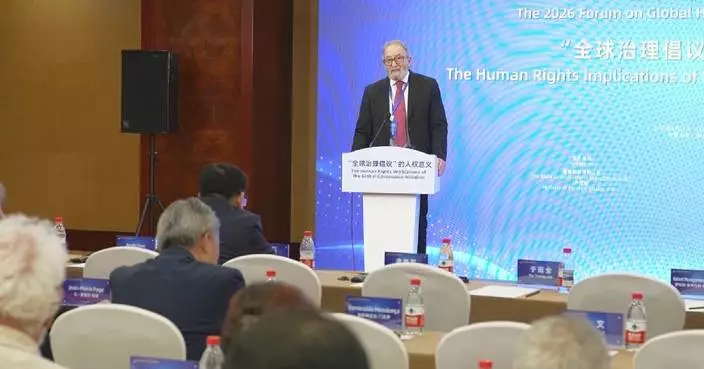
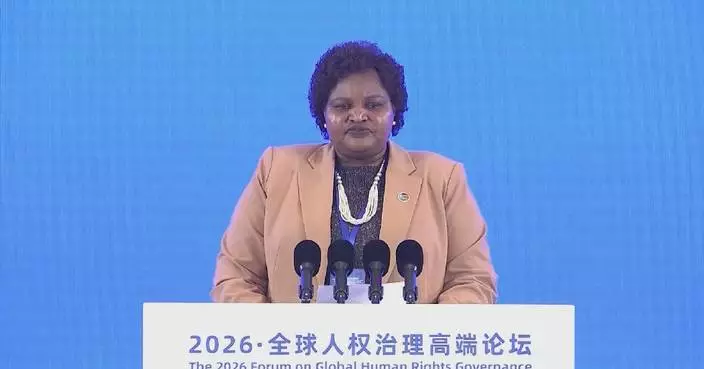
Former Foreign Minister of Cabo Verde Jorge Alberto da Silva Borges put forth concrete recommendations for climate finance reform based on his small island African country's experience at the 2026 Forum on Global Human Rights Governance in Beijing on Friday, as the world faces overlapping global crises.
The two-day forum, which kicked off on Thursday, focused on joint development and shared human rights and attracted over 400 participants from over 100 countries and international organizations, including the United Nations.
Speaking to attendees at the forum, Borges emphasized the foundational role of the right to development in ensuring all human rights, noting that the urgency of the climate change crisis makes the realization of this right more vital than ever.
"2026 marks the 50th anniversary of the establishment of diplomatic relations between my country, Cabo Verde, and the People's Republic of China -- half a century of friendship and cooperation that bears witness to a fundamental principle: the right to development is transversal in all nations, constituting the cornerstone and foundation of all other rights. This year, we also celebrate the 40th anniversary of the Declaration on the Right to Development -- a happy coincidence, because we live in an era of overlapping crises: climate change, energy transitions and growing inequalities, not to mention the challenging geopolitical environment," Borges said.
In 2024, Cabo Verde elevated its ties with China to a strategic partnership, followed by the signing of a financing agreement in January 2025 focused on renewable energy, the digital economy, and sustainable tourism. Drawing from this cooperation and considering the evolving global landscape, Borges put forth three specific proposals for climate finance reform at the forum.
"Based on the experience of Cabo Verde and within the framework of the right to development, I propose three concrete recommendations to this forum. One, climate finance reform: a draft protocol on green development and the right to development, requiring adaptation for SIDS [Small Island Developing States] and LDCs [Least Developed Countries] to be financed exclusively through grants, treating loss and damage as a matter of right and mandating FPIC (Free, Prior and Informed Consent) for mineral extraction," Borges said.
"Second, mandatory due diligence for all transition mineral supply chains, including human rights impact assessment, public disclosure and access to independent grievance mechanisms. Third, the creation of an Africa-SIDS Climate Justice Caucus to monitor green development projects, propose amendments to climate finance rules, and bring complaints to the UN Working Group on the Right to Development," he said.
As a vulnerable island country, Cabo Verde in recent years has embarked on a green development journey that has striven to build resilience against climate risks, develop sustainable aquaculture and maritime logistics, and achieve net-zero renewable energy transition by 2050.
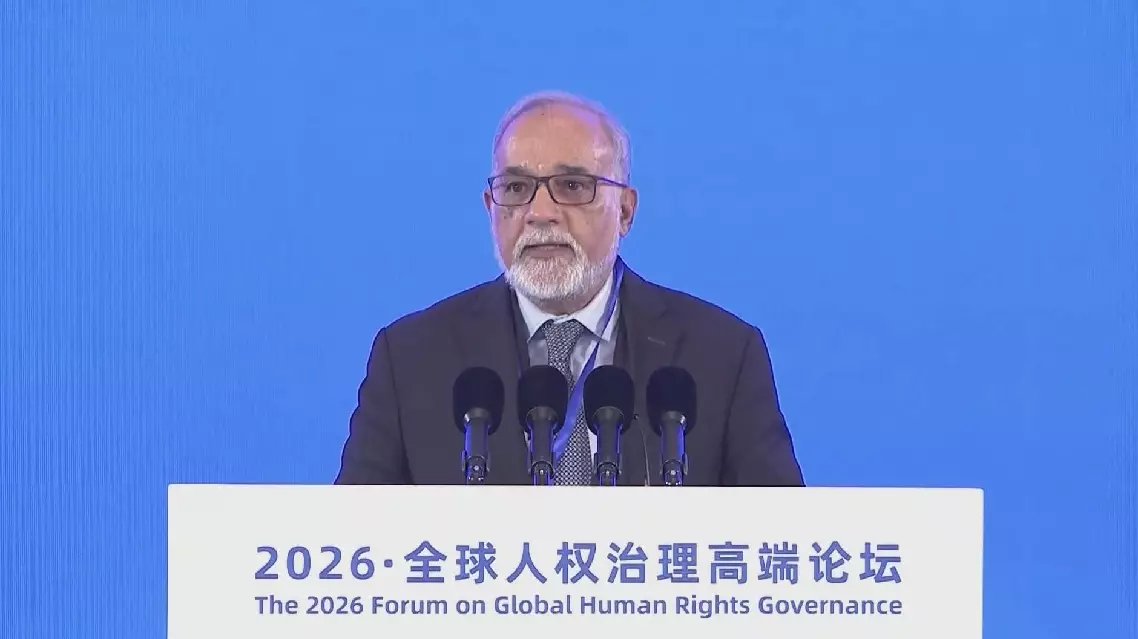
Cabo Verde former official urges climate finance reform amidst global crises