DENVER (AP) — Days before the beginning of Pride Month in June, a glamorous drag queen with long, wavy red hair, a matching mustache and carabiner earrings stared into a camera and levied a strong accusation against a famous sustainable outdoors apparel brand: “This is a corporation trying to erase an activist.”
The drag queen, Pattie Gonia, said in the video she was breaking her silence on a lawsuit filed against her by Patagonia, a brand blazed across the chests of adventure athletes and midtown Manhattan investment bankers alike. The apparel company is suing her for $1 for alleged trademark infringement, although experts say legal fees could easily surpass $1 million.
A maelstrom of social media posts quickly followed, as drag has a long history of parodying famous names. Many expressed indignation that a climate-friendly clothing brand would appear to go after a beloved climate activist. Others chided Pattie Gonia for leveling the accusation against Patagonia, a company considered by many as a leader in sustainability, without painting a full picture of the case.
Pattie Gonia, whose given name is Wyn Wiley, is a drag queen based in Bend, Oregon. She is known for her climate activism and has a combined following of nearly 3 million people on TikTok and Instagram. She first went viral in 2018 after posting a clip wearing high heels while camping.
She makes short, educational videos about climate change, created and tours with the “Save Her! Environmental Drag Show,” and is known for mobilizing climate activists and raising money for climate organizations.
Patagonia says that Pattie Gonia infringed on its trademark by selling clothing and products under the “Pattie Gonia” name, which they say confuses consumers.
“There doesn’t have to be actual consumer confusion to win a trademark infringement suit. If consumers are likely to be confused, that is sufficient,” said Tim Holbrook, an intellectual property professor at the University of Denver.
The company filed the complaint, which included screenshots of consumer confusion, on Jan. 21. Pattie Gonia announced, and criticized, the lawsuit on May 27. This initially sparked confusion, with many believing Patagonia had filed the complaint around Pride Month.
Pattie Gonia declined to say whether the timing of her announcement was intentional.
In September 2025, she filed a trademark application for the “Pattie Gonia” name to, among other things, sell apparel. Several months later, Patagonia sued.
According to the complaint, the clothing company reached out in 2022 after hearing about a fundraising collaboration between the performer and Hydroflask, an outdoors accessory brand. On a phone call, it asked the performer not to sell products with the Patagonia logo, font or the name “Pattie Gonia,” and outlined the points over email.
The company then followed up over email three years later when Pattie Gonia began selling clothing with her name on it. After a brief exchange, the clothing brand asked the performer to meet and discuss “different understandings of where we left things related to Patagonia's trademarks when this last came up.”
The performer called the complaint one-sided and said it “misrepresented not only the facts but also my personal integrity.”
McDonald's sued a dental practice with the name “McDental.” Starbucks sued “Sambucks,” an Oregon-based coffee house. Even Patagonia has fought off brand copycats “Catagonia,” “Fratagonia” and others, according to the complaint.
It's a high bar to clear to trademark something similar to an existing brand, said Carmel Imani, a trademark lawyer who represents small creators and brands.
“I get rejections for trademarks for my clients that are way less similar than these brand names,” she said about Pattie Gonia and Patagonia.
In trademark law, a complaint is about far more than a singular dispute — it's about the big picture of whether a brand will be protected from future disputes by others, said Lara Pearson, trademark attorney with Brand Geek.
By allowing similar brands with similar goods and services, “Are we setting a precedent that we’re not going to be able to walk back from later?” she said.
After Pattie Gonia alleged erasure, supporters and allies quickly spoke up, asking how such a reputable company could sue a queer climate activist, some going as far as donating Patagonia clothing.
The day after Pattie Gonia's announcement, supporter Jim Gregory posted a video to TikTok outside of a Goodwill donation center where he said he was dropping off his Patagonia hat.
“I think that you just completely wrecked your company, at least from my demographic, the LGBTQ demographic,” Gregory said to the camera.
Cleo Schroer, a Brooklyn-based researcher on queer politics and culture who has also been posting videos about the case, said she initially felt like Patagonia was in the wrong, but that something didn’t sit right. Then she read the complaint.
“Saying that Patagonia was trying to silence a drag queen or a queer activist ... it just felt inaccurate,” she said.
Patagonia is a diverse region in southern Chile and Argentina, with glaciers, mountains and fjords to the west, stretching into steppe and desert toward the east. It has long been occupied by Indigenous peoples, including the Mapuche, Tehuelche and others.
Founder Yvon Chouinard decided the name would be perfect for an apparel brand targeting a range of outdoors enthusiasts. After more than a decade of selling clothes as “Patagonia,” the company filed for and was granted the trademark.
“You can certainly protect a name even if it's the name of a geographic region or location,” said trademark attorney Josh Gerben. “There's Chevy Tahoe, GMC Denali, Arizona Tea Company and many more,” he explained. It's nuanced, but how well known the region is at the time of the trademark is a factor the U.S. Patent and Trademark Office would weigh, he said.
Since 1973, the apparel brand has built a profitable business off of Patagonia, now a sought-after destination for outdoors enthusiasts.
If Pattie Gonia's application is eventually approved by the U.S. Patent and Trademark Office, Patagonia would be able to file an opposition, which could take years to resolve, Gerben said. But it's a moot point.
“The lawsuit will control the situation,” he said. “If Patagonia wins the lawsuit, the Federal Court can tell the USPTO to deny the application.”
Still, both sides have made small steps toward the middle, Imani observed. Pattie Gonia said she would drop the trademark application if Patagonia drops the suit. The clothing brand issued a statement that recognized “any hurt (the lawsuit) has caused, especially in the LBGTQ+ community,” but said the suit could only be dropped if Pattie Gonia stops using their logo, font and her name in “selling and promoting apparel and other products.”
Pattie Gonia agreed to the first two but not the third. At some point, her website went from www.pattiegoniamerch.com to www.pattiemerch.com, a change the performer did not answer questions about.
“We are very open and want to find a resolution,” said Corley Kenna, chief impact and communications officer for Patagonia, but did not offer details.
The best resolution, said Gerben, would be to avoid court and reach an agreement.
“It’s always more ideal because it provides certainty to both parties. And you’re not going in front of a jury wondering who’s gonna win,” he said.
The Associated Press receives support from the Walton Family Foundation for coverage of water and environmental policy. The AP is solely responsible for all content. For all of AP’s environmental coverage, visit https://apnews.com/hub/climate-and-environment
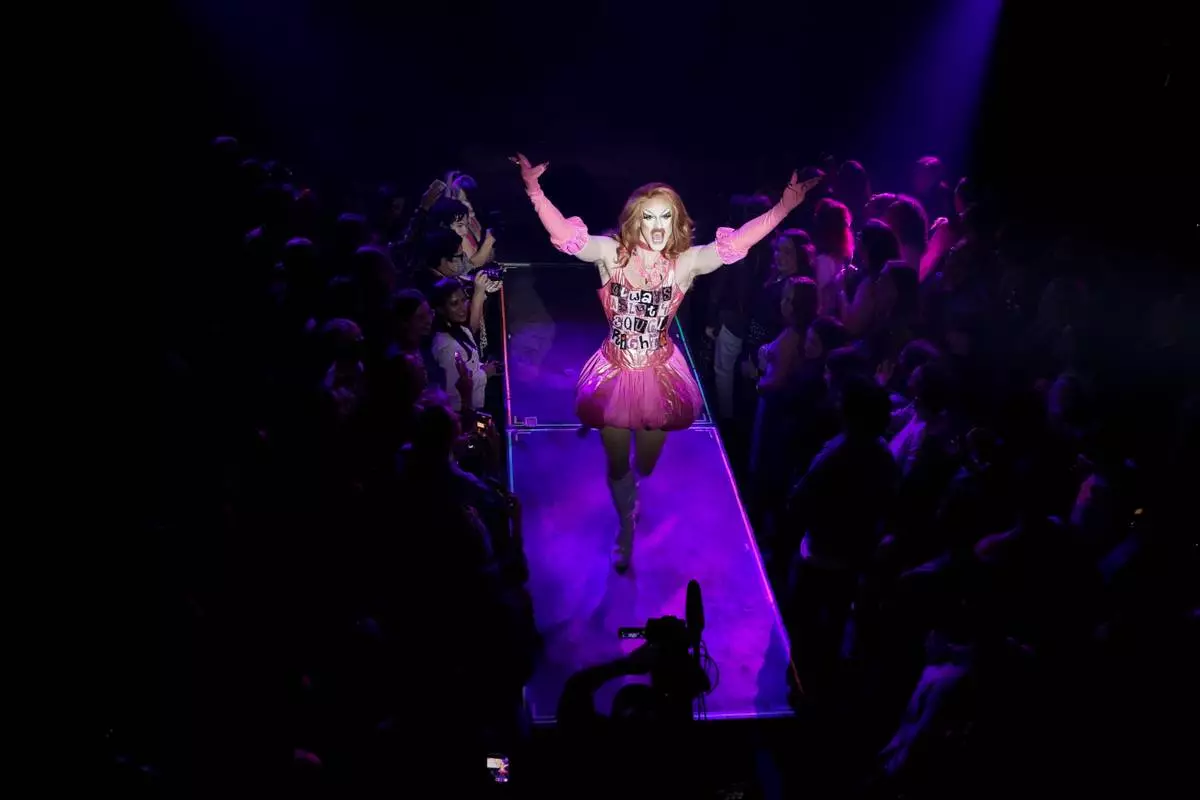
FILE - Pattie Gonia performs at the "Save Her! Environmental Drag Show" during Climate Week, Sept. 24, 2024, in the Brooklyn borough of New York. (AP Photo/Alyssa Goodman, File)
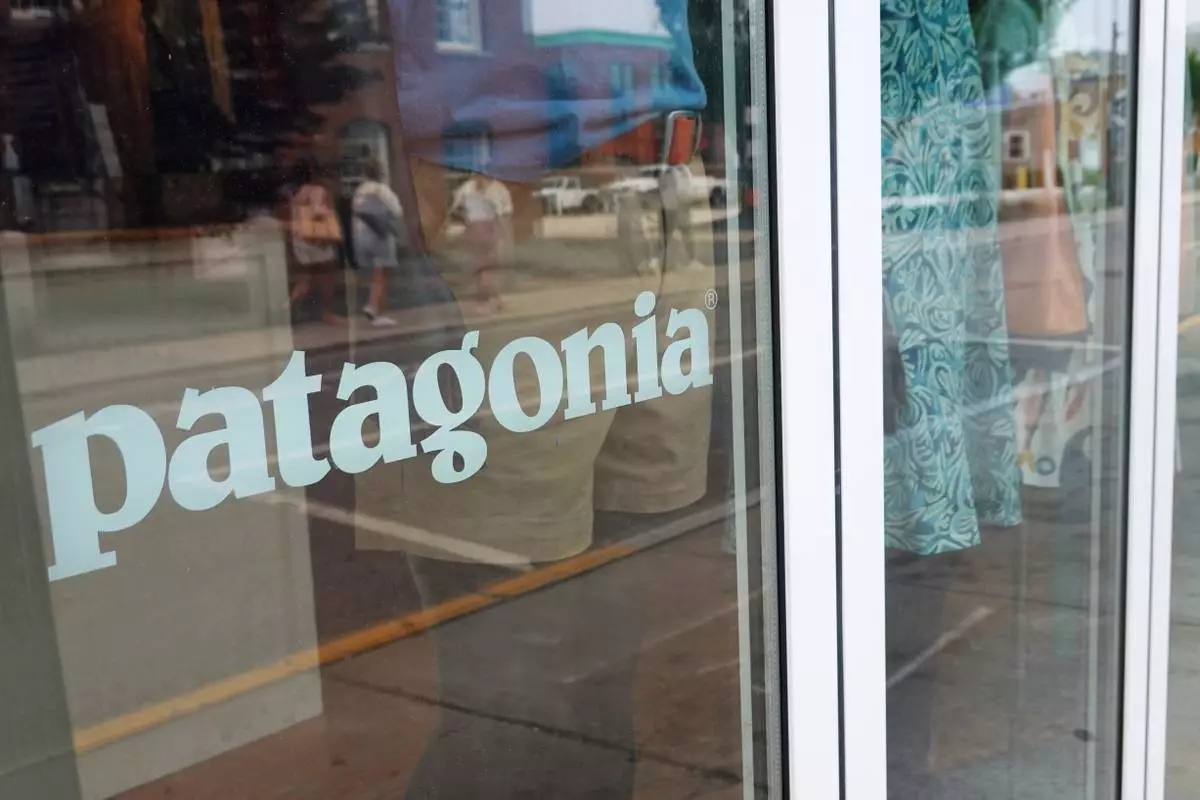
A sign for Patagonia is displayed at a store Thursday, June 11, 2026, in Newport, R.I. (AP Photo/Alyssa Goodman)
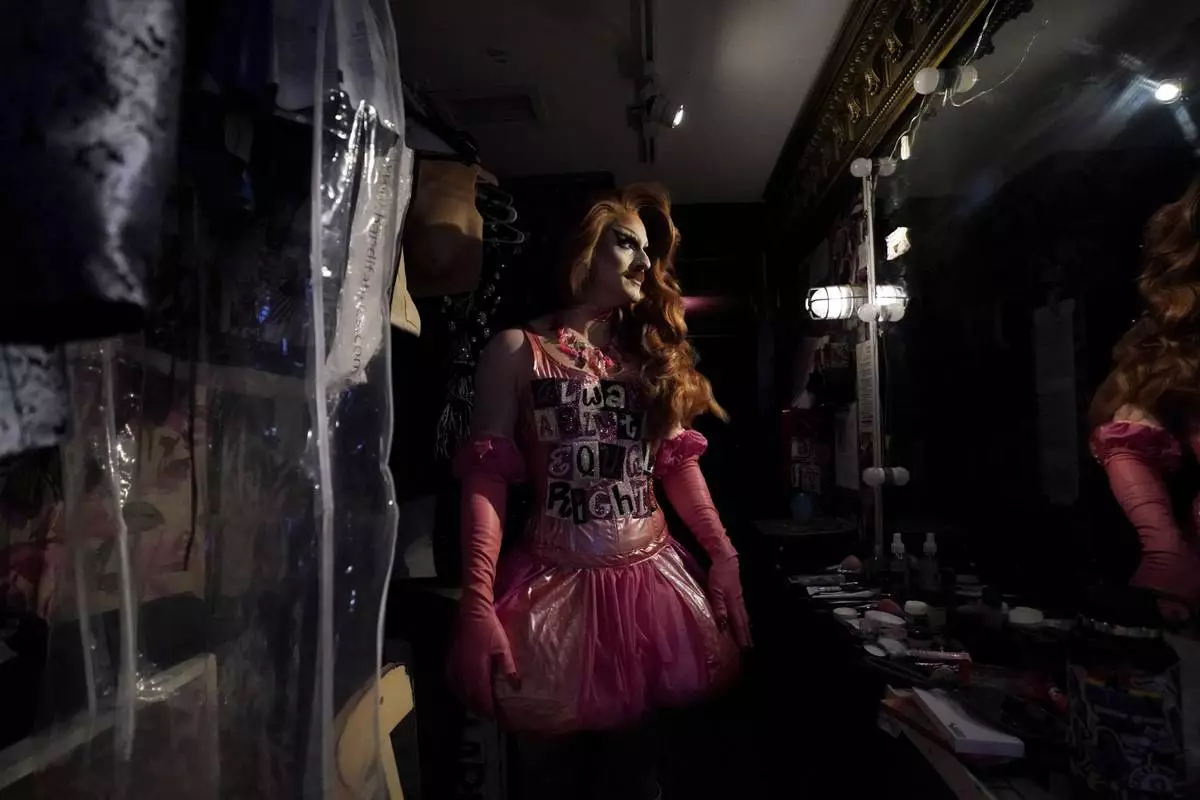
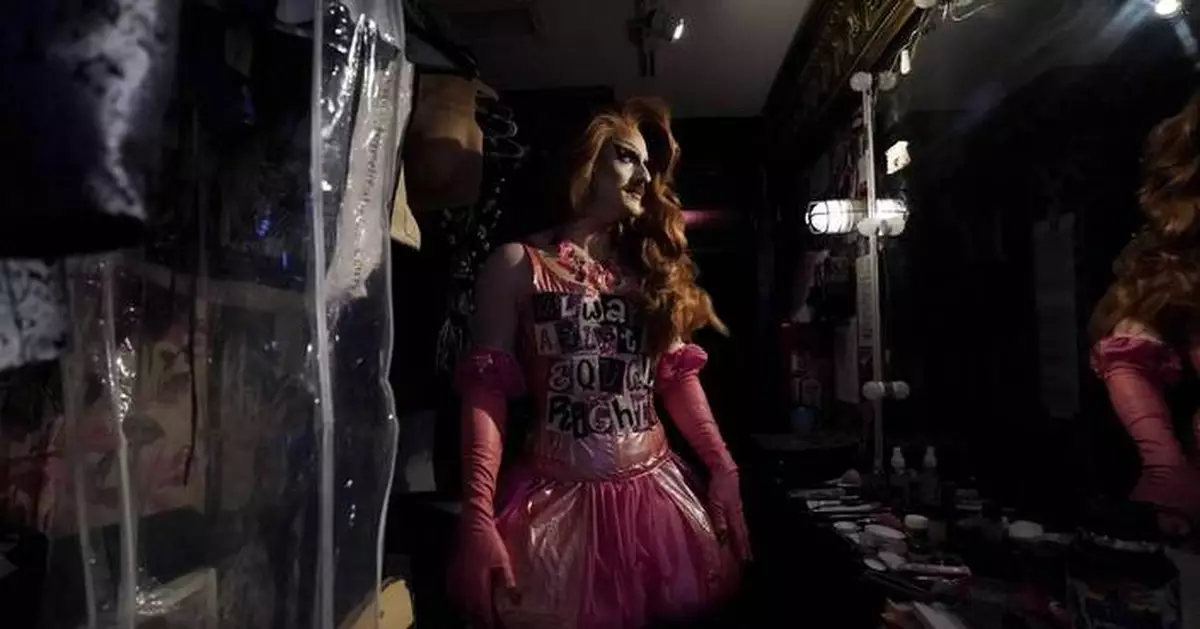
FILE - Pattie Gonia gets ready before performing in the "Save Her! Environmental Drag Show" during Climate Week, Sept. 24, 2024, in the Brooklyn borough of New York. (AP Photo/Alyssa Goodman, File)

After her grandmother’s house in Caracas narrowly survived last month’s devastating back-to-back earthquakes, Alessandra Izaguirre was desperate to help Venezuela.
“Seeing my grandma and all these people affected made me feel like I had to do something, even if it was from the U.S.," said the 18-year-old, who has spent the last couple weeks preparing food for volunteers at the Doral, Florida headquarters of the nonprofit Global Empowerment Mission.
Izaguirre is one of thousands of people who have participated in an exceptionally large grassroots humanitarian effort based at GEM, supported by donations from across the U.S. and beyond and still going strong nearly three weeks after the catastrophe.
Hundreds of volunteers still show up each day at GEM's warehouses in Doral, where about half the population is of Venezuelan descent. They sort donated supplies –– curated to address the latest needs –– and prepare them for transport to Caracas on daily flights.
GEM's system, facilitated by the U.S. State Department, has given members of the Venezuelan diaspora and others an outlet to support the ongoing crisis, and a trusted mechanism to send aid amid widespread concern about theft and corruption on the part of Venezuelan officials.
“Whatever we can get to the Venezuelan public is what counts,” said Izaguirre.
The effort also underscores the stunning dynamic shift between the U.S. and Venezuela since President Donald Trump ordered then-Venezuelan president Nicolás Maduro’s capture in an early morning raid on Jan 3. With military personnel again on the ground, the U.S. has assumed a response role that would have been unimaginable before January, when Trump said the U.S. would “run” the country and seized control of its oil exports.
“This is a whole different animal,” said GEM founder and president Michael Capponi, who was denied entry to Venezuela while trying to deliver aid during the reign of Maduro, who long rejected humanitarian help, equating it to foreign intervention. “We land a private plane, it gets unloaded by U.S. soldiers, it goes in a truck we pay for and to a warehouse that we completely control. It doesn’t touch the hands of the Venezuelan government.”
The 7.2- and 7.5-magnitude earthquakes struck 39 seconds apart on June 24, killing at least 4,500 people with thousands more still missing. They destroyed and damaged over 850 buildings, leaving 17,000 displaced and ravaging critical infrastructure providing electricity, clean water and sanitation.
GEM's headquarters became a donation collection point almost immediately. Some donors were initially skeptical that aid could reach those who needed it without being stolen or misused by a notoriously corrupt government, Capponi said. After GEM made its first successful aid distribution, the movement grew bigger than he'd seen in decades of global response.
Companies like Goya, Walmart and Amazon contribute supplies while professional sports teams have donated funds. But much of the aid is still amassed from thousands of individuals' contributions.
“They’re going to Walmart with their credit card, buying 15 cans of food and bringing it in a shopping bag,” said Capponi. “It doesn’t sound like a lot, but when it’s 2,000 people... it’s an enormous amount of aid.”
Lines to drop off aid at GEM have at times been so long police had to help manage traffic. Supplies arrive from across North America: Two brothers drove a U-Haul of goods from Canada. Another group arrived from Mexico. Trucks have rolled in from Nevada, Texas and California.
As many as 1,000 volunteers across three warehouses sort and pack. They fill pallets with essentials like diapers, and assemble individual care packages with enough sustenance and hygiene items to last two people about five days. They also tuck in notes of encouragement: “Te queremos Venezuela,” one reads. “We love you, Venezuela.”
GEM aims to deliver at least 100,000 care packages monthly for the next three-to-six months, while also addressing upcoming needs, like longer term housing.
Volunteers have taken vacations from work to put in hours at the warehouses, said Billy Richardson, director of U.S. logistics. Others arrive after work. “We almost have to kick them out at the end of the day,” Richardson said.
Mariela Vila showed up because she remembers how affected she was when Hurricane Maria pummeled her homeland of Puerto Rico in 2017. “The Latino community in general gathered together to help Puerto Rico, and that made me feel really well,” said Vila, 25, who has worked full-day shifts at GEM since the effort began. “So I felt the need to help Venezuela.”
Nearly one million pounds (454,000 kilograms) of supplies have been deployed so far from GEM headquarters to its recently leased Caracas warehouses. GEM collaborates with local nonprofits and trusted community members to organize distributions in the hardest hit areas, often twice daily.
But it is the U.S. State Department that facilitates the shipments with the Venezuelan government, making it possible for GEM to operate in the country, even getting help from the U.S. military. On Saturday, U.S. Marines landed an amphibious landing craft on a Venezuelan beach and unloaded GEM packages that were then passed to 2,000 people lined up for aid.
Partnerships with GEM and additional nonprofits allow the U.S. to tap into existing logistics and donation mechanisms, a State Department spokesperson told The Associated Press, adding that the effort with GEM leverages "the Venezuelan American diaspora and private partners who want to donate.”
Several other U.S.-based humanitarian groups told The Associated Press they also have been able to operate without interference from Venezuelan officials. Some depend on collaborations with established local nonprofits.
Despite the U.S. presence, some still question whether the Trump administration is doing enough to help Venezuela, especially since it controls billions of dollars in oil revenue.
“There are a lot of transparency questions that linger on the use of that fund in a moment in which Venezuelans really need that money to be used for the protection of Venezuelans,” said Laura Cristina Dib, Venezuela program director at the human rights organization Washington Office on Latin America.
John M. Barrett, U.S. charge d’affairs for Venezuela, told reporters last week that the interim government has been “fully compliant in terms of our requests to advance this massive humanitarian response" and that revenue from Venezuelan oil production, currently controlled by the U.S. Treasury, is being made available for relief efforts.
Asked for further details, the State Department spokesperson said “State and Treasury are supporting the Venezuelan interim government’s budgetary operations, improving Venezuela’s liquidity and access to capital during the recovery," adding that the U.S. has contributed over $386 million to earthquake response independent of the oil revenue.
In the coastal city of Maiquetía last week, Yoniel Reyes sat inside a tent, examining the contents of a GEM package he’d just received during an aid distribution, packed and sealed 1,300 miles away in Doral. There were instant meals, bottles of water, canned food, hydration powder and hygiene kits.
“I never imagined I would be receiving aid from the U.S.,” said Reyes. “We Venezuelans are thankful, very thankful.”
——
Associated Press videojournalist Juan Pablo Arraez contributed to this report from Maiquetía, Venezuela.
——
Associated Press coverage of philanthropy and nonprofits receives support through the AP’s collaboration with The Conversation US, with funding from Lilly Endowment Inc. The AP is solely responsible for this content. For all of AP’s philanthropy coverage, visit https://apnews.com/hub/philanthropy.
Relief workers unload U.S. humanitarian aid for people affected by the earthquakes in La Guaira, Venezuela, Wednesday, July 8, 2026. (AP Photo/Ariana Cubillos)
People affected by the earthquakes carry U.S. humanitarian aid after receiving it in La Guaira, Venezuela, Wednesday, July 8, 2026. (AP Photo/Ariana Cubillos)
Lisa Galindez calls on other volunteers to help pack baby items at the Global Empowerment Mission Venezuela relief donation site Tuesday, June 30, 2026, in Doral, Fla. (AP Photo/Marta Lavandier)