Skip to Content Facebook Feature Image

A Bosnian song about disillusionment with the American Dream becomes a World Cup banger

ENT

A Bosnian song about disillusionment with the American Dream becomes a World Cup banger
ENT

ENT

A Bosnian song about disillusionment with the American Dream becomes a World Cup banger

2026-06-12 21:52 Last Updated At:22:01

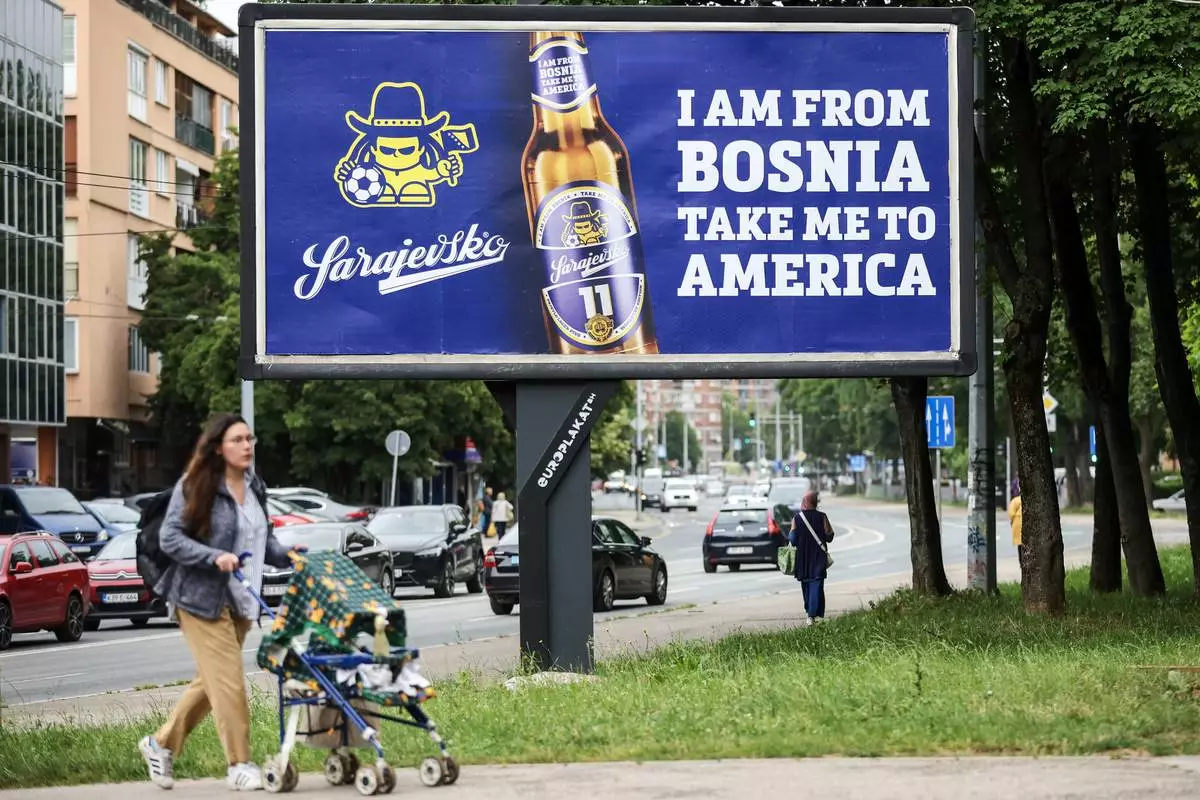
SARAJEVO, Bosnia-Herzegovina (AP) — The opening lyrics couldn't be plainer: “I am from Bosnia; take me to America.” But by rewriting its classic “USA,” the Bosnian band Dubioza Kolektiv has transformed a song about disillusionment with the American Dream into a viral anthem powering Bosnia-Herzegovina's own World Cup dreams.

On the eve of Friday's match between Bosnia and Canada, members of the genre-bending rock group met The Associated Press in the Sarajevo neighborhood where they filmed the new music video for the accordion-heavy earworm, now titled “I Am From Bosnia, Take Me to America.” In less than three weeks, the video celebrating soccer's working-class roots has notched nearly 2 million views on YouTube — on top of the 26 million views the original “USA,” released in 2011, has amassed over the years.

More Images
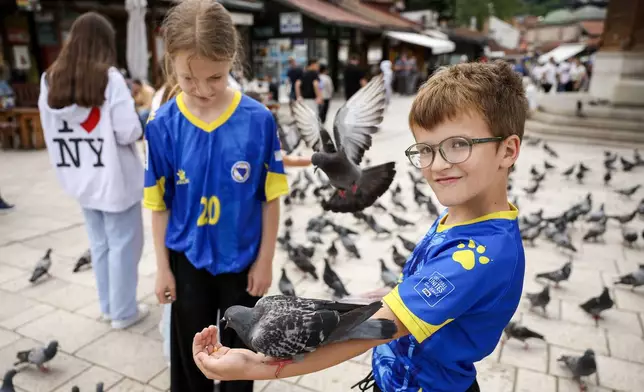
Children in Bosnian national soccer team jerseys feed pigeons in the old part of Sarajevo ahead of the soccer match of the FIFA World Cup 2026 between Canada and Bosnia, in Sarajevo, Bosnia, Friday, June 12, 2026. (AP Photo/Armin Durgut)
Children in Bosnian national soccer team jerseys feed pigeons in the old part of Sarajevo ahead of the soccer match of the FIFA World Cup 2026 between Canada and Bosnia, in Sarajevo, Bosnia, Friday, June 12, 2026. (AP Photo/Armin Durgut)

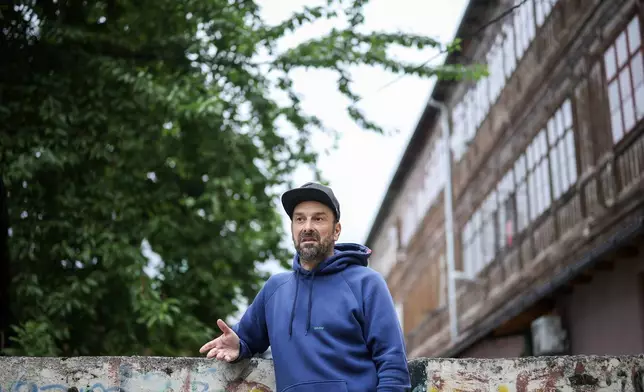
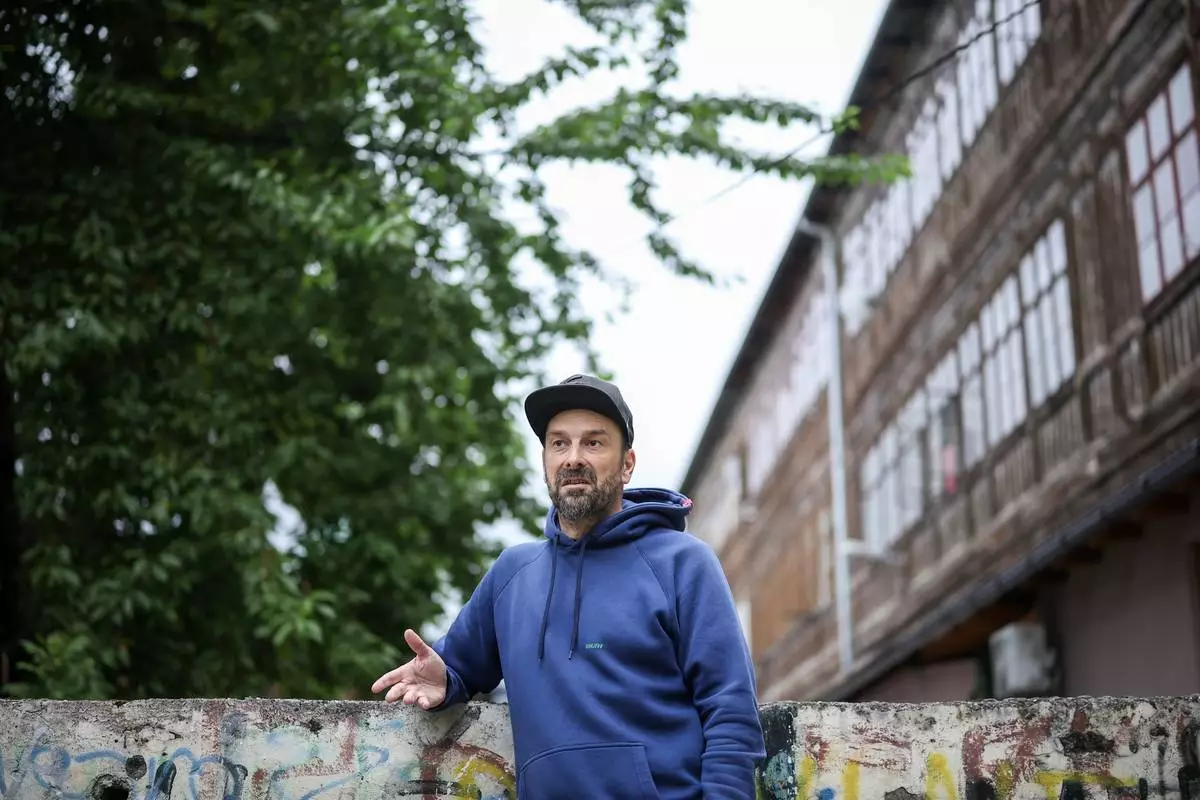
Brano Jakubovic, a member of Bosnian band Dubioza kolektiv, speaks during an interview for The Associated Press at a soccer playground where the video for the song "I Am From Bosnia, Take Me to America" was filmed, in Sarajevo, Bosnia, Thursday, June 11, 2026. (AP Photo/Armin Durgut)
Brano Jakubovic, a member of Bosnian band Dubioza kolektiv, speaks during an interview for The Associated Press at a soccer playground where the video for the song "I Am From Bosnia, Take Me to America" was filmed, in Sarajevo, Bosnia, Thursday, June 11, 2026. (AP Photo/Armin Durgut)
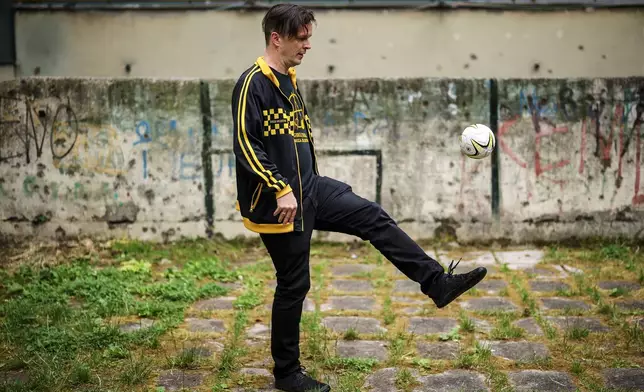
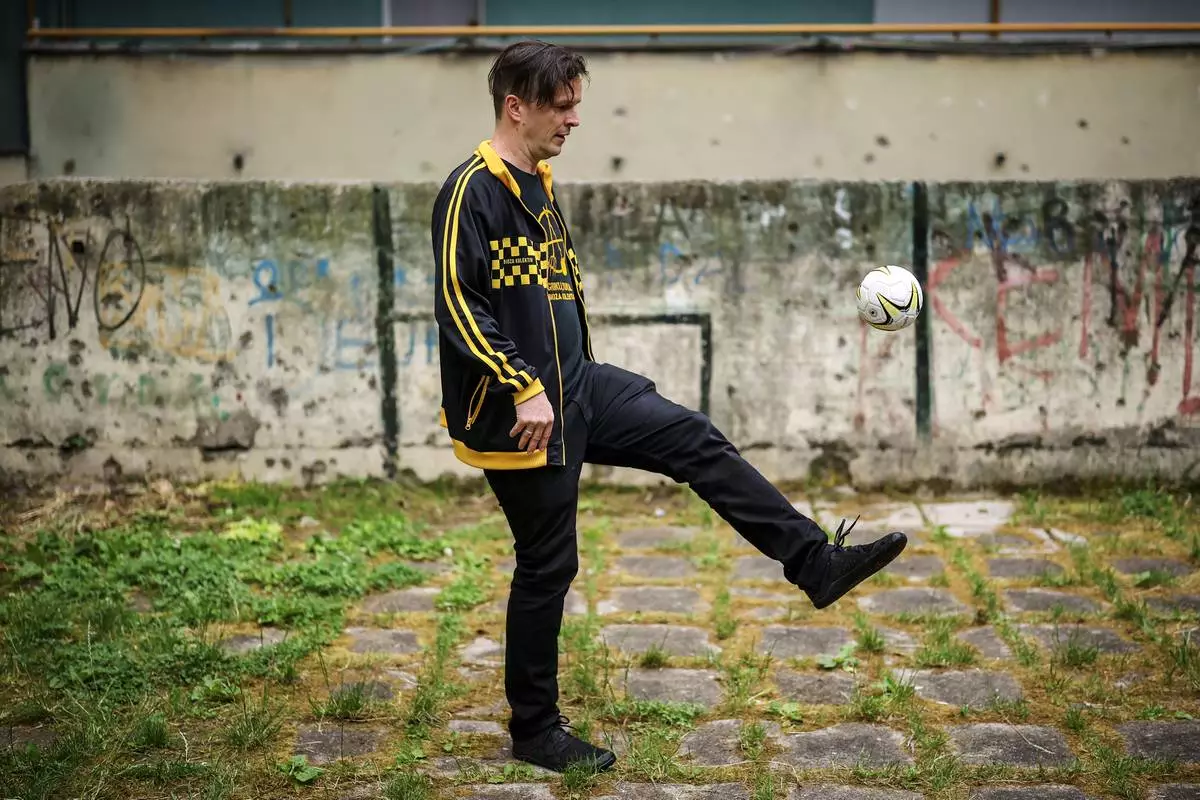
Vedran Mujagic, a member of Bosnian band Dubioza kolektiv, plays with a ball at a soccer playground where the video for the song "I Am From Bosnia, Take Me to America" was filmed, in Sarajevo, Bosnia, Thursday, June 11, 2026. (AP Photo/Armin Durgut)
Vedran Mujagic, a member of Bosnian band Dubioza kolektiv, plays with a ball at a soccer playground where the video for the song "I Am From Bosnia, Take Me to America" was filmed, in Sarajevo, Bosnia, Thursday, June 11, 2026. (AP Photo/Armin Durgut)

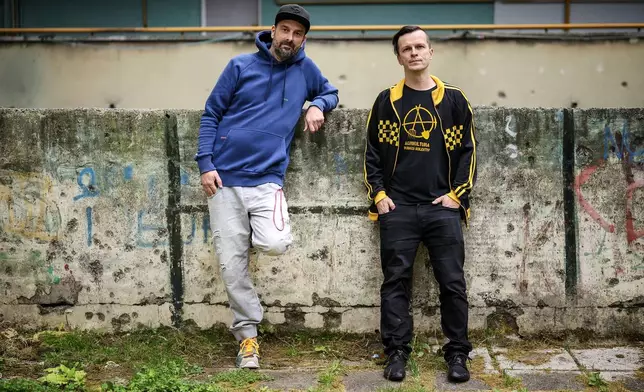
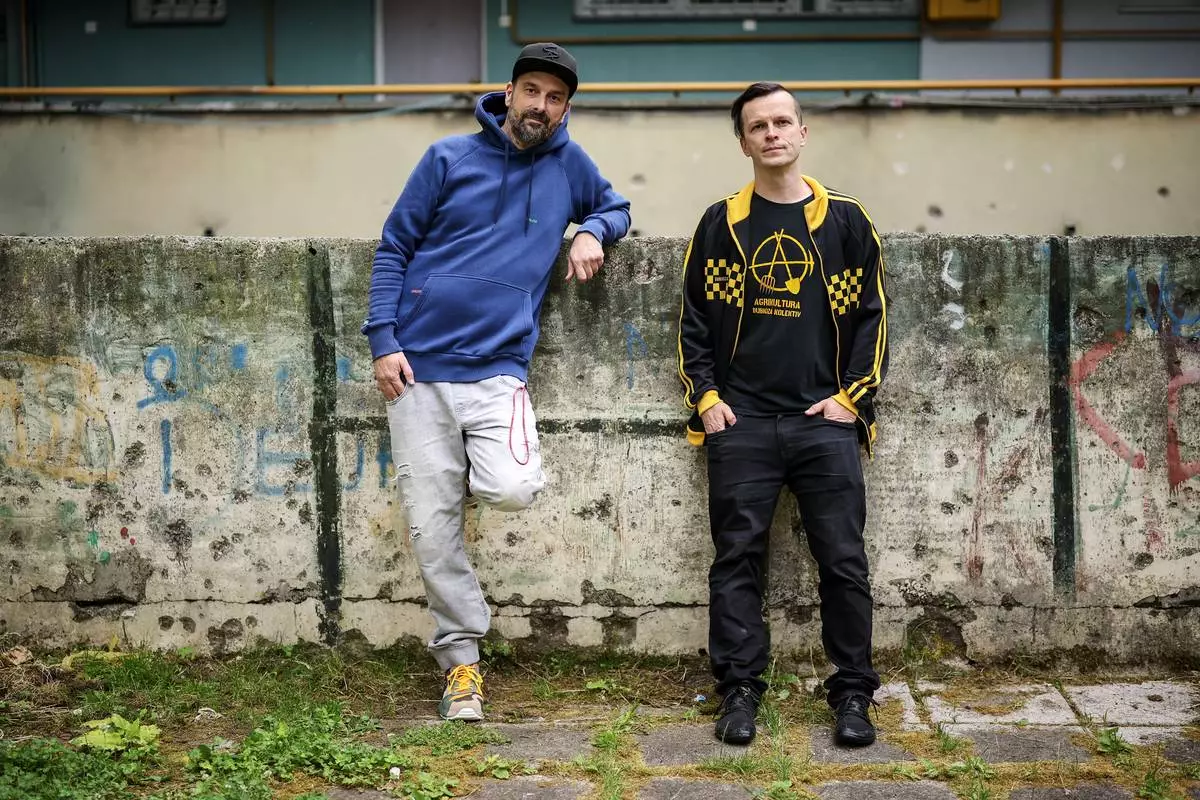
Brano Jakubovic, left, and Vedran Mujagic, members of Bosnian band Dubioza kolektiv, pose for a photo at a soccer playground where the video for the song "I Am From Bosnia, Take Me to America" was filmed, in Sarajevo, Bosnia, Thursday, June 11, 2026. (AP Photo/Armin Durgut)

Brano Jakubovic, left, and Vedran Mujagic, members of Bosnian band Dubioza kolektiv, pose for a photo at a soccer playground where the video for the song "I Am From Bosnia, Take Me to America" was filmed, in Sarajevo, Bosnia, Thursday, June 11, 2026. (AP Photo/Armin Durgut)

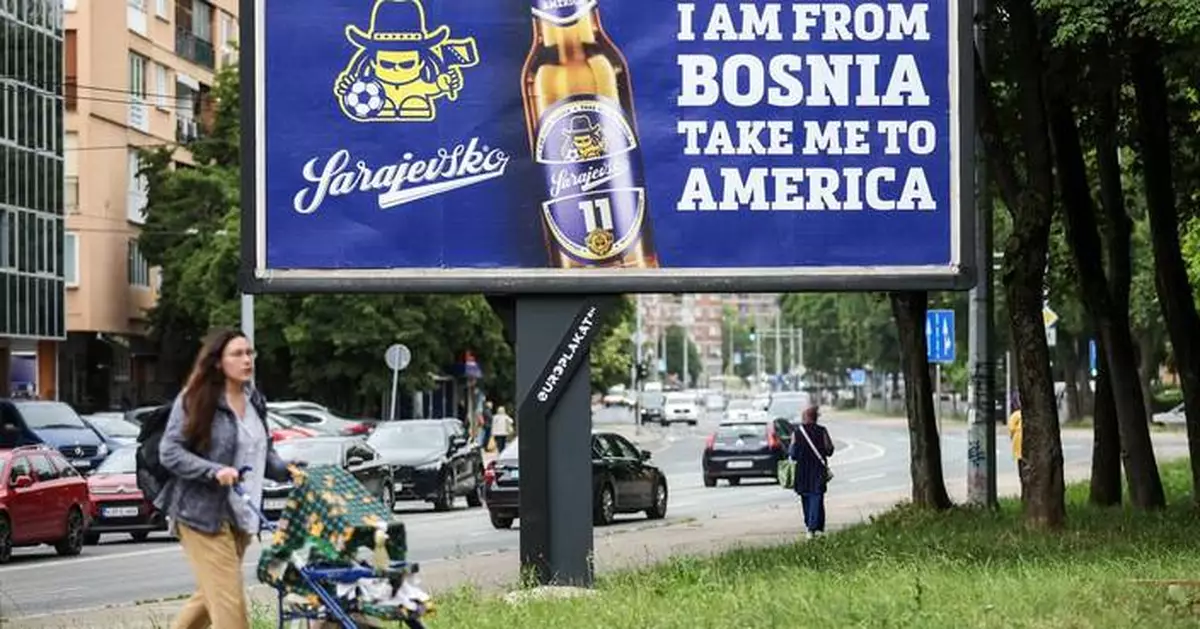
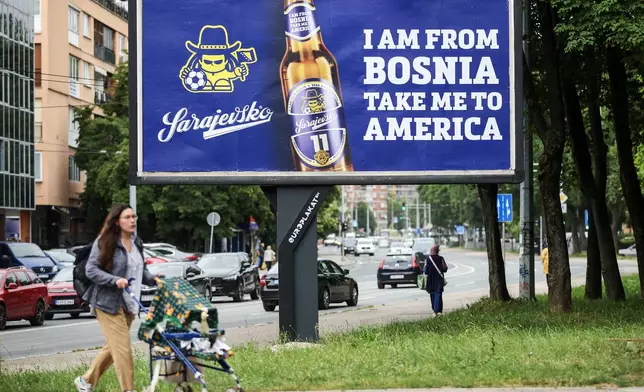
A woman walks past a billboard displaying lyrics from the Dubioza kolektiv song "I Am From Bosnia, Take Me to America" in Sarajevo, Bosnia, Thursday, June 11, 2026. (AP Photo/Armin Durgut)

A woman walks past a billboard displaying lyrics from the Dubioza kolektiv song "I Am From Bosnia, Take Me to America" in Sarajevo, Bosnia, Thursday, June 11, 2026. (AP Photo/Armin Durgut)

“It’s an interesting story how this song got its second and third and fourth incarnation in these 15 years,” muses Vedran Mujagić, bassist for the band that has woven political and social causes into its identity. “It evolved from this satirical take on immigration and (the) American Dream and it was translated into (an) American football dream for the entire nation.”

Bosnia-Herzegovina is making only its second appearance at a World Cup, a goal that once seemed improbable as more traditional soccer powers stood in the way of qualification. At the end of April, though, Bosnia's late goal against Wales propelled the team to a victorious penalty shootout, a feat it would replicate days later against Italy. The band members were surprised when fans unfurled a banner emblazoned with their lyrics, singing them as a rallying cry.

“First, it was working as a joke, but what I like the most is the supporters kind of loaded completely new meaning to the old song, and this is the best thing for the band or for the song: when people take over and load new meaning and then it becomes theirs,” keyboardist Brano Jakubović says. “It’s not ours anymore.”

The original “USA” is as up-tempo and catchy — it's hard not to wander around muttering, “I can no longer wait, take me to United States / Take me to Golden Gate, I will assimilate” — but its protagonist's eagerness to flee slides quickly to disenchantment with life outside the Balkans.

The band decided to deliver an updated version of what Jakubović describes as a “typical immigrant song,” writing new lyrics befitting a soccer anthem. While “USA” is in English, this version is mostly in Bosnian — “so people will understand,” he says — and mostly about the sport. The language switch has done nothing to lessen its global appeal, as a quick perusal of the YouTube comments suggests, though there are some jokes Jakubović acknowledges would be inscrutable outside Bosnia. (See: burek without cheese.)

Jakubović’s favorite new line is a chance to excise something that has haunted the country since the 2014 World Cup: “And that goal against Nigeria, that was never offside.”

“So this is like a big national trauma in Bosnia, so I used the song and lyrics to kind of release this trauma,” he says.

He's being wry there, but trauma has been a mainstay since Bosnia's independence amid the dissolution of Yugoslavia in 1992. Interethnic war almost immediately broke out, leading to genocide. More than 30 years after the Srebrenica massacre, deep division between Bosnian Serbs and Bosniak Muslims persist.

“Football in this moment is much more than just a game, it's a hope and it’s very basically (a) political thing because it brought all the people from Bosnia together, which is usually not the case,” Jakubović says.

Bosnia's first match is in Canada, but the team will indeed be taken to America. Their base camp is in Sandy, Utah, and the other group stage matches — against Switzerland and Qatar — are in the States. And, as Mujagić points out, many of the players were born in the U.S. or elsewhere in the diaspora.

“They are children of those people who went outside in search of a better life or as refugees or whatever their story was. And they kind of see and hear these lyrics and this song entirely differently from us,” he says.

Mujagić thinks the original message of “USA” endures as Bosnians still emigrate. Once they leave, he finds, “they encounter this hostility of the locals, right-wingers, and they just don’t want them there.”

“So it’s this schizophrenic situation in which you want to go there, but you somehow know that you won’t have it good on the other side as well,” he concludes. “So in that sense, this song still works perfectly well as it worked before.”

In St. Louis, home to a thriving Bosnian community, Admir Hodzic is one of the founders of the supporter group BH Loyals. The 40-year-old business owner was born in Bosnia and has moved back and forth between his homeland and the U.S., not unlike the protagonist of “USA.”

“I think every Bosnian that lives here and understands how the system works and everything else, I think they will find the truth in that song, and that song is honestly nothing but the truth,” he says. There are more opportunities in the U.S. than elsewhere, he says, but “it's a matter of biting your teeth and pulling through the worst times possible.”

He and his fellow supporters are big fans of Dubioza Kolektiv and sing their anthem at matches and watch parties. More often than not, though, it's the original “USA.”

“It’s engraved in their brain and their hearts,” he says, “and no matter what, they just go back to the old lyrics, you know?”

Sen reported from New York.

AP World Cup coverage: https://apnews.com/hub/fifa-world-cup
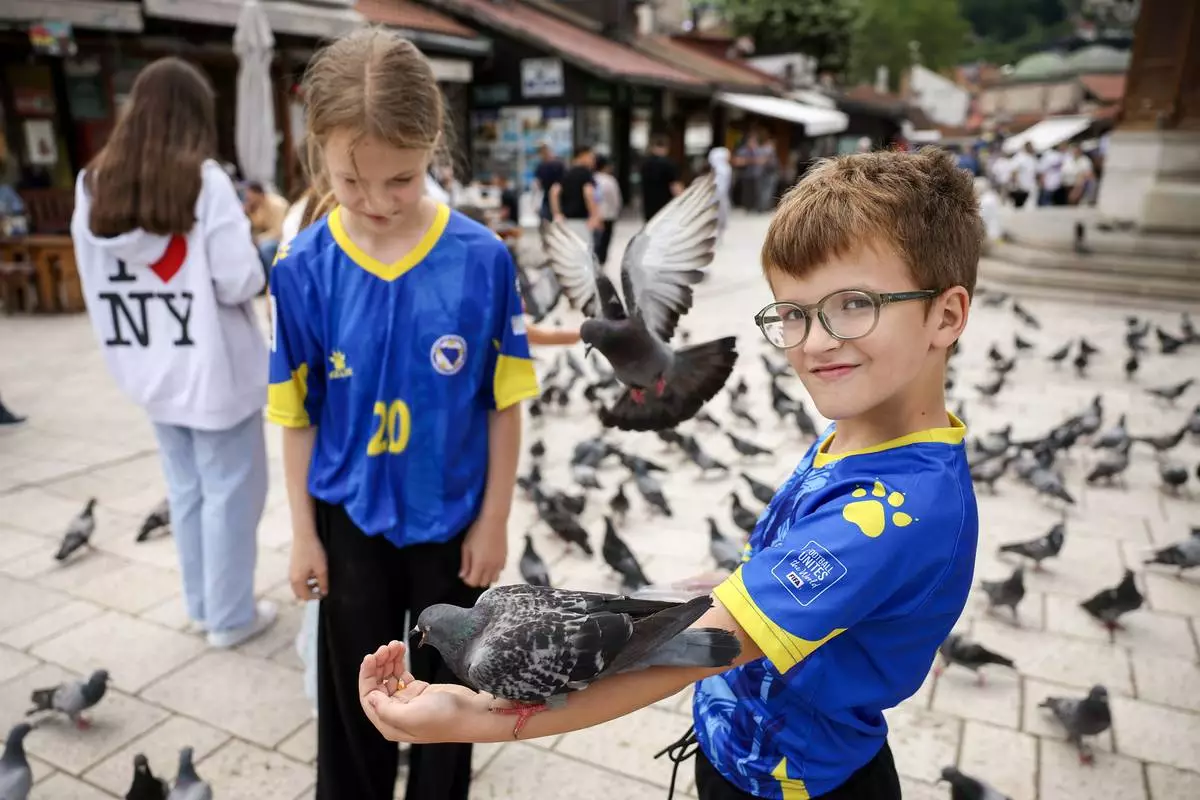
Children in Bosnian national soccer team jerseys feed pigeons in the old part of Sarajevo ahead of the soccer match of the FIFA World Cup 2026 between Canada and Bosnia, in Sarajevo, Bosnia, Friday, June 12, 2026. (AP Photo/Armin Durgut)
Children in Bosnian national soccer team jerseys feed pigeons in the old part of Sarajevo ahead of the soccer match of the FIFA World Cup 2026 between Canada and Bosnia, in Sarajevo, Bosnia, Friday, June 12, 2026. (AP Photo/Armin Durgut)

Brano Jakubovic, a member of Bosnian band Dubioza kolektiv, speaks during an interview for The Associated Press at a soccer playground where the video for the song "I Am From Bosnia, Take Me to America" was filmed, in Sarajevo, Bosnia, Thursday, June 11, 2026. (AP Photo/Armin Durgut)
Brano Jakubovic, a member of Bosnian band Dubioza kolektiv, speaks during an interview for The Associated Press at a soccer playground where the video for the song "I Am From Bosnia, Take Me to America" was filmed, in Sarajevo, Bosnia, Thursday, June 11, 2026. (AP Photo/Armin Durgut)
Vedran Mujagic, a member of Bosnian band Dubioza kolektiv, plays with a ball at a soccer playground where the video for the song "I Am From Bosnia, Take Me to America" was filmed, in Sarajevo, Bosnia, Thursday, June 11, 2026. (AP Photo/Armin Durgut)
Vedran Mujagic, a member of Bosnian band Dubioza kolektiv, plays with a ball at a soccer playground where the video for the song "I Am From Bosnia, Take Me to America" was filmed, in Sarajevo, Bosnia, Thursday, June 11, 2026. (AP Photo/Armin Durgut)

Brano Jakubovic, left, and Vedran Mujagic, members of Bosnian band Dubioza kolektiv, pose for a photo at a soccer playground where the video for the song "I Am From Bosnia, Take Me to America" was filmed, in Sarajevo, Bosnia, Thursday, June 11, 2026. (AP Photo/Armin Durgut)

Brano Jakubovic, left, and Vedran Mujagic, members of Bosnian band Dubioza kolektiv, pose for a photo at a soccer playground where the video for the song "I Am From Bosnia, Take Me to America" was filmed, in Sarajevo, Bosnia, Thursday, June 11, 2026. (AP Photo/Armin Durgut)

A woman walks past a billboard displaying lyrics from the Dubioza kolektiv song "I Am From Bosnia, Take Me to America" in Sarajevo, Bosnia, Thursday, June 11, 2026. (AP Photo/Armin Durgut)

A woman walks past a billboard displaying lyrics from the Dubioza kolektiv song "I Am From Bosnia, Take Me to America" in Sarajevo, Bosnia, Thursday, June 11, 2026. (AP Photo/Armin Durgut)
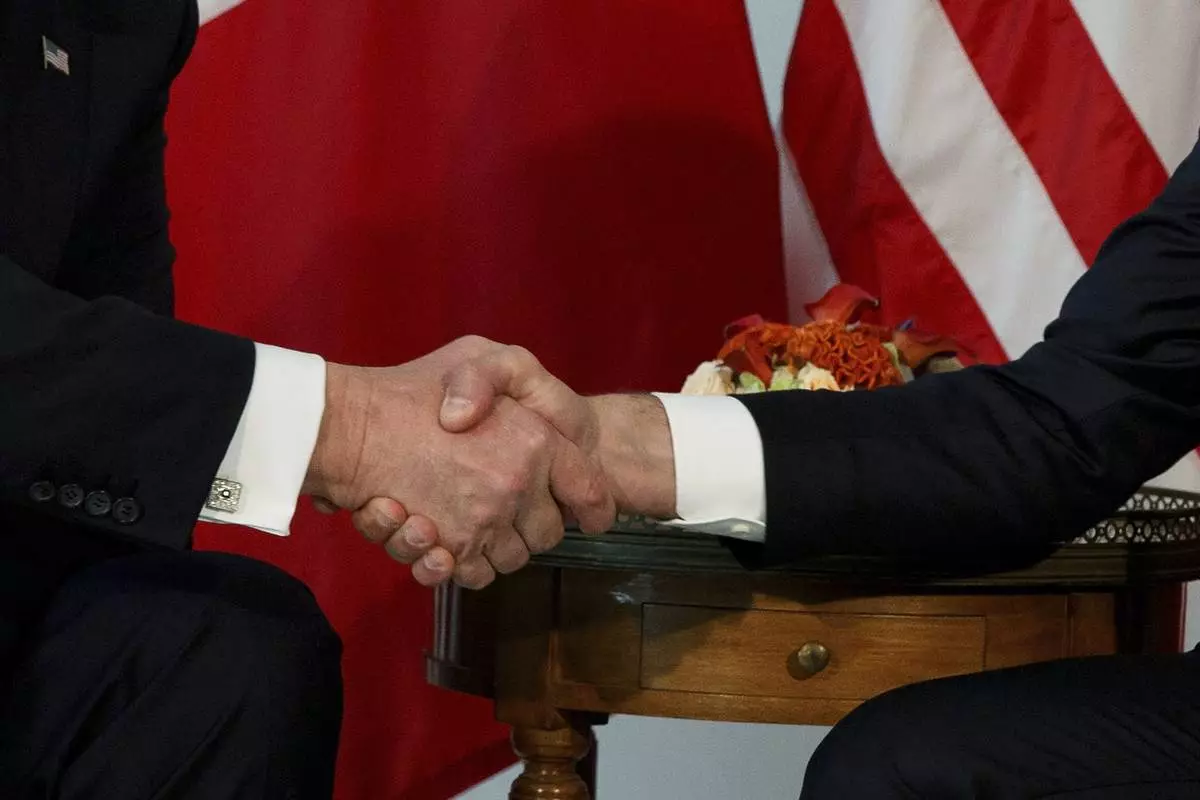
WASHINGTON (AP) — The relationship between U.S. President Donald Trump and French President Emmanuel Macron started simply enough, with a handshake, nearly a decade ago.

But even then, there were signs of strain in their relationship — tensions that could be on full display during next week’s G7 summit in France.

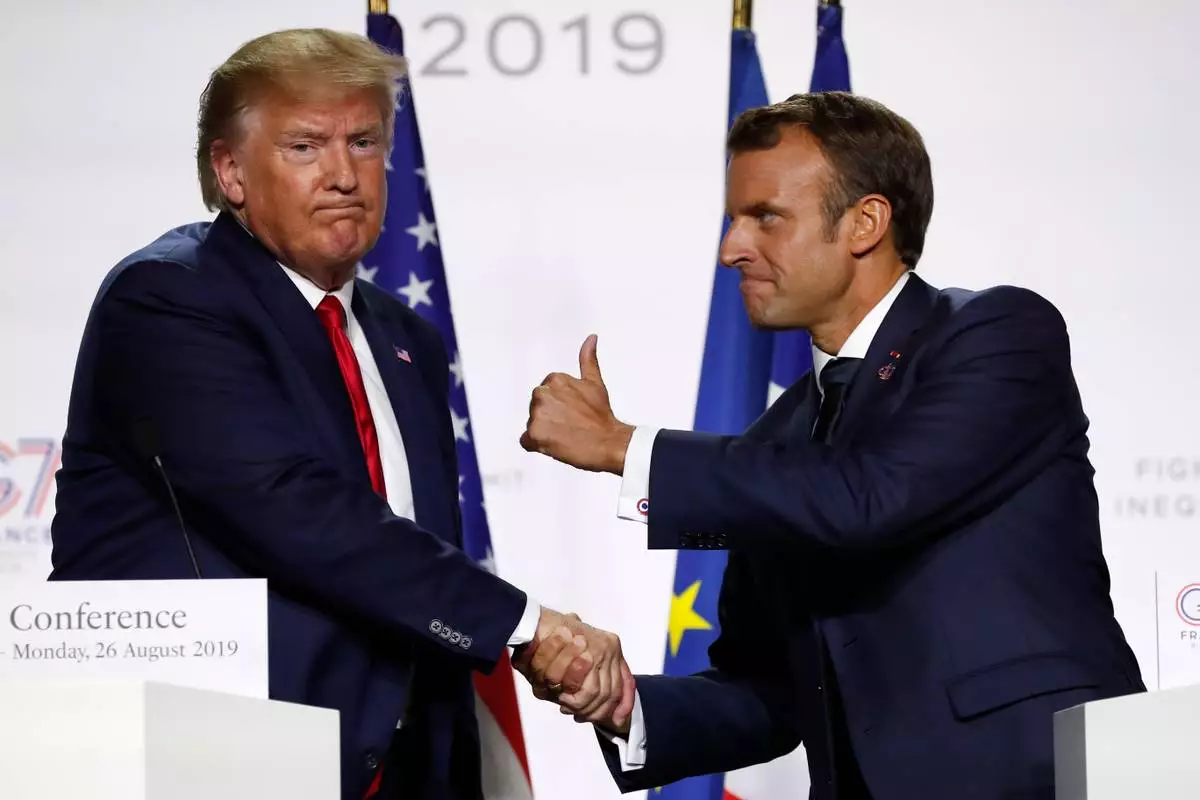
Back in 2017, Trump was a brash businessman just elected to America's most powerful office, and Macron was an upstart politician who had won his race in a landslide. At a NATO summit in Brussels, they clinched hands far longer than most people do when they meet for the first time. Neither seemed to want to be the first to break a grip so tight that it exposed white knuckles.

Nevertheless, a friendship was born. And early on, Macron seemed to be the one European leader with a knack for managing his mercurial, three-decades-older counterpart.

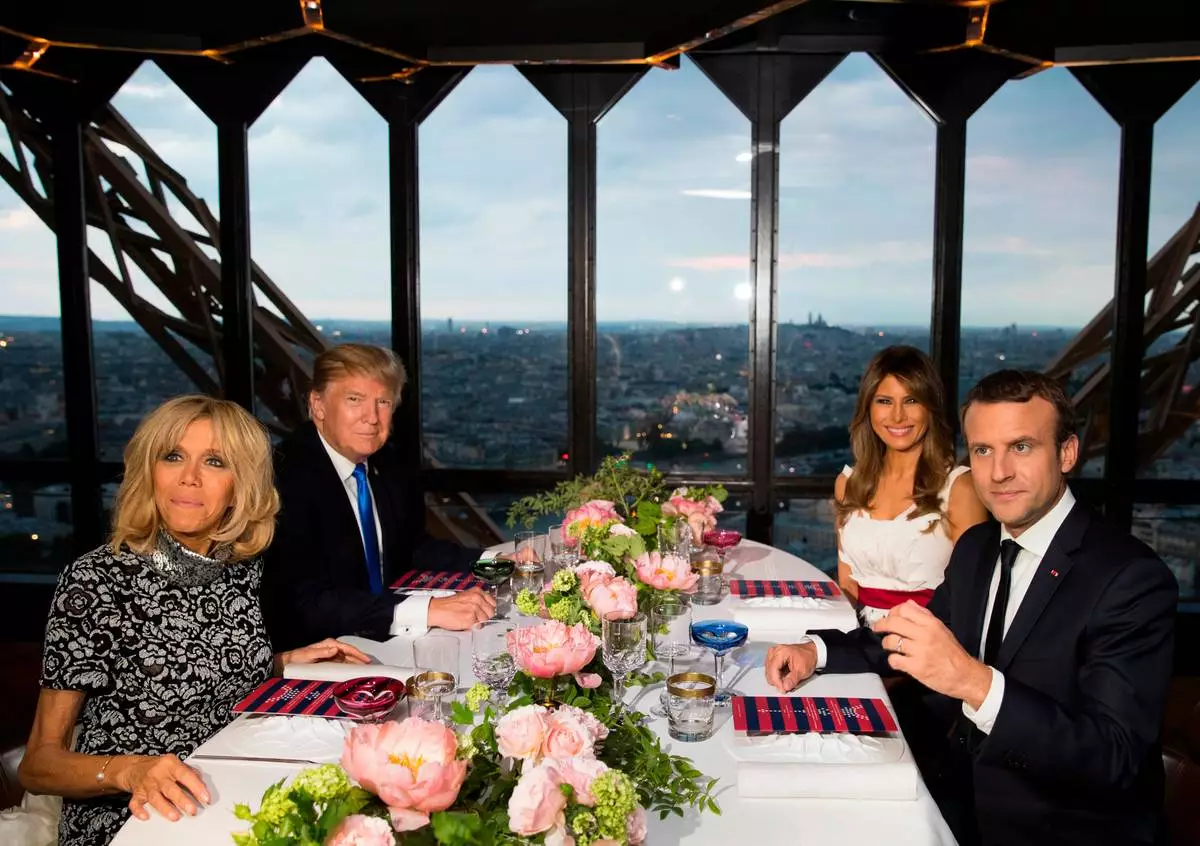
Macron invited the Republican president to join him for Bastille Day celebrations in July 2017, including an Eiffel Tower dinner date with their wives. Trump reciprocated by making Macron the guest of honor the following year at his first White House state dinner, the highest diplomatic honor the United States can extend to an ally.

But by the end of Trump's first term, the bromance had faded. And in his second term, the leaders now openly trade barbs, disagreeing over tariffs, Ukraine and the Iran war. That dynamic will be scrutinized next week when Trump and the leaders of Britain, Canada, Germany, Italy and Japan join Macron in the French lakeside resort of Evian-les-Bains for the G7 summit.

There could be awkward moments between Trump and Macron, as well as among Trump and the other G7 leaders he's criticized for not joining him in Iran.

“But I also think European leaders are quite professionals when it comes to politics, and in some ways diplomacy at this point, and will maybe see it as an opportunity as well,” Max Bergmann, director of the Europe, Russia, and Eurasia Program at the Center for Strategic and International Studies, said in an interview.

Kurt Volker, a former U.S. ambassador to NATO, said the Trump-Macron relationship has been further complicated by the Iran war and Trump's complaints “that Europeans weren't helping, when they hadn't been consulted, and their interests are very much affected by this.”

“I think that was a negative for Macron,” Volker said.

Trump joined Israel in a war against Iran over its nuclear program back in February without consulting other U.S. allies. He then complained publicly when European countries spurned his requests for their help.

Waning support for Ukraine in its war against Russia from the Trump administration “has really irritated the French,” Volker said. “They feel this is important and we're not paying attention to it.” Macron invited Ukrainian President Volodymyr Zelenskyy to join the leaders’ discussions on Tuesday.

In Trump's first term, Macron appeared confident that he could persuade and influence the U.S. leader, but the relationship increasingly has come to be defined by their disagreements.

Macron now says he is “careful” about Trump's statements, suggesting he no longer takes them at face value. Their relationship remains cordial as each calls the other “my friend.” But the relationship has also experienced some ups and downs.

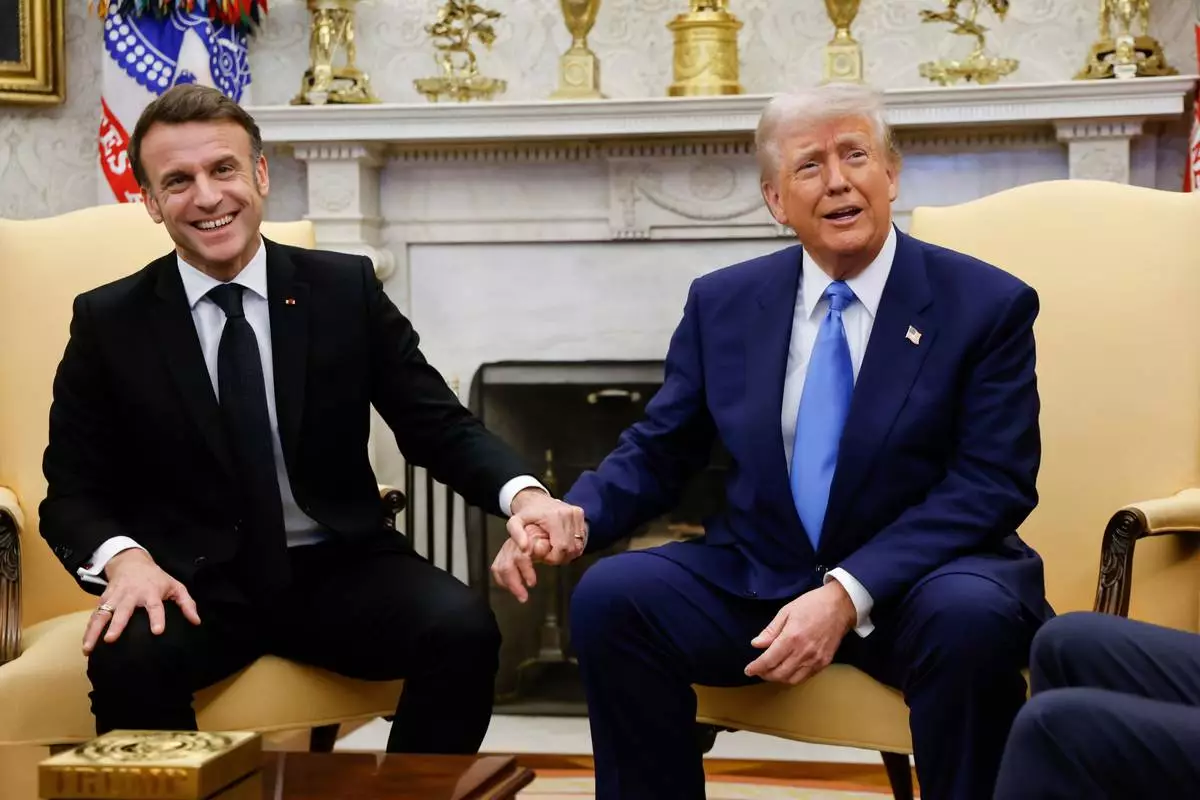
As president-elect, Trump attended the reopening of Notre Dame Cathedral in Paris in late 2024 at Macron's invitation. After Trump began his second term in 2025, Macron was an early Oval Office visitor. The president wrote on social media that he was “delighted” to welcome Macron back to the White House and said the relationship with France has been “very special.”

But at one point during the meeting, the French president publicly corrected Trump after he wrongly suggested that Europe would recover the money it had provided to support Ukraine. With a smile, Macron touched Trump's forearm and replied, “We provided real money.”

Macron also condemned as “brutal and unfounded” new tariffs that Trump slapped on steel, aluminum and a broader range of European imports in early 2025.

But there have also been some lighter moments mixed with the tensions.

A documentary aired last year on French television showed Macron telling Trump during a phone call that Zelenskyy had agreed to a U.S.-backed ceasefire proposal. Trump replied, “You’re the greatest.”

Macron has often said he can reach Trump directly whenever he needs to — and proved his point during last year’s U.N. General Assembly session in New York. After police officers blocked the French leader from crossing a street because traffic had been halted for Trump’s motorcade, Macron whipped out his cellphone and dialed the U.S. president.

“How are you?” Macron said. “Guess what? I’m waiting in the street because everything is frozen for you!”

Macron has argued that Trump’s “America first” policies bolstered his case for a stronger European defense capability that would lessen reliance on the United States.

In April of this year, as Trump sent mixed signals about Washington's commitment to NATO after the start of the war in Iran, Macron delivered some of his sharpest criticism of the U.S. president.

“There is too much talk, and it's going in all directions,” Macron said. “We all need stability, calm and a return to peace. This is not a show.”

“You have to be serious, and when you want to be serious, you don't say the opposite every day of what you said the day before,” he said.

Trump, while mimicking a French accent, recently has taken to reenacting a conversation he says he had with Macron over drug prices and tariffs. Trump also poked Macron by telling a private luncheon in April that his wife, Brigitte Macron, treats her husband badly. The comments were in a video the White House had posted on its YouTube channel before blocking access.

Macron didn't see any humor in Trump's comments. “The remarks I heard were neither elegant nor appropriate,” he said. “They do not deserve a response.”

Still, Macron has tried to accommodate Trump's schedule to ensure his presence at the summit in Evian-les-Bains, knowing that he has a record of leaving such gatherings early.

Macron originally had set Sunday, which is Trump's 80th birthday, as the opening day of the summit, but he pushed the start back a day because Trump is celebrating the occasion with a UFC show staged on the White House grounds.

Corbet reported from Paris.

FILE - In this Aug. 26, 2019, file photo, French President Emmanuel Macron and U.S President Donald Trump shake hands during the final press conference during the G7 summit in Biarritz, southwestern France. (AP Photo/Francois Mori, File)

FILE - In this Aug. 26, 2019, file photo, French President Emmanuel Macron and U.S President Donald Trump shake hands during the final press conference during the G7 summit in Biarritz, southwestern France. (AP Photo/Francois Mori, File)

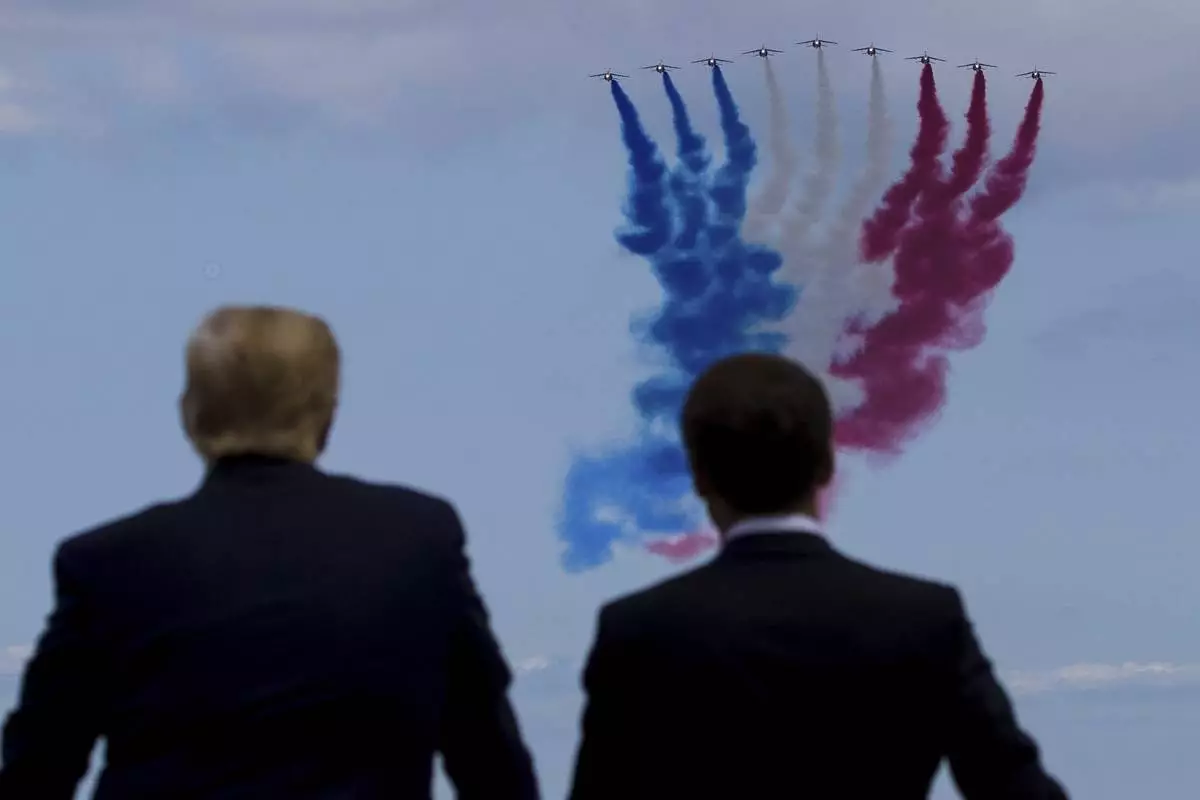
FILE - President Donald Trump, left, and French President Emmanuel Macron watch a flyover during a ceremony to commemorate the 75th anniversary of D-Day at the American Normandy cemetery, June 6, 2019, in Colleville-sur-Mer, Normandy, France. (AP Photo/Alex Brandon, File)

FILE - President Donald Trump, left, and French President Emmanuel Macron watch a flyover during a ceremony to commemorate the 75th anniversary of D-Day at the American Normandy cemetery, June 6, 2019, in Colleville-sur-Mer, Normandy, France. (AP Photo/Alex Brandon, File)

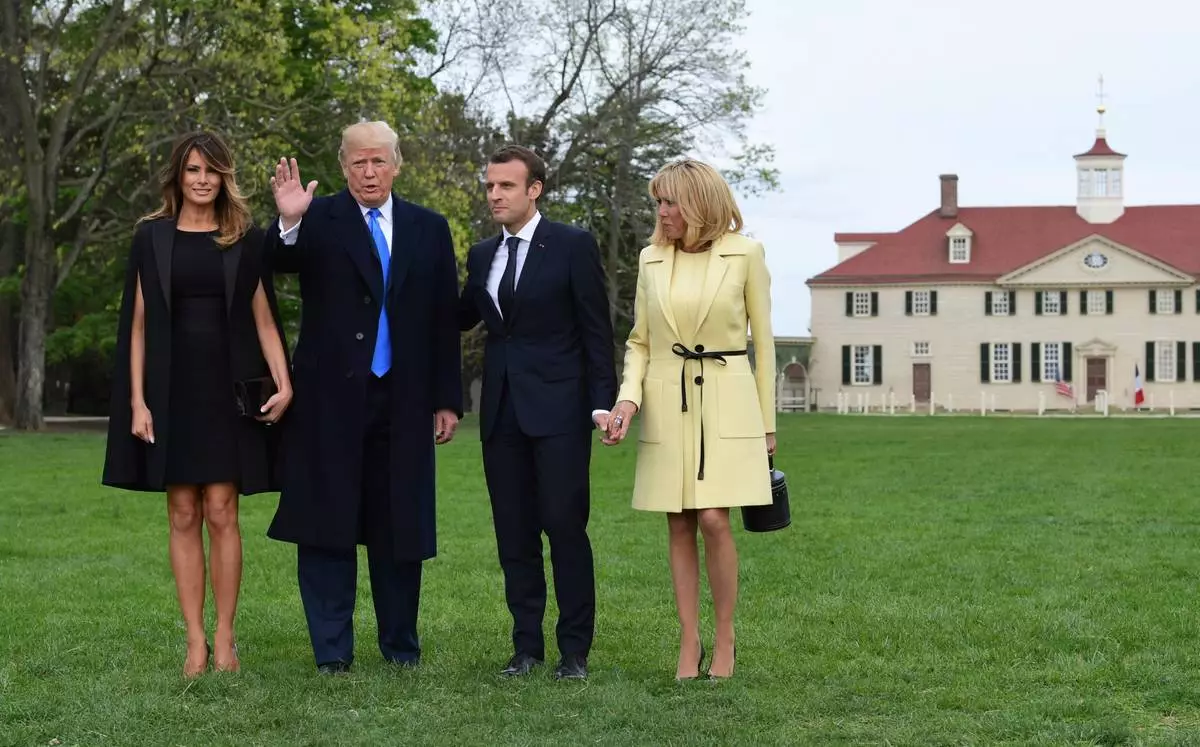
FILE - From left, first lady Melania Trump, President Donald Trump, French President Emmanuel Macron, and his wife Brigitte Macron, pose for a photo during a visit and private dinner at George Washington's Mount Vernon estate in Mount Vernon, Va., April 23, 2018. (AP Photo/Susan Walsh, file)

FILE - From left, first lady Melania Trump, President Donald Trump, French President Emmanuel Macron, and his wife Brigitte Macron, pose for a photo during a visit and private dinner at George Washington's Mount Vernon estate in Mount Vernon, Va., April 23, 2018. (AP Photo/Susan Walsh, file)

FILE - In this July 13, 2017 file photo, President Donald Trump, first lady Melania Trump, French President Emmanuel Macron, right, and his wife Brigitte Macron, left, sit for dinner at the Jules Verne Restaurant at the Eiffel Tower in Paris. (AP Photo/Carolyn Kaster, File)

FILE - In this July 13, 2017 file photo, President Donald Trump, first lady Melania Trump, French President Emmanuel Macron, right, and his wife Brigitte Macron, left, sit for dinner at the Jules Verne Restaurant at the Eiffel Tower in Paris. (AP Photo/Carolyn Kaster, File)

FILE - President Donald Trump, right, meets with France's President Emmanuel Macron in the Oval Office of the White House in Washington, Feb. 24, 2025. (Ludovic Marin/Pool via AP, file)

FILE - President Donald Trump, right, meets with France's President Emmanuel Macron in the Oval Office of the White House in Washington, Feb. 24, 2025. (Ludovic Marin/Pool via AP, file)

FILE - President Donald Trump shakes hands with French President Emmanuel Macron during a meeting at the U.S. Embassy, May 25, 2017, in Brussels. (AP Photo/Evan Vucci, file)

FILE - President Donald Trump shakes hands with French President Emmanuel Macron during a meeting at the U.S. Embassy, May 25, 2017, in Brussels. (AP Photo/Evan Vucci, file)

Recommended Articles