The United Kingdom's economy contracted in April, with the gross domestic product (GDP) falling 0.1 percent month on month after growing 0.3 percent in March, according to data released Friday by the Office for National Statistics (ONS).
The main driver of the negative growth was cited as a 0.2 percent contraction in services.
According to the ONS, one of the biggest contributors to the decline in services was a 9.1 percent fall in sports, amusement and recreation activities -- the largest negative contribution from a single industry to services output and real GDP growth.
Some of the sector's decline was attributed to the war in the Middle East, as the cancellation of various sporting events in the Middle East affected the output of U.K.-based companies, said the ONS.

UK economy contracts 0.1 percent in April
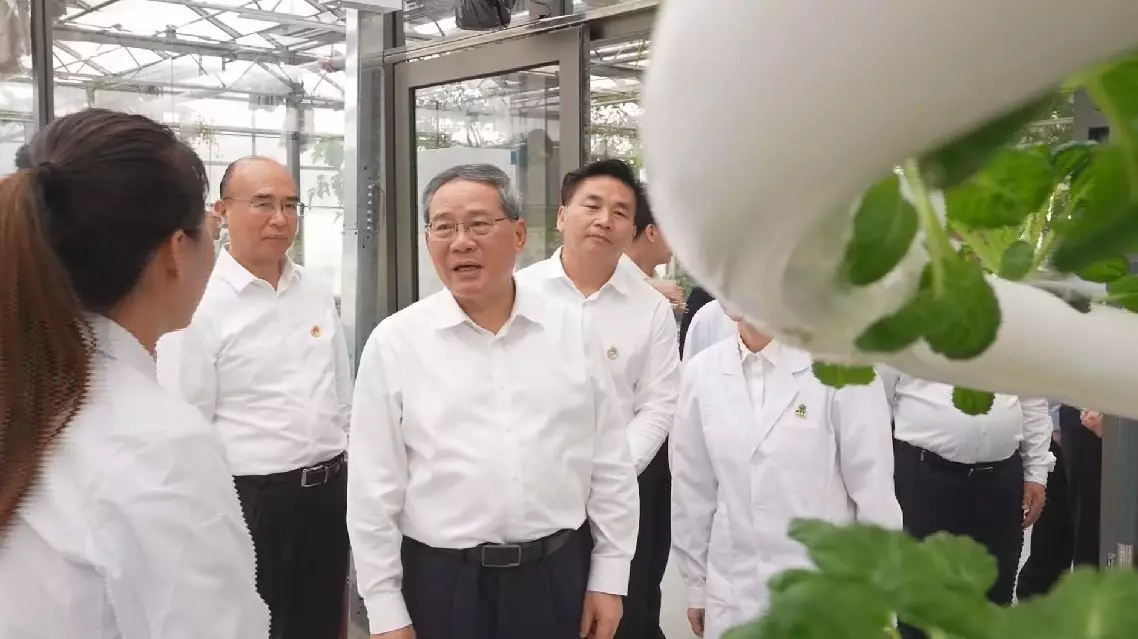
Chinese Premier Li Qiang emphasized advancing agricultural modernization and ensuring food security when making investigation in northeast China's Heilongjiang and Jilin provinces from Monday to Wednesday.
In Heilongjiang Province, Li, also a member of the Standing Committee of the Political Bureau of the Communist Party of China Central Committee, visited a state farm and observed the growth of soybean, corn, and rice crops. He stressed that autumn grain accounts for the bulk of annual output, calling for stepped-up farmland management and policy support to ensure grain harvest.
Visiting an agricultural science park and a rice research institute, Li asked about seed breeding innovation and black soil conservation, highlighting the importance of science and technology in pursuing higher yields and calling for further efforts in seed breeding, advanced machinery, and smart farming.
At a major water conservancy project, Li reviewed construction progress, urging faster completion to improve flood control, irrigation, and ecological benefits while supporting stable, high-yield harvests.
In Jilin Province, Li visited an agricultural cooperative and learned about its operations. He called for developing diverse forms of appropriately scaled agricultural operations and improving services for agriculture to help smallholders connect with modern agriculture.
At a grain processing plant, Li inspected a corn oil production line and called for boosting intensive processing of agricultural products to extend industrial chains and raise value.
Li also visited the Chagan Lake and learned about the ecological fisheries. He called for actively developing modern eco-aquaculture, promoting integrated development of the farming, forestry, livestock, and fishing industries as well as the development of eco-tourism.
Chinese premier stresses agricultural modernization, food security