CHP investigates case of influenza A (H9) infection
The Centre for Health Protection (CHP) of the Department of Health (DH) is today (June 12) investigating a case of human infection with influenza A (H9) in collaboration with relevant departments. The patient is a two-year-old boy. His condition has remained mild and he is currently in stable condition. The CHP will send a letter to all doctors in Hong Kong to update them on the latest developments regarding avian influenza A and to urge them to remain vigilant and report any suspected cases.
Case information
-------------------
The boy lives in Sha Tin District. He developed a fever and mild diarrhoea on June 9. On the following day (June 10), he was brought to Prince of Wales Hospital and was admitted for treatment. His clinical specimen tested positive for the influenza A (H9) virus by the Public Health Laboratory Services Branch (PHLSB) of the CHP. The subtyping result is pending. His clinical diagnosis was novel influenza. He is currently in stable condition and has been admitted to an isolation ward at Princess Margaret Hospital for treatment.
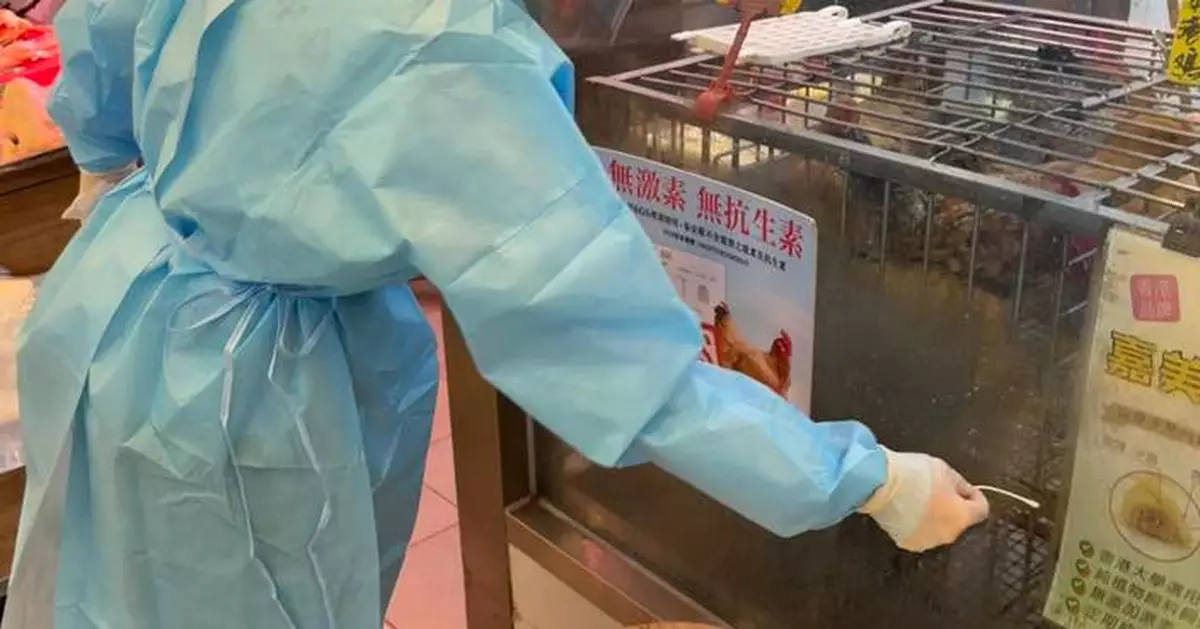
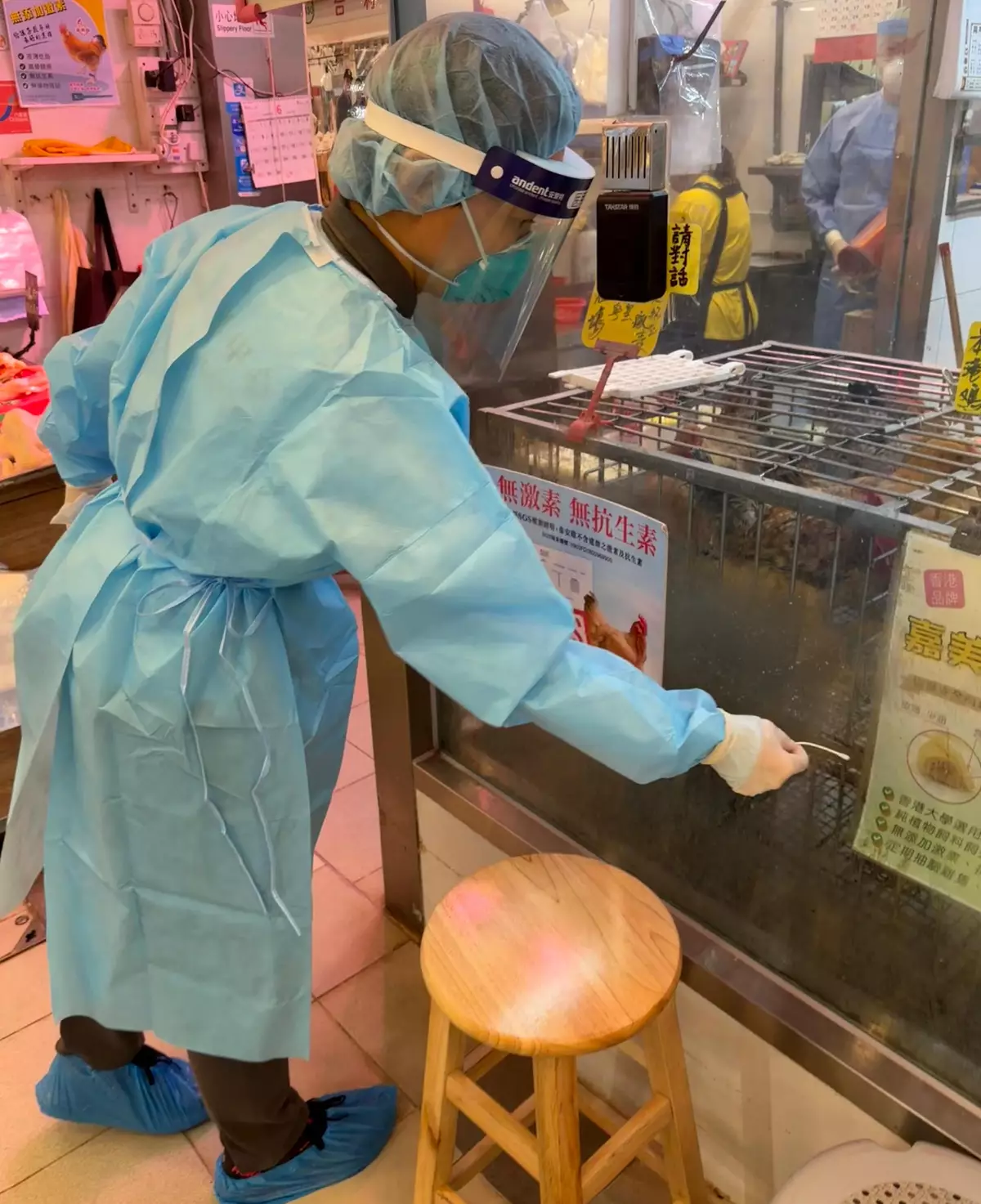
The CHP's preliminary investigation revealed that the patient had no travel history during the incubation period. The case has been classified as a locally acquired case. The patient does not attend school or receive daycare services. He is primarily cared for by his family members and spends most of his time at home or nearby. His household does not keep poultry. According to information provided by his family members, he has neither consumed undercooked poultry nor come into contact with any patients. In early June, one of his family members took him to Wo Che Market on two occasions. During these visits, the patient stayed at a fresh provision shop in the market that sells live chickens to watch the poultry and touched the surroundings of the fresh provision shop. The CHP conducted an investigation with the Food and Environmental Hygiene Department (FEHD) and collected environmental samples from the shop concerned. The shop staff remained asymptomatic. The patient has six household contacts and they remain asymptomatic so far. The CHP has provided them with preventive medication and put them under medical surveillance.
The CHP is continuing to investigate the source of infection of the case and is conducting whole genome sequencing of the virus sample. The CHP will also report the case to the World Health Organization (WHO).
Humans are primarily infected with the influenza A virus through direct contact with infected poultry or through indirect contact with environments contaminated by their droppings. The CHP's epidemiological investigation indicated that the patient had visited a location where live poultry was sold. It cannot be ruled out that the patient was infected through indirect contact with a contaminated environment at the wet market. As young children have weaker immune systems and are incapable of maintaining good hand hygiene, the CHP advised parents to avoid taking young children to places where live poultry is sold. Transporting poultry may contaminate the ground and the surrounding environment. As young children are shorter in height and easy to be in contact with the surrounding environment, they are at greater risk of coming into contact with poultry droppings or contaminated areas.
In the past ten years, the WHO has received reports of a total of over 160 cases of human infection with influenza A (H9) worldwide. To date, most case of human infection with influenza A (H9) have presented with only mild clinical illness. According to the WHO's risk assessment, the influenza A (H9) virus has not acquired the ability for sustained human-to-human transmissions.
Government's comprehensive follow-up actions
-----------------------------------------------------
Novel influenza A infection, including influenza A (H9), is a notifiable infectious disease in Hong Kong. Compared to other highly pathogenic avian influenza strains such as H5N1 and H7N9, influenza A (H9) is a low-pathogenic avian influenza strain that causes milder illness. Excluding the aforementioned case, 10 cases of influenza A (H9N2) have been reported since 1999, including four locally acquired cases and six imported cases. No deaths have been recorded so far. In response to the latest local case, the CHP will issue a letter to all doctors in Hong Kong, reminding them of the latest situation of influenza A (H9), and urging them to remain vigilant and report any suspected cases.
Sporadic cases of human infection with avian influenza occur from time to time internationally. Although the current risk of an outbreak is low, the Hong Kong Special Administrative Region Government has consistently implemented preventive measures, including a disease surveillance system, the implementation of livestock control measures at farms, markets and ports, in order to prevent avian influenza.
The PHLSB of the CHP comprises laboratories with high biosafety standards, capable of conducting, testing for high-risk pathogens, and which also possess sufficient testing and genetic analysis capabilities and facilities. Hong Kong currently has sufficient reserve of antiviral medications.
Preventive measures to be taken by the public
----------------------------------------------------
Humans are primarily infected with the avian influenza A virus through contact with infected birds, poultry or other animals (whether alive or dead), or through surfaces or environments contaminated with saliva, mucous and animal faeces (such as wet markets and live poultry markets). The virus has very low transmissibility among humans. People who have close contact with live poultry are more susceptible to contracting avian influenza. The elderly, children and people with chronic illnesses have a higher risk of developing complications such as bronchitis and pneumonia, if infected. Members of the public should remain vigilant and take the following measures to prevent avian influenza:
 Avoid contact with poultry, birds or their droppings. If contact has been made, thoroughly wash hands with soap and water;
Poultry and eggs should be thoroughly cooked before eating;
Perform hand hygiene at all times, especially before touching the mouth, nose or eyes; after contact with animals or their living environments; after touching public installations such as handrails or doorknobs; or when hands are contaminated with respiratory secretions, such as after coughing or sneezing;
Cover the mouth and nose with tissue paper when sneezing or coughing. Dispose of soiled tissues into a lidded rubbish bin, then wash hands thoroughly;
When having respiratory symptoms, wear a surgical mask, do not go to work or school, avoid crowded places and seek medical advice promptly;
Avoid crowded public places or areas with poorly ventilated; high-risk individuals may consider putting on a surgical mask when staying in such places; and
Travellers returning to Hong Kong from areas affected by avian influenza outbreaks should consult doctors promptly if they have flu-like symptoms, and inform the doctor of the recent travel history and wear a surgical mask to help prevent spreading of the disease.
Avoid contact with poultry, birds or their droppings. If contact has been made, thoroughly wash hands with soap and water;
Poultry and eggs should be thoroughly cooked before eating;
Perform hand hygiene at all times, especially before touching the mouth, nose or eyes; after contact with animals or their living environments; after touching public installations such as handrails or doorknobs; or when hands are contaminated with respiratory secretions, such as after coughing or sneezing;
Cover the mouth and nose with tissue paper when sneezing or coughing. Dispose of soiled tissues into a lidded rubbish bin, then wash hands thoroughly;
When having respiratory symptoms, wear a surgical mask, do not go to work or school, avoid crowded places and seek medical advice promptly;
Avoid crowded public places or areas with poorly ventilated; high-risk individuals may consider putting on a surgical mask when staying in such places; and
Travellers returning to Hong Kong from areas affected by avian influenza outbreaks should consult doctors promptly if they have flu-like symptoms, and inform the doctor of the recent travel history and wear a surgical mask to help prevent spreading of the disease.
The public may visit the CHP's webpages for more information: Avian Influenza Webpage, Avian Influenza Report, Avian influenza statistics and affected areas around the world, Facebook page and Youtube channel.
CHP investigates case of influenza A (H9) infection Source: HKSAR Government Press Releases
CHP urges high-risk individuals to receive COVID-19 vaccination at appropriate time as two severe paediatric cases of COVID-19 infection are recorded this week
The Centre for Health Protection (CHP) of the Department of Health today (June 12) is investigating a severe paediatric case of COVID-19 infection, the second such case this week. The CHP urged the public to observe good personal and environmental hygiene at all times to prevent COVID-19 and other respiratory illnesses. It also reminded high-risk individuals to receive initial doses or booster doses of COVID-19 vaccination at appropriate times to minimise the risk of severe disease and death.
Case details
--------------
The case involves a 12-month-old boy with good past health. He developed a fever, cough and runny nose on June 2. On the next day (June 3), he presented with stridor and his family member administered a rapid antigen test for him, which was positive for COVID-19. He was taken to the Accident and Emergency Department of Alice Ho Miu Ling Nethersole Hospital and was admitted on June 4. On the same day, due to severe croup symptom, he was transferred to the pediatric intensive care unit of Prince of Wales Hospital for treatment. He is currently in critical condition. His respiratory specimen tested positive for the SARS-CoV-2 virus upon laboratory testing. The clinical diagnosis was COVID-19 complicated with croup.
The CHP's preliminary investigation revealed that the boy had not received COVID-19 vaccine and had no travel history during the incubation period. His two household contacts developed mild respiratory symptoms since June 4 and have recovered and did not require hospitalisation.
Government's COVID-19 Vaccination Programme
-------------------------------------------------------------
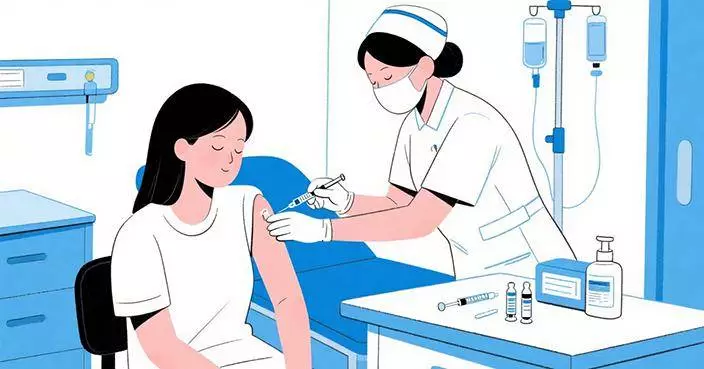
"Scientific evidence shows that COVID-19 vaccines are effective in reducing the risk of severe disease and death. Although COVID-19 has become a common respiratory infection in Hong Kong and around the world, certain high-risk individuals, especially young children, who have not received their initial dose of the COVID-19 vaccine and have not developed immunity through natural infection, face a higher risk of serious complications if they become infected. I would like to specifically remind the public that individuals who have not yet received their initial dose of the COVID-19 vaccine (including children aged six months or above) should get vaccinated as soon as possible, while high-risk individuals (particularly the elderly and those with underlying comorbidities) should also receive booster dose at appropriate times for effective protection against COVID-19." said the Controller of the CHP, Dr Edwin Tsui.
"According to the latest surveillance data, while the overall local activity of COVID-19 still remains at a relatively low level, slight increases have been recorded continually since early May. The positive detection rate of specimens collected at the Public Health Laboratory Services Branch of the CHP increased from 0.45 per cent in the early May to 1.39 per cent in the previous week. The COVID-19 activity levels fluctuate, with an upsurge period generally occurred approximately every six to nine months in recent years. Each upsurge is associated with changes in predominant circulating variants and a decline in community herd immunity. It has been nearly a year since the end of the last periodic upsurge of COVID-19 activity in Hong Kong, and it cannot be ruled out that the overall COVID-19 activity will rise further in the coming one to two months," he added.
The shelf life of the vaccines provided under the Government's COVID-19 Vaccination Programme (the Programme) is going to expire. A new batch of vaccines will arrive in Hong Kong successively in the fourth quarter of 2026. During this transition period, eligible individuals will not be able to receive free COVID-19 vaccines through the Programme for a short period. As such, those in need are advised to make appointments as early as possible. Existing vaccination services will continue until the following dates:
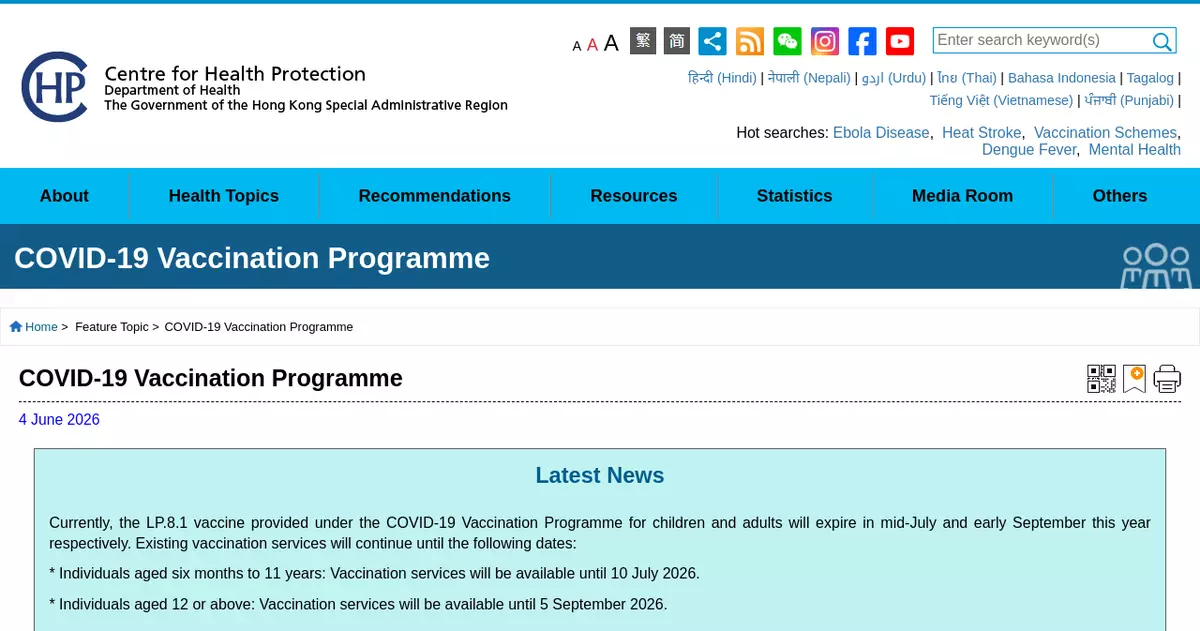 Individuals aged 6 months to 11 years: Vaccination services will be available until July 10, 2026.
Individuals aged 12 or above: Vaccination services will be available until September 5, 2026.
Individuals aged 6 months to 11 years: Vaccination services will be available until July 10, 2026.
Individuals aged 12 or above: Vaccination services will be available until September 5, 2026.
Apart from vaccination, in order to prevent COVID-19, influenza, and other respiratory illnesses as well as transmission in the community, the public should maintain strict personal and environmental hygiene at all times and note the following:
Patients can wear surgical masks to prevent transmission of respiratory viruses. Therefore, it is essential for persons who are symptomatic (even with mild symptoms) to wear a surgical mask;
High-risk persons (e.g. persons with underlying medical conditions or persons who are immunocompromised) should wear surgical masks when visiting public places. The general public should also wear a surgical mask when taking public transport or staying in crowded places. It is important to wear a mask properly, including performing hand hygiene before wearing and after removing a mask;
Avoid touching one's eyes, mouth and nose;
Practise hand hygiene frequently, wash hands with liquid soap and water properly whenever possibly contaminated;
When hands are not visibly soiled, clean them with 70 to 80 per cent alcohol-based handrub;
Cover the mouth and nose with tissue paper when sneezing or coughing. Dispose of soiled tissue paper properly into a lidded rubbish bin, and wash hands thoroughly afterwards;
Maintain good indoor ventilation;
Avoid sharing personal items;
When having respiratory symptoms, wear a surgical mask, consider to refrain from going to work or school, avoid going to crowded places and seek medical advice promptly; and
Maintain a balanced diet, perform physical activity regularly, take adequate rest, do not smoke and avoid overstress.
For more information on the COVID-19 Vaccination Programme and the latest recommendations on vaccine use, please refer to the CHP'swebsite.
Source: AI-found images