SAN JUAN, Puerto Rico (AP) — A group of U.S. Democratic lawmakers promised Puerto Ricans on Friday that they would try to speed up the island’s sluggish recovery from destructive hurricanes and earthquakes, a process that relies heavily on federal funds.
Mississippi Rep. Bennie G. Thompson, ranking member of the House Committee of Homeland Security, said he and other legislators met with Puerto Rico mayors as part of a two-day trip to the U.S. territory and heard their concerns including delays in reimbursements and project approvals.
“We’ll move some of those concerns into corrective actions,” he said at a news conference. “The system should work better.”
Pablo José Hernández, Puerto Rico’s representative in Congress, said the island’s mayors flagged their concerns after former Homeland Security Secretary Kristi Noem implemented a policy that DHS expenditures over $100,000 be personally approved by that office.
The policy further delayed recovery efforts in Puerto Rico from hurricanes Maria and Fiona, and a series of strong quakes that struck in late 2019 and early 2020.
In April, new Homeland Security Secretary Markwayne Mullin rescinded the rule, but challenges remain.
Thompson noted that about a third of the workforce of the U.S. Federal Emergency Management Agency “has been done away with.”
He added: “Not a lot of people to answer the phones or look at the paperwork because they’re not there.”
Thompson said Mullin has promised that he’ll bring back employees, but it’s unclear when that might happen.
“FEMA’s role is to be here in a time of need when local resources have been overrun,” Thompson said. “Obviously, hurricanes that you’re dealing with over time have overrun local resources.”
Hurricane Maria hit Puerto Rico in September 2017 as a powerful Category 4 storm. It shredded the island’s power grid and caused an estimated $90 billion in damage. In the storm’s steamy aftermath, an estimated 2,982 people died.
Hurricane Fiona pummeled Puerto Rico in September 2022 as a Category 1 storm, lashing once more a power grid that hadn’t been rebuilt from Hurricane Maria.
Meanwhile, a series of earthquakes that shook southern Puerto Rico caused an estimated $3 billion in damage.
The island is trying to recover from the disasters, with some 30% of projects still pending.
So far, nearly $43 billion in federal funds have been allocated, nearly $40 billion obligated, and $12.7 billion disbursed, according to Puerto Rico’s Central Office for Recovery, Reconstruction and Resiliency. The office receives and awards federal grant funds.
Caguas Mayor William Miranda Torres said that a bottleneck of pending projects is driving up costs, which in turn causes more delays. He said there are many projects pending in his city.
In September 2025, a DHS report found that FEMA “did not ensure the timely rebuilding of Puerto Rico’s electrical grid” after Hurricane Maria and that FEMA officials “missed opportunities to provide more assistance to Puerto Rico."
Meanwhile, a February 2024 audit by the U.S. Government Accountability Office found that Puerto Rico’s government had spent less than 10% of the more than $23 billion in available federal funds at the time.
Challenges included rising costs, a lack of workers, significant reductions in insurance coverage and interruptions in the global supply chain. Many of those issues persist.
Follow AP’s coverage of Latin America and the Caribbean at https://apnews.com/hub/latin-america
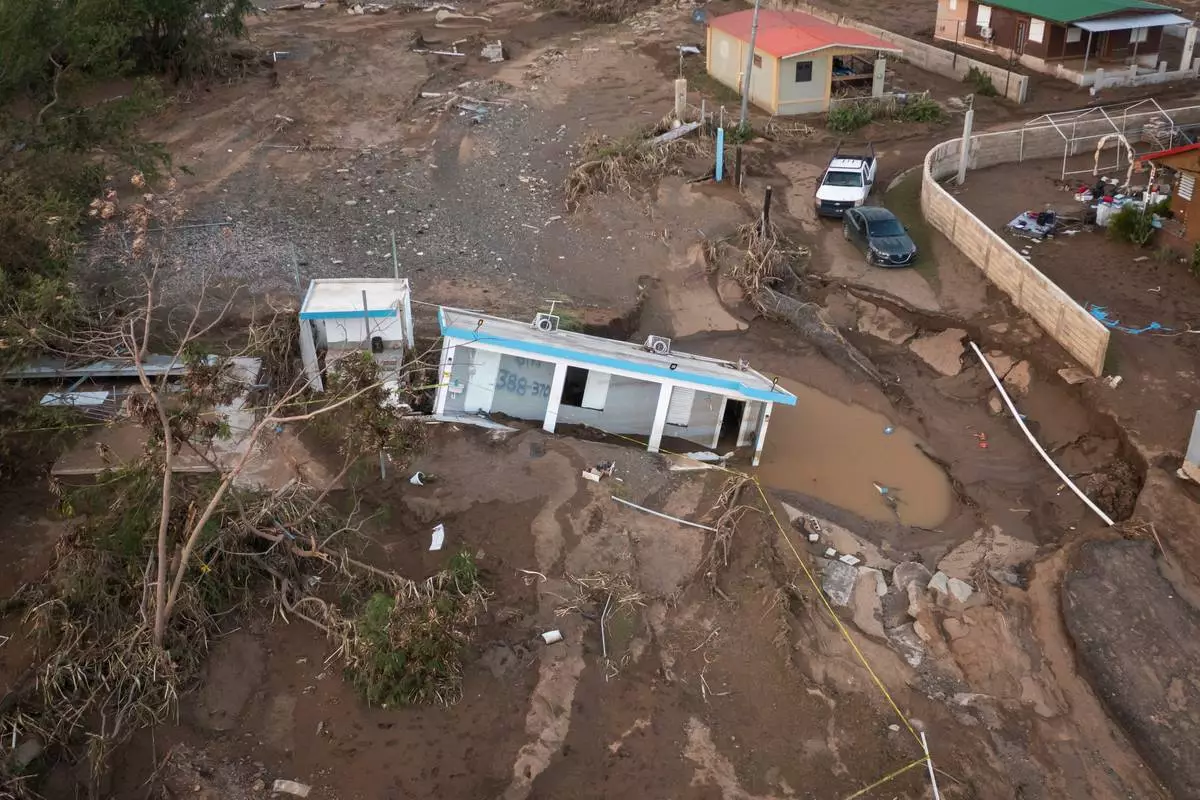
FILE - A house lays in the mud after it was washed away by Hurricane Fiona at Villa Esperanza in Salinas, Puerto Rico, Sept. 21, 2022. (AP Photo/Alejandro Granadillo)