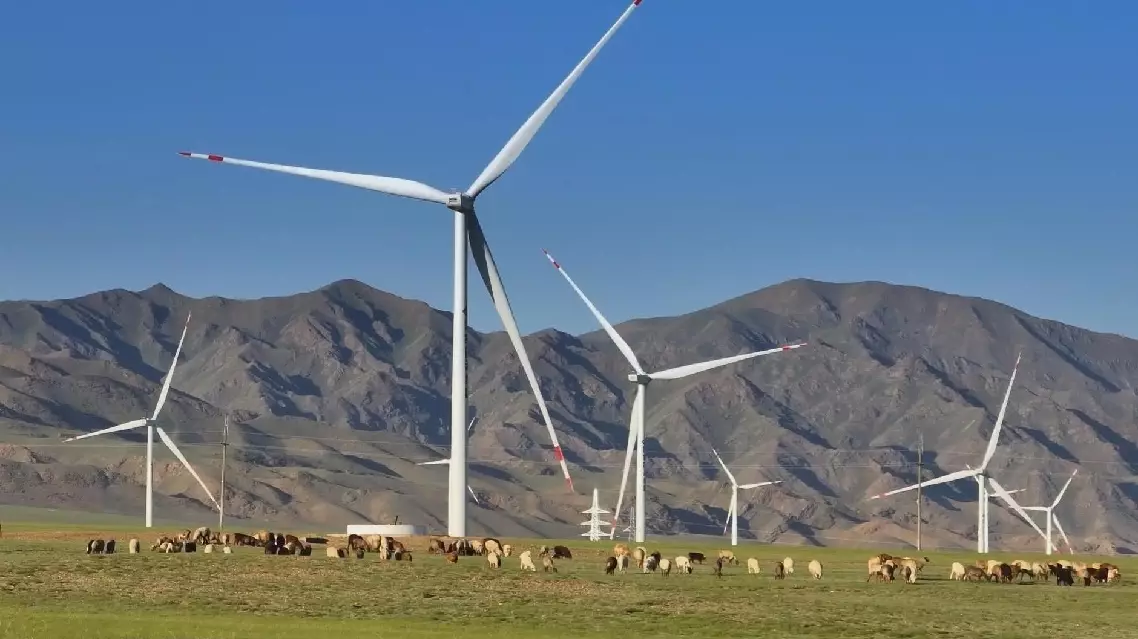
China is expected to add around 300 gigawatts of new wind and solar power capacity in 2026, with renewables continuing to drive the country’s green and low-carbon energy transition, according to the China Renewable Energy Development Report released on Friday.
The report shows that China’s newly installed renewable power generation capacity reached another record high in 2025, accounting for more than 60 percent of global additions.
The country’s total installed renewable energy capacity surpassed 2,337 gigawatts in 2025, while renewables accounted for 82.7 percent of newly installed power capacity, according to the report.
Newly installed distributed solar photovoltaic capacity exceeded 100 gigawatts for the second straight year, accompanied by marked improvements in regional power grid absorption and clean energy utilization.
China's electricity generation from renewable sources reached about 4,000 terawatt-hours. Both wind and photovoltaic power generation crossed the 1,000 terawatt-hours threshold, each contributing more than 10 percent to the country's total power output.
"In 2025, wind and solar power installations achieved leapfrog growth, with the cumulative installed capacity of wind and solar power historically surpassing that of thermal power, further accelerating the pace of power structure transformation. New business forms such as zero-carbon industrial parks, green power direct supply, wind-solar hydrogen production, and photovoltaic-based desert control accelerated their popularization, as clean energy gradually permeated various sectors of the economy and society," said Yi Yuechun, general manager of the China Renewable Energy Engineering Institute.
This year, China's new energy sector will continue following the core path that combines onshore and offshore development, centralized and distributed projects, multiple energy sources working together, and integrated growth. The country will accelerate the construction of renewable energy bases in deserts, the Gobi and other arid areas, while coordinating ecological governance. Offshore wind power projects will also be pushed forward in an orderly manner.
In addition to the expected growth in wind and solar power, China is planning to add more than 50 gigawatts of new grid-connected energy storage capacity in 2026.
"During the 15th Five-Year Plan period (2026-2030), China will prioritize the commencement of a series of deep-sea offshore wind power projects, steadily advance major hydropower projects, actively and orderly develop pumped storage hydropower, and accelerate the planning and construction of integrated wind-solar-hydro power bases along major river basins. The green electricity market will continue to be cultivated and expanded. By 2035, the share of non-fossil energy in China's total primary energy consumption is targeted to reach more than 30 percent, with the combined installed capacity of wind and solar power striving to reach 3,600 gigawatts," said Liu Deshun, chief engineer of the National Energy Administration.
China to add 300 GW of wind, solar power capacity in 2026: report