Skip to Content Facebook Feature Image

Gene Shalit, longtime 'Today' show movie critic with bushy hair and massive mustache, dies at 100

ENT

Gene Shalit, longtime 'Today' show movie critic with bushy hair and massive mustache, dies at 100
ENT

ENT

Gene Shalit, longtime 'Today' show movie critic with bushy hair and massive mustache, dies at 100

2026-06-13 10:57 Last Updated At:16:06

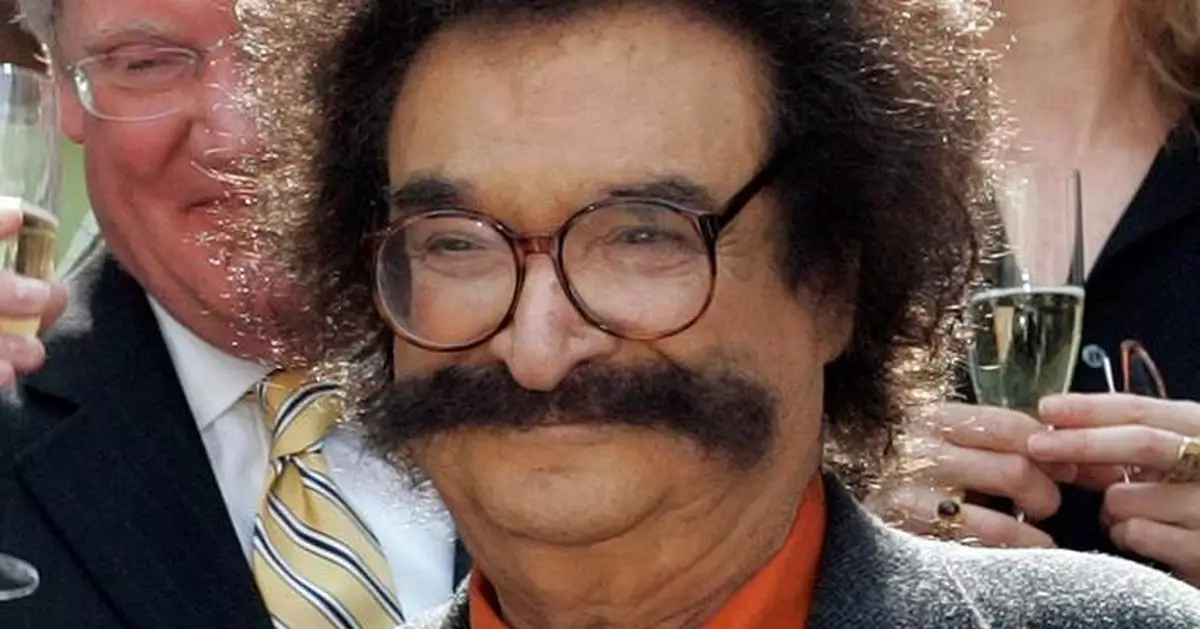
NEW YORK (AP) — Gene Shalit, a movie critic and arts reporter for the “Today” show over four decades who was known for his puffy hair, oversized handlebar mustache and affection for groan-inducing puns, has died. He was 100.

Shalit's family announced the death Friday to NBC News, saying in a statement that he “passed away peacefully today after 100 years of an amazing life.”

Shalit joined “Today” as a contributor in 1970 and became arts editor in 1973, later settling in for his segment, “Critic’s Corner.” When he left the show in 2010, he was one of the last high-profile film critics on a major network.

“What resonated above his unusual appearance was his incredible wit, his remarkable intelligence. But he didn’t pound you over the head with it. He amused you. He enlightened and amused whatever subject he was on,” Guy Ludwig, Shalit’s producer for more than 20 years, wrote in an essay at the time of Shalit's retirement.

It was no coincidence that Chicago critics Roger Ebert and Gene Siskel’s local “thumbs-up, thumbs-down” movie-review program, “Sneak Previews,” went national on PBS in the late 1970s and that “Today” show's ABC rival, “Good Morning America,” hired Joel Siegel to be its movie critic in 1981.

“Shalit was instrumental in changing the balance of critical power in America. When he began his ‘Today’ tenure, newspapers and magazines were the primary sources for movie reviews. That’s where cinematic opinion was sparked and shaped,” The Plain Dealer wrote in 2010, calling Shalit “Daniel Boone in a bow tie and Groucho glasses.”

Shalit started as an entertainment columnist for McCall’s magazine, eventually becoming senior film critic for Look magazine in 1968 and writing for Ladies’ Home Journal. His popularity in magazines led to an offer from NBC.

“No one at NBC had seen him. They’d only read his stuff. So he walked into this executive’s office and the executive took one look at him and said, ‘Mr. Shalit, have you ever thought of radio?’” wrote Ludwig. “They didn’t know how the public would react to someone who looked so different from people who were typically on TV in 1967.”

On the air, Shalit was a middle-of-the-road critic. Of 1986’s classic “Stand By Me,” he said it was different from other movies about youth “because of instead of grossing you out, ‘Stand by You’ is engrossing.”

“Many critics will give so much of the plot of a movie away that they destroy the movie for the viewer. ... I just don’t give away the story,” he told The Associated Press in 1993.

He liked “Enemy at the Gates,” starring Jude Law, calling it “a vivid dramatization of one of history’s titanic turning points.” But he called “Brokeback Mountain “wildly overpraised, but not by me” and drew condemnation from GLAAD for calling Jake Gyllenhaal’s character, Jack, a “sexual predator.” Shalit apologized.

He called “Frozen” “very cool.” He said the oddball title of “The Men Who Stare at Goats” was “heard to bleat,” and his review of “The Lovely Bones” read in part: “There’s no bones about it.”

He began reviewing on air the year of “Patton” and “Love Story” and ended his run with a critique of “Shrek Forever After,” of which he noted that the “bellow fellow is now a mellow fellow.” One highlight of this tenure was his descent into a fit of giggles while interviewing Carol Channing.

He called a remake of “King Kong” so “gargantuan that I must create new words to describe it: fabularious … a brilliantological humongousness of marvelosity.” His take on Steven Spielberg’s adaptation of Alice Walker’s “The Color Purple”: “It should be against the law not to see it.”

In a 1981 interview with John Belushi and Dan Aykroyd, Belushi said Shalit’s hair looked like “an ant farm on fire.” Nevertheless, he peppered his guest with so many questions about their daily life that it felt like therapy. He asked both comedians what their last meals would be. “What do you want to be doing 10 years from now, John Belushi?” Shalit asked. “Fiddler on the Roof” Belushi replied.

During his tenure, he traded quips with anchors ranging from Edwin Newman, Barbara Walters and Jane Pauley to Tom Brokaw, Bryant Gumbel, Katie Couric, Al Roker and Meredith Vieira.

Gumbel was not always a fan, once saying Shalit’s reviews “are often late and his interviews aren’t very good.” The critique came in what was supposed to be a confidential memo to Marty Ryan, the show’s executive producer at the time.

In 1994, while in St. Pete Beach, Florida, to cover Major League Baseball spring training, a car hit Shalit as he was crossing a street and broke his leg. After that, “Today” began recording his movie reviews in his home studio.

He was born in New York and grew up in Morristown, New Jersey, starting his grammar school’s first newspaper before writing a humor column for the newspaper while a student at Morristown High School. He graduated from the University of Illinois in 1949.

Shalit played the bassoon, but he said he started out on the clarinet.

“I didn’t practice for a few weeks and the teacher got furious,” he recalled in 1988, before playing bassoon in a New York City fundraiser. “He took away my clarinet and as punishment he said, ‘From now on, you’re gonna play THIS.’”

In 1987, he edited a book called “Laughing Matters: A Celebration of American Humor,” saying he wanted to introduce and reintroduce such old and new masters of American humor as Mark Twain, James Thurber and Russell Baker.

Shalit was regularly mocked on “Saturday Night Live” by cast member Horatio Sanz, who would appear on the “Weekend Update” desk dressed as Shalit and go on extended, barely coherent rants that punned the title of every movie he reviewed. Shalit also made cameos on “Sesame Street,” “Family Guy” and “SpongeBob SquarePants.”

Shalit was predeceased in 1978 by his wife, Nancy Lewis, and had six children.

This story has been corrected to show that a movie Shalit liked was “Enemy at the Gates,” not “Defiance.” It also removes a reference to Daniel Craig, who was in “Defiance” but not “Enemy at the Gates.”
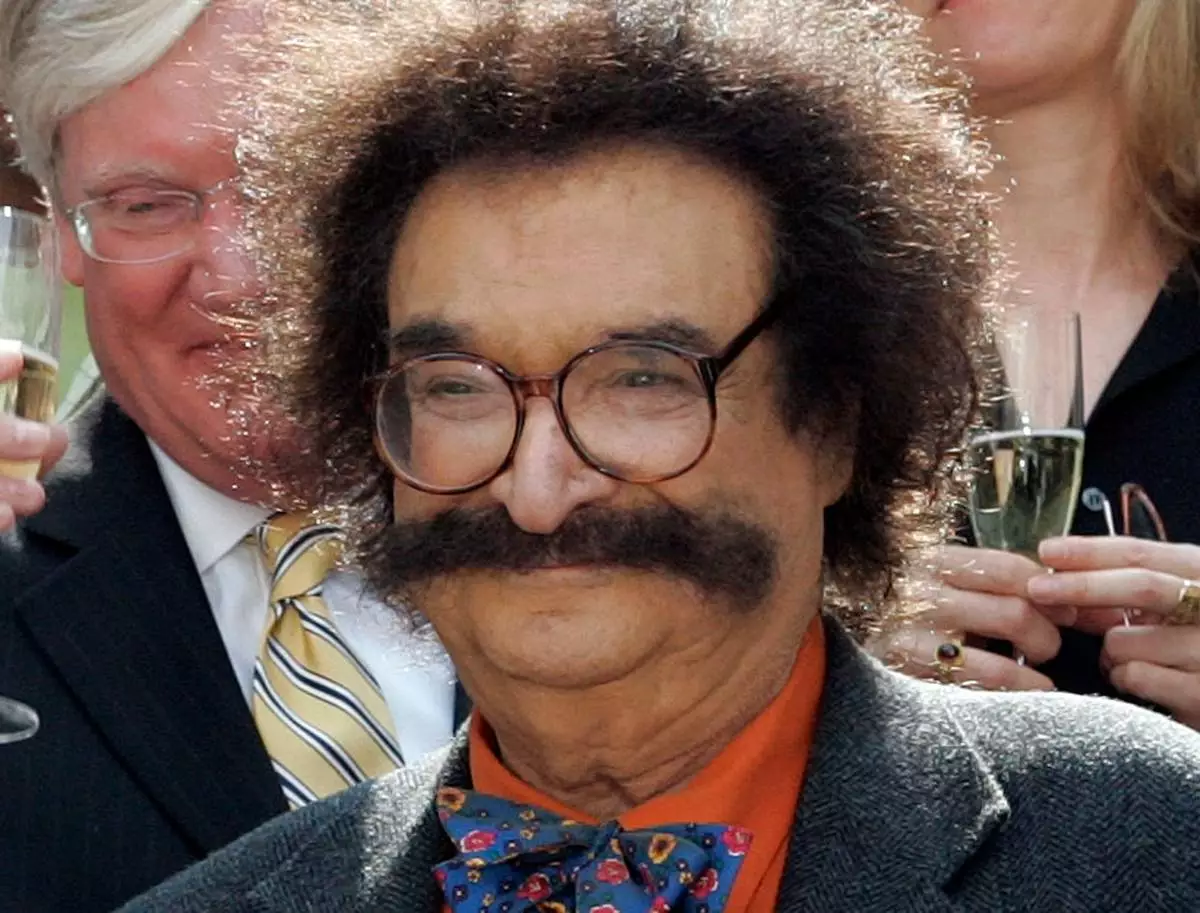
FILE - In this May 31, 2006 file photo, film critic Gene Shalit is seen during a toast with "Today" show cast and crew at the end of Katie Couric's final show, in New York. (AP Photo/Richard Drew, File)

FILE - In this May 31, 2006 file photo, film critic Gene Shalit is seen during a toast with "Today" show cast and crew at the end of Katie Couric's final show, in New York. (AP Photo/Richard Drew, File)
DUBAI, United Arab Emirates (AP) — The U.S. military on Saturday announced its first troop deaths due to direct Iranian fire since the opening days of the war, saying two were killed and another was missing in an attack on a base in Jordan.

They were killed Friday as the U.S. and partner forces defended against ballistic missile and drone attacks, a statement said. Four other service members were medically evacuated to Jordanian hospitals and later discharged. The dead were not identified.

Since the war began, 16 U.S. service members have been killed and over 430 wounded.

Minutes earlier, Iran’s supreme leader warned of “unforgettable lessons” if the U.S. keeps attacking the Islamic Republic. The remarks read out on state TV and attributed to Mojtaba Khamenei, still unseen since the war began, also called President Donald Trump’s signature “worthless and invalid.”

The comments came hours after a negotiator said Tehran was suspending its commitments to the interim deal signed about a month ago and aimed at permanently ending the fighting.

Tehran's declarations snapped another fragile thread as the war shows no end in sight. Now Khamenei warns of “lessons” not only from Iran but its armed proxies in the region, calling them the “Axis of Resistance."

The battle over the Strait of Hormuz has intensified in a conflict increasingly focused on control of the essential waterway that previously carried a fifth of the world's crude oil. The strikes threaten civilians and infrastructure, including desalination plants for drinking water, while the global economy again is on alert.

The U.S. has violated its commitments under the deal that was signed about a month ago and now Iran is “no longer implementing them,” Kazem Gharibabadi, Iran’s deputy foreign minister, told state TV.

There was no new word on mediation efforts.

The most significant damage from Iranian strikes on Saturday occurred in Kuwait, where a water desalination plant and an oil facility were hit, according to the Kuwait authorities and the Kuwait Petroleum Corporation. Both declined to provide locations.

The strikes injured several people at the oil facility and caused a fire at the desalination plant, forcing several power generation units offline. It was the second attack against a desalination plant in two days in the tiny desert nation that depends on desalination for 90% of its drinking water.

Several firefighters and a worker were injured while battling two other blazes sparked by Iranian strikes, according to the Kuwait Fire Force. Kuwait briefly closed its airspace due to missile threats, and Kuwait Airways said it was rescheduling most flights to and from the capital.

Meanwhile, Iraq said it shot down attack drones over the city of Irbil. Jordan’s state-run Petra news agency said the kingdom’s air defense systems had downed Iranian missiles, while air sirens sounded multiple times in Bahrain throughout the day and in Saudi Arabia in the morning, according to their governments.

The secretary general of the six-nation Gulf Cooperation Council, Jasem Mohamed al-Budaiwi, accused Iran of war crimes for strikes on infrastructure and civilian facilities.

The U.S. Central Command said early Saturday that its seventh straight night of strikes hit “surveillance sites, military logistics infrastructure, underground weapons storage, and maritime capabilities.”

U.S. airstrikes hit an electricity and desalination plant in Iran’s southern Hormozgan province, Iranian state TV reported. IRNA said the Bonji desalination plant was destroyed, cutting off water supplies to about 10,000 people, and that a desalination plant on strategic Qeshm Island inside the strait was damaged.

Overnight strikes damaged two tunnels and a bridge, disrupting one of the main highways toward Bandar Abbas, Iran’s main port that sits near the narrowest part of the strait, according to Iran's state-run news agency. IRNA said three bridges were hit Saturday, including one on a route to Bandar Abbas.

Iran acknowledged “attacks on power infrastructure” during the U.S. airstrikes for the first time Friday when its Energy Ministry issued a call for people to use less power in southern provinces “experiencing extreme heat.” It did not specify what was hit.

Iranian authorities said at least 50 people have been killed and more than 500 wounded in U.S. strikes in the past three weeks, including eight killed in a strike on a bridge Friday.

Iran effectively closed the strait to shipping traffic after the war started with U.S. and Israeli strikes on Feb. 28. That sent the price of oil soaring and has given Tehran significant leverage in negotiations.

Iran has said the strait must be under its sole control and that vessels should pay fees to Tehran, even though the world for decades has considered it an international waterway. It fired on ships on recent days. Crossings through the strait fell to a three-week low, according to an international shipping tracker.

Trump has resumed threats to target power stations and bridges to try to compel Iran to loosen its hold. The U.S. in the past week reimposed a naval blockade on Iranian ports to halt its shipments of crude oil.

A growing amount of the region’s energy is being shipped through pipelines, but not nearly enough to offset the decline in shipping.

Before the war began, the U.S. had been in talks with Iran over its nuclear program. Trump now faces political pressure to end the war and avoid the kind of prolonged Middle East conflict he had campaigned against.

Ezzidin reported from Cairo and Toropin from Washington. Associated Press writers Amir Vahdat in Tehran; Melanie Lidman in Tel Aviv, Israel and Stella Martany in Irbil, Iraq contributed to this report.

A man displays a placard with portraits of the current and late supreme leaders and the late Revolutionary Guard Gen. Qassem Soleimani at the Islamic Revolution Square in downtown Tehran, Iran, Saturday, July 18, 2026. (AP Photo/Vahid Salemi)

A man displays a placard with portraits of the current and late supreme leaders and the late Revolutionary Guard Gen. Qassem Soleimani at the Islamic Revolution Square in downtown Tehran, Iran, Saturday, July 18, 2026. (AP Photo/Vahid Salemi)

People look at books which are placed for sale on a street in downtown Tehran, Iran, Saturday, July 18, 2026. (AP Photo/Vahid Salemi)

People look at books which are placed for sale on a street in downtown Tehran, Iran, Saturday, July 18, 2026. (AP Photo/Vahid Salemi)

A woman walks past a mural depicting a portrait of the late Iranian Supreme Leader Ayatollah Ali Khamenei, who was killed in the U.S. and Israel strike on Feb. 28, in downtown Tehran, Iran, Saturday, July 18, 2026. (AP Photo/Vahid Salemi)

A woman walks past a mural depicting a portrait of the late Iranian Supreme Leader Ayatollah Ali Khamenei, who was killed in the U.S. and Israel strike on Feb. 28, in downtown Tehran, Iran, Saturday, July 18, 2026. (AP Photo/Vahid Salemi)

Pro-government demonstrators gather at a square in Tehran, Friday, July 17, 2026. (AP Photo/Vahid Salemi)

Pro-government demonstrators gather at a square in Tehran, Friday, July 17, 2026. (AP Photo/Vahid Salemi)

Pro-government demonstrators gather at a square in Tehran, Friday, July 17, 2026. (AP Photo/Vahid Salemi)

Pro-government demonstrators gather at a square in Tehran, Friday, July 17, 2026. (AP Photo/Vahid Salemi)

Women sit beneath a banner reading in English, "Kill Trump," during a pro-government rally in Tehran, Friday, July 17, 2026. (AP Photo/Vahid Salemi)

Women sit beneath a banner reading in English, "Kill Trump," during a pro-government rally in Tehran, Friday, July 17, 2026. (AP Photo/Vahid Salemi)

Women gather during a pro-government rally as one holds a sign reading in English, "Kill Trump," in Tehran, Friday, July 17, 2026. (AP Photo/Vahid Salemi)

Women gather during a pro-government rally as one holds a sign reading in English, "Kill Trump," in Tehran, Friday, July 17, 2026. (AP Photo/Vahid Salemi)

Pro-government demonstrators gather at a square in Tehran, Friday, July 17, 2026. (AP Photo/Vahid Salemi)

Pro-government demonstrators gather at a square in Tehran, Friday, July 17, 2026. (AP Photo/Vahid Salemi)

Recommended Articles