WASHINGTON (AP) — President Donald Trump said Friday that a “swift and lethal kinetic” U.S. strike has killed Hector Rusthenford Guerrero Flores, whom he called “the infamous leader” of the Tren de Aragua gang.
Tren de Aragua has been labeled by the United States as a terrorist organization. Guerrero Flores was charged in a New York federal court with racketeering conspiracy and other crimes, including lending support to terrorists in crimes that stretched more than a decade, authorities announced in December.
Defense Secretary Pete Hegseth posted on X that the strike occurred earlier in the week on a Tren de Aragua compound in Venezuela.
U.S. Attorney Jay Clayton said at the time that the gang is responsible for countless acts of violence, extortion and drug trafficking in North America, South America and Europe. Trump nominated Clayton on Thursday to be director of national intelligence.
The U.S. State Department had offered rewards of up to $5 million for information leading to Guerrero Flores’ arrest
In a post on his social media site, Trump wrote, “Tren de Aragua terrorists no longer have safe haven in Venezuela or anywhere else and, under my leadership, we will find these vicious murderers and drug lords anytime, anyplace, and send them to the depths of hell where they belong.” Trump's post referred to Guerrero Flores by his alias, “Niño Guerrero.”
The post also included unclassified video, shot from above, of a small building with a green roof exploding.
Hegseth said, “The operation underscores the shared U.S. and Venezuelan commitment to take the fight to narco-terrorists and deny them any safe haven in our hemisphere.”
Venezuela’s ministry of communications did not immediately respond to a request for comment on the operation.
Trump has taken a series of extraordinary actions against the gang, including a series of strikes on small boats his administration has accused of smuggling drugs to America. At least 207 people have been killed in boat strikes by the U.S. military in the eastern Pacific Ocean and Caribbean Sea since the Trump administration began targeting those it calls “narcoterrorists” in early September.
Trump and administration officials have consistently blamed Tren de Aragua for being at the root of the violence and illicit drug dealing that plague some U.S. cities. The president spent months repeating the claim — contradicted by a declassified U.S. intelligence assessment — that Tren de Aragua had operated under Venezuelan President Nicolás Maduro’s control. The U.S. whisked Maduro out of Venezuela to face U.S. drug charges in January.
Tren de Aragua originated more than a decade ago at an infamously lawless prison with hardened criminals in Venezuela’s central state of Aragua. The gang has expanded in recent years as millions of Venezuelans migrated to other Latin American countries or the U.S. in search of better living conditions.
Guerrero Flores returned to the prison in Aragua for murder and other convictions in 2013, when Venezuela’s crisis began as corruption, mismanagement and a drop in crude prices wrecked the oil-dependent economy. Guerrero Flores and a few other inmates saw a profitable opportunity as the government neglected prisons.
They assumed control and administration of the prison, establishing a system that controlled the entire inmate population through force and extortion. Over time, they transformed the facility into a sort of city that included a zoo, baseball field, casino and restaurants. Guerrero Flores had his own lavish suite.
The size of the gang is unclear. Countries with large populations of Venezuelan migrants, including Peru and Colombia, have accused the group of being behind a spree of violence in the region. Still, unlike other criminal organizations from Colombia, Central America and Brazil, Tren de Aragua has no large-scale involvement in smuggling cocaine across international borders, according to InSight Crime, a think tank that tracks crime across Latin America.
In Venezuela, gang leaders have long been known to participate in various illegal activities, including gold mining.
Trump campaigned for a second term promising to crack down on immigration and crime. While polls show his favorability ratings have sagged on his handling of the economy, immigration remains Trump’s strongest issue, according to the AP-NORC Center for Public Affairs Research.
__
Associated Press writer Regina Garcia Cano in Mexico City contributed.
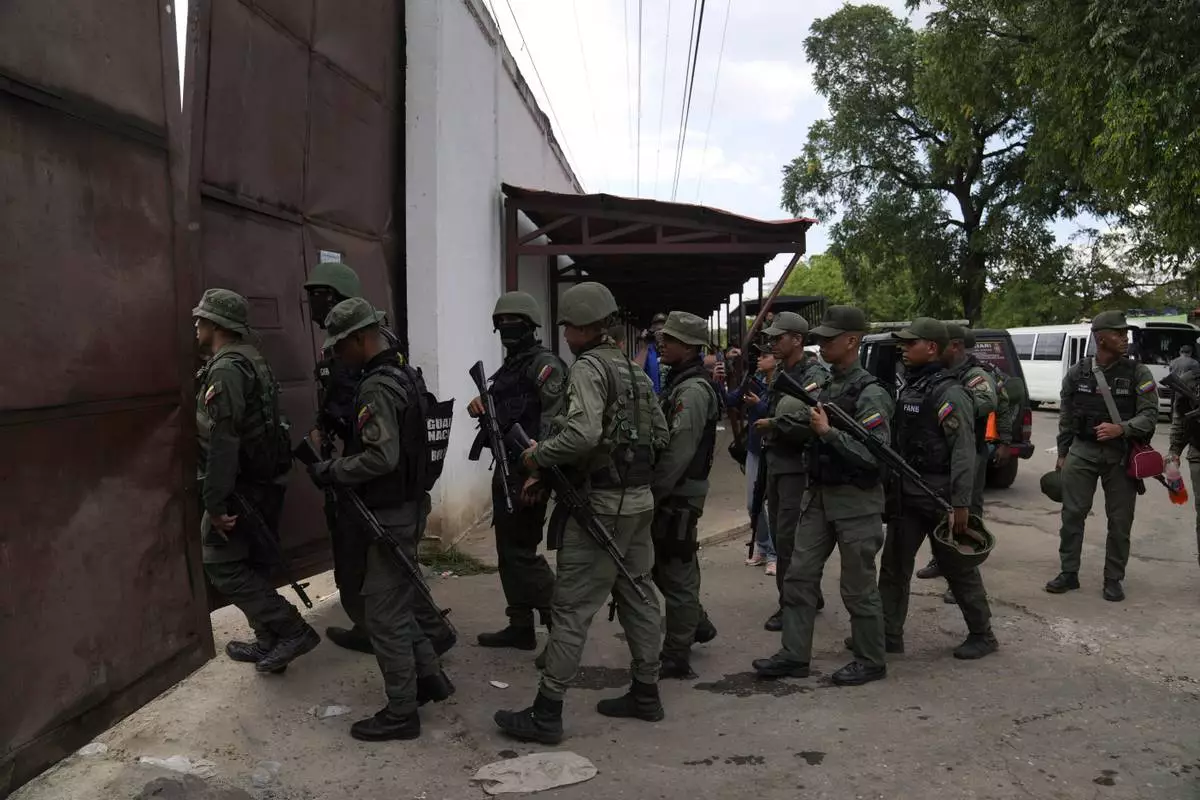
FILE - Soldiers raid the Tocorón Penitentiary Center, where the Tren de Aragua gang originated, in Tocorón, Venezuela, Sept. 20, 2023. (AP Photo/Ariana Cubillos, File)
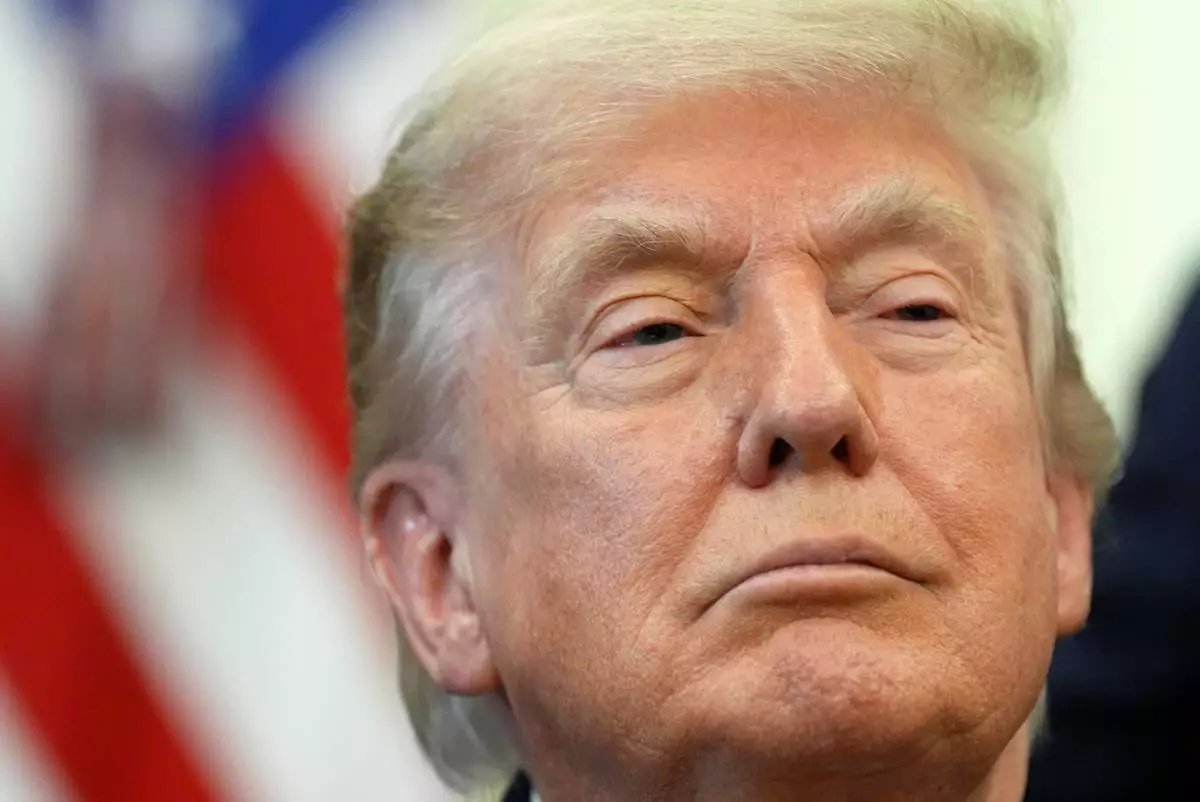
President Donald Trump is pictured during an event where he signs a proclamation about the fishing industry, in the Oval Office of the White House, Thursday, June 11, 2026, in Washington. (AP Photo/Jacquelyn Martin)
MONTGOMERY, Ala. (AP) — Alabama on Friday asked permission to execute a man by lethal injection after court rulings blocked the use of nitrogen gas and cast doubt on the future of the state’s gas method.
The Alabama Attorney General’s office filed a motion asking the Alabama Supreme Court to authorize a death warrant for Jeffery Lee, this time using lethal injection. The request came less than 24 hours after the state was thwarted in plans to use nitrogen to execute Lee, who was convicted of killing two people during a 1998 robbery.
“In sum, ADOC has not been barred from executing Lee, only from executing him by nitrogen hypoxia,” state lawyers wrote.
A spokesperson for Lee’s legal team said they did not have an immediate comment on the action. The next step is for his attorneys to respond to the request at the Alabama Supreme Court.
The U.S. Supreme Court on Thursday night refused to lift an injunction blocking the state from executing Lee with nitrogen gas. A district judge issued the injunction after finding the state’s nitrogen protocol violated the ban on cruel and unusual punishments established in the Constitution's Eighth Amendment. The injunction, however, did not block the state from using one of its other authorized methods, lethal injection or the electric chair, to put Lee to death.
A spokesperson for Alabama Attorney General Steve Marshall declined to comment Friday, citing the pending litigation. Marshall on Thursday said he would “never stop seeking justice” for Lee’s victims.
“The State is prepared to do whatever is necessary to see Mr. Lee’s lawful sentence carried out,” Marshall said Thursday.
The development came after a week of legal rulings that cast doubt on the future of nitrogen executions, a method the state began using in 2024. It involves strapping a respirator to a person’s face and replacing breathable air with pure nitrogen gas, causing death from lack of oxygen.
Lee filed a lawsuit in 2025 challenging the constitutionality of the state’s nitrogen protocol. U.S. District Judge Emily C. Marks, after holding a three-day bench trial, initially ruled the method constitutional. However, a three-judge appellate panel on Monday reversed part of her conclusions and sent the case back. Marks issued a new finding Tuesday that the state’s execution protocol violates the Eighth Amendment and permanently enjoined the state from using it to execute Lee.
The state asked the U.S. Supreme Court to stay the injunction so Lee’s execution could go forward Thursday night. The court on Thursday declined to do so. The high court voted 6-3 and did not explain its reasoning. Three of the conservative justices — Clarence Thomas, Samuel Alito, and Neil Gorsuch — said they would grant Alabama’s request to lift the injunction and let the execution go forward.
The Supreme Court decision was only a ruling on Alabama’s emergency request to stay or lift the injunction. The court has not made a merits decision on the constitutionality of using nitrogen gas, said Robin Maher executive director of the Death Penalty Information Center. However, Maher said there is now a very significant ruling by a district judge that “this method, as Alabama has chosen to use it, is unconstitutional.”
“Anyone else who’s facing a potential execution in Alabama, in which the state intends to use nitrogen gas, will argue that the very same equities that resulted in Alabama being prohibited from using it in Mr. Lee’s case should also prohibit the state from using it in their case,” Maher said.
Lee was convicted of two counts of capital murder for killing Jimmy Ellis and Elaine Thompson while robbing a pawnshop on Dec. 12, 1998. Prosecutors said Lee entered Jimmy’s Pawnshop with a sawed-off shotgun and shot Ellis, the owner of the store, and Thompson, a store employee.
Nitrogen has been used in eight executions in the United States — seven times in Alabama and once in Louisiana. Lee was scheduled to be the ninth.
Alabama could appeal the case back to the Supreme Court, which so far has never ruled a state’s execution method unconstitutional.
Deborah W. Denno, a professor at Fordham Law School, said it’s difficult to predict what will happen.
“What seems pretty clear to me is that Alabama is going to have a very hard time carrying out a nitrogen hypoxia execution. It’s basically three courts telling you they can’t do that,” Denno said.
The Alabama Supreme Court recently authorized a nitrogen execution for another Alabama inmate, Michael Taylor. His lawyers asked the court to recall the warrant in the wake of what happened with Lee’s case. His lawyers wrote they don’t suggest the Supreme Court's “denial of emergency relief constitutes a ruling on the merits of the State’s appeal” but said the state shouldn't move ahead for now.
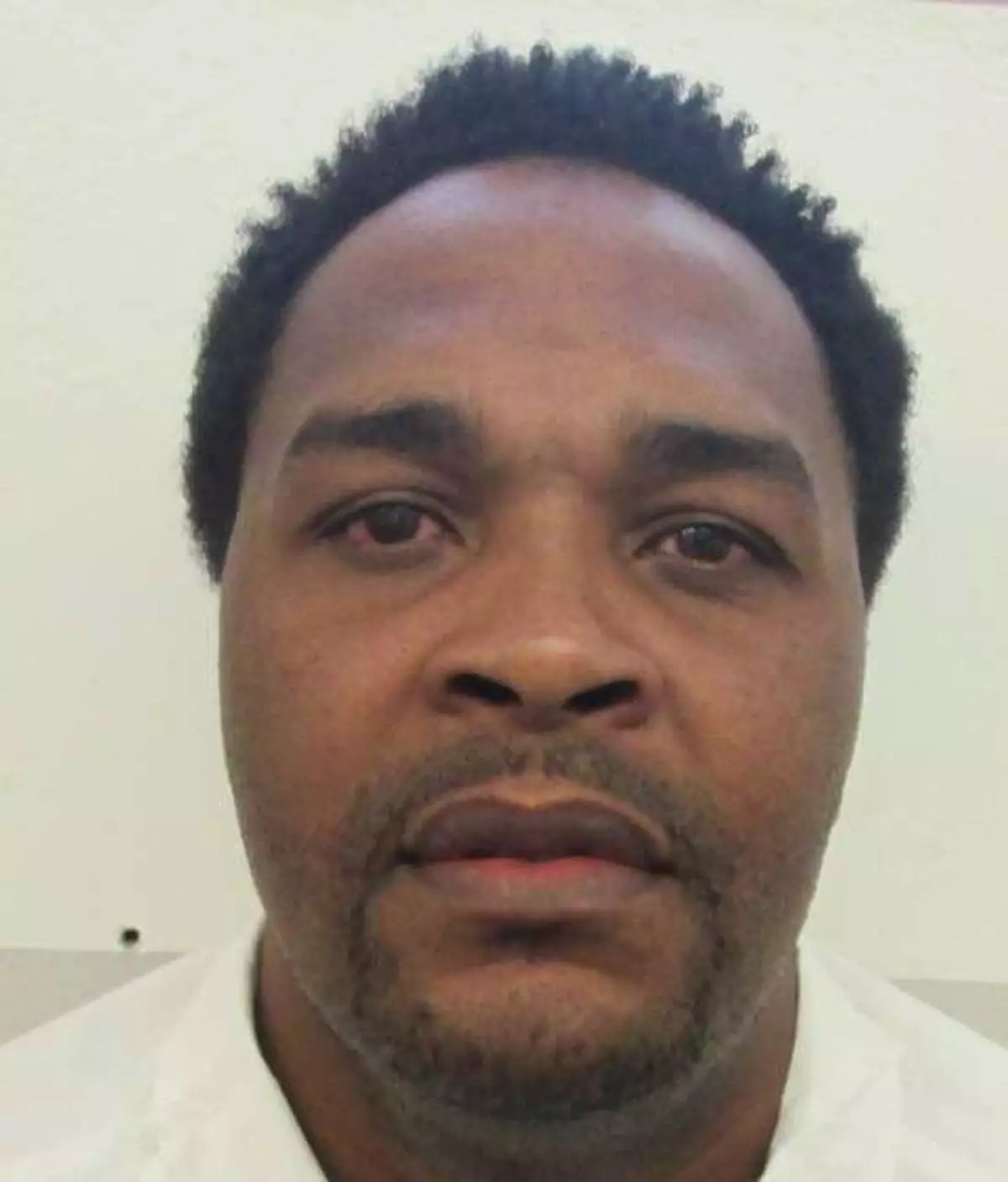
This undated photo from the Alabama Department of Corrections shows Jeffery Lee, who was sentenced to death for killing two people during a 1998 robbery at a pawn shop. (Alabama Department of Corrections via AP)
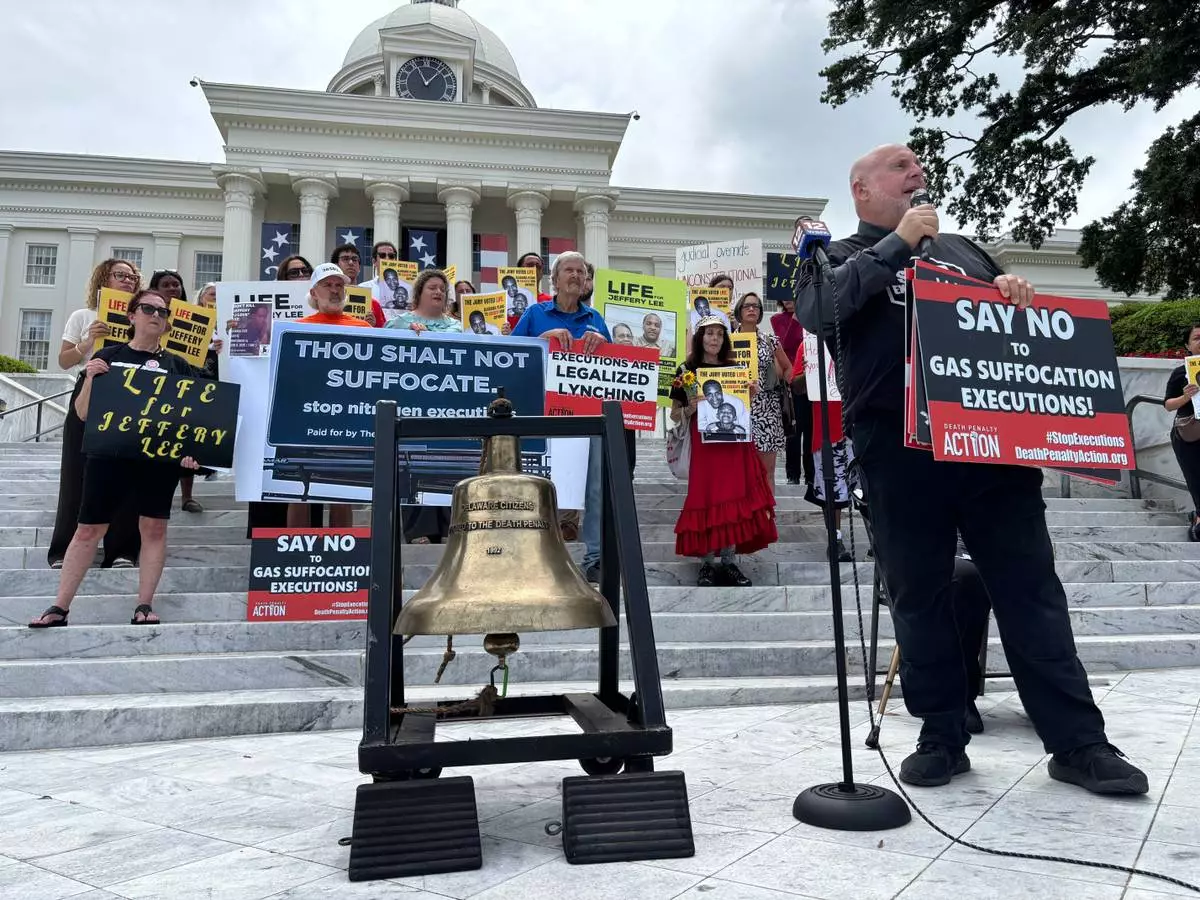
Abraham Bonowitz, of the group Death Penalty Action, leads a demonstration outside the Capitol in Montgomery, Ala., on Monday, June 8, 2026, to oppose an upcoming execution in Alabama. (AP Photo/Kim Chandler)
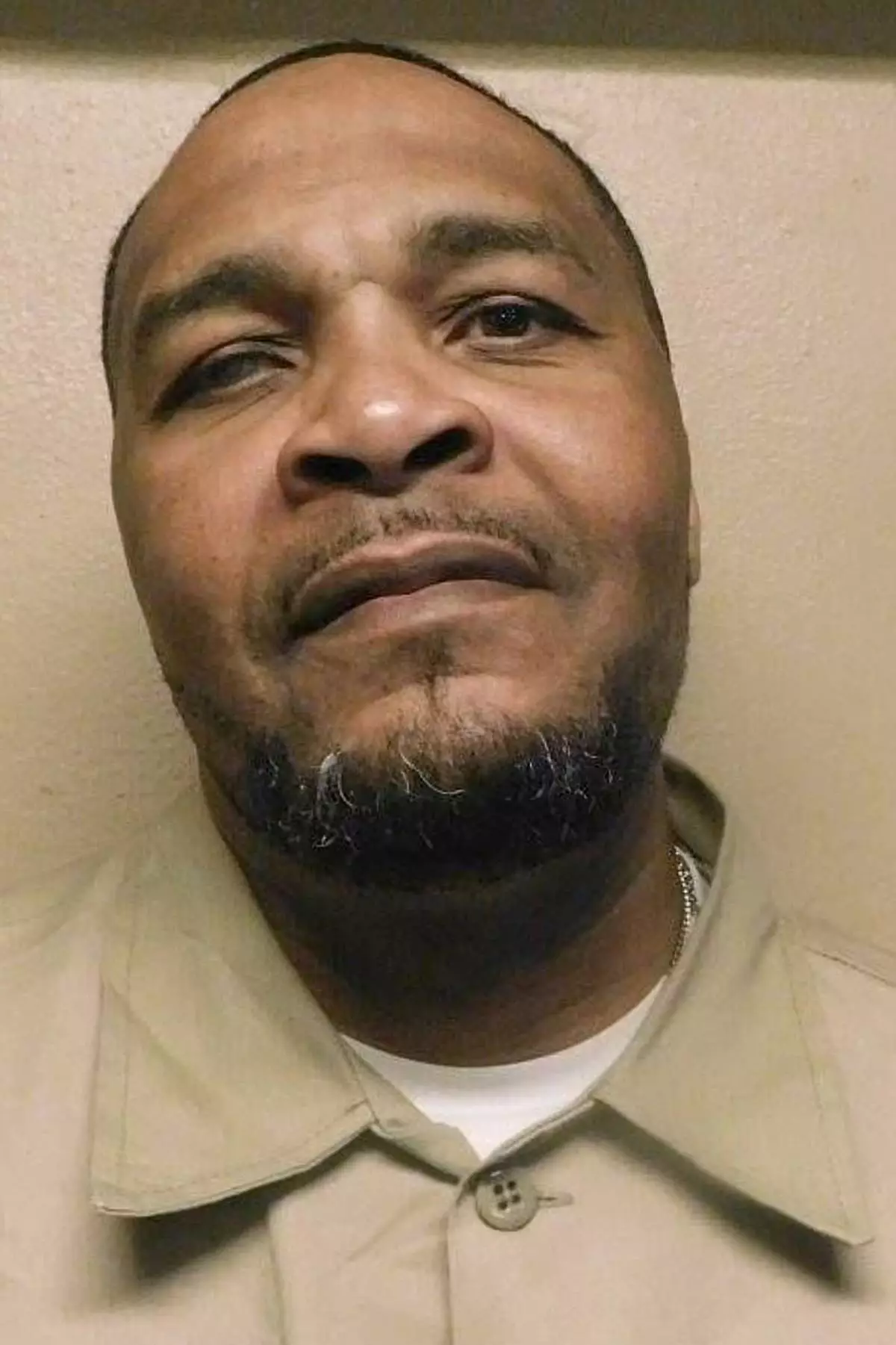
This undated photo provided by the Alabama Department of Corrections on Thursday, June 11, 2026, shows Jeffery Lee, who was sentenced to death for killing two people during a 1998 robbery at a pawn shop. (Alabama Department of Corrections via AP)
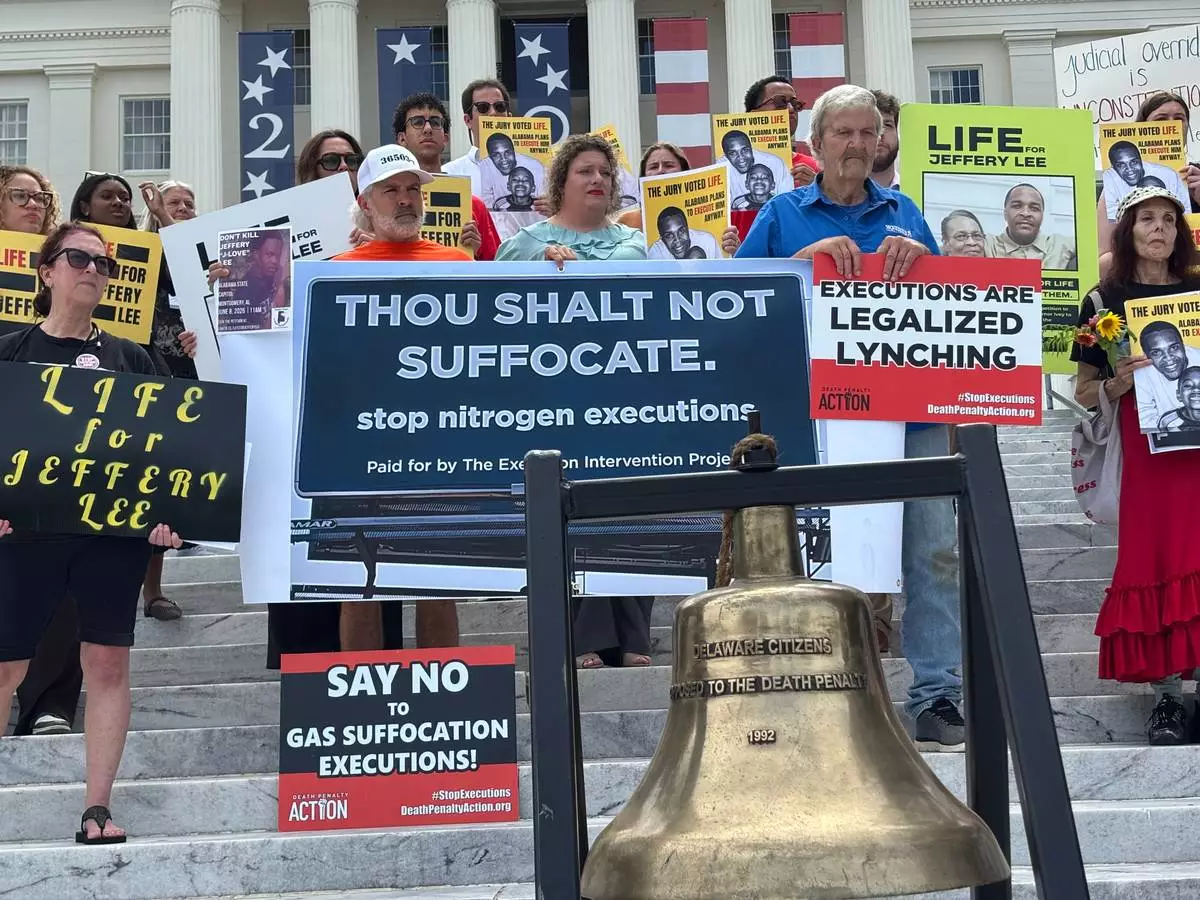
Protesters gather outside the Capitol in Montgomery, Ala., on Monday, June 8, 2026, to oppose an upcoming execution in Alabama. (AP Photo/Kim Chandler)