FRANKFORT, Ky. (AP) — A coalition that includes Kalshi, Crypto.com and Polymarket filed a lawsuit Friday challenging Kentucky's first-in-the-nation excise tax on prediction markets.
The Kentucky General Assembly in April enacted a 14.25% tax on prediction market operators' transaction fees, a levy the lawsuit says is discriminatory, unconstitutional and preempted by federal law.
Prediction markets are platforms where customers can buy, sell or trade event contracts — a form of derivative that allow placing trades based on whether real-world events, such as election results or economic indicators, will or won't happen.
The new tax is higher than for Kentucky's “favored incumbent industry,” the lawsuit filed in state court by the Coalition for Fair Markets says, noting a 9.75% tax on wagers at horse tracks.
In a statement using gambling terminology, Kentucky Attorney General Russell Coleman vowed to fight the legal challenge.
“You can bet our Office will defend these statutes and the people of our Commonwealth from out-of-state companies that seek to cancel Kentucky’s sports betting laws," he said. “In any courtroom, the attorneys with the AG’s Office are the odds-on favorite to win.”
The tax disincentivizes the operation of prediction markets in Kentucky, the lawsuit says.
“No State currently levies a State-specific excise tax of any kind on derivatives transactions that take place on a federally designated exchange, let alone the sort of specifically targeted and discriminatory tax that Kentucky has imposed here," it says.
Taxing federally regulated markets “just pushes people toward illegal platforms with no oversight and no protections,” Kalshi said in a statement. "Kalshi is an American company, regulated here at home, and we’re joining the fight for Kentuckians’ access to safe, legal markets.”
Prediction markets have been pushing hard to gain legitimacy among the public and policymakers as a legitimate platform where users can bet on everything from sports to the weather to geopolitical events.
There have been several incidents where traders have used inside information to profit on prediction market platforms. It was recently disclosed that former former Congressman George Santos was under investigation for allegedly illegally betting he wouldn’t attend President Donald Trump’s State of the Union address after initially saying he would. In April, a U.S. Army soldier was charged with using classified information to make a $400,000 profit trading on Polymarket on the timing of the U.S. military operations in Venezuela earlier this year.

FILE - The prediction market app Polymarket is displayed on a mobile phone Thursday, April 16, 2026, in Chicago. (AP Photo/Erin Hooley, File)
FILE - The logo for crypto.com appears on a mobile phone and computer screen, in New York, Jan. 31, 2023. (AP Photo/Richard Drew, File)

FILE - An ad for the prediction market app Kalshi is displayed on a mobile phone on April 16, 2026, in Chicago. (AP Photo/Erin Hooley, File)
The Supreme Court has rejected President Donald Trump’s bid to restrict mail ballots for the midterm elections, capping a flurry of last-minute legal action with voting already underway. The decision allows states to continue sending out mail ballots under the same processes they’ve used for years. Nearly a third of U.S. voters cast their ballots by mail.
A federal whistleblower says a last-ditch Trump administration effort to hunt for noncitizen voters ahead of November’s elections is requiring federal employees to misrepresent themselves on voter lookup tools in a way that likely violates state laws.
And the Federal Reserve is widely expected to lift its short-term interest rate Wednesday for the first time in three years to fight stubbornly high inflation, despite Trump's lobbying for a cut.
Here’s the Latest:
Air Force Secretary Troy Meink told the Air and Space Cyber Conference in Maryland on Monday that the U.S. has fielded “on-orbit space control weapons capable of defending the Joint Force against hostile adversary action.”
He didn’t say what the weapons are or how they work. In 2024 the U.S. said Russia was developing a new anti-satellite weapon that could be launched from space. At the time the White House said the danger wasn’t imminent, but it raised concerns about threats to U.S. infrastructure that depends on satellite communications.
Meink, who has overseen the Space Force, predicted the service would look “radically different” by 2032 — for example, with one-way attack drones replacing artillery as the “primary killer.”
“We are increasing readiness against existing threats,” he said.
The technology industry’s increasingly urgent warnings about the potential harm of artificial intelligence are slamming into political intransigence in Washington, offering a fresh test of the federal government’s willingness and ability to confront what may become a defining issue of the era.
Trump is leading the opposition to recent calls by tech leaders seeking greater government oversight.
The president dismissed efforts to limit the technology on Monday as a “conspiracy.” House Speaker Mike Johnson has largely deferred to the White House.
Democrats, meanwhile, are pressing for a more robust response, convening in private on Tuesday in the House to discuss AI. Sen. Bernie Sanders, I-Vt., is hosting his colleagues for a briefing with experts on Wednesday.
The contrasting responses illustrate a yawning disconnect emerging between a tech sector warning of AI’s existential threats to humanity and a federal government often struggling to accomplish basic functions under the weight of intense partisanship and election-year pressure.
▶ Read more
A last-ditch Trump administration effort to hunt for noncitizen voters ahead of November’s elections is requiring federal employees to misrepresent themselves on voter lookup tools in a way that likely violates state laws, according to a federal whistleblower’s statement released Monday.
The Department of Homeland Security probe known as the “Unlawful Voter Initiative” also asks employees to create federal law enforcement records about voters based on unreliable data, the account warns. That could potentially wrongly implicate U.S. citizens in official documentation that could spur further investigation.
The anonymous, nearly 30-page disclosure was published Monday by Democratic Senate Minority Leader Chuck Schumer of New York and Democratic Sen. Alex Padilla of California, the ranking member of a Senate committee overseeing federal elections.
Padilla and Schumer said Monday the initiative was an example of Trump attempting to interfere in elections and the short timelines would impede officials from conducting proper investigations. They noted that the data DHS has on voters can be unreliable and differ from state records, making any federal findings based on that data potentially problematic.
▶ Read more
The Federal Reserve is widely expected to lift its short-term interest rate Wednesday for the first time in three years to fight stubbornly high inflation, a move that would put the central bank at odds with President Donald Trump’s support for a cut.
An increase in the Fed’s rate, currently about 3.6%, isn’t guaranteed because Fed Chair Kevin Warsh doesn’t provide the signals about next moves that his predecessors did. Still, most analysts and economists expect a hike after a speech two weeks ago at the Fed’s annual conference in Jackson Hole, Wyoming, in which Warsh argued that the Fed had not yet achieved its goal of putting inflation in check.
A rate hike would throw another sharp shift into a volatile period for the economy and financial markets. As recently as March, the Fed had forecast it would cut its rate once this year. But with the Iran war flaring up again and causing sharp increases in oil and gas prices, inflation is likely to remain higher than the Fed’s 2% target for even longer.
▶ Read more
The Supreme Court on Monday rejected President Donald Trump’s bid to restrict mail ballots for the midterm elections, capping a flurry of last-minute legal action with voting already underway.
The decision allows states to continue sending out mail ballots under the same processes they’ve used for years and have accounted for nearly a third of votes cast.
It represented a stark defeat for Trump on an issue he consistently has emphasized as vital to ensuring election integrity even though there is virtually no evidence of fraud with mail ballots.
The Supreme Court majority wrote that the administration’s push to implement the restrictions this year is likely to lose in court, though the brief emergency order didn’t detail its reasoning. Two justices, Samuel Alito and Clarence Thomas, publicly dissented.
The Trump administration had asked the justices, once again at the center of a roiling political controversy, to clear the way for restrictions before the pivotal November contests for control of Congress.
▶ Read more
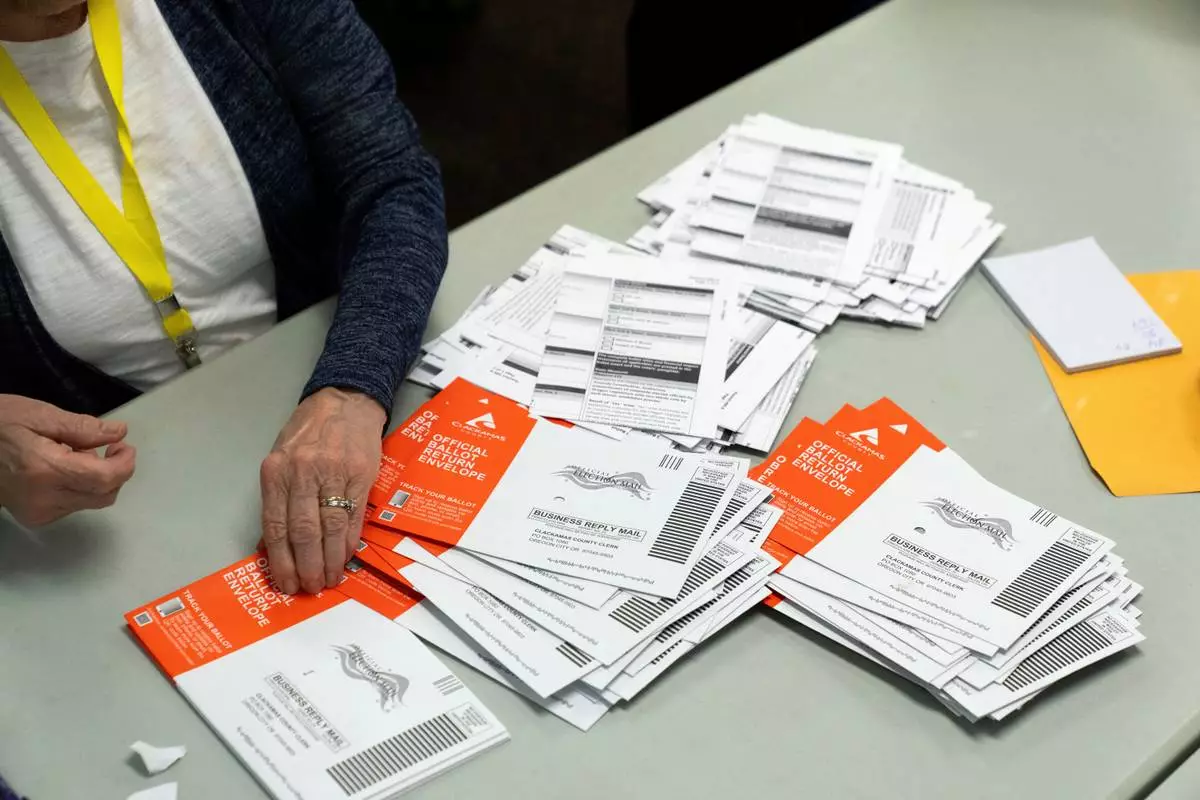
FILE - An election worker reaches for an unopened ballot during sorting at the Clackamas County Elections office, Nov. 7, 2024, in Oregon City, Ore. (AP Photo/Jenny Kane, File)
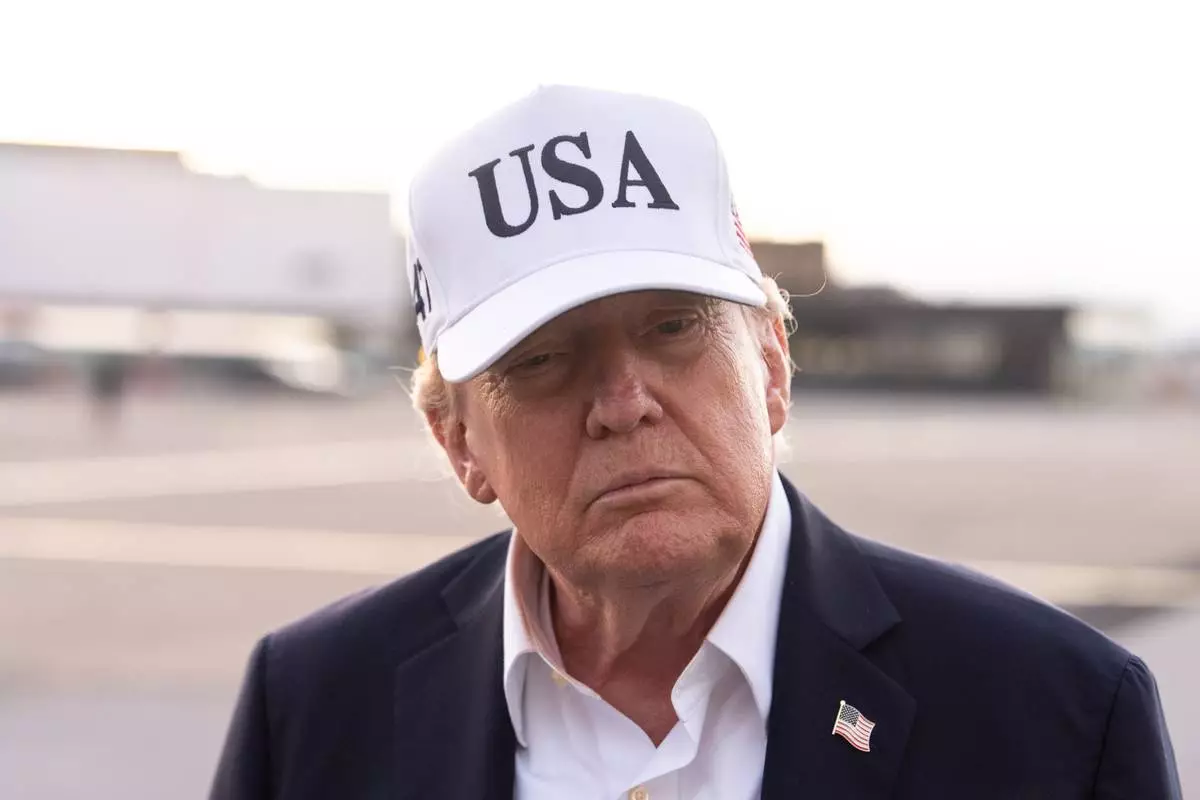
President Donald Trump speaks with reporters before boarding Air Force One at Shannon Airport, Sunday, Sept. 13, 2026, in Shannon, Ireland. (AP Photo/Julia Demaree Nikhinson)

Protestor, Linda James, poses for photo with her "VOTE" sash at the Dallas March on the RNC Midterm Convention in Dallas, Thursday, Sept. 10, 2026. (AP Photo/Gabriela Passos)