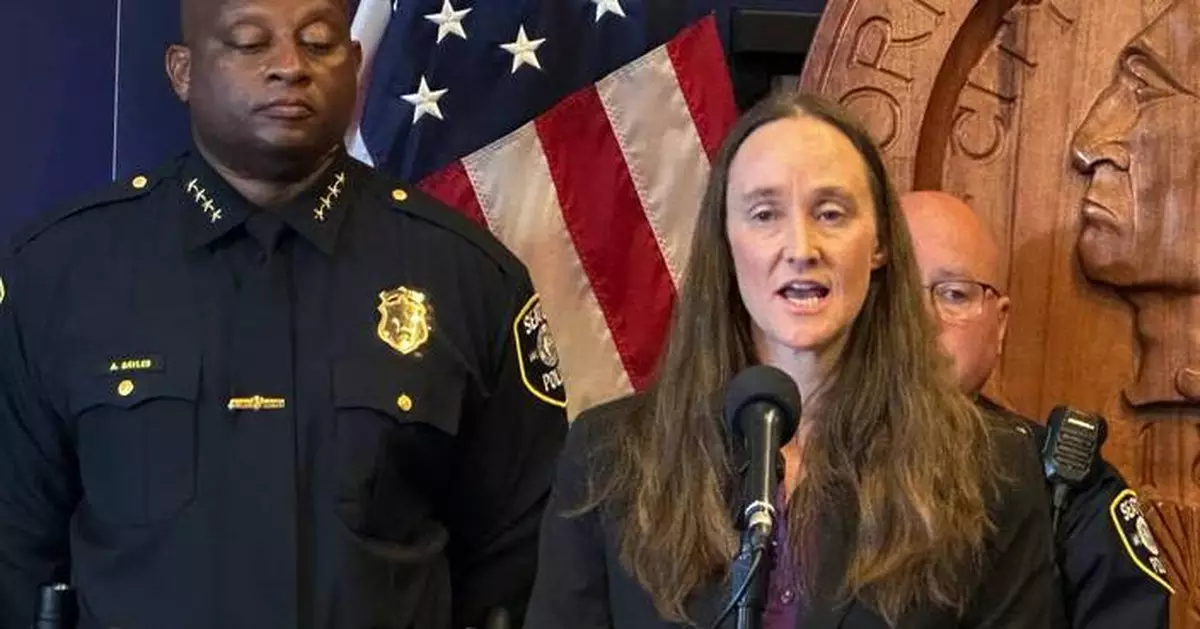
SEATTLE (AP) — Seattle Mayor Katie Wilson on Friday defended her decision to oust the city's police chief as the “right decision at the right time,” but she declined to explain why.
The leadership change came as police continue searching for people involved in a fatal, gang-related shootout at a food festival near the Space Needle last weekend. A 15-year-old was arrested at the scene and has been charged with assault, but charging documents say the gun he was seen firing wasn't involved in the deaths of two bystanders.
Wilson and then-Police Chief Shon Barnes faced criticism for being slow to release key information about the shootout on Sunday, including whether suspects remained at large.
Barnes, who was the city's second Black police chief, has been credited with boosting the recruitment of officers and helping reduce crime downtown. A number of Black community organizations, a major business group and several City Council members issued statements criticizing Wilson's decision to replace him Thursday.
At a news conference Friday with Andre Sayles, a Seattle deputy chief the mayor named as interim chief, Wilson credited Barnes for his service and said that as mayor she had a clearer window into the operations at the Seattle Police Department than her critics.
The lack of communication about a mass shooting at a major public event in Seattle was not the only reason she asked Barnes to resign, she said.
“There were multiple factors,” Wilson said. “The events of Sunday played into it.”
Sayles told the news conference the department would boost police staffing at public festivals for the remainder of the summer. He also said he believed investigators are close to finding and arresting additional suspects in the shootout.
The gunfire erupted in the waning hours of the Bite of Seattle, an annual three-day festival that draws hundreds of food and retail vendors and performers. Three people, including a suspect, were killed, and four people were wounded. One of the people injured was a 2-year-old boy.
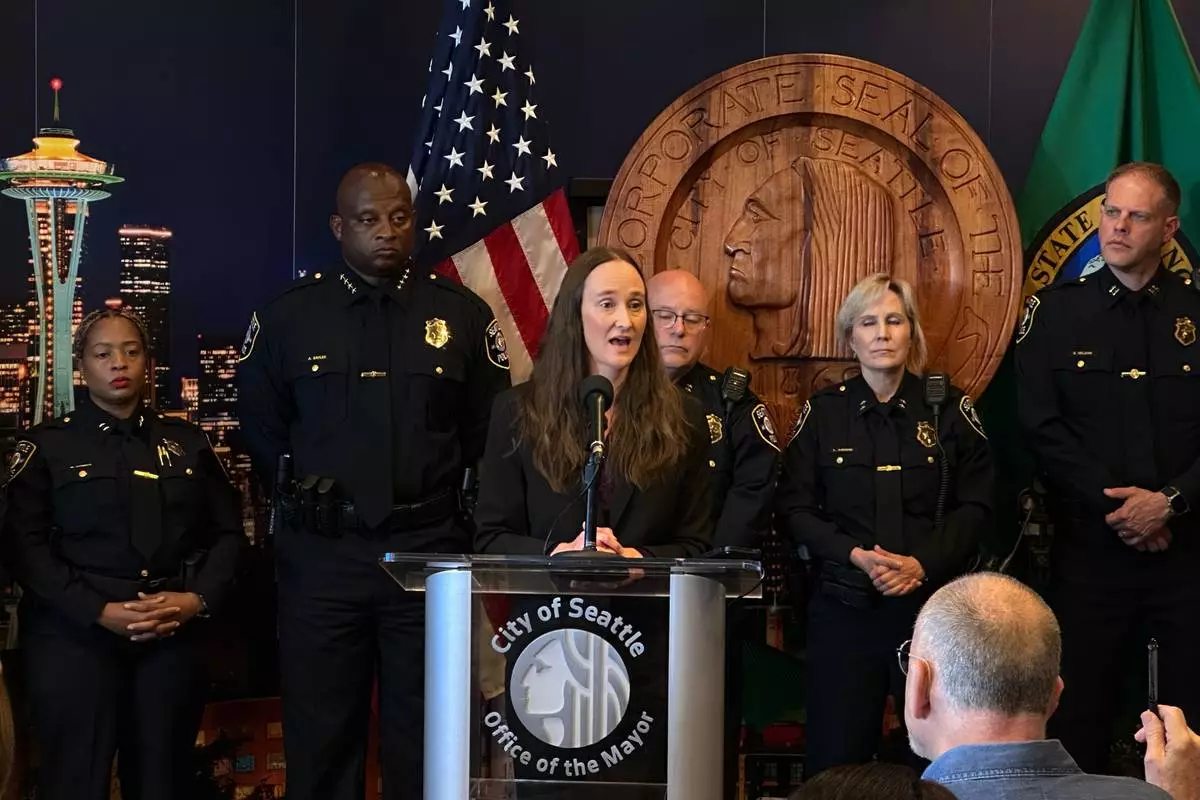
Seattle Mayor Katie Wilson holds a news conference to introduce Andre Sayles as interim police chief on Friday, July 31, 2026 in Seattle. (AP Photo/Manuel Valdes)
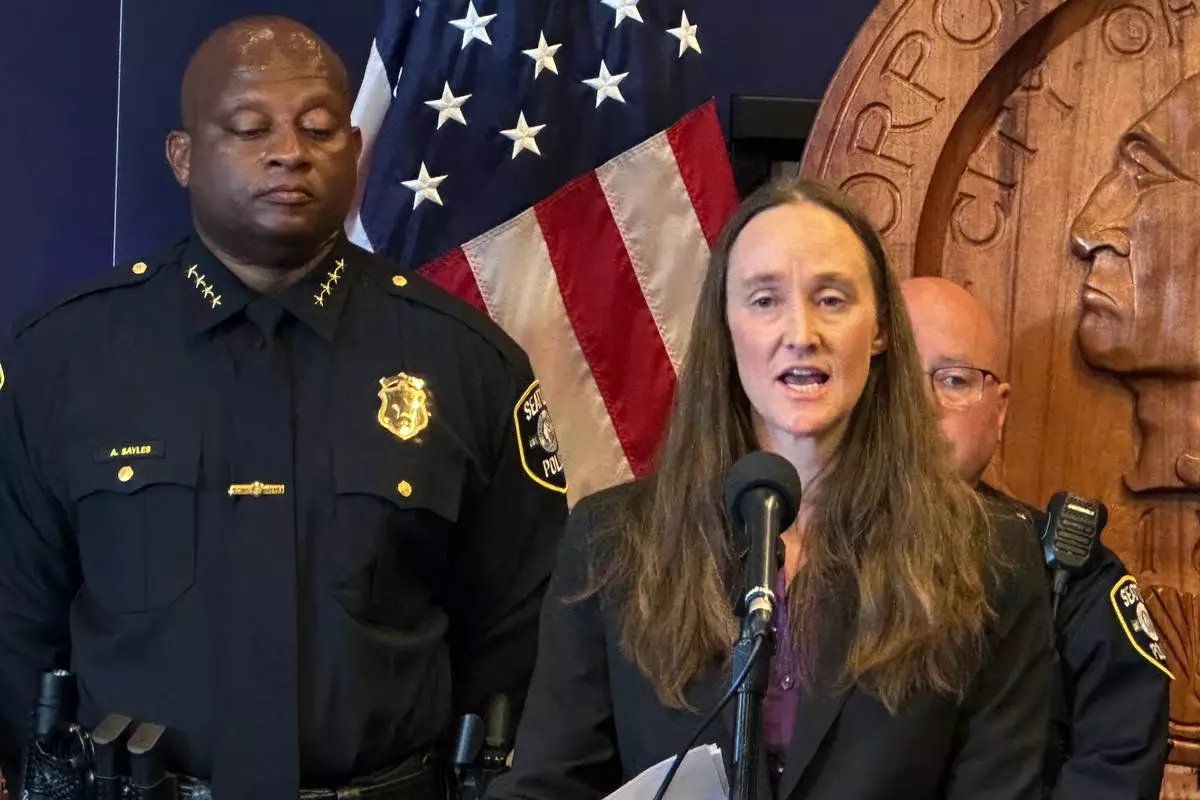
Seattle Mayor Katie Wilson holds a news conference to introduce Andre Sayles as interim police chief on Friday, July 31, 2026 in Seattle. (AP Photo/Manuel Valdes)
The Big Ten and Southeastern Conferences agreed Friday night to support a Senate bill that seeks to regulate college sports, ending a breakneck week of negotiations and pulling the bipartisan measure out of what looked like a certain death spiral.
School presidents from both conferences voted to back the bill after receiving last-minute concessions over language regarding third-party name-image-likeness deals and the so-called “associated entities” that often make those arrangements.
More details need to be worked out, but the headline is that the bill still has a chance to earn the 60 votes it needs to halt debate and head to an up-or-down vote before the Senate heads for summer break next Friday.
The summer recess was increasingly looking like a hard deadline for the Protect College Sports Act, a bipartisan effort headed by Sens. Ted Cruz, R-Texas, and Maria Cantwell, D-Wash.
After the conferences, which had balked at large sections of the bill, put out a short release announcing they supported the act “as currently drafted,” Cantwell went on social media and said: “Good. Now progress can be made in protecting women and Olympic athletes and moving the legislation closer to the President’s desk.”
President Donald Trump, who has also been seeking fixes for an industry that now pays its players millions, got involved late Thursday, which helped push the parties back to the negotiating table.
Cody Campbell, the Texas Tech regent who has played a big role in shaping this policy, called the SEC and Big Ten support “ a major breakthrough that moves us closer to a Senate vote — and a better future” for college sports.
The most groundbreaking part of the reworked deal is the $27.5 million that schools would be allotted to retain players, in addition to the $21.3 million cap that already exists.
It could represent a major reworking of the House settlement — the lawsuit settlement that governs paying players. The idea is that the extra money will take the place of payments from “associated entities” that were allowed above and beyond the $21.3 million cap. It was those payments that, many schools complained, obliterated any idea of a cap or controlled cost.
The SEC and Big Ten sought stronger language in the bill to guarantee that any third-party deals are truly outside deals and not coming from the schools’ multimedia-rights partners, which currently broker the majority of those deals.
Among the questions still unanswered are whether the new cap will comport with the House settlement, which had very specific instructions about the hard cap (22% of a certain part of revenues, which equals $21.3 million this season).
Also, what would happen to the College Sports Commission, the main NIL enforcement arm that spends the bulk of its time analyzing third-party NIL deals that would be greatly reduced under this arrangement?
Even with Friday night’s victory, the bill has a long road ahead. Sen. Tommy Tuberville, R-Ala., has been a staunch opponent of the bill since the beginning. Before the latest compromise, Sen. Bill Cassidy, R-La., said that “as written today,” the act “creates chaos and eliminates opportunity for student-athletes.”
Whether the SEC’s approval is enough to get those senators and others from SEC states on board is one issue. If the bill clears the Senate, it would still then need to pass the narrowly divided House, which flailed on another college bill called the SCORE Act, for more than a year.
There’s also the matter of whether smaller conferences, long in favor of the bill, will remain so now that their bigger competition is being allowed to directly pay players up to $48.8 million.
Almost everyone in college sports agrees that the status quo isn’t working.
The news about the bill broke only hours after the NCAA lost a pair of key court cases involving its new rule that would give most Division I athletes five years to complete five seasons of eligibility.
Using those losses as another chance to urge for passage of the bill, NCAA President Charlie Baker said “It is long past time leaders across college sports call for the immediate passage of the bipartisan Protect College Sports Act.”
Two-time national champion hoops coach Dan Hurley of UConn used social media to outline the stakes in more colorful terms: “Somebody please come and fix College Sports. It’s a complete (expletive) show,” he said, using an emoji where the expletive would go.
AP college sports: https://apnews.com/hub/college-sports
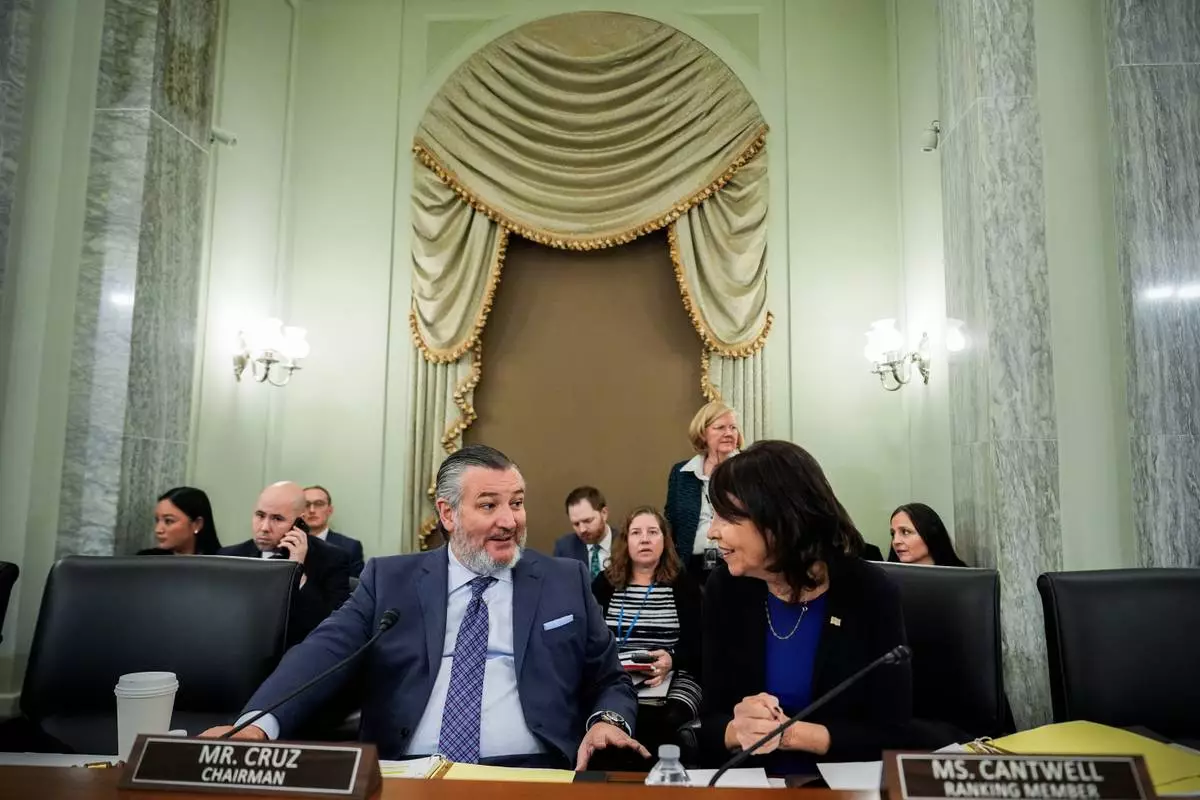
FILE - Sen. Ted Cruz, R-Texas, left, chairman of the Senate Commerce, Science and Transportation Committee, speaks with Sen. Maria Cantwell, D-Wash., right, before a hearing Wednesday, Nov. 19, 2025, on Capitol Hill in Washington. (AP Photo/Julia Demaree Nikhinson,File)