Mexico City became the global epicenter of football as co-host Mexico beat nine-man South Africa 2-0 in the opening match of the 2026 FIFA World Cup on Thursday.
Thousands of fans experienced a day marked by excitement and pride of hosting a World Cup once again.
From the early hours, the Mexican capital turned into a football party. Dressed in green, white, and red, fans took to the streets and squares to witness the historic match.
"I came to the Zocalo, but we couldn't get in. There were too many people, but we made it to this bar. We're very happy here watching Mexico's victory," said Roberto Paredes, a Mexican fan.
Restaurants and street stalls welcomed families, groups of friends, and foreign visitors who mingled amid flags, chants, and tricolor jerseys. Toward halftime, fans began to move toward the Angel of Independence, the iconic monument where victories are celebrated.
For many Mexicans, the day represented much more than a match: it was an opportunity to be part of a historic event and show the world their passion for football. The World Cup opening strengthened the bond between the city and one of the most iconic venues in international sport.
"We came to support Mexico and, more than anything, South America. We are a very united Mexican republic, and we know how to share friendship, love, respect, and the game on the field. I think our greatest role is that we accept all kinds of cultures; we are very open, very friendly, and we have the love to welcome all our neighbors from around the world," said Fernando Rojas, another fan.
The celebration spread to various parts of the capital. Despite the rain, fans celebrated the 2-0 victory against South Africa, hoping the winning streak will continue in the upcoming matches.
Mexican tourists and fans will now focus their attention on Guadalajara, Jalisco, where the Mexican national team will face the Republic of Korea in the coming days.

World Cup opening turns Mexico City into global epicenter of football

World Cup opening turns Mexico City into global epicenter of football
Mounting inflation and household strain are amplifying calls across the United States to end the war with Iran, with residents urging the government to shift focus to restoring economic stability at home.
The war, which U.S. President Donald Trump claimed "could be ended in four days," has now dragged on for more than 100, fueling domestic inflation and public frustration.
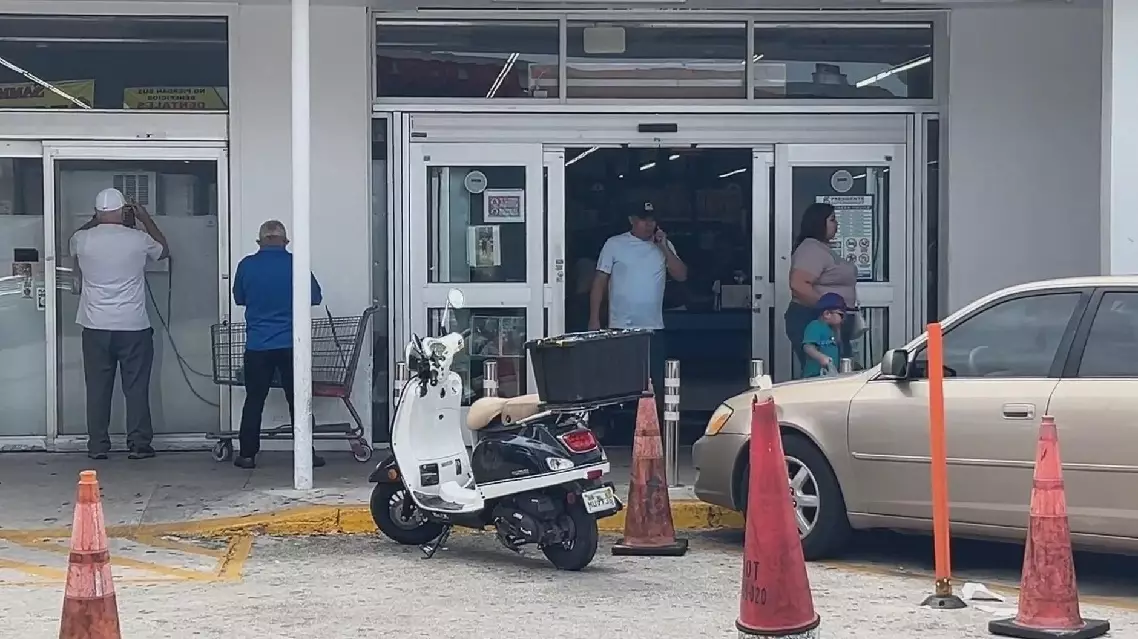
Across Massachusetts, residents described how rising costs for fuel, food and utilities are straining household budgets and sharpening frustration with the conflict.
"I commute about 20 miles to work every day, luckily I do have a Prius, but the prices have gone up significantly. And for hardworking Americans like me and a lot of people out there, the prices can hurt the bank account," said one resident.
Beyond gasoline, consumers are reporting sharp increases in grocery bills and utility costs.
"Most especially, energy prices, natural gas that we use to heat the house," another local resident in Massachusetts said.
"Absolutely. I have noticed so many increases in like gas prices. You go over to the gas (station), it's like 4 U.S. dollars or 5 U.S. dollars (per gallon). You know what I mean? How are you supposed to live on this? It's insane. Food. You know (compared to) just a couple of months ago, you go to a grocery store and food is just so much more expensive. It's just the price of taxes going up," said a third.
While Trump defended the strikes on Iran as a necessary measure to defend the American people by eliminating imminent threats, residents said that the government's top priority should be restoring economic stability for the sake of people's livelihoods.
"I mean I understand where Trump is coming from, trying to blot out, as you would say, Iran's capabilities of having nuclear possibilities. However, at the same time, we're suffering in the wake of everything that he has done thus far. So economically, energy, all those things are making the American people upset and unhappy. So he should concentrate on dealing with America first," said a resident.
"I also think that the priority should always be the American people. And I think the American people have already been struggling. And I think it's just the price of living has just gone up. It has become even harder to live and just to make ends meet. So I think the priority first and foremost should always be to helping the American people (to have) a stable economy," another resident said.
On Feb 28, the United States and Israel launched coordinated strikes on Iran, hitting Tehran, Isfahan and Karaj, and killing Supreme Leader Ali Khamenei along with senior officials. Iran's Islamic Revolution Guard Corps retaliated the same day with missile and drone attacks on U.S. bases in the Middle East and Israeli targets.
After more than a month of fighting, a temporary ceasefire was announced on April 8, followed by talks in Pakistan on April 11-12 that produced no breakthrough. Sporadic clashes resumed in May and intensified toward the end of the month. Since May 30, U.S. forces have struck Iranian positions along the Strait of Hormuz, while Iran has repeatedly targeted American bases across the region.
US residents voice frustration as costs climb amid Iran war