The Chinese-built Caculo-Cabaca Hydropower Station has begun supplying electricity to rural communities in Angola's north-central province of Cuanza Norte.
A launch ceremony for the project's rural power supply was recently held in a local residential community of Cambambe Municipality in Cuanza Norte.
The ceremony was attended by Governor of Cuanza Norte Province Joao Diogo Gaspar, Mayor of Cambambe Municipality Maria Mafuta Difuma Bafutidy, and Chinese representatives of the Caculo-Cabaca plant project.
According to the China Gezhouba Group Company Limited (CGGC), the contractor for the project, the hydroelectric plant is located in the middle section of the Cuanza River, the longest river in Angola. Designed to have an installed capacity of 2,172 megawatts, it is projected to generate an average of over 8,500 gigawatt-hours of electricity a year, reducing greenhouse gas emissions by approximately 7.2 million tons annually. Additionally, the dam serves other functions such as water flow regulation and flood prevention.
The station, on which construction began in August 2017, is a major energy infrastructure project undertaken by Chinese-funded enterprises in Africa and an important achievement of energy cooperation between China and Angola under the framework of the Belt and Road Initiative.
It is scheduled to begin commercial operations and connect its first generator to Angola's power grid in October. Once fully completed, it will be the largest hydroelectric infrastructure in Angola and the third largest in Africa.
Addressing the launch ceremony, Gaspar called the Caculo-Cabaca a world-class project which will bring not only clean electricity to the Angolan people, but also drive development across various sectors of the country and provide a strong guarantee for its public energy security.
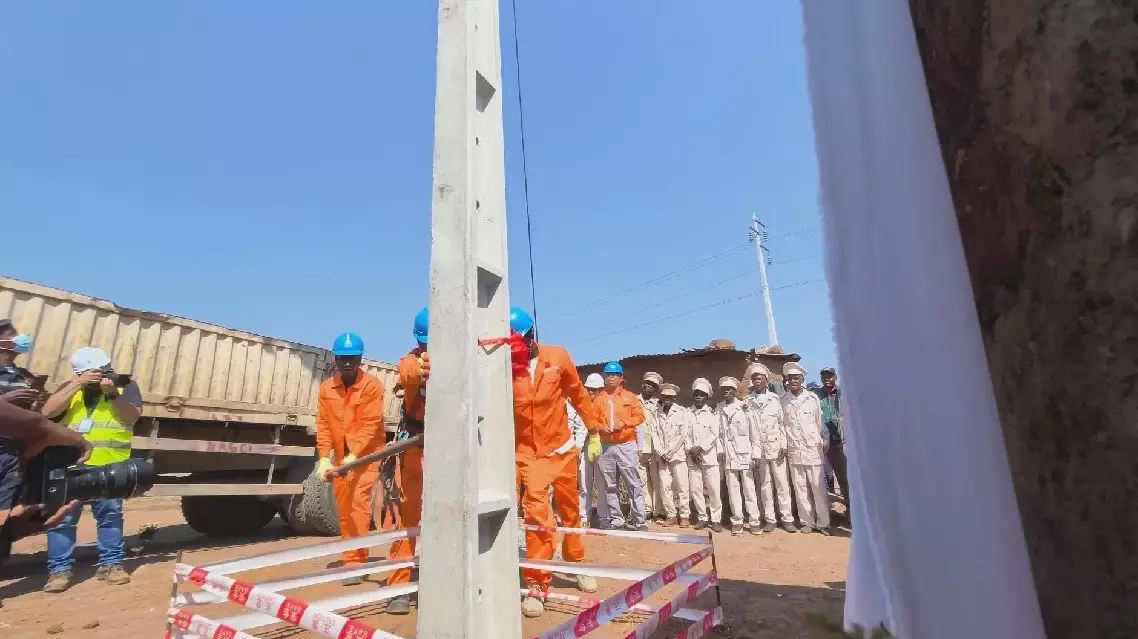
Chinese-built hydropower station begins power supply to Angolan villages
By leveraging the Shanghai Science and Technology Film City, Shanghai is forging a full-chain AI film ecosystem that covers computing power, data, models, and application scenarios, thus driving the integrated development of "film plus technology."
At a workshop during this year's Shanghai International Film Festival (SIFF), staff showed how a green screen and virtual studio can create a video of someone flying on a sword in only 10 minutes, a process that once took hours or even days.
"Our new AI workflow can bypass the tedious process of creating 3D assets. We only need a simple white model to position the actor within the scene. Then, AI takes care of everything, including integration of lights and shadows, computer-generated visual effects, and traditional manual production, dramatically improving efficiency," said Wang Yi, marketing director of a Shanghai-based virtual production technology company.
Technological innovation, continuous upgrades, and the pursuit of quality have become industry standards for filmmakers and television producers.
"What we're working on now is using a full AI workflow to adapt a classic black-and-white movie into a short drama series of 60 episodes, each about two to three minutes long. With the rapid improvement of large language model capabilities, on the production side, we can complete a short drama project of over 100 minutes in just about two months," said Yu Xin, a person in charge of a company based at the Shanghai Science and Technology Film City AI Creation Ecosystem Center.
Located in Songjiang District, the Shanghai Science and Technology Film City houses over 8,000 film and TV enterprises, forming a full-chain AI ecosystem that covers computing power, data, models, and application scenarios.
"The AI Creation Ecosystem Center has attracted more than 50 companies over the past year and secured over 50 million yuan in commercial commissions. Moving forward, we will provide support not only in terms of computing power and funding but also through talent-related policies," said Zhao Huiying, director of the Songjiang District Culture and Tourism Bureau.
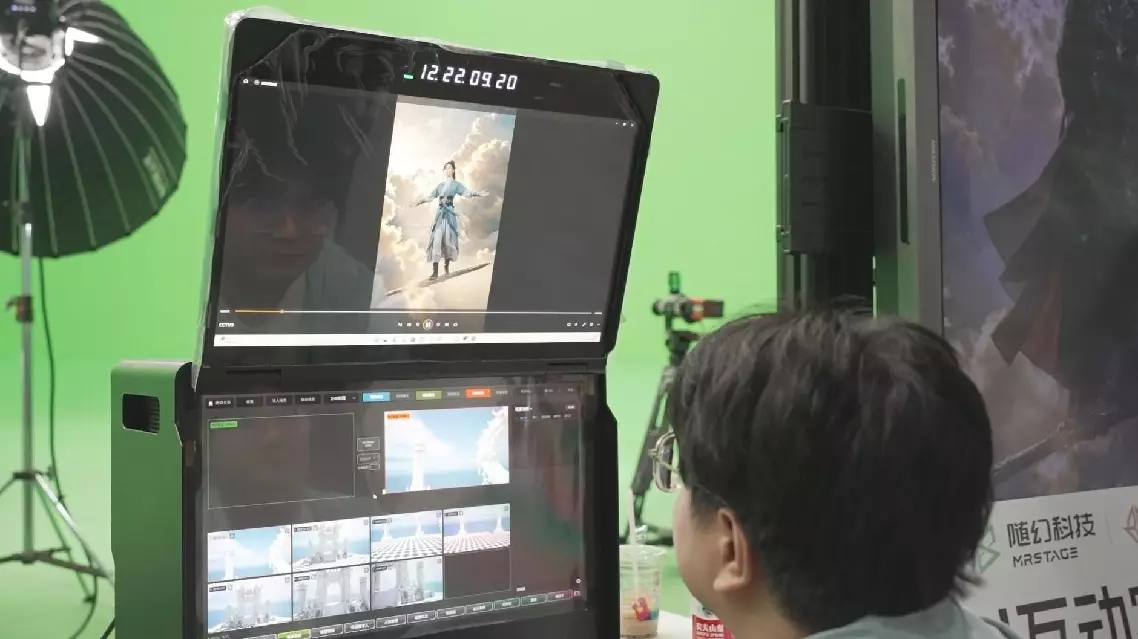
Shanghai drives 'film plus technology' with AI ecosystem