Skip to Content Facebook Feature Image

Experts share insights on real-world deployment of humanoid robots in China

China

China

China

Experts share insights on real-world deployment of humanoid robots in China

2026-06-14 17:23 Last Updated At:20:17

China is actively pushing humanoid robots out of the lab and into real-world deployments, with experts highlighting the challenges ahead and envisioning future development.

Performing back clip kicks, racing in marathons and playing ping-pong, China-made humanoid robots have become internet stars, which have left many wondering when they are ready for real jobs.

Wang Zhongyuan, president of the Beijing Academy of Artificial Intelligence, said humanoid robots still have a long way to go before they can be applied in real‑world scenarios.

"It can start to actually perform tasks in home-like hotel scenarios. If humanoid robots are really going to enter real home scenarios, I think there is still a long way to go," he said.

Wang pointed to several key challenges, including improving the robot's adapatability, along with task precision, battery endurance, and the safety of task completion.

"As these specific scenarios are implemented, we will also accumulate more data, and all these data will contribute to the training and emergence of more generalized robots in the future," Wang said.

Official data shows that China shipped around 17,000 humanoid robots in 2025, produced by more than 140 companies. The focus is no longer just on hardware performance. The goal is to teach robots to understand the physical world, to perceive their surroundings, make decisions autonomously and learn new tasks on the job. In industry terms, it's known as building a "physical world model."

"We are still in the process of gradually understanding the physical world based on digital sensing and digital computers. So, in order to help the robots to understand the real world and to interact with the real world, probably the data, the environment need to be more dynamic instead of purely static," said Sui Yanan, associate professor from Tsinghua University.

China on Tuesday launched a nationwide action plan to help humanoid robots move from dance performances and marathon races into factories, warehouses and hospitals. The authorities want humanoid robots and related key products to enter "work mode" in less than six months.

The plan also calls for more than 100 high-value applications to be created to support the deployment of 10,000 units by year-end. Six months is not a long time. But a concentrated effort like this can help the industry converge more quickly on viable engineering solutions that also drive companies along the industrial chain.
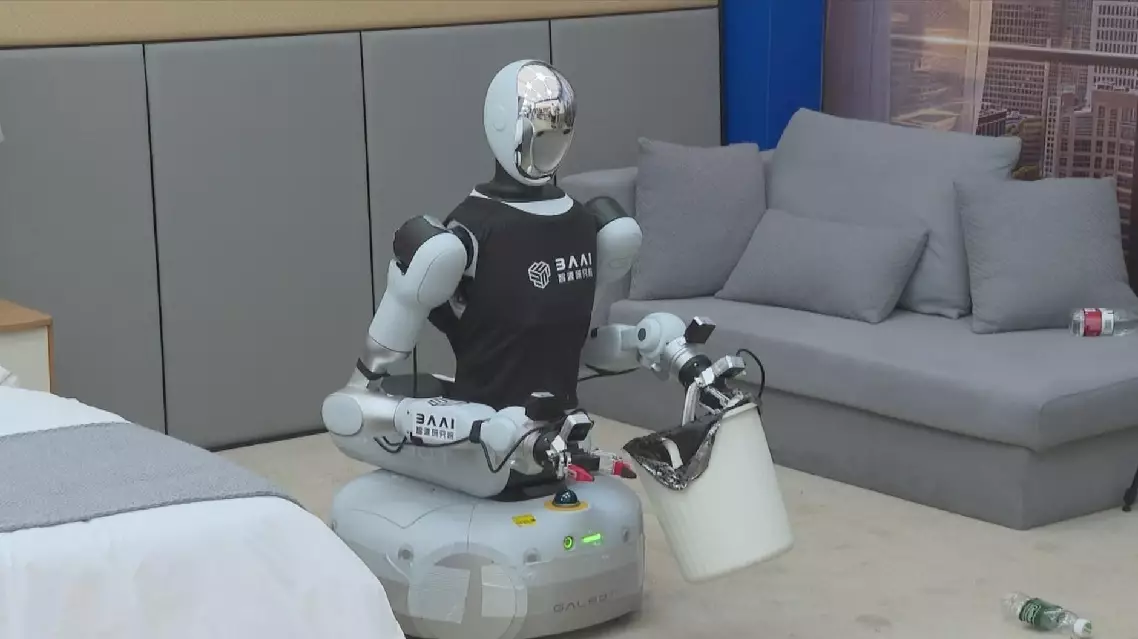
Experts share insights on real-world deployment of humanoid robots in China

Experts share insights on real-world deployment of humanoid robots in China

By leveraging the Shanghai Science and Technology Film City, Shanghai is forging a full-chain AI film ecosystem that covers computing power, data, models, and application scenarios, thus driving the integrated development of "film plus technology."

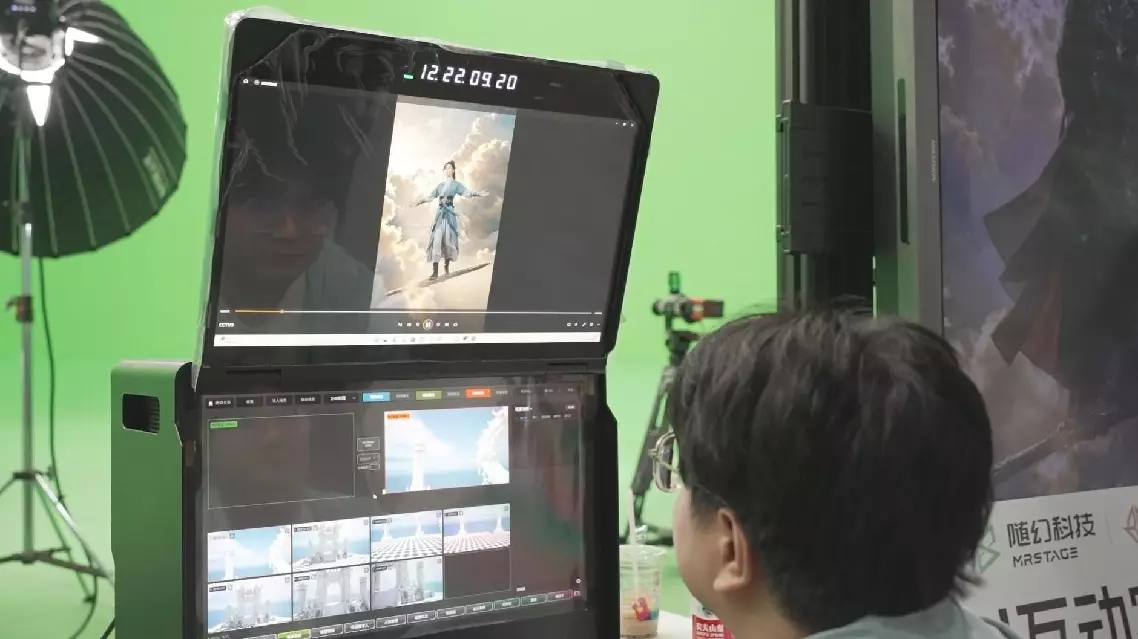
At a workshop during this year's Shanghai International Film Festival (SIFF), staff showed how a green screen and virtual studio can create a video of someone flying on a sword in only 10 minutes, a process that once took hours or even days.

"Our new AI workflow can bypass the tedious process of creating 3D assets. We only need a simple white model to position the actor within the scene. Then, AI takes care of everything, including integration of lights and shadows, computer-generated visual effects, and traditional manual production, dramatically improving efficiency," said Wang Yi, marketing director of a Shanghai-based virtual production technology company.

Technological innovation, continuous upgrades, and the pursuit of quality have become industry standards for filmmakers and television producers.

"What we're working on now is using a full AI workflow to adapt a classic black-and-white movie into a short drama series of 60 episodes, each about two to three minutes long. With the rapid improvement of large language model capabilities, on the production side, we can complete a short drama project of over 100 minutes in just about two months," said Yu Xin, a person in charge of a company based at the Shanghai Science and Technology Film City AI Creation Ecosystem Center.

Located in Songjiang District, the Shanghai Science and Technology Film City houses over 8,000 film and TV enterprises, forming a full-chain AI ecosystem that covers computing power, data, models, and application scenarios.

"The AI Creation Ecosystem Center has attracted more than 50 companies over the past year and secured over 50 million yuan in commercial commissions. Moving forward, we will provide support not only in terms of computing power and funding but also through talent-related policies," said Zhao Huiying, director of the Songjiang District Culture and Tourism Bureau.

Shanghai drives 'film plus technology' with AI ecosystem

Shanghai drives 'film plus technology' with AI ecosystem

Recommended Articles