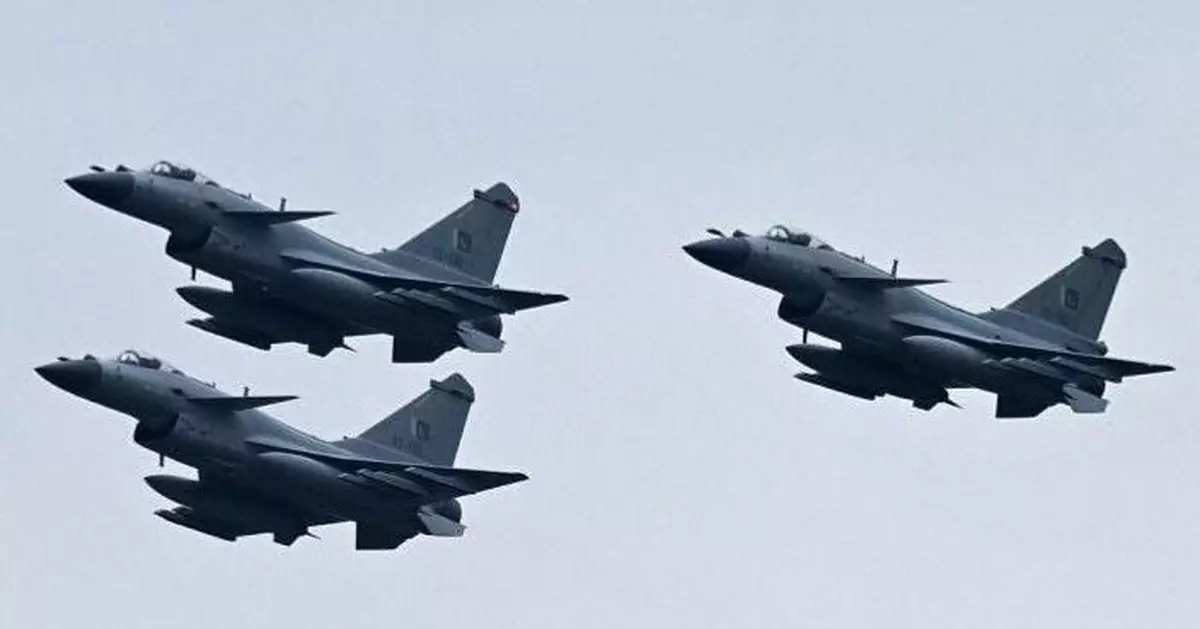
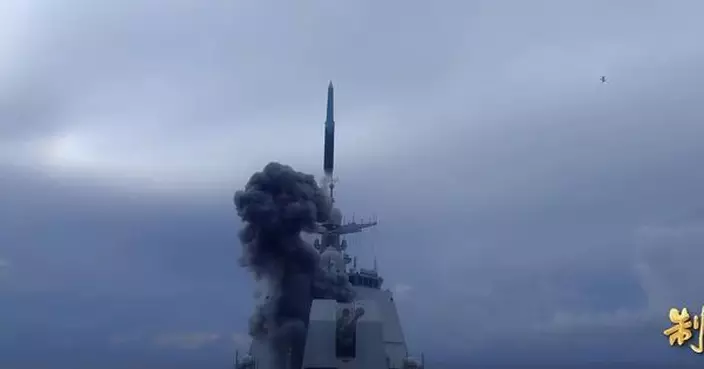
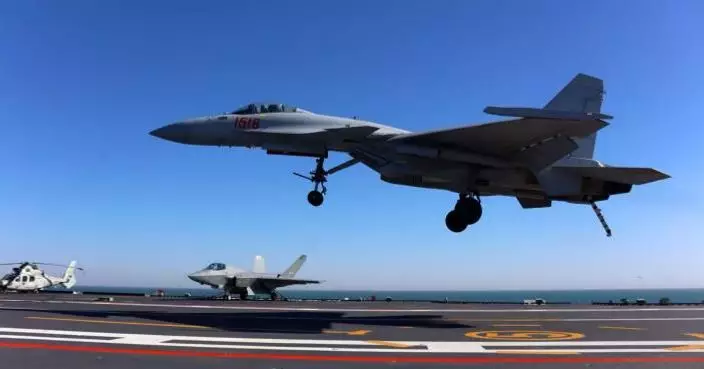
Alan Warnes — publisher of the international military magazine Air Forces Monthly — dropped a significant revelation on social media. Indonesian Air Force officials confirmed to him that Indonesia has finalized plans to procure the J-10CE fighter jet. The order has doubled, from the originally planned 12 aircraft to 24. Indonesia will simultaneously introduce the PL-15E air-to-air missile, effectively acquiring the same fully configured J-10CE variant currently in service with the Pakistan Air Force.
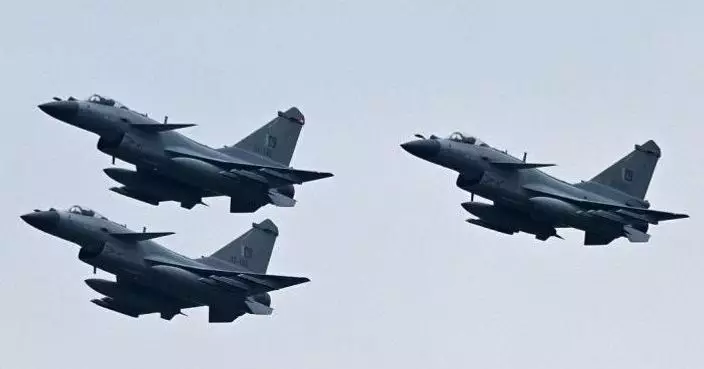
Pakistan already flies the fully loaded J-10CE. Indonesia is buying the exact same jet.
Indonesia's interest in the J-10CE did not come out of nowhere. In October 2025, Indonesian Defence Minister Sjafrie Sjamsoeddin told media that Indonesia would soon purchase fighter jets from China as part of its military modernization program — adding that "Chinese fighter jets will fly over Jakarta." He stopped short of naming a specific model. Based on Jakarta's bidding process, observers concluded that only the J-10CE could realistically compete against Boeing's F-15EX, which was also in the running.
Click to Gallery
Pakistan already flies the fully loaded J-10CE. Indonesia is buying the exact same jet.
The J-10CE's stellar air combat record forced Jakarta to completely rethink its fighter procurement.
Armed with powerful radar and PL-15E long-range missiles, the J-10CE strikes before the enemy can react.
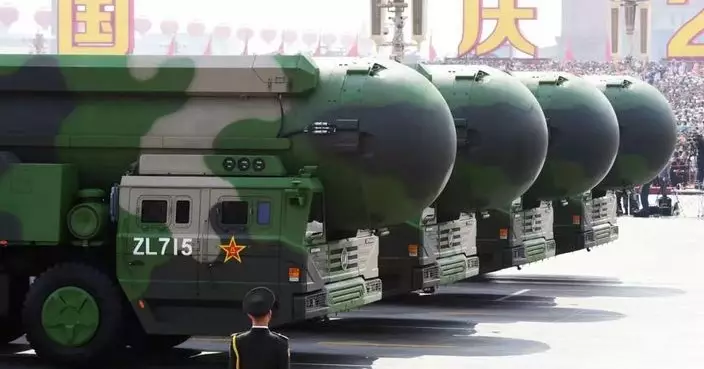
France uses massive loans to sell Rafales to developing nations—hooking buyers who cannot afford to walk away.
When Sjamsoeddin made those remarks, a critical backdrop was already in play. Indonesia's Defense Ministry had launched a review of its Rafale F4 order — and rumors circulated that Jakarta might cancel the deal and pivot to the J-10CE. The review was triggered on May 14, 2025, just one week after the May 7 air combat encounter in which Pakistan Air Force J-10CE fighters defeated India's Rafale F3R jets. That outcome left Jakarta in an uncomfortable position. The Rafale — billed as "Europe's top fighter" — had underperformed in actual combat, sparking domestic skepticism and speculation about an abrupt change of course.
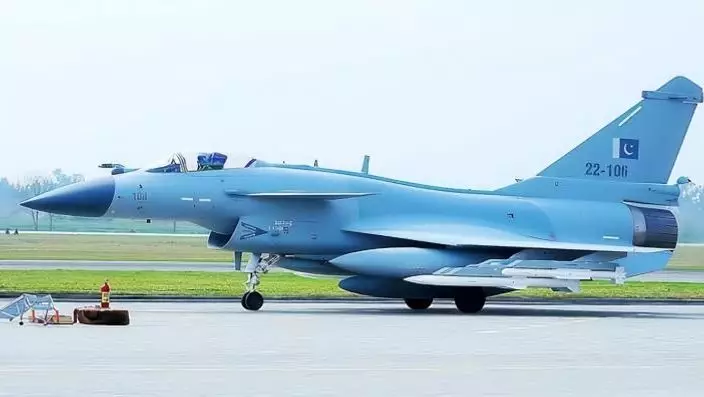
The J-10CE's stellar air combat record forced Jakarta to completely rethink its fighter procurement.
The review ended quietly, without a public announcement. One year later, on May 18, 2026, France's Dassault Aviation delivered the first batch of six Rafale F4 jets to the Indonesian military — effectively confirming the verdict. Some observers assumed the J-10CE had lost out, reasoning that Jakarta would never simultaneously buy Rafales and Chinese fighters. The reality is Jakarta has been quietly running a two-track procurement strategy all along.
The J-10CE's performance aligns squarely with Indonesia's urgent need to modernize its air force. The fact that J-10CEs downed several Rafales does not make the French jets worthless — for Indonesia, more advanced fighters simply means more combat capability. Operating both the J-10CE and the Rafale offers real tactical upside: the two types can complement each other externally and enable adversarial training internally to sharpen combat readiness. More importantly, if the Rafale's air combat performance continues to fall short, the J-10CE can underpin overall Indonesian air power as a fallback.
Indonesia's air force maintains two primary hypothetical adversaries: Singapore — which controls the Strait of Malacca — and Australia to the south. Australia is the main strategic concern, driven by disputes over maritime resource boundaries. The Royal Australian Air Force operates 72 F-35A fighters that outperform Indonesia's current fleet of F-16s, Su-27s, and Su-30s.
Indonesia's Rafale purchase was designed precisely to counter Australia's F-35A. France had marketed the jet as Europe's most advanced "4.5-generation" fighter, citing exercise scenarios in which the Rafale reportedly "shot down" the F-22 and claimed near fifth-generation capabilities. Indonesia maintains good relations with the United States but is not a formal ally and lacks access to the F-35A. That made the Rafale a comparatively viable option. In 2022, the two countries signed an $8.1 billion deal — roughly HK$63.2 billion — for 42 Rafale F4 jets.
Many countries accepted France's promotional claims at face value — until May 7, 2025. That night, Pakistan Air Force J-10CEs reportedly shot down three Rafales. Equipped with advanced onboard radar and PL-15E missiles, the J-10CE gave its opponents virtually no chance to respond. Reported details paint a one-sided engagement: the J-10CE detected Rafales at approximately 200 km using its own radar, the PL-15E achieved a record engagement distance of 189 km, and the Rafale's radar warning system never triggered an alert.
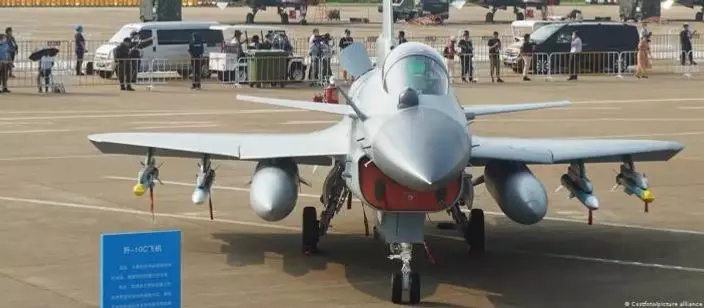
Armed with powerful radar and PL-15E long-range missiles, the J-10CE strikes before the enemy can react.
That engagement exposed three concrete advantages the J-10CE holds over the Rafale. First, its onboard radar is powerful enough to deliver strong air combat performance even without extensive network support — a decisive edge for smaller air forces. Second, its long-range missiles allow the J-10CE to fully exploit detection range, seize the initiative, and deny opponents the time or space to retaliate. Third, the radar features low probability of intercept capabilities, rendering even the Rafale's advanced European warning systems largely ineffective.
Before May 7, 2025, Indonesia had almost no viable path to acquiring a fighter that combined all three qualities. With the Rafale's claimed superiority now shattered, Jakarta naturally wants the J-10CE to fill the gap — and counter Australia's F-35As.
Make no mistake: all of this rests on the assumption that Indonesia keeps buying Rafales. Jakarta financed the 42-jet order through loans from Paris. Canceling the contract would trigger massive penalty payments and devastating damage to Indonesia's international credit standing. This reflects a deliberate French export model. Paris knows that wealthy nations go to Washington. Its target market is financially constrained developing countries — Egypt, Serbia, and others — and it hooks them with high-percentage financing guarantees and low-interest loans, collecting profits over the long repayment window.
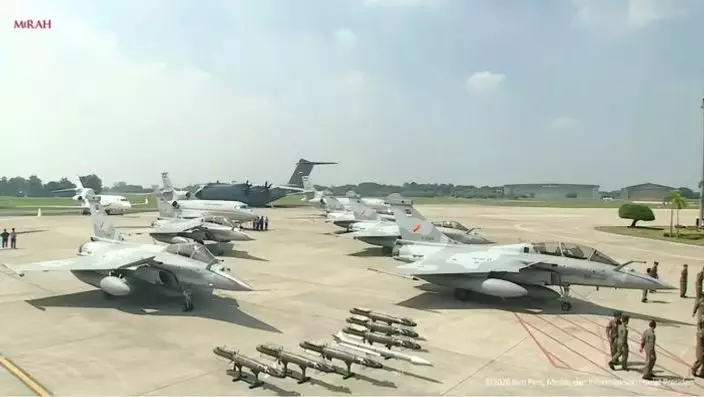
France uses massive loans to sell Rafales to developing nations—hooking buyers who cannot afford to walk away.
Egypt's deal illustrates how the model works. Egypt received loans covering up to 85% of its Rafale contract value, structured over 10 years. On a €4 billion deal — approximately HK$33.6 billion — Egypt needed only €600 million in upfront cash. Indonesia adopted the same structure: 15% down payment, 85% financed through commercial loans, on an $8.1 billion contract — roughly HK$63.2 billion. Given Indonesia's annual defense budget of only $11.6 billion — around HK$90.5 billion — walking away from the agreement is simply not financially feasible.
Indonesia's potential 24-jet J-10CE purchase also offers China a clear lesson. When Beijing exported the J-10CE to Pakistan, it provided low-interest loans worth RMB 10.14 billion — approximately HK$11 billion — but that fell short of France's mature, systematic financing model for arms exports. A strong product is only the first step. Creating effective mechanisms for customers to pay is equally critical. Indonesia's order may be precisely the opportunity China needs to build that capability.
The Art of Stopping War
** 博客文章文責自負,不代表本公司立場 **
The smoking gun has just surfaced online. Screenshots circulating on the internet show a People's Liberation Army Attack-11 'Xuanlong' ('Mysterious Dragon') UAV firing a PL-15 medium-to-long-range air-to-air missile.
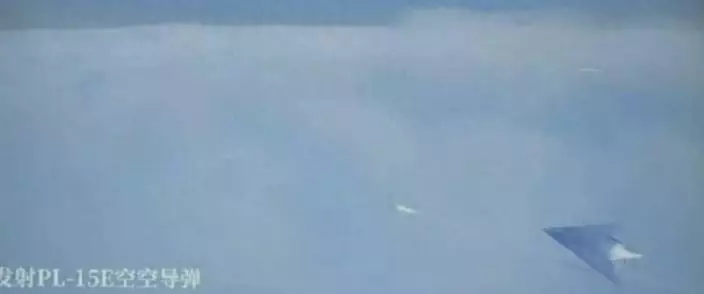
Attack-11 fires PL-15: stealth striker turned air combatant.
The Smoking Gun
Outside observers had already connected the dots. Judging from public models, airshow displays and related information, they had concluded that the Attack-11 can carry air-to-air missiles and perform air combat missions. These images, at minimum, corroborate that assessment at the evidentiary level.
The real significance runs deeper. The disclosure signals that the Attack-11's mission orientation is no longer limited to the traditional role of exploiting its own stealth for air-to-ground and anti-ship strikes. The drone is beginning to evolve into an air combat platform with manned-unmanned cooperative combat capability.
The Attack-11 UAV first stepped into public view at the 2019 National Day military parade. The AVIC 601 Institute developed the aircraft, and Hongdu Aviation Industry Group produces it.
The airframe is a pure tailless flying wing, with no conventional vertical stabilizer or horizontal tail. Stack on stealth coatings, internal weapons bays, stealthy intakes and treated engine exhaust nozzles, and the aircraft delivers superb infrared and radar stealth.
The spec sheet is compact but telling. According to relevant materials, the Attack-11 is 12.2 meters long and 2.7 meters high, with a wingspan of 14.4 meters. Its frontal radar cross-section measures less than 0.01 square meters. A single small turbofan engine drives the drone at high subsonic speed, out to a maximum range of 4,000 kilometers.
A frontal radar cross-section of less than 0.01 square meters means the aircraft shows up on an adversary's radar screen almost like a small bird or a faint patch of clutter. That amounts to extremely strong low observability.
Combine that with the favorable aerodynamics of the tailless flying wing, the Attack-11 can sustain a long cruise radius without ever engaging its afterburner. It can slip deep into an opponent's defense zones and remain hard to detect. That is the foundation for executing a wide range of high-risk missions.
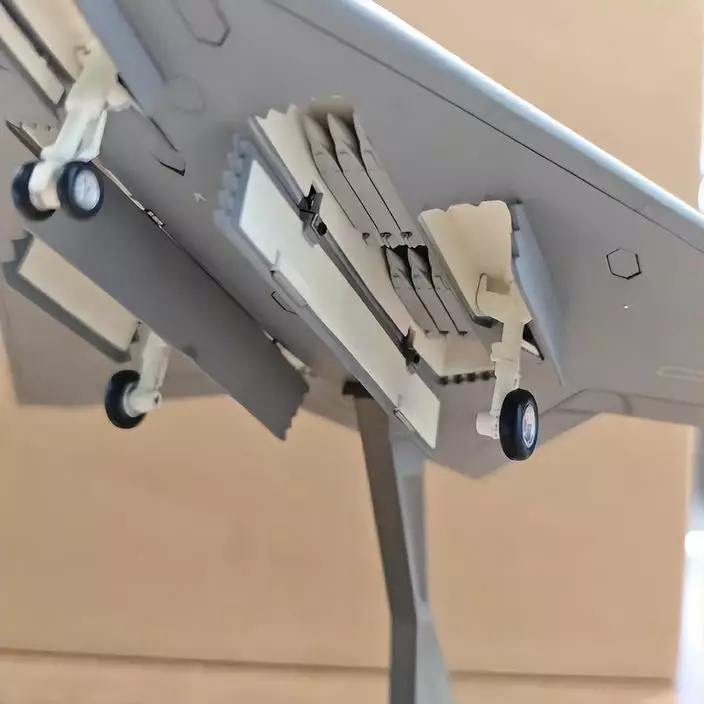
Hidden bays carry air-to-ground or air-to-air — stealth preserved .
The Arsenal Inside: Internal Bays, Flexible Loadouts and the PL-15's Reach
The Attack-11 plays in a different league. Measured against the Attack-1, Attack-2 and Attack-3, unmanned attackers defined mainly by integrated reconnaissance and strike, it clearly belongs to a higher class of unmanned combat platform. Stealth lets it slip deep into an opponent's defenses for reconnaissance, precision ground strikes, suppression of enemy air defenses and anti-ship operations. Data links then tie it to manned fighters, letting it join air combat missions as their 'loyal wingman.'
The real firepower hides in its belly. Two internal weapons bays on the underside of the fuselage can be loaded with multiple types of weapons to match the Attack-11's multi-mission profile. Public information so far points to a strike and anti-ship loadout of six small-diameter precision-guided glide bombs plus one heavy precision-guided glide bomb, or eight medium precision-guided glide bombs. For air-to-air missions, each of the two internal bays carries a single PL-15 medium-to-long-range air-to-air missile.
The internal bays do double duty. They guarantee the munitions load while keeping externally mounted weapons from wrecking the stealth shape. That gives the Attack-11 a sound balance between firepower and stealth.
The missile itself deserves a closer look. The PL-15 medium-to-long-range air-to-air missile was developed and produced by China Airborne Missile Academy(CAMA). Public data describe a round 4 meters long, 203 millimeters in diameter and 210 kilograms in weight. It runs a dual-pulse solid rocket motor, reaches a maximum range of 200 to 300 kilometers, and carries a fragmentation warhead fitted with a radio proximity fuze.
The guidance system stacks layer upon layer. The missile applies a composite regime of 'inertial guidance plus BeiDou satellite guidance plus two-way data-link correction plus active radar terminal guidance.' Its active electronically scanned array radar seeker brings formidable detection and anti-jamming capability, a low probability of signal interception and a strong element of surprise. The dual-pulse motor design adds a second ignition in midcourse flight, stretching the PL-15's effective range. High terminal kinetic energy persists at medium-to-long distance, keeping the no-escape zone large.
Those specifications put it at the front of the pack. The technical benchmark ranks among the leaders in the international family of comparable air-to-air missiles. In overall performance it stands level with new-generation medium-range missiles such as the US-made AIM-120D, and some key parameters tilt further in its favor. That gives the Attack-11 a reliable munitions foundation for beyond-visual-range air combat.
One Fighter, Three Drones: Manned-Unmanned Teaming Goes Operational
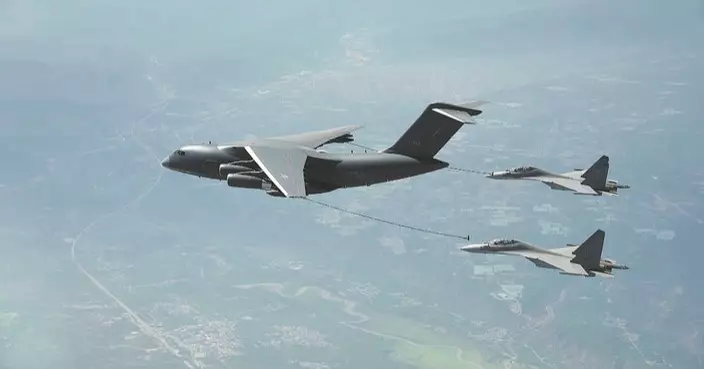
In actual combat, the Attack-11 unmanned aerial vehicle carrying PL-15 medium-to-long-range air-to-air missiles teams up with advanced domestic two-seat fighters such as the J-20 and J-16 for manned-unmanned cooperative operations. CCTV's earlier public footage has already confirmed the arrangement.
CCTV's official briefing lays out the formula: one J-20 or J-16 fighter coordinates with three Attack-11 drones simultaneously in combat.
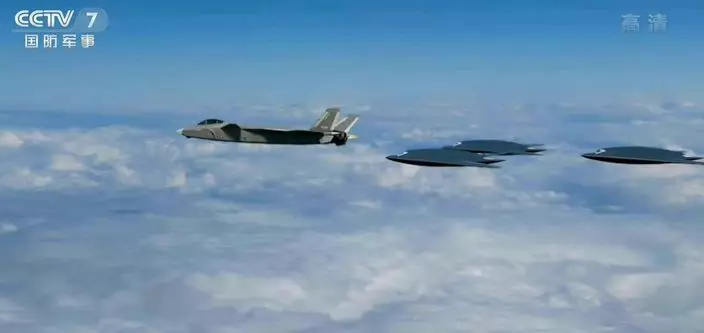
Teamed with stealth drones, fighters see farther, strike deeper.
The division of labor is sharp. The manned fighter handles battlefield situation assessment, mission authorization and core decision-making. The Attack-11 drones shoulder the high-risk work: firepower strikes, electronic support, decoying and reconnaissance.
That split frees the manned fighter from stacking every task onto its own platform. Datalinks pull the Attack-11 into a larger combat network, further widening the sensing range and firepower coverage of the friendly air combat system. The edge matters most against high-value airborne targets such as large enemy electronic warfare aircraft, transports, early warning planes and tankers.
With the Attack-11 scouting ahead and pushing firepower forward, manned jets can lock onto and strike enemy soft-spot targets at greater range. Valuable pilots no longer have to run major risks punching through an opponent's defenses.
Zoom out, and 'loyal wingman'-style manned-unmanned teaming is exactly the direction the world's major military powers are now exploring. The United States is advancing concepts that pair stealth drones such as the XQ-58A "Valkyrie" with manned fighters. Several European countries run similar cooperative combat programs.
China, by contrast, has taken the idea off the drawing board. CCTV's public footage, airshow displays and this live-fire launch screenshot show the country has pushed this form of operations from conceptual vision to actual application.
That leap reflects the overall progress of China's aviation industry across drone platforms, datalinks, sensors and munitions systems. It also signals that this combat system has reached considerable maturity.
The New Shape of Air Combat: From Manned Platforms to System Confrontation
So the real significance of this footage of a Attack-11 launching a PL-15 medium-to-long-range air-to-air missile is not the confirmation of a long-standing claim. The footage matters because it spotlights a shift in the very shape of the air force's future air combat.
In the past, the core of the air force's air combat still revolved around the contest for air superiority, with manned fighters at its heart.
In the future, the roles split. Manned fighters will command and decide, while drones take on tasks such as forward firepower strikes, electronic warfare, and reconnaissance. Multiple advanced unmanned combat aircraft can even join together into distributed operational nodes that support the manned fighters, boosting the air force's combat effectiveness.
This shift from 'manned platform at the center' to 'manned-plus-unmanned system confrontation' is likely to become an important direction in the evolution of the future air combat landscape.