VANCOUVER, British Columbia--(BUSINESS WIRE)--Jun 15, 2026--
Spanish Mountain Gold Ltd. (the " Company " or " Spanish Mountain Gold ") (TSX-V: SPA) (FSE: S3Y) (OTCQB: SPAUF) is pleased to provide assay results from eight diamond drill holes completed as part of its 2025-2026 Diamond Drill program on the Spanish Mountain Gold project (the “Project”), located in the Cariboo Gold Corridor, British Columbia, Canada.
Click to Gallery
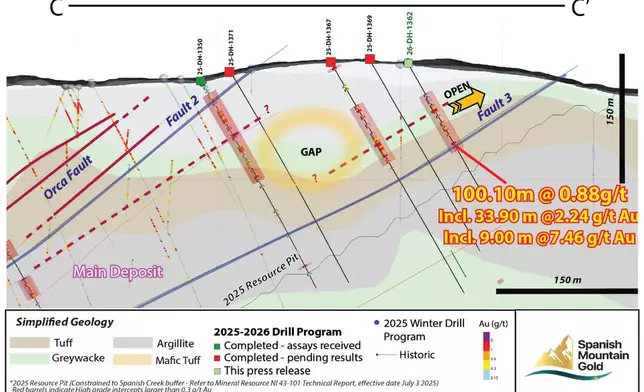
Figure 4: Drill Long Section Through the Orca Fault Corridor (looking northeast); section line C-C’ Figure 1
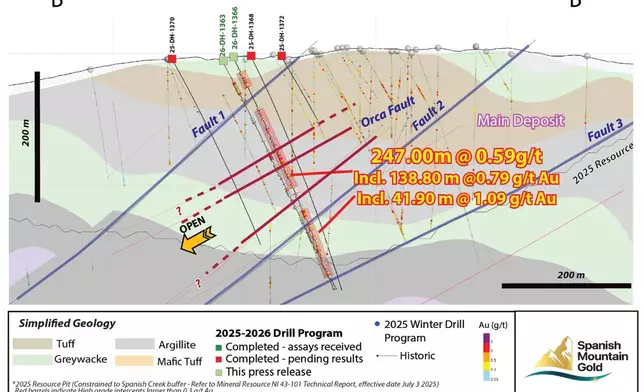
Figure 3: Drill Long Section (30 m thickness) Through the Orca Fault Corridor (looking northeast); section line B-B’ Figure 1
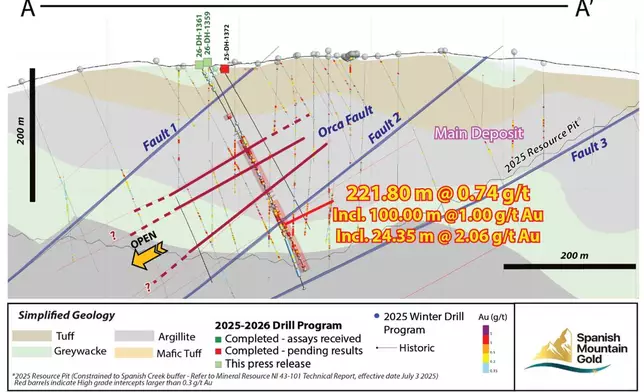
Figure 2: Drill Long Section (30 m thickness) Through the Orca Fault corridor (looking northeast); section line A-A’ Figure 1
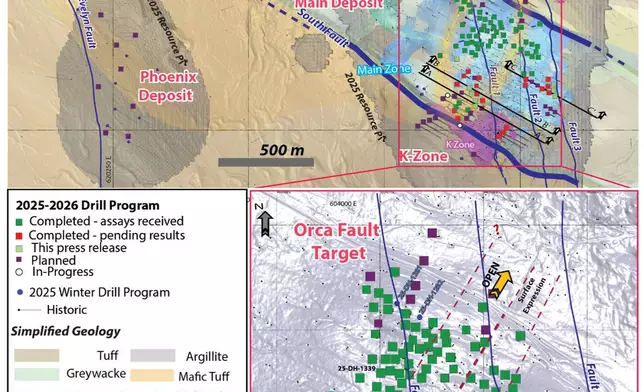
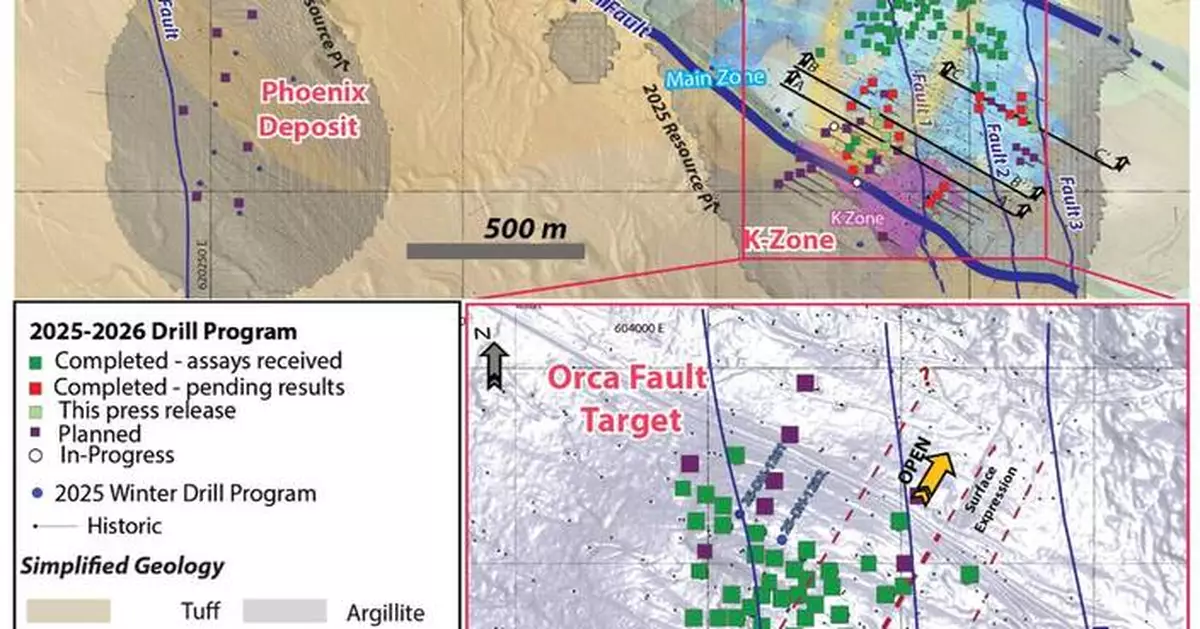
Figure 1: Drill Collar Location Map — 2025-2026 Drill Program. The figure illustrates the collar locations for all 8 drill holes reported in this news release, plus holes with assays pending. Section lines correspond to cross-sections presented in Figures 2, 3, and 4. Collar coordinates are summarized in Table 5. Abbreviations: metres = m, grams per tonne = g/t, gold = Au, mineral resource estimate = MRE, Spanish Mountain Gold = SMG.
This press release features multimedia. View the full release here: https://www.businesswire.com/news/home/20260615476084/en/
Approximately 28,500 metres (“m”) of drilling has been completed to date as part of the 2025-2026 Drill Program (1), which includes 13,400 m of a planned 60,000 m drilling program related to the 2026 Feasibility Drill Program (“2026 FS Drill Program”) initiated in March 2026. Assay results are pending for 19 additional drill holes.
Highlights:
Spanish Mountain Gold, President, Chief Executive Officer & Director, Peter Mah, commented: “We are excited to announce positive new high-grade near surface drill results from the 2026 Feasibility Drill Program including 100.0 m of 1.00 g/t, 100.1 m @ 0.88 g/t, and 138.8 m of 0.79 g/t gold in three holes within the growing Orca Fault Corridor. These results continue to expand on previous reported drill intersections of high-grade late-stage mineralization along the Orca Fault Corridor. Drilling is progressing with two rigs currently dedicated to testing the limits of the Orca Fault Corridor and the Company expects to provide regular updates as results are received and validated.”
Main Deposit Overview
The Main Deposit exhibits two principal mineralization styles. The early-stage mineralization is strata bound mineralization hosted primarily within carbonaceous argillite units, particularly at or near the contact with tuff and greywacke units. This mineralization strikes northwest and dips shallowly to the northeast with gold mineralization commonly associated with fine-grained disseminated and vein pyrite. The late-stage mineralization consists of quartz veins where visible gold is commonly associated with galena, sphalerite and pyrite. The late-stage mineralization typically strikes northeast and dips moderately to steeply west within the Orca Fault Corridor. Late-stage mineralization is best developed in the tuff/greywacke unit; however, it occurs in all stratigraphic units and crosscuts the early-stage mineralization.
The 2025-2026 Drill Program was designed to test both styles of mineralization with a preferred drill orientation of azimuth 120° and a dip of -60° (drilling toward the southeast). Historic holes oriented vertically or drilled to the northeast or southwest were not the optimal drill orientation to intersect the late-stage mineralization.
Key Findings - 8 Drill Holes
Drill Results
The following drill descriptions are organized by cross-section south to north.
Drill Holes 26-DH-1359 and 26-DH-1361 (Section A-A’)
26-DH-1359 and 26-DH-1361 were collared as infill holes in an area where historic drilling was subvertical, which was not ideal to test multiple mineralization controls identified in the deposit.
26-DH-1361 intersected 221.8 m of 0.74 g/t gold from 128.0 m, including 100.0 m of 1.00 g/t gold from 231.0 m and a high-grade subset of 24.35 m of 2.06 g/t gold from 306.65 m (Table 1).
26-DH-1359 returned high-grade subsets of 17.5 m of 1.34 g/t gold from 144.5 m and 17.0 m of 1.30 g/t gold from 252.0 m (Table 1).
Drill Holes 26-DH-1363 and 26-DH-1366 (Section B-B’)
26-DH-1363 and 26-DH-1366 were collared approximately 50 m and 75 m north of 26-DH-1361, respectively, drilled at the preferred 120° azimuth in an area of historically vertical drilling.
26-DH-1363 intersected 331.5 m of 0.42 g/t gold from 36.5 m, including a near-surface interval of 30.7 m of 1.22 g/t gold from 36.5 m with a high-grade subset of 20.5 m of 1.75 g/t gold from 36.5 m, and a deeper zone of 99.2 m of 0.57 g/t gold from 150.8 m (Table 2).
26-DH-1366 returned 339.0 m of 0.51 g/t gold from 26.0 m, including 247.0 m of 0.59 g/t gold from 118.0 m, 101.5 m of 0.69 g/t gold from 118.0 m, 138.8 m of 0.79 g/t gold from 160.1 m, and an internal high-grade zone of 41.9 m of 1.09 g/t gold from 160.1 m (Table 2, Figure 3).
Drill Holes 26-DH-1362, 26-DH-1364, and 26-DH-1365 (Section C-C’)
26-DH-1362, 26-DH-1364, and 26-DH-1365 were collared in the easternmost area of the current drill program to test Orca-Fault parallel structures between Fault 2 and Fault 3. Systematic infill is recommended.
26-DH-1362 returned 100.1 m of 0.88 g/t gold from 8.3 m, including 33.9 m of 2.24 g/t gold from 72.0 m and 9.0 m of 7.46 g/t gold from 96.9 m (Table 3, Figure 4). These near-surface high grade results confirm the continuity of Orca Fault-style structural controls are also present within the Fault 2-Fault 3 block. Results from 26-DH-1364 and 26-DH-1365 are presented in Table 3.
Drill Hole 26-DH-1360
26-DH-1360, collared 65 m southwest of 26-DH-1339 (Figure 1), confirms the down-dip continuity of the Orca fault trend between Faults 1 and 2, returning high-grade subsets of 38.1 m of 0.42 g/t gold from 113.9 m, 7.5 m of 0.44 g/t gold from 95.0 m, and 17.4 m of 0.45 g/t gold from 189.6 m. Assay results are summarized in Table 4.
Notes for all Tables:
Drill Core Processing, Data Verification and Quality Assurance – Quality Control Program (QAQC)
Once received from the drill and processed, all drill core samples were sawn in half, labeled, and bagged. The remaining half of the drill core was securely stored on-site. Numbered security tags were applied to sample shipments to ensure chain of custody compliance. The Company inserts quality control (QC) samples at regular intervals, including blanks and reference materials, for all sample shipments to monitor laboratory performance. Standards, blanks, preparation and field duplicates account for a minimum of 20% of the samples in addition to the laboratory's internal quality assurance programs. The QAQC program was overseen by the Company's Qualified Person, Julian Manco, P.Geo., Director of Exploration (as described below).
The data verification process involved a multi-step approach to ensure accuracy and integrity. This included a detailed quality control (QC) analysis of the data, which was performed using both internal and external platforms, such as the MxDeposit™ software. These QC checks involved the analysis of certified reference materials (CRMs), blanks, and duplicates to confirm the reliability of the assay results. In addition, a field inspection of the specific drill intervals mentioned in this release has been conducted to directly observe the geological features and verify the nature of the results presented.
Drill core samples were submitted to MSALABS's analytical facility in Prince George, British Columbia, for sample preparation and PhotonAssay™ analysis. The MSALABS facilities are accredited to the International Standards ISO/IEC 17025 and ISO 9001 standard for gold and multi-element assays, with all analytical methods incorporating quality control materials at defined frequencies and established data acceptance criteria. MSALABS Inc. is independent of the Company.
PhotonAssay™
The PhotonAssay™ method utilizes gamma ray analysis for gold detection using the Chrysos PhotonAssay™ instrument (PA1408X). This non-destructive, fully automated technique offers high accuracy for analyzing ores and pulps. Sample preparation begins with drying and crushing up to 1 kg of material to achieve at least 70% passing through a 2-millimetre (mm) sieve. The sample is then riffle split to obtain a suitable aliquot for 2 testing cycles (MSALABS Method CPA-Au1). The PhotonAssay™ instrument bombards 400- to 600-gram samples contained in sealed containers with gamma rays. Each sample is accompanied by a reference disc traceable to a Certified Reference Material (CRM). The method offers a gold detection range from 0.015 ppm (lower limit) to 10,000 ppm (upper limit).
Spanish Mountain Gold implemented two QAQC methodologies to validate the accuracy of PhotonAssay™ results, both demonstrating good comparability: 1) comparative analysis of diverse mineralization styles using Total Au screen metallic methods with both FAS-415 (gravimetric finish) and FAS-211 (AAS finish), and 2) comprehensive testing of both sample aliquots and rejects using FAS-211 (AAS finish).
Multi-Elemental Analysis
For the 2026 drilling campaign, Spanish Mountain Gold used the IMS-230 method to provide multi-element determination using a four-acid digestion followed by ICP-OES and ICP-MS analysis.
Qualified Person
Julian Manco, M.Sc., P.Geo., Director of Exploration with Spanish Mountain Gold, is the Qualified Person as defined under National Instrument 43-101 who has reviewed the technical information in this news release and has approved the content for dissemination.
About Spanish Mountain Gold Ltd.
Spanish Mountain Gold Ltd. is focused on advancing its 100%-owned Spanish Mountain Gold Project (Project) towards construction of the next gold mine in the Cariboo Gold Corridor, British Columbia. On May 1, 2026, the Company received the first instalment of US$22.5 million in connection with the sale of a 1.5% NSR to Wheaton Precious Metals for US$55 million (see news release dated May 1, 2026). In Q2, the Company initiated a feasibility study on the Project, which is fully funded with the US$55 million royalty sale, that will position the Company to make a construction decision in 2028.
The Relentless Pursuit for Better Gold means seeking new ways to achieve optimal financial outcomes that are safer, minimize environmental impact and create meaningful sustainability for communities. Details on the Company are available on www.sedarplus.ca and on the Company's website: www.spanishmountaingold.com.
On Behalf of the Board,
"Peter Mah"
President, Chief Executive Officer and Director
Spanish Mountain Gold Ltd.
Neither the TSX Venture Exchange nor its Regulation Services Provider (as that term is defined in the policies of the TSX Venture Exchange) accepts responsibility for the adequacy or accuracy of this release.
FORWARD-LOOKING INFORMATION:
Certain of the statements and information in this press release constitute "forward-looking information". Any statements or information that express or involve discussions with respect to predictions, expectations, beliefs, plans, projections, objectives, assumptions or future events or performance (often, but not always, using words or phrases such as "expects", "anticipates", "believes", "plans", "estimates", "intends", "targets", "goals", "forecasts", "objectives", "potential" or variations thereof or stating that certain actions, events or results "may", "could", "would", "might" or "will" be taken, occur or be achieved, or the negative of any of these terms and similar expressions) are not statements of historical fact and may be considered forward-looking information. The Company's forward-looking information is based on the assumptions, beliefs, expectations and opinions of management as of the date of this press release and includes but is not limited to information with respect to exploration drilling extending near surface gold mineralization hosted within the Orca Fault Corridor, the potential to enhance the life-of-mine plan in the first 10-years of production, the receipt of the two remaining instalments from the sale of the 1.5% NSR to Wheaton Precious Metals for US$55 million, the results of the feasibility study, and the timeline to make a construction decision. Other than as required by applicable securities laws, the Company does not assume any obligation to update forward-looking information if circumstances or management's assumptions, beliefs, expectations or opinions should change, or changes in any other events affecting such statements or information. For the reasons set forth above, investors should not place undue reliance on forward-looking information.
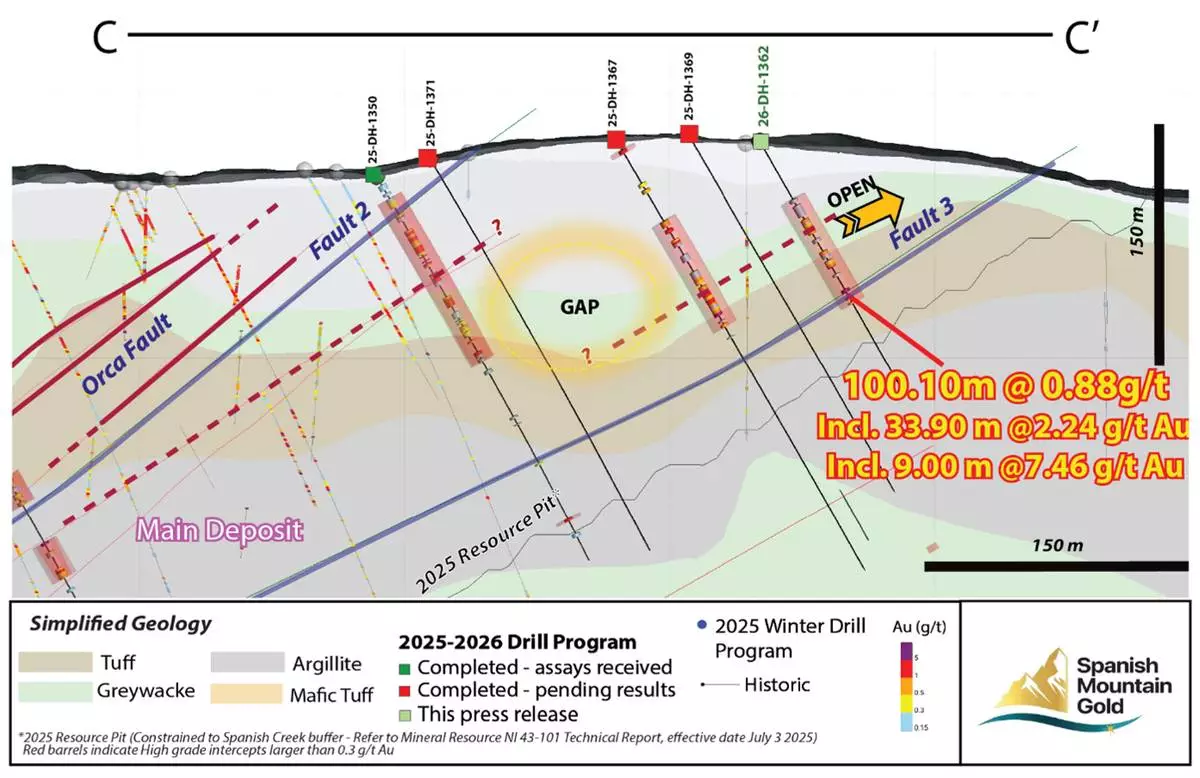
Figure 4: Drill Long Section Through the Orca Fault Corridor (looking northeast); section line C-C’ Figure 1
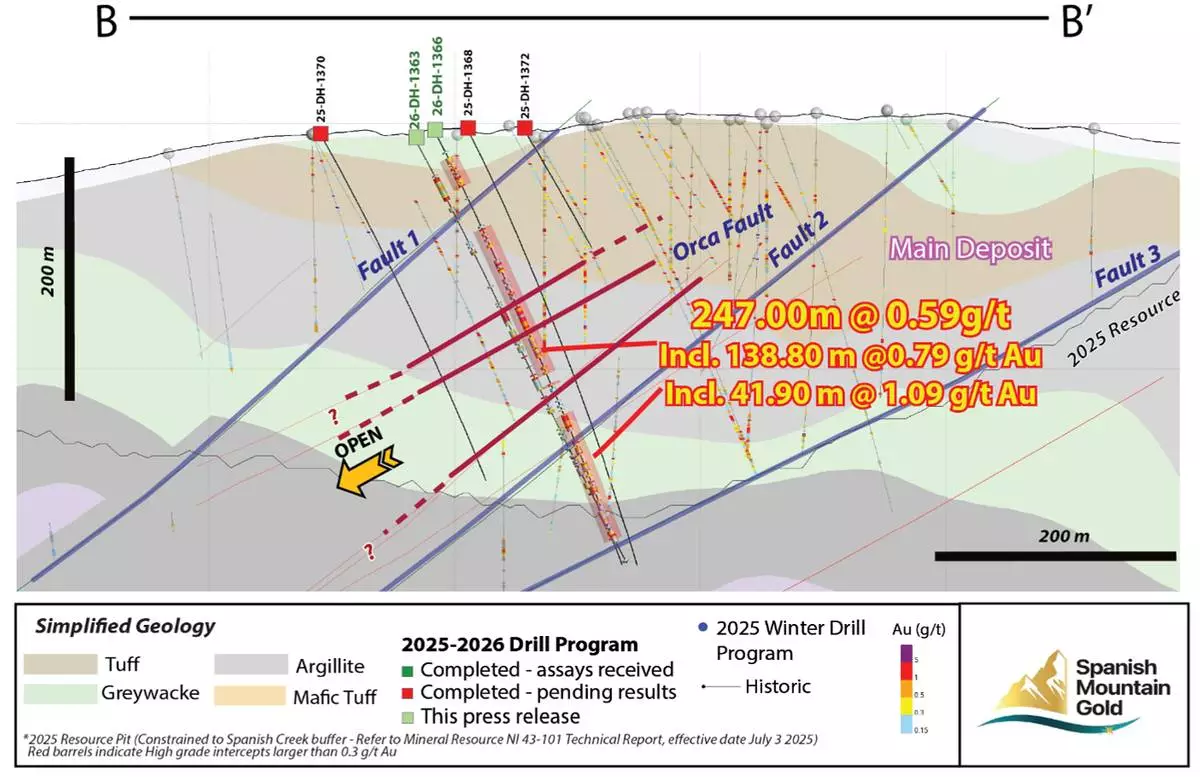
Figure 3: Drill Long Section (30 m thickness) Through the Orca Fault Corridor (looking northeast); section line B-B’ Figure 1
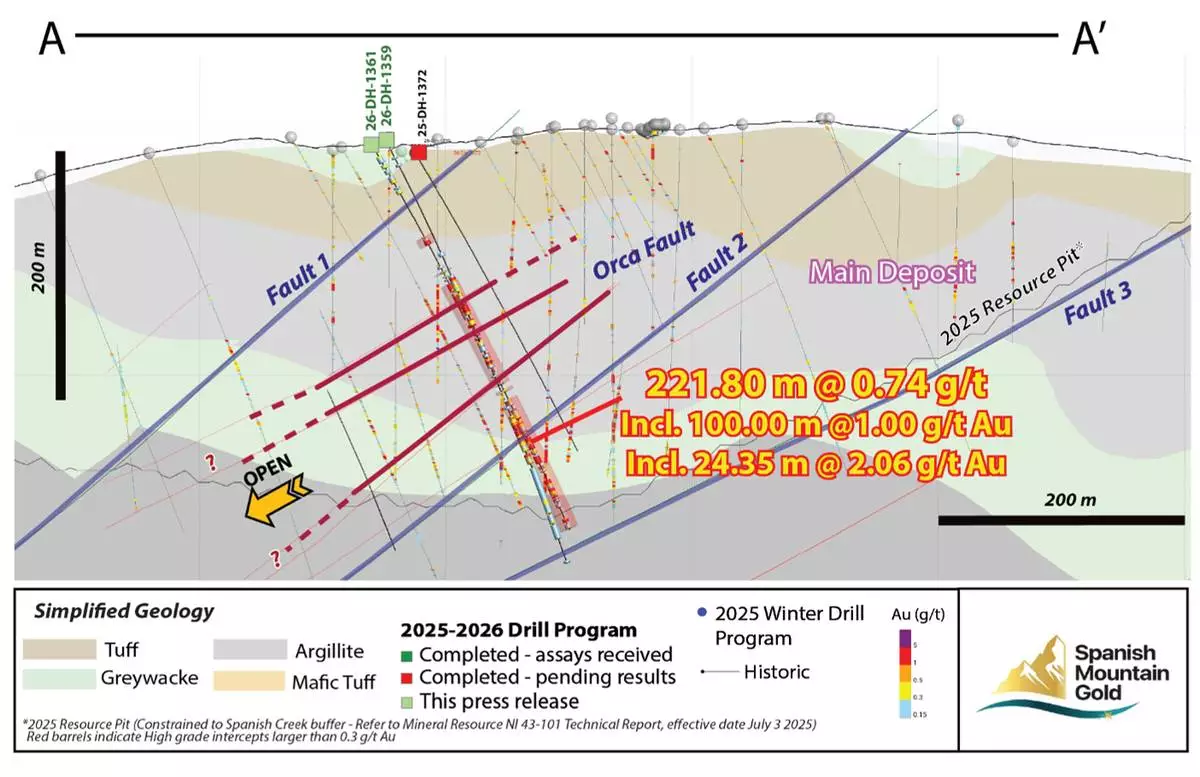
Figure 2: Drill Long Section (30 m thickness) Through the Orca Fault corridor (looking northeast); section line A-A’ Figure 1
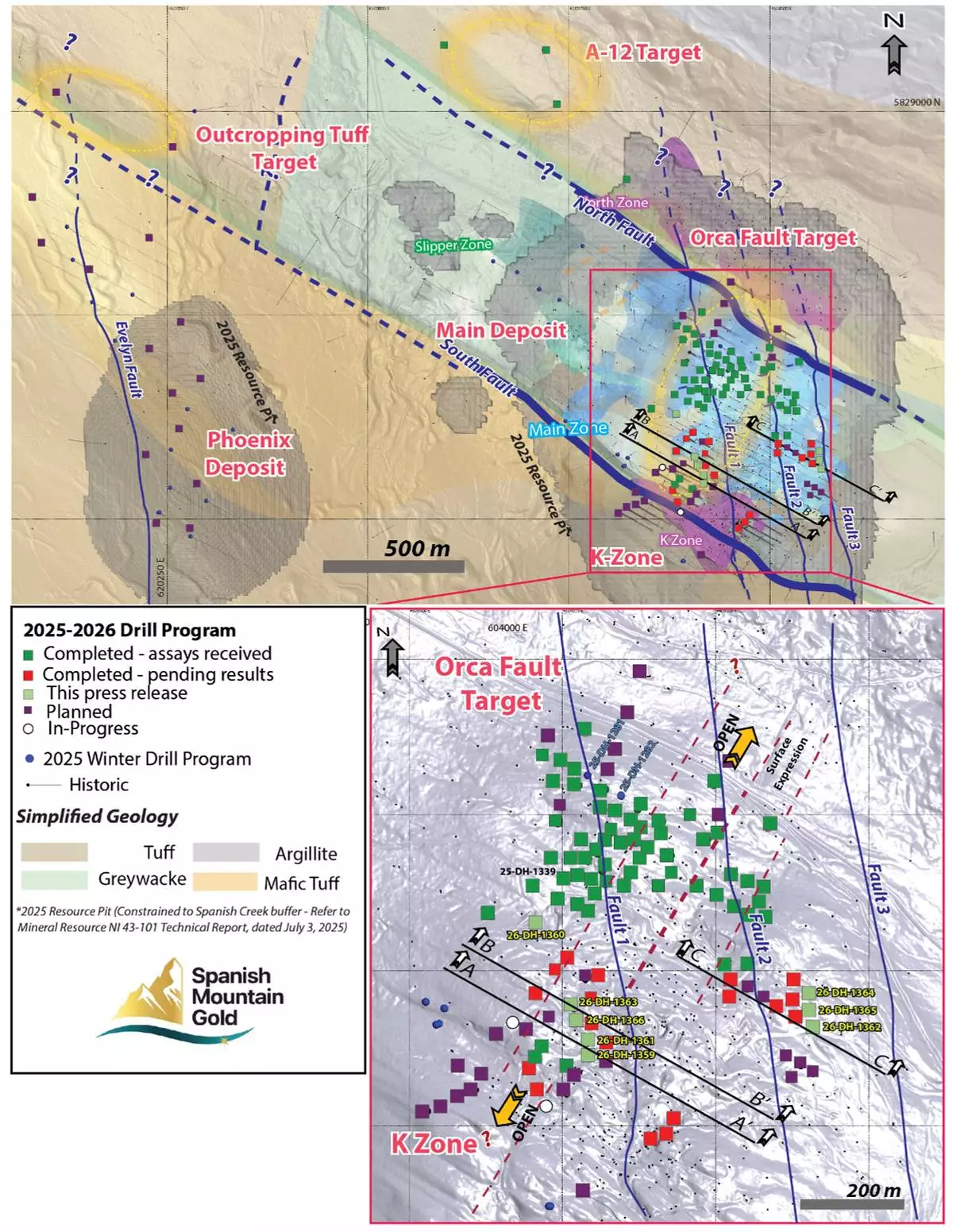
Figure 1: Drill Collar Location Map — 2025-2026 Drill Program. The figure illustrates the collar locations for all 8 drill holes reported in this news release, plus holes with assays pending. Section lines correspond to cross-sections presented in Figures 2, 3, and 4. Collar coordinates are summarized in Table 5. Abbreviations: metres = m, grams per tonne = g/t, gold = Au, mineral resource estimate = MRE, Spanish Mountain Gold = SMG.