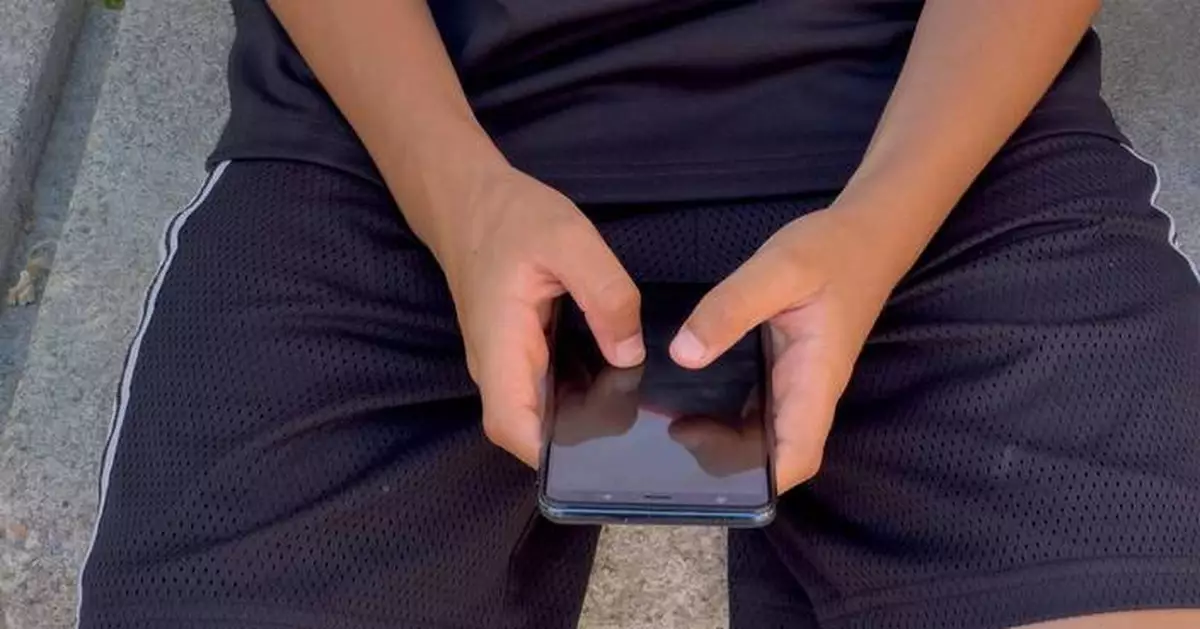
LONDON (AP) — Britain says it will ban people under 16 from using a range of social media apps, including Snapchat, TikTok and YouTube, a decision intended to protect young people from harmful content and excessive screen time.
The U.K. joins a global movement to enforce age-based restrictions or requirements for access to social media. Some parents and child advocacy groups have welcomed them, but critics say they are ineffective and come with privacy concerns.
Here’s what some other countries are doing:
The ban there was described as a global first when it was introduced in December. It bars under-16s from holding accounts on Facebook, Instagram, Kick, Reddit, Snapchat, Threads, TikTok, X, YouTube and Twitch. Technology firms can be fined up to 49.5 million Australian dollars ($35 million) if they fail to take reasonable steps to remove the accounts. No fines have been handed out. The government says companies have shut down almost 5 million accounts identified as belonging to children.
The government announced in March that under-16s will not be allowed to have accounts on platforms that could expose them to addiction, pornography, online scams and cyberbullying, including YouTube, TikTok, Facebook, Instagram, Threads, X, Bigo Live and gaming platform Roblox.
Social media platforms with at least 8 million users in Malaysia, including Facebook, Instagram, TikTok and YouTube, must implement age-verification systems and block users under 16 from creating accounts. Companies that fail to comply can face penalties of up to 10 million ringgit ($2.5 million).
A law that took effect in March stops short of a full ban but requires people under 16 to link their social media accounts to a legal guardian to ensure supervision. The legislation also prohibits platforms from using addictive features such as infinite scroll and the automatic playing of videos. Digital services are also obliged to implement an age verification mechanism that goes beyond self-declaration that the user is over 18 to protect them from accessing inappropriate or prohibited material.
The government introduced legislation this month to create a regulator, the Digital Safety Commission of Canada, which could ban children younger than 16 from having social media accounts unless the companies show they can remove harmful content including nonconsensual intimate images and material that induces children to harm themselves, incites violence or foments hatred.
Other countries, including France, Spain, Denmark, Greece, Thailand and South Korea, are considering or in the process of introducing measures to restrict minors’ access to social media.
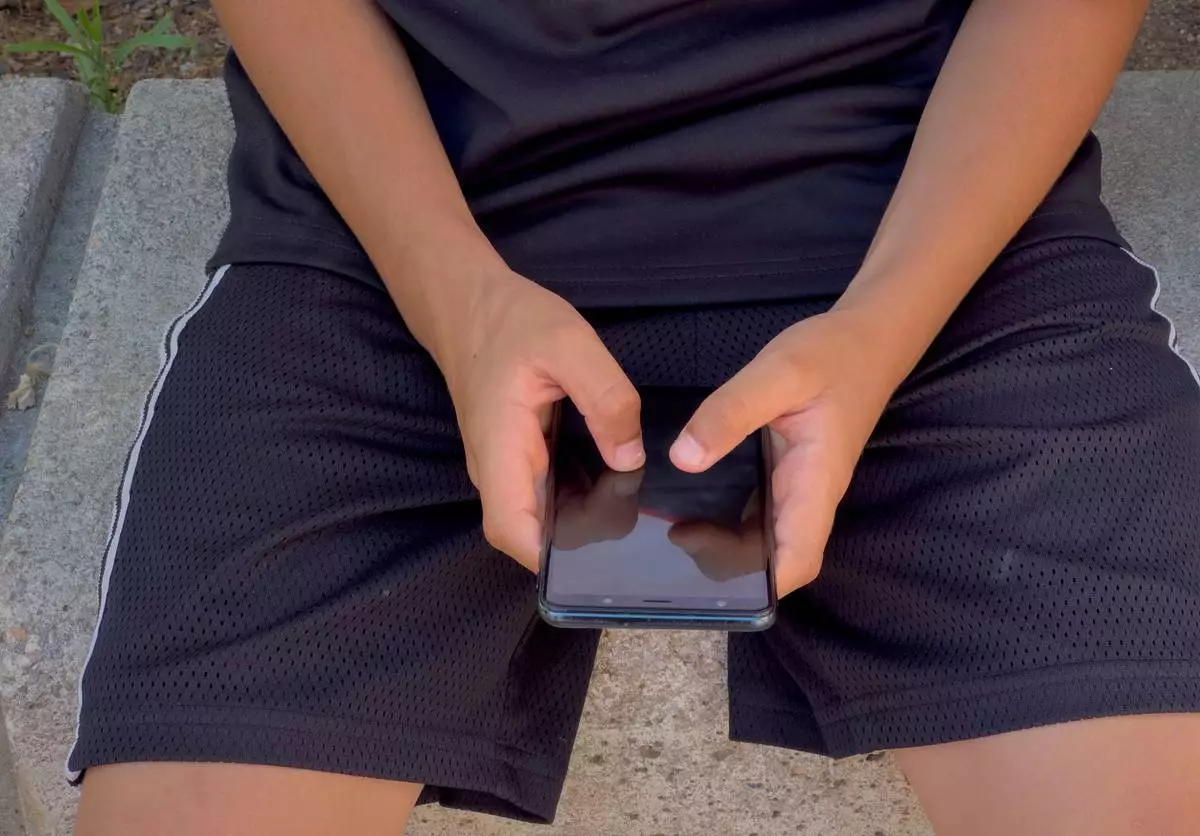
FILE - A 12-year-old boy plays with his personal phone outside school in Barcelona, Spain, Monday, June 17, 2024. (AP Photo/Emilio Morenatti, File)
GENEVA (AP) — FIFA’s discrimination monitor at the World Cup called Monday for a video review official to be removed for appearing to make a hand gesture resembling a white supremacist sign.
When the official broadcast of Germany's opening game against Curaçao on Sunday cut pre-game to show the team of video review analysts, Shaun Evans from Australia made an “OK” symbol with his right hand in front of his right leg. Though the game was played in Houston, video officials work in Dallas at the World Cup broadcast center.
In 2019, the gesture — with thumb and forefinger touched in a circle and other fingers outstretched — was designated a hate symbol by the New York-based Anti-Defamation League.
“Advice from our experts is that the gesture used clearly resembles an upside down ‘OK’ hand symbol used as a ‘white power’ symbol in global far-right circles,” said the Fare network, a long-time partner of FIFA and European soccer body UEFA to monitor racist and discriminatory chants, flags and symbols at international games.
“Clearly this official should have no further role to play in this World Cup,” Fare said in its statement, describing the gesture as “neo-nazi.”
FIFA was asked for comment.
In Australia, the Professional Football Referees Association and governing body Football Australia were contacted for comment.
It was unclear if Evans, working at his second straight World Cup and his first game at this edition, was making a political gesture or playing a children’s game prank.
The “gotcha” or “circle game” is where someone flashes an upside-down OK sign below their waist and punches in the shoulder anyone who looks at it.
It was appropriated a decade ago as a signal for white supremacy that started as a hoax on the far-right online message board 4chan.
The sign got global attention in March 2019 in New Zealand, after it was made during the first court appearance by the white supremacist shooter who killed 51 Muslim worshippers at two mosques in Christchurch.
Later in 2019 when the sign was designated as a hate symbol, Oren Segal, director of the ADL’s Center on Extremism, said context is key to interpreting whether an “OK” symbol is hateful or harmless.
At the time, he said: “There is enough of a volume of use for hateful purposes that we felt it was important to add.”
Evans is among 30 video review analysts selected by FIFA to work at the World Cup being played in the United States, Canada and Mexico.
“Why is a VAR supervisor using this symbol at a global football event at the very moment he knows the cameras are on him?” Fare said. “We note that in the two subsequent games it appears TV directors have stopped introducing the VAR panel to the TV audience.”
AP Sports Writer John Pye in Brisbane, Australia, contributed to this report
AP World Cup: https://apnews.com/hub/fifa-world-cup
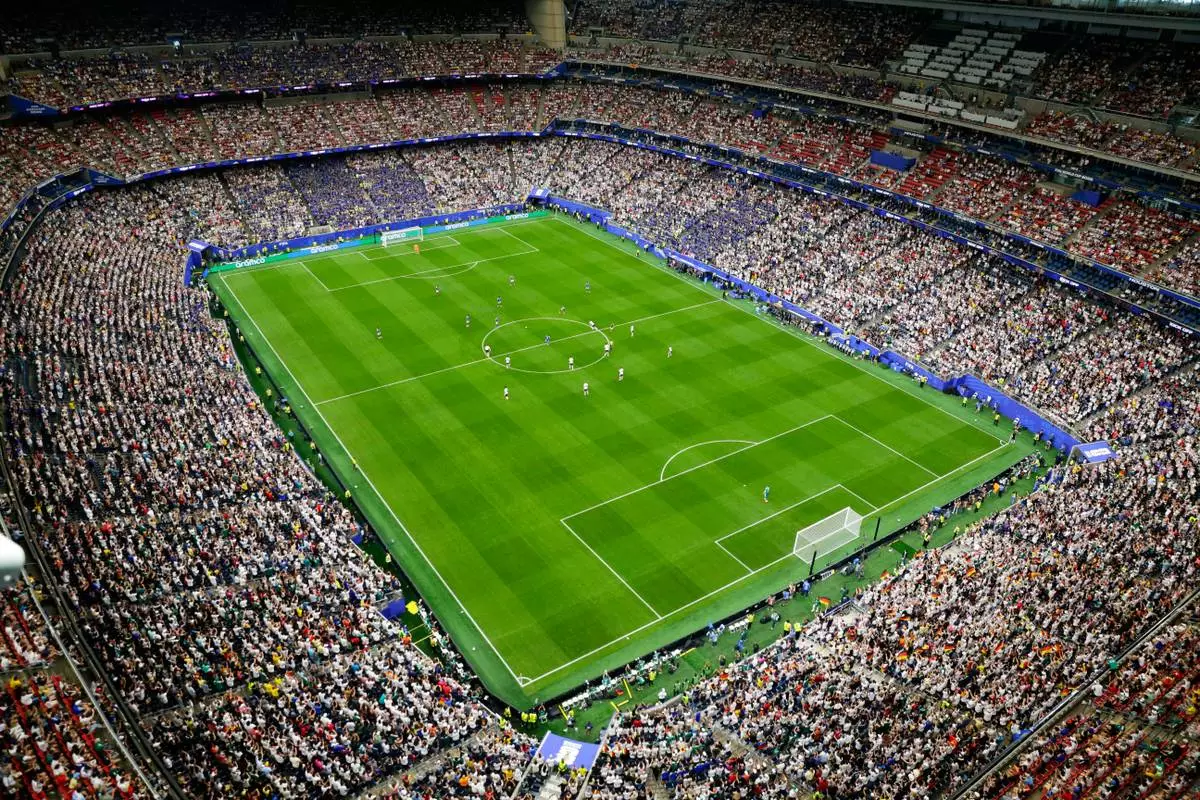
The pitch is seen in this general view during the World Cup Group E soccer match between Germany and Curacao in Houston, Sunday, June 14, 2026. (AP Photo/Michael Wyke)