Skip to Content Facebook Feature Image

A diamond, a whale bone and lots of letters: What's inside the America 250 time capsule

News

A diamond, a whale bone and lots of letters: What's inside the America 250 time capsule
News

News

A diamond, a whale bone and lots of letters: What's inside the America 250 time capsule

2026-06-15 20:34 Last Updated At:06-16 01:11

CONCORD, N.H. (AP) — Paper, the traditional gift for marking a couple’s first year of marriage, also is a great choice for 250th anniversaries — especially when filling a time capsule celebrating American independence.

The 2016 law creating the nonpartisan America250 commission mandated that a time capsule be buried in Philadelphia on July 4, 2026, and dug up 250 years later in 2276. Last week, the resulting 900-pound cylinder was sealed shut, capping years of technical design and construction, collaboration with states and meticulous review of collected items.

“Once it was closed, it was a little bit anti-climactic, and then it was kind of really emotional,” said Michael Berilla, who directs the fabrication technology office at the National Institute of Standards and Technology and led the team that designed and built the capsule.

Berilla’s office, part of the Department of Commerce, has built encasements to protect historical documents in the past, but those tend to be stored indoors under carefully controlled conditions. With time capsules, the number one enemy is water, so much of the design work focused on how to keep it out.

The stainless steel capsule is shaped like a cylinder, not the typical box, because square edges tend to crack and break. It will be covered with a secondary cylinder that will trap air and push out any approaching water, and the capsule itself is rimmed with a soft metal that compresses under pressure.

“When you smash it shut with the lid, that metal goes into all the cracks and spaces and makes an airtight, watertight seal,” Berilla said.

The items inside were at 35% relative humidity. That's moist enough to ensure they won’t dry out and disintegrate, but dry enough that they won’t create moisture problems. The capsule will be buried 10 feet below ground, safe from temperature fluctuations or storm damage, Berilla said.

“Philadelphia would have to be six feet underwater in order for this time capsule to even possibly take on water,” he said. “And if Philly is six feet underwater, you’ve got way bigger problems in the world.”

Inside the capsule are contributions from the three branches of the federal government, many of the ongoing America 250 events and programs, and all 50 states, the five U.S. territories and the District of Columbia. Most contents are in small archival boxes, while paper documents are in a separate compartment. According to a list posted on the America250 website Monday, archival quality paper was a particularly popular choice, with states submitting hundreds of letters, postcards, posters, poems and other printed material.

In a nod to its past, New Hampshire submitted a brochure featuring a timeline of major events in the state’s Revolutionary War history. California looked to the future, including the answer it got when it asked an AI ChatBot, “Write me a prediction of what California will be like 250 years from July 4, 2026.” Highways will be gone, grizzly bears will be back, and the entire state will secede and join Oregon, Washington and British Columbia to form the “Pacific Federation.”

Some states went all out. Utah sent 100 cards featuring historical citizens, 13 coins, eight documents, eight pins, two granite disks and a booklet. Arizona used nano-etching technology to put the full text of the Declaration of Independence and the U.S. Constitution on a stainless steel coin. Other submissions were more bare bones, literally. Maine’s submission included a bone from the endangered North Atlantic right whale. Arkansas sent a diamond.

The variety was fascinating, said Tom Medema, a retired National Park Service official and project manager for the time capsule.

“I’m glad there wasn’t really a prescription for it,” he said. “I know that was hard for them, but in the end, it was just up to them to represent themselves.”

Anything that might degrade or metals that would rust over time was forbidden: Maryland’s submission of Old Bay seasoning was rejected, while Native American beaded artwork backed by elk hide was resubmitted on a fabric background.

Some of the items reflect dark historical times, Medema said, as well as the nation’s current challenges. But an air of optimism still surrounded the project.

“There’s great hope in what this capsule represents and the messages that are put in it,” he said. “Something about this capsule has been truly uplifting for everyone who’s been involved in it.”

This isn’t the first national time capsule tied to the anniversary of the signing of the Declaration of Independence.

A “Century Safe" filled in 1876 was opened by President Gerald Ford in 1976. That year in turn saw the creation of an official Bicentennial time capsule, which is stored at the National Archives and will be opened in 2076. And there’s another time capsule in the works that will be housed at the U.S. Capitol Visitor Center.

To ensure the America 250 capsule is found in 2276, the National Park Service has included details about it in its succession plans to be passed down through time. A capstone with information about it will cover the spot where it's buried.

Berilla, who helped build the capsule, said when he thinks back to what America was like 250 years ago, he thinks about resilience.

“And when I think forward to the future, I hope that’s what they see from us,” he said. “That, yes, we had it hard compared to them, but more importantly, we were diverse. We were interesting. We were creative. We worked together.”

The capsule contains a photo of his team and a letter he wrote on their behalf.

“Greetings from the living, breathing hearts and hands of 2026,” Berilla wrote. “We will have long since returned to dust, but our devotion, pride, and unwavering hope for what our world could become are alive right here inside this steel. We built this for you.”
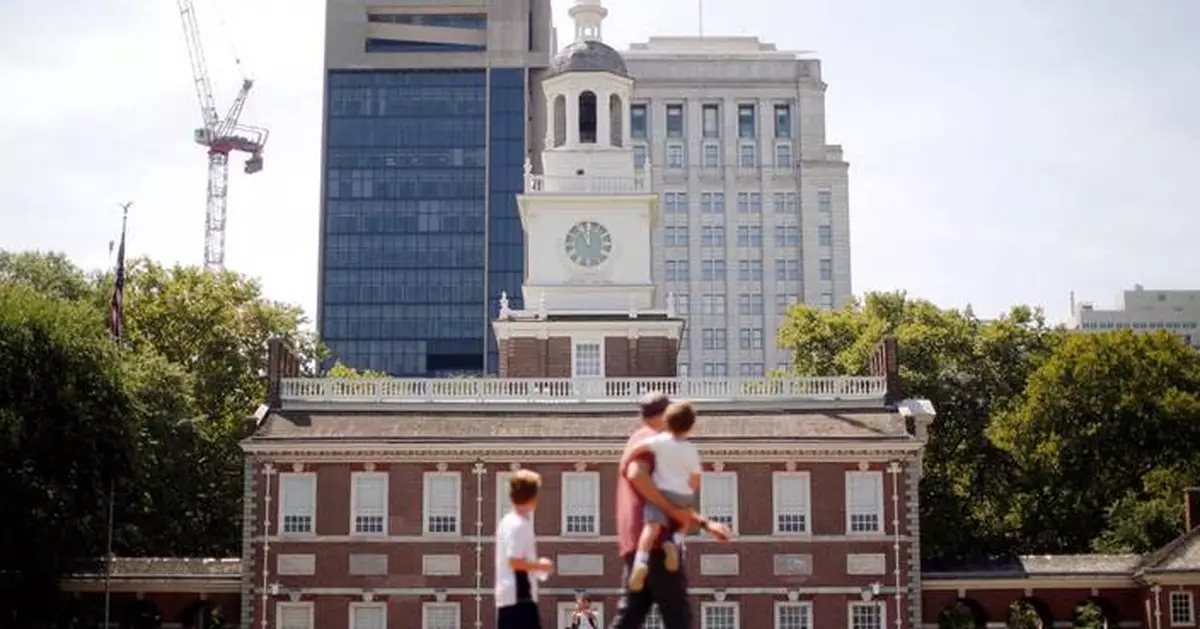
FILE - People walk in view of Independence Hall at the Independence National Historical Park, in Philadelphia, Nov. 12, 2014. (AP Photo/Matt Rourke, File)
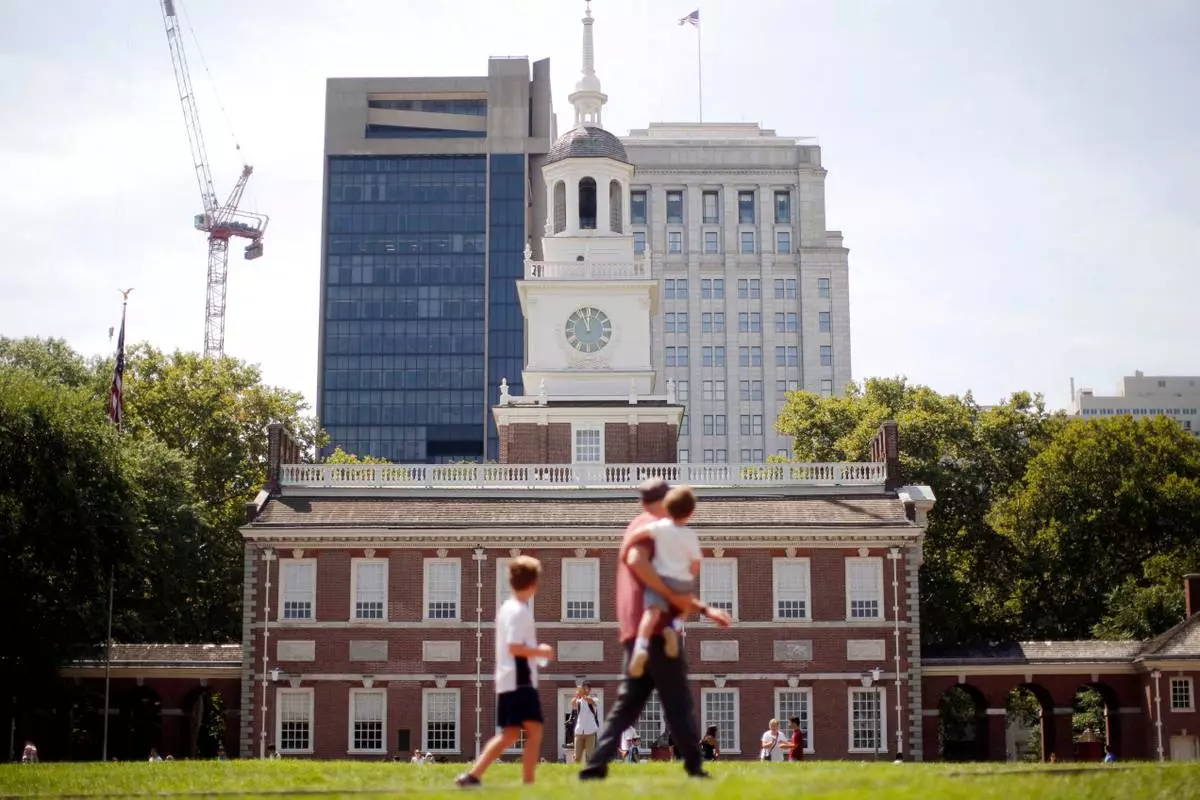
FILE - People walk in view of Independence Hall at the Independence National Historical Park, in Philadelphia, Nov. 12, 2014. (AP Photo/Matt Rourke, File)

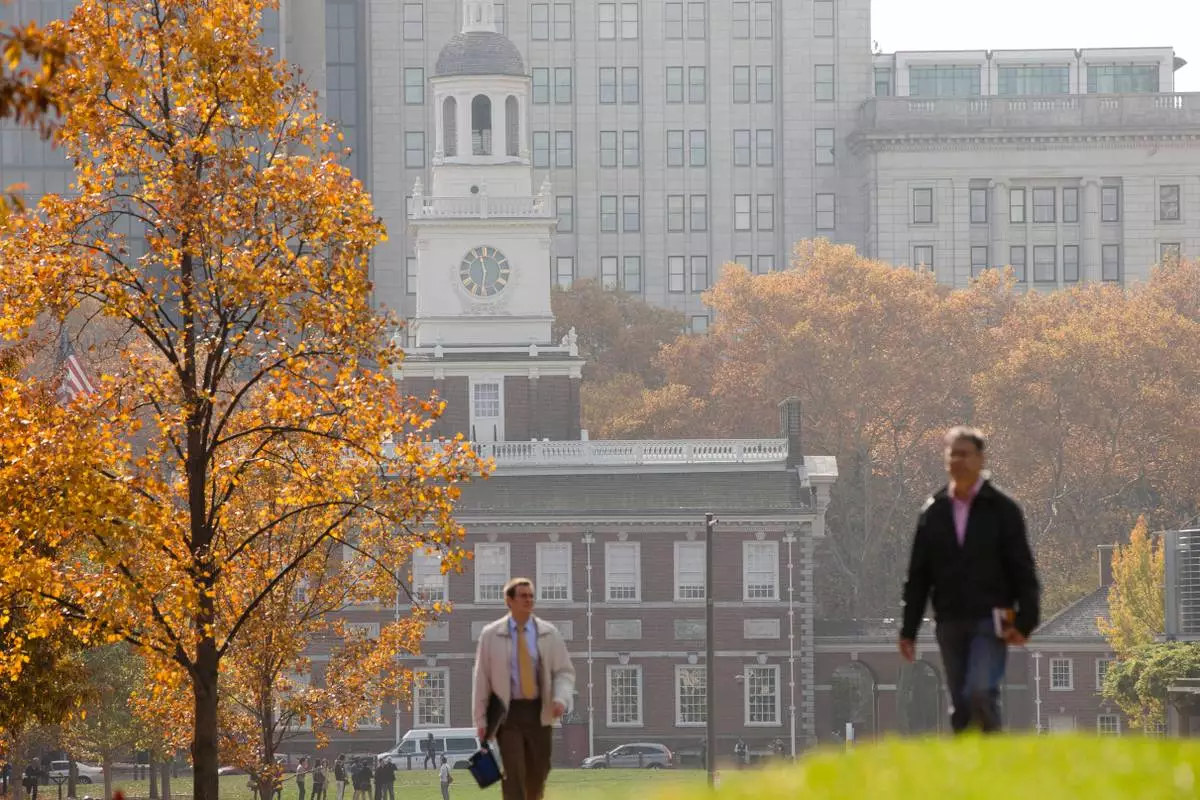
FILE- People move past Independence Hall at the Independence National Historical Park in Philadelphia, Aug. 25, 2016. (AP Photo/Matt Rourke, File)

FILE- People move past Independence Hall at the Independence National Historical Park in Philadelphia, Aug. 25, 2016. (AP Photo/Matt Rourke, File)
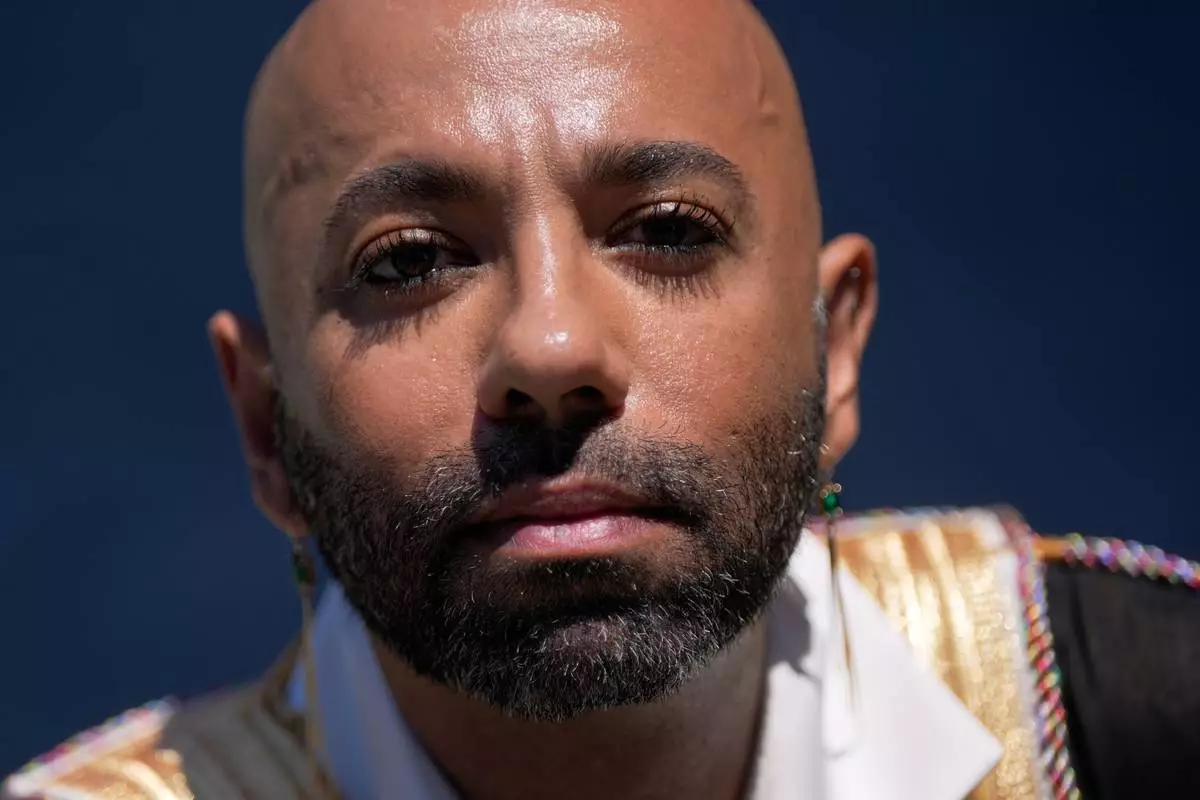
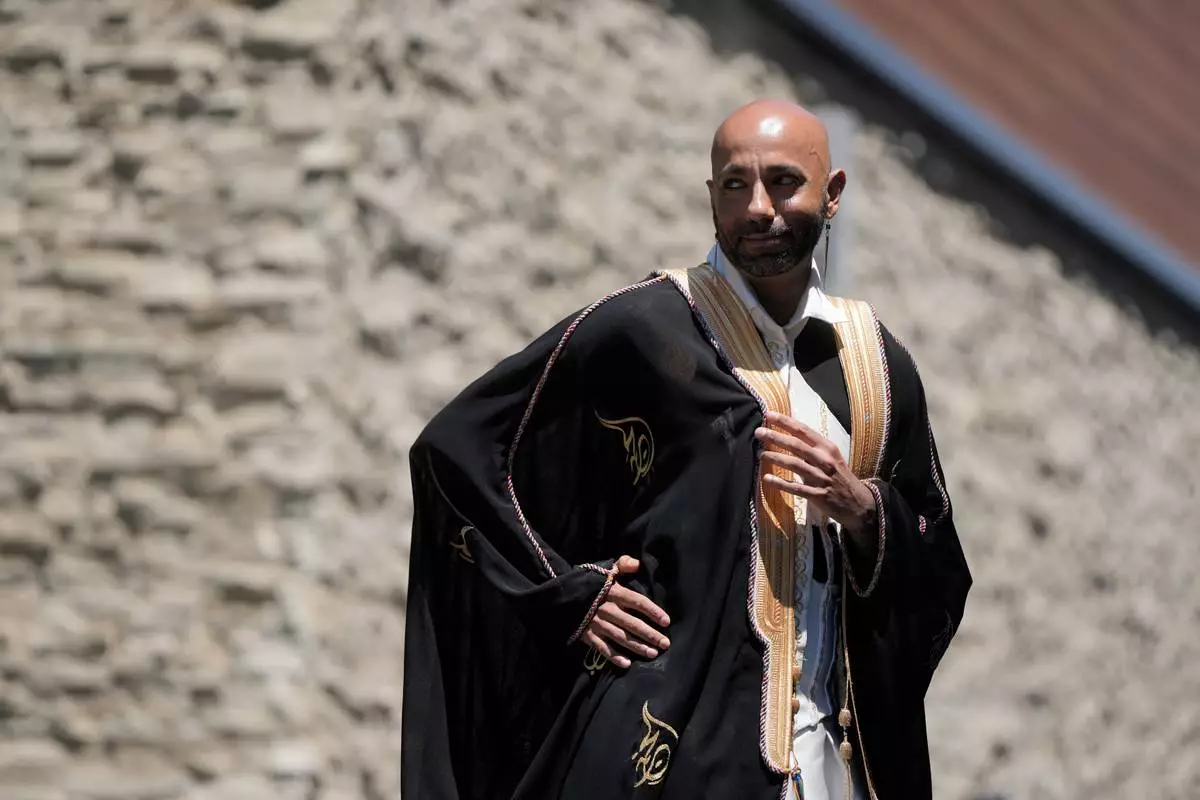
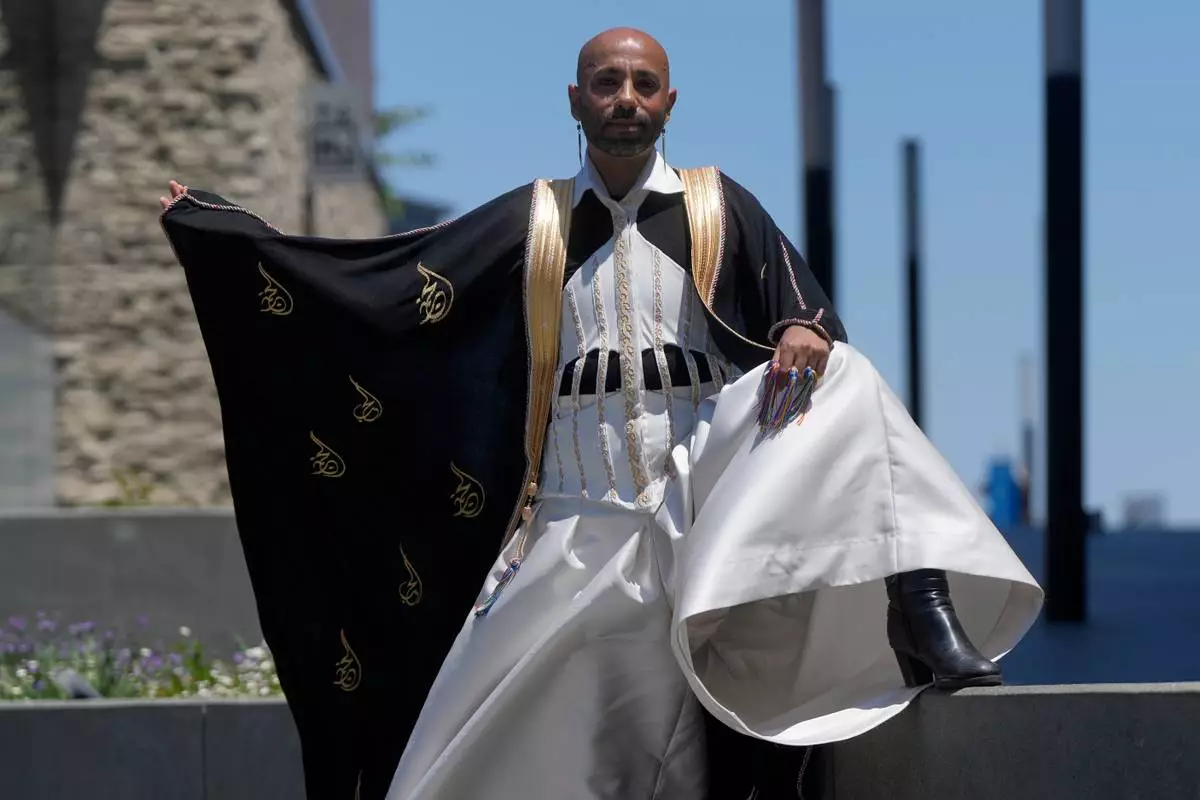
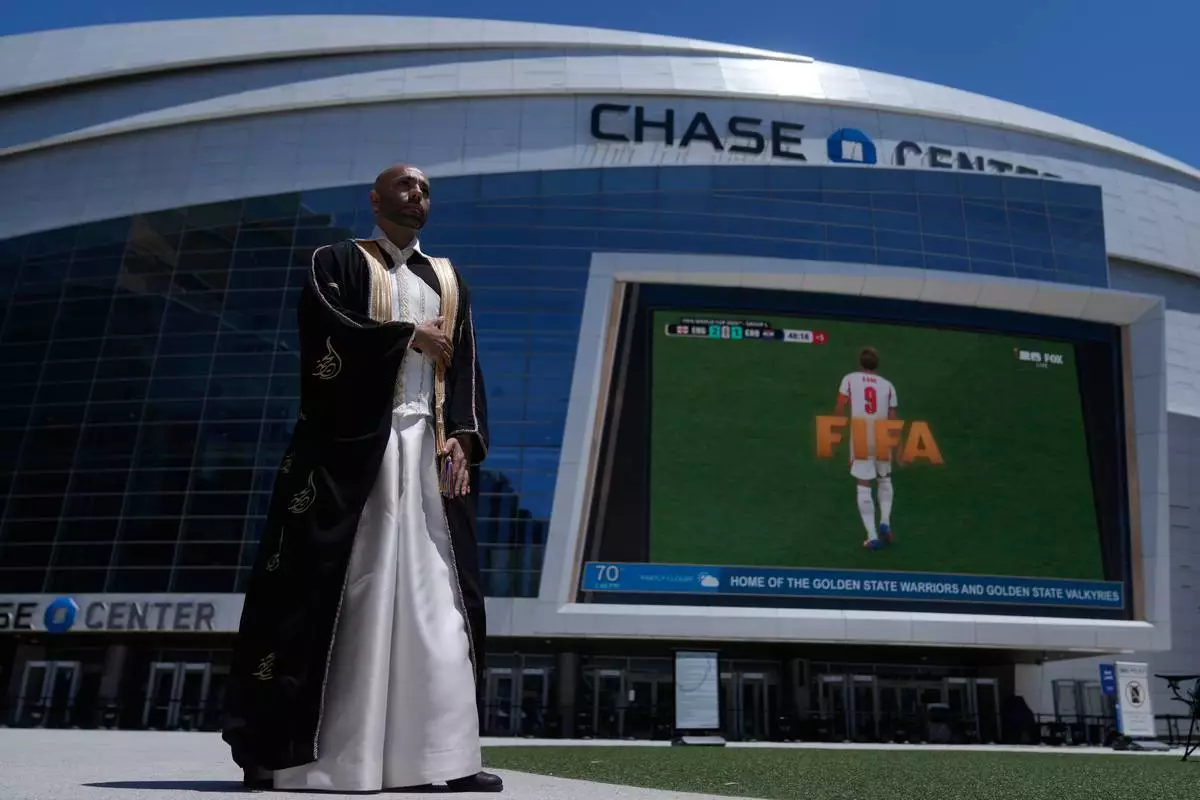
SAN FRANCISCO (AP) — Formally dressed in a traditional Qatari bisht, Dr. Nasser Mohamed strolled past a crowd of several hundred people outside Chase Center as the England-Croatia World Cup match was shown high above on the big screen. His gold-and-black robe featured a flourish: rainbow piping down each sleeve and the words “love” and “freedom” written in Arabic.

“That’s why the World Cup is really powerful, because people don’t need to hear about who I am — I can just walk, be seen, and that’s it,” he said. “We don’t have to say a word.”

Four years ago, when the World Cup was played in his home country and Mohamed was already living across the world in San Francisco, he came out and became an exceptionally rare openly gay man from Qatar, where gay sex is prohibited and he can't dress how he'd like.

Mohamed is speaking up again for those without a voice. The 39-year-old now feels secure enough to walk around with confidence, and without fear of harm, while wearing chunky heeled boots, mascara and 2-inch dangly earrings. He still gets regular backlash and hate, but he has also found support and kindness from around the globe that helps drown out the death threats and divisiveness.

“I am so loved in San Francisco, really, truly,” Mohamed said of the city he moved to more than a decade ago. “I have not worn this since I was a kid in Qatar, and San Francisco put it back on my shoulders, with rainbows.”

For him, donning the bisht for everyone to see is important: “The emir of Qatar put it on (Lionel) Messi at the last World Cup to celebrate Messi. We should be celebrated too.”

An LGBTQ+ activist and family doctor who treats HIV, “Dr. Nas” — as he is known — launched his “Love is the Goal” campaign ahead of the World Cup and Pride Month, hoping to humanize all people taking part. For a video, he combined soccer lingo with references to love, such as him reading “love is kickoff, the very first touch,” and someone else offering “love is the assist, finding you exactly where you are.”

“Saving a life like mine is very expensive, and I know that, and this is the hard truth,” Mohamed said. “So that’s why I had to pave my own path and get out. I lost everything. I’m disowned completely. I had to build myself from scratch, the ground up, all of it.”

On Wednesday, Qatar plays its final group-stage match, against Bosnia-Herzegovina in Seattle. Mohamed won't be there, but he was at the team's first game, on June 13 in Santa Clara, California. He had clear and visible security, and was escorted by California state Sen. Scott Wiener to the 1-1 draw with Switzerland. A photo from the day has more than 12 million views on social media.

“As I was passing, everybody was taking pictures of me with the senator,” he recalled. “It was so dramatic.”

And emotional.

“In the stadium I couldn’t speak because if I started talking I’m not going to stop crying, because when am I going to see Qatar again in my life?” Mohamed said through tears. “When is it ever going to happen again? I don’t know. When am I going to see home? I can’t see Mom and Dad, even when they were getting hit by missiles.”

After the game, he hosted a dance party at the San Francisco Mint highlighted by a performance “Let Your Love Shine,” written by close friend Simon Tam and sung by Debby Holiday.

“Nas’ journey moves me because it is rooted in extraordinary courage and an enormous heart,” Tam said. “He’s taken his own truth and turned it into a way to help others feel seen, worthy, and less alone.”

Tam believes Mohamed can change the world — and that's the doctor's hope, too.

“The first step to heal is to witness things the way they are,” Mohamed said. “My endgame is for every child to belong with their own family and their own society.”

Still, it breaks his heart knowing he can't go back to Qatar. Mohamed has been ostracized by his own family because of his sexuality and for standing up to power to help others. For those in need, including a transgender woman who had been imprisoned and tortured, he has aided their moves out of Qatar and secured resources so they could rebuild their lives elsewhere.

Mohamed is thankful for this new existence, embracing the obstacles that come with his work, even as he believes his safety could be at stake.

“We all fled persecution and took political asylum in the U.S., and now we invited all of them to come here to play soccer,” he said. “I didn’t feel safe leaving my apartment.”

Still, after everything, he roots for Qatar — and the Americans. He plans to watch the U.S. during the round of 32 next week in Santa Clara.

“I am cheering for both the United States and for Qatar with love,” he said. “They both had homes for me and, when I challenge either of them, it is out of love, and I mean it.”

AP World Cup: https://apnews.com/fifa-world-cup

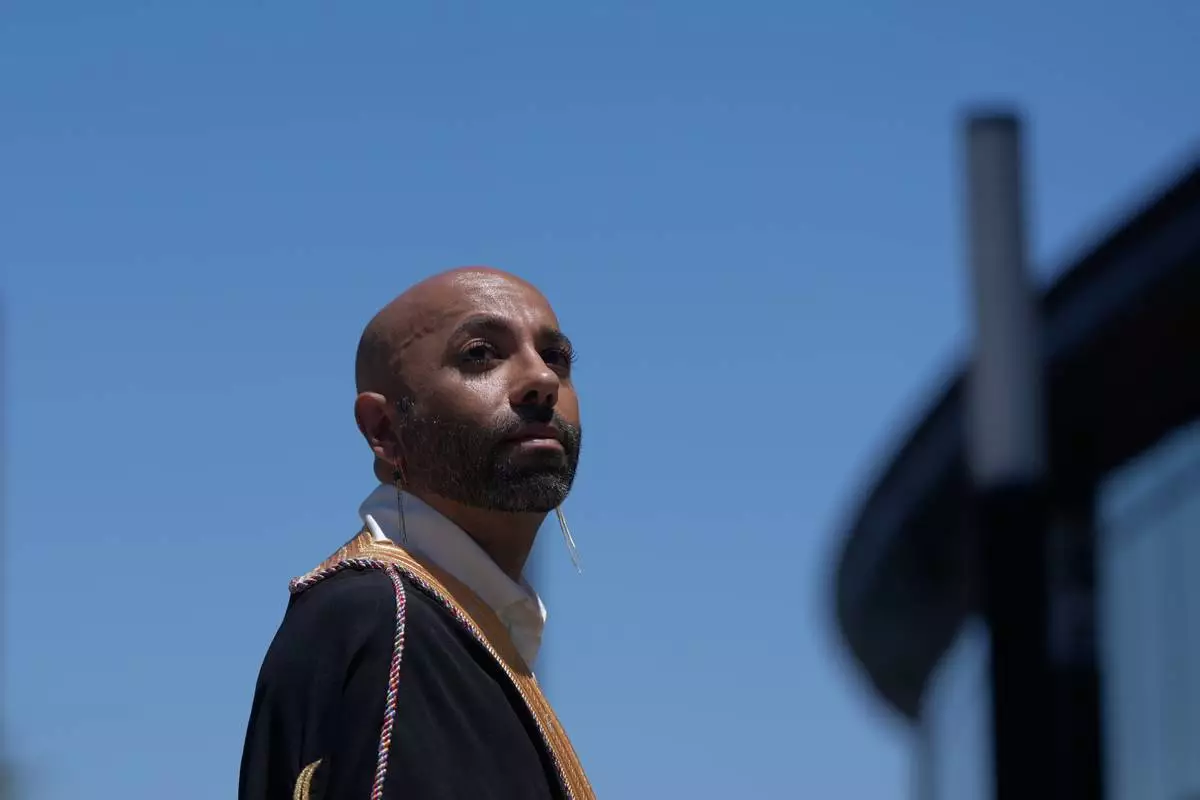
Dr. Nasser Mohamed, of Qatar, is photographed, Wednesday, June 17, 2026, in San Francisco. (AP Photo/Jeff Chiu)

Dr. Nasser Mohamed, of Qatar, is photographed, Wednesday, June 17, 2026, in San Francisco. (AP Photo/Jeff Chiu)

Dr. Nasser Mohamed, of Qatar, is photographed, Wednesday, June 17, 2026, in San Francisco. (AP Photo/Jeff Chiu)

Dr. Nasser Mohamed, of Qatar, is photographed, Wednesday, June 17, 2026, in San Francisco. (AP Photo/Jeff Chiu)

Dr. Nasser Mohamed, of Qatar, is photographed, Wednesday, June 17, 2026, in San Francisco. (AP Photo/Jeff Chiu)

Dr. Nasser Mohamed, of Qatar, is photographed, Wednesday, June 17, 2026, in San Francisco. (AP Photo/Jeff Chiu)

Dr. Nasser Mohamed, of Qatar, is photographed, Wednesday, June 17, 2026, in San Francisco. (AP Photo/Jeff Chiu)

Dr. Nasser Mohamed, of Qatar, is photographed, Wednesday, June 17, 2026, in San Francisco. (AP Photo/Jeff Chiu)

Dr. Nasser Mohamed, of Qatar, is photographed, Wednesday, June 17, 2026, in San Francisco. (AP Photo/Jeff Chiu)

Dr. Nasser Mohamed, of Qatar, is photographed, Wednesday, June 17, 2026, in San Francisco. (AP Photo/Jeff Chiu)

Recommended Articles