BRUSSELS (AP) — Ukraine on Monday officially started European Union membership negotiations, launching a process that will require its government to commit to years of political reforms even as it fights a Russian invasion.
Ukrainian Deputy Prime Minister Taras Kachka took part in an intergovernmental conference in Luxembourg to open talks that will help Kyiv align with the 27-member bloc's laws, standards and values.
“Aggression against Ukraine and threats against Europe is a permanent policy of Russia, so that’s why we need to be united," Kachka told journalists. "That’s why we need faster and very comprehensive accession to the European Union.”
Ukraine sees EU membership as a security guarantee for a stable future once the war ends. Its best guarantee would be membership in the NATO military alliance, but the Trump administration insists that cannot happen, and others are wary of it joining while the war continues.
Moldova also officially launched its membership talks. Russia has long tried to keep the country within its orbit, and last year Moscow was accused of waging a disinformation campaign driven by artificial intelligence during elections.
Countries hoping to join the EU must complete negotiations in 35 policy areas, or chapters, from agriculture to taxation and energy to trade, a process which can take years.
Monday’s meeting saw the opening of five key chapters — grouped as “clusters” — that underpin the values and principles on which the bloc was founded, notably the rule of law, fundamental rights and the functioning of democratic institutions.
The chapters are judiciary and fundamental rights, justice, freedom and security, public procurement, and statistics and financial control. The cluster is important for some EU countries that worry about Ukraine’s ability and willingness to fight corruption.
Last month, two national agencies fighting corruption named Ukrainian President Volodymyr Zelenskyy's former chief of staff as an official suspect in a major graft investigation, but they said the Ukrainian leader was not under suspicion.
Some European countries have pushed to get Ukraine in the bloc as quickly as possible. They see Ukraine as vital to Europe's security and have helped bolster its armed forces.
Last month, German Chancellor Friedrich Merz urged his EU partners to consider offering Ukraine “associate membership” to help breathe new life into talks aimed at ending more than four years of war with Russia.
Other countries — France and the Netherlands among them — have suggested work-arounds to bring Ukraine into the fold more quickly but without the rights of full membership.
But EU officials, and other countries waiting in line to join the bloc, insist that it should be a merits-based process that leads to nothing less than full membership.
Finland’s Foreign Minister Elina Valtonen said that completing the full reform process is vital, and that membership is not simply about securing a “club card for the EU.”
What Ukrainians “truly are after is freedom, democracy and a transparent market economy without any corruption,” she told journalists in Luxembourg.
Ukraine’s accession process was long stymied by Hungary under stridently nationalist former Prime Minister Viktor Orbán, who was considered Russia’s strongest ally in Europe and a possible threat to the EU project. He lost an election this year.
Orbán routinely exploited voting rules that require all 27 member countries to agree on certain rules, sanctions and even political statements. Indeed, unanimous agreement is required for each negotiating chapter to be opened, and then again for it to be closed.
The European Commission froze billions of euros in funds for Hungary in response to democratic backsliding led by Orbán, and concern lingers about the damage that can be done when one unhappy government insists on wielding its veto.
“We need to be very cautious in the future and make sure that these are countries that really want to be a part of Europe, and a part of the European Union, and are willing to work with us,” Swedish Foreign Minister Maria Malmer Stenergard said.
“In order for the EU to be really strong, we need to make sure that this doesn’t happen again,” she said.
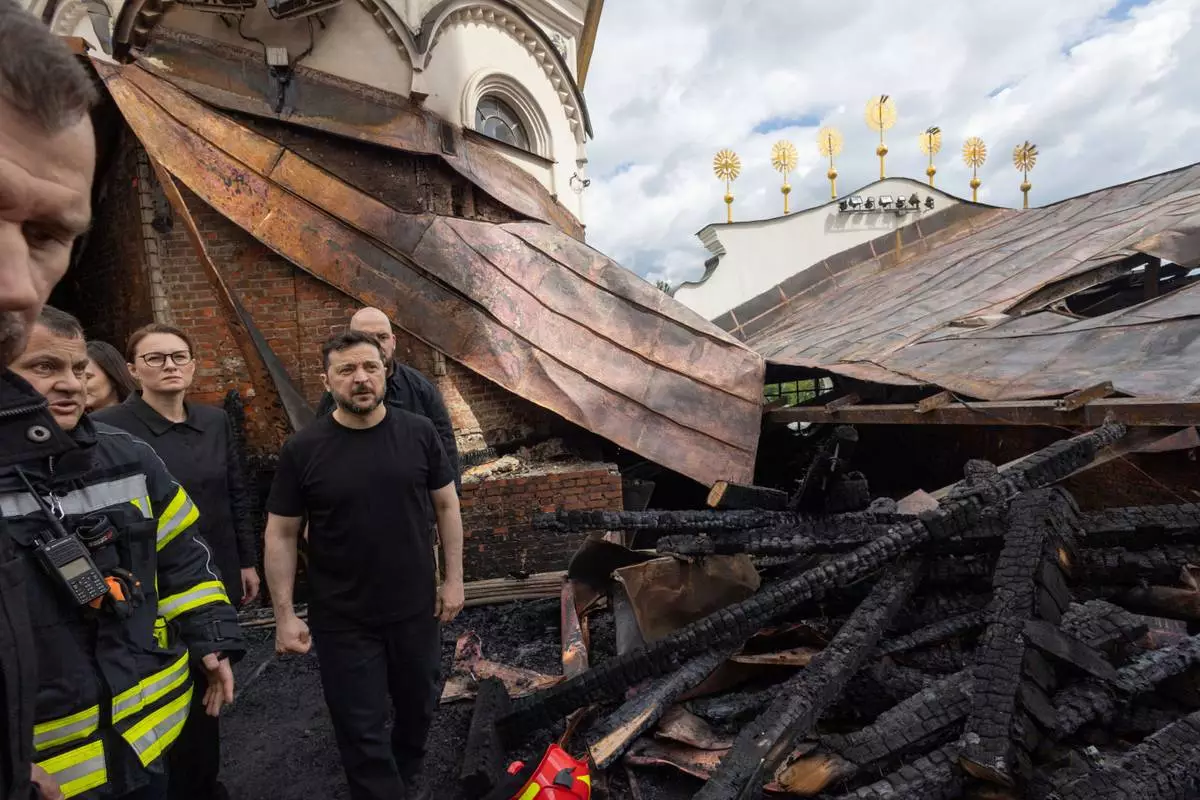
Accompanied by Ukrainian Prime Minister Yulia Svyrydenko, center, left, and Interior Minister Ihor Klymenko, President Volodymyr Zelenskyy, center, enters the Dormition Cathedral of the Kyiv-Pechersk Lavra, which was damaged in an overnight drone attack in Kyiv, Ukraine, Monday, June 15, 2026.
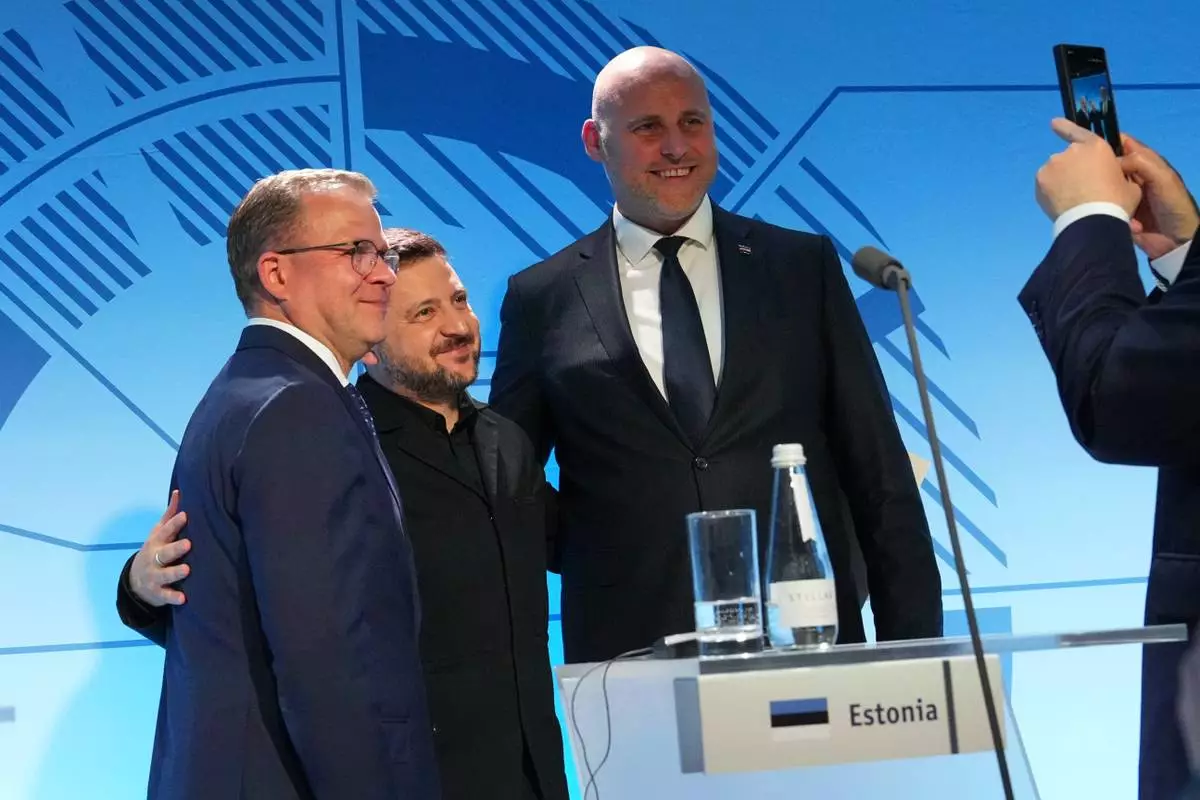
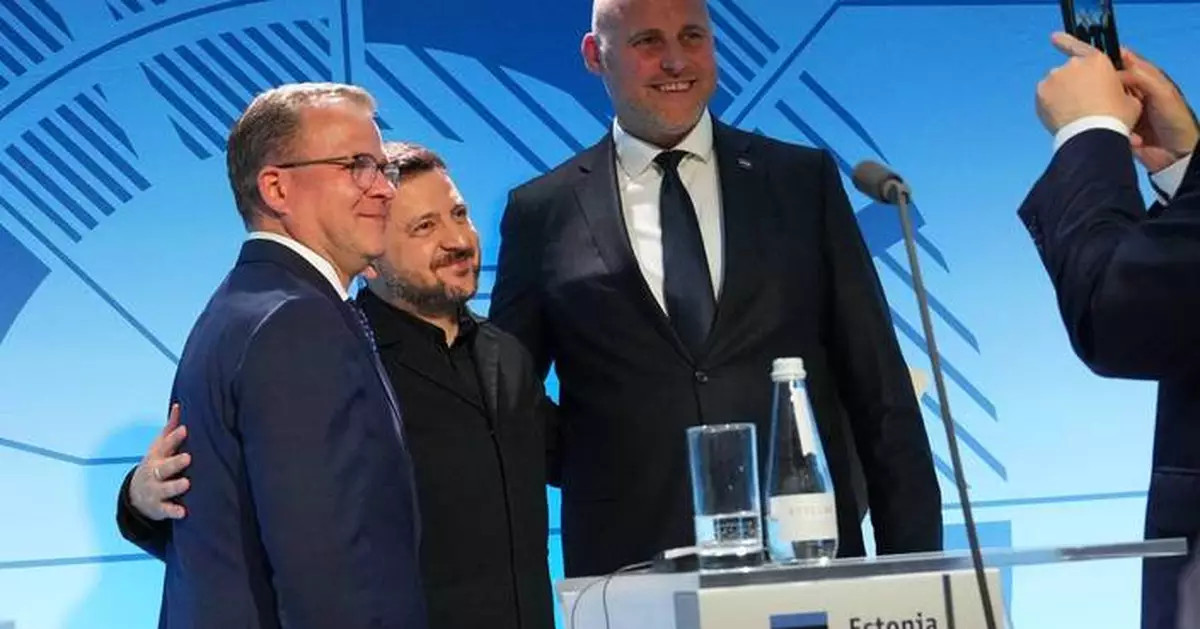
From left, Finnish Prime Minister Petteri Orpo, Ukraine's President Volodymyr Zelenskyy and Latvia's Prime Minister Andris Kulbergs pose for photo after a news conference at the Nordic and Baltic countries meeting in Tallinn, Estonia, Tuesday, June 9, 2026. (AP Photo/Sergei Grits)
DUBAI, United Arab Emirates (AP) — Iran will immediately take steps to reopen the Strait of Hormuz once a tentative deal with the U.S. to end the war is signed and will be allowed to sell its oil without restrictions, according to leaked copies of an interim agreement that officials say broadly matches the document.
The accord, due to be formally signed in a ceremony in Switzerland on Friday, lays out that the U.S. would secure at least $300 billion to rebuild Iran after the war and work to end all American and United Nations sanctions imposed on Tehran if a final agreement addressing Iran’s nuclear program is reached.
The U.S. agreement to immediately allow Iran to sell its oil freely and the offer to eventually lift all sanctions represent major concessions that outstrip the terms of Iran’s 2015 nuclear deal with world powers, which U.S. President Donald Trump unilaterally withdrew America from in his first term, declaring it the “worst deal ever.” This new accord likely will draw intense criticism in Washington — and appears to be a major setback for Israeli Prime Minister Benjamin Netanyahu, who launched the war with Trump on Feb. 28.
The deal calls for an immediate end to all fighting in Lebanon between Israel and the Iranian-backed militia Hezbollah. That is one of the most delicate parts of the agreement because Israel has maintained it will continue to defend itself and to occupy vast swaths of Lebanon. Iran has said it must withdraw under the deal, although the leaked versions make no mention of withdrawal.
The two sides are to start 60 days of negotiations over a final deal that the Trump administration insists will prevent Iran from ever developing a nuclear weapon. The U.S. offers appear aimed at enticing Iran to strike an agreement.
But in the meantime, Iran appears to be getting benefits up front while making few concessions. Much of the agreement would restore the status quo before the war, including ending hostilities and reopening the strait, which is a crucial passage for the world's oil and natural gas and whose closure created a historic energy crisis.
Other concessions to Iran — some of which are extraordinary, including the money for rebuilding, the full lifting of sanctions and the release of frozen assets — appear dependent on the progress of further negotiations on Iran's nuclear program.
A person who was briefed on the memorandum of understanding after it was signed and another who viewed a copy beforehand said it largely matched the text of what was published by the Saudi-owned broadcaster Al Arabiya, which reported details of the deal Tuesday. The two people spoke on condition of anonymity because of the sensitivity of the discussions.
Another two officials in the Mideast, who spoke on condition of anonymity for the same reason, also said the versions published by Al Arabiya and Bloomberg broadly matched the final agreement.
The White House and other American officials have not published the terms and did not immediately respond to questions. Iran also has not published an official version of the deal. Iran's semiofficial Tasnim news agency, close to its paramilitary Revolutionary Guard, claimed Wednesday that Bloomberg's version had missing portions, without offering a full accounting.
The deal provides a major win for the global economy — the reopening of the Strait of Hormuz, the narrow mouth of the Persian Gulf through which a fifth of all oil and natural gas traded once passed before the war began. Since then, Iranian attacks on shipping and the threat to vessels effectively shut the strait.
The strait's closure drove up energy prices around the world and made many basics, including food, more expensive. Iran let out some vessels that paid tolls, something never done before in the strait, which sits in the territorial waters of Iran and Oman and long has been considered an international waterway. The U.S. later provided military support to get other tankers out, but traffic through the strait was nowhere near levels before the war.
The deal calls for the U.S. to lift a blockade imposed on Iranian ports and for the strait to return to its prewar traffic levels in 30 days, while acknowledging Iranian mines may still be in its waters that need to be destroyed.
While the deal says that the eventual lifting of sanctions on Iran will depend on future negotiations, the U.S. will immediately issue waivers on Iranian oil sales.
Granting oil waivers directly at the start of the 60-day talks strips the U.S. of a major point of leverage over Iran. In the years before the 2015 nuclear deal, Iranian oil faced international sanctions limiting their sales. Only at the conclusion of the overall deal in 2015 were those sanctions lifted.
The interim deal also opens the door to ending all sanctions Iran faces from the U.S. and at the U.N. — though it says the schedule for that will be worked out later. Still, that is far beyond the 2015 deal, which only lifted some sanctions in exchange for Iran drastically reducing its enrichment and stockpile of uranium.
The accord would also provide Iran with at least $300 billion to rebuild after an intense U.S. and Israeli bombing campaign — an extraordinary figure and another major benefit for Iran. U.S. Vice President JD Vance has said Gulf Arab nations would provide that amount as investments in Iran.
The interim deal sets a 60-day window, which can be extended, to negotiate over limiting Iran's nuclear program, which has been discussed at multiple rounds of talks during Trump's second administration without success. Iran maintains its nuclear program is peaceful, though it has enough highly enriched uranium to build multiple atomic bombs, should it choose to do so, according to the International Atomic Energy Agency.
In the interim deal, Iran reiterates that it will never produce nuclear weapons — a promise that it also made in the 2015 nuclear accord. Iranian diplomats have long pointed to statements from the late Ayatollah Ali Khamenei that Iran wouldn’t build an atomic bomb. It remains unclear whether Khamenei’s son, Iran’s new Supreme Leader Ayatollah Mojtaba Khamenei, will follow that or not.
Trump has cited shifting goals for the war, including at times vowing it would end Iran’s nuclear and missile programs and its support for Hezbollah and other proxy groups in the region. He also suggested it could lead to toppling the Iranian government.
The interim deal falls short of all of these goals. The negotiations also exposed a rift between Netanyahu and Trump, the Israeli leader’s closest and most important ally, just as Netanyahu is seeking reelection. Netanyahu has come under heavy domestic criticism over the emerging deal but will be hard pressed to go against Trump, given Israel’s heavy reliance on the U.S. for diplomatic and military support.
Miller and Price reported from Washington, and Magdy from Cairo.
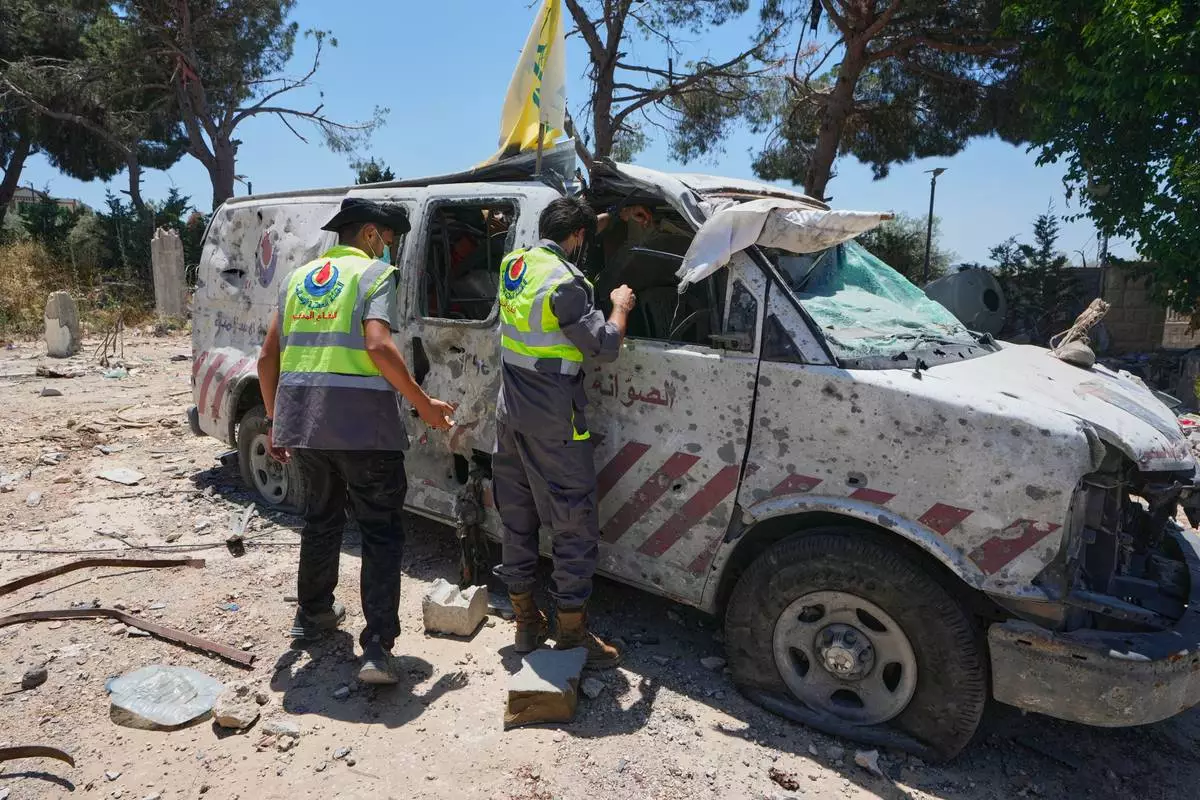
Rescue workers inspect a damaged ambulance belonging to Hezbollah's health unit that was hit in a previous Israeli airstrike in the southern village of Souaneh, Lebanon, Tuesday, June 16, 2026. (AP Photo/Mohammed Zaatari)
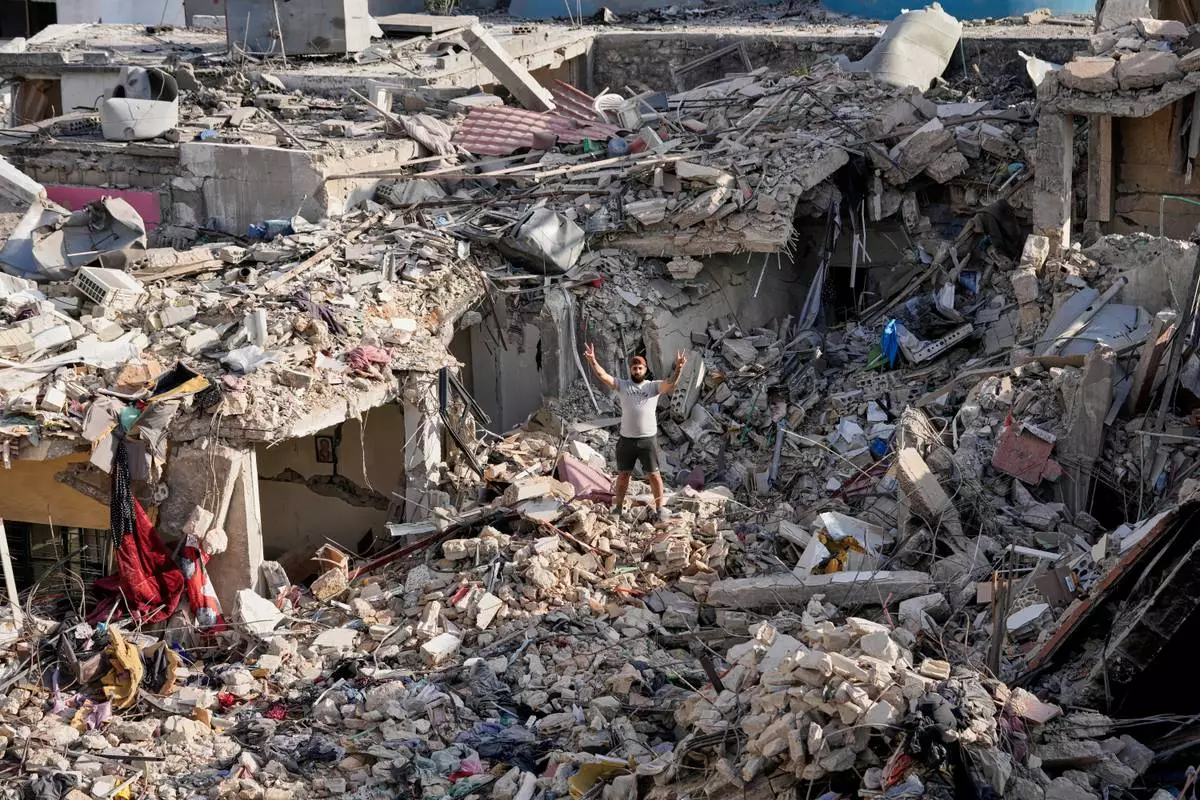
A man who returns to his village following the announcement of an initial ceasefire agreement between the United States and Iran, flashes victory sign as he stands on the rubble of his destroyed house in Nabatiyeh town, southern Lebanon, Tuesday, June 16, 2026. (AP Photo/Hussein Malla)
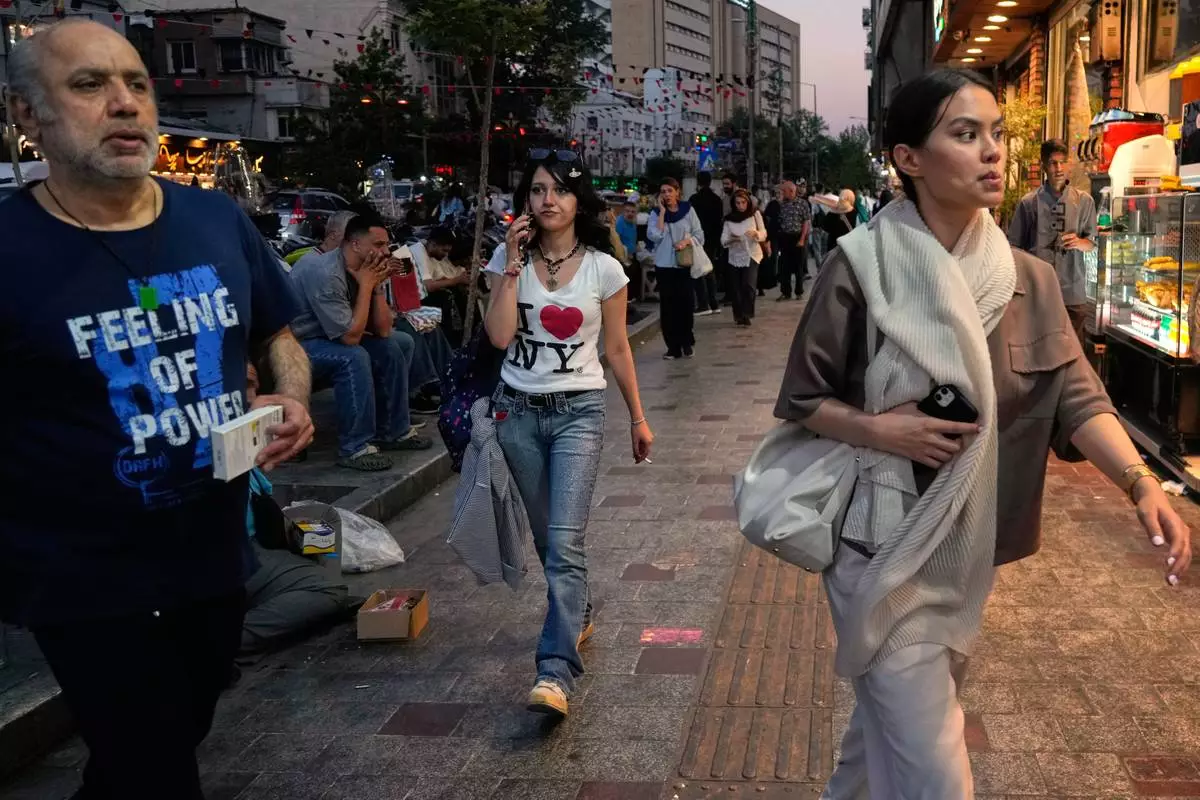
People walk along Tajrish square in northern Tehran, Monday, June 15, 2026. (AP Photo/Vahid Salemi)
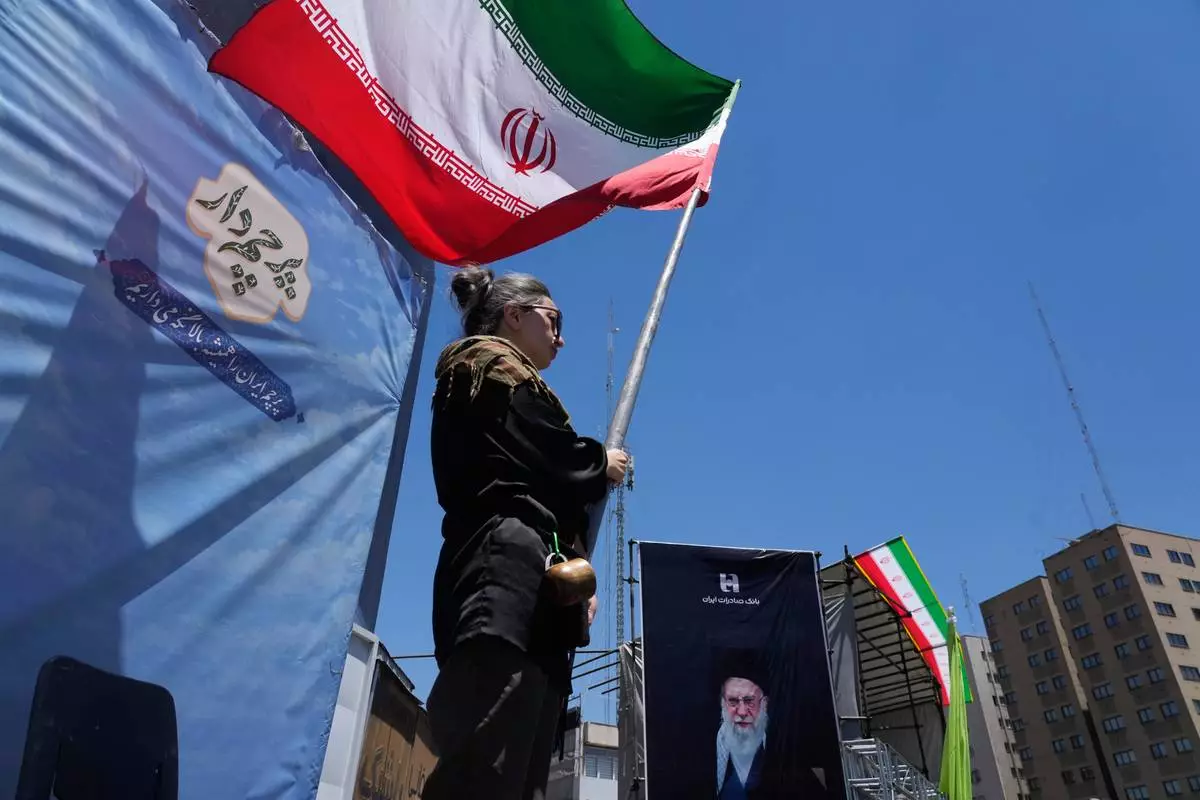
A woman waves an Iranian flag during a pro-government campaign as a portrait of the slain Supreme Leader Ayatollah Ali Khamenei, who was killed in U.S. and Israeli strikes on Feb. 28, is displayed at right, in downtown Tehran, Iran, Monday, June 15, 2026. (AP Photo/Vahid Salemi)