WASHINGTON (AP) — It's common knowledge that ticks can spread infections that cause serious illnesses, including Lyme disease. Now health officials are trying to raise awareness of a lesser-known problem: a life-threatening allergy to meat triggered by tick bites.
The problem, known as alpha-gal syndrome, was first linked to a particular species of ticks about 15 years ago. But cases are on the rise as more people report symptoms such as hives, diarrhea and itchiness after eating as little as a mouthful of meat and — in some cases — dairy. The allergy doesn’t impact consumption of seafood or poultry. Chicken, turkey and eggs are all OK to eat.
For years, the standard treatment has involved avoiding foods that come from cows, pigs and lambs while carrying an epinephrine injector in case of medical emergency. But regulators recently approved the first drug for the condition, and more therapies may be on the way.
Here's what to know about alpha-gal syndrome:
Unlike other tick-borne illnesses, such as Rocky Mountain spotted fever, alpha-gal syndrome isn't caused by a bacteria or a virus. Instead, it occurs when the human immune system triggers an allergic response to a type of sugar, known as alpha-gal.
Alpha-gal is found in the meat of most mammals, but not in humans or other primates. It's also found in the saliva of certain ticks.
When eaten, the sugar is normally harmless. But when ticks bite through the skin, they can introduce the sugar directly into the bloodstream. That triggers the development of antibodies — immune system proteins that fight off foreign invaders — that quickly learn to identify and attack alpha-gal sugar molecules.
“It turns out that the skin is a fantastic way to make an allergic response,” said Dr. Scott Commins, an alpha-gal syndrome researcher at the University of North Carolina. “If this all happened orally, and we were eating alpha-gal like we do with steaks or barbecue, then we wouldn't become allergic.”
People that develop the antibodies will often experience a strong allergic reaction a few hours after consuming meat or dairy. But it can take weeks or months for the problem to develop, with the severity of symptoms often increasing over time.
Experts point to increased awareness among health professionals and the public.
“I think part of it is more people have learned about it and are on the watch for this syndrome,” said Maria Diuk-Wasser, a Columbia University researcher who studies tick-borne diseases.
But rising cases also reflect the expanding habitat range of the lone star tick, the primary source of the condition in the U.S. Often identifiable by a white dot on its back, the lone star tick is most common in the eastern and southern U.S. But in recent years it's been reported in new parts of the country, including the Great Lakes region and as far north as Martha's Vineyard in Massachusetts.
Researchers worry that other types of ticks, including blacklegged ticks, may also increasingly spread the condition.
Roughly 450,000 Americans are estimated to have developed the allergy, according to a 2023 study by the Centers for Disease Control and Prevention.
People usually seek medical attention after experiencing worrisome symptoms, including hives, dizziness, difficulty breathing and swelling of the lips, throat, tongue or eyelids. Some people may only experience digestive issues, including diarrhea, stomach pain, vomiting and nausea.
Doctors diagnose the allergy based on results from a blood test, symptoms and other details reported by the patient, including whether they recall any recent bug bites.
The blood test detects the presence of alpha-gal antibodies, but not all patients with a positive result develop the condition. Sometimes the test can also be wrong.
“The blood test in and of itself is great, but you can’t rely on that just for diagnosis. You need the actual symptoms too,” Commins said. “In the allergy world, we have a lot of trouble with false positives on blood tests.”
Doctors generally advise patients to avoid beef, pork, lamb and other meats from mammals. Some people are still be able to consume dairy products from these animals, including milk, cheese and butter. Those with particularly severe reactions may need to avoid foods made with other animal byproducts such as gelatin, which is found in marshmallows and gummy bears.
One rare exception: meat from a small number of pigs that have been genetically modified to not produce alpha-gal. Approved for consumption by the Food and Drug Administration in 2020, the pigs are bred as part of an experimental effort to harvest animal organs for transplantation into humans. Deactivating the alpha-gal gene was a critical first step to make sure the human immune system wouldn't immediately reject the foreign organs. Meat from these so-called “GalSafe” pigs is available from a company called Amaroo Hills.
People with the syndrome may also have to avoid certain medical products and implants. For instance, many heart valves are made from cow or pig parts.
The allergy can fade away in some people after several years. Commins has seen that happen in about 15% to 20% of his patients. But it's critical to avoid new tick bites.
In 2024, the FDA approved an injectable drug called Xolair for a variety of food allergies, including alpha-gal syndrome. The drug doesn't reverse the condition but helps reduce severe allergic reactions after accidental exposure to meat.
The drug was first approved more than 20 years ago for patients with hard-to-control asthma. It works by reducing the release of biological chemicals that cause inflammation and other allergic reactions.
Commins and other researchers hope to study other previously approved drugs as new options for patients.
“There are certain (biologic drugs) out there nowadays that interfere with the allergic signaling,” Commins said. “We think that if you were on one of those — or if you got one quickly enough after a tick bite — perhaps it could interfere with the entire allergic response process.”
Associated Press video journalist Mary Conlon contributed to this story.
The Associated Press Health and Science Department receives support from the Howard Hughes Medical Institute’s Science and Educational Media Group and the Robert Wood Johnson Foundation. The AP is solely responsible for all content.

This photo provided by the U.S. Centers for Disease Control shows an adult female lone star tick crawling on a blade of grass in 2023. (Lauren Bishop/CDC via AP)
An endorsement from President Donald Trump is worth a lot in Republican primaries. But is it worth more than $100 million in Georgia? Can it propel a congressman past an insurgent outsider in Alabama? Can it transform a candidate into a front-runner in Oklahoma?
Trump has been at the center of this year’s midterm campaigns, and his influence will be tested in different ways Tuesday as four states and the District of Columbia hold primaries.
Among Democrats, the primaries will hinge on longstanding divides between progressives and moderates as the party tries to chart the best path forward to November.
Here's the latest:
Eleven candidates are running in the special primary, which sends the top two voter-getters to a special general election regardless of party affiliation.
Democratic state Sen. Aisha Wahab has focused on housing costs and consumer protections such as banning junk fees. She's endorsed by the state Democratic Party and has leaned into her story of living through foster care and adoption in California.
Another Democratic candidate is Melissa Hernandez, a former mayor of the East Bay city of Dublin, who says she’ll tackle high costs by supporting small businesses and helping create jobs. She’s also emphasized expanding access to healthcare and childcare.
Both candidates also ran in the regular primary election seeking the full two-year term to the House seat.
Jenny Beth Martin and Debbie Dooley were on the front lines of the early tea party movement during Barack Obama’s presidency.
In Georgia’s GOP Senate runoff, they’re on different sides. Each insists her candidate is the one to defeat Democratic Sen. Jon Ossoff in the fall.
Martin backs Rep. Mike Collins, a self-declared “MAGA warrior” with Trump’s endorsement. Dooley supports first-time candidate Derek Dooley (no relation).
Martin says energizing the conservative base is necessary to protect Republican majorities that aren’t populated with Republican “anti-Trumpers” or “liberals like Jon Ossoff.”
Debbie Dooley says Collins has too much baggage and hard-right ties to win. “He will drag down the whole Republican ticket in Georgia,” she predicted. “This is about actually winning. It’s not about just following Donald Trump.”
Debbie Dooley and Martin have diverged before. In 2016, Dooley backed Trump from the start. Martin backed Ted Cruz for the GOP nomination.
The closing days of the Senate runoff between U.S. Rep. Barry Moore and former Navy SEAL Jared Hudson have been marked by a heated back-and-forth over military service.
Some of Hudson’s supporters have accused Moore, a three-term congressman, of inflating his military record.
Moore served in the Alabama National Guard and U.S Army Reserves, and has often emphasized his veteran status. He ran an ad in 2020 saying he knows how to support veterans because he’s been in combat boots.
In a recent video, Moore called it a “garbage swamp tactic” to suggest Guardsmen and reservists aren’t veterans. He said he never claimed to have been in combat.
The two are seeking the Senate seat being vacated by Republican Sen. Tommy Tuberville, who's running for governor.
Trump’s early backing of Republican Rep. Kevin Hern for the U.S. Senate seat previously held by Homeland Security Secretary Markwayne Mullin kept other potential big challengers at bay in Oklahoma, which hasn’t elected a Democratic senator since 1990.
A bigger test may come in the crowded race to succeed outgoing Republican Gov. Kevin Stitt.
Trump last month endorsed former state Sen. Mike Mazzei. Other prominent Oklahoma Republicans seeking the nomination include Attorney General Gentner Drummond, former Oklahoma House Speaker Charles McCall and Chip Keating, the state’s former public safety director.
District of Columbia Mayor Muriel Bowser greeted supporters as she arrived to cast her primary vote at Shepard Park Elementary on Tuesday morning.
This fall, current council members Janeese Lewis George and Kenyan McDuffie are the frontrunners vying to replace Bowser, who was elected in 2014.
Georgia’s secretary of state election is open for the first time since Trump’s attempts to subvert the 2020 election, famously pressuring outgoing Secretary of State Brad Raffensperger to “find 11,800 votes” to overtake Democrat Joe Biden. Raffensperger refused.
For his potential successor, Republicans are left to choose between an outright election denier, Vernon Jones, and a state lawmaker, Tim Fleming, who avoids explicitly disputing the president’s 2020 election lies.
Democrats will choose between Dana Barrett, a Fulton County commissioner, and Penny Brown Reynolds, a former state judge in Fulton County who also served in the Biden administration as deputy assistant secretary for civil rights for the Department of Agriculture.
Retired software engineer James Haddad emigrated from Jordan and became a U.S. citizen in 1983. He backs Rep. Mike Collins in Georgia’s GOP Senate runoff because of Collins’ hardline approach on immigration.
“I’m an immigrant, but I’m a legal immigrant,” Haddad said. “Just follow the law.”
Collins hopes to defeat former football coach Derek Dooley and then draw contrasts on immigration with Democratic Sen. Jon Ossoff in November.
“The congressman is a good American who puts America first,” said Haddad, a 66-year-old from Woodstock.
Collins sponsored the 2025 Laken Riley Act, named for a Georgia nursing student killed by a man in the U.S. illegally. The law requires immigrants charged with certain crimes to be held without bond.
Ossoff voted against an initial version but backed it after Trump returned to power.
“It’s unfortunate that some immigrants have ruined it for others,” Haddad said.
The outgoing Republican governor passed on a Senate bid and recruited his former football coach Derek Dooley. Kemp’s spent months saying it’ll take an “outsider” to defeat Democratic Sen. Jon Ossoff in November.
Meanwhile, until Sunday, Kemp sat out the Republican tussle to be his successor. That runoff pits the sitting lieutenant governor against a first-time candidate. Rick Jackson, a billionaire businessman, labels himself an “outsider” in his ads and plastered the word on his campaign tour bus.
Yet Kemp opted for Burt Jones, the Capitol insider. Campaigning with Jones on Monday, Kemp said there’s no contradiction in his message.
His reasoning, essentially: Georgia state government has been run by Republicans for a generation and things are great, whereas in Washington, where Dooley would go, Congress is often deadlocked and has atrocious approval ratings. But Kemp did not note that Republicans have a trifecta with Trump as president and GOP majorities on Capitol Hill.
There’s the regular race in November that will determine who'll be sworn in come January and serve a full, two-year term in the U.S. House.
But since Swalwell resigned early following sexual assault allegations, there’s also the special election that will decide who will serve out the rest of his current term until January.
Tuesday’s primary will decide the top two candidates for the special general election on August 18. But if one candidate receives more than 50% of the vote, they’ll win outright and there won’t be a general election.
The Texas senator has gotten more active on the Republican campaign circuit.
In Republican governor’s races in South Carolina and Georgia, Cruz finds himself on the opposing side from the president.
Cruz was in Georgia ahead of Tuesday’s runoff to stump for billionaire Rick Jackson. Trump backs Jackson’s rival, Georgia Lt. Gov. Burt Jones.
In the upcoming South Carolina runoff the GOP governor nomination, Cruz backs longtime state Attorney General Alan Wilson over Trump’s pick, Lt. Gov. Pamela Evette.
Cruz, who finished second in Republicans 2016 presidential nominating fight, insisted he’s not picking fights with Trump.
“Not remotely,” Cruz said Monday. He noted he and Trump have both endorsed former New Hampshire Gov. John Sununu in his U.S. Senate bid.
“The president and I agree on the vast majority of races,” Cruz said. “What I try to do in every race is endorse the strongest conservative who can win.”
Georgia gubernatorial candidate Rick Jackson choked up a bit in the closing hours of his GOP runoff campaign explaining why he’s spent nearly $100 million of his own money on the race.
Jackson called his wealth “God’s money” that he directs “the best I can.” And he compared his campaign spending to his years of philanthropy, especially to help children in foster care, where he spent part of his childhood.
“I want our kids, our foster kids and everybody else, to have hope, you know,” he told a lunch crowd Monday.
“I have lived in poverty,” Jackson continued. “When you, when you have not eaten, you never forget that you don’t forget the people that are struggling.”
It was a stark contrast to Jackson’s tone in some of his television ads, including a promise that migrants who are in Georgia illegally and commit crimes will be “deported or departed.”
Voters in the nation’s capital are selecting party candidates for mayor and the district’s delegate to Congress.
Mayor Muriel Bowser, who isn’t seeking reelection, has walked a fine line between staying in Trump’s good graces and responding to the concerns of constituents, many of whom said she didn’t push back hard enough on Trump’s actions.
The district’s long-serving congressional delegate, Eleanor Holmes Norton, is also stepping down.
The election is taking place as Washington undergoes major change under the Trump administration.
Washington has limited autonomy and federal leaders retain significant control over local affairs, including the approval of the budget and laws passed by the D.C. Council.
In 2020, a Georgia state senator named Burt Jones was part of Donald Trump’s alternate Electoral College slate and backed the president’s scheme to overturn his loss to Democrat Joe Biden.
Trump has referenced Jones’ “loyalty” many times since, including when endorsing his bid for governor. Jones, now the lieutenant governor, faces billionaire businessman Rick Jackson in a Tuesday runoff for the Republican nomination.
“Burt was strongly committed to my Campaign in 2016, 2020, and 2024, and worked tirelessly to help us WIN,” Trump wrote on Truth Social on the eve of the runoff. “He has been with us from the very beginning.”
A day earlier, Trump endorsed Rep. Mike Collins in a Senate runoff over former football coach Derek Dooley. The president chided Dooley for saying (months ago and not as a feature of his campaign) that Trump did indeed lose Georgia in 2020.
Collins, meanwhile, has consistently echoed Trump’s false claims of a “rigged” election.
The president’s endorsed candidates have mostly done well so far in the midterm primaries. But the open U.S. Senate race in Alabama will be another test of his endorsement power.
U.S. Rep. Barry Moore, a three-term congressman, faces former Navy SEAL Jared Hudson in the GOP runoff. Trump endorsed Moore early in the campaign, but he's been forced into a heated race with Hudson, a political newcomer.
Hudson, borrowing a page from Trump’s original playbook, has tried to depict Moore as a political insider and has urged voters to send an outsider to Washington.
Trump held a telephone rally for Moore last week.
The candidates are seeking the Senate seat being vacated by Republican Sen. Tommy Tuberville, who's running for governor. The winner will face the Democratic nominee in November.
GOP Gov. Kevin Stitt is term-limited, and former U.S. Sen. Markwayne Mullin vacated his seat to replace Kristi Noem as Homeland Security secretary.
Republican Alan Armstrong, an energy executive, is filling the U.S. Senate seat for now, but state law prohibits him from seeking a full term as an interim appointee.
Rep. Kevin Hern, a four-term congressman endorsed by Trump, is running against four other candidates of lesser profile in the Republican Senate primary.
The GOP primary for governor is more crowded, with nine names on the ballot, including several prominent Republicans. That could lead to an Aug. 25 runoff if no candidate receives at least 50% of the vote to win outright.
The Democrat stepped down in April following allegations that he sexually assaulted a woman twice, including when she worked for him, and other accusations of sexual misconduct.
Swalwell was a leading candidate for California governor at the time and dropped out of the race the same month. He has denied the allegations and said he will defend himself.
The San Francisco Chronicle first reported that a woman accused Swalwell of sexually assaulting her in 2019 and again in 2024. She told the outlet that she had been too intoxicated to consent.
Tuesday’s elections are needed after no Republican won a majority to clinch the nominations in the May primary.
In the Senate race, Rep. Mike Collins, a second-term congressman who calls himself a “MAGA warrior,” and Derek Dooley, a first-time candidate and former football coach, are facing off. The winner will try to oust Democratic Sen. Jon Ossoff in a key November contest. Trump endorsed Collins on Sunday.
The primary for governor pits Lt. Gov. Burt Jones against billionaire Rick Jackson. Trump endorsed Jones last August. The winner will face Democrat Keisha Lance Bottoms, the former mayor of Atlanta, in November.
Voting is underway in one of the city’s most consequential primaries in a generation.
Democrats in the nation’s capital have not had a chance to vote for a new mayor and new delegate to Congress in the same election since 1990, when gas was cheaper than $1.35 a gallon and George H.W. Bush was president.
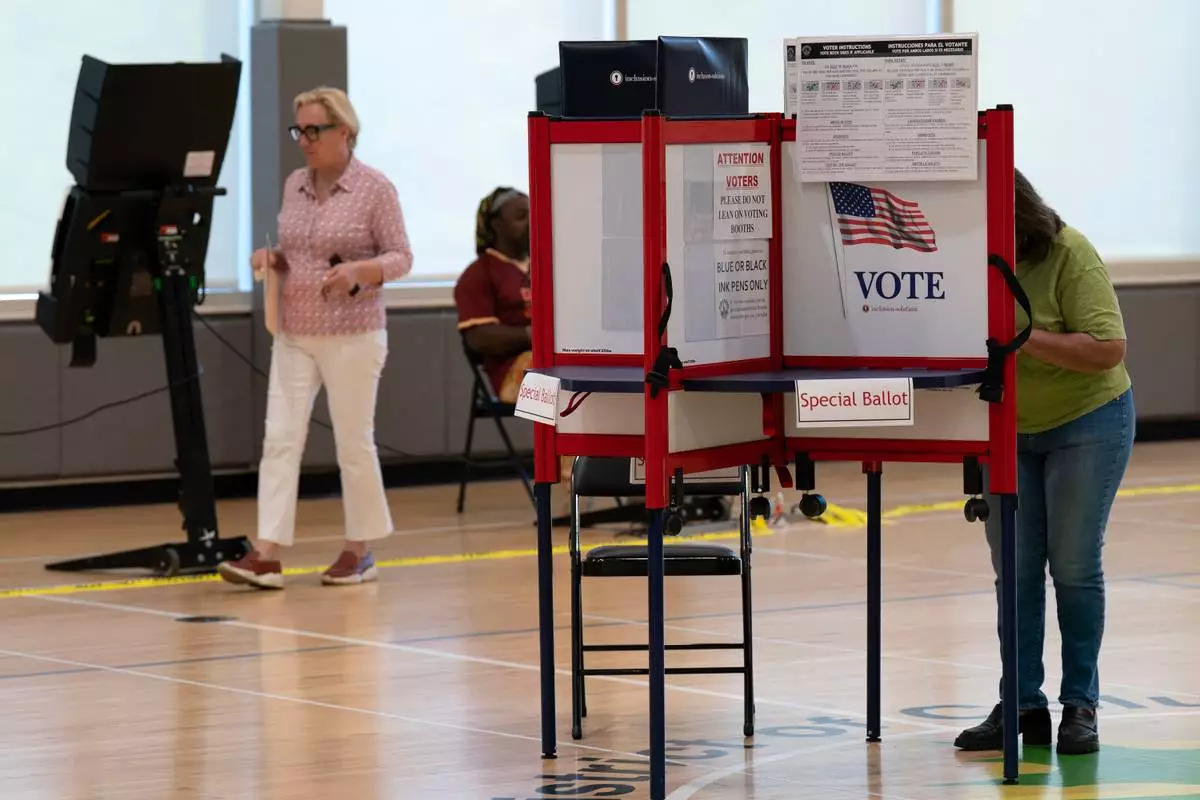
People cast their vote during D.C. primary election at Shepard Park Elementary, Tuesday, June 16, 2026, in Washington. (AP Photo/Jose Luis Magana)
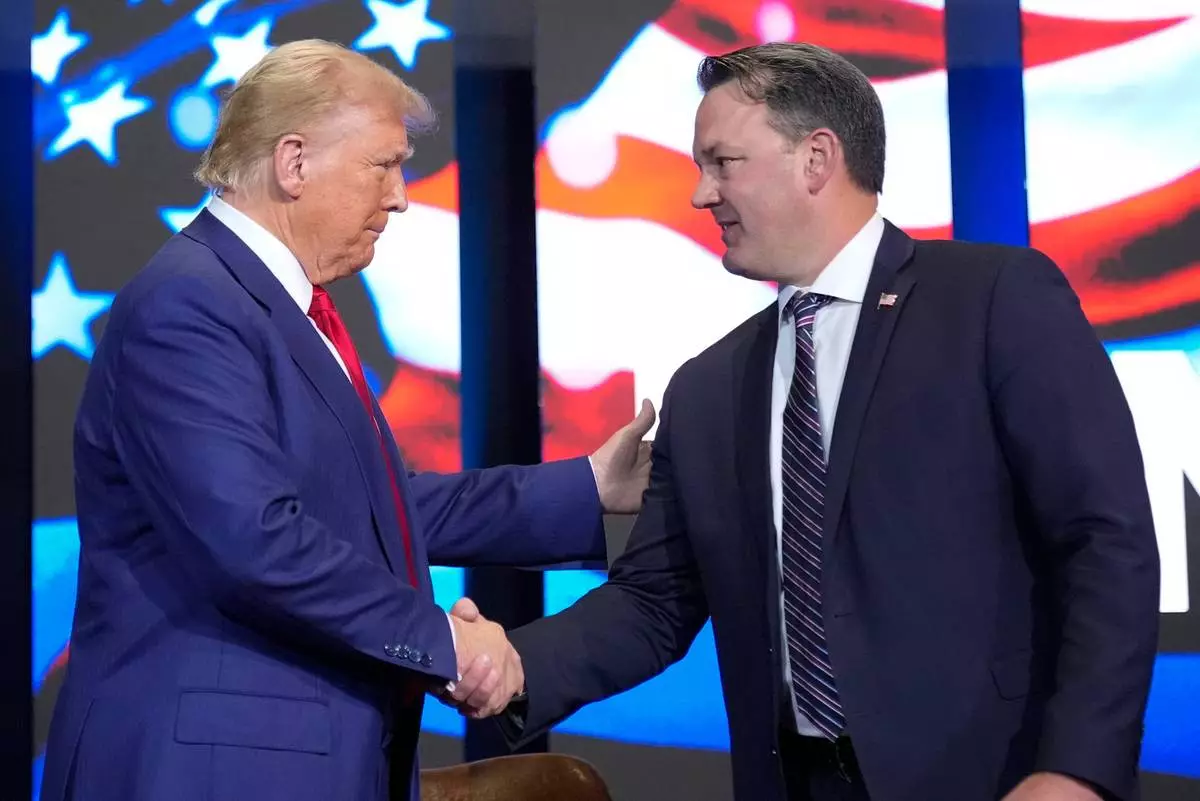
FILE - Republican presidential nominee former President Donald Trump arrives for a faith town hall with Georgia Lt. Gov. Burt Jones, Oct. 23, 2024, in Zebulon, Ga. (AP Photo/Alex Brandon, File)
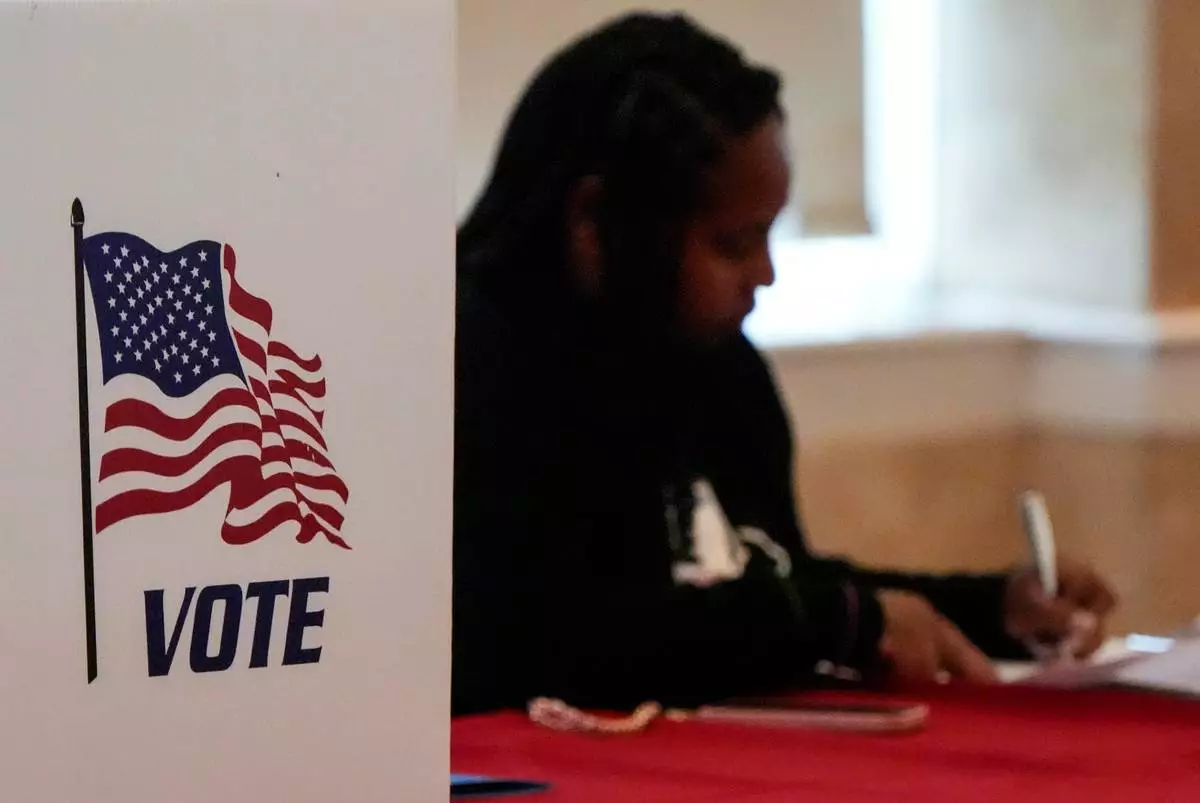
A Fulton County staff member works as people vote in a runoff election, Tuesday, June 16, 2026, in Atlanta. (AP Photo/Mike Stewart)
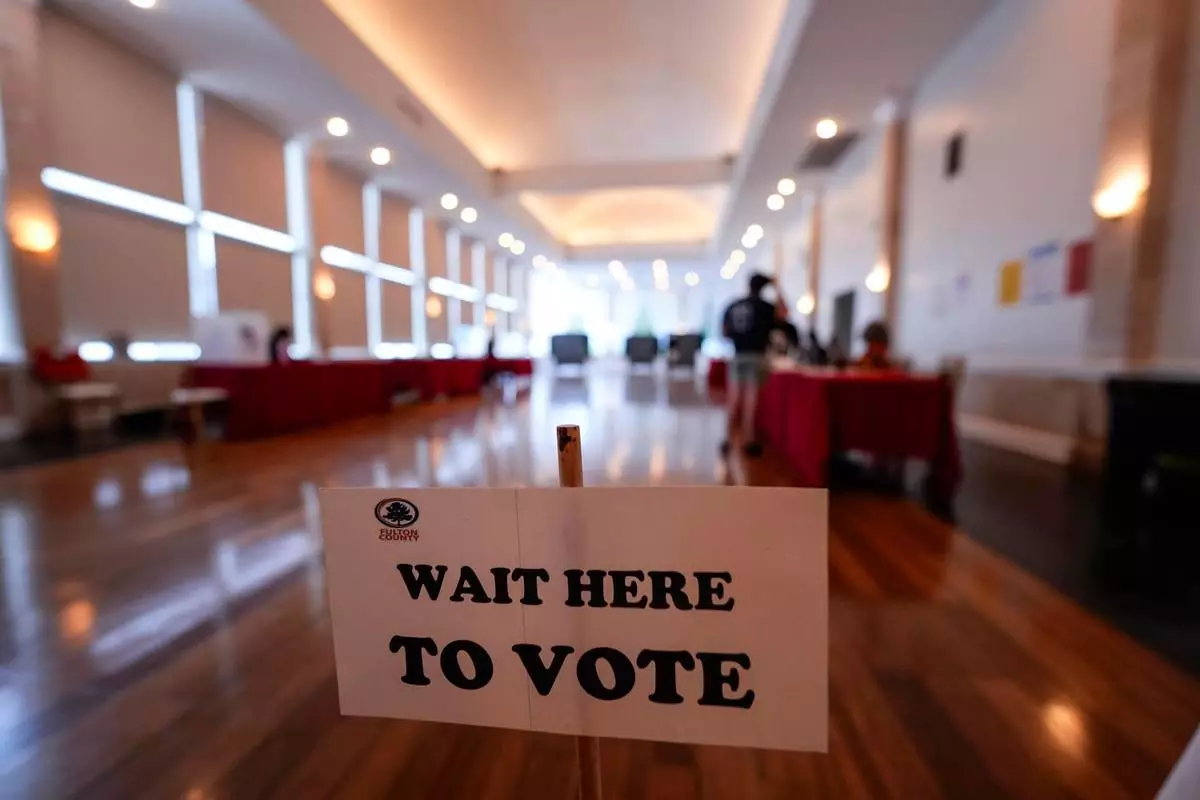
People vote in a runoff election at Park Tavern, Tuesday, June 16, 2026, in Atlanta. (AP Photo/Mike Stewart)