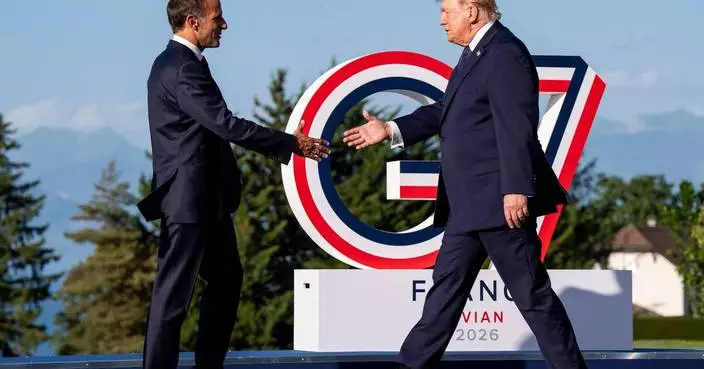
DUBAI, United Arab Emirates (AP) — Iran’s top diplomat said Tuesday that the deal ending the war with the United States would also require Israel to withdraw from Lebanon. But with Israel insisting it will keep forces in Lebanon, questions are growing about the still-unpublished agreement and whether disagreement over its terms could prolong the conflict.
Foreign Minister Abbas Araghchi said Israel’s continued occupation of southern Lebanon would violate the memorandum of understanding reached between the United States and Iran.
“The end of the war in Lebanon is an inseparable part of the complete end of the war,” Araghchi said in statements made to foreign diplomats in Tehran that were aired on Iranian state TV. “Without the withdrawal of Israeli forces from the territories they occupied during this war, the war has not fully come to an end.”
Araghchi said further Israeli attacks on Lebanon “will be considered by us a violation of the memorandum of understanding.”
The United States has not said whether Lebanon was part of the final agreement. But Araghchi's description clashes with statements made by Israeli officials about the deal to end the war that started with joint U.S.-Israeli airstrikes on Feb. 28.
Israel is not party to the agreement. Prime Minister Benjamin Netanyahu on Monday described it as President Donald Trump's decision, noting Israel had its own priorities and would remain in a buffer zone in Lebanon “as long as necessary.”
The ambiguity mirrored developments during past negotiations, including the temporary ceasefire brokered in April. That agreement did not pave the way to broader peace or the reopening of the Strait of Hormuz after the United States and Iran announced differing frameworks.
The discrepancy underscored how much of the agreement remains apparently unresolved ahead of a planned ceremonial signing Friday in Geneva.
The agreement is meant to provide a meaningful truce in a monthslong war that has killed thousands across the Middle East, including the top leaders of Iran’s theocracy, and raised the prices of fuel, food and other basic goods far beyond the region.
The unpublished agreement provides for the “immediate” opening of the Strait of Hormuz and lifting of the blockade, according to a senior U.S. official who spoke to reporters on condition of anonymity to discuss outlines of the agreement on Monday.
Brokered mainly by Pakistan, it starts with the simultaneous lifting of Iran’s closure of the strait and the U.S. blockade of Iran’s ports, according to Pakistani officials. The United States and Iran will then begin 60 days of negotiations over Iran’s nuclear program and the potential lifting of sanctions, Pakistani officials who helped broker the interim deal said, speaking on condition of anonymity about the unpublished text.
It also includes the possibility of releasing Iran’s frozen funds, sanctions relief and a $300 billion fund to help rebuild Iran if Tehran meets certain benchmarks, senior U.S. officials told reporters Monday.
Araghchi’s comments Tuesday appear to match the understanding of two regional officials with direct knowledge of the interim deal. The officials, speaking to The Associated Press on condition of anonymity to discuss the closed-door negotiations, said it would require Israel to leave nearly all the territory it occupies in Lebanon, minus a few hilltop points along the border seized earlier.
The officials say Iran insisted the accord include Lebanon in the last days of the negotiations. Regarding the timeline, the officials said the release of frozen Iranian assets are tied to Tehran implementing the deal. Gulf Arab states also have pledged to inject billions of dollars in Iran’s economy, they added.
Beyond Lebanon, there’s one more point of possible contention on Iran’s nuclear program. The interim deal begins a 60-day clock for talks over Tehran’s stockpile of highly enriched uranium.
Iran has agreed to discuss ways to possibly “dilute or remove” its stockpile, the officials said. However, it remains unclear whether Tehran would agree to that, particularly with hard-liners opposing to giving it up.
U.S. officials have not yet explained how they see the agreement addressing Iran’s nuclear program, including who will be in charge of verifying that Iran is in compliance and who will destroy or remove highly enriched uranium believed to be buried under nuclear sites that were badly damaged by U.S. strikes last summer.
Meanwhile, world leaders gathered in France for the first full day of the Group of Seven summit of major industrialized nations, where Iran was high on the agenda. Scheduled discussions include a work session focused on “ending crises and ensuring stability in the Middle East.” Leaders of Egypt, Qatar and the United Arab Emirates are to join the talks.
Trump has clashed with European leaders over not consulting them before going to war in Iran. Even so, leaders are expected to strike a measured tone as they seek ways to ease the economic fallout from rising oil prices caused by the blockade of the Strait of Hormuz.
Ahead of their meeting, the leaders of France, Germany, Italy and the United Kingdom issued a joint statement congratulating the United States, the Iranian government and the mediators on what they called a “diplomatic breakthrough.” Canada also signed the statement. The leaders said it was vital for detailed negotiations to take place and for the deal to be quickly implemented so the Strait of Hormuz can be reopened to tanker traffic.
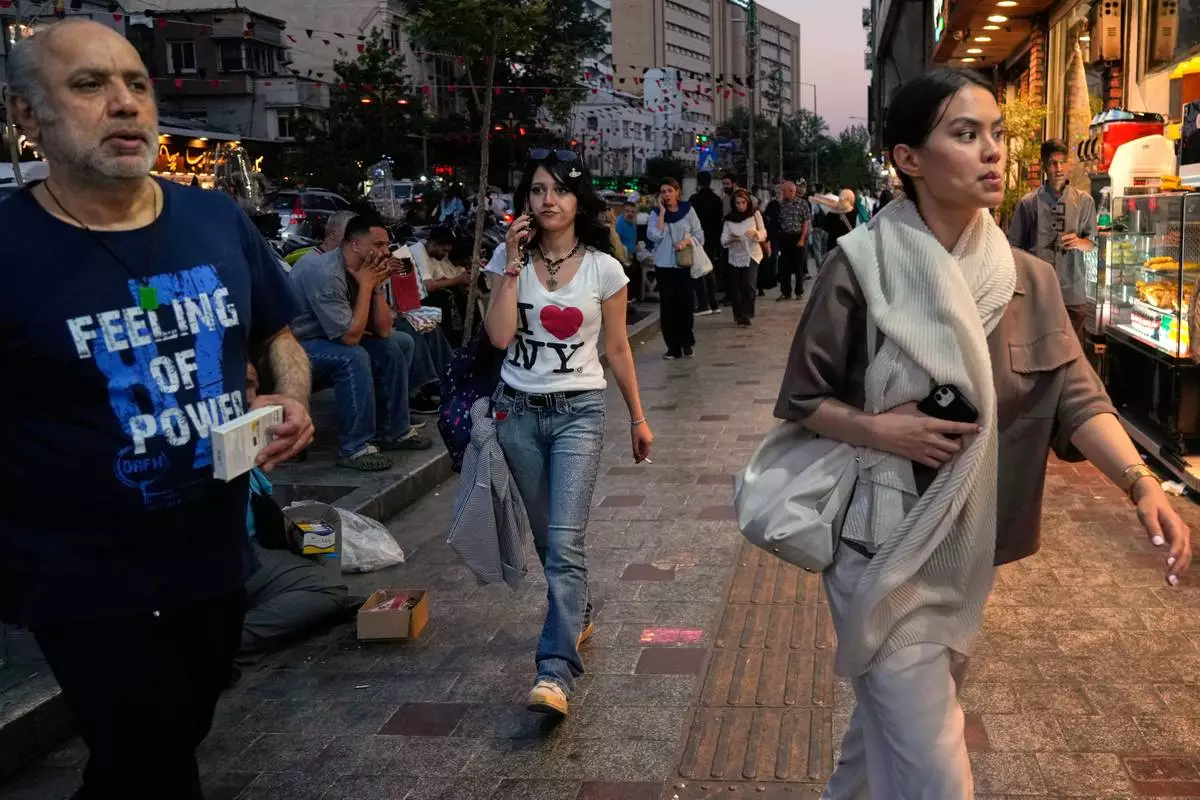
People walk along Tajrish square in northern Tehran, Monday, June 15, 2026. (AP Photo/Vahid Salemi)
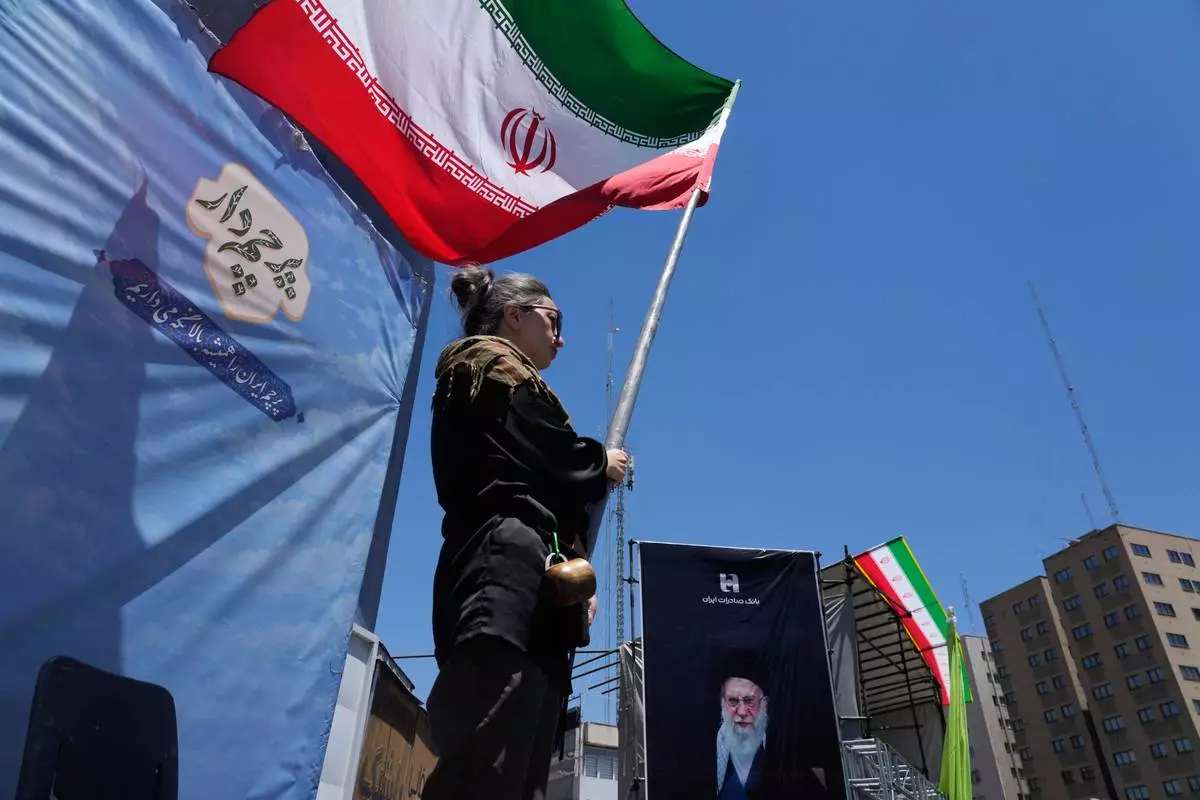
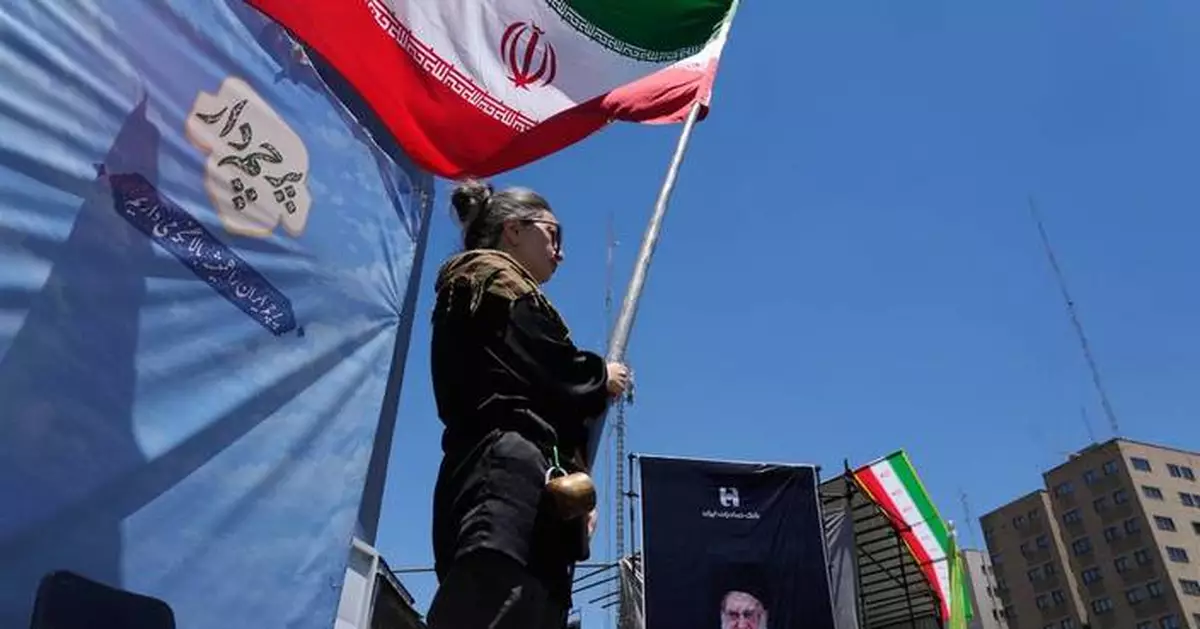
A woman waves an Iranian flag during a pro-government campaign as a portrait of the slain Supreme Leader Ayatollah Ali Khamenei, who was killed in U.S. and Israeli strikes on Feb. 28, is displayed at right, in downtown Tehran, Iran, Monday, June 15, 2026. (AP Photo/Vahid Salemi)
Leaders of the Group of Seven are discussing Russia's war in Ukraine along with a tentative deal struck by U.S. President Donald Trump to end the conflict with Iran as they meet for the first full day at the G7 summit of leading industrialized nations on Tuesday in the French town of Evian-les-Bains.
Trump said he would focus again on Ukraine following a bilateral meeting with French President Emmanuel Macron shortly after arriving late Monday in the lakeside spa town.
“Now that this (Iran) is finished, we’re going to be focusing on that,” Trump said.
Macron said he will seek to persuade Trump to continue supporting Ukraine and increase pressure on Russia to help reach a peace agreement more than four years after Russian President Vladimir Putin launched the war. Trump said he had good conversations on Sunday with Putin and Ukrainian President Volodymyr Zelenskyy, who is attending the summit at France’s invitation.
The leaders also will have a working session focused on ending crises and ensuring stability in the Middle East. They are expected to discuss the global economic crisis resulting from the war and the closure of the Strait of Hormuz. Egypt, Qatar and the United Arab Emirates will join the talks.
Shortly before his arrival, Trump announced an agreement to end the 3 1/2-month-old U.S. war against Iran.
The G7 includes France, the United States, Canada, Germany, Italy, Japan and the United Kingdom. Guest nations at this summit include Brazil, Egypt, India, Kenya, South Korea, Qatar, Ukraine and the UAE.
Here is the latest:
Trump and Sheikh Tamim have much to discuss with the U.S. and Iran expected to formally sign a ceasefire settlement later this week and open up negotiations about Tehran’s nuclear program.
“You’ll always be my friend,” Trump said at the start of the bilateral meeting.
The emir in turned thanked Trump for his leadership, adding that the ceasefire agreement between the U.S. and Iran “is a very important deal” but much work remains to be done.
The desert peninsula of Qatar was shaken by the three-month Iran war.
Iranian strikes caused billions of dollars in damage to Qatar’s critical energy infrastructure. Experts estimate it will take three to five years to repair liquefied natural gas pipelines that were damaged by strikes.
Trump and other leaders of the G7 gathered with Ukraine’s President Volodymyr Zelenskyy for an hour and 15 minutes Tuesday morning at the summit in Evian-les-Bains.
The talks focused on how to “build peace and security for Ukraine and Europe,” the French organizers of the summit said.
Macron and Zelenskyy took a little walk through the wooded garden at the Hotel Royal as they held bilateral talks before joining other G7 leaders.
French organizers of the G7 summit in the resort town of Evian-les-Bains placed Ukraine high on the agenda during efforts to end the war more than four years after Russia’s full-scale invasion.
Macron said he would urge Trump to maintain U.S. support for Ukraine and increase pressure on Russia to help secure a peace agreement.
“The right negotiation is one with Ukraine and Russia at the table, with Europeans and Americans also present,” Macron said Monday.
German Chancellor Friedrich Merz, who has had a frosty relationship with Trump, gave the U.S. president a soccer jersey with Trump’s name and the number 47 on the back.
Merz approached with the jersey as Trump sat down at a conference table for a working session. Trump smiled and held it up for a photo.
The white jersey appeared to be the same one the German national team is wearing in the ongoing World Cup.
Merz and Trump exchanged barbs earlier this year after Merz said the U.S. was being “humiliated” by Iran and criticized the U.S. for going into the war without any strategy.
Trump later said Merz “should spend more time on ending the war with Russia/Ukraine” and “fixing his broken Country, especially Immigration and Energy.”
Trump is scheduled to host one-on-one talks with the Emir of Qatar, Sheikh Tamim bin Hamad al-Thani, and United Arab Emirates President Mohammed bin Zayed Al Nahyan later in the morning.
The Gulf nations are not part of the G7, but Macron extended invitations to the leaders to take part in the summit at a fraught moment for the region.
G7 leaders also will convene a working lunch to discuss the situation in the Middle East, where the conversation is expected to focus on the path ahead after the ceasefire agreement between the U.S. and Iran.
Britain has announced a new set of sanctions targeting the “shadow fleet” Russia uses to ship oil and gas and the finance networks used by Moscow to evade Western sanctions.
The sanctioned ships include several vessels recently purchased by Russia to ship liquefied natural gas from its sanctioned Arctic LNG 2 project.
Britain says it has now sanctioned more than 600 shadow fleet vessels.
U.K. troops seized a Russian shadow fleet vessel in the English Channel for the first time last weekend.
The sanctions were announced as Prime Minister Keir Starmer attends the G7 summit in France. He is due to meet Ukraine’s President Volodymyr Zelenskyy on Tuesday.
Zelenskyy is getting some time for private talks with Macron before he is scheduled to meet with the other G7 leaders, according to the French government.
Five of the seven leaders, representing Britain, Canada, Germany, Italy and Japan, were huddled in conversation with European Commission President Ursula von der Leyen before the start of the first session on Ukraine.
Trump was missing. Macron, too, hadn’t arrived yet because he was with Zelenskyy.
Ukrainian President Volodymyr Zelensky was welcomed by French President Emmanuel Macron ahead of the morning working session with G7 leaders to discuss the ongoing Russian war against Ukraine.
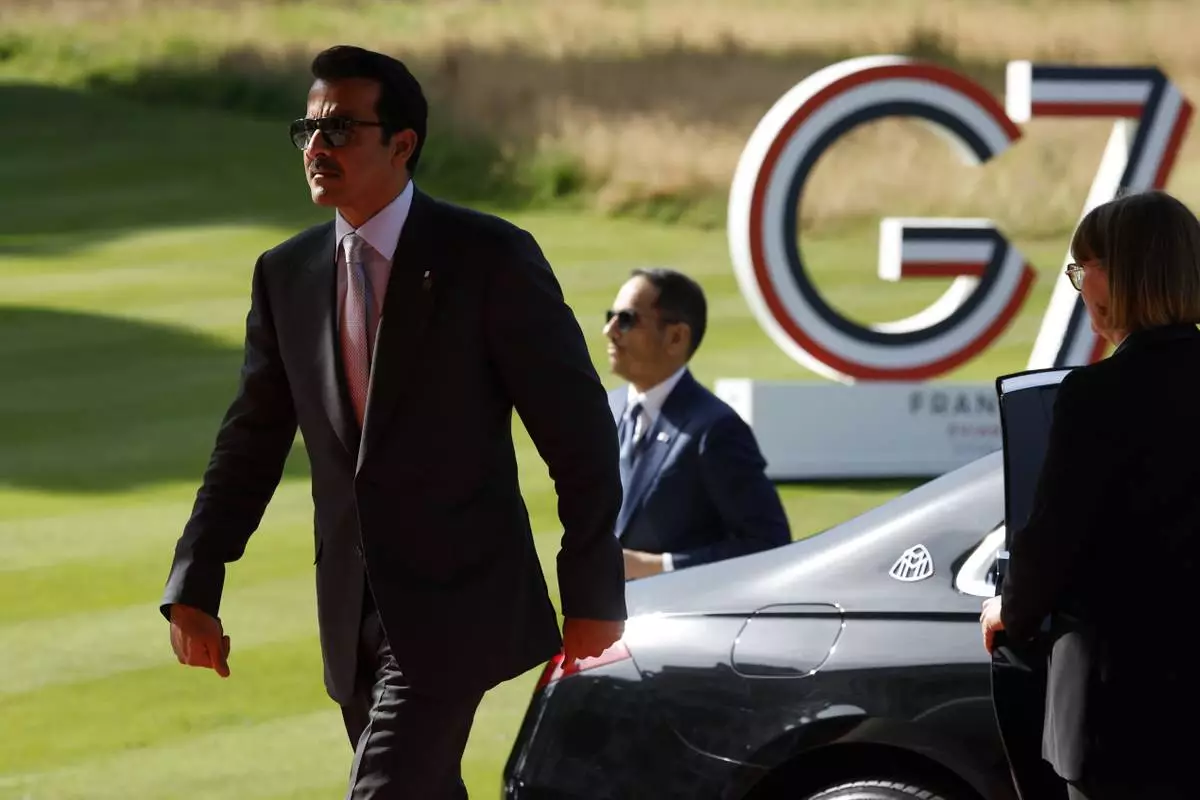
Qatar's Emir Sheikh Tamim bin Hamad Al Thani arrives at the Hotel Royal for a G7 Summit in Evian-les-Bains, France, Tuesday, June 16, 2026. (Yoan Valat/Pool Photo via AP)
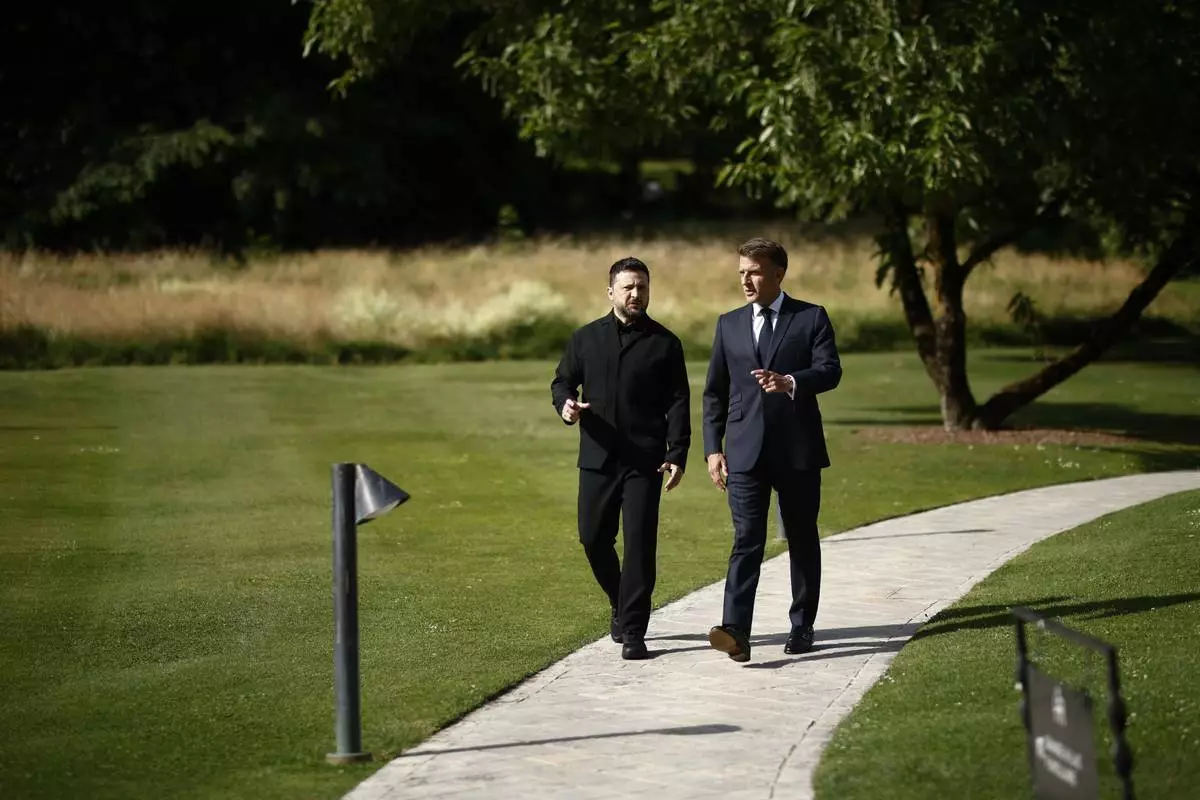
French President Emmanuel Macron, right, walks with Ukrainian President Volodymyr Zelenskyy at the Hotel Royal for the G7 Summit in Evian-les-Bains, France, Tuesday, June 16, 2026. (Yoan Valat/Pool Photo via AP)
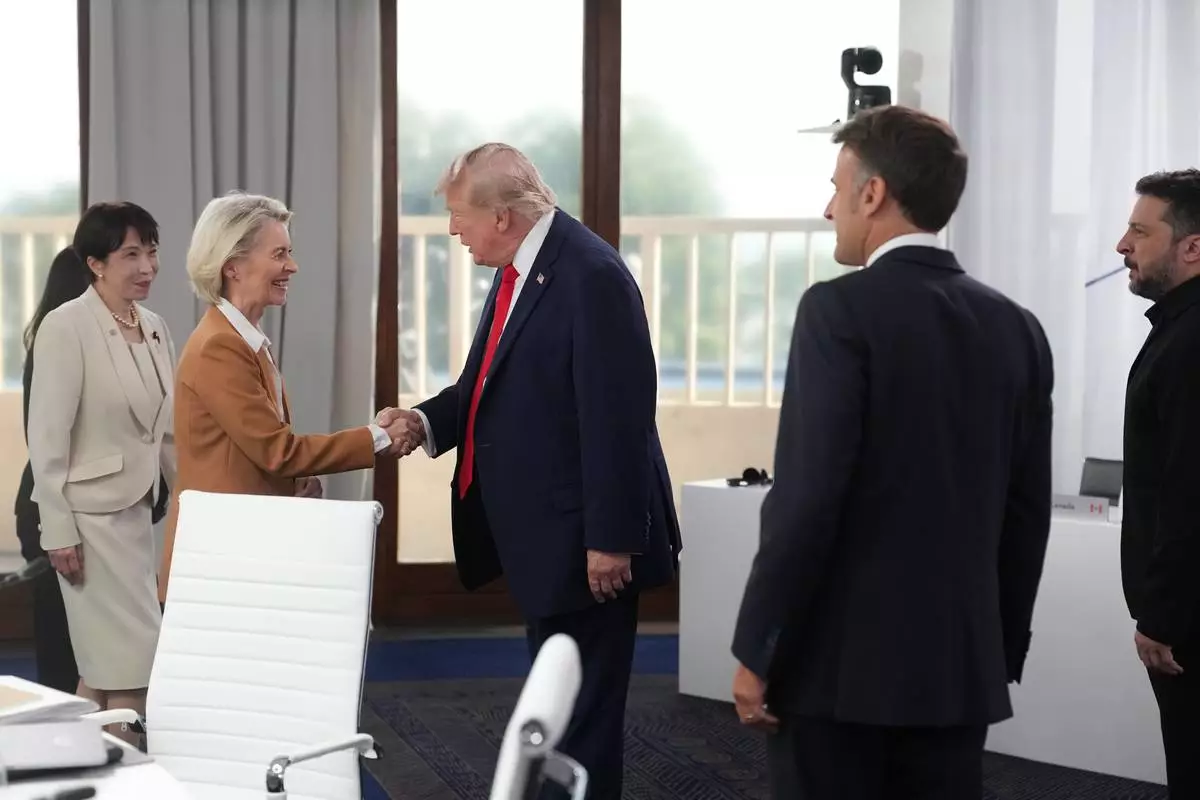
From left, Japan's Prime Minister Sanae Takaichi, European Commission President Ursula von der Leyen, U.S. President Donald Trump, French President Emmanuel Macron and Ukrainian President Volodymyr Zelenskyy during a working session at the G7 summit in Evian-les-Bains, France, Tuesday, June 16, 2026. (AP Photo/Thibault Camus, Pool)
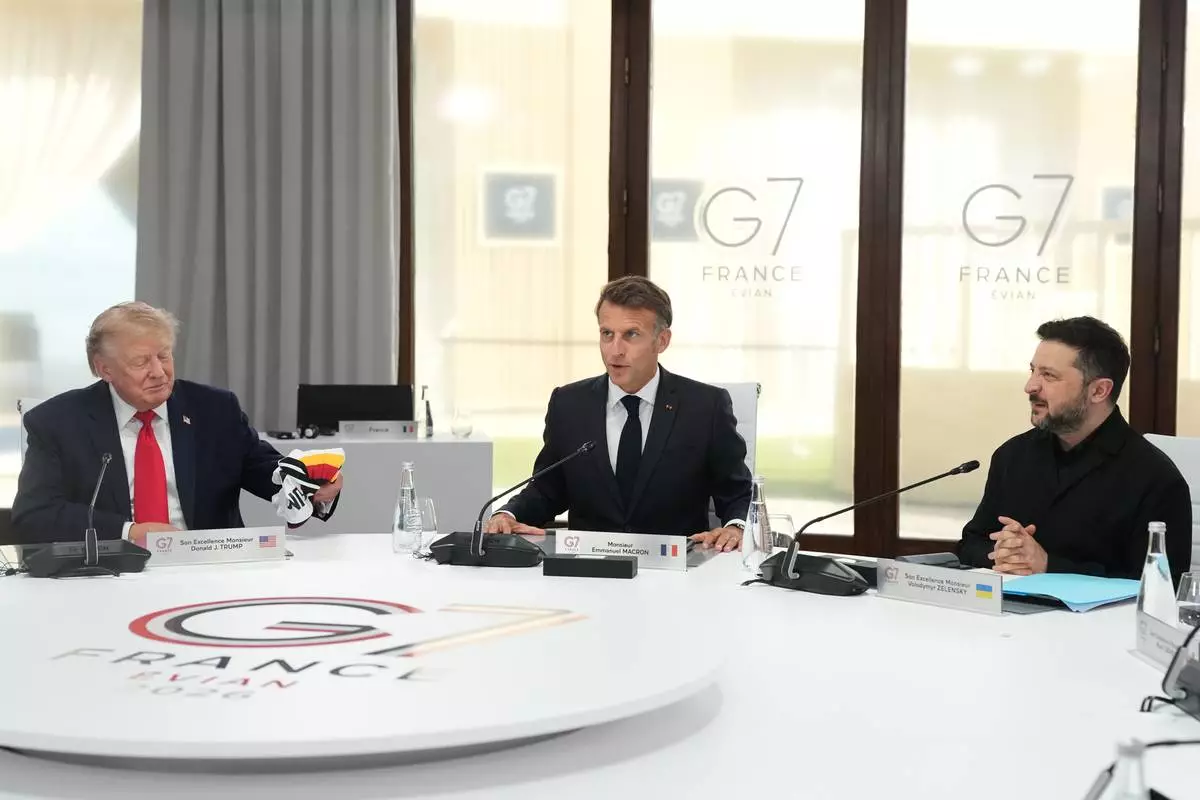
From left, U.S. President Donald Trump, French President Emmanuel Macron and Ukrainian President Volodymyr Zelenskyy during a working session at the G7 summit in Evian-les-Bains, France, Tuesday, June 16, 2026. (AP Photo/Thibault Camus, Pool)
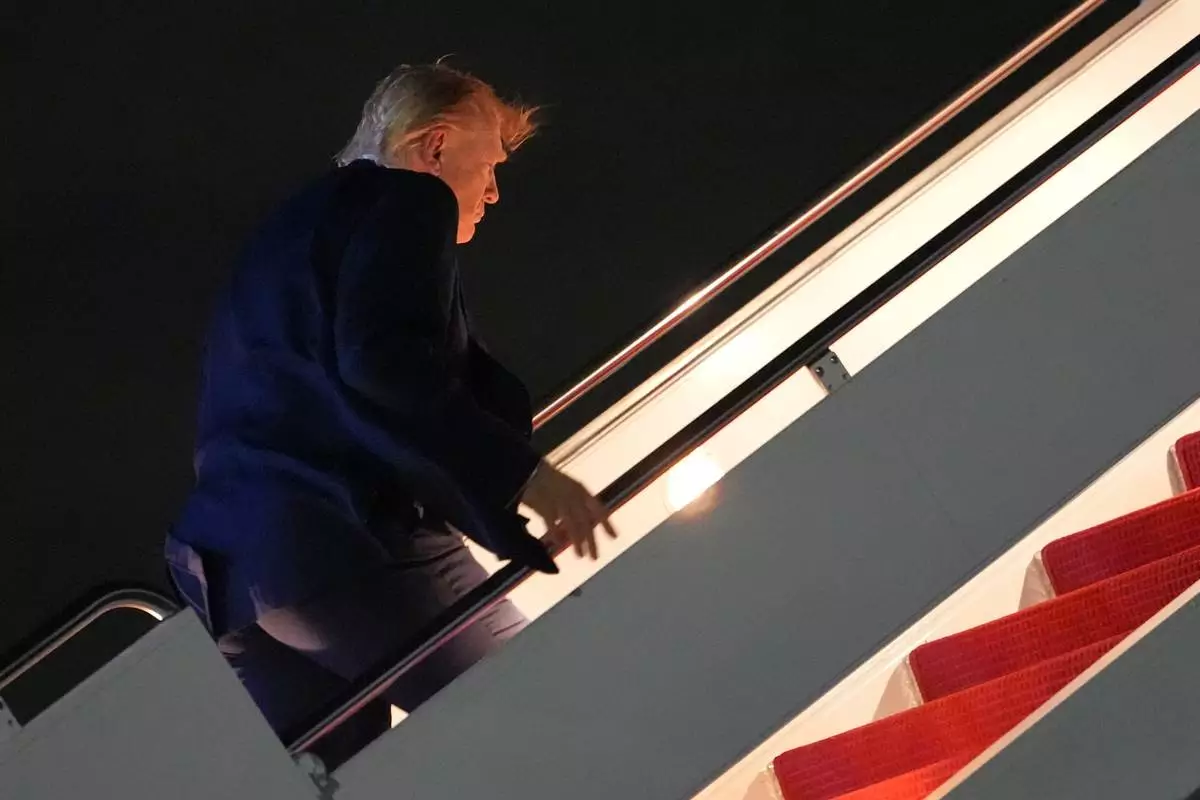
President Donald Trump boards Air Force One, Monday, June 15, 2026, at Joint Base Andrews, Md. (AP Photo/Julia Demaree Nikhinson)
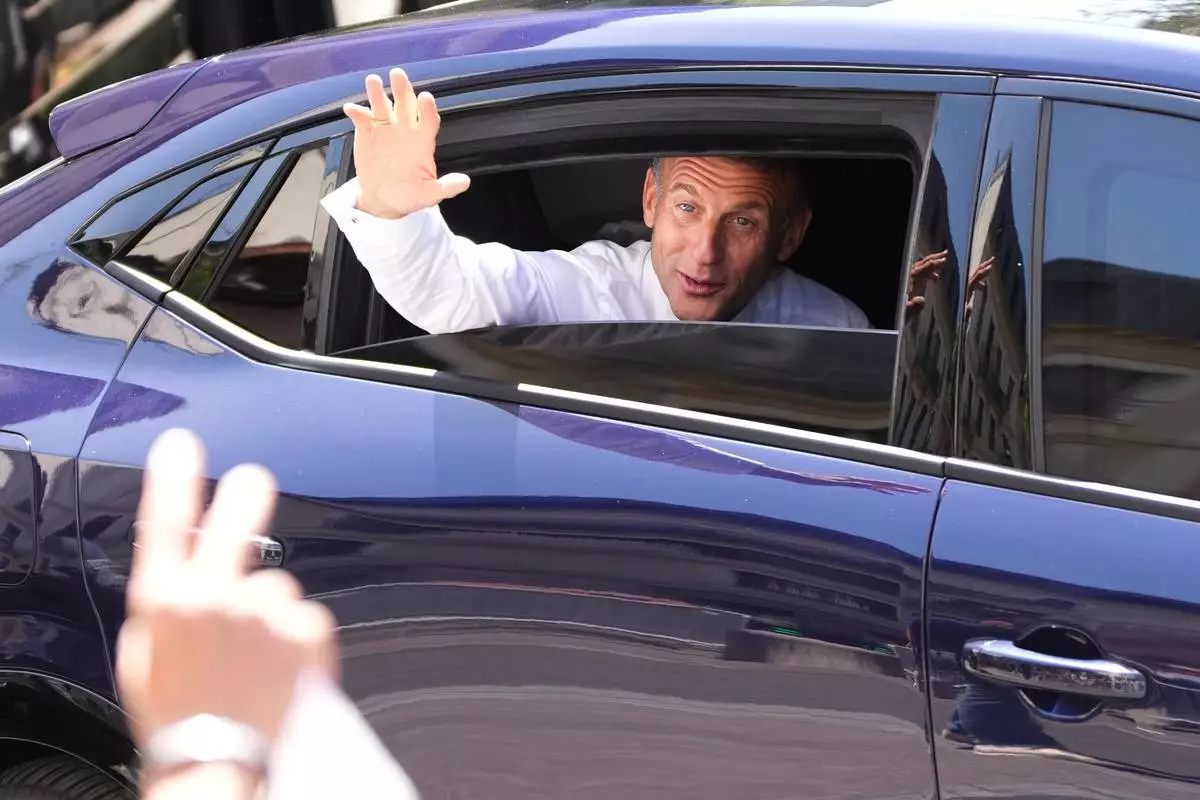
French President Emmanuel Macron waves from a car leaving after meeting security forces ahead of G7 summit in Evian-les-Bains, France, Monday, June 15, 2026. (AP Photo/Christophe Ena)
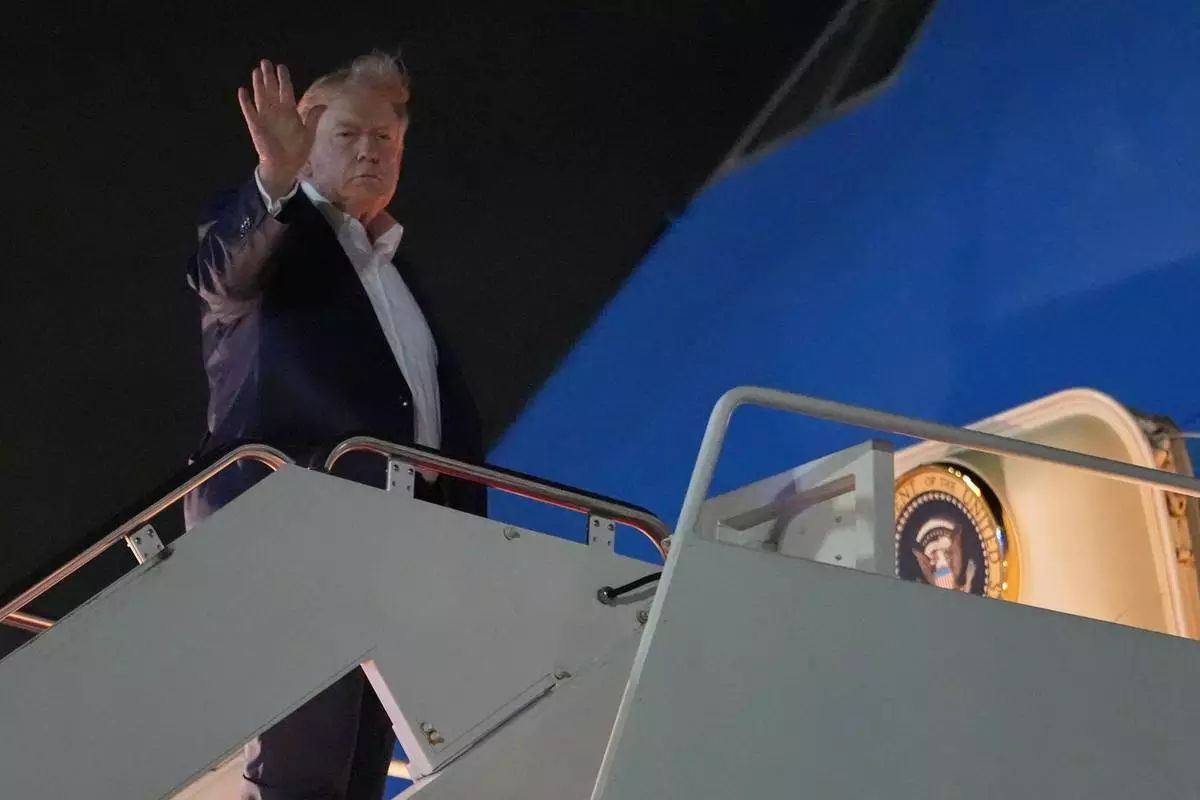
President Donald Trump waves as he boards Air Force One, Monday, June 15, 2026, at Joint Base Andrews, Md. (AP Photo/Julia Demaree Nikhinson)
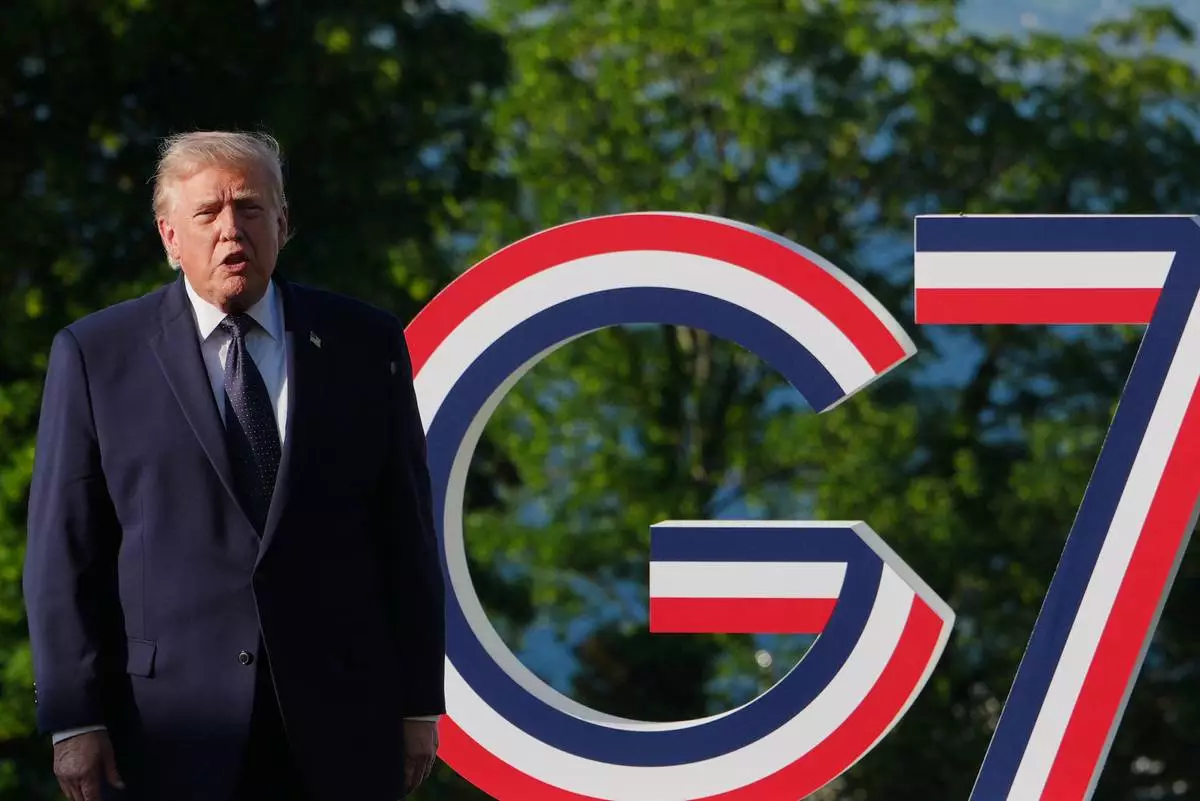
U.S. President Donald Trump talks as he greets France's President Emmanuel Macron and first lady Brigitte Macron at the G7 summit, Monday, June 15, 2026, in Evian-les-Bains, France. (AP Photo/Julia Demaree Nikhinson)