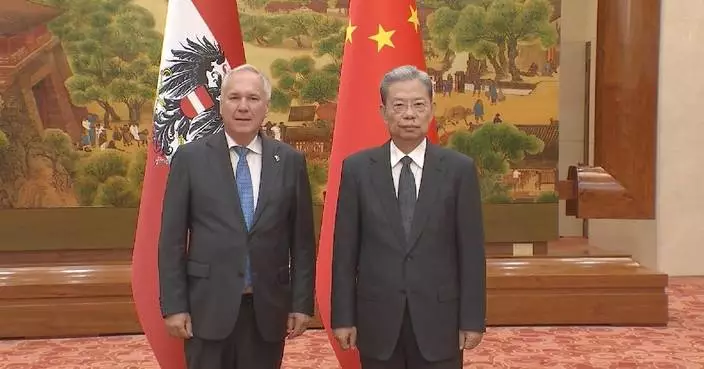
The Council of the European Union (EU) on Monday approved Ukraine's accession to the EU Cybersecurity Reserve, enabling Ukraine to activate the EU emergency cybersecurity support mechanism to counter major and large-scale cyber incidents.
The reserve mechanism, managed by the European Union Agency for Cybersecurity (ENISA), pools cyber incident response services from trusted private providers to help tackle significant or large-scale cyber incidents.
The EU said the decision is part of a broader effort to ensure that the bloc and its partners are equipped to address evolving cyber threats through preparedness, rapid response and the sharing of expertise.
European Council President Antonio Costa and European Commission President Ursula von der Leyen had previously said that the EU would launch the first phase of post-accession negotiations with Ukraine and Moldova on Monday.
The negotiations will cover fundamental principles, including the rule of law and institutions, during an intergovernmental conference.

EU approves Ukraine's accession to cybersecurity reserve
China stands ready to work with Uzbekistan to usher in a new "golden decade" for bilateral relations, as the two sides celebrate the 10th anniversary of the China-Uzbekistan comprehensive strategic partnership, Chinese President Xi Jinping said on Monday during a meeting with Uzbek President Shavkat Mirziyoyev on the sidelines of the Shanghai Cooperation Organization (SCO) Summit 2026 in Bishkek, Kyrgyzstan.
Xi said that under the guidance of the two heads of state, China and Uzbekistan have elevated and upgraded their bilateral relations, reaped fruitful results in cooperation across various fields, and achieved remarkable success in building a China-Uzbekistan community with a shared future.
China is willing to work with Uzbekistan to consolidate strategic mutual trust, deepen mutually beneficial cooperation, and jointly usher in a new "golden decade" for bilateral relations, he said.
No matter how the international landscape may evolve, China's commitment to deepening China-Uzbekistan friendship remains unwavering, Xi said, adding that China will, as always, support Uzbekistan in pursuing a development path suited to its national conditions.
He called on the two countries to work together to advance bilateral cooperation.
Both sides should promote the high-quality construction of the China-Kyrgyzstan-Uzbekistan railway, expand cooperation in areas such as artificial intelligence and desertification control, and uphold mutual benefit, Xi said.
He stressed the need to speed up the establishment of cultural centers in each other's country, expand cooperation in education and poverty alleviation, and foster people-to-people bonds.
It's important to make full use of the law enforcement and security cooperation mechanism between the two countries, and join hands to fight the three forces of terrorism, separatism and extremism, Xi said.
As the SCO's founding members, China and Uzbekistan should work together to implement the outcomes of the Tianjin Summit, and advance regional development and prosperity, he said.
Mirziyoyev said that Uzbekistan remains firmly committed to developing relations with China and will not change this course amid shifts in the international landscape.
Uzbekistan is willing to work with China to deepen political mutual trust, expand trade and investment, strengthen cooperation in agriculture, transportation, energy, minerals, and science and technology, promote people-to-people exchanges, and fight the three forces of terrorism, separatism and extremism, advancing the further development of bilateral relations, he said.
The Uzbek side firmly upholds the one-China principle, highly values the four global initiatives proposed by President Xi, and stands ready to work with China to advance the SCO development and uphold international fairness and justice, Mirziyoyev said.
Xi arrived in the Kyrgyz capital on Sunday for the SCO Summit 2026 and a state visit to Kyrgyzstan.
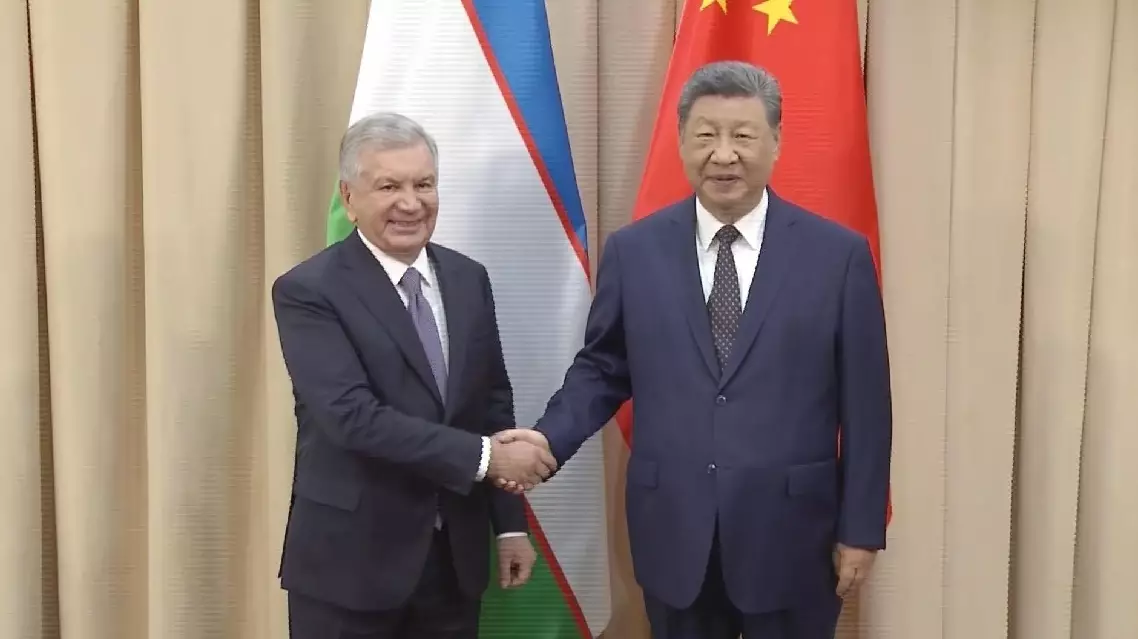
China ready to work with Uzbekistan to usher in new "golden decade" for bilateral relations