Skip to Content Facebook Feature Image

Iran, US divided on whether Strait of Hormuz is open

China

China

China

Iran, US divided on whether Strait of Hormuz is open

2026-06-16 01:18 Last Updated At:09:07

Iranian sources said Monday that the Strait of Hormuz remains closed to vessels, despite U.S. President Donald Trump's claim that ships loaded up with oil are starting to move out of the Strait of Hormuz.

According to Iranian sources, the Islamic Revolutionary Guard Corps (IRGC) Navy has not issued any transit permits over the past 96 hours, leaving the Strait of Hormuz closed to all vessels at entry and exit points until further notice.

According to ship-tracking data from the MarineTraffic platform, a liquefied natural gas (LNG) tanker called the "Disha" passed through the Strait of Hormuz into the Gulf of Oman on Monday, the only large energy transport ship to have transited the strategic waterway on the day.

On the same day, however, Trump said in a post on Truth Social that ships carrying oil are starting to move out of the Strait of Hormuz.

"They are going along the Southern 'Highway,' which is totally safe, secure, and pristine," the U.S. president added.

"There are other areas of travel, also!" he wrote.

Trump also said Monday that restoring navigation in the Strait of Hormuz does not need much external help, as France, Britain, Italy, and the Netherlands voiced readiness to deploy for a joint mission in the strait.

"I don't think we're going to need much help because we have an agreement where it's going to be open," Trump said, referring to the strait.

"But I don't think it's a bad idea to have a ship or two up here for a few countries," he said.

Trump made the remarks during talks with French President Emmanuel Macron on the sidelines of the G7 summit held in Evian, France.

Earlier on Monday, Macron said France and Britain are preparing to deploy a joint mission in the Strait of Hormuz with the support of the Netherlands and Italy.
Iran, US divided on whether Strait of Hormuz is open

Iran, US divided on whether Strait of Hormuz is open

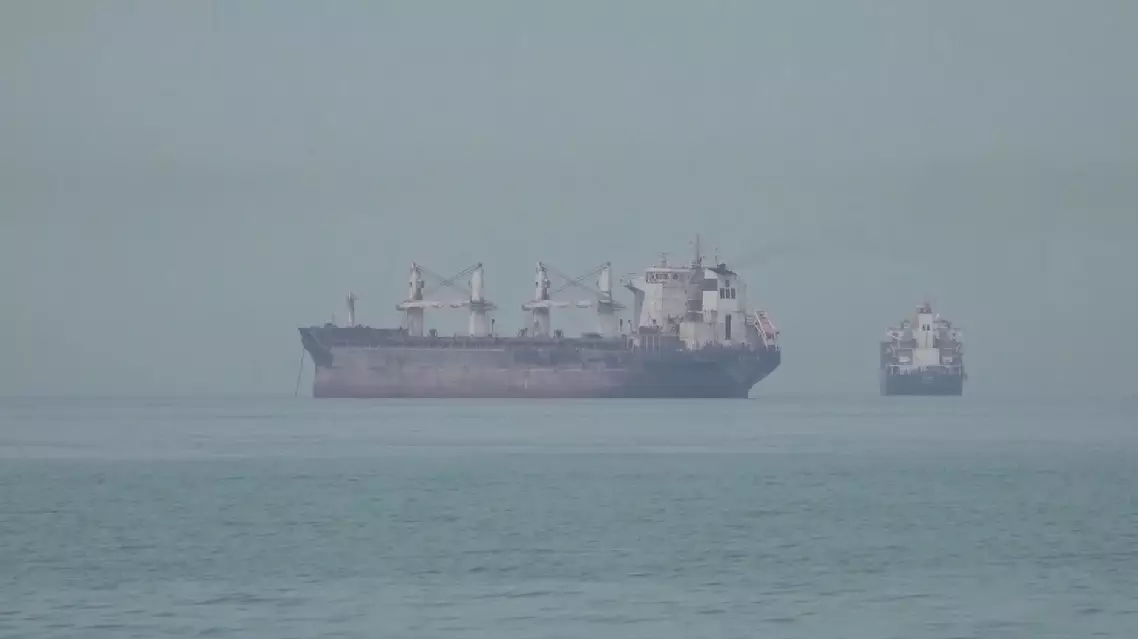
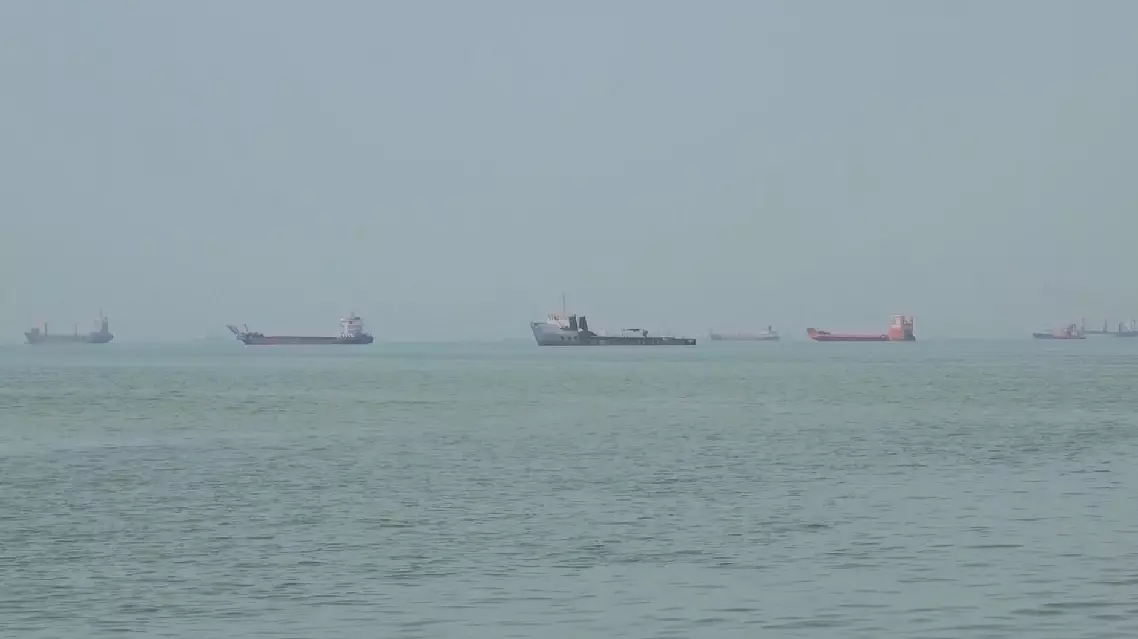
Vessels waiting to transit the Strait of Hormuz have increased following the U.S.-Iran announcement of reaching a deal to end war, but ship owners and operators remain cautious about safety, according to a Bloomberg report on Monday.

Citing analysis from maritime data firm Kpler, the report said that out of hundreds of idle vessels in the Gulf region, nearly 300 are already loaded and ready to pass through the Strait, and a similar number of ships are waiting in the Gulf of Oman to return to major export terminals.

Theoretically, this could release millions of barrels of crude oil supply, but actual transit still faces multiple obstacles, including the need to remove marine growth from hulls and competing for the right of way in the narrow waterway.

Brett Erickson, managing principal at Obsidian Risk Advisors, said that safety is the core concern for all ship owners.

He added that the shipping industry, captains, and seafarers were highly alert to the situation and knew that one miscalculation, one attack, or one political decision could seriously worsen it.

Before the outbreak of the U.S.-Israel-Iran war in late February, the average daily volume of oil transported through the Strait of Hormuz was 20 million barrels, accounting for about one-fifth of the world's daily oil transport.

Kpler estimated that after more than three months of conflict, about 500 commercial vessels remain stranded in the Gulf.

More vessels wait at Hormuz, but owners still wary despite US-Iran deal

More vessels wait at Hormuz, but owners still wary despite US-Iran deal

Recommended Articles