NEW YORK (AP) — The marmalade-loving, Peruvian emigree bear Paddington is on the move again. Next stop, Broadway.
“Paddington The Musical” will play the Al Hirschfeld Theatre starting in March after wowing critics in London and winning seven Olivier Awards earlier this year, including best new musical.
“The excitement around the show and the sort of joy that it seems to be bringing people has put wind in our sails and marmalade in our suitcases,” says director Luke Sheppard.
The move is not entirely unexpected. During the Tony Awards’ opening number, a Paddington stuffie was brought out by Neil Patrick Harris, to which host Pink responded, “Maybe next season.”
“Spoilers!” Harris said.
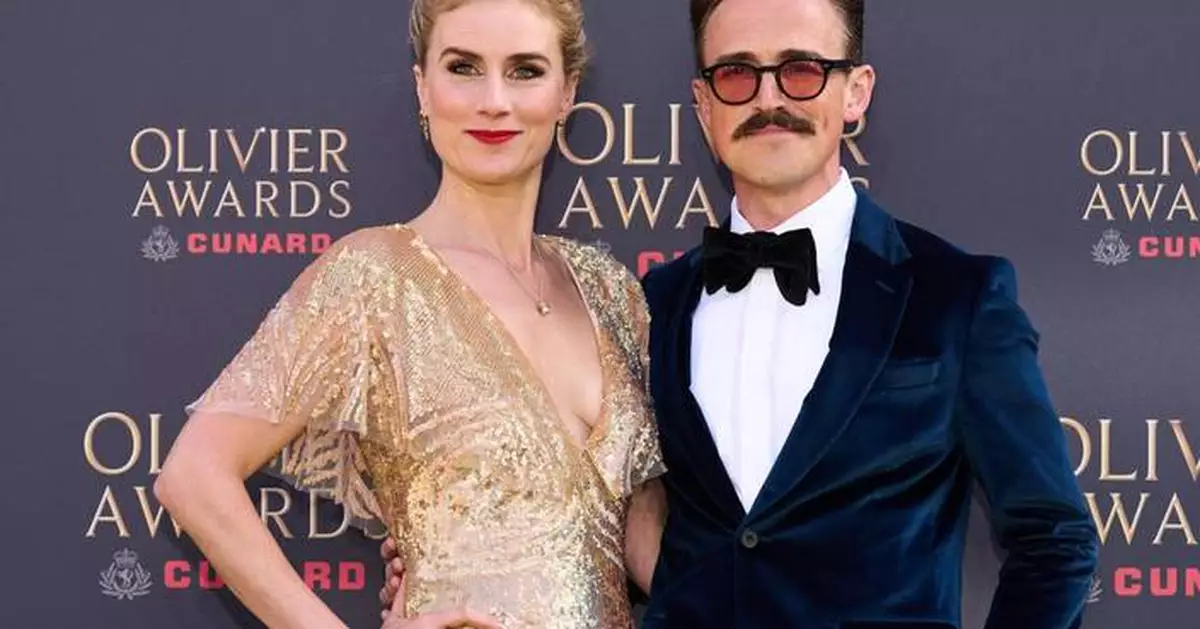
Based on Michael Bond’s children stories, “Paddington The Musical” was written by playwright Jessica Swale and songwriter and author Tom Fletcher of the band McFly.
Paddington has been having a revival thanks to three successful movies and an onscreen appearance with Queen Elizabeth II in 2022, just weeks before her death. The bear recently graced the cover of Rolling Stone in the U.K.
“The films I think have looked after him brilliantly and allowed him to find an identity that lives in this moment and speaks to new audiences,” says Sheppard. “We’re very proud to be the sort of the next custodian of him.”
The musical's plot is about this orphaned bear who goes to London and is taken in by a kind family. He learns how to handle his neighbors and new city but they also learn about his big heart. “Kindness is never complicated” is one of the show's lyrics.
“If we’re doing something it’s trying to spread kindness and that is such a simple thing that sometimes can feel quite difficult,” says Fletcher, adds there's a message of welcoming immigrants and strangers also baked into the musical.
“What’s really special about Paddington is that coming from Peru to London looking for a home, looking for family, that’s a very real story for a lot of people,” he says.
Fletcher has leaned on his musical influences — everything from the Beatles and Queen to the Sherman Brothers and Alan Menken — for a score that reflects modern London's varied and diverse sounds.
Paddington — like his precious marmalade — is a national treasure in England but both are less well known in the United States, so the creative team will “get back under the hood” and see what tweaks they may need for a New York run.
“We’re going to take this opportunity not to fundamentally change anything but to consider this a chance to fine-tune and hone and upgrade,” Swale says.
Its Olivier wins included a joint best actor in a musical award for James Hameed and Arti Shah, who together play the title role. Hameed provides the voice and remote puppetry, while Shah — the first woman to win a best actor Olivier — inhabits the bear costume onstage.
The New York Post called it “a mesmerizing fur de force” while The Guardian said “This is the new ‘Mary Poppins:’ a well-known story imaginatively staged, immaculately performed and utterly winning.”
It's creators were pleased to find out that 40% of the audience for “Paddington The Musical” in London was first-time theatergoers and hopes to replicate that on Broadway, perhaps turning on a generation to live theater.
“Most stories are about a little girl or an old man or a very specific type of human and so an audience will naturally gravitate to someone who looks like them,” says Sheppard. “And yet we’ve got a bear who somehow becomes an Everyman and so his story really has something for everybody.”
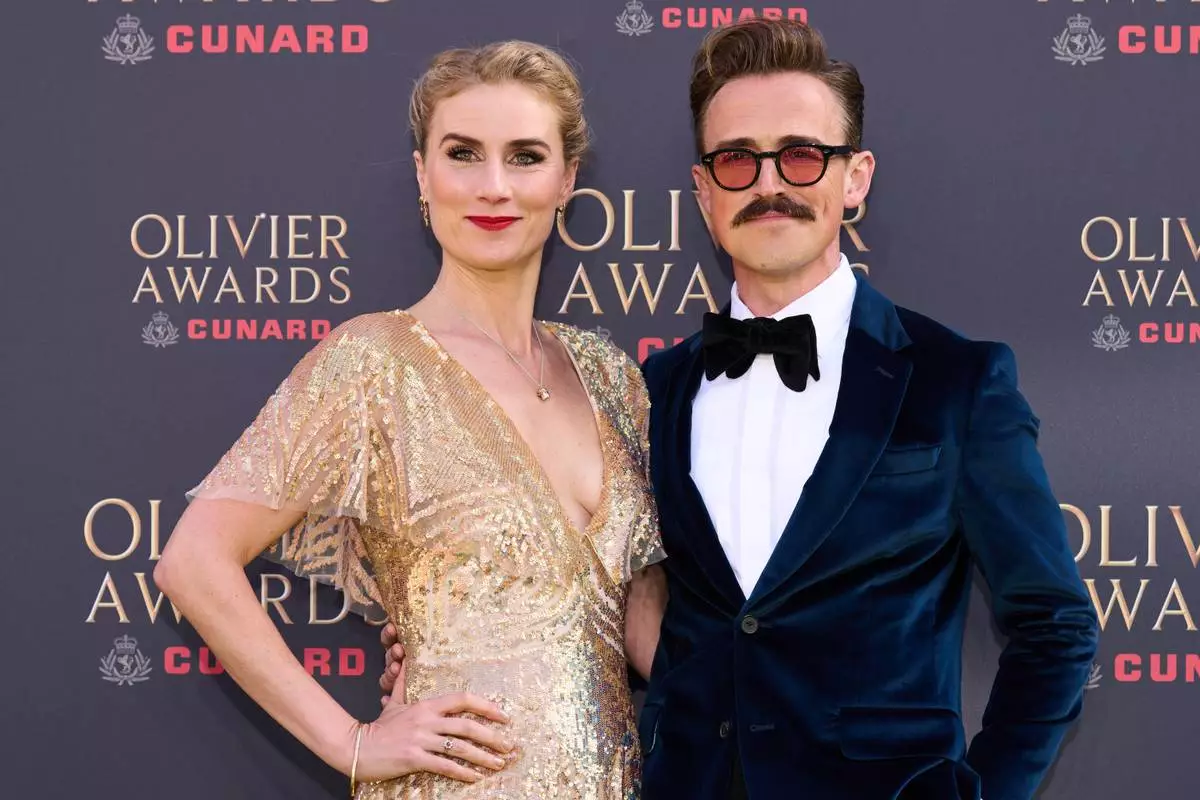
FILE - Jessica Swale, left, and Tom Fletcher appear at the Olivier Awards in London on April 12, 2026. (Photo by Scott A Garfitt/Invision/AP, File)
DUBAI, United Arab Emirates (AP) — Iran’s top diplomat said Tuesday that the tentative deal to end the war with the United States would require Israel to withdraw from Lebanon — a condition Israel has already rejected and that could sink the agreement, leading to the resumption of all-out war.
The deal, which is between the U.S. and Iran, has not been made public, and officials have sometimes offered contradictory interpretations of what is in it. While Israel is not party to the agreement, it is part of the war: It joined the U.S. in launching strikes on Iran on Feb. 28, and has since fought the Iran-backed Hezbollah militant group in Lebanon and seized large swaths of that country.
Iranian Foreign Minister Abbas Araghchi said Israel’s continued occupation of southern Lebanon would violate the deal.
“Without the withdrawal of Israeli forces from the territories they occupied during this war, the war has not fully come to an end,” Araghchi said.
A U.S. official, who spoke on condition of anonymity to discuss outlines of the agreement, has said the deal did not call for an Israeli withdrawal. And Israeli Prime Minister Benjamin Netanyahu said Monday that Israel would remain in Lebanon “as long as necessary.”
The negotiations to end the war have been plagued by such disagreements before — leading to a prolonged but uneasy ceasefire that has failed to develop into a permanent end to hostilities and that has left the Strait of Hormuz, a crucial waterway for the world’s energy supplies, effectively shut.
Pakistan, a key mediator, has said the deal called for an end to military operations, including in Lebanon, as Iran long insisted. But Araghchi’s call for an Israeli withdrawal adds a new wrinkle.
It puts Israel into a dilemma as it juggles trying to degrade Hezbollah’s military capabilities and restore deterrence without undermining an agreement championed by its most important ally, the United States. Israel invaded southern Lebanon after Hezbollah fired missiles across the border during the first week of the war. Since then, it has expanded its military footprint to levels unseen in decades and struck targets deep inside Beirut.
Though Hezbollah has been weakened, it retains the ability to strike Israel, leaving open questions about the effectiveness of Israel’s campaign.
The extent of Israel’s strikes have at times opened a public fracture between its leaders and U.S. President Donald Trump, who told reporters Tuesday that he was “not happy with the way Israel has handled themselves with Lebanon and with Hezbollah.”
“It just goes on forever,” he said of Israel’s strategy. Israeli strikes in Lebanon have killed nearly 4,000 people, including hundreds of civilians, and displaced more than 1 million. “And when that happens, it throws a negative light on the big deal. And that’s the deal with Iran.”
Israel and the Lebanese government have entered into their own U.S.-mediated direct negotiations, of which Hezbollah was not a part. Those talks have yielded several announced ceasefires that were never implemented on the ground. Lebanese officials initially tried to keep Lebanon separate from the U.S.-Iran negotiations, not wanting to be seen as beholden to Iran, but they have since welcomed the announcement that the deal to end the U.S.-Iran war would include a ceasefire in Lebanon.
Araghchi’s comments Tuesday appear to match the understanding of two regional officials with direct knowledge of the interim deal. The officials, speaking to The Associated Press on condition of anonymity to discuss the closed-door negotiations, said it would require Israel to leave nearly all the territory it occupies in Lebanon, minus a few hilltop points along the border seized earlier.
The officials say Iran insisted the accord include Lebanon in the last days of the negotiations.
Lebanon is only one of several major questions hanging over the ceasefire ahead of a planned ceremonial signing Friday in Geneva.
The agreement is meant to provide a meaningful truce in a monthslong war that has killed thousands across the Middle East, including the top leaders of Iran’s theocracy, and raised the prices of fuel, food and other basic goods far beyond the region.
The unpublished agreement provides for the “immediate” opening of the Strait of Hormuz and lifting of the blockade, according to a senior U.S. official who spoke to reporters on condition of anonymity to discuss outlines of the agreement on Monday.
It starts with the simultaneous lifting of Iran’s closure of the strait and the U.S. blockade of Iran’s ports, according to Pakistani officials who helped broker the agreement. The United States and Iran will then begin 60 days of negotiations over Iran’s nuclear program and the potential lifting of sanctions, Pakistani officials who helped broker the interim deal said, speaking on condition of anonymity about the unpublished text.
It also includes the possibility of releasing Iran’s frozen funds and a $300 billion fund to help rebuild Iran if Tehran meets certain benchmarks, senior U.S. officials told reporters Monday. Trump later said the United States would not “invest” funds in Iran.
Regarding the timeline, regional officials who spoke to AP about the deal said the release of frozen Iranian assets would be tied to Tehran implementing the deal. Gulf Arab states also have pledged to inject billions of dollars in Iran’s economy, they added, speaking on the condition of anonymity to discuss the negotiations.
Iran's nuclear program, specifically the fate of its stockpile of highly enriched uranium, would be subject to the 60-day clock. Iran has agreed to discuss ways to possibly “dilute or remove” it, the officials said. However, it remains unclear whether Tehran would agree to that, particularly with hard-liners opposing to giving it up.
U.S. officials have not yet explained how they see the agreement addressing Iran’s nuclear program, including who will be in charge of verifying that Iran is in compliance and who will destroy or remove highly enriched uranium believed to be buried under nuclear sites that were badly damaged by U.S. strikes last summer.
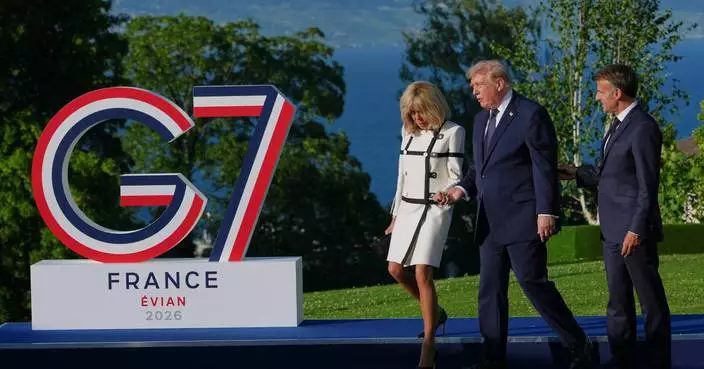
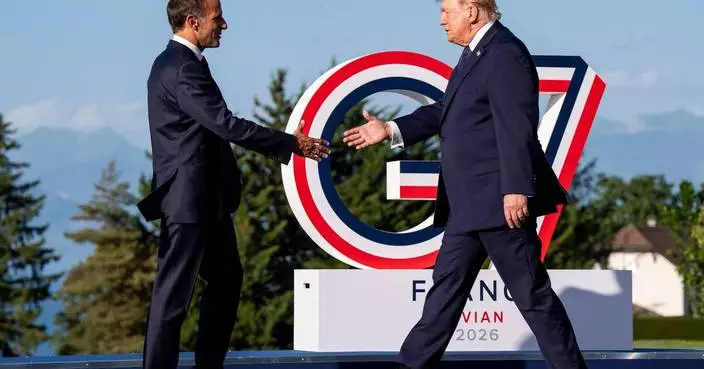
Still, world leaders gathering in France for the first full day of the Group of Seven summit insisted the agreement needed to succeed, even as key questions remained unanswered.
Some had clashed with Trump over not consulting them before going to war. But the leaders of France, Germany, Italy and the United Kingdom issued a joint statement congratulating the United States, the Iranian government and the mediators on what they called a “diplomatic breakthrough" before the summit kicked off, saying it was vital for the deal to be quickly implemented.
French President Emmanuel Macron said France and other Western nations were “ready to take action very quickly” to help reopen the Strait of Hormuz peacefully.
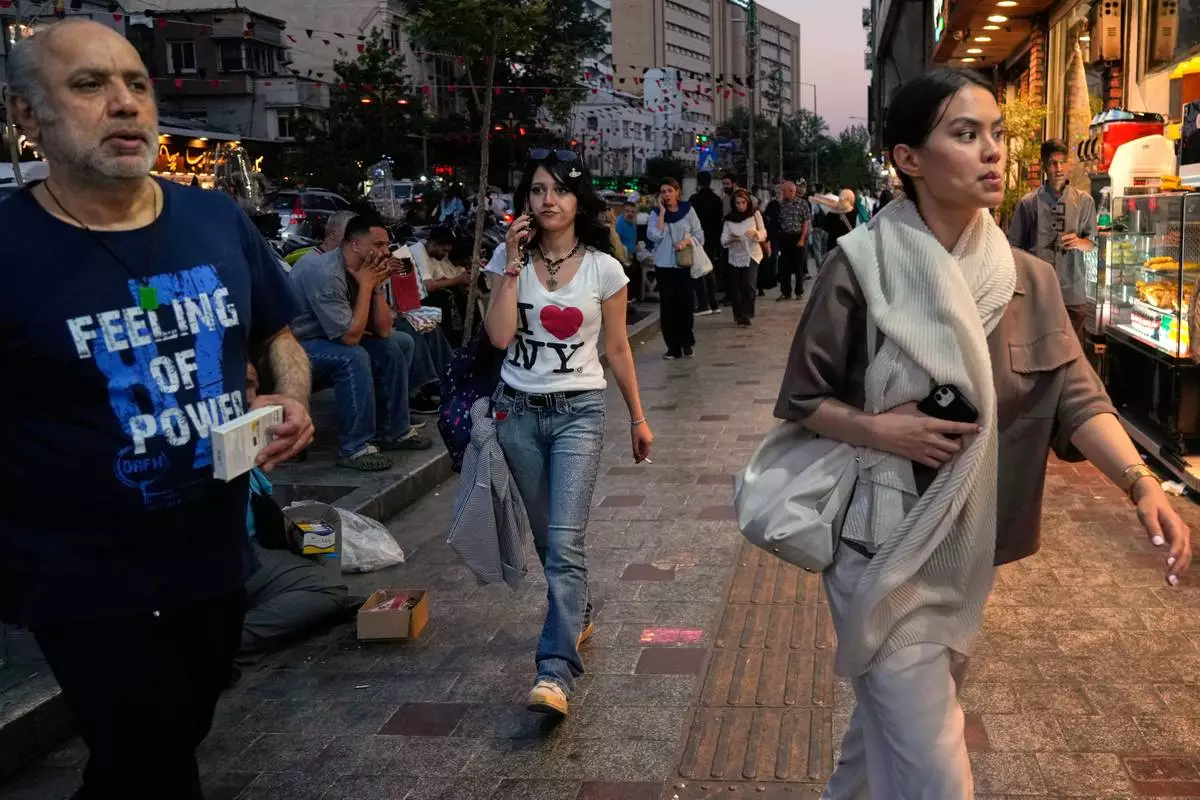
People walk along Tajrish square in northern Tehran, Monday, June 15, 2026. (AP Photo/Vahid Salemi)
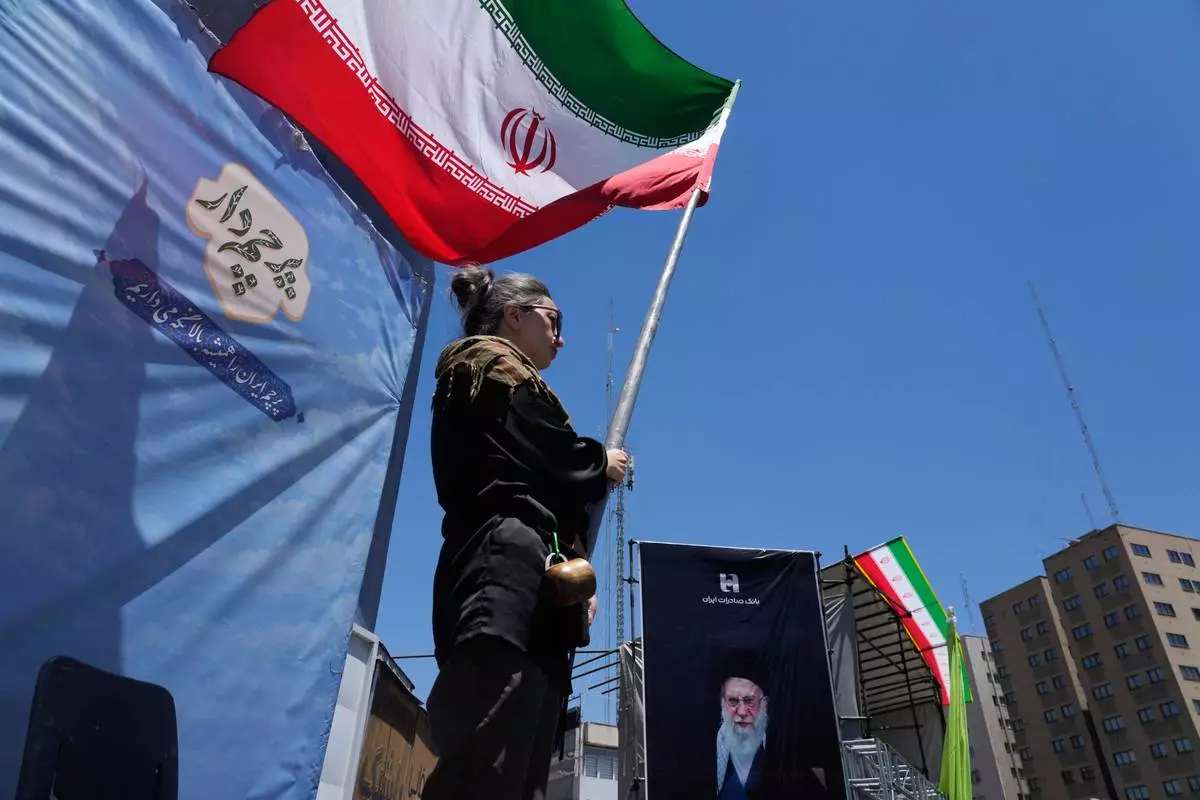
A woman waves an Iranian flag during a pro-government campaign as a portrait of the slain Supreme Leader Ayatollah Ali Khamenei, who was killed in U.S. and Israeli strikes on Feb. 28, is displayed at right, in downtown Tehran, Iran, Monday, June 15, 2026. (AP Photo/Vahid Salemi)