MORRISTOWN, N.J. (AP) — Neymar was back on the training field Tuesday, returning to action for the first time since he joined Brazil's World Cup squad while nursing an injured right leg.
Neymar still wasn't at full speed, though, and did mostly physical conditioning at the team's training camp outside New York.
Click to Gallery
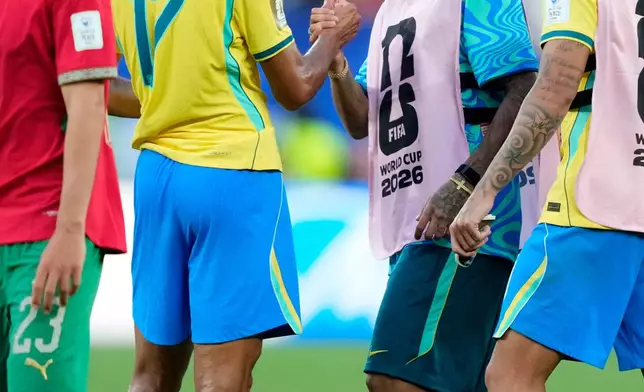
Brazil's Fabinho (17) and Neymar (10) after the World Cup Group C soccer match between Brazil and Morocco in East Rutherford, N.J., near New York, Saturday, June 13, 2026. (AP Photo/Yuki Iwanmura)
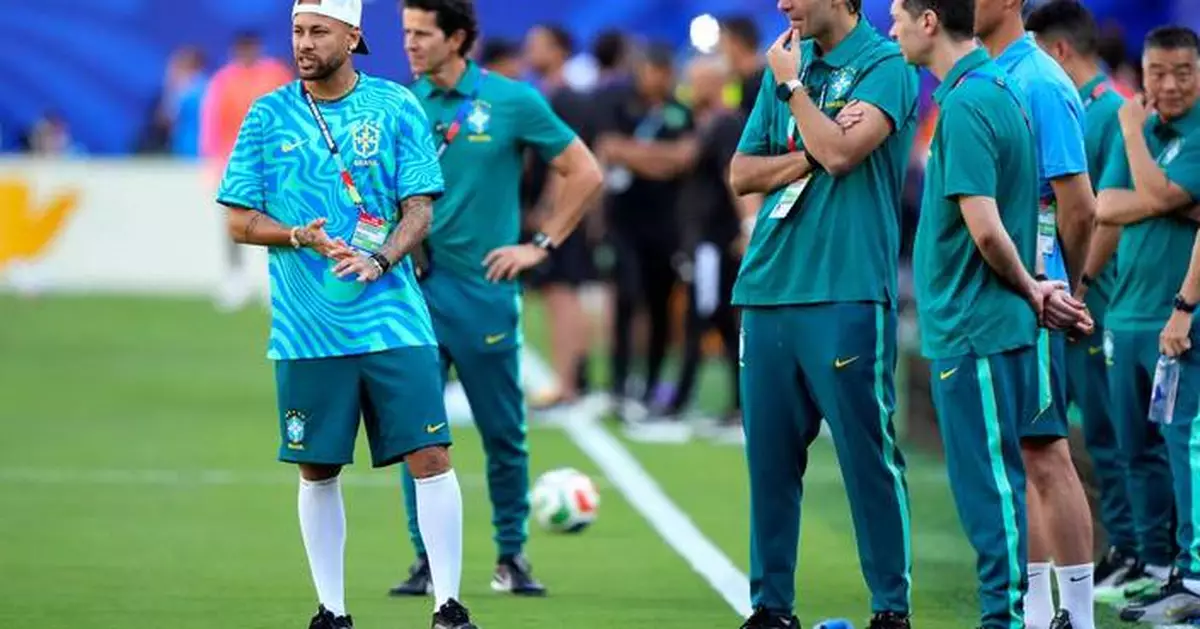
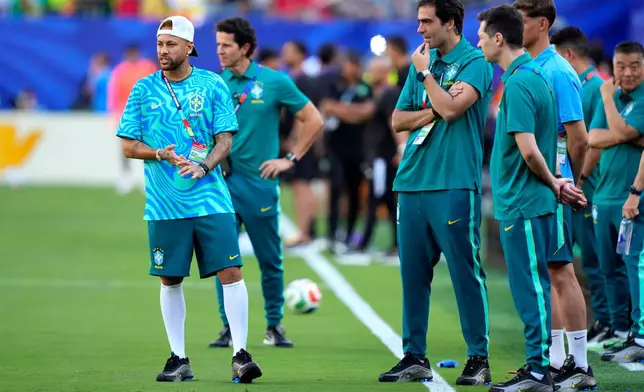
Brazil's Neymar looks on before the World Cup Group C soccer match against Morocco in East Rutherford, N.J., near New York, Saturday, June 13, 2026. (AP Photo/Frank Franklin II)
Brazil's Neymar (10) looks on before the World Cup Group C soccer match between Brazil and Morocco in East Rutherford, N.J., near New York, Saturday, June 13, 2026. (AP Photo/Yuki Iwanmura)
Brazil's Neymar, left, looks on before the World Cup Group C soccer match between Brazil and Morocco in East Rutherford, N.J., near New York, Saturday, June 13, 2026. (AP Photo/Yuki Iwanmura)
He had undergone tests on his right calf on Monday to determine the progress of the injury that he sustained while playing with Brazilian club Santos on May 17.
The 34-year-old Neymar, playing at his fourth World Cup, has yet to join the rest of the squad in full training sessions during the team's preparations.
He is not expected to play in Brazil's match against Haiti on Friday in Philadelphia. The five-time World Cup champions began their tournament with a 1-1 draw against Morocco on Saturday in Group C.
There was widespread debate in Brazil over whether Neymar, whose first World Cup was on home soil in 2014, should have been called up for the tournament by coach Carlo Ancelotti.
After Tuesday's training, Neymar stayed on the field and posed for photos with his partner and daughters.
AP World Cup: https://apnews.com/hub/fifa-world-cup
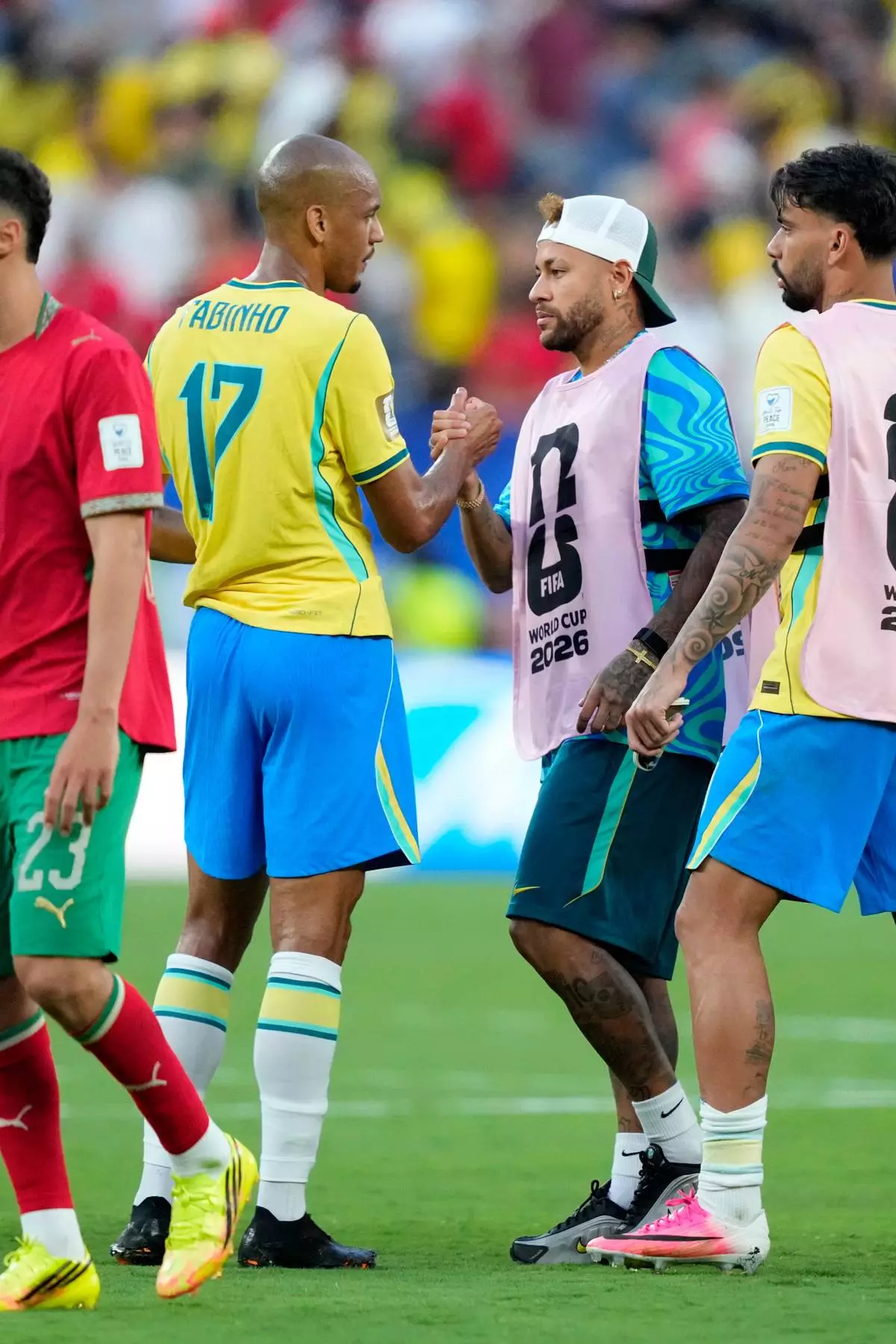
Brazil's Fabinho (17) and Neymar (10) after the World Cup Group C soccer match between Brazil and Morocco in East Rutherford, N.J., near New York, Saturday, June 13, 2026. (AP Photo/Yuki Iwanmura)

Brazil's Neymar looks on before the World Cup Group C soccer match against Morocco in East Rutherford, N.J., near New York, Saturday, June 13, 2026. (AP Photo/Frank Franklin II)

Brazil's Neymar (10) looks on before the World Cup Group C soccer match between Brazil and Morocco in East Rutherford, N.J., near New York, Saturday, June 13, 2026. (AP Photo/Yuki Iwanmura)
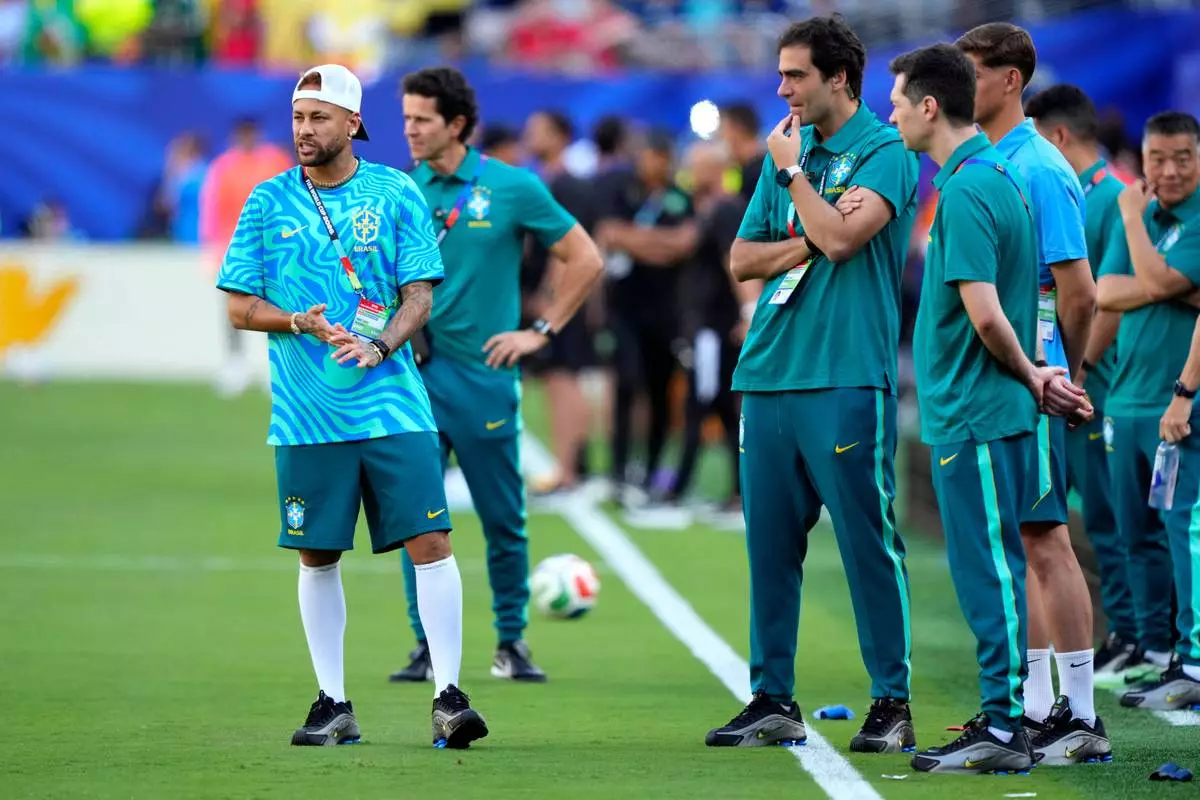
Brazil's Neymar, left, looks on before the World Cup Group C soccer match between Brazil and Morocco in East Rutherford, N.J., near New York, Saturday, June 13, 2026. (AP Photo/Yuki Iwanmura)
PORT-AU-PRINCE, Haiti (AP) — U.N. Secretary-General António Guterres visited Haiti on Tuesday, where surging gang violence has left more than 1 in 10 people homeless.
New statistics released by the U.N. reveal that 2,300 people have been killed across Haiti so far this year, with another 100 kidnapped, while 1.5 million have been displaced. Among those abducted is James Boyard, cabinet director of the Defense Ministry, who was kidnapped last week in one of the few relatively safe areas of the capital.
Guterres’ one-day visit to Port-au-Prince comes after more than 30 people were killed, injured or missing last weekend in Cité Soleil, a seaside slum, according to Cooperative for Peace and Development, a local human rights organization.
His convoy sped past a neighborhood once fully controlled by gangs that left in their wake decimated car dealerships, abandoned homes and dozens of concrete buildings pockmarked with bullet holes. A colorful bus known as a tap-tap rumbled past, its windshield peppered with bullet holes.
Graffiti scrawled on a crumbling concrete wall read: “Down with Viv Ansanm, long live the police.” Viv Ansanm is a powerful gang federation that the U.S. government designated a foreign terrorist organization. It is estimated to control 70% of Port-au-Prince.
Guterres traveled past dozens of Haitians who fled the clashes and now live in makeshift homes under large pieces of canvas strung up with frayed rope.
They are among the more than 300,000 people displaced by gang violence across Port-au-Prince — a record. Among them are more than 18,000 people who fled the Cité Soleil slum in May, according to the U.N. International Organization for Migration.
“Haiti’s displacement crisis is entering an even more alarming phase,” Gregoire Goodstein, IOM chief of mission in Haiti, said in a recent statement.
Guterres’s first stop was the headquarters of the new gang-suppression force, which the U.N. Security Council approved in September. It replaces a U.N.-backed mission led by Kenyan police that aimed to help Haiti’s National Police fight gangs but remained underfunded and understaffed. So far, Jamaica, Chad, El Salvador and Guatemala have deployed troops that number less than 1,000 to form part of the growing force, which is due to start operations in the coming weeks.
They are expected to work with Haiti’s National Police and its growing Armed Forces, with hundreds of Haitian men and a couple of women lining up on a dusty road hoping to interview to join.
Guterres then met behind closed doors with Prime Minister Alix Didier-Fils-Aimé, who is under pressure to hold elections in the country of nearly 12 million people that hasn’t had a president since Jovenel Moïse was killed at his private residence in July 2021.
“We had a frank conversation about what’s happening in Haiti, the vision the government has for the future,” Fils-Aimé told The Associated Press after the meeting.
He said security is a priority so the transitional government can hold elections and “get back to republican rule.” Fils-Aimé added that Guterres can help with that effort by ensuring that the countries backing the gang-suppression force “live up to their engagement.”
Guterres also stopped by a makeshift shelter in a former school where dozens of the people living there crowded around him.
Forced to flee their homes after gangs shot up their community and set fire to it, some had been living there for up to four years.
“Solino is not ready,” 31-year-old Clifford Lala said of going back to his community. It was one of the last holdouts in Port-au-Prince until gangs overran it.
Guterres ducked into a hot classroom and met privately with a group of six women who decried the lack of privacy at the shelter, even to shower or use the bathroom, and said they worried about their young children.
"It’s skin-to-skin and mouth-to-mouth,” said one woman.
The shelter houses more than 1,200 people who sleep side by side, and only one meal a day is guaranteed.
“We’re going to do our best,” Guterres told the women.
Outside, a man began to slap the building’s metal siding and bellowed, “We want to go back home!” His voice grew louder and angrier as security walked into the room and whisked Guterres away.
Wendy Cejour, 26, told the AP that he and his family have been living at the school for a year and a half.
“As long as we’re alive we have hope, but … things are difficult,” he said. “We ask ... to return to our neighborhood to live better, because we don’t have a life here.”
A day before Guterres’s visit, Human Rights Watch published a letter urging him to protect the population and target the root causes of violence and human rights abuses. Guterres said he was deeply impacted by what he saw.
“What I saw will not leave me,” he said. “Each day is a fight to survive. ... The women and the children pay the highest price.”
Follow AP’s coverage of Latin America and the Caribbean at https://apnews.com/hub/latin-america
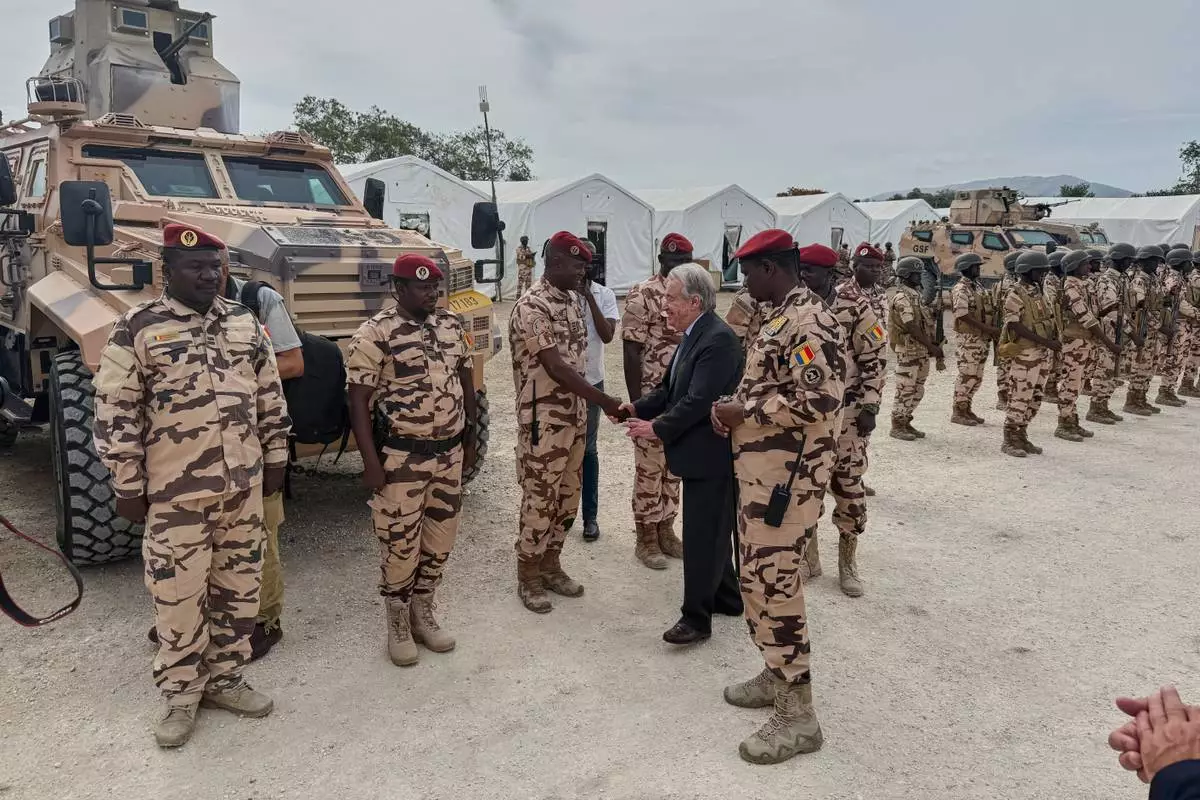
UN Secretary-General Antonio Guterres greets soldiers from Chad at a base in Port-au-Prince, Haiti, Tuesday, June 16, 2026. (AP Photo/Danica Coto)
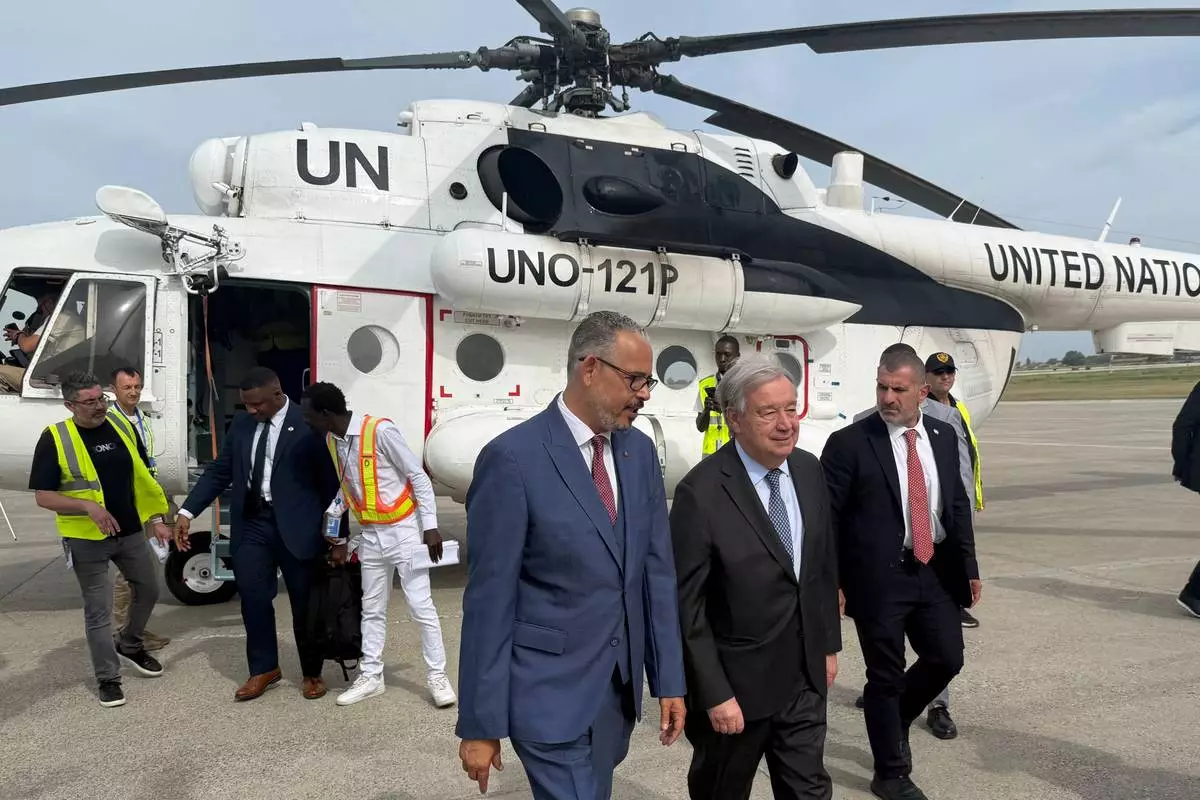
Haitian Prime Minister Alix Didier Fils-Aimé, front center, walks with U.N. Secretary-General Antonio Guterres as Guterres arrives to Port-au-Prince, Haiti, Tuesday, June 16, 2026. (AP Photo/Danica Coto)