The first 5,000-tonne-class intelligent eco-friendly vessel is set to begin trial navigation on Wednesday on the Pinglu Canal in south China's Guangxi Zhuang Autonomous Region, a landmark waterway that stands as the country's first digitalized smart canal linking rivers with the sea.
The vessel, named "Beigang Yunhe 002," is a dual-purpose carrier designed for both container and bulk cargo. Tailor-made to maximize single-lock throughput on the Pinglu Canal, it is equipped with intelligent features such as route planning, collision alert systems, and remote-sensing monitoring. A single canal lock can accommodate up to six such ships at a time.
The first batch of four such intelligent vessels has already been completed at a shipyard in Guigang City of Guangxi. Trial navigations will be rolled out successively for each unit, with final delivery slated for this August.
Stretching 134.2 kilometers from the Pingtang River in Guangxi's Hengzhou City to the Beibu Gulf in the South China Sea, the Pinglu Canal is the backbone of the country's New International Land-Sea Trade Corridor, a key initiative that enhances global trade connectivity for China's western inland regions.
The waterway is expected to open to full navigation this September. Once it becomes fully operational, the Pinglu Canal will facilitate the direct shipment of goods from Guangxi and the neighboring Yunnan and Guizhou provinces through the Xijiang river system to ports in the Beibu Gulf of Guangxi, rather than routing them through Guangdong in south China. This strategic shift is projected to significantly reduce the shipping distance by approximately 560 kilometers.
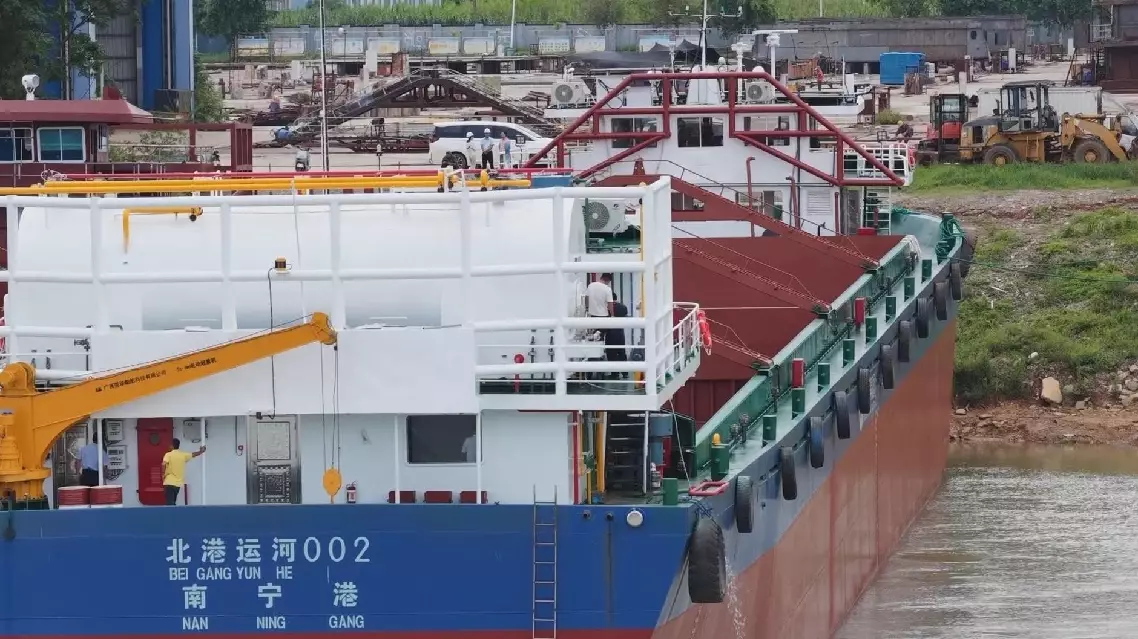
First smart ship for China's flagship Pinglu Canal project set for trial voyage
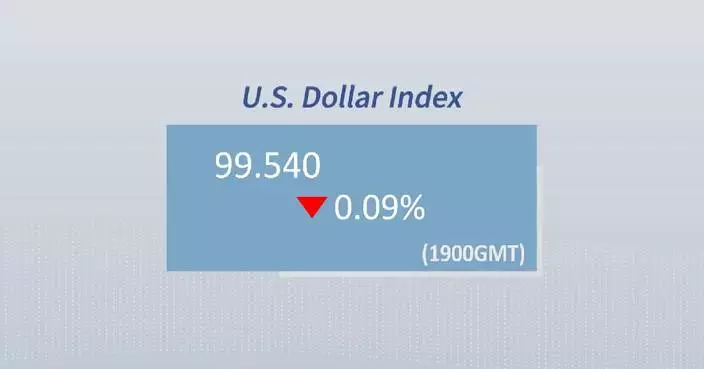
U.S. stocks ended mixed on Tuesday, as tech stocks retreated and focus turned to the Federal Reserve's policy meeting on Wednesday.
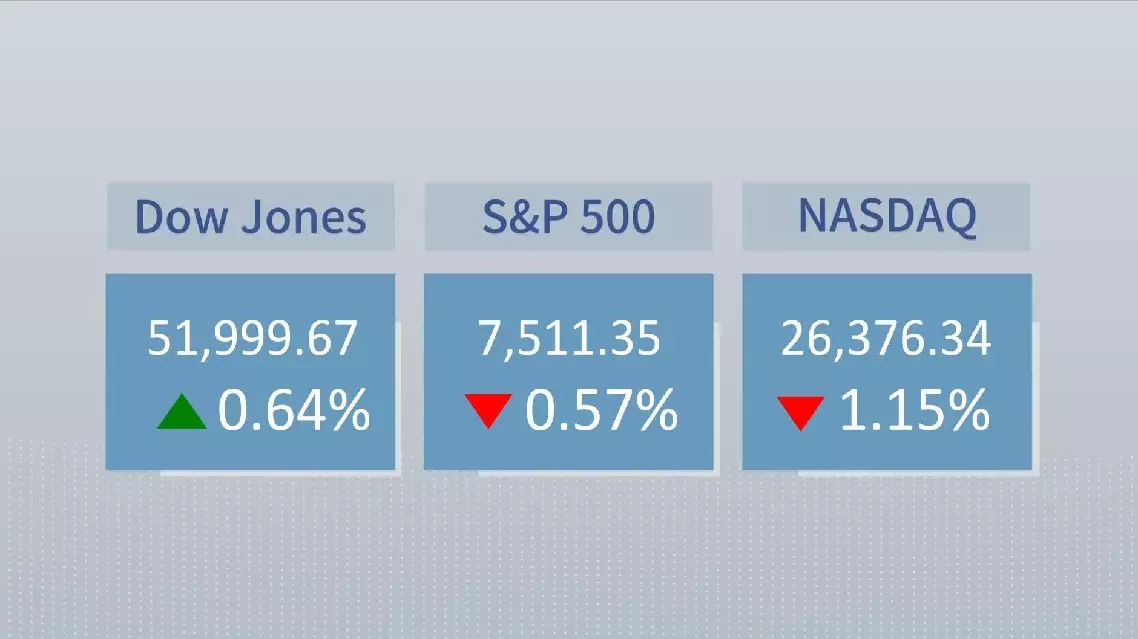
The Dow Jones Industrial Average rose 0.64 percent to a record close of 51,999.67. The S&P 500 sank 0.57 percent to 7,511.35. The Nasdaq Composite Index shed 1.15 percent to 26,376.34.
Seven of the 11 primary S&P 500 sectors closed higher, led by financials and utilities with gains of 1.49 percent and 0.69 percent, respectively. Technology and energy were the main laggards, declining 2.32 percent and 0.25 percent, respectively.
Markets continued to scrutinize the recently announced U.S.-Iran ceasefire agreement. Although full details have yet to be released, U.S. officials indicated that the deal will reopen the Strait of Hormuz to commercial traffic without tolls by Friday.
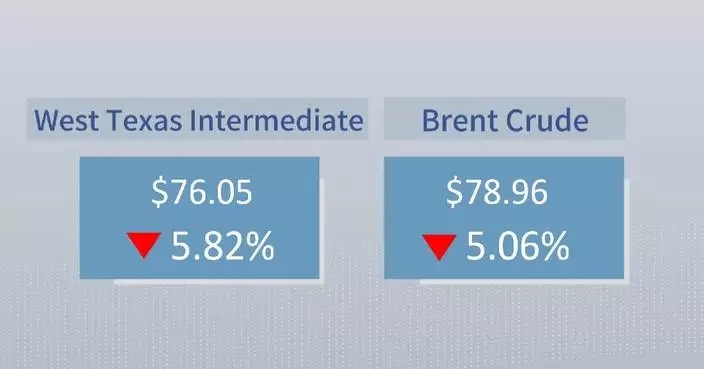
Oil prices fell sharply on the news. West Texas Intermediate crude for July delivery dropped 4.70 U.S. dollars, or 5.82 percent, to settle at 76.05 dollars per barrel. Brent crude for August delivery lost 4.21 dollars, or 5.06 percent, to settle at 78.96 dollars per barrel on the London ICE Futures Exchange.
"If all of a sudden oil prices were to come down quickly, the headline inflation number will come down, but at the same time, it'll put a lot of money back in consumers' pockets right at a time where they're feeling pretty good, and that's how you can get some more inflation," Andy Goldberg, chief investment strategist at Nomura Asset Management International, told CNBC.
The tech-heavy Nasdaq was weighed down by losses in chip stocks. Advanced Micro Devices fell more than 7 percent, while Broadcom and Micron Technology each dropped more than 4 percent. Nvidia declined more than 2 percent.
SpaceX rallied but pared earlier gains to close at 4.83 percent. For much of the session, the Elon Musk-led company's market value briefly surpassed that of Amazon and even Microsoft. SpaceX will buy AI coding startup Cursor from its parent company, Anysphere, for 60 billion dollars.
Investors are turning their attention to Wednesday's Fed policy meeting, the first to be chaired by new chairman Kevin Warsh. The central bank is widely expected to hold interest rates unchanged, but markets will closely watch updated economic projections and Warsh's first post-meeting press conference.
U.S. stocks close mixed ahead of Fed policy meeting