LOS ANGELES--(BUSINESS WIRE)--Jun 17, 2026--
Flosonics Medical received the Paul and Debra Walker Award, part of the Sepsis Research and Innovation Challenge at the Unite for Sepsis Symposium presented by Sepsis Alliance in Washington, D.C. on June 11, 2026. The recognition comes as FloPatch, the company’s FDA-cleared wearable Doppler ultrasound device, has become a trusted tool for bedside fluid responsiveness assessment across a growing number of U.S. emergency departments and intensive care units.
This press release features multimedia. View the full release here: https://www.businesswire.com/news/home/20260617924822/en/
This award recognizes the top innovation transforming sepsis detection, treatment, and patient outcomes. Flosonics earned the honor for FloPatch's ability to bring dynamic fluid responsiveness assessment to any bedside nurse or frontline provider without specialized training, capital equipment, or a wait for an ultrasound technician.
Fluid resuscitation is among the most consequential and most frequently misjudged interventions in sepsis care. Sepsis claims more than 350,000 American adult lives annually, 1 and nearly one in three patients with sepsis or septic shock were found to be fluid unresponsive, 2 yet most hospitals still lack a reliable bedside method to identify them before fluid overload sets in. Without early identification of fluid unresponsiveness, patients may receive excessive fluids, increasing their risk of serious complications such as pulmonary edema, where fluid accumulates in the lungs. By some estimates, fluid overload can extend the average hospital stay by three days and increase healthcare costs by more than $15,000 per patient. 3
This move from fixed protocols toward dynamic, personalized assessment is now reflected across the leading bodies in critical care. The Society of Critical Care Medicine's 2024 guidelines call for critical care ultrasound to guide targeted volume management in sepsis, and both the Surviving Sepsis Campaign and the New England Journal of Medicine have reinforced the move from static markers toward dynamic assessment of fluid responsiveness. 4 The Centers for Medicare and Medicaid Services now recognizes carotid flow time, the metric measured by FloPatch, as a SEP-1 compliant indicator of tissue perfusion. 5 FloPatch puts the standard of care within reach at every bedside, helping hospitals align with CMS and SCCM guidance, deliver evidence-based sepsis care, and protect reimbursement tied to SEP-1 performance.
"Sepsis has challenged clinicians for decades, not because we lack understanding of the physiology, but because acting on that understanding quickly and precisely at the bedside has remained so difficult. What impressed the panel about FloPatch is that it closes exactly that gap. It takes a critical resuscitation decision, whether a patient will respond to fluids, and makes it answerable in minutes, by any clinician at the bedside. That is the kind of practical, data-driven innovation that makes personalized sepsis care possible at the bedside, and it is why FloPatch was selected for this award," said Paul Walker, MD, of the Paul and Debra Walker Award.
The clinical framework underlying FloPatch adoption is the SaFER (Safe and Fluid Effective Resuscitation) protocol, co-authored by Dr. Kenny and Stanford’s Dr. Carolyn Kaufman and published in SN Comprehensive Clinical Medicine. 6 SaFER gives institutions a peer-reviewed, auditable decision pathway for IV fluid management that integrates directly into SEP-1 bundle workflows, providing the clinical infrastructure that sustainable, system-wide adoption requires.
"Critical care ultrasound for IV fluid management is now a Society recommendation; however, for most clinicians this guideline is out of reach - limited by time, training, and access to those practiced in point of care ultrasound. We built FloPatch to put fast, evidence-based, critical care ultrasound for IV fluid management in the hands of any clinician, regardless of their training. To have that work recognized by a panel of leaders in the field is deeply meaningful. It affirms that the future of sepsis resuscitation is individualized and accessible to every patient, not only those treated where advanced expertise happens to be available," said Jon-Emile Kenny, MD, Co-Founder and Chief Medical Officer of Flosonics Medical.
About Flosonics Medical
Flosonics Medical is a medical device company engaged in the research and development of innovative ultrasound technology. Founded in 2015, the company’s mission is to improve patient care and the practice of medicine through technology-enabled solutions and groundbreaking clinical research. For more information, please visit www.flosonicsmedical.com.
References
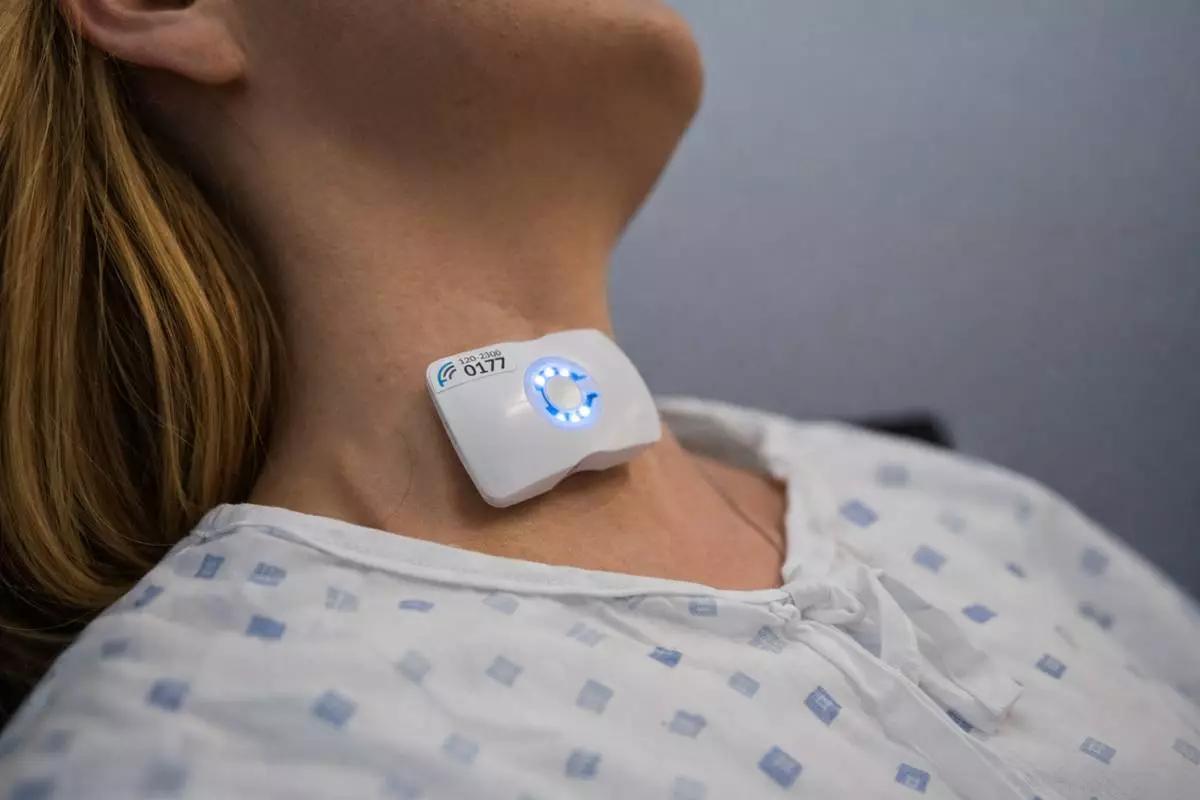
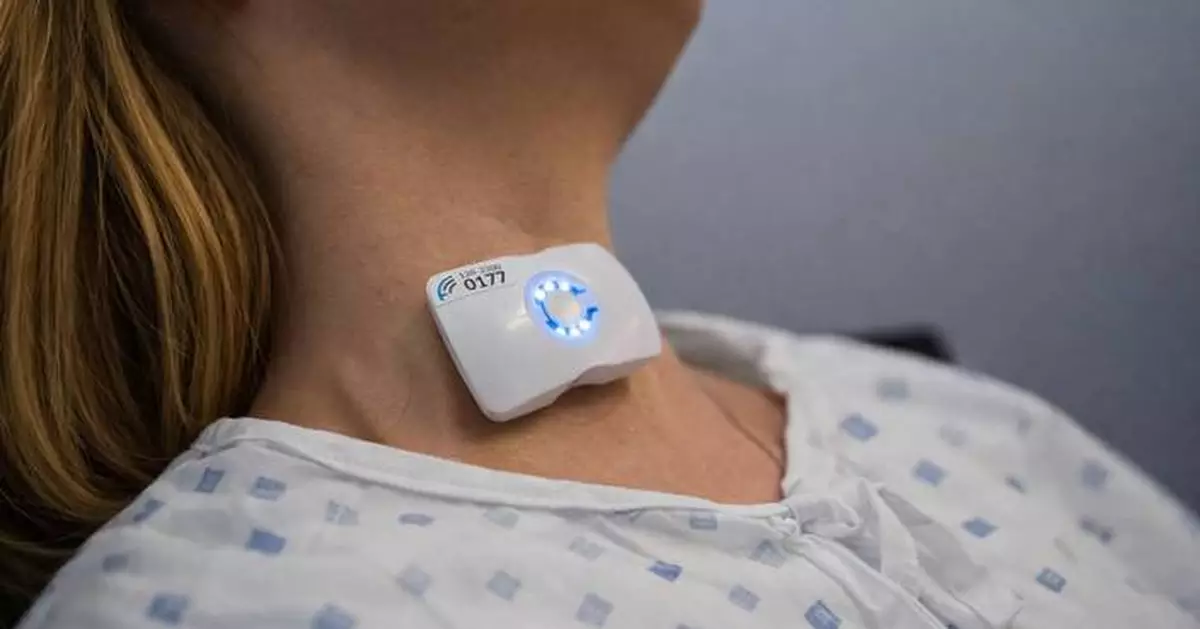
FloPatch, a wearable Doppler ultrasound device, is applied to the neck to measure real-time blood flow and help clinicians make faster, more personalized treatment decisions.
ATLANTA (AP) — Curaçao fans went wild. The Germans were in shock.
Livano Comenencia had scored a goal for the smallest nation by population to ever qualify for the World Cup against four-time champion Germany.
At 1-1 in Houston a famous upset looked possible.
Then came the hydration break.
Curaçao lost the initiative, conceding two goals before halftime in what eventually became a 7-1 defeat to the Germans.
“I actually felt sorry for them,” former England striker Alan Shearer told The Rest is Football podcast. “They scored and then it was maybe 30 seconds after that it stopped. So it’s killed their momentum.”
FIFA’s new hydration breaks midway through each half — a novelty for this World Cup — were introduced to help players deal with the summer heat in the United States, Canada and Mexico. But critics say they’re having unintended consequences, ruining the flow of the game and giving coaches a chance to tactically shift momentum in their team’s favor.
While player welfare is a real concern with temperatures expected to exceed 90 F (32 C) in the hottest World Cup venues, some say the hydration breaks are just an excuse for broadcasters to go to commercials in the middle of the game.
“We’re in America, right? So, it’s like it is a timeout,” former Ireland international Roy Keane said on The Overlap, a podcast that he co-hosts with long-time Manchester United teammate Gary Neville. “We love football because of the pace of the game ... what it’s doing is stopping the flow of the game, the momentum.”
Rather than players merely taking on fluids, coaches have been seizing the opportunity to pass on in-game tactical instructions that would normally not be possible. And early indications are that it is having an effect.
“You can use the break to tell the players what they need to improve or what is good or what they should do better,” Netherlands coach Ronald Koeman said. “So you can use it in different ways to your advantage, and this is what we will be doing.”
In eight of the first 16 games there were goals scored within 10 minutes of the rehydration break.
Curaçao never recovered after the restart against Germany.
Morocco paid the price against Brazil in New Jersey, having dominated the game from the start and scored just before the first break. Less that 10 minutes after play resumed the game was level with Vinicius Junior equalizing.
Canada, the U.S., Australia, Scotland, Sweden and Iran have all benefited with goals soon after the break.
Momentum maps have shown how games have shifted after the new stoppages in play.
The hydration breaks also affect the experience of fans watching at stadiums. There were boos from the crowd for the first one in the game Tuesday between Iraq and Norway in Foxborough, Massachusetts.
Referees pause the games 22 minutes into each half, with players given three minutes to rehydrate.
FIFA stipulated that the breaks would occur regardless of the weather, venue or location, meaning the Spain vs. Cape Verde match in Atlanta on Monday was interrupted despite being under a roof and in an air conditioned stadium.
The governing body said it was to “ensure equal conditions for all teams, in all matches.”
Spain coach Luis de la Fuente said the breaks make sense in “extreme” heat conditions but questioned whether they were necessary at every match.
“Pause, freshen up and continue. Tomorrow, when the temperature that we’ll have in this stadium is chill, maybe these breaks are not so needed, but we need to abide by the rules," he said.
Norway coach Staale Solbakken agreed.
“I can understand it when it’s like it’s been in Greensboro (North Carolina), when it’s been 35 degrees (95 Fahrenheit) and a really hot climate and there’s a bit vibration in the air – then I think it’s fine. But I don’t like it otherwise. I think it’s unnecessary," he said.
Aside from the sporting impact on games, the stoppages have been criticized for damaging the spectacle for fans, with broadcasters using the opportunity to take commercial breaks.
In the United States, Fox immediately goes to commercials during the hydration breaks. Telemundo, a Spanish-language U.S. broadcaster, does not.
Unlike in U.S. professional sports like baseball, basketball and football, commercial breaks have not been a common feature in soccer except during the half-time break.
“Every time going to a commercial is a bit ... not really (something) that I like,” said Netherlands captain Virgil van Dijk, who watched World Cup games on TV before the Dutch began their campaign with a 2-2 draw against Japan. “I think for the neutral watchers on TV it’s also not great.”
France coach Didier Deschamps, however, said this is the changing face of soccer.
“It’s not two half times, it is four quarter times basically that we’ve got. This is what’s been decided and so the players and the coaches adapt to this new reality,” he said.
It is not known if FIFA will implement hydration breaks at all future World Cups, but the English Football Association said it was unlikely to be in place for the European Championship, hosted by the U.K. and Ireland in 2028.
AP Sports Writers Kyle Hightower in Foxborough, Massachusetts; Ron Blum in New York, Maura Carey in Atlanta and Stephen Hawkins in Dallas contributed to this report.
James Robson is at https://x.com/jamesalanrobson
AP World Cup coverage: https://apnews.com/fifa-world-cup
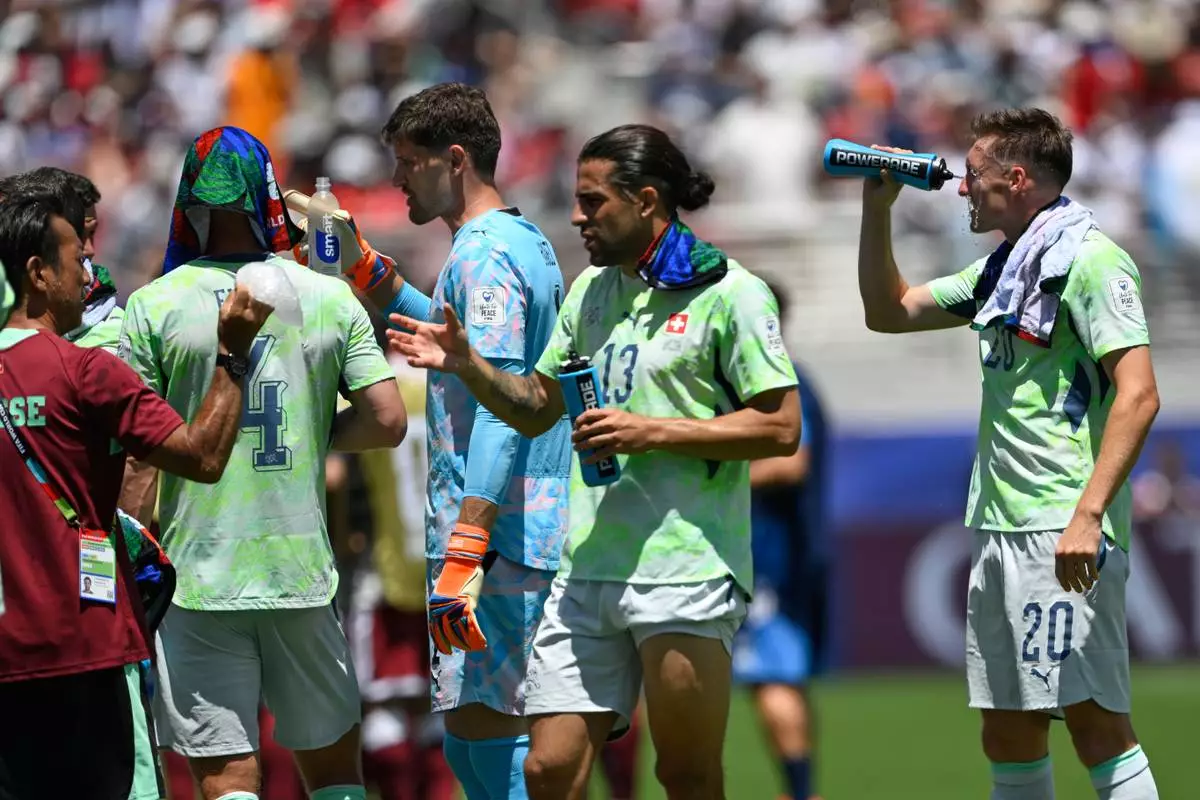
Switzerland's Michel Aebischer squirts water onto his face as the players take a mandatory hydration break during the World Cup Group B soccer match between Qatar and Switzerland in Santa Clara, Calif., near San Francisco, Saturday, June 13, 2026. (AP Photo/Eakin Howard)
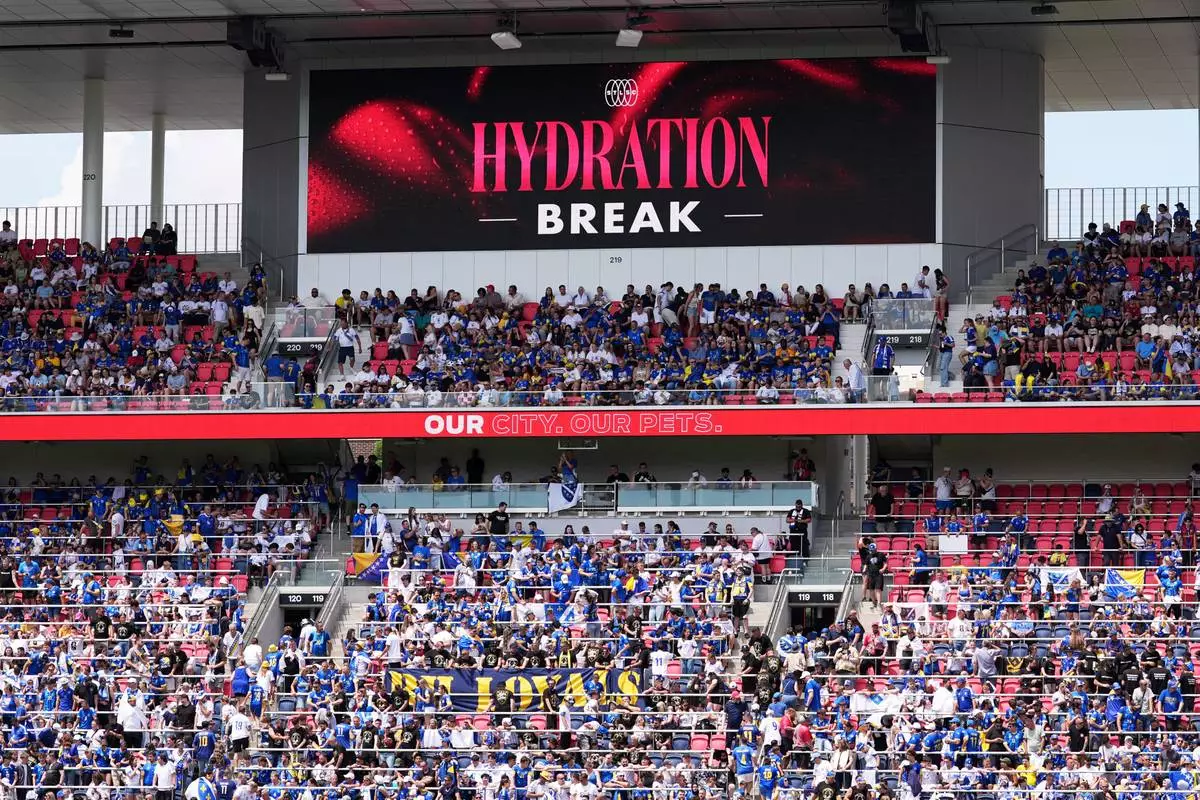
A screen announces a hydration break for players due to hot temperatures during the first half of an international friendly soccer match between Bosnia and Panama Saturday, June 6, 2026, in St. Louis. (AP Photo/Jeff Roberson)
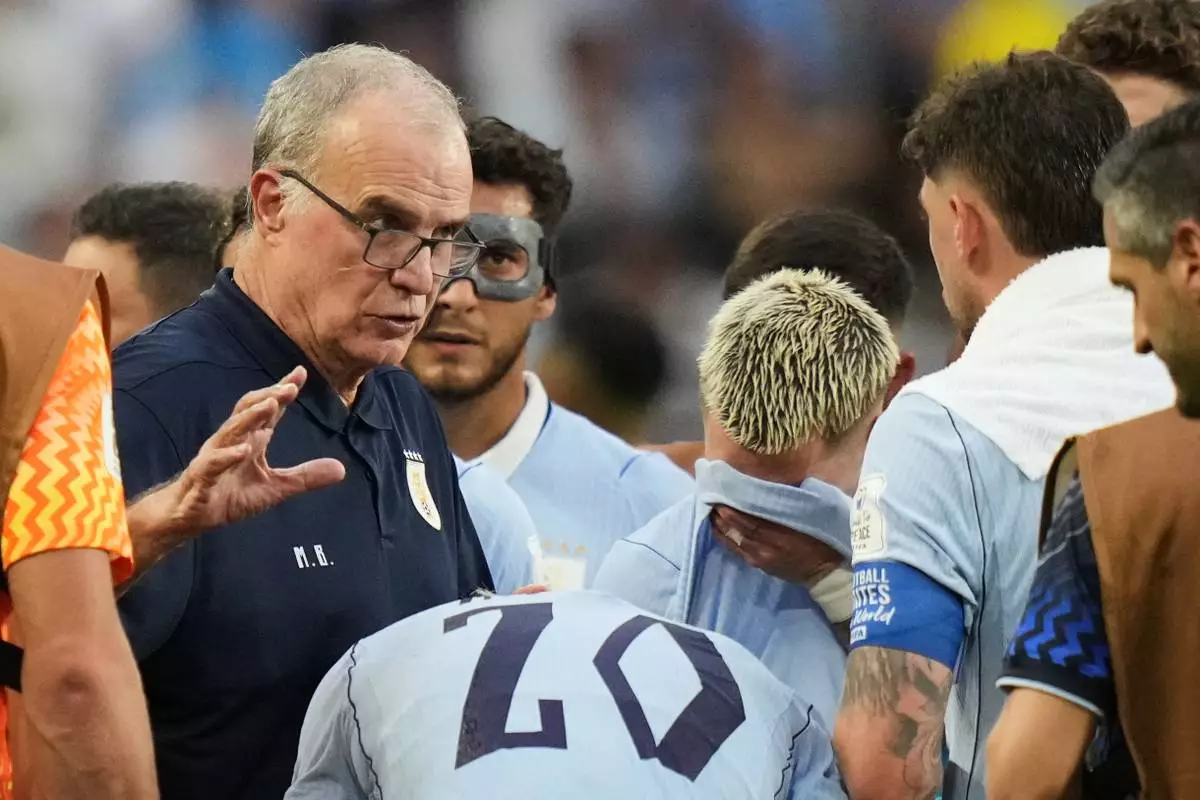
Uruguay head coach Marcelo Bielsa talks to his players during a hydration break in a World Cup Group H soccer match against Saudi Arabia in Miami Gardens, Fla., Monday, June 15, 2026. (AP Photo/Lynne Sladky)
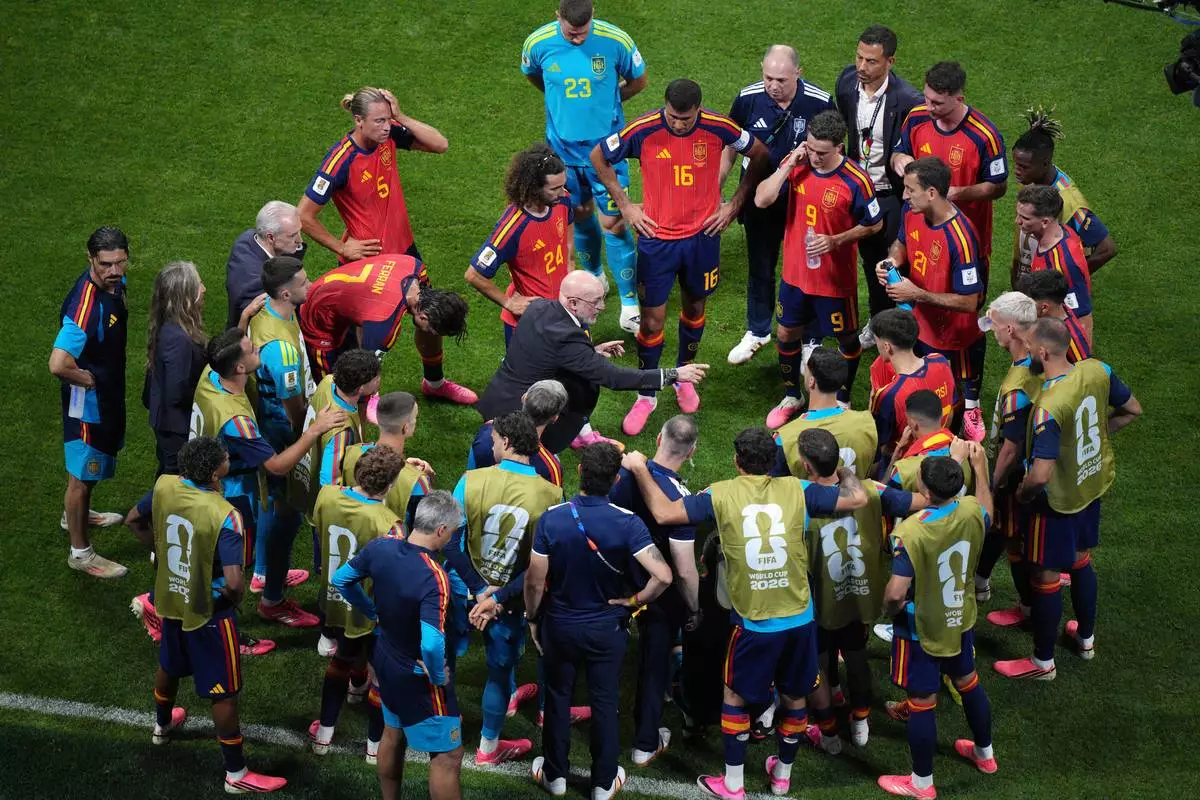
Spain head coach Luis de la Fuente talks with players during a hydration break in the World Cup Group H soccer match between Spain and Cape Verde in Atlanta, Monday, June 15, 2026. (AP Photo/Jacob Kupferman)
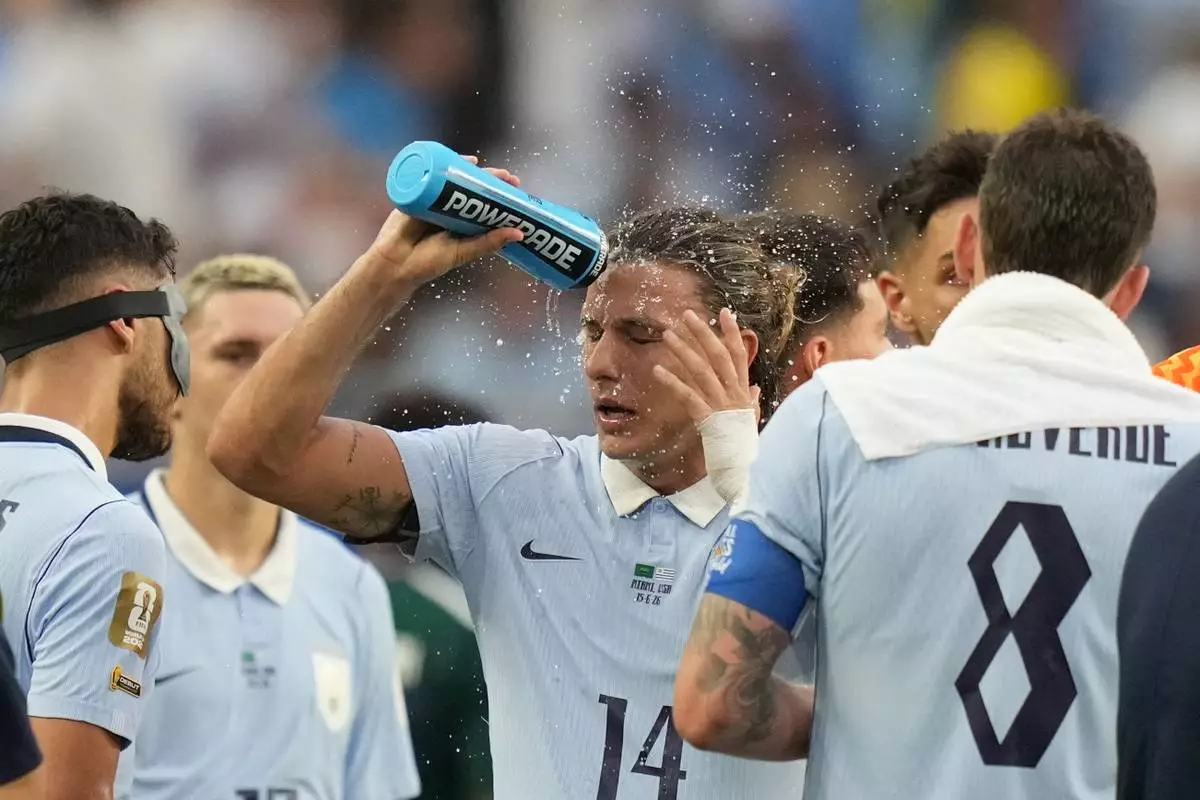
Uruguay's Agustin Canobbio cools off during a hydration break in a World Cup Group H soccer match against Saudi Arabia in Miami Gardens, Fla., Monday, June 15, 2026. (AP Photo/Lynne Sladky)