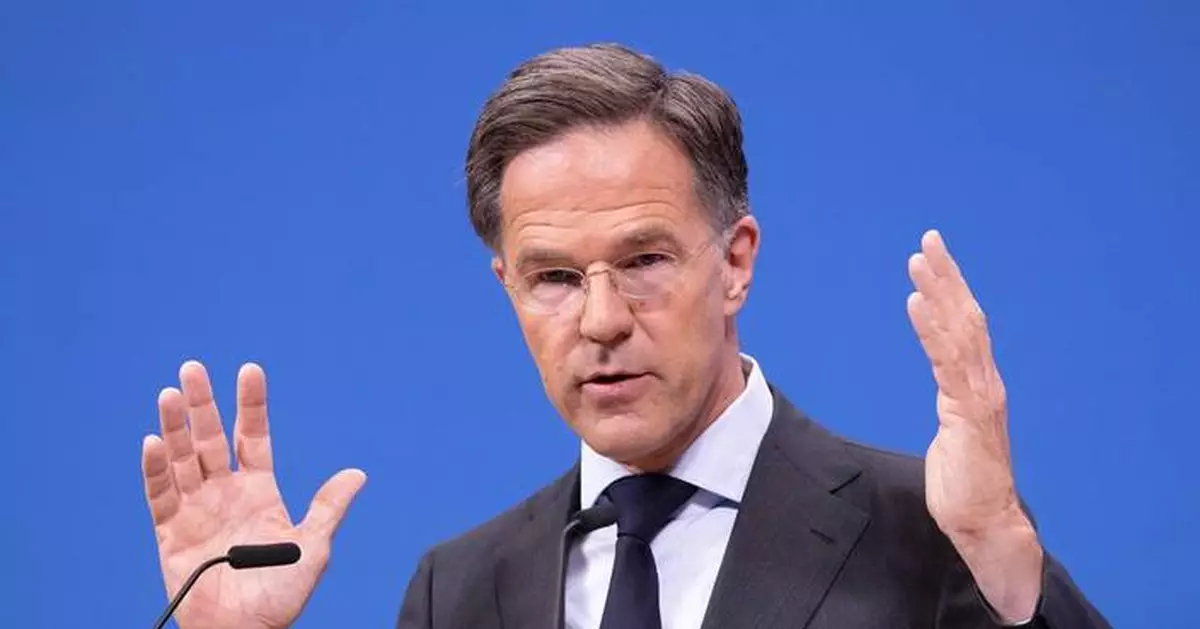
BRUSSELS (AP) — NATO Secretary-General Mark Rutte played down on Wednesday the impact of the Trump administration’s decision to cut back the number of troops and military equipment it would provide its allies should they come under attack.
NATO’s supreme allied commander, an American, is working on backup plans to defend Europe after the U.S. signaled on June 3 that it would no longer supply an aircraft carrier and support ships, aerial refueling planes and dozens of fighter jets, among other military assets, in a crisis.
But Rutte said the U.S. is not withdrawing more troops from Europe. “This is not about where forces and assets are currently located,” he said on the eve of a meeting of NATO defense ministers that he will chair in Brussels.
“It’s about who would do what if our defense plans were activated. So, let’s say in case of an Article 5 situation,” Rutte told reporters.
Under NATO’s collective security guarantee – Article 5 of its founding treaty – the 32 allies pledge that an attack on one of them will be considered an attack on all. It does not oblige them to provide military support, although many likely would.
In essence, the United States is scaling back how it might help should an ally trigger Article 5. The U.S. has by far NATO's biggest armed forces. It does not intend to withdraw its nuclear weapons in Europe, which are key to NATO's deterrence.
The so-called NATO Force Model is the alliance's Plan A for making forces from the 32 member nations available in times of peace, crisis or war. It sets out the military assets that commanders can call on in phases over the first six months of any conflict.
Earlier this month, the Pentagon informed its NATO allies that it would no longer provide as much as it focuses on potential threats elsewhere, notably from China in the Indo-Pacific region.
Rutte said NATO’s top commander, U.S. Gen. Alex Grynkewich, believes that “there are largely capabilities available that other allies already have, or will have in the near future,” to fill the U.S. shortfall.
“The overall picture is looking good,” Rutte said.
But some of the equipment being held back has surprised U.S. allies. Much of it is in short supply in Europe. Still, the U.S. wants to know how they intend to replace these assets, or make do without them, by the time President Donald Trump and his counterparts meet for a NATO summit on July 7-8.
Before then, European allies and Canada want to hear more from U.S. Defense Secretary Pete Hegseth about the Trump administration’s plans for the summit in Turkey’s capital, Ankara. Hegseth skipped their last meeting in February.
Trump bewildered the allies last month with plans to send 5,000 additional U.S. troops to Poland, sowing confusion as his administration continued to insist on reducing — not increasing — the U.S. military footprint in Europe.
Cutbacks are happening. On Friday, NATO military headquarters announced that it will reduce the size of its security force in Kosovo. U.S. forces are expected to be among those to leave.
The U.S. currently has 590 troops deployed with KFOR there, second only among the 31 contributing nations to Italy with its 907 personnel. U.S. Black Hawk helicopters are also stationed at the sprawling U.S. base there, Camp Bondsteel.
KFOR began deploying in 1999 to keep the peace between Kosovo and Serbia.
Once composed of 50,000 personnel, KFOR has been routinely scaled back over the years as tensions eased, although 1,000 additional troops were deployed in 2023 after fresh violence erupted.
Rutte confirmed on Wednesday that more than 1,000 personnel would leave. Grynkewich has said he believes Kosovo is calm enough now to “optimize” the size of KFOR.
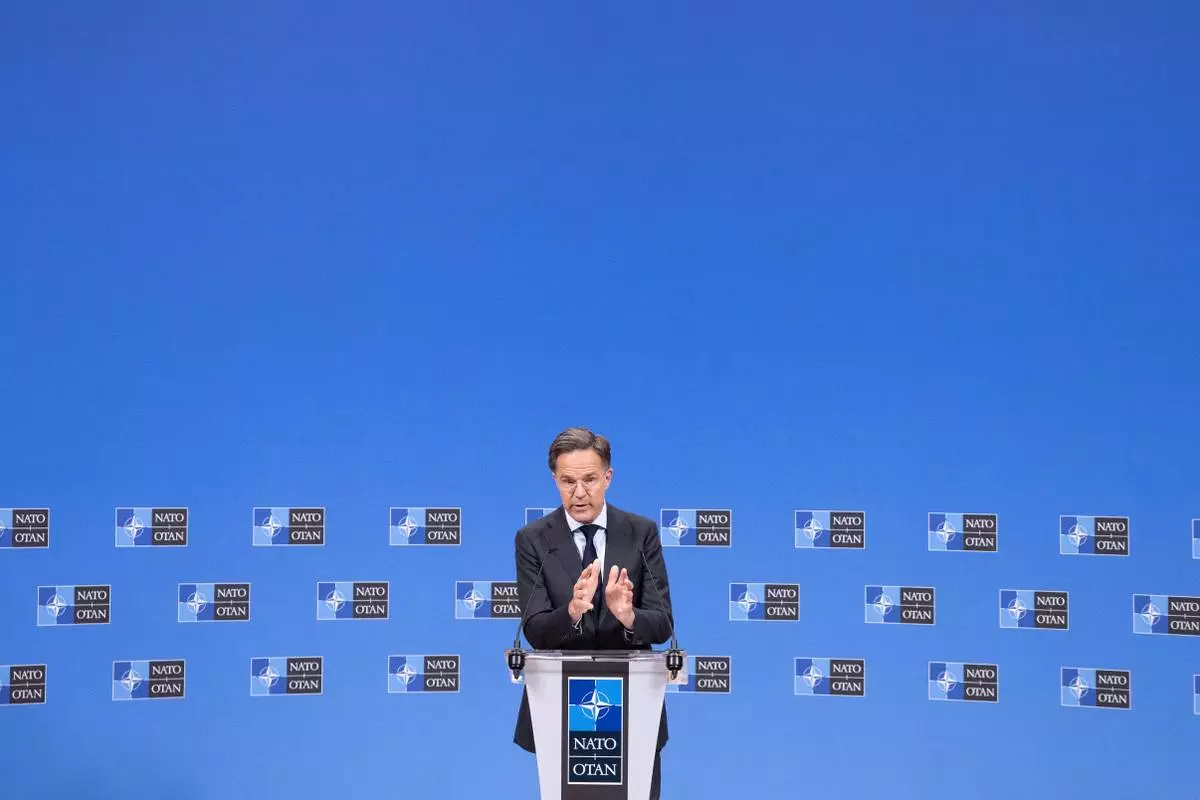
NATO Secretary General Mark Rutte speaks during a pre-ministerial media conference at NATO headquarters in Brussels, Wednesday, June 17, 2026. (AP Photo/Omar Havana)
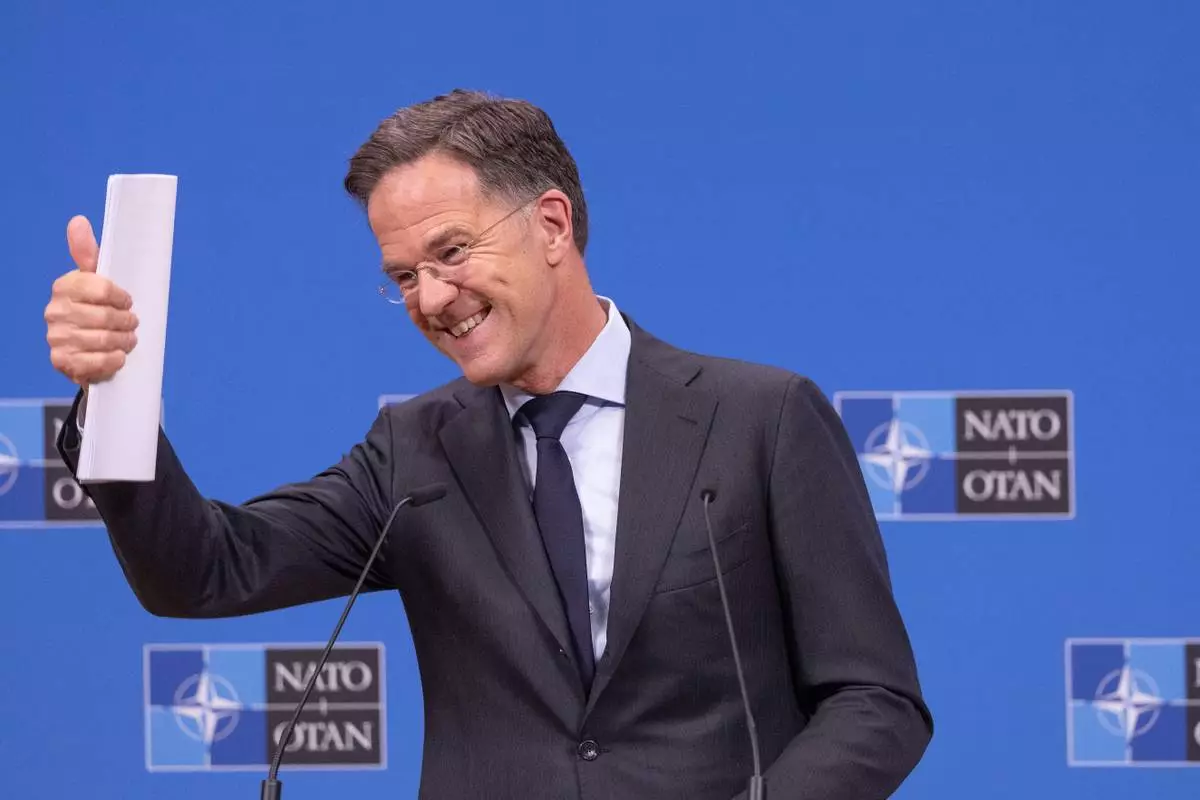
NATO Secretary General Mark Rutte speaks during a pre-ministerial media conference at NATO headquarters in Brussels, Wednesday, June 17, 2026. (AP Photo/Omar Havana)
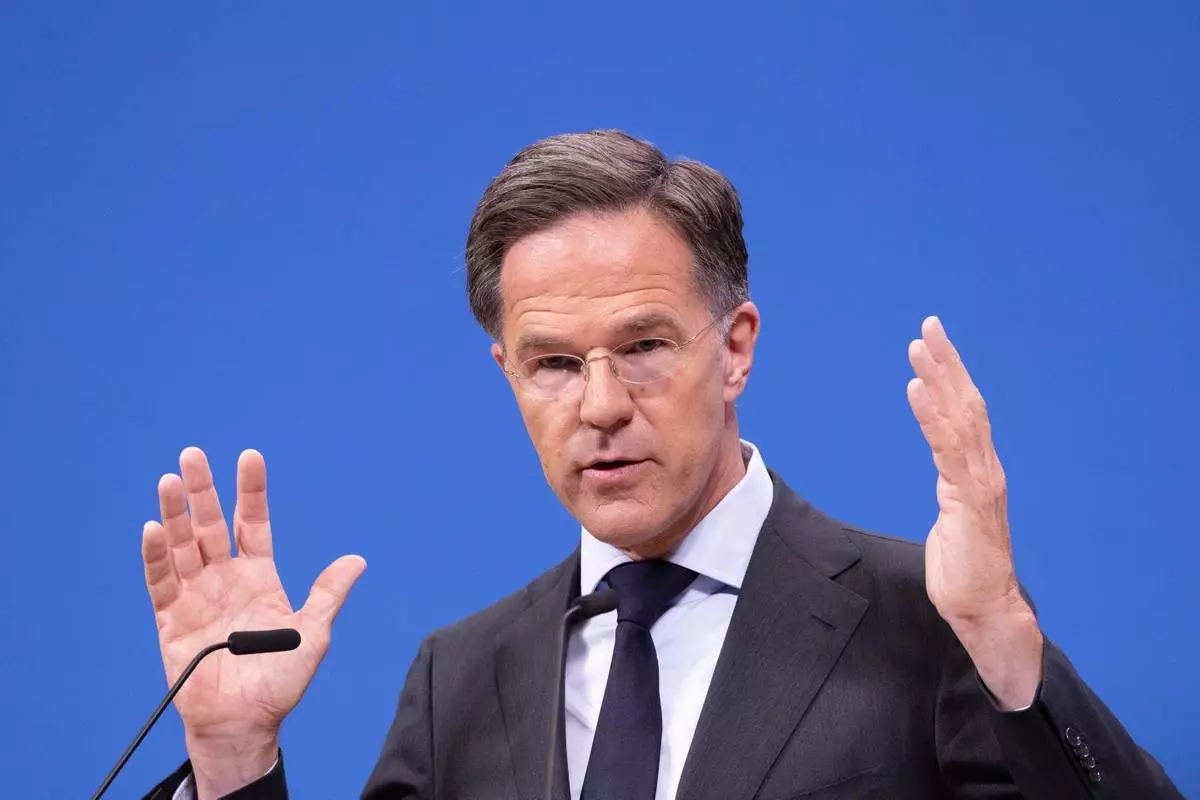
NATO Secretary General Mark Rutte speaks during a pre-ministerial media conference at NATO headquarters in Brussels, Wednesday, June 17, 2026. (AP Photo/Omar Havana)
DUBAI, United Arab Emirates (AP) — Iran will immediately take steps to reopen the Strait of Hormuz once a tentative deal with the U.S. to end the war is signed and will be allowed to sell its oil without restrictions, according to leaked copies of an interim agreement that officials say broadly matches the document.
The accord, due to be signed Friday in Switzerland, also envisions Iran receiving at least $300 billion to rebuild after the war and says the U.S. would work to end all American and United Nations sanctions imposed on Tehran — if a final agreement addressing Iran’s nuclear program is reached.
The U.S. and Israel went to war on Feb. 28 in part to prevent Iran from ever getting a nuclear weapon, although U.S. President Donald Trump's goals in the conflict have repeatedly shifted. The interim deal stops the war before that aim is secured. Instead, it opens a two-month period for nuclear negotiations and appears to offer Iran several benefits up front while extracting little in return.
The U.S. agreement to immediately allow Iran to sell its oil freely and the offer to eventually lift all sanctions, for instance, represent major concessions that go beyond the terms of Iran’s 2015 nuclear deal with world powers that Trump withdrew America from in his first term, declaring it the “worst deal ever.”
The accord likely will draw intense opposition in Washington, and it appears to be a major setback for Israeli Prime Minister Benjamin Netanyahu, who has come under criticism at home from the media, his opponents and even some allies as details emerge.
Much of the agreement would restore the status quo before the war, including ending hostilities, restarting negotiations between the U.S. and Iran over Tehran's nuclear program, and reopening the strait, which is a crucial passage for the world’s oil and natural gas and whose closure created a historic energy crisis.
The deal includes an end to the fighting in Lebanon between Israel and the Iranian-backed militia Hezbollah. That is one of the most delicate parts of the agreement because Israel has maintained it will continue to defend itself and to occupy vast swaths of Lebanon. Iran has said Israel must withdraw under the deal, although the leaked versions make no mention of withdrawal.
A person who was briefed on the memorandum of understanding after it was signed and another who viewed a copy beforehand said it largely matched the text of what was published by the Saudi-owned broadcaster Al Arabiya, which reported details of the deal Tuesday. The two people spoke on condition of anonymity because of the sensitivity of the discussions.
Another two officials in the Mideast, who spoke on condition of anonymity for the same reason, also said the versions published by Al Arabiya and Bloomberg broadly matched the final agreement.
The White House and other American officials have not published the terms and did not immediately respond to questions. However, White House communications director Steven Cheung wrote online Wednesday after CNN published a leaked version of the deal that it “does not reflect the language of the actual" agreement, without elaborating.
Iran also has not published an official version of the deal. The country's semiofficial Tasnim news agency, close to its paramilitary Revolutionary Guard, claimed Wednesday that Bloomberg's version had missing portions, without offering a full accounting.
Trump has cited various goals for the war, including at times vowing it would end Iran’s nuclear and missile programs and its support for Hezbollah and other proxy groups in the region. He also suggested it could lead to toppling the Iranian government.
The interim deal falls short of all of these goals, but Trump hailed it Wednesday.
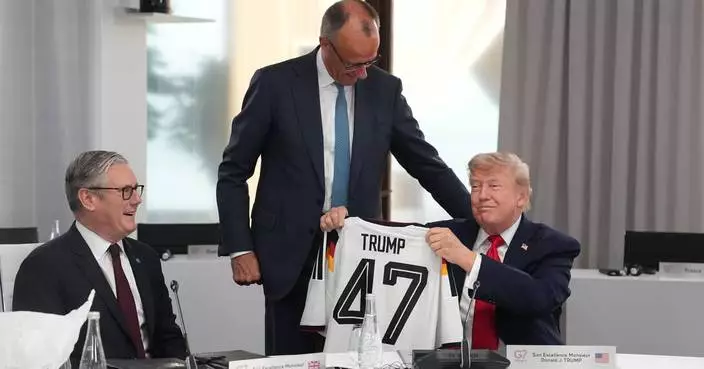
“Nobody knows what it is, but it’s very strong,” Trump said in France, where he is attending a Group of Seven summit.
But he also opened the door to abandoning it: “It’s a memorandum of understanding and if I don’t like it, we’ll go back to shooting at them, dropping bombs.”
Some concessions to Iran — including the full lifting of sanctions and the release of frozen assets — would happen gradually and be linked to progress in the nuclear talks, according to officials from Pakistan, a key mediator. They outlined some of the deal’s major points on condition of anonymity because of the sensitivity of the issue.
But in the meantime, the U.S. will issue waivers to sanctions that allow Iran to sell oil freely.
The Islamic Republic's oil export revenues in 2024 were more than $46 billion. Its main buyer of oil, China, is believed to have bought at below-market prices because of its willingness to ignore the sanctions.
Granting oil waivers at the start of the 60-day talks strips the U.S. of a major point of leverage. Only at the conclusion of the overall deal in 2015 were sanctions on Iran's oil lifted.
The interim deal also opens the door to ending all sanctions Iran faces from the U.S. and at the U.N. — including those over Tehran’s weapons programs and human rights abuses — though it says the schedule for that will be worked out later. Still, that far surpasses the 2015 deal, which only lifted some sanctions in exchange for Iran drastically reducing its enrichment and stockpile of uranium.
The accord would also provide Iran with at least $300 billion to rebuild after an intense U.S. and Israeli bombing campaign — an extraordinary figure and another major benefit for Iran. The money also appears dependent on the progress of further negotiations.
U.S. Vice President JD Vance has said Gulf Arab nations would invest that amount. But Gulf countries would likely be reluctant to help Iran after Iranian attacks in the war destroyed oil facilities and other sites in their territory.
Trump reiterated Wednesday that the U.S. would not contribute and said it was up to other countries if they wanted to invest.
The deal provides a major win for the global economy — the reopening of the Strait of Hormuz, the narrow mouth of the Persian Gulf through which a fifth of all oil and natural gas traded once passed before the war began. Since then, Iranian attacks on shipping and the threat to vessels effectively shut the strait.
The strait's closure drove up energy prices around the world and made many basics, including food, more expensive. Iran let out some vessels that paid tolls, something never done before in the strait, which has long has been considered an international waterway. The U.S. later provided military support to get other tankers out, but traffic was nowhere near levels before the war.
The deal also says the U.S. will lift a blockade imposed on Iranian ports and that the strait will return to its prewar traffic levels in 30 days, while acknowledging Iranian mines may need to be destroyed.
The interim deal sets a 60-day window, which can be extended, to negotiate over limiting Iran's nuclear program, which has been discussed at multiple rounds of talks during Trump's second administration without success. The U.S. promises not to make threats of military action under the current deal after two rounds of talks were interrupted by attacks.
Iran maintains its nuclear program is peaceful, though it has enough highly enriched uranium to build multiple atomic bombs, should it choose to do so, according to the International Atomic Energy Agency.
In the interim deal, Iran reiterates that it will never build a nuclear weapon — a promise it also made in the 2015 nuclear accord.
Miller and Price reported from Washington, and Magdy from Cairo. Associated Press writers Aamer Madhani in Evian-les-Bains, France, Darlene Superville in Geneva and Munir Ahmed in Islamabad contributed to this story.
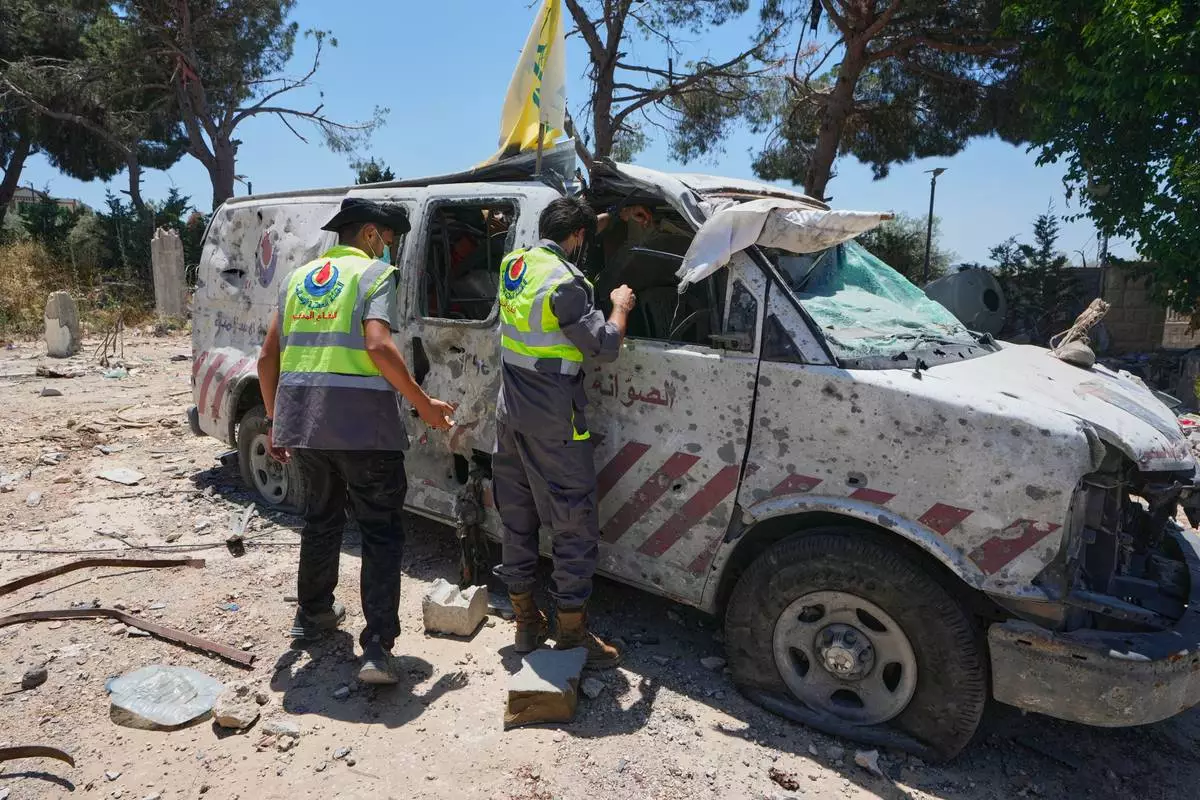
Rescue workers inspect a damaged ambulance belonging to Hezbollah's health unit that was hit in a previous Israeli airstrike in the southern village of Souaneh, Lebanon, Tuesday, June 16, 2026. (AP Photo/Mohammed Zaatari)
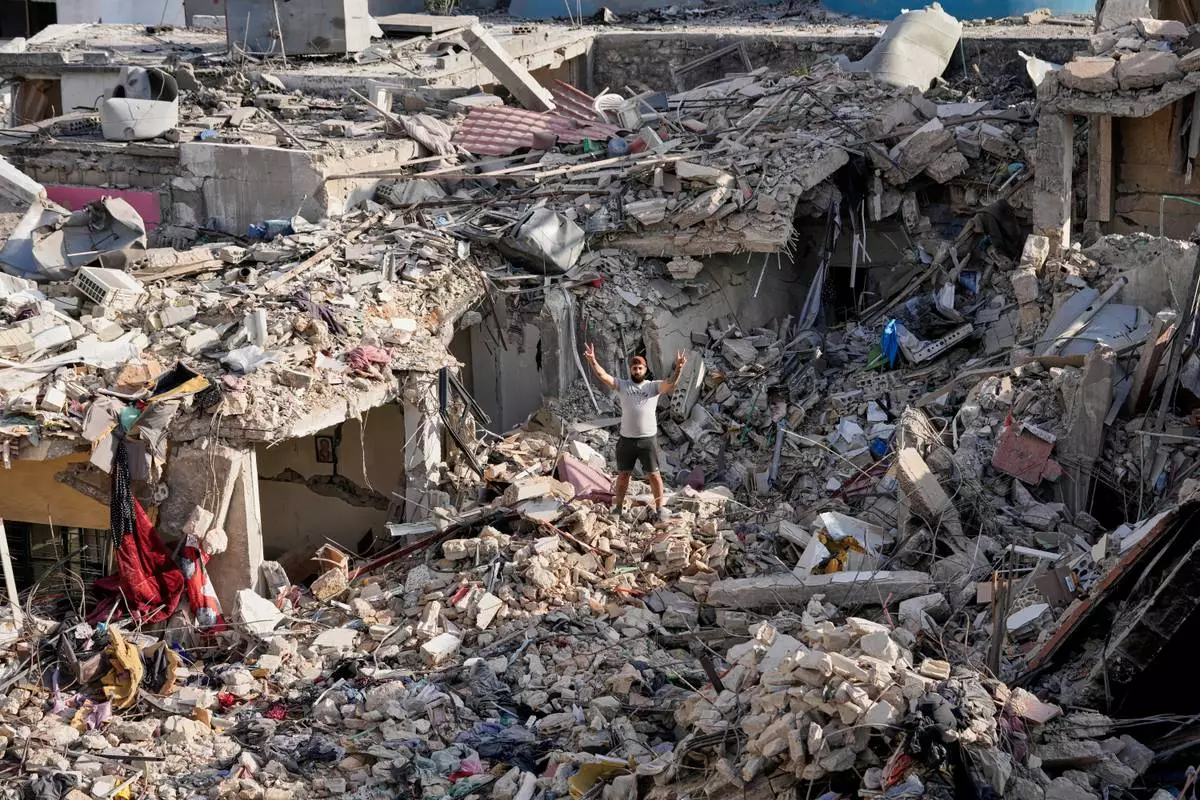
A man who returns to his village following the announcement of an initial ceasefire agreement between the United States and Iran, flashes victory sign as he stands on the rubble of his destroyed house in Nabatiyeh town, southern Lebanon, Tuesday, June 16, 2026. (AP Photo/Hussein Malla)
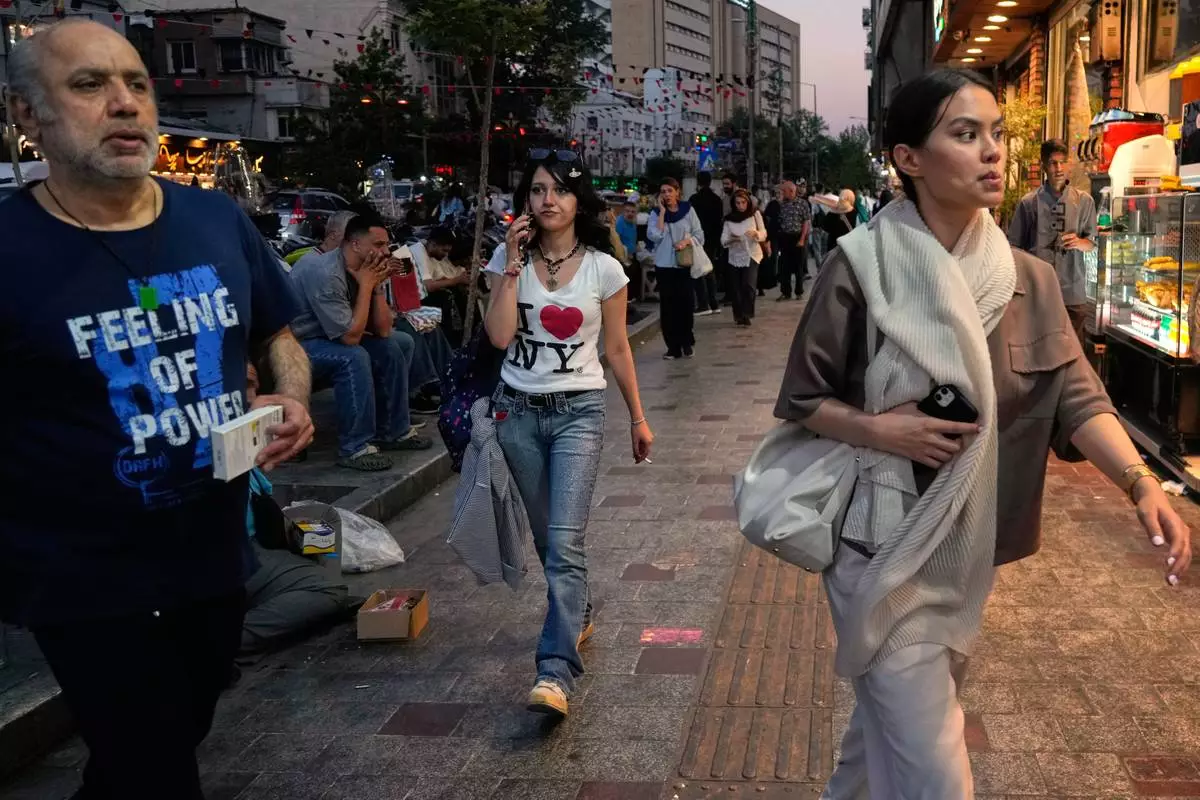
People walk along Tajrish square in northern Tehran, Monday, June 15, 2026. (AP Photo/Vahid Salemi)
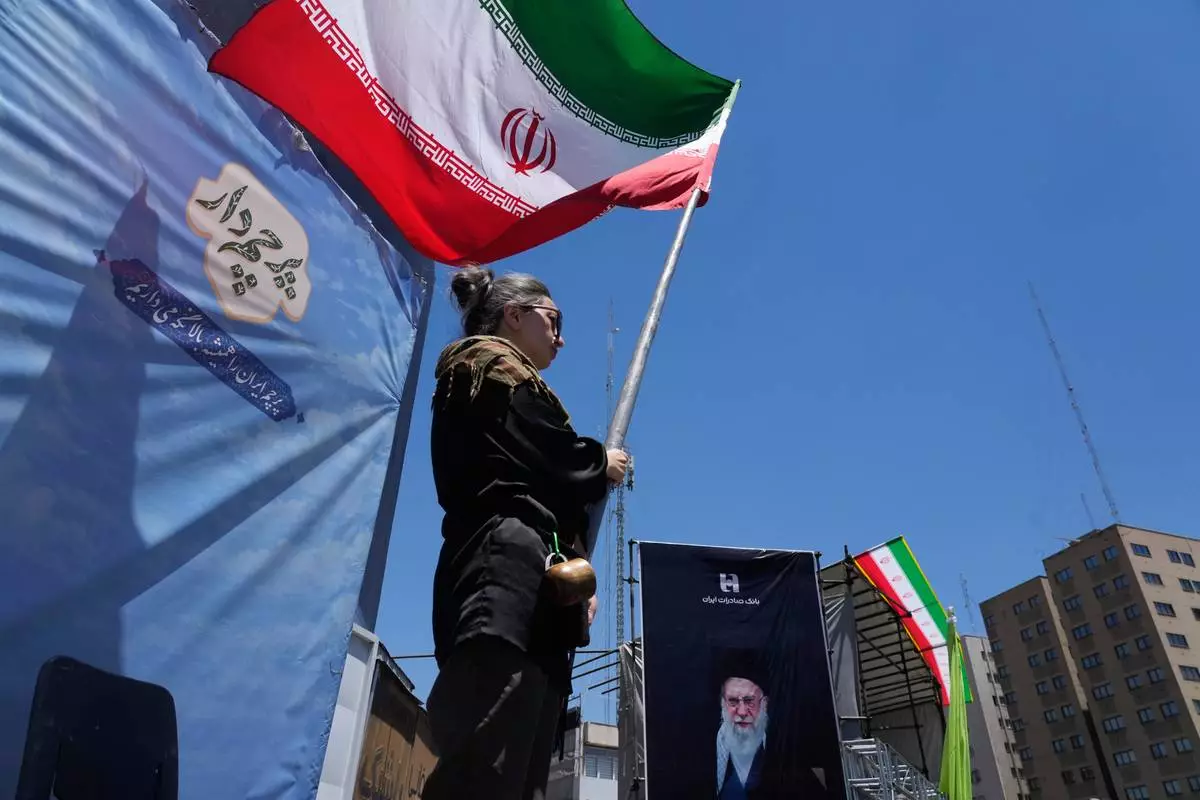
A woman waves an Iranian flag during a pro-government campaign as a portrait of the slain Supreme Leader Ayatollah Ali Khamenei, who was killed in U.S. and Israeli strikes on Feb. 28, is displayed at right, in downtown Tehran, Iran, Monday, June 15, 2026. (AP Photo/Vahid Salemi)