MARLBOROUGH, Mass.--(BUSINESS WIRE)--Jun 17, 2026--
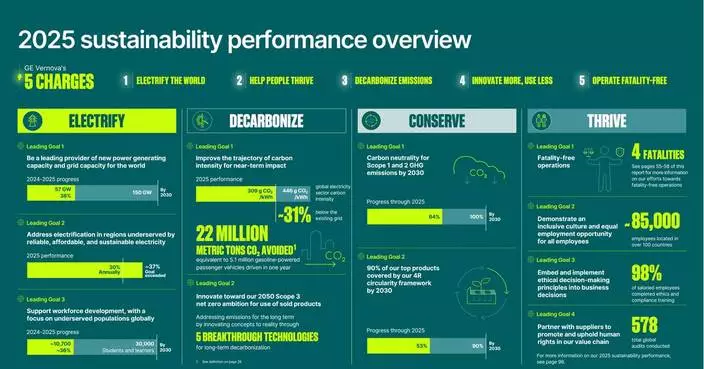
Hologic, Inc., a global leader in women’s health, today released its 2025 Sustainability Report. The new report coincides with Hologic’s 40 th anniversary and underscores how the company’s longstanding purpose — to enable healthier lives for women everywhere, every day — continues to drive progress for patients, communities and the planet.
This press release features multimedia. View the full release here: https://www.businesswire.com/news/home/20260617160174/en/
“We have always firmly believed that our success as a company is fundamentally tied to our ability and commitment to help women worldwide live healthier lives,” said Sharon Vidal, Chief Sustainability Officer at Hologic. “Together with our customers and partners, we’re taking measurable steps to increase global access to innovative medical technologies while pursuing a more sustainable and equitable future for all.”
Hologic’s Sustainability Report details progress on environmental sustainability efforts and advancements championing women’s health, employee engagement, community support and responsible business practices.
Key highlights include:
To read the full report, visit www.hologic.com/sustainability.
About Hologic, Inc.
Hologic, Inc. is a global leader in women’s health focused on developing innovative medical technologies that effectively detect, diagnose and treat health conditions and raise the standard of care around the world. To learn more, visit Hologic.com and connect with us on LinkedIn, Facebook, X, Instagram and YouTube.
Forward-Looking Statements
This news release may contain forward-looking information that involves risks and uncertainties, including statements about the use of Hologic products. There can be no assurance these products will achieve the benefits described herein or that such benefits will be replicated in any particular manner with respect to an individual patient, as the actual effect of the use of the products can only be determined on a case-by-case basis. In addition, there can be no assurance that these products will be commercially successful or achieve any expected level of sales. Hologic expressly disclaims any obligation or undertaking to release publicly any updates or revisions to any such statements presented herein to reflect any change in expectations or any change in events, conditions or circumstances on which any such data or statements are based.
Hologic, The Science of Sure and Better is Possible are trademarks and/or registered trademarks of Hologic, Inc., and/or its subsidiaries in the United States and/or other countries.
References

Hologic 2025 Sustainability Report
ATLANTA (AP) — Georgia is the next Southern state where Republicans are convening to redraw voting districts in ways that could diminish the political power of Black and other nonwhite voters after the U.S. Supreme Court gutted Voting Rights Act provisions that helped shape existing boundaries in racially diverse states.
The General Assembly convenes Wednesday in a special session called by outgoing Gov. Brian Kemp in response to the court's Louisiana v. Callais decision, which struck down Louisiana’s congressional map as an illegal racial gerrymander.
Kemp, who is in the final months of his second term, deviated from other governors who fast-tracked new congressional maps for the November midterms partly in response to President Donald Trump's pleas to shore up the party's chances at maintaining control of Congress. Kemp instead wants Georgia lawmakers to draw districts for the 2028 elections. Yet the governor moved ahead of his Southern counterparts by asking the Republican-controlled Assembly to redraw its own boundaries, as well.
That would make Georgia the first state to apply Callais to its legislature and demonstrate the cascading effect of the high court's decision across Southern states with the nation’s highest proportions of Black voters and Black lawmakers.
The issue is especially salient in Georgia, where the Capitol complex includes a statue of the Rev. Martin Luther King Jr. and sits blocks from where the slain civil rights icon lived, preached and led the movement that yielded the Voting Rights Act in 1965.
Still, neither Kemp nor Republican legislative leaders had unveiled proposed changes as of Wednesday morning, frustrating Democrats and activists who plan daily demonstrations throughout the session.
“They have not been transparent,” said state Rep. Tanya Miller, a Black legislator from Atlanta who is the Democratic nominee for attorney general. “Something as fundamental as voters getting to choose their leaders ought not to be done in the dark, ought not happen in back rooms.”
Several Republican lawmakers said Wednesday morning they still had not seen proposed districts, and Kemp’s office had not scheduled any public remarks from the governor.
House Speaker Pro Tem Jan Jones, a veteran of earlier redistricting efforts, said the outcome “will be a legislative prerogative” — a notion Kemp aides confirmed. But Jones said that even as a top-ranking Republican on the committee that would consider new maps, she hasn't “been in any room creating maps.”
Asked directly who is drawing new districts, she replied: “I don't know.”
Before Callais, Section 2 of the Voting Rights Act was understood to require maps — for Congress, state legislatures and local legislative bodies — that gave historically marginalized minorities a reasonable chance to select candidates of their choice. Nationally and in Georgia, those so-called “opportunity districts” have disproportionately elected Black and other nonwhite representatives.
For example, about a third of Georgia's 180 state representatives are Black. Latino, Asian and other minorities bring the total nonwhite share to about 40% — roughly reflecting the state's overall population. Georgia's U.S. House delegation has five districts out of 14 total where the electorate is majority or plurality nonwhite. All elected Black Democrats in 2024.
With the Callais ruling, issued earlier this spring, a conservative majority of justices concluded that jurisdictions drawn with racial makeup in mind are discriminatory and violate the U.S. Constitution's equal protection clause. The justices declared that apportionment should be “race neutral.”
Their stated reasoning did not hinge on party interests, and federal courts have said partisan gerrymandering is constitutionally permissible. But in Southern states, especially, party loyalty dovetails considerably with race and ethnicity. So the decision has allowed Republicans — a party dominated by white people — to redraw maps to goose likely GOP districts by redistributing nonwhite voters who tend to support Democrats.
That, many civil rights activists and experts argue, makes it impossible for Southern legislatures to be genuinely “race neutral” when drawing boundaries.
Emory University professor Carol Anderson compared Callais and the resulting redistricting push to poll taxes and literacy tests imposed by white Southern conservatives — and blessed by the Supreme Court — during the Jim Crow era.
“They used racially neutral language for policies that were clearly racially targeted,” said Anderson, who is also a board member of Fair Fight Action, a group organizing against the Georgia redistricting.
It's not guaranteed that Georgia Republicans can get what they want from new maps.
Partisan gerrymandering involves redistributing voters — packing certain citizens into fewer districts or dividing them across more districts. Around metro Atlanta, spreading nonwhite, Democratic-leaning voters across more districts could make more seats seem to lean Republican. The risk, however, is that more battleground districts emerge because white metropolitan voters are trending less conservative, which could give Democratic candidates of any race or ethnicity more chances to win.
That's perhaps not a major factor in the Georgia state Senate, which already is considered gerrymandered for Republicans. But it could be a consideration when drawing state House and U.S. House maps.
Kemp is effectively asking Republicans, especially in metro Atlanta, to redraw their own boundaries and take on new, unfamiliar territory.
Nationally, a partisan redistricting battle started last year when Trump urged Republican-controlled states to redraw congressional boundaries to shore up the GOP's narrow House majority in Washington this November. Texas answered the call first.
California Gov. Gavin Newsom and Democrats in Sacramento answered with their own gerrymander that voters later approved. A succession of states followed. The outcome would have been close to even had the Virginia Supreme Court, controlled by conservatives, not struck down new Democratic-drawn maps approved by the state’s voters. All told, Republicans think they could gain as many as 16 seats from their redistricting efforts while Democrats think they could gain six seats from new districts in California and Utah.
That still may not be enough for the GOP to hold a congressional majority, given Trump's lagging approval ratings. But it could mitigate Democratic gains and set Republicans up well for 2028 and beyond.
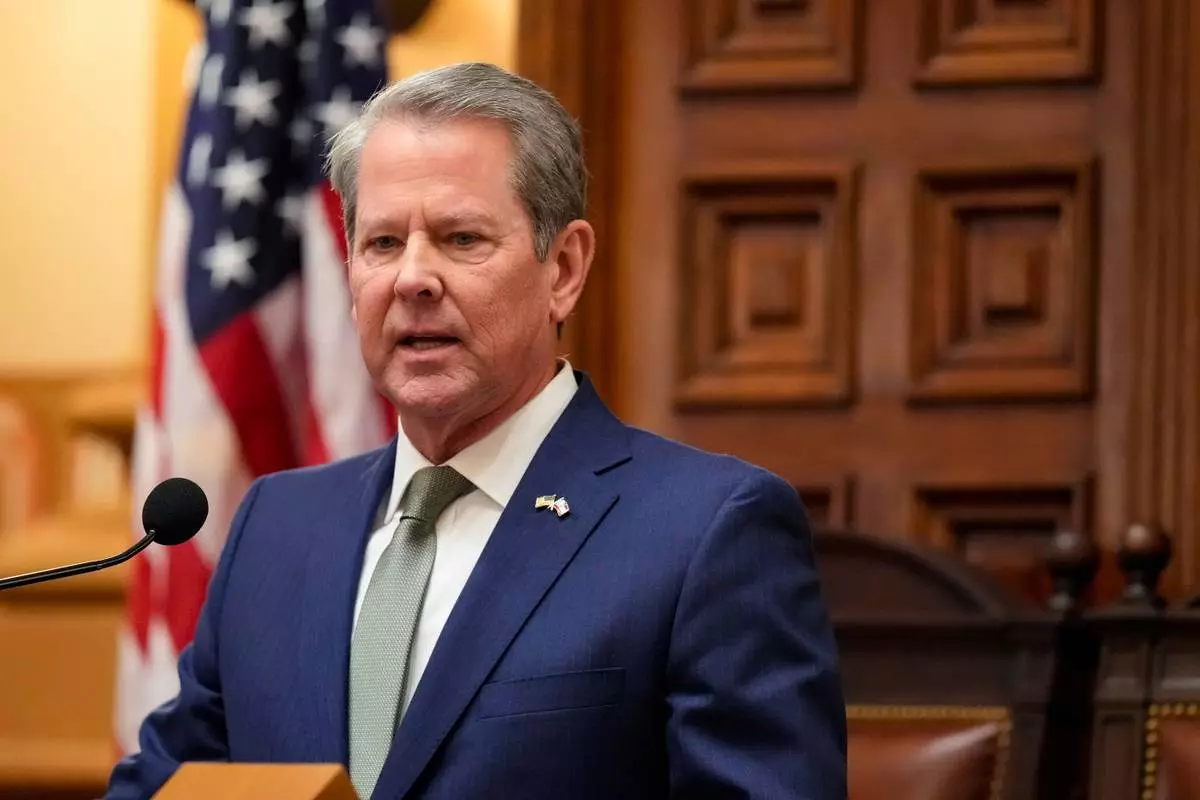
FILE - Gov. Brian Kemp speaks during the State of the State, Jan. 15, 2026, in Atlanta. (AP Photo/Brynn Anderson, File)