NASHVILLE, Tenn.--(BUSINESS WIRE)--Jun 17, 2026--
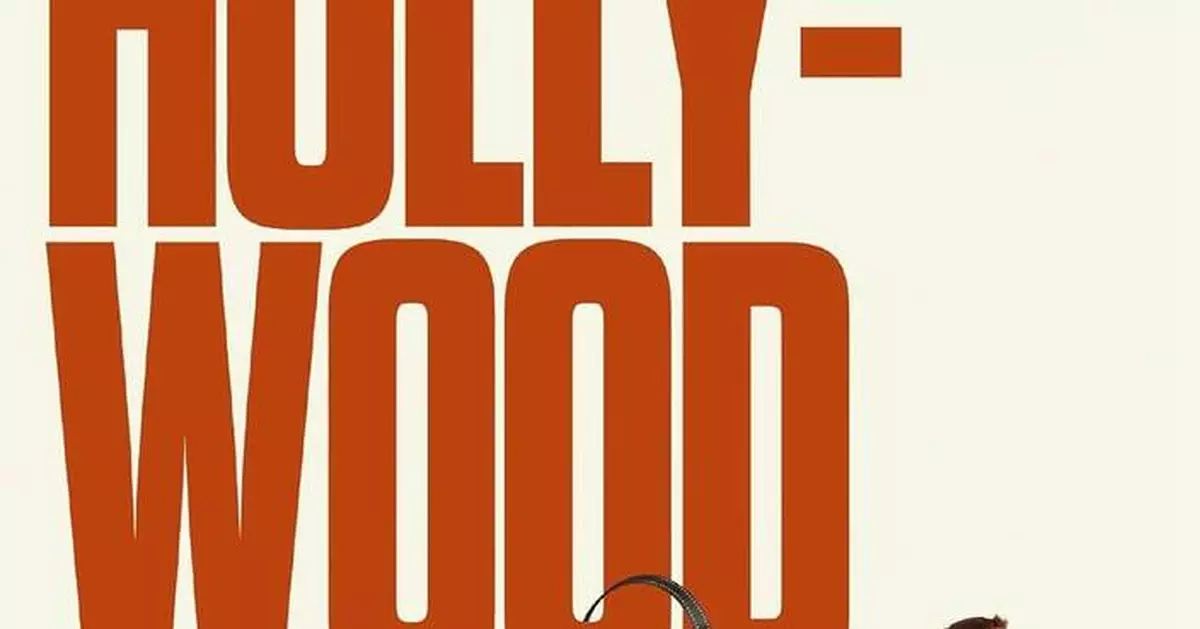
HarperCollins Leadership will release Chasing Hollywood: A Marketing Chief’s Lessons on Breaking Through by Gerry Rich on October 13, 2026. Blending memoir, film history, and practical marketing insight, the book examines how some of the most memorable movies of the last two generations captured public attention and shaped culture, while offering lessons for anyone trying to stand out in a crowded marketplace.
This press release features multimedia. View the full release here: https://www.businesswire.com/news/home/20260617516126/en/
In Chasing Hollywood, Rich draws on his career as a marketing leader to reveal the work, creativity, and conviction behind the creation and promotion of films that became lasting cultural touchstones, including Iron Man, which launched the Marvel Cinematic Universe and became the highest-grossing film franchise of all time. More than a business book, it is a personal account of what it takes to champion bold ideas, navigate resistance, and help original projects find their audience.
Set against the backdrop of films that helped define shared memories, catchphrases, stars, and moments in popular culture, the book shows how breakthrough success often comes from seeing what others overlook. Rich argues that audiences do not always know what they want until they see something new, and that lasting impact often comes from the projects willing to challenge convention.
The book also speaks directly to today’s marketing landscape, where even major brands struggle to break through the noise. Drawing on his experience at Miramax, MGM, Paramount, Columbia Pictures and Amazon MGM, Rich helped launch and elevate independent films into the cultural zeitgeist while working alongside some of the industry’s most acclaimed filmmakers. Through stories from Hollywood and beyond, he makes the case for an indie-film approach to standing out: one rooted in originality, persistence, strategic positioning and the willingness to go against the crowd.
“Getting an opportunity to journey back through Hollywood and revisit the countless people and moments that have both inspired and challenged me is incredible. I am so fortunate to have a career that allowed me to sit in rooms with Steven Spielberg, Pedro Almodovar, Barbara Broccoli, Quentin Tarantino, Sarah Polley, Ridley Scott and many more. I have loved movies as far back as I can recall and for me, potentially inspiring others to follow their dreams is the ultimate reward,” shared Rich.
“From limited budget indies at Miramax like The Crying Game, to shaping the promotion of the James Bond franchise to a new generation of viewers, Gerry Rich has brought a fresh perspective and a willingness to reinvent the wheel that helped propel him to the highest levels in Hollywood,” said Tim Burgard, executive editor of HarperCollins Leadership. “In Chasing Hollywood, Gerry shares his marketing wisdom while bringing us into the rooms where the magic happened for some of the most iconic movies of the ’90s and 2000s.”
With its mix of personal storytelling and practical lessons, Chasing Hollywood offers insight for marketers, creators, leaders, and readers interested in the intersection of entertainment, culture, and influence. The book presents a timely message: While barriers to attention are more formidable than ever, they can still be overcome by those willing to think outside the box.
Chasing Hollywood: A Marketing Chief’s Lessons on Breaking Through will be available in hardcover, ebook, and audiobook with Rich narrating. You can pre-order today at: https://www.harpercollinsleadership.com/books/chasing-hollywood
You can download cover art and Gerry Rich’s headshot HERE.
ABOUT THE AUTHOR:
Gerry Rich was just a kid when he set his sights on marketing movies. That’s when his journey of chasing Hollywood began: By forging new paths to escape the confines of his St. Louis neighborhood, he innovated his way to California, scrappily climbing from a humble post-college advertising job to the top of the Hollywood food chain. Named by Ad Age as one of the Top 100 Marketers in America (across all industries), Gerry has proven his talents as a marketing executive at Columbia Pictures, DeLaurentis Entertainment Group, Miramax, Miramax/Disney, MGM, Paramount, and MGM/United Artists.
ABOUT HARPERCOLLINS LEADERSHIP:
HarperCollins Leadership publishes content from leaders who redefine or expand what a reader previously thought possible. Authors provide unique inspiration and experiences to those who seek to learn, make a difference, and find their own version of success.
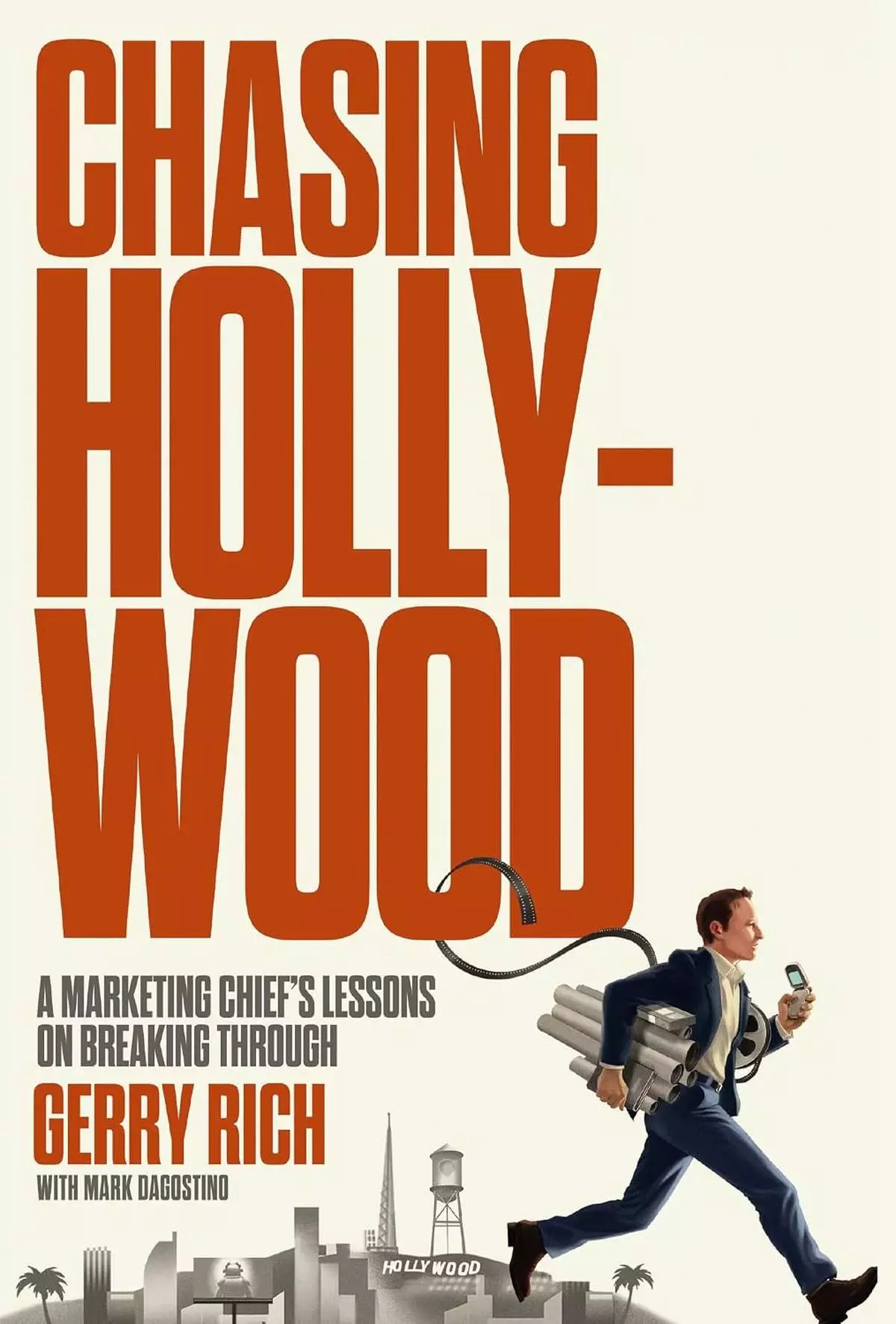
Courtesy of HarperCollins Leadership, an imprint of HarperCollins Focus.
WASHINGTON (AP) — President Donald Trump signed an agreement with Iran on Wednesday that calls for Tehran to dilute its stockpile of highly enriched uranium and waives U.S.-backed sanctions on the country, immediately allowing Iran to sell its oil freely in a major concession from Washington, according to details released by both countries.
The initial deal to end the war takes “immediate effect” after leaders from both countries signed it, Pakistani Prime Minister Shehbaz Sharif, who helped mediate the agreement, said online.
The agreement calls for a permanent end to hostilities and starts a 60-day negotiating clock to reach a final deal on the future of Iran's nuclear program, though Trump left the door open to resume attacks. It appears to offer Iran several benefits up front while extracting little in return.
The deal has been shrouded in secrecy and confusion for days. U.S. officials refused to disclose the terms even after saying Trump and Vice President JD Vance digitally signed it over the weekend. Trump signed a physical copy Wednesday while dining with French President Emmanuel Macron at Versailles, the palace where many historic agreements have been signed over the centuries, ending wars or territorial disputes.
The White House had planned a signing ceremony on Friday in Switzerland, but its fate is now uncertain, with conflicting information from the U.S., Iran and Pakistan.
“It’s signed,” Trump said as he left the dinner at Versailles, which followed his trip to the Group of Seven summit in France.
In a video posted online by a White House aide, Trump was seen seated at a table next to Macron signing a paper copy of the agreement. Trump then handed the document and pen to Secretary of State Marco Rubio as people in the room applauded.
“This was not easy,” Trump said right before he signed it, according to a video posted to social media by Macron.
In Tehran, a stone-faced President Masoud Pezeshkian signed the deal on behalf of Iran, according to the state-run IRNA news agency, which posted an image of him holding up the deal with his signature and Trump’s.
Text of the agreement still has not been formally released by the Americans. U.S. officials dictated draft language to journalists after days of secrecy, speaking on condition of anonymity. Iranian state media has released text that largely tracked what the U.S. put out.
Much of the agreement would restore the status quo before the war, including ending hostilities, restarting talks between the U.S. and Iran over Tehran’s nuclear program, and reopening the the Strait of Hormuz, the crucial passage for the world’s oil and natural gas whose closure created a historic energy crisis.
The agreement opens the strait without tolls for two months, but does not preclude fees in the future, according to the drafts from both countries.
In return, the U.S. will move to waive, but not eliminate, some wide-ranging sanctions against Iran.
The deal also affirms a commitment to Lebanon’s territorial integrity in the face of Israel’s invasion against the Hezbollah militant group. That is one of the most delicate parts of the agreement because Israel has maintained it will continue to defend itself and to occupy vast swaths of Lebanon. Iran has said Israel must withdraw under the deal, a condition Israel has already rejected.
The U.S. and Israel went to war Feb. 28 in part to prevent Iran from ever getting a nuclear weapon. Trump has cited various goals for the war, including at times vowing it would end Iran’s nuclear and missile programs and its support for Hezbollah and other proxy groups. He also suggested it could lead to toppling the Iranian government.
The interim deal falls short of all those goals, but Trump hailed it as “very strong.”
He also opened the door to abandoning it: “It’s a memorandum of understanding, and if I don’t like it, we’ll go back to shooting at them, dropping bombs.”
The U.S. agreement to immediately allow Iran to sell its oil freely and the offer to eventually lift all sanctions are major concessions that go beyond the terms of Iran’s 2015 nuclear deal with world powers. Trump withdrew America from that Obama-era pact in his first term, declaring it the “worst deal ever.”
Iran maintains its nuclear program is peaceful, though it is the only country to enrich uranium to 60% purity without a weapons program, according to the International Atomic Energy Agency. The interim deal calls for the IAEA to monitor the “downblending” of that uranium in Iran, without elaborating.
The accord likely will draw intense opposition in Washington, and it appears to be a major setback for Israeli Prime Minister Benjamin Netanyahu, who has come under criticism at home from the media, his opponents and even some allies as details emerge.
Under the Obama-era nuclear agreement with Iran that Trump pulled out of, Iran also agreed to restrictions on its nuclear program and promised never to build an atomic weapon in exchange for the lifting of economic sanctions.
Some concessions to Iran — including the full lifting of sanctions and the release of frozen assets — would happen gradually and be linked to progress in the nuclear talks, according to Pakistani officials. They outlined some of the deal’s major points on condition of anonymity because of the sensitivity of the issue.
But in the meantime, the U.S. will issue waivers to sanctions that allow Iran to sell oil freely.
The Islamic Republic's oil export revenues in 2024 were more than $46 billion. Its main buyer of oil, China, is believed to have bought at below-market prices because of its willingness to ignore the sanctions.
Granting oil waivers at the start of the 60-day talks strips the U.S. of a major point of leverage. Only at the conclusion of the overall deal in 2015 were sanctions on Iran's oil lifted.
The interim deal also opens the door to ending all sanctions Iran faces from the U.S. and at the U.N. — including those over Tehran’s weapons programs and human rights abuses — though it says the schedule for that will be worked out later. Still, that far surpasses the 2015 deal, which only lifted some sanctions in exchange for Iran drastically reducing its enrichment and stockpile of uranium.
The accord would also provide Iran with at least $300 billion to rebuild — an extraordinary figure and another major benefit for Iran. The money also appears dependent on the progress of further negotiations.
Vance has said Gulf Arab nations would invest that amount. But Gulf countries would likely be reluctant to help Iran after Iranian attacks in the war destroyed oil facilities and other sites in their territory.
Trump reiterated Wednesday that the U.S. would not contribute and said it was up to other countries if they wanted to invest.
The initial deal provides a major win for the global economy — the reopening of the Strait of Hormuz, the narrow mouth of the Persian Gulf through which a fifth of all traded oil and natural gas once passed before the war began. Since then, Iranian attacks on shipping and the threat to vessels effectively shut the strait.
The strait's closure drove up energy prices around the world and made many basics, including food, more expensive. Iran let through some vessels that paid tolls, something never done before in the strait, which has long been considered an international waterway. The U.S. later provided military support to get other tankers out, but traffic was nowhere near levels before the war.
The deal also says the U.S. will lift a blockade imposed on Iranian ports and that the strait will return to its prewar traffic levels in 30 days, while acknowledging Iranian mines may need to be destroyed.
Gambrell reported from Dubai, United Arab Emirates; Magdy reported from Cairo and Catalini reported from Morrisville, Pennsylvania. Associated Press writers Aamer Madhani in Evian-les-Bains, France, Darlene Superville in Geneva, Angela Charlton in Paris and Munir Ahmed in Islamabad contributed to this story.
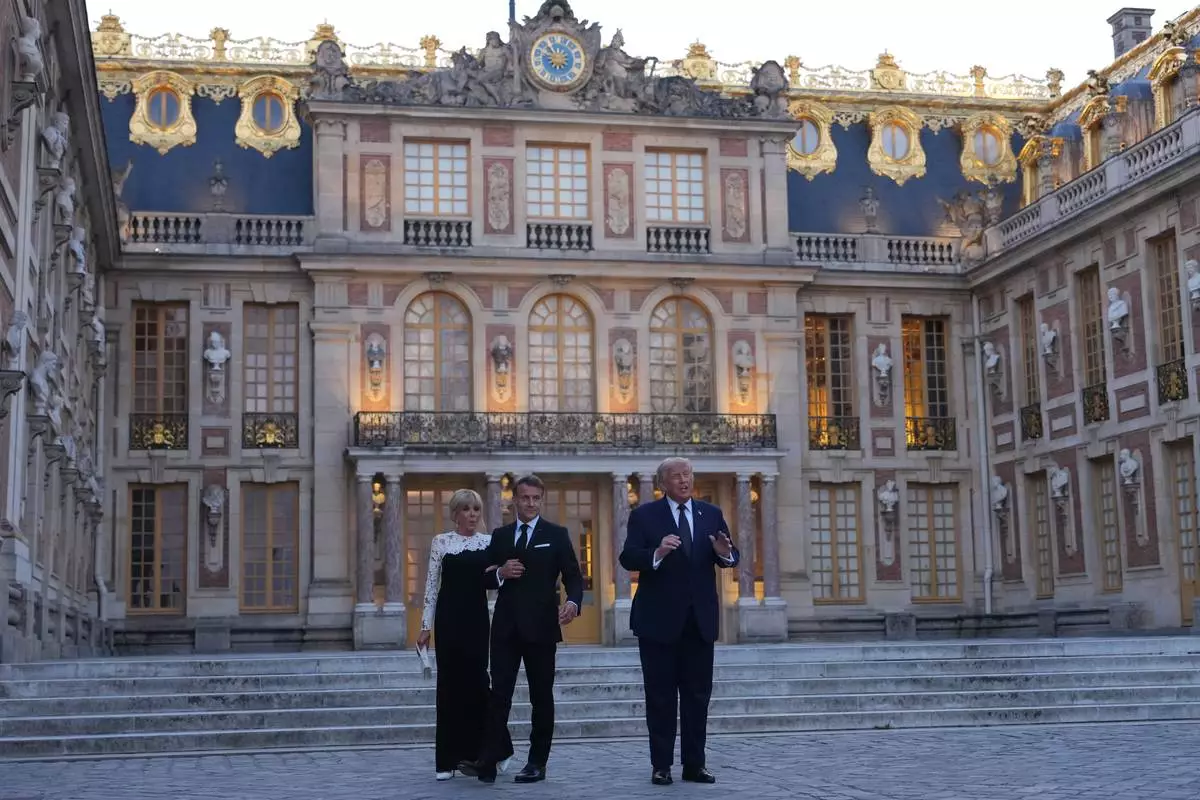
U.S. President Donald Trump is greeted by French President Emmanuel Macron and and first lady Brigitte Macron as he arrives at the Palace of Versailles, Wednesday, June 17, 2026, in Versailles, France. (AP Photo/Julia Demaree Nikhinson)
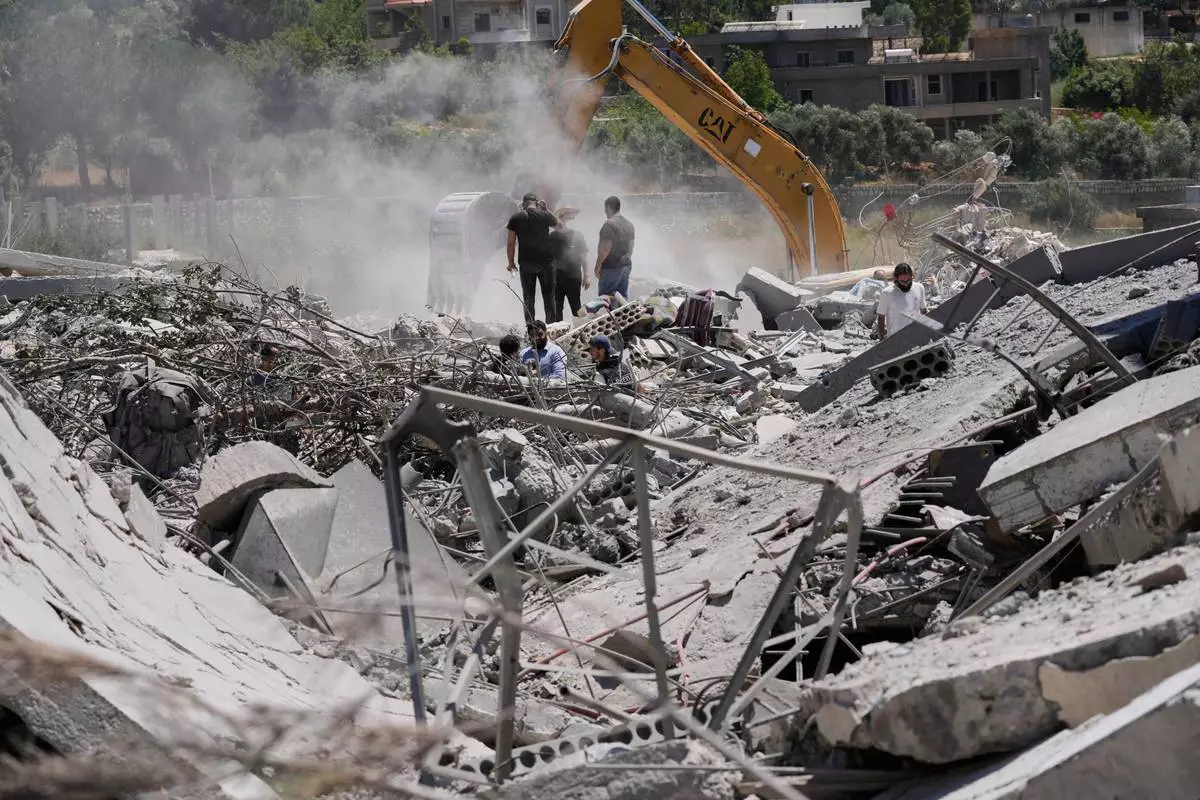
People who returned to their village following the announcement of an initial ceasefire agreement between the United States and Iran, use an excavator as they search for dead bodies under the wreckage of a destroyed house in the southern village of Touline, Lebanon, Tuesday, June 16, 2026. (AP Photo/Mohammed Zaatari)
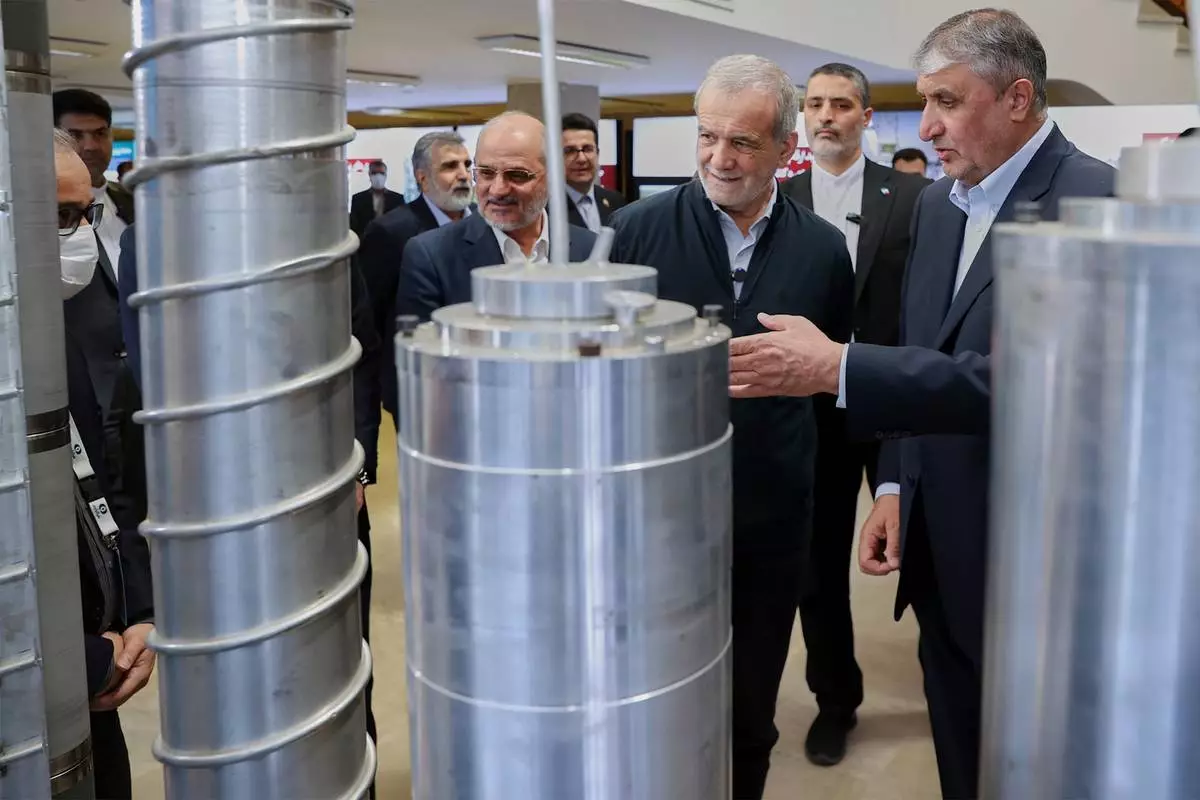
FILE - In this photo released by the Iranian Presidency Office, President Masoud Pezeshkian, second right, listens to head of Atomic Energy Organization of Iran Mohammad Eslami as he visits an exhibition of Iran's nuclear achievements, in Tehran, Iran, April 9, 2025. (Iranian Presidency Office via AP, File)
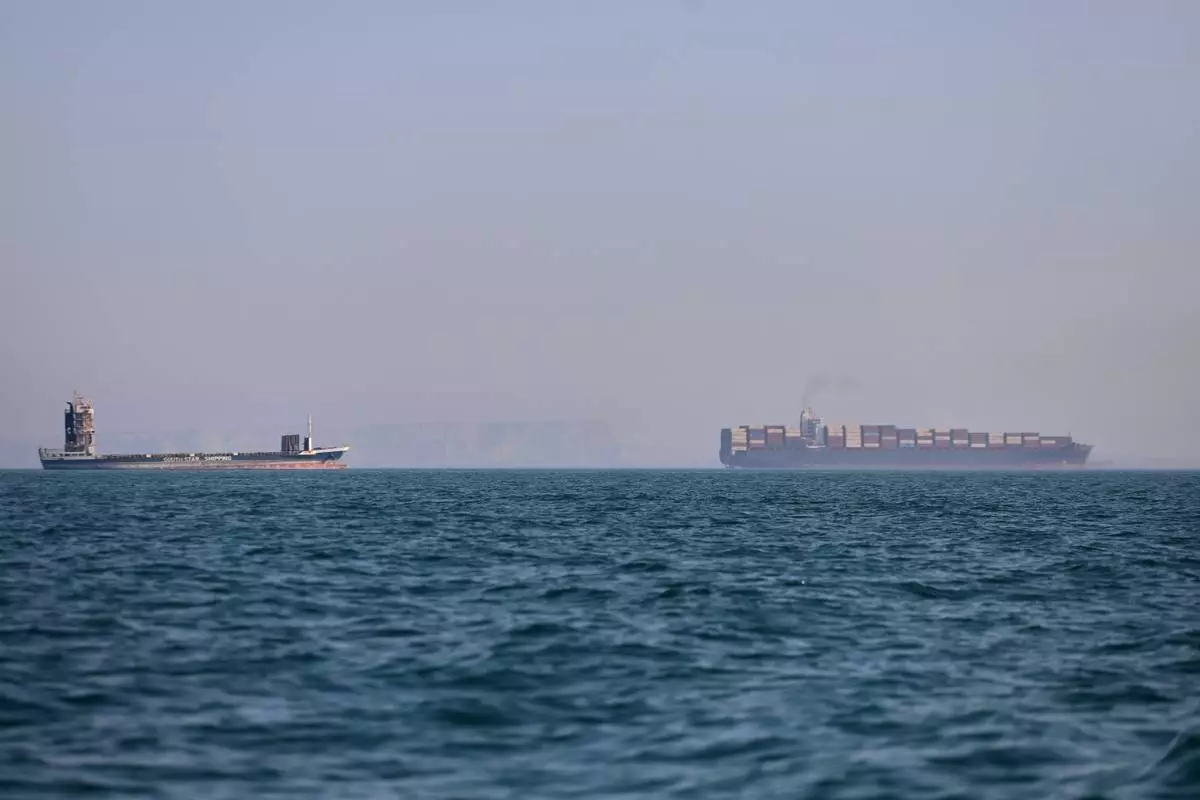
A container ship, right, and a cargo vessel are seen in the Strait of Hormuz off Bandar Abbas, Iran, Wednesday, June 17, 2026. (Amirhosein Khorgooi/ISNA via AP)

A small motorboat passes anchored vessels in the Strait of Hormuz off Bandar Abbas, Iran, Wednesday, June 17, 2026.(Amirhosein Khorgooi/ISNA via AP)
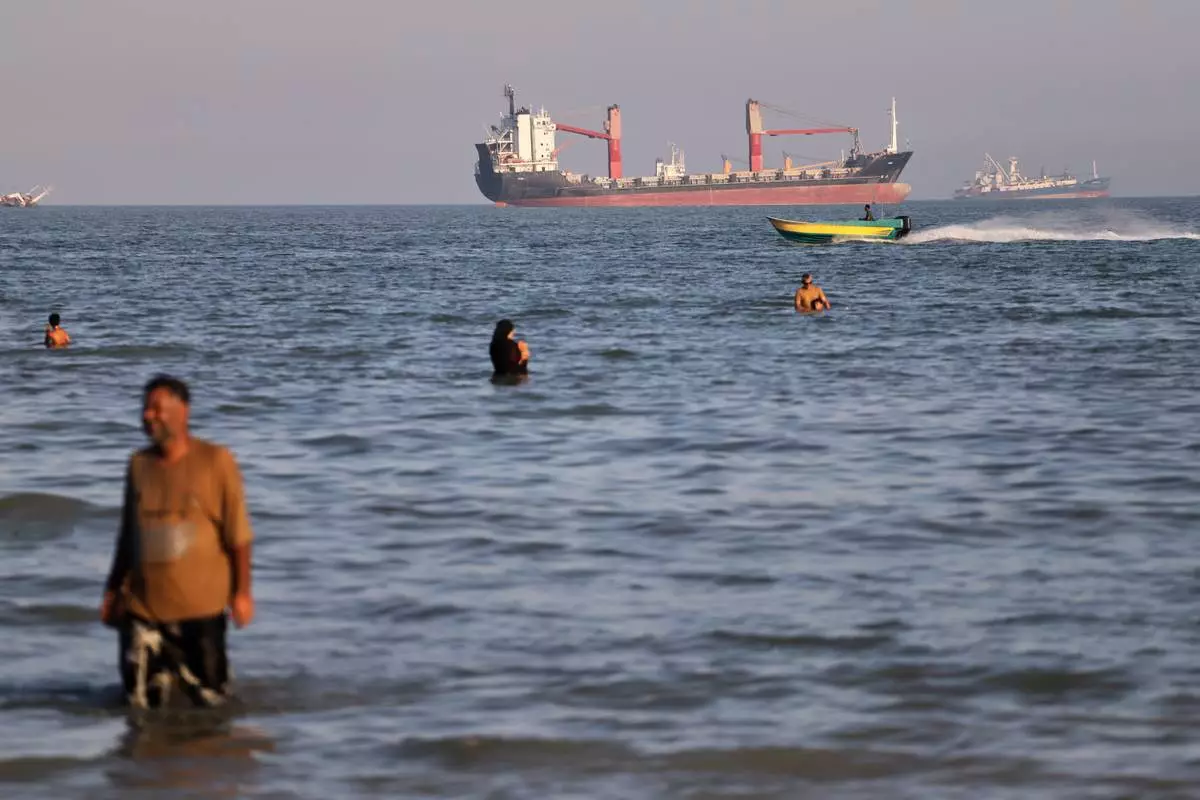
Residents swim in the waters of the Strait of Hormuz as a small motorboat passes cargo ships and other commercial vessels offshore near Bandar Abbas, Iran, Wednesday, June 17, 2026. (Amirhosein Khorgooi/ISNA via AP)
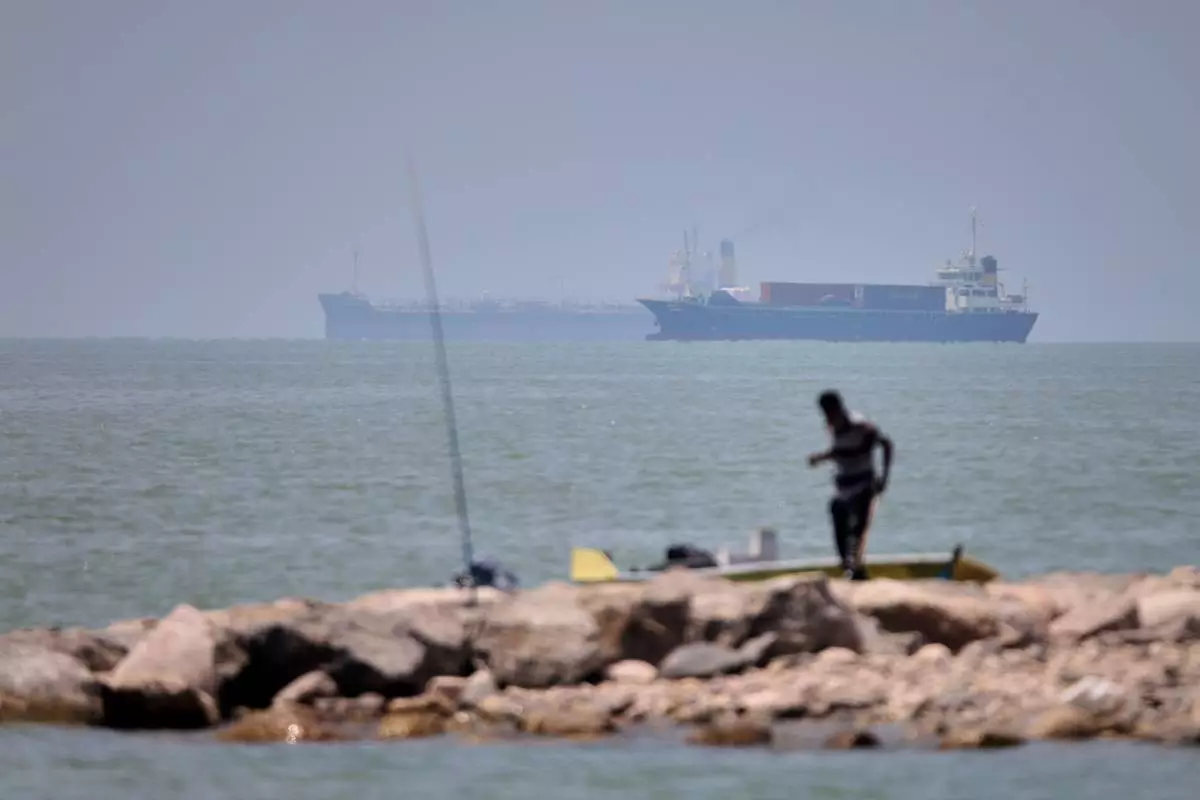
A man stands beside a fishing pole along the shore as cargo ships and commercial vessels are seen in the Strait of Hormuz off Bandar Abbas, Iran, Wednesday, June 17, 2026. (Amirhosein Khorgooi/ISNA via AP)
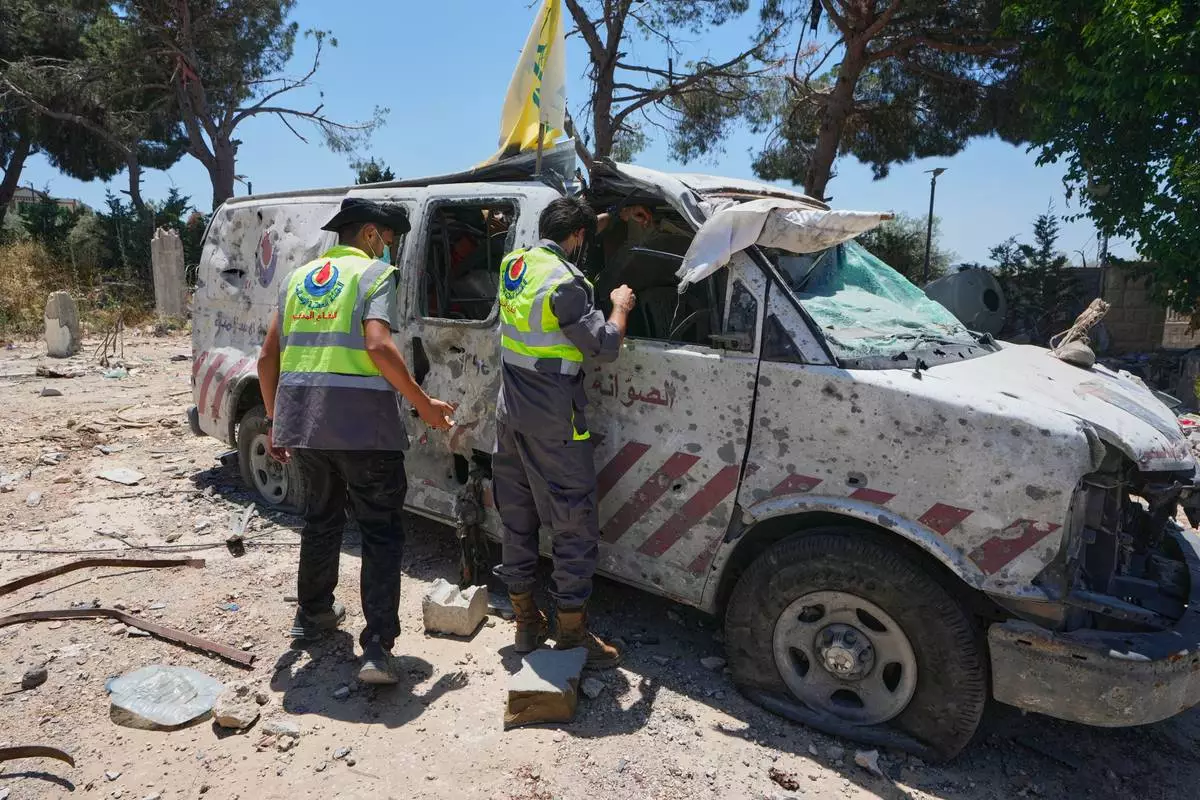
Rescue workers inspect a damaged ambulance belonging to Hezbollah's health unit that was hit in a previous Israeli airstrike in the southern village of Souaneh, Lebanon, Tuesday, June 16, 2026. (AP Photo/Mohammed Zaatari)
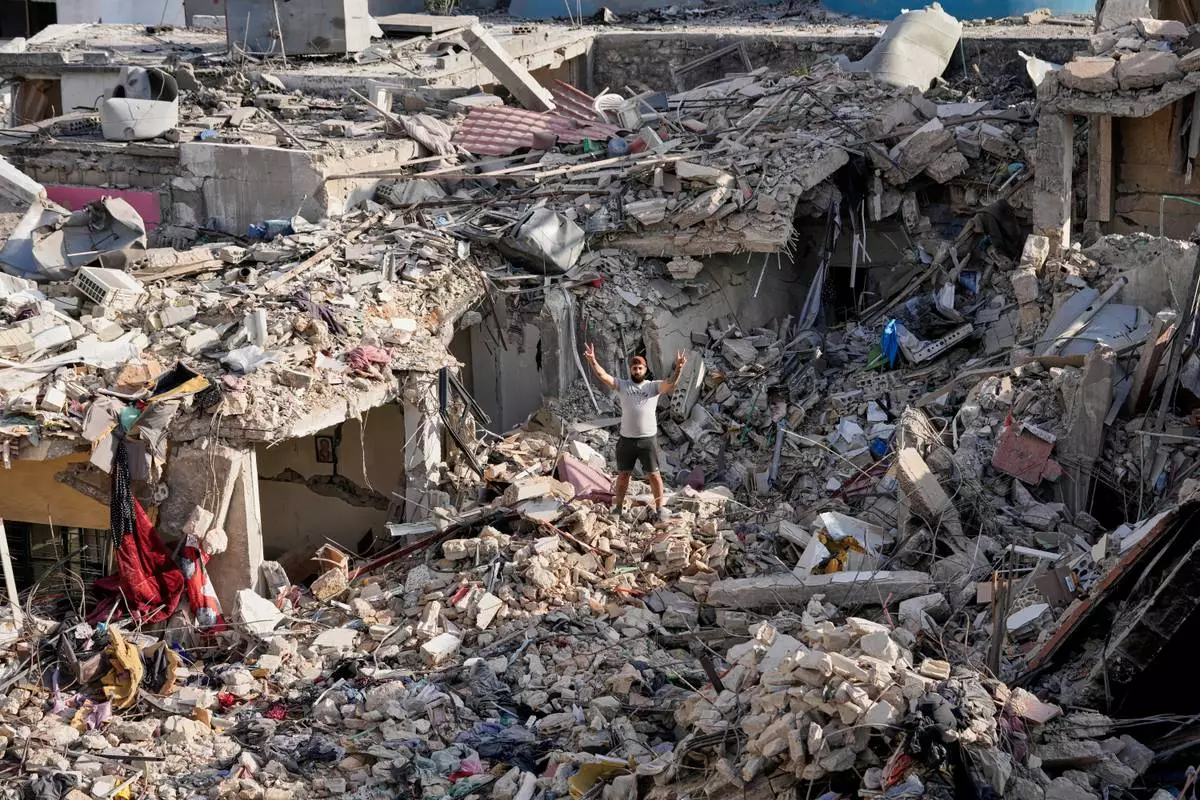
A man who returns to his village following the announcement of an initial ceasefire agreement between the United States and Iran, flashes victory sign as he stands on the rubble of his destroyed house in Nabatiyeh town, southern Lebanon, Tuesday, June 16, 2026. (AP Photo/Hussein Malla)
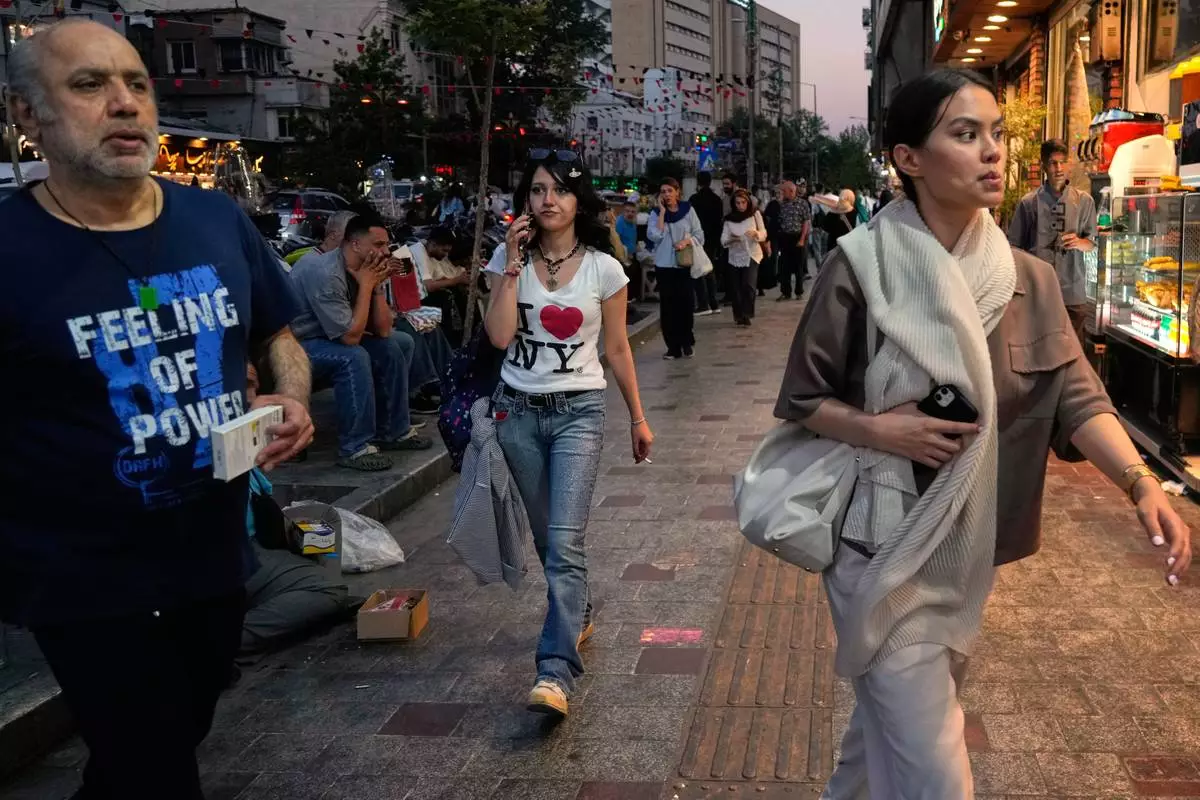
People walk along Tajrish square in northern Tehran, Monday, June 15, 2026. (AP Photo/Vahid Salemi)
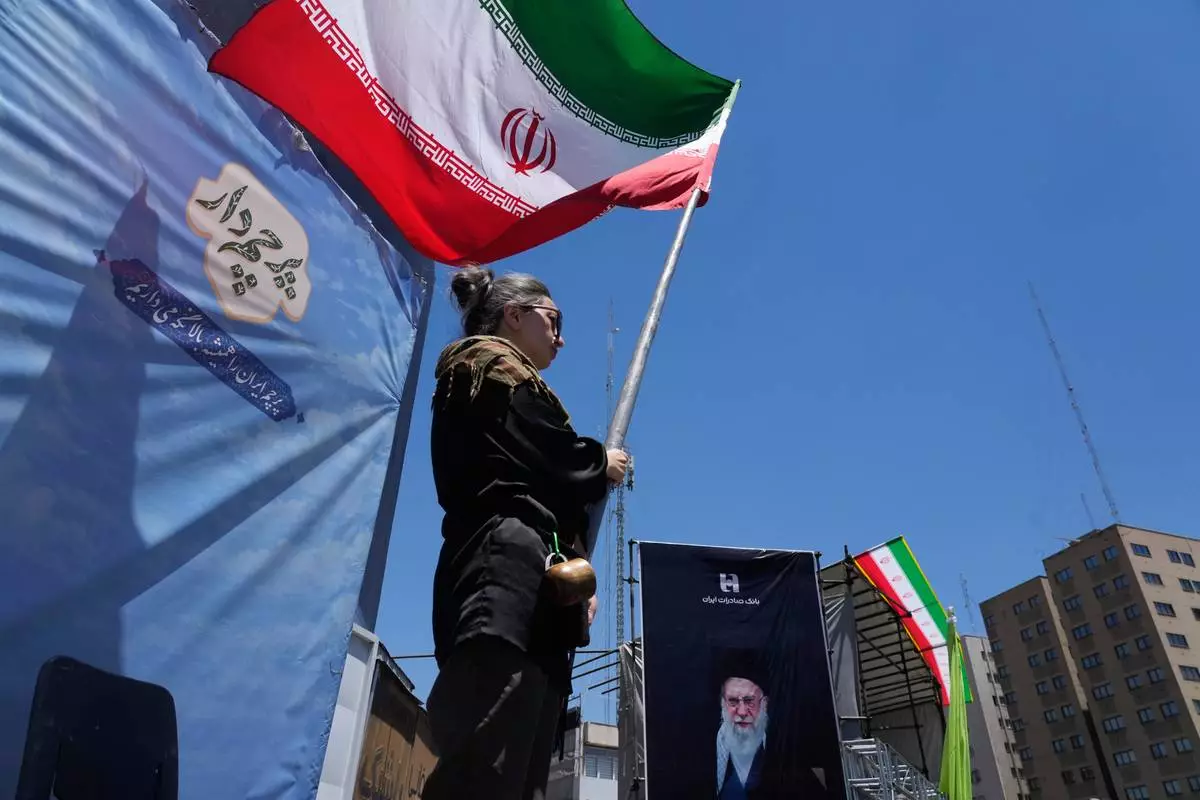
A woman waves an Iranian flag during a pro-government campaign as a portrait of the slain Supreme Leader Ayatollah Ali Khamenei, who was killed in U.S. and Israeli strikes on Feb. 28, is displayed at right, in downtown Tehran, Iran, Monday, June 15, 2026. (AP Photo/Vahid Salemi)